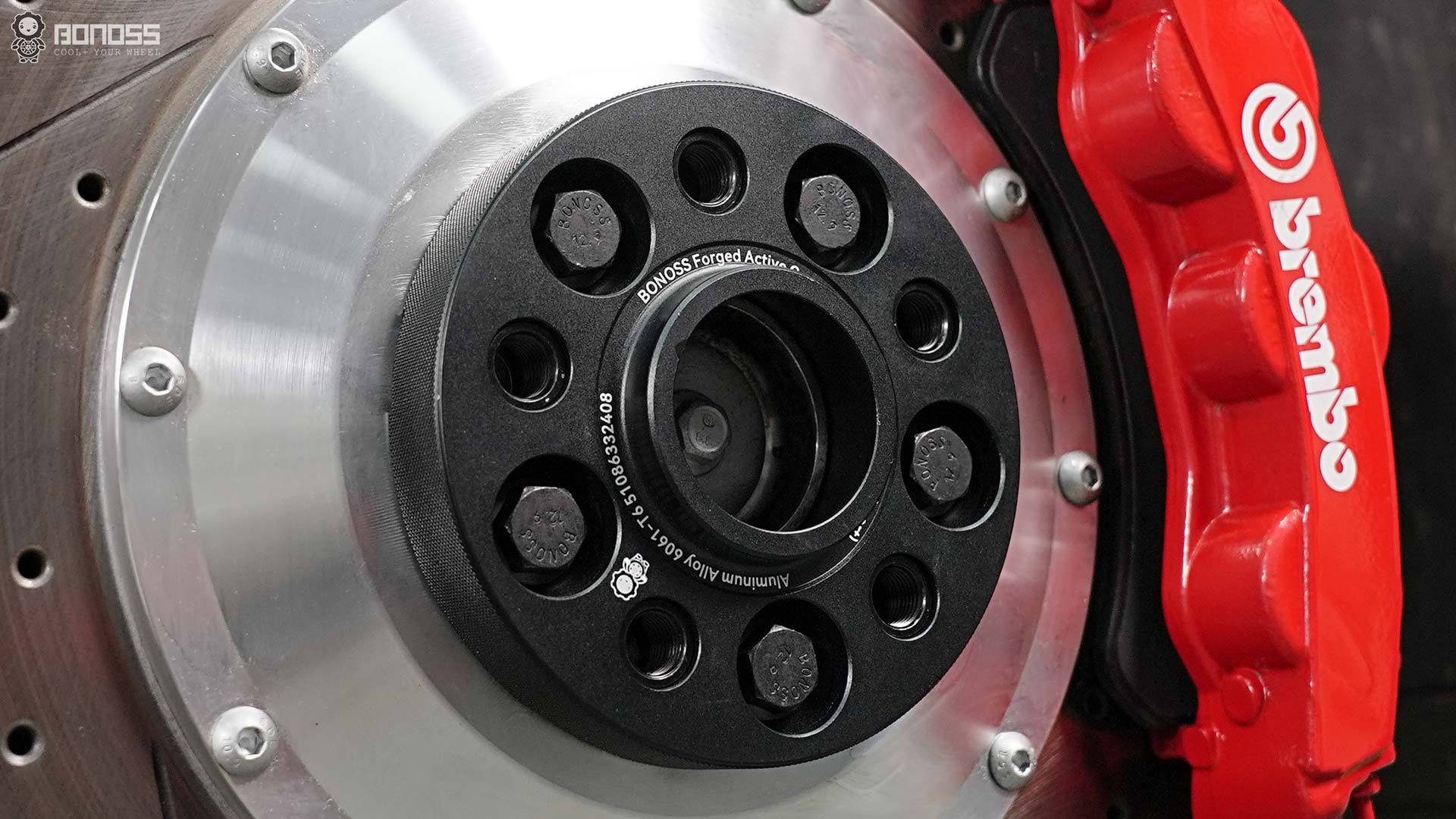
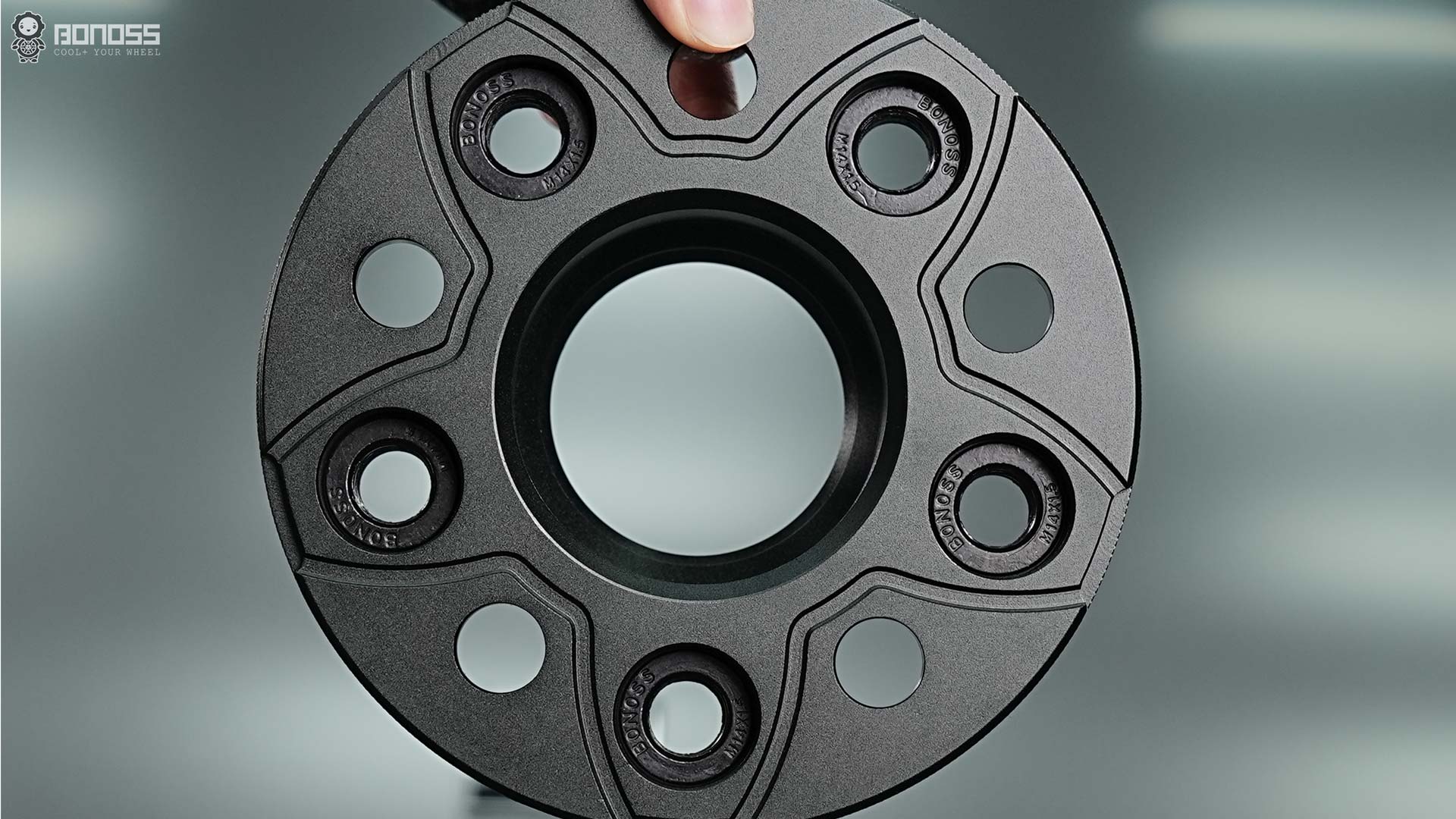
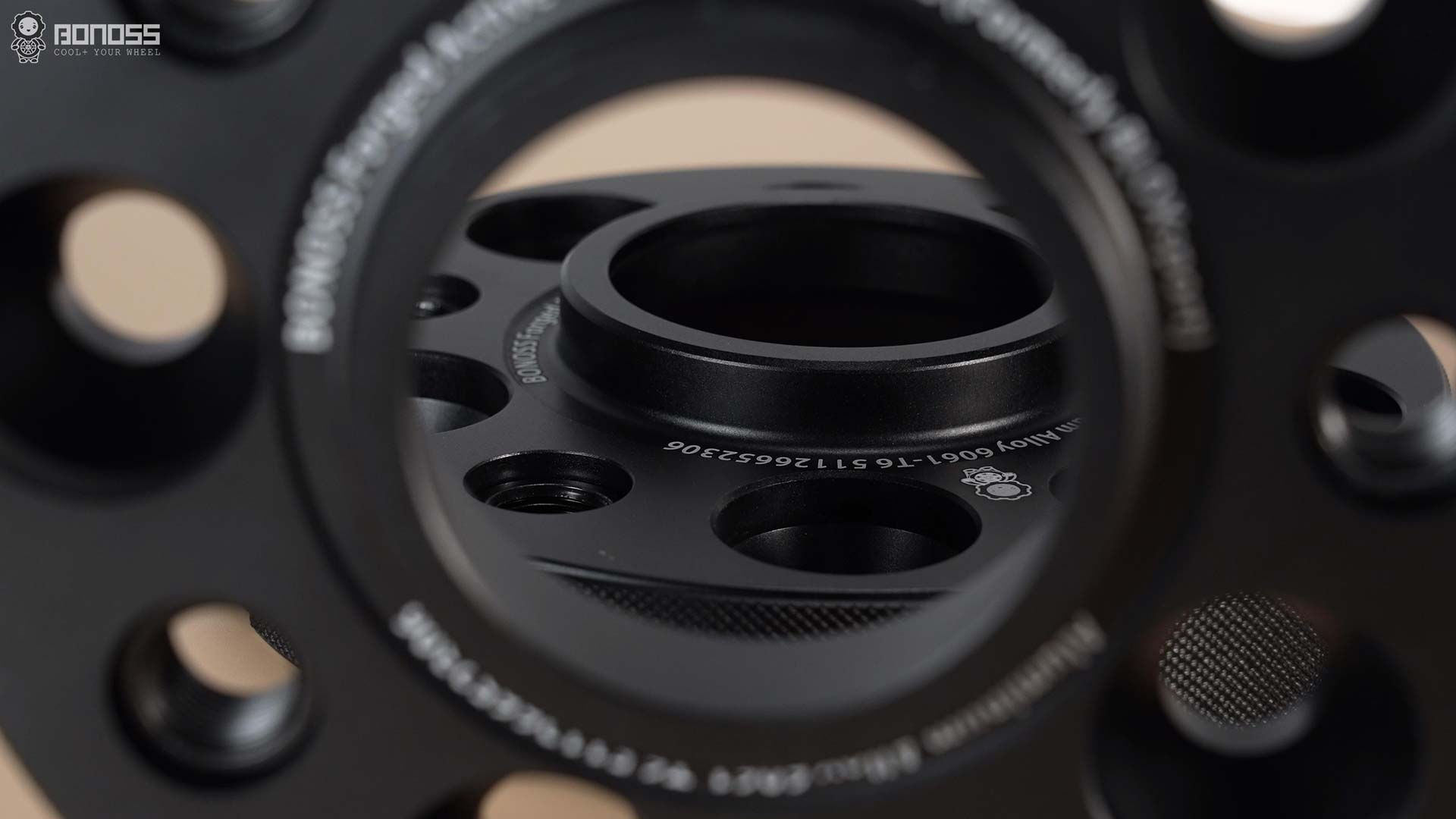
Dialing in the right spacer thickness for your 5×120 bolt pattern ride involves balancing fitment goals, tire specs, and suspension mods. Most reputable shops recommend 10mm to 25mm (0.4″–1″) spacers as the sweet spot – enough to clear wider rubber or big brakes without compromising handling or safety. Pushing beyond this range requires careful planning and premium components.
Sizing Breakdown: From Subtle to Aggressive
3–10mm: Brake clearance, minor offset tweaks. Minimal visual change
Note: Wide-body kits change these rules entirely – consult a specialist.
Choosing Your Spacer: 3 Critical Factors
1. Tire & Clearance Math
Measure your current rim-to-fender gap. Need 15mm clearance? Match it with 15mm spacers. Oversized tires often demand thicker spacers to prevent fender rub.
2. Adapter Requirements
Converting 5×112 (Audi/Mercedes) to 5×120? You’ll need minimum 25mm (1″) bolt-on adapters. Never compromise on hub-centric locking here.
Aerospace-grade ISO 12.9 bolts (1,220 MPa tensile)
ISO 10 nuts withstand 1,100 MPa proof load
7075-T6 alloy handles extreme loads
The Bottom Line
Choose thickness based on measured clearance, not looks alone. For under 1″, prioritize weight savings; beyond 1″, active cooling and forged strength become non-negotiable. Your spacer choice directly impacts safety – invest in CNC-machined, hub-centric units from proven brands.