
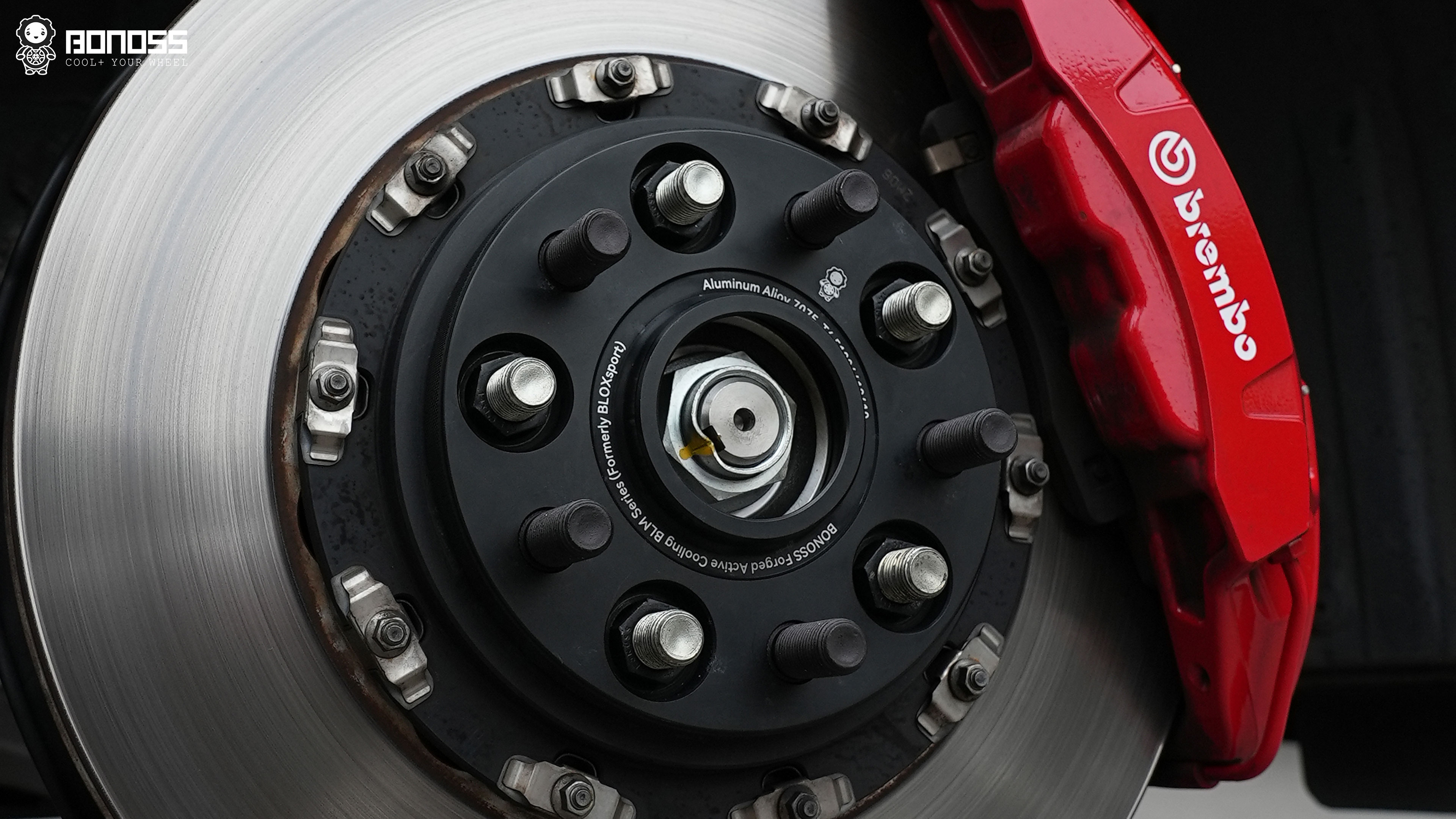
If you are shopping for Honda Civic Type R wheel spacers, here is the short version: go hub-centric, go forged, and nail the bolt pattern for your generation. The FL5 (2023+) and FK8 (2017–2022) run 5×120 with a 64.1mm center bore and M14x1.5 thread pitch. Every generation before the FK2 — the EK9, EP3, FD2, and FN2 — uses 5×114.3 with M12x1.5. Mix those up and the spacers will not bolt on.
For most FL5 and FK8 owners chasing a flush stance, 15–25mm bolt-on spacers in forged 6061-T6 hit the sweet spot. If you track the car, step up to 7075-T6 bolt-on. Expect $125–$260 per pair.
Confirm three numbers before ordering: bolt pattern (5×120 for 2015+, 5×114.3 earlier), center bore (64.1mm all gens), thread pitch (M14x1.5 for FK2/FK8/FL5, M12x1.5 for EK9/EP3/FD2/FN2). The rest is thickness and material.
Full-Generation Spec Quick Reference
Before you pick a thickness or a material, lock down the fundamentals. The table below covers every Civic Type R generation from the 1997 EK9 to the current FL5. The single most critical detail: Honda switched from 5×114.3 to 5×120 starting with the FK2 in 2015, and simultaneously moved from M12x1.5 to M14x1.5 wheel studs. Civic Type R 5×120 spacers will not fit a 5×114.3 car, and the reverse is equally true.
| Generation / Year | Bolt Pattern | Center Bore | Thread Pitch | Wheel Offset | Suggested Spacer Sizes | Factory Lug Nut Torque |
|---|---|---|---|---|---|---|
| 2023-2027 FL5 2.0 VTEC TURBO | 5x120mm | 64.1mm | M14x1.5 | ET60 | 15mm to 20mm | 94 ft-lb / 127 Nm |
| 2017-2022 FK8 2.0i | 5x120mm | 64.1mm | M14x1.5 | ET55 | 15mm to 25mm | 94 ft-lb / 127 Nm |
| 2017-2022 FK8 2.0i Turbo | 5x120mm | 64.1mm | M14x1.5 | ET60 | 20mm to 25mm | 94 ft-lb / 127 Nm |
| 2015-2016 FK2 2.0i | 5x120mm | 64.1mm | M14x1.5 | ET60 | 15mm to 25mm | 94 ft-lb / 127 Nm |
| 2015-2016 FK2 2.0i-VTEC | 5x120mm | 64.1mm | M14x1.5 | ET60 | 15mm to 25mm | 94 ft-lb / 127 Nm |
| 2007-2010 FD 2.0i | 5×114.3mm | 64.1mm | M12x1.5 | ET60 | 15mm to 20mm | 80 ft-lb / 108 Nm |
| 2006-2012 FN 2.0i | 5×114.3mm | 64.1mm | M12x1.5 | ET55 | 15mm to 20mm | 80 ft-lb / 108 Nm |
| 2006-2012 FN 2.0 i-VTEC | 5×114.3mm | 64.1mm | M12x1.5 | ET55 | 15mm to 20mm | 80 ft-lb / 108 Nm |
| 2001-2005 EP3 2.0i | 5×114.3mm | 64.1mm | M12x1.5 | ET45 | 10mm to 20mm | 80 ft-lb / 108 Nm |
| 1997-2000 EK9 1.6 | 5×114.3mm | 64.1mm | M12x1.5 | ET50 | 10mm to 20mm | 80 ft-lb / 108 Nm |
A few things to notice. The 64.1mm center bore is constant — Honda kept it identical even when they changed the bolt pattern. That simplifies hub-centric spacer selection because the hub interface never changes. The offset varies by generation and trim, which is why the suggested spacer ranges differ. The FK8 2.0i (non-turbo, ET55) sits 5mm further inboard than the FK8 Turbo (ET60), so it benefits from slightly thicker spacers to reach the same flush position.
If you are cross-shopping with an Acura Integra Type S DE5, the FL5 shares its 5×120 bolt pattern, 64.1mm hub bore, and M14x1.5 thread pitch with that car. Spacers that fit the FL5 will bolt onto the DE5. Civic Type R 5×114.3 spacers are for the older chassis codes only — verify your generation before ordering.
Choosing the Right Thickness
Chasing Flush Fitment
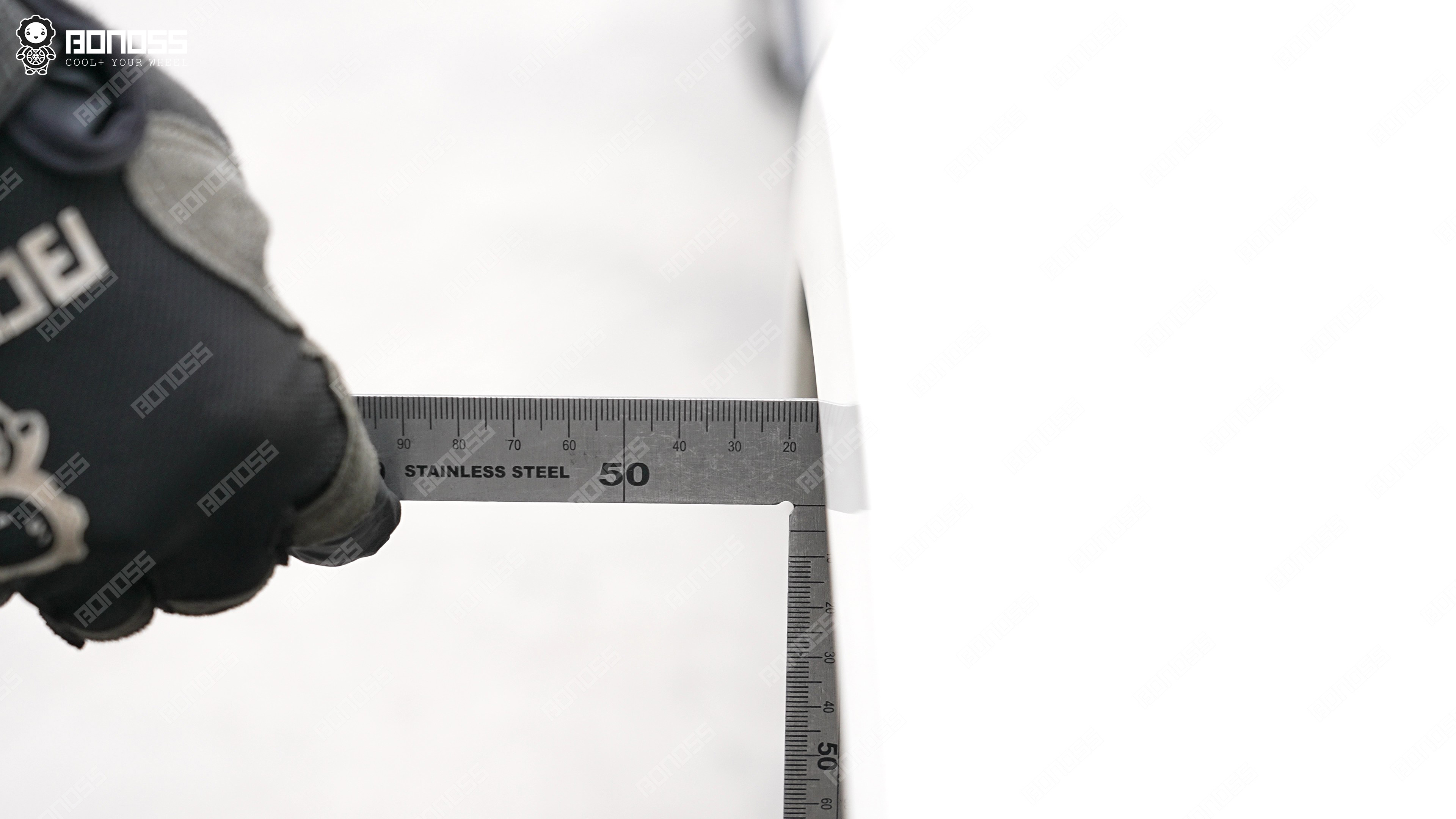
The practical method: park on level ground, measure the distance from the tire’s outer sidewall to the inner edge of the fender lip. That gap is roughly the spacer thickness you need for a flush fit. Front and rear gaps differ, so measure both.
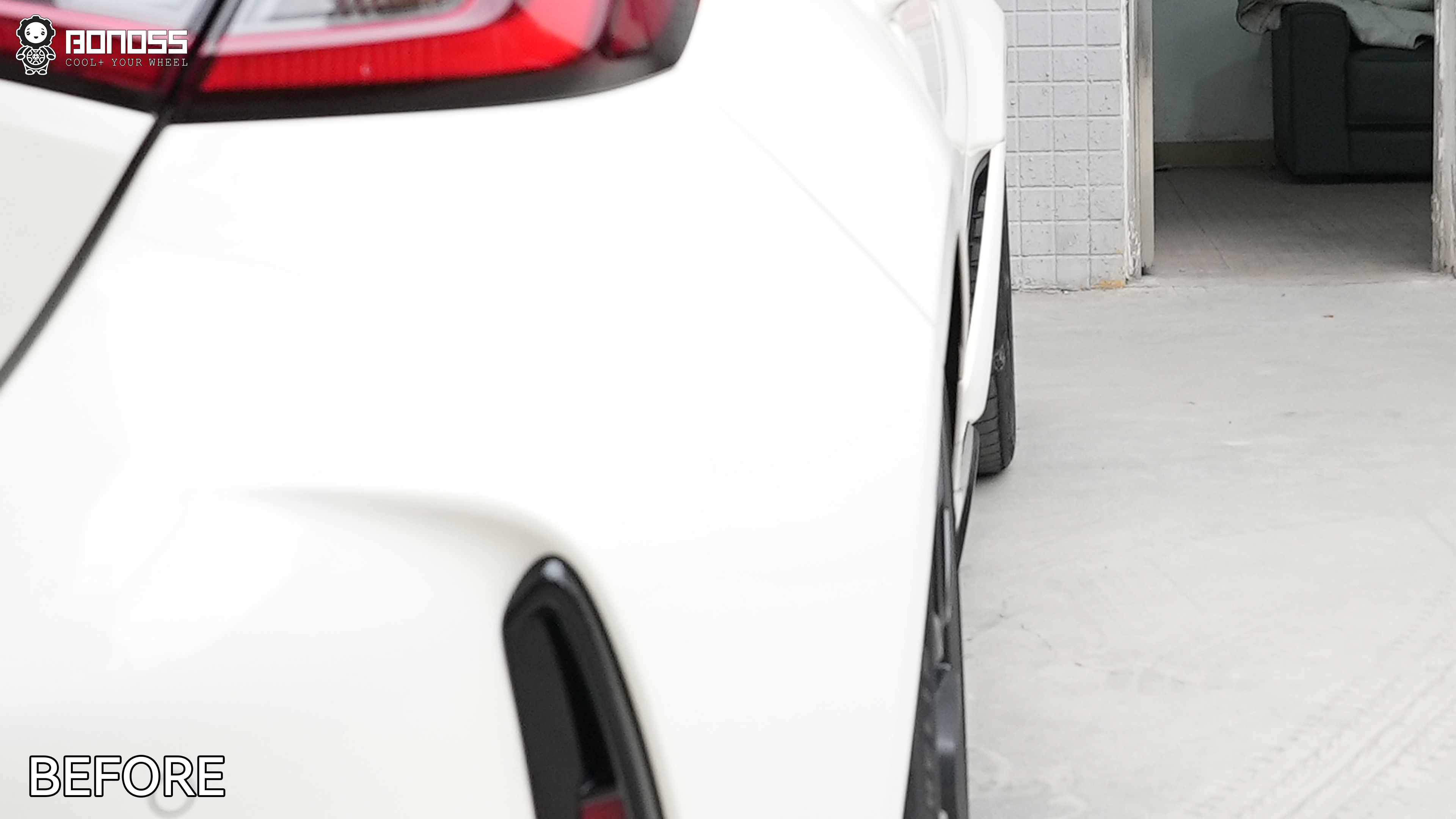
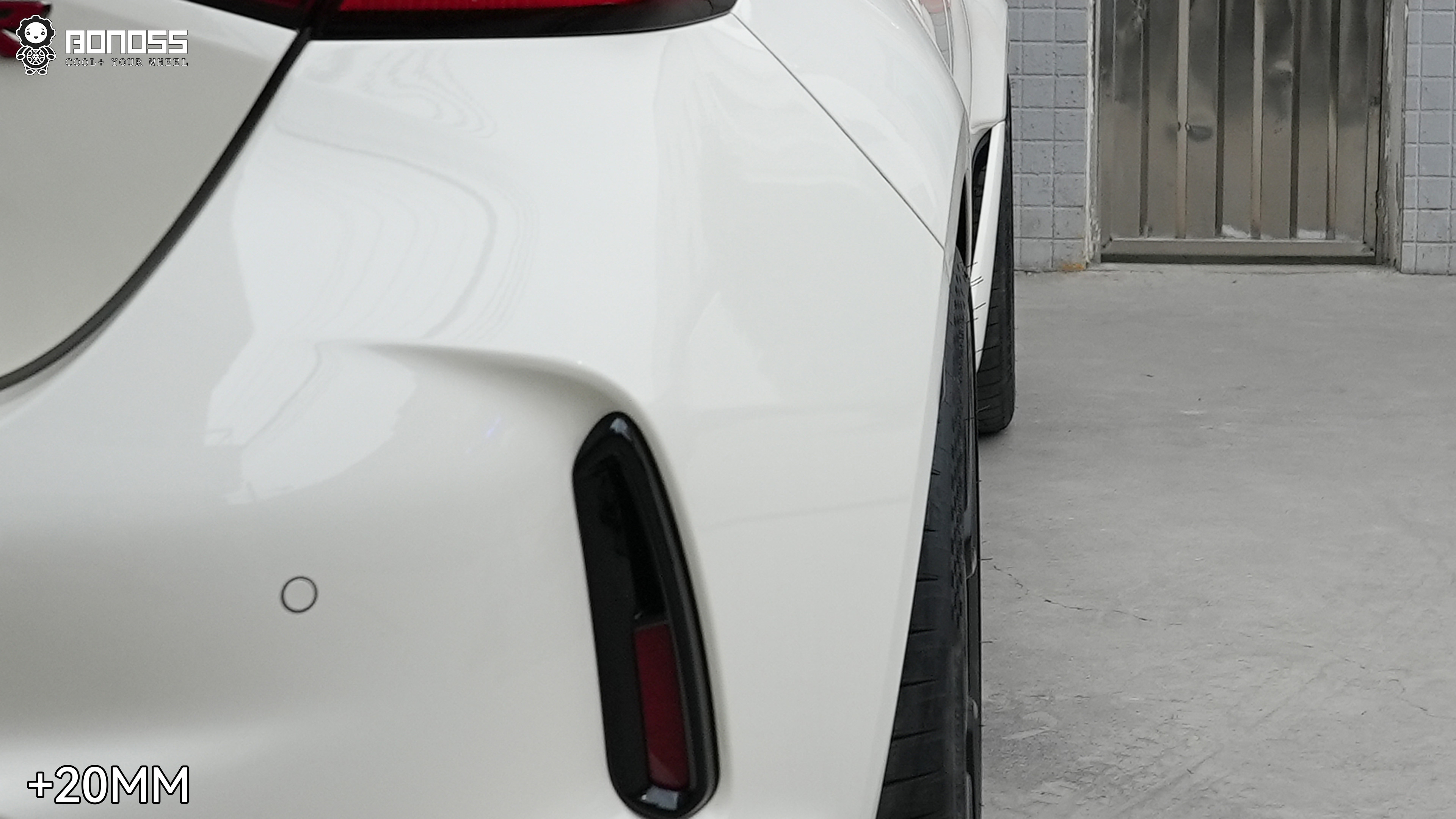
On the FL5, the factory ET60 offset with the OEM 20-inch wheel typically leaves about 15mm of fender gap up front and 20mm at the rear. That is why FL5 Civic Type R 15mm spacers are the most common front-axle choice, with 20mm on the rear for a square, aggressive stance. Civic Type R FL5 spacers in the 15–20mm range cover the majority of daily-driven setups.
For a real-world reference, a 2023 Civic Type R running 15mm front and 20mm rear spacers shows how this split-thickness approach delivers a flush look. The Type R 15mm spacers before and after difference is dramatic. Comparing 15mm vs 20mm Civic Type R spacers: 15mm is the safer daily choice; 20mm gives aggression without going overboard.
Clearing Big Brake Calipers
The FL5 and FK8 come with Brembo front calipers from the factory. If you are running aftermarket wheels with a different spoke design, the caliper can contact the wheel barrel. A 5–10mm spacer provides the brake caliper clearance you need without dramatically altering the track width. Civic Type R 10mm spacers are a popular pick for this — function over form.
Compensating Wheel Offset
If you have swapped to aftermarket wheels with a higher offset, spacers bring the effective offset back down and restore fender clearance. A 20mm spacer on an ET80 wheel gives you an effective ET60 — matching the FL5’s stock. Simple math, but double-check before ordering.
Widening Track for Track Days
More track width means more lateral stability and a wider contact patch. For HPDE and time attack, 20–25mm per corner is where most Civic Type R FK8 wheel spacers land — Civic Type R FK8 20mm spacers are the go-to for most track drivers. Civic Type R 25mm spacers are about as far as we would go for regular track use; Civic Type R wheel spacers 30mm thick exist, but we would reserve those for show builds or wide-body conversions.
Wheel Adapters — Converting PCD or Center Bore
If you want to run wheels from a different platform — say, a set of 5×114.3 wheels on an FL5 — you need wheel adapters, not simple spacers. Type R 5×120 to 5×114.3 wheel adapters are typically 20mm+ thick because they have to accommodate two bolt patterns and two hub interfaces. The same logic applies to center bore conversion: 64.1 to 66.5 hub adapters let you fit wheels designed for a larger hub bore, but you are looking at adapter-thickness minimums.
Spacers add thickness to the same bolt pattern; adapters change the bolt pattern and/or center bore. In the wheel spacers vs wheel adapters debate, adapters add an extra set of fasteners, so make sure every adapter is hub-centric on both sides.
Hub-centric vs Lug-centric / Slip-on vs Bolt-on
Hub-centric vs Lug-centric
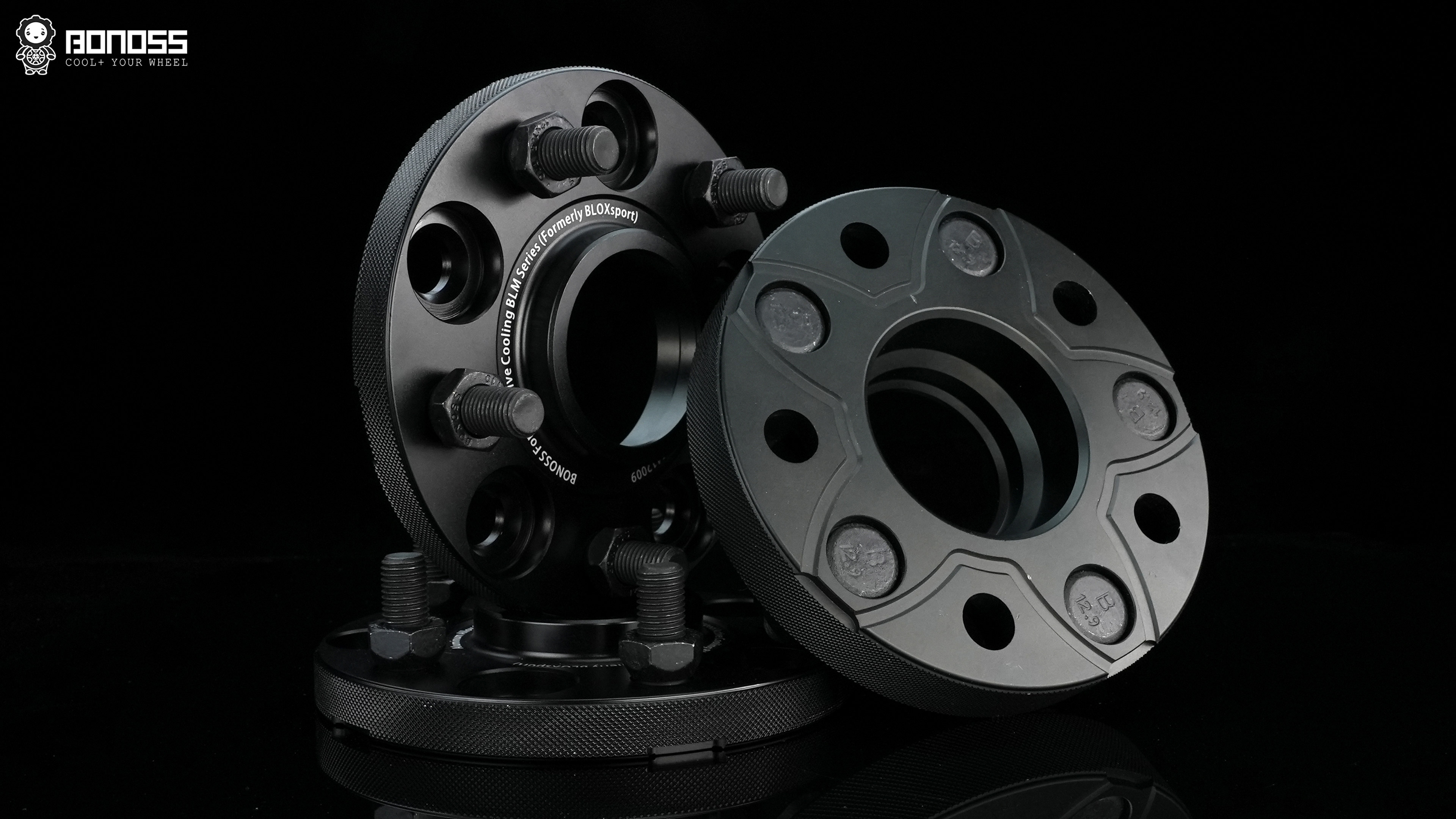
Do not buy lug-centric spacers. That is a safety position, not a preference. A hub-centric spacer has a machined lip that fits over the vehicle’s hub and centers the wheel — weight and impact loads transfer through the hub, not the studs. A lug-centric spacer relies on stud clamping force, which works on a low-stress street car but is a bad idea on a 315-hp front-driver that sees track duty.
BONOSS multi-stage hub-centric spacers machine the centering lip to the 64.1mm hub bore with 0.02mm CNC tolerance, and the wheel-side bore to match the wheel. That dual-stage centering eliminates the vibration cheap spacers are notorious for.
Slip-on vs Bolt-on
Slip-on spacers slide over existing studs. Your OEM studs need enough length to thread the lug nuts past the spacer, the wheel mounting surface, and still engage 6–8 full turns. If they are not long enough, run extended studs or go bolt-on.
Bolt-on spacers bolt to the hub with their own integrated studs and nuts, then the wheel mounts to the spacer’s studs using OEM lug nuts. They are the safer choice for 15mm+ applications because stud thread engagement is not a concern.
For 5–10mm, slip-on with extended studs works. For 15mm and above, bolt-on is the responsible choice.
Forged 6061-T6 vs 7075-T6 — Material Matters
Forged 6061-T6 for Daily Drivers
For a car that lives on paved roads, forged 6061-T6 aluminum is more than sufficient. It is the workhorse alloy of the spacer world — solid strength-to-weight ratio, excellent corrosion resistance, and it will not crack under street-car impacts.
The BONOSS 6061-T6 spacers carry a TÜV Rheinland hardness certification of 101–103 HBW, tested per ISO 6506-1:2014. That hardness range tells you the material has been properly solution-treated and aged — it is not just a chunk of aluminum someone turned on a lathe. TÜV hardness test report for 6061-T6 spacers.
If you are running an FL5 or FK8 as a daily and want BONOSS forged active cooling wheel spacers in 6061-T6, that is the combination most owners land on.
Forged 7075-T6 for Track Use
7075-T6 is the serious-business alloy — roughly 80% stronger than 6061-T6 in tensile strength, and the same grade used in aerospace structural components. For a car that gets flogged on circuit, heat-cycled repeatedly, and subjected to curb impacts, 7075-T6 is the right call.
The TÜV hardness test on BONOSS 7075-T6 spacers returned 146 HBW 5/250, tested per ISO 6506-1:2014 — a significant jump from the 6061’s 101–103 range. That is not a marketing number; it is a lab-verified metallurgical difference. TÜV hardness test report for 7075-T6 spacers.
If you are tracking your FL5 or FK8, the 7075-T6 forged spacers for the FL5 and FK8 Civic Type R are the step up.
Why Cast Spacers Are a Hard Pass
Cast aluminum spacers are cheaper — and it shows. The casting process introduces porosity, inconsistent grain structure, and lower strength. Under impact loading, internal voids become stress concentrations and crack initiation sites. Forged billet is compressed under enormous pressure, producing a dense, uniform grain structure with no voids. The price gap between forged and cast is maybe $40–$60 per pair. The risk gap is much wider.
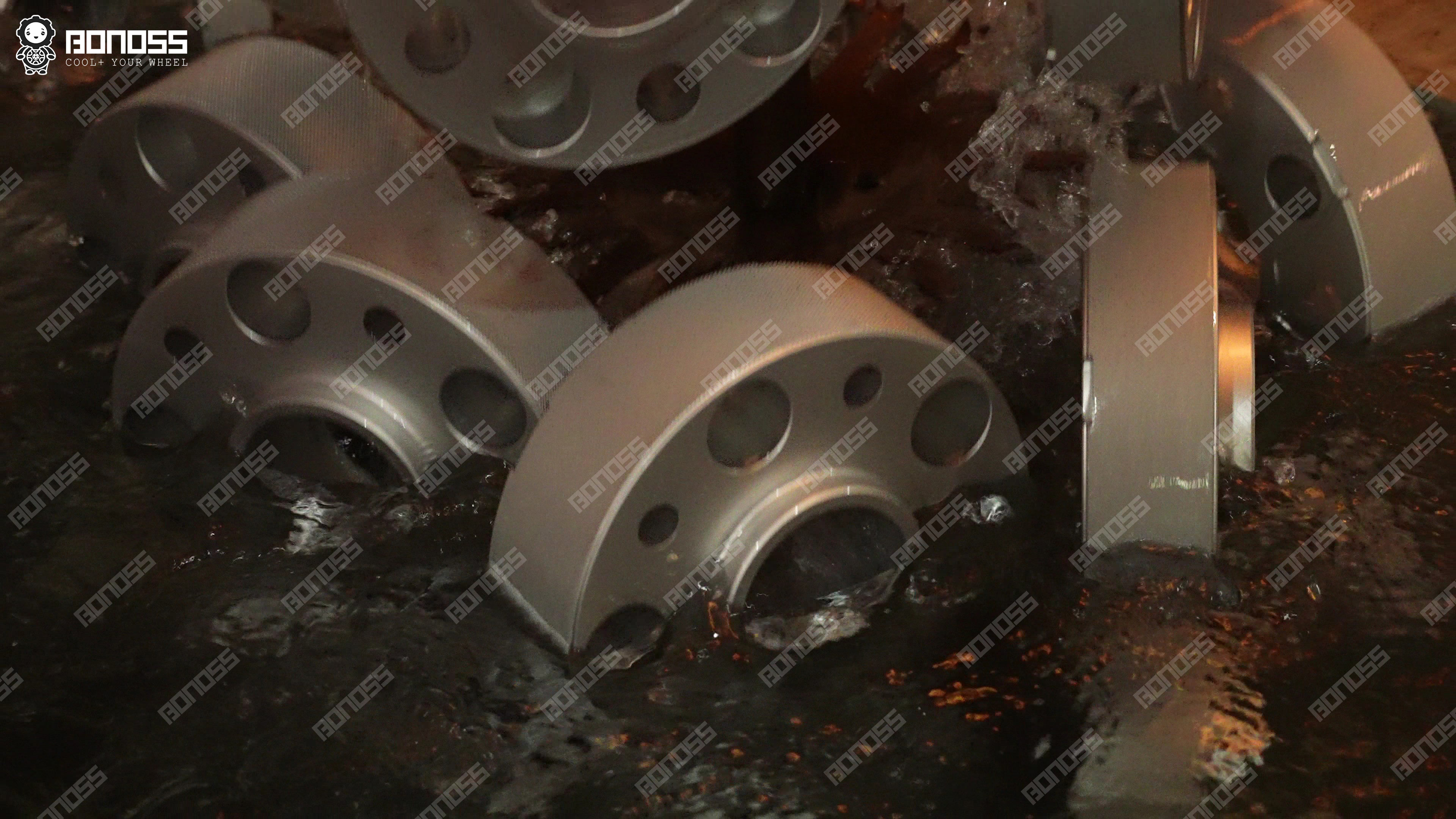
BONOSS spacers go through a hard anodizing process after machining, building a controlled oxide layer on the aluminum surface. Hard anodized spacers resist corrosion and surface wear, which matters if you live somewhere that salts the roads in winter.
Active Cooling and Side Knurling
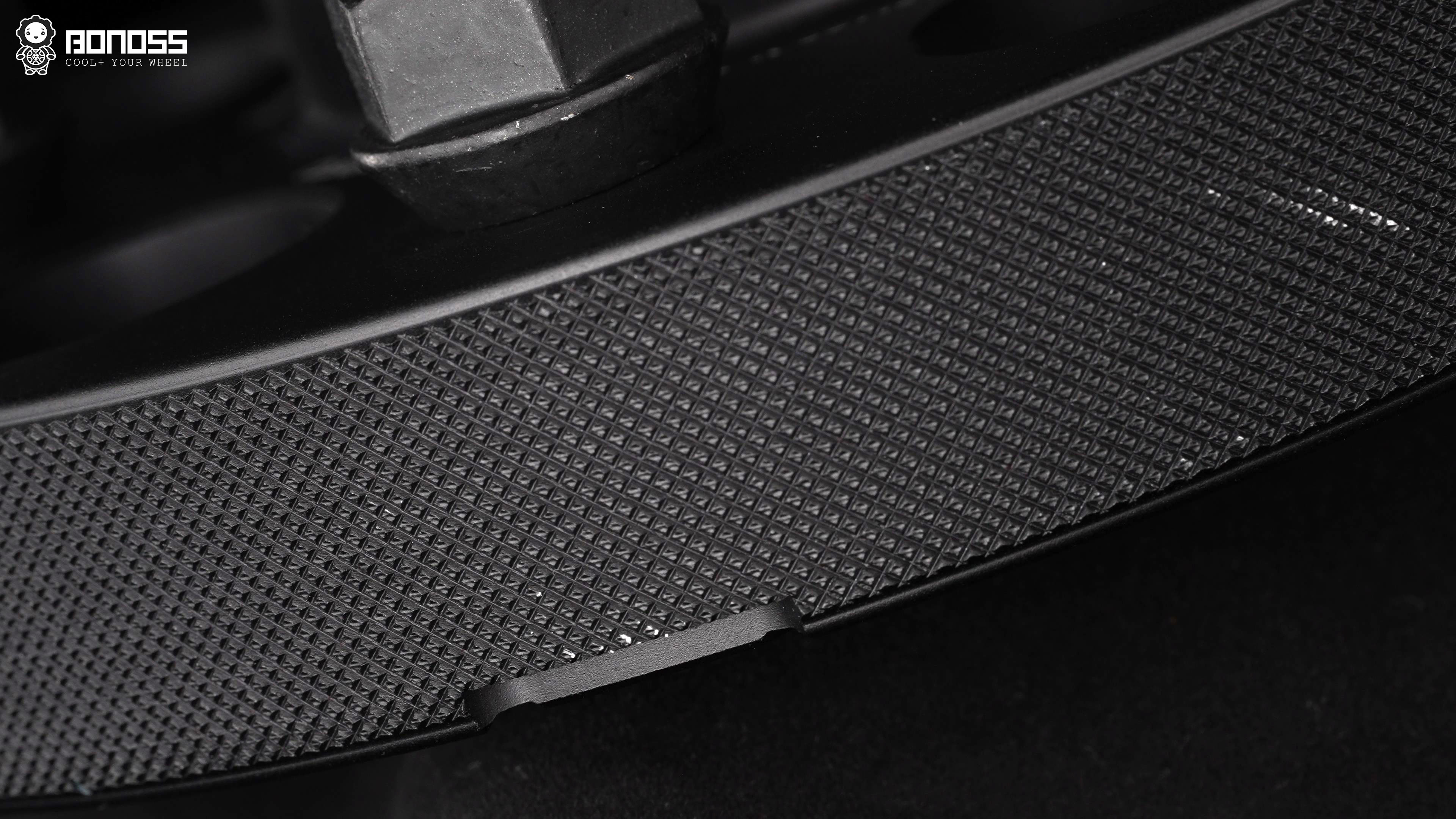
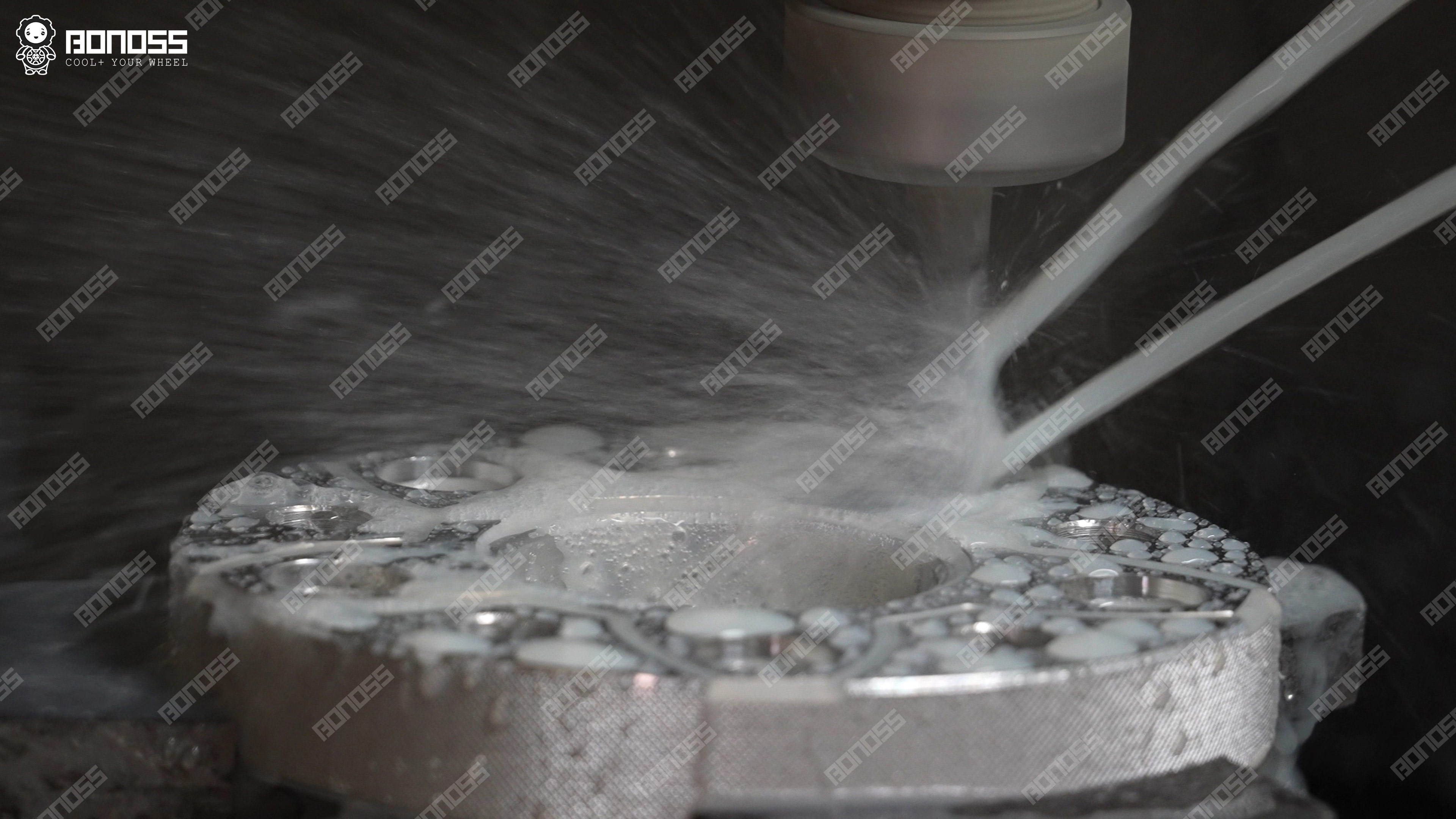
One feature worth calling out: BONOSS’s active cooling design incorporates side knurling on the spacer’s outer circumference. Those knurled grooves increase surface area exposed to airflow, helping dissipate heat absorbed from the hub and brake assembly during hard driving. The same knurling provides mechanical grip for easier installation and removal — spacers without it can seize to the hub over time.
Disassembly grooves machined into the spacer face give you a pry point when the spacer is stuck, so you are not hammering on the precision-machined hub-centric lip. BONOSS backs this hardware with a 10-year warranty and over 75 SGS and TÜV test reports across the product line.
Do You Need to Trim Your Studs?
This is the question that stops most people from running bolt-on spacers. Here is how to answer it with two measurements.
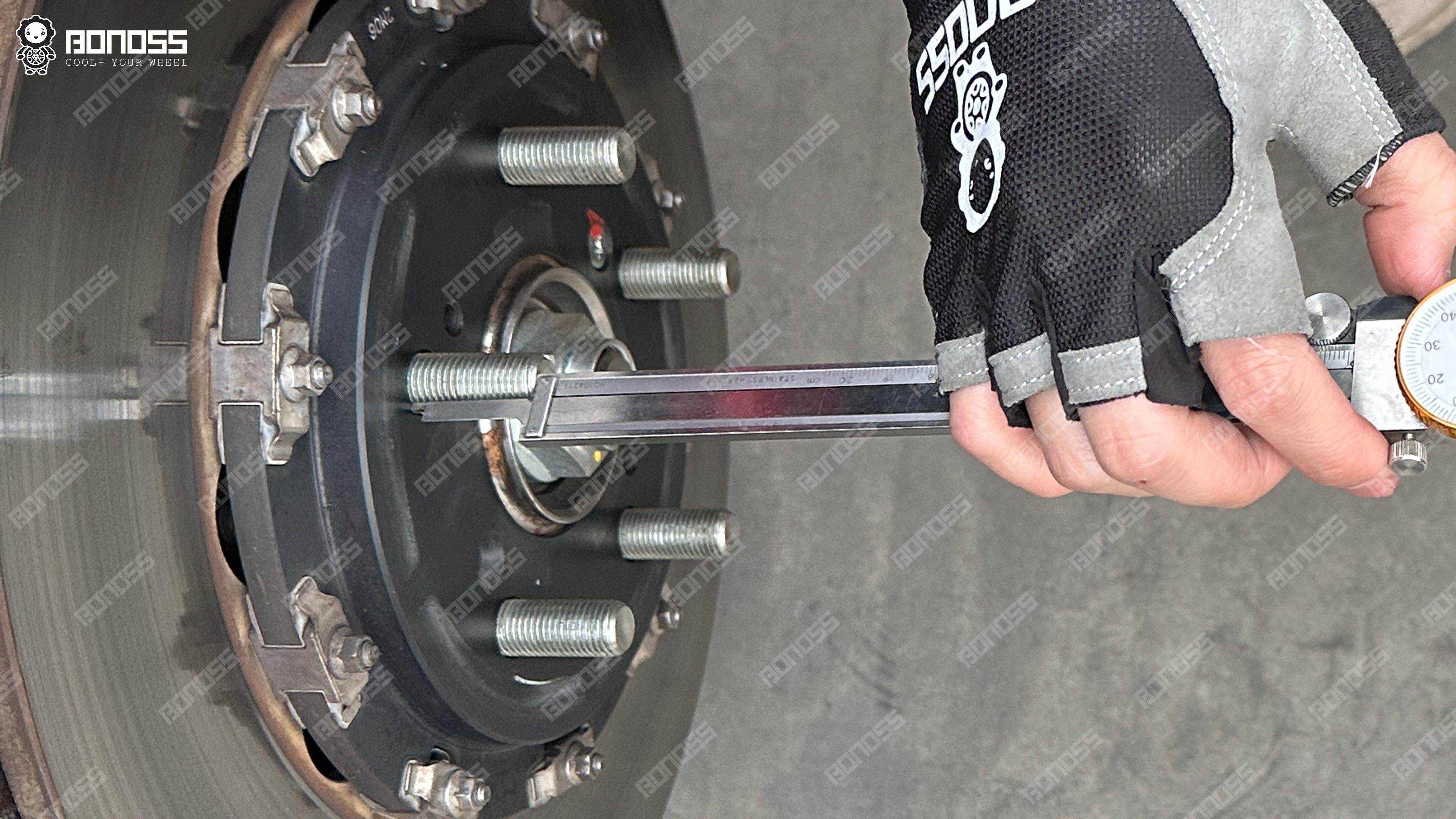
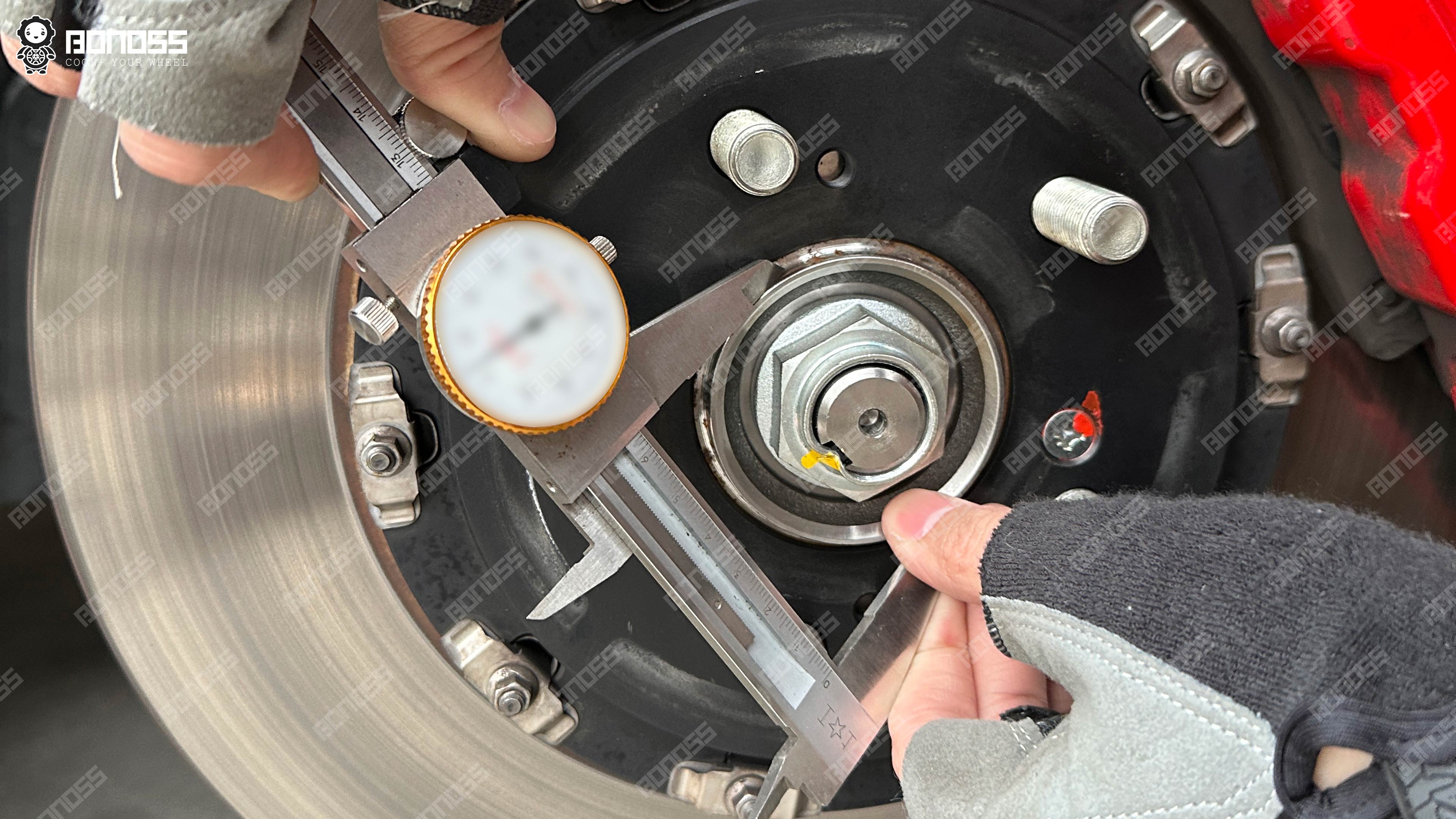
First, measure your axle stud protrusion — the length of threaded stud that extends past the wheel mounting surface. Use a vernier caliper and measure from the hub face to the tip of the stud. On a stock FL5, the M14x1.5 studs typically protrude about 27–30mm past the mounting surface.
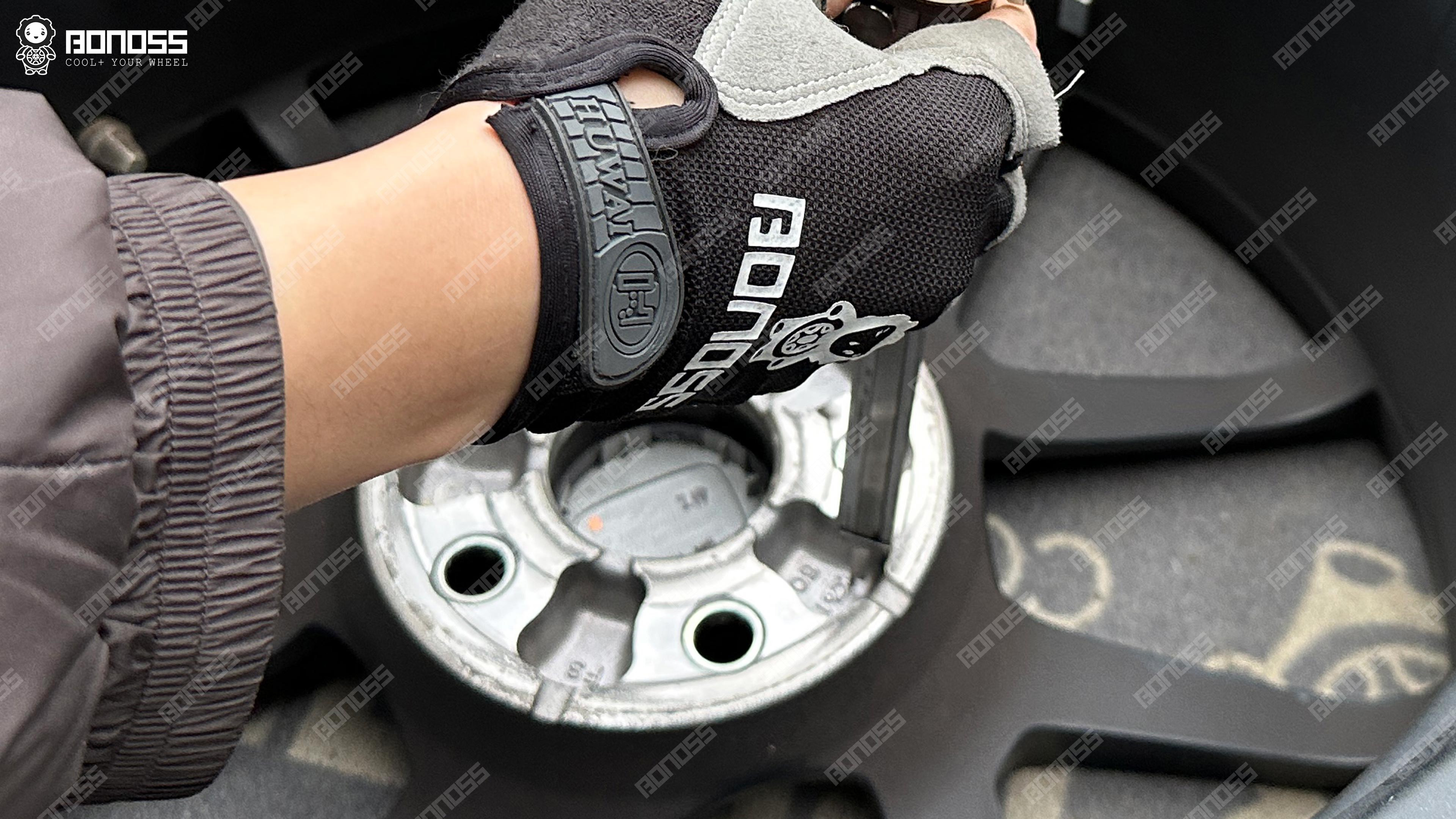
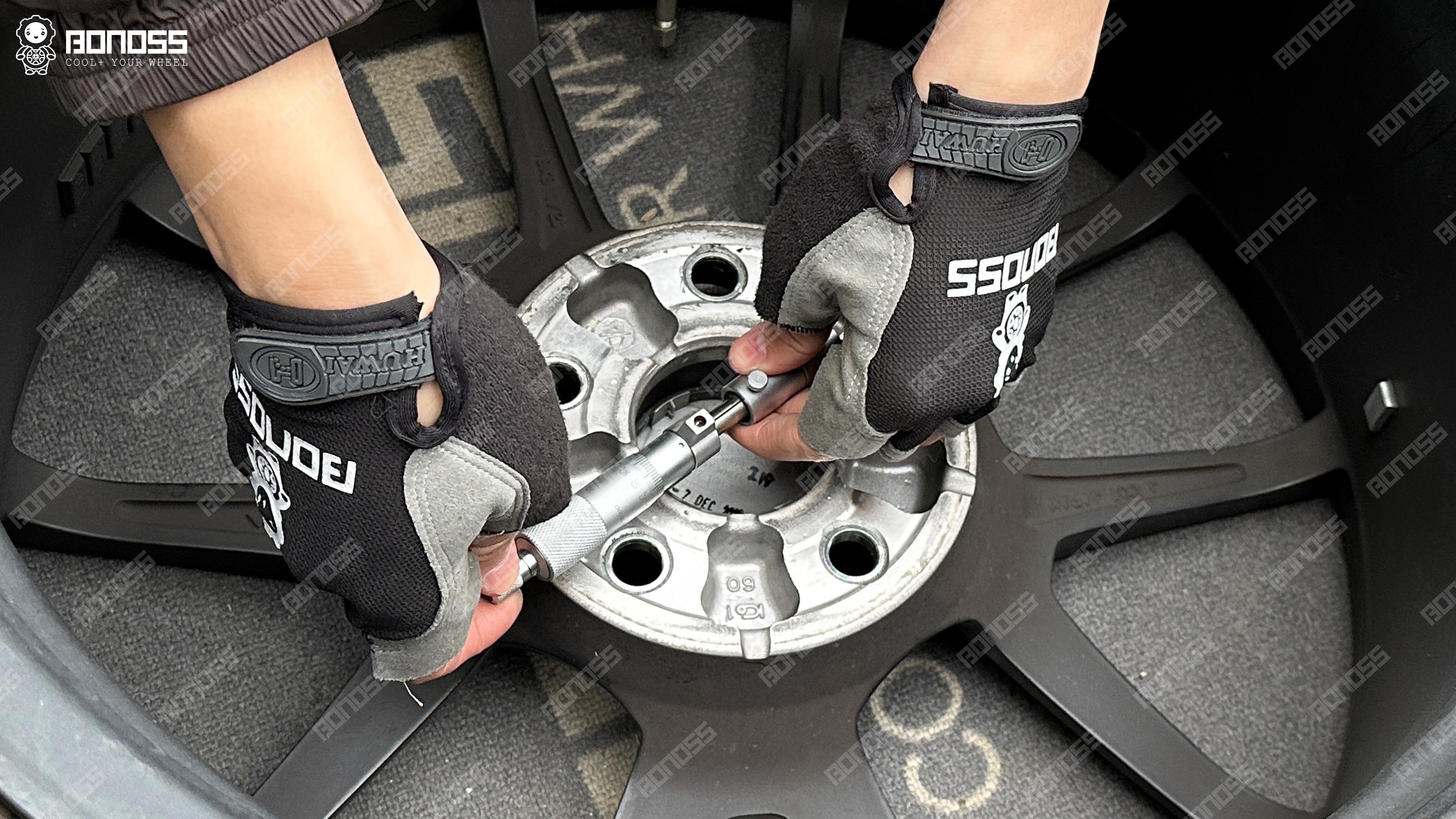
Second, measure your wheel pocket depth — the depth of the recessed pocket on the back of the wheel where the stud passes through. Not all wheels have these pockets, and their depth varies by wheel design. Use the caliper to measure from the wheel’s mounting surface to the bottom of the pocket.
The math is simple: if the wheel pocket depth plus the spacer thickness is greater than the stud protrusion length, the studs tuck into the pockets and you can install bolt-on spacers without trimming anything. If that sum is less than the protrusion, you have three options — trim the studs, swap to shorter studs, or switch to slip-on spacers.
The BONOSS bolt-on design uses its own ISO Grade 12.9 studs pressed into the spacer body, so OEM studs only need enough length to mount the spacer itself. The wheel then mounts to the spacer’s studs with OEM lug nuts. No guessing.
Matching Hardware — Studs, Nuts, and Seat Types
The hardware conversation is short but critical. Honda Civic Type R wheel bolts and nuts come in two thread pitches across generations: M14x1.5 for the FK2, FK8, and FL5, and M12x1.5 for the EK9, EP3, FD2, and FN2. You cannot mix them.
BONOSS uses ISO Grade 12.9 wheel studs in their bolt-on spacers. The SGS tensile test on these M14x1.5 studs returned 1268 MPa, tested per ISO 898-1:2013, with a proof load of 121 kN. TÜV independently tested the same studs: 1233 MPa tensile and 386–390 HV10 hardness, per ISO 6507-1:2018. The slightly different numbers between SGS and TÜV are normal — different labs, samples, and measurement uncertainty. Both confirm the studs meet or exceed Grade 12.9. SGS tensile test | TÜV tensile and proof load
The matching ISO Grade 10 wheel nuts carry an SGS-certified proof load of 138.8 kN (ISO 898-2:2012) and hardness of 358–362 HV0.5 (ISO 6507-1:2018). Nut values differ from stud values because nuts and studs engage threads differently — a nut distributes load across multiple thread flanks, while a stud’s critical zone is its tensile cross-section. Even within studs, M14x1.5 and M14x1.25 test differently because thread pitch changes the stress area. Always verify against the actual certification report. SGS proof load for nuts
Seat type matters. Honda uses a ball-seat (spherical) lug nut on most Civics, not the conical (acorn) seat that many American cars use. If you are running aftermarket wheels, check the seat type — running a conical nut on a ball-seat wheel, or vice versa, will damage the wheel and reduce clamping force.
For owners of the older 5×114.3 generations, 5×114.3 hub-centric spacers for the EP3, EK9, and FD2 are available in both 6061-T6 and 7075-T6 grades. 7075-T6 5×114.3 spacers for older Type R chassis codes round out the lineup for track use on JDM-era cars.
Torque Specifications
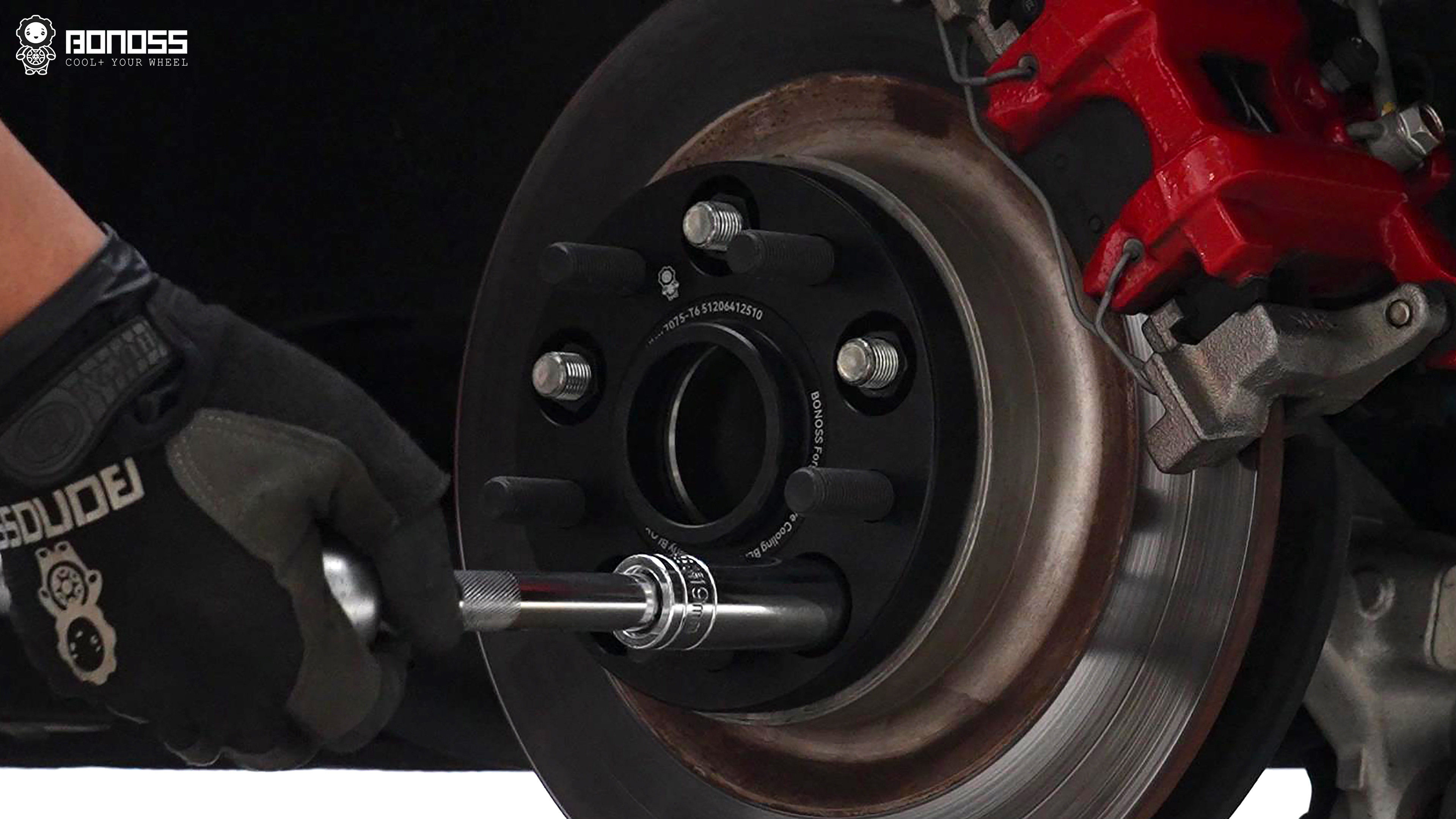
Torque is non-negotiable. Under-torqued fasteners back out; over-torqued ones stretch past yield and lose clamping force permanently. Use a calibrated torque wrench — not an impact gun — follow a crisscross star pattern, and get the torque specs right the first time. Four torque values, two procedures, two sources:
| Procedure | Hardware | Torque Value | Source |
|---|---|---|---|
| Spacer to hub (BONOSS nuts on OEM studs) | BONOSS M14x1.5 wheel nuts | 140 Nm / 103.5 ft-lb | Per BONOSS installation instructions |
| Spacer to hub (BONOSS nuts on OEM studs) | BONOSS M12x1.5 wheel nuts | 113 Nm / 83.3 ft-lb | Per BONOSS installation instructions |
| Wheel to spacer (OEM nuts on BONOSS studs) | OEM M14x1.5 wheel nuts | 127 Nm / 94 ft-lb | Per the owner’s manual |
| Wheel to spacer (OEM nuts on BONOSS studs) | OEM M12x1.5 wheel nuts | 108 Nm / 80 ft-lb | Per the owner’s manual |
Use ONE torque value for the hardware you are using. Never mix the torque specs. When in doubt, use the more conservative value and confirm compatibility with your hardware.
After the first 50–80 miles of driving, re-torque everything. Heat cycles settle the components and fasteners can relax. This is not optional — it is standard practice for any wheel installation, spacer or not.
Price Ranges — What to Pay and What to Avoid
A quality set of forged, hub-centric Civic Type R spacers runs $125–$260 per pair. Anything significantly below that — $40–$60 a pair on marketplace sites — is almost certainly cast aluminum with no material certification, no load testing, and no warranty.
Red flags: no stated alloy grade, no TÜV or SGS test reports, no hub-centric machining spec, and no warranty. If a seller cannot tell you the hardness of their spacers or the tensile strength of their studs, they have not tested them.
You do not need to spend $400+ per pair unless you are paying for a boutique brand name. BONOSS forged active cooling wheel spacers sit in the middle of the quality range — certified, tested, and warrantied — without the boutique markup.
FAQ
What size wheel spacers are safe for a Honda Civic Type R?
15–25mm per axle is the safe range for FL5 and FK8 models, with 10–20mm for older 5×114.3 generations. Beyond 25mm, a wide-body kit may be needed.
Do Honda Civic Type R wheel spacers fit every generation?
No. The FK2 (2015), FK8 (2017–2022), and FL5 (2023+) use 5×120 with M14x1.5. The EK9, EP3, FD2, and FN2 use 5×114.3 with M12x1.5. Spacers are not interchangeable between these groups — bolt pattern and stud diameter are physically different.
Do I need to trim my studs for Type R spacers?
Only if your wheel pockets cannot accommodate stud protrusion plus spacer thickness. Measure both with a caliper: if pocket depth plus spacer thickness exceeds stud protrusion, no trimming is needed.
What torque should I use for Honda Civic Type R wheel spacers?
Use 140 Nm (103.5 ft-lb) for BONOSS M14x1.5 nuts or 113 Nm (83.3 ft-lb) for BONOSS M12x1.5 nuts, per BONOSS installation instructions; use 127 Nm (94 ft-lb) for OEM M14x1.5 nuts or 108 Nm (80 ft-lb) for OEM M12×1.5 nuts, per the owner’s manual. Pick one value based on your fasteners and use it consistently across all four corners. Re-torque after 50–80 miles.
What thread pitch do Honda Civic Type R lug nuts use?
M14x1.5 on the FK2, FK8, and FL5 (2015+). M12x1.5 on the EK9, EP3, FD2, and FN2 (pre-2015). The two are not interchangeable, and extended studs must match your lug nuts’ thread pitch.
Will wheel spacers clear the Brembo calipers on a Civic Type R?
Yes, in most cases. A 5–10mm spacer clears most aftermarket wheel designs past the factory Brembo front calipers. With OEM wheels, caliper clearance is not an issue — spacers are for stance or offset correction.
Conclusion
The best wheel spacers for Civic Type R come down to three things: the right bolt pattern for your generation, forged hub-centric construction, and a thickness that matches your use case. For FL5 and FK8 daily drivers, 15–20mm forged 6061-T6 slip-on spacers deliver the flush look most owners are after. For track use, step up to 7075-T6 bolt-on. For the older 5×114.3 chassis, the same material logic applies with M12x1.5 hardware.
Measure your fender gap, measure your stud protrusion, confirm your bolt pattern, and torque everything with a calibrated wrench. To buy Honda Civic Type R wheel spacers with certified material data and a 10-year warranty, BONOSS forged active cooling wheel spacers cover the EK9 through the FL5 — competitive Honda Civic Type R wheel spacers price without the boutique markup.

About Robert Wall
Robert Wall is a Senior Automotive Engineer at BONOSS with over 9 years of experience in automotive component R&D, specializing in the structural design and safety validation of wheel spacers, wheel adapters, and high-strength fasteners. He is actively involved in product testing and on-track evaluation and is dedicated to translating engineering expertise into accessible modification knowledge — helping enthusiasts upgrade their vehicle’s stance and handling without compromising safety.