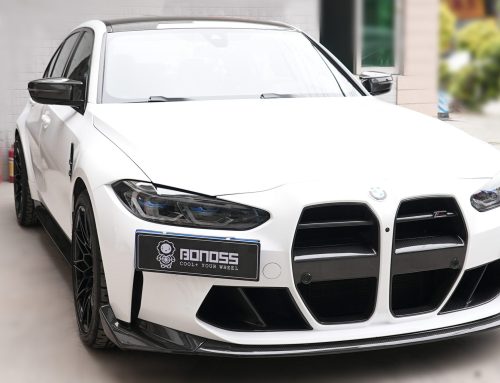
Frank Evans bought wheel spacers for one simple reason: the factory wheels sat too far inside the fenders, and the car looked like it was standing on its tiptoes. He installed a set of 2023 Honda Civic Type R 15mm wheel spacers up front, 20mm in the rear — on January 20, 2026, in about an hour. Frank has since put roughly 4,500 miles on the setup, including regular track time, with zero issues.
This is his install story, told with the actual measurements we took on his car. If you own an FL5 and you’re wondering whether 15mm spacers are safe, whether you’ll need to cut your factory studs, or how the stance changes, the numbers below answer all three questions with real data — not forum guesses.
The Problem: A Tucked-In Stance and Three Unanswered Questions
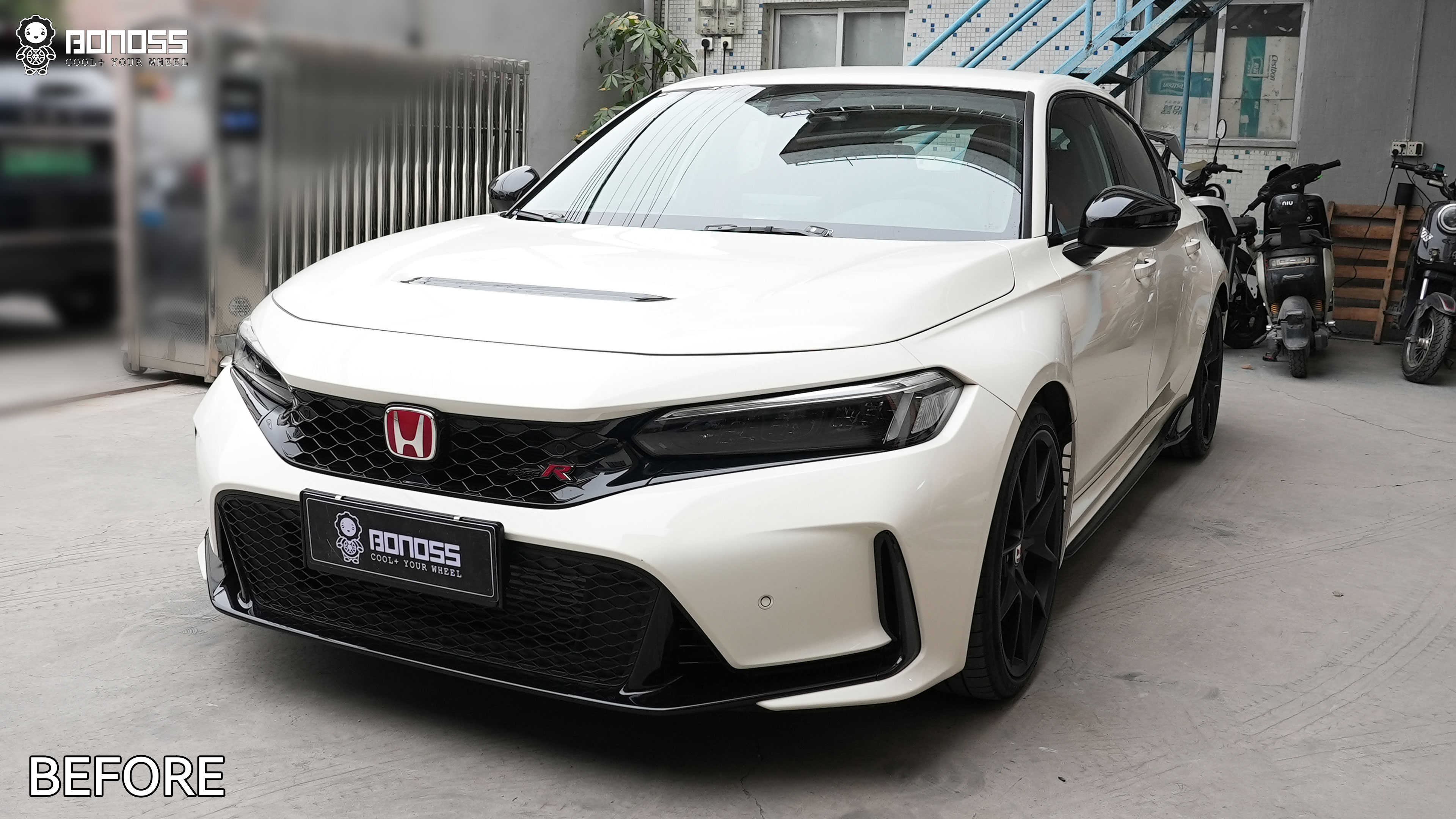
The FL5 Civic Type R ships with a tucked-in look. The factory 19-inch wheels (265/30R19, ET60 offset) sit noticeably inside the fender line. Frank wanted a flush stance — wheels sitting even with the fender edge — without touching the suspension.
Before buying, he had three concerns, and they’re the same three we hear from most FL5 owners:
1. How thick should I go? He knew he wanted flush, but had no idea whether that meant 10mm, 15mm, or 25mm.
2. Do I have to cut the factory studs? He’d read that 15mm spacers often require trimming the OEM studs — something he didn’t want to do.
3. Are wheel spacers safe on track? Frank drives his Type R at track days regularly. A spacer failure at speed is not an acceptable risk.
Measuring the Fender Gap
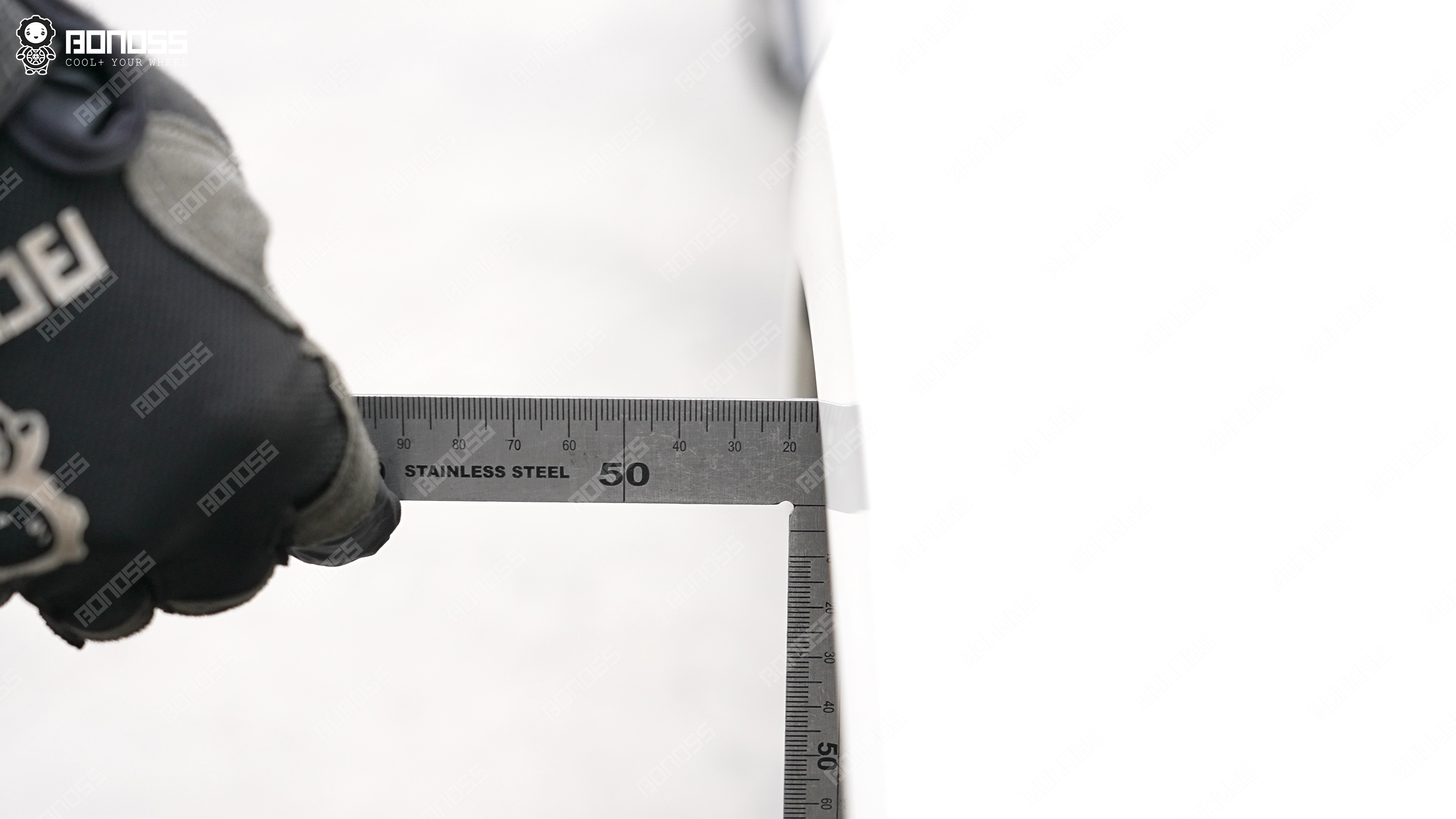
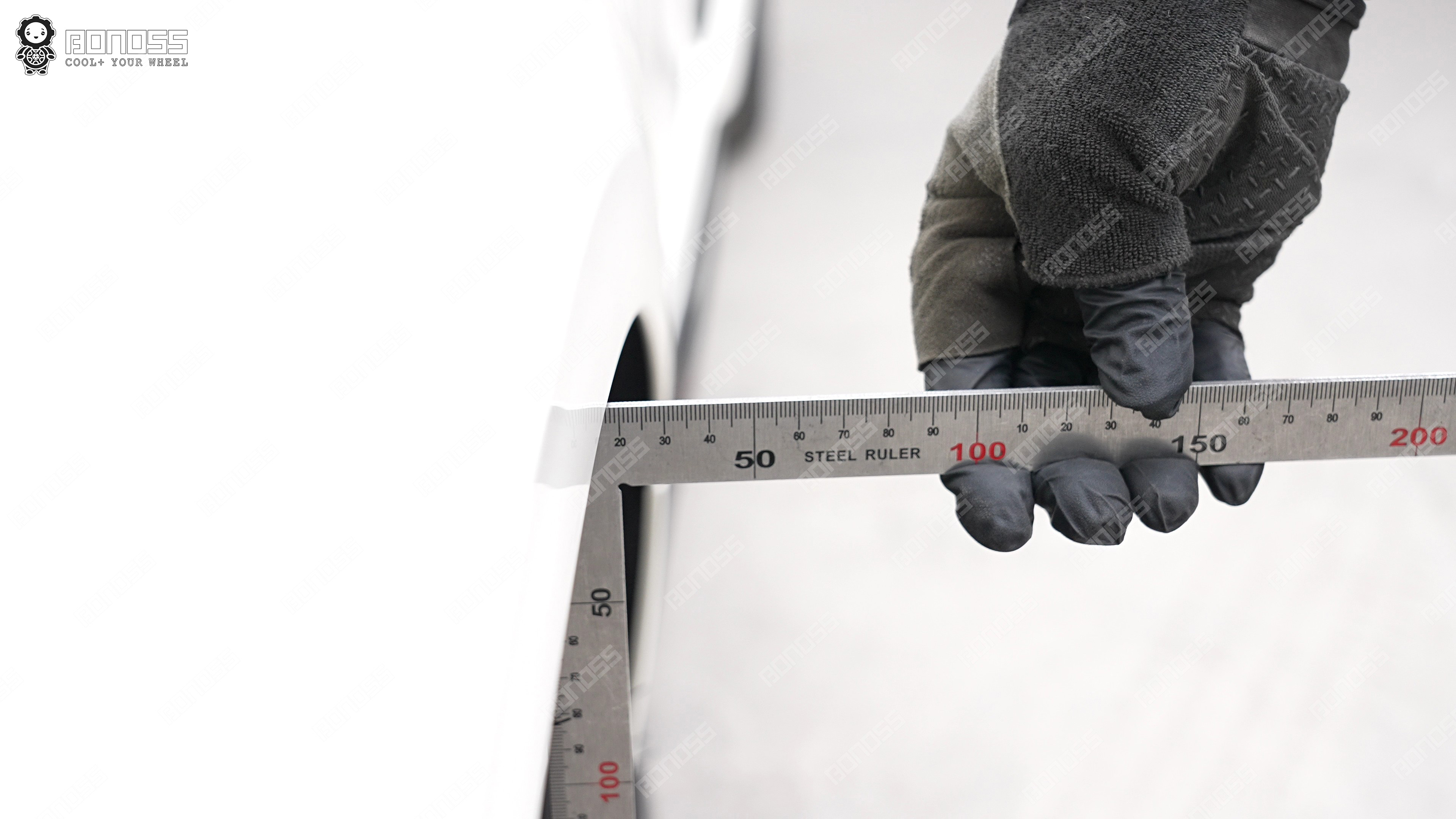
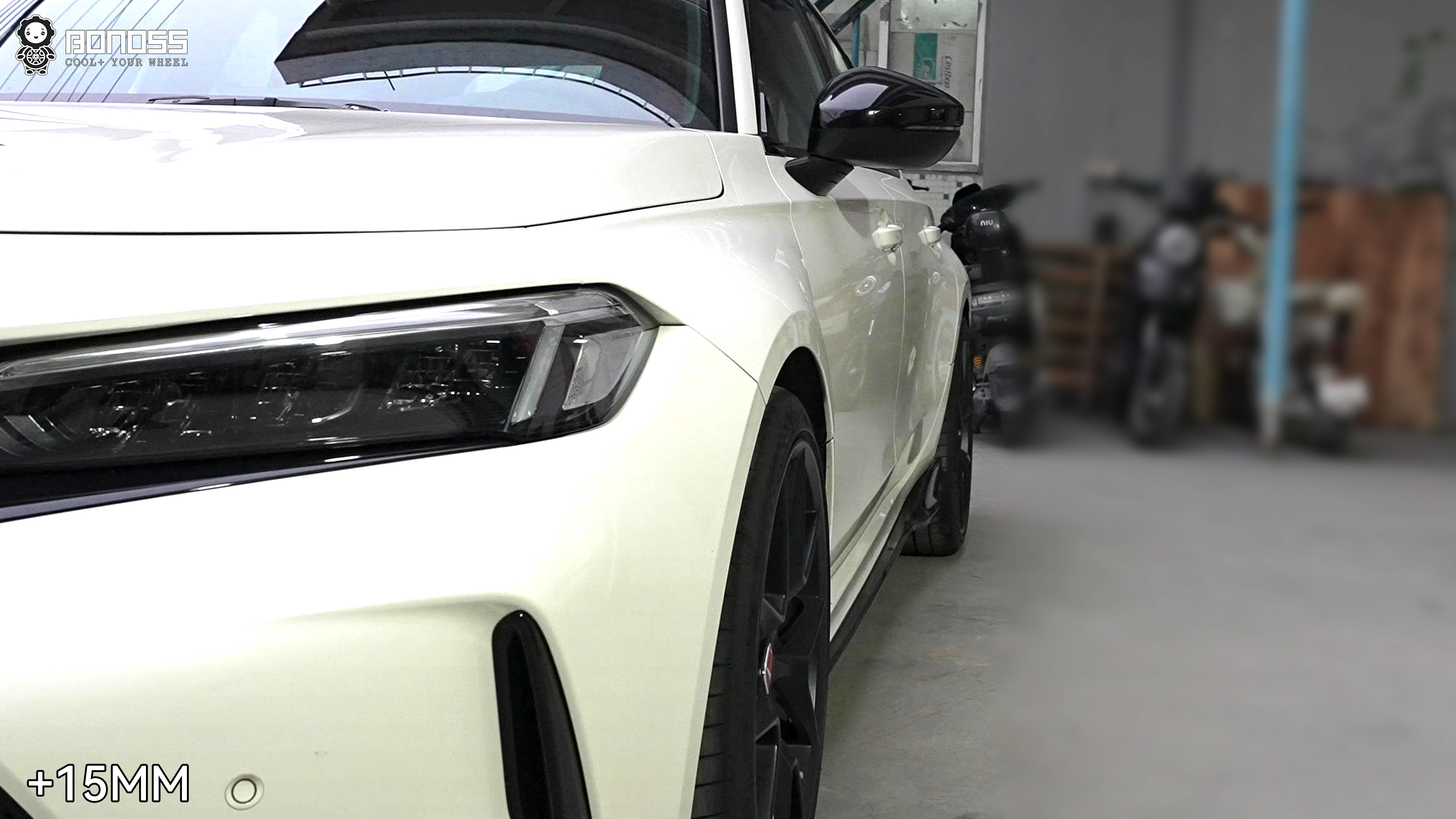
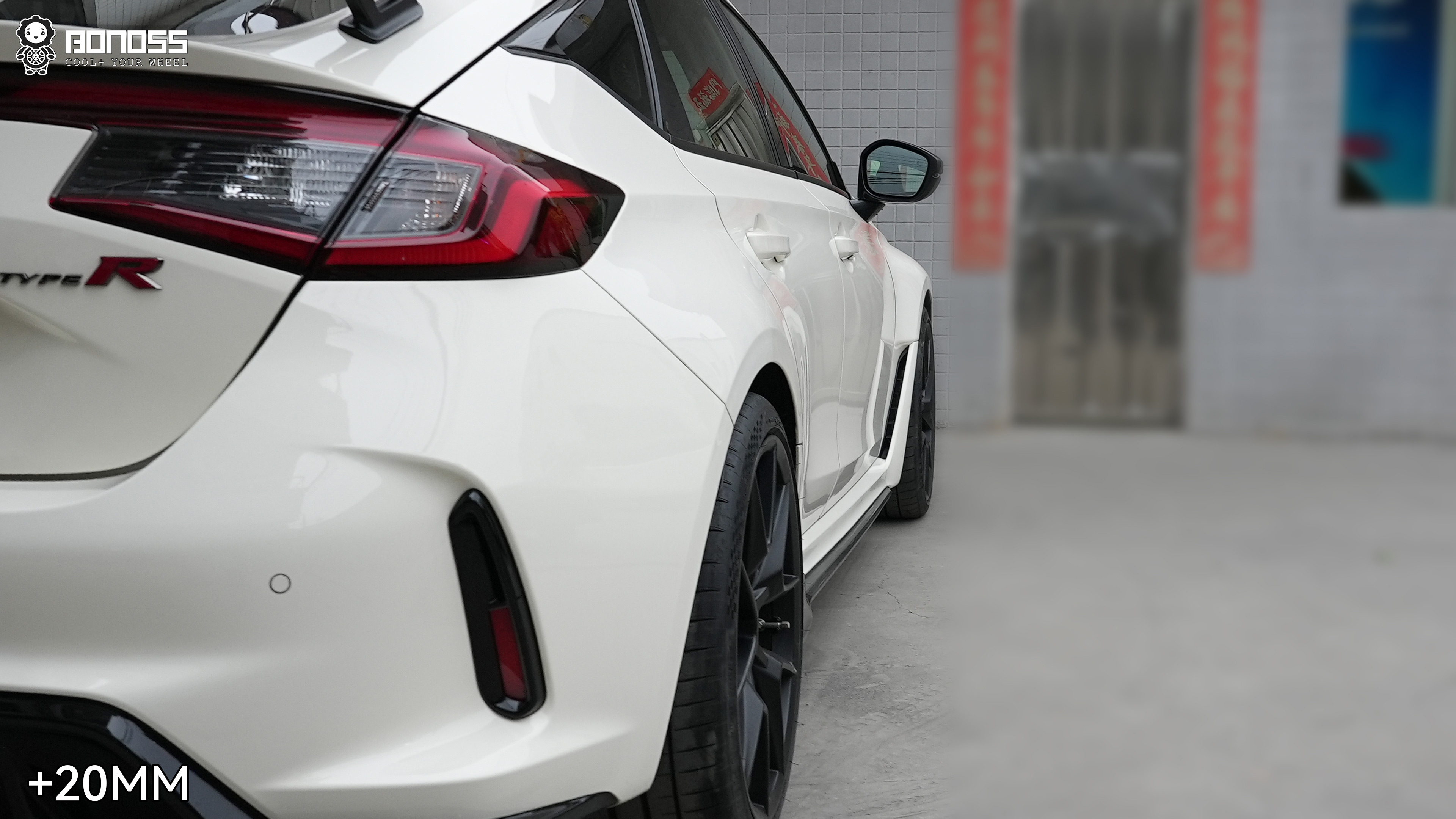
We started by measuring the actual gap between the tire sidewall and the fender edge with a high-accuracy ruler, with the car on level ground at factory ride height. The measurements pointed to a clear answer: 15mm up front and 20mm in the rear would bring the wheels flush with the fenders without pushing the tire into the arch liner. Anything thicker up front would have moved the sidewall past flush; anything thinner in the rear would have left a visible gap. Once installed, Frank confirmed the stance was exactly what he wanted: “Flush stance looks spot on now.”
Spec Quick Reference
| Item | Specification |
|---|---|
| Vehicle | 2023 Honda Civic Type R (FL5) |
| Bolt Pattern (PCD) | 5x120mm |
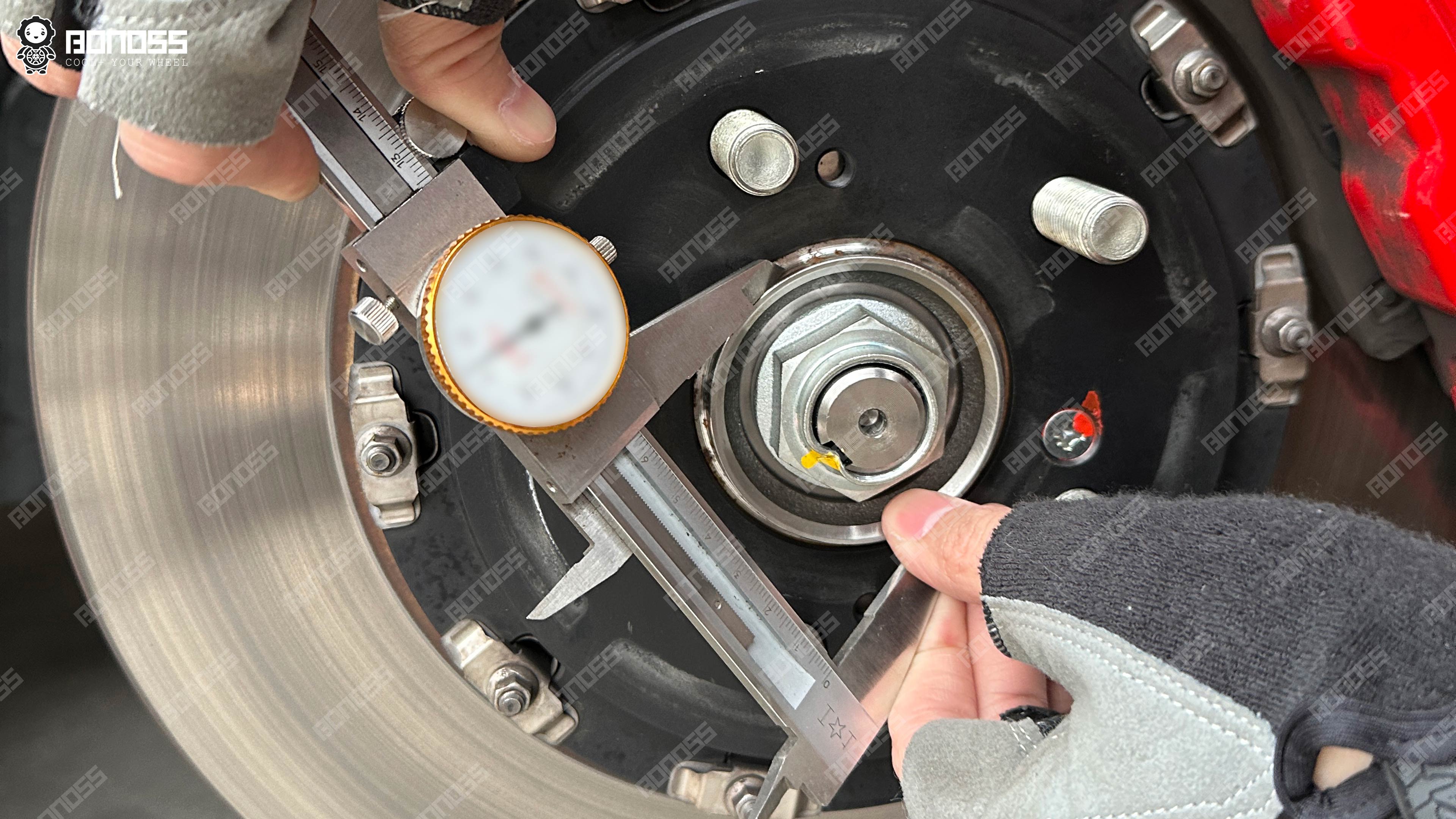
| Hub Center Bore (CB) | 64.1mm (this car measured 64.08mm) |
| Thread Size | M14x1.5, ball seat |
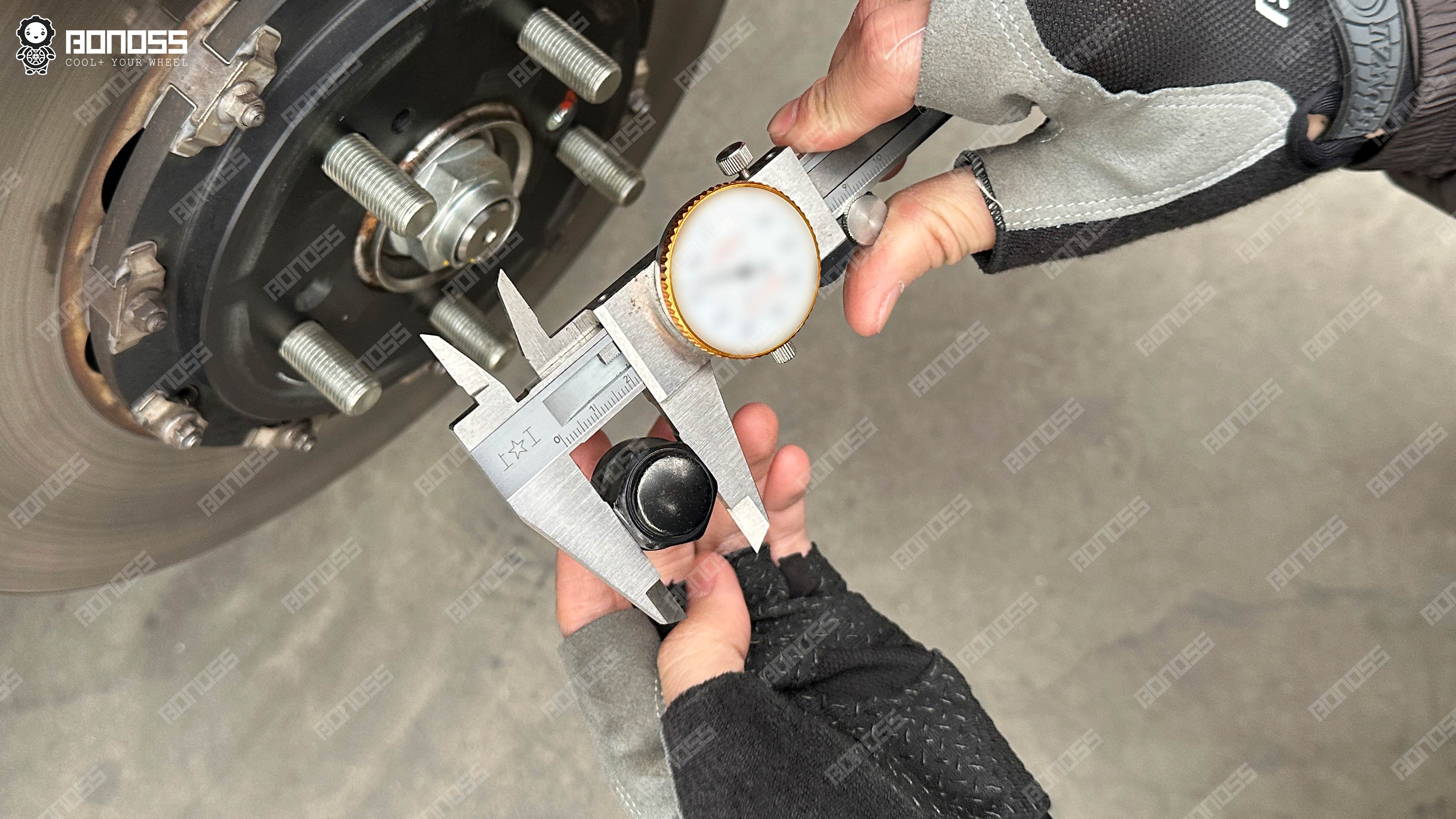
| Lug Nut Socket Size | 22mm hex (measured) |
| Factory Wheel Nut Torque | 94 ft-lb (127 Nm) per the owner’s manual |
| Recommended Torque | 103.5 ft-lb (140 Nm) per BONOSS installation instructions |
| Spacer Thickness | Front 15mm, Rear 20mm |
| Spacer Material | Forged 7075-T6 aluminum |
| Factory Wheel / Tire | 19-inch, 265/30R19, ET60 |
| Effective Offset After Install | Front ET45 / Rear ET40 |
| Vehicle hub lip | Front 5.58mm / Rear 7.36mm |
One thing to be clear about before you touch a torque wrench: pick a single torque value and use it for every fastener, start to finish. Either the BONOSS-recommended 103.5 ft-lb (140 Nm) or the factory 94 ft-lb (127 Nm) figure is acceptable. What you should never do is treat them as two steps, torquing the spacer studs to one value and the wheel nuts to another. One number, all fasteners, whole job.
Choosing 15mm Front / 20mm Rear: Fitment Math for the FL5’s 5×120 Bolt Pattern
Why the ET60 Factory Offset Matters
The FL5’s factory ET60 offset is high. That high offset is exactly why the stock wheels look tucked.
The math on a spacer is simple subtraction: every millimeter of spacer thickness reduces the effective offset by the same amount. Frank’s 15mm front spacers took the front wheels from ET60 to ET45, and the 20mm rear spacers took the rear to ET40. That’s a 15–20mm outward shift of the entire wheel — roughly 5/8 inch (15mm) up front and 3/4 inch (20mm) in the rear — which is what brings the tire face level with the fender.
The effect is a wider track width: 30mm (about 1.2 inches) wider across the front axle and 40mm (about 1.6 inches) wider across the rear. A wider track generally means more lateral stability and a slightly larger contact patch in corners — which Frank noticed immediately on track, and we’ll get to that in the 4,500-mile verdict below.
If you want to explore other thickness options and what each one does to offset and clearance, the Honda Civic Type R wheel spacer size guide covers the full range for the FL5 platform.
The 15mm Critical Point: Will the Factory Studs Fit?
Here’s the technical heart of this install, and the reason 15mm is a “critical value” on the FL5.
A 15mm bolt-on spacer is thinner than the exposed length of the factory wheel studs. Once the spacer sits on the hub, the OEM studs poke through the spacer face — on Frank’s car, by quite a bit. Whether that matters depends entirely on one thing: whether the pockets on the back of the wheel are deep enough to swallow the protruding studs. If they aren’t, the wheel can’t seat flat against the spacer, and you’d have to trim the studs or go thicker.
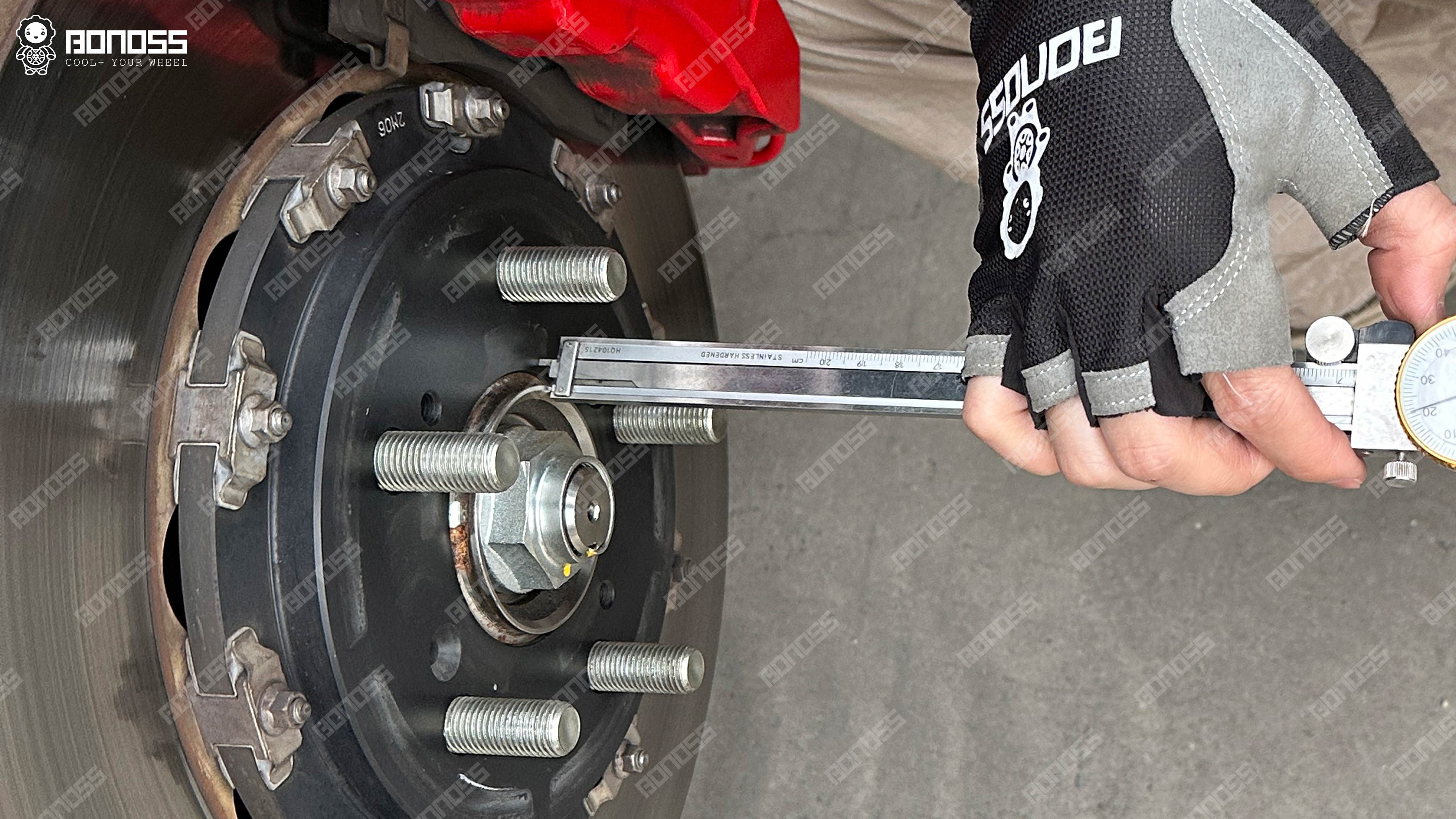
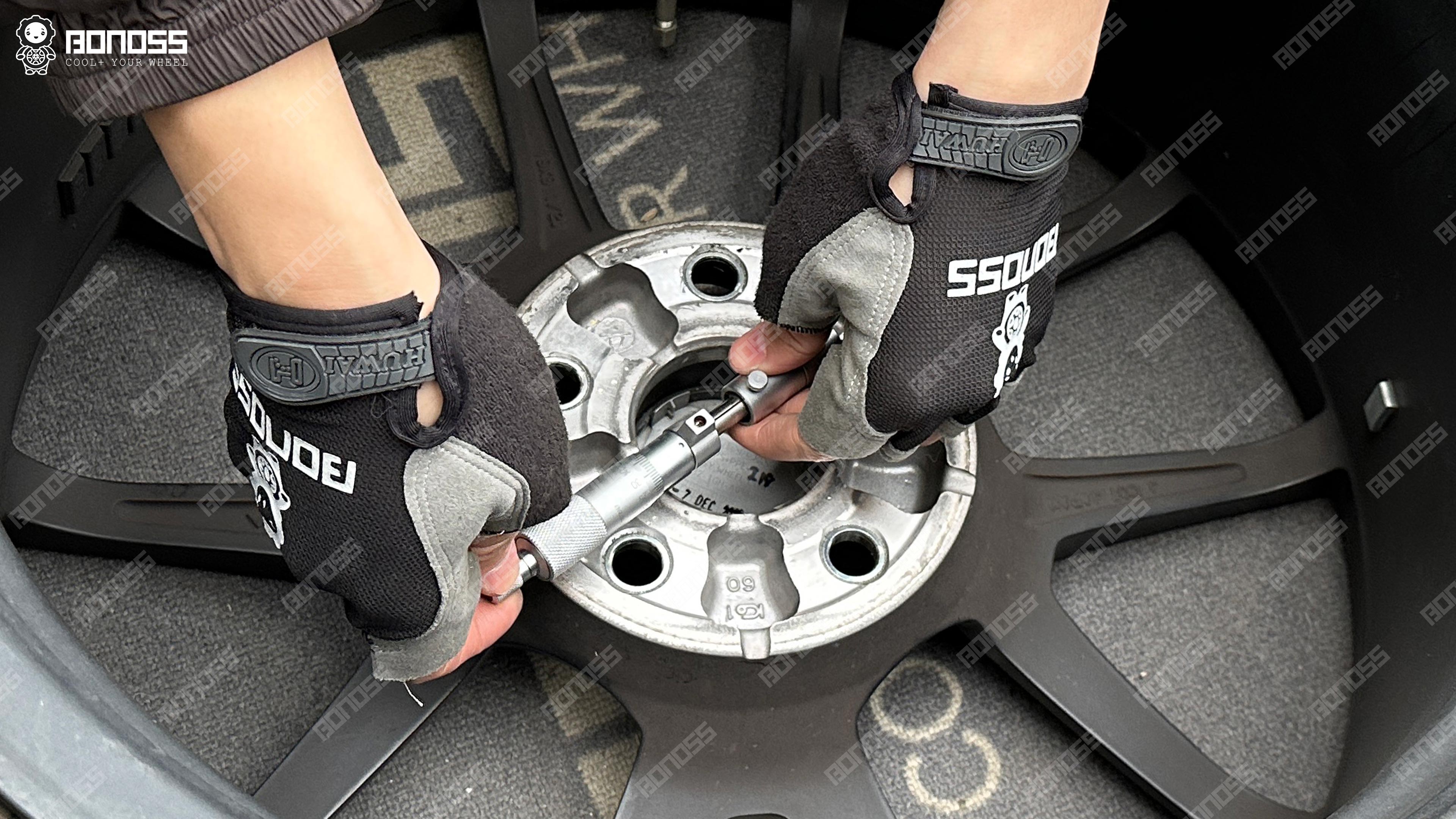
So we measured everything with a vernier caliper before committing to 15mm:
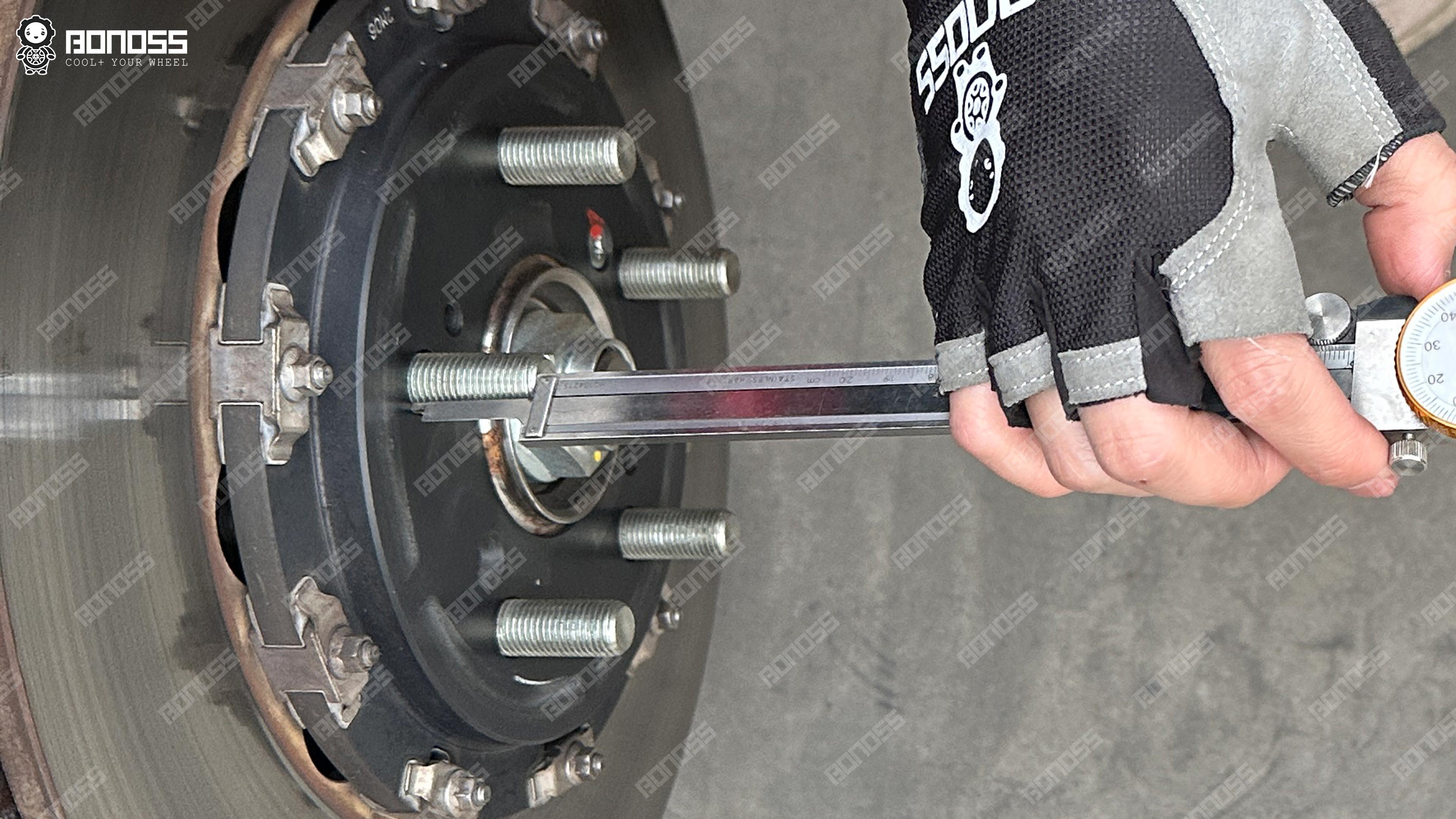
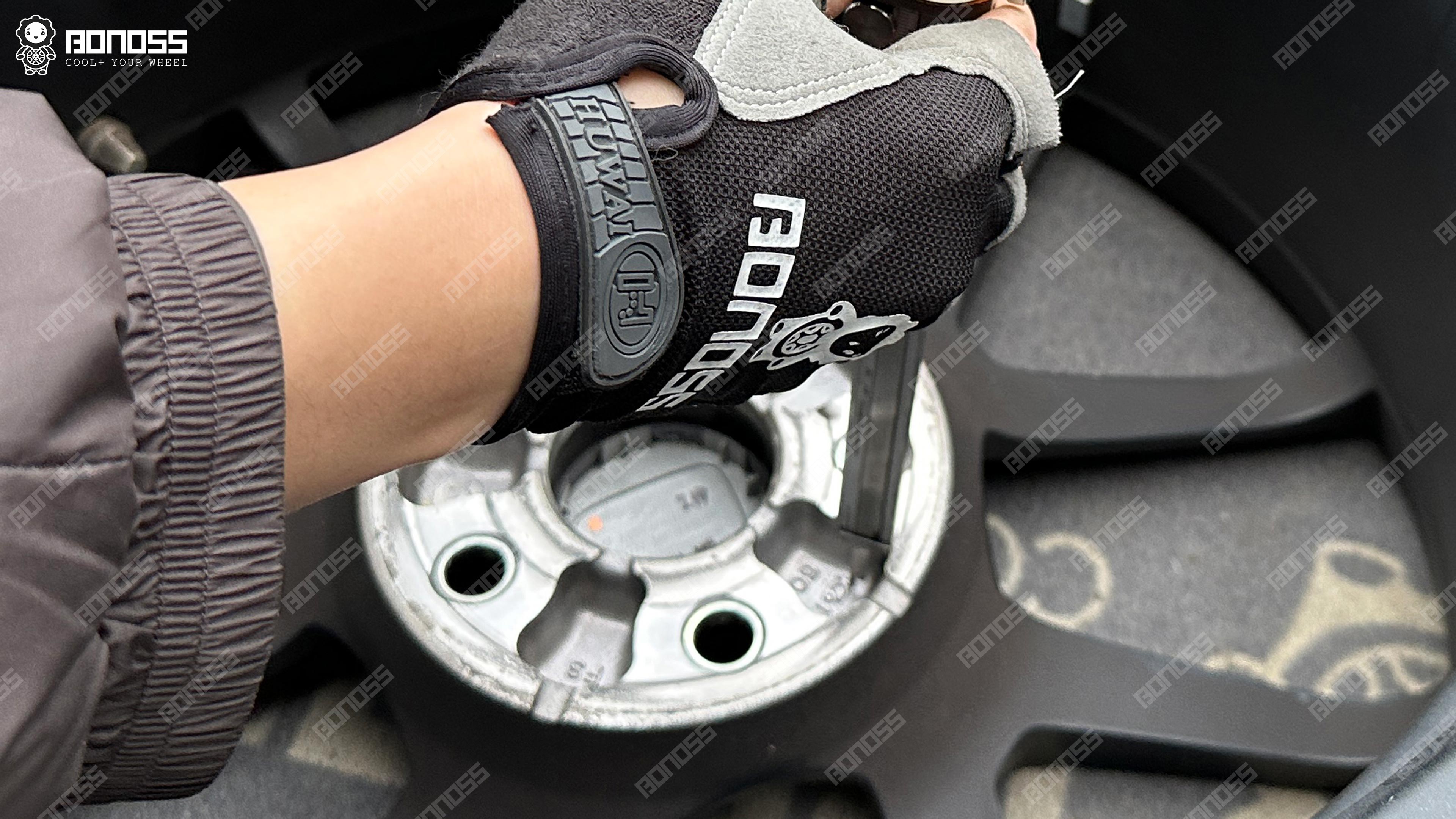
What the numbers say:
– Factory stud protrusion: 28.82mm front / 29.68mm rear
– Spacer thickness: 15mm
– Stud length poking past the spacer face: 13.82mm front / 14.68mm rear
– Wheel pocket depth (measured on the back of the factory wheel): 30.79mm
The pockets are more than twice as deep as the protruding studs. The wheel seats fully flat against the spacer with room to spare — no stud cutting required. One caveat worth stating plainly: this clearance result applies to the factory FL5 wheels. Aftermarket wheels have different pocket designs — some have shallow pockets or none at all. If you’re running aftermarket wheels, measure your own pockets the same way before assuming 15mm will work without trimming.
7075-T6 vs 6061-T6: Why Material Mattered for a Track Car
Frank chose the BONOSS forged 7075-T6 spacers over the more common 6061-T6 option, and for a car that sees track duty, the reasoning is sound. 7075-T6 is the stronger alloy — it’s the grade used in aerospace structural parts — with meaningfully higher tensile and yield strength than 6061-T6.
This isn’t just a spec-sheet claim. The spacers carry independent lab certification:
– TÜV test report (7075-T6 spacer material): hardness measured at 146 HBW per ISO 6506-1:2014 — see the TÜV hardness test for BONOSS 7075-T6 spacers.
– SGS test report (ISO Grade 12.9 studs, M14x1.5): tensile strength of 1,268 MPa, proof load of 121 kN, hardness of 391–401 HV10.
– TÜV test report (ISO Grade 12.9 studs, M14x1.5): tensile strength of 1,233 MPa, proof load of 121 kN, hardness of 386–390 HV10.
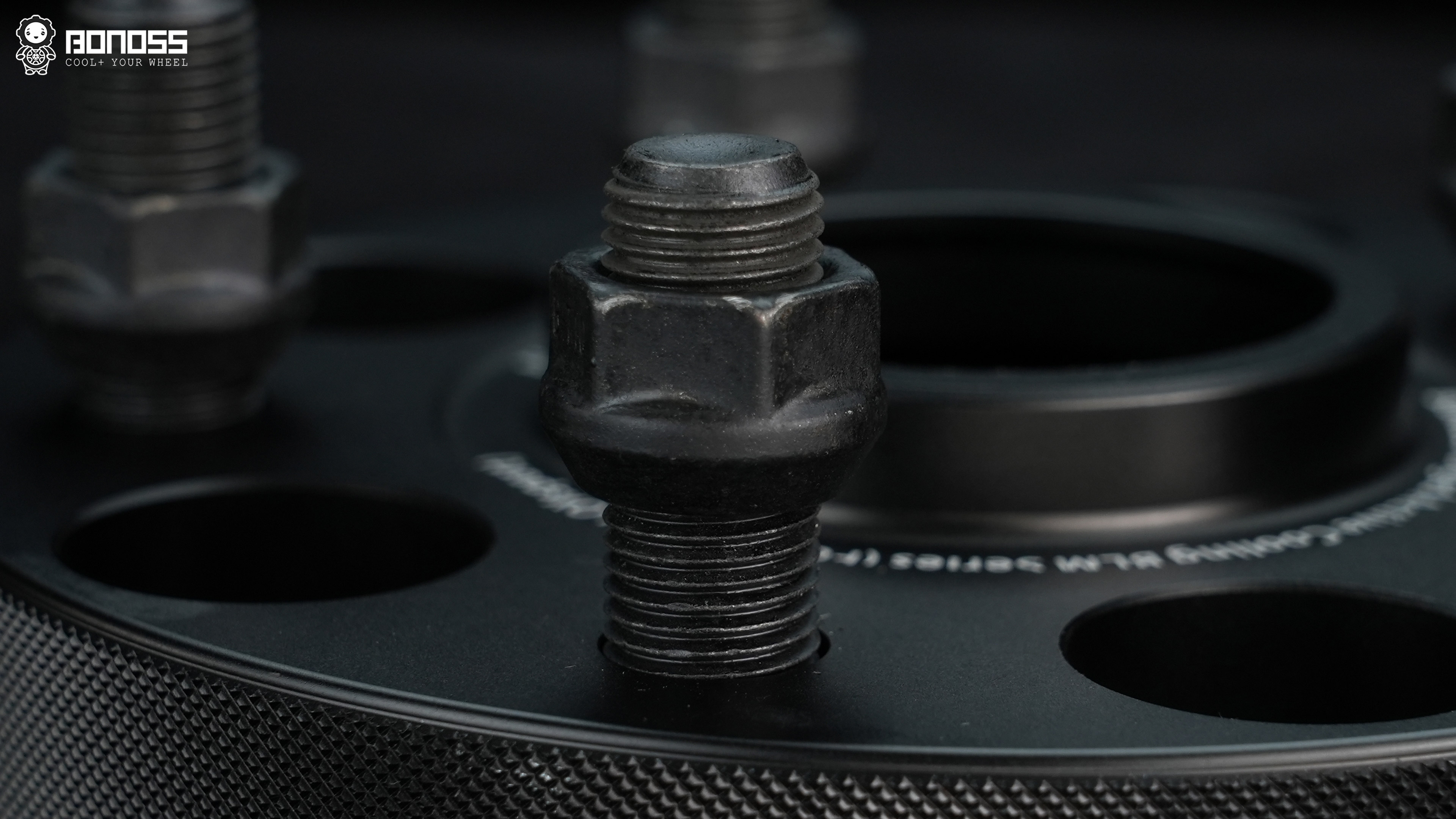
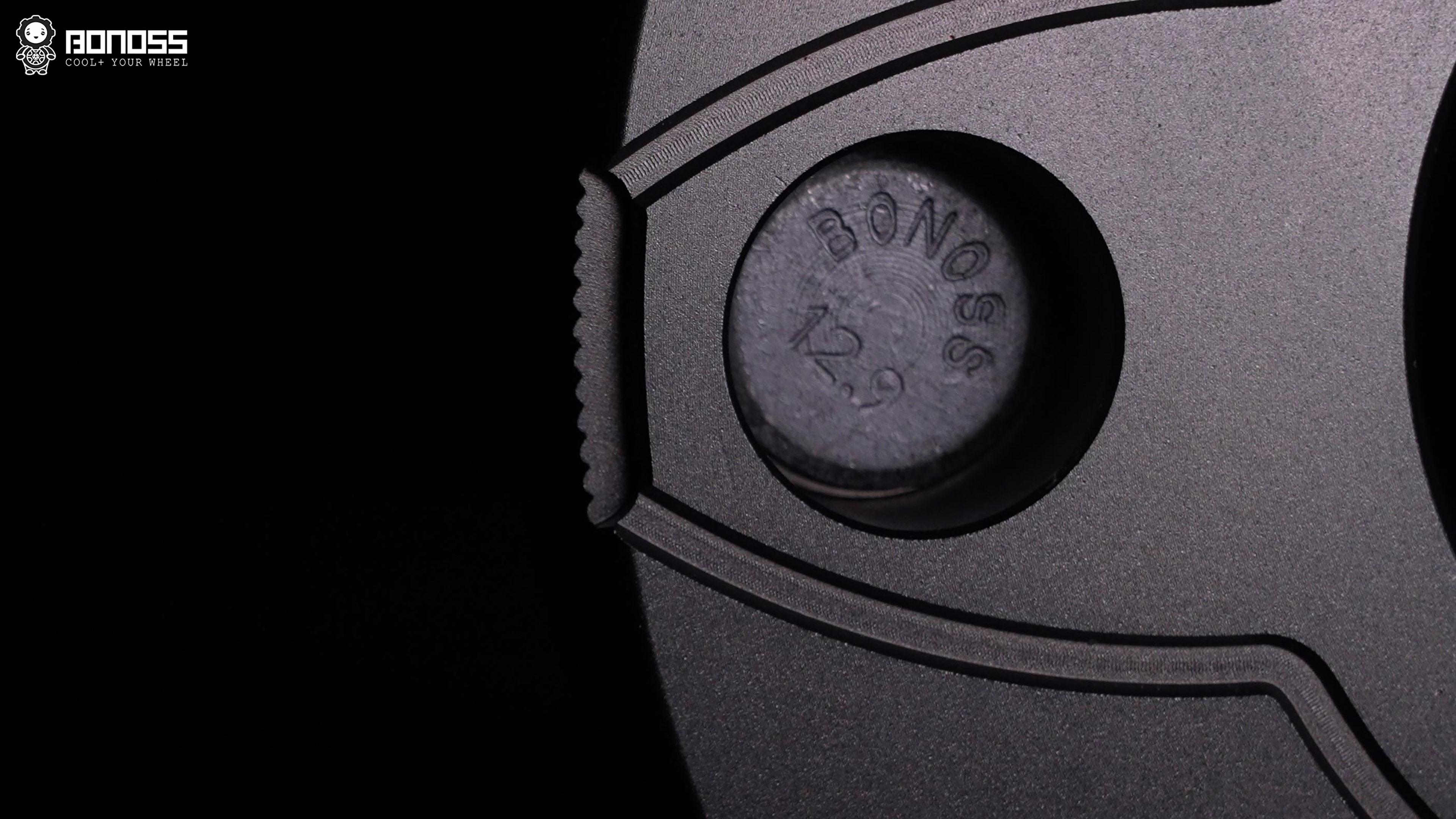
You’ll notice the SGS and TÜV numbers for the studs aren’t identical — 1,268 MPa vs. 1,233 MPa tensile strength, and slightly different hardness ranges. That’s normal. Different labs, different test samples, and measurement uncertainty produce different readings, and nut test values differ from stud values because the parts and thread engagements aren’t the same. What matters is that every report, from both labs, lands well above the ISO Grade 12.9 minimums. The full certificates are published on the BONOSS site if you want to read the raw data.
Installation: One Hour, Start to Finish
Total install time on the FL5 was about an hour — all four corners. The FL5’s hub uses a 5×120 bolt pattern with an M14x1.5 thread and a ball-seat contact face, and the factory nuts take a 22mm socket. Because the BONOSS spacers are hub-centric and machined to the FL5’s 64.1mm center bore, each spacer pilots onto the hub lip — the 5.58mm front / 7.36mm rear step we measured earlier — with no play. Hub-centric fitment means the spacer (and then the wheel) is located by the hub, not hanging off the studs, which is what keeps things vibration-free at speed.
The install sequence per corner: remove the wheel, clean the hub face, seat the spacer on the hub, thread the supplied nuts onto the factory studs, torque them, then mount the wheel onto the spacer’s pre-installed studs and torque the wheel nuts. Because these are bolt-on spacers with their own pre-installed studs, there’s no need to buy or install extended studs — the factory studs only hold the spacer, and the spacer’s own studs hold the wheel.
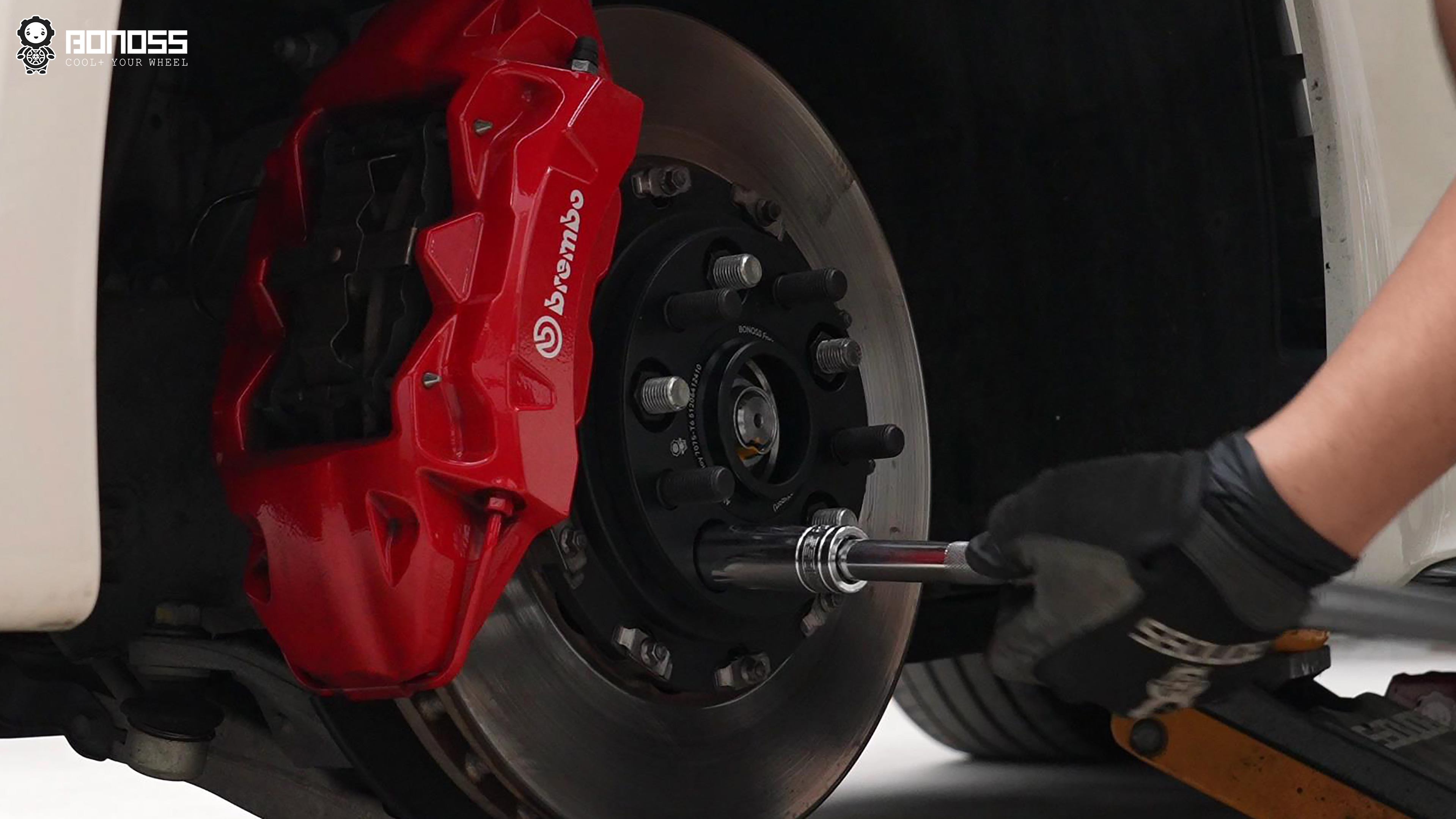
Torque: Pick One Value and Use It Everywhere
Worth repeating because it’s the most common installation mistake: use one torque value for the entire job. Frank torqued everything — spacer-to-hub nuts and wheel nuts alike — to the BONOSS-recommended 103.5 ft-lb (140 Nm). The factory 94 ft-lb (127 Nm) spec from the owner’s manual is equally acceptable. Either one, applied uniformly to all fasteners, is correct. Mixing the two values on different fasteners is the one wrong answer.
Re-check torque after the first 50–100 miles of driving, and again after any track session. That’s good practice with any wheel hardware, spacers or not.
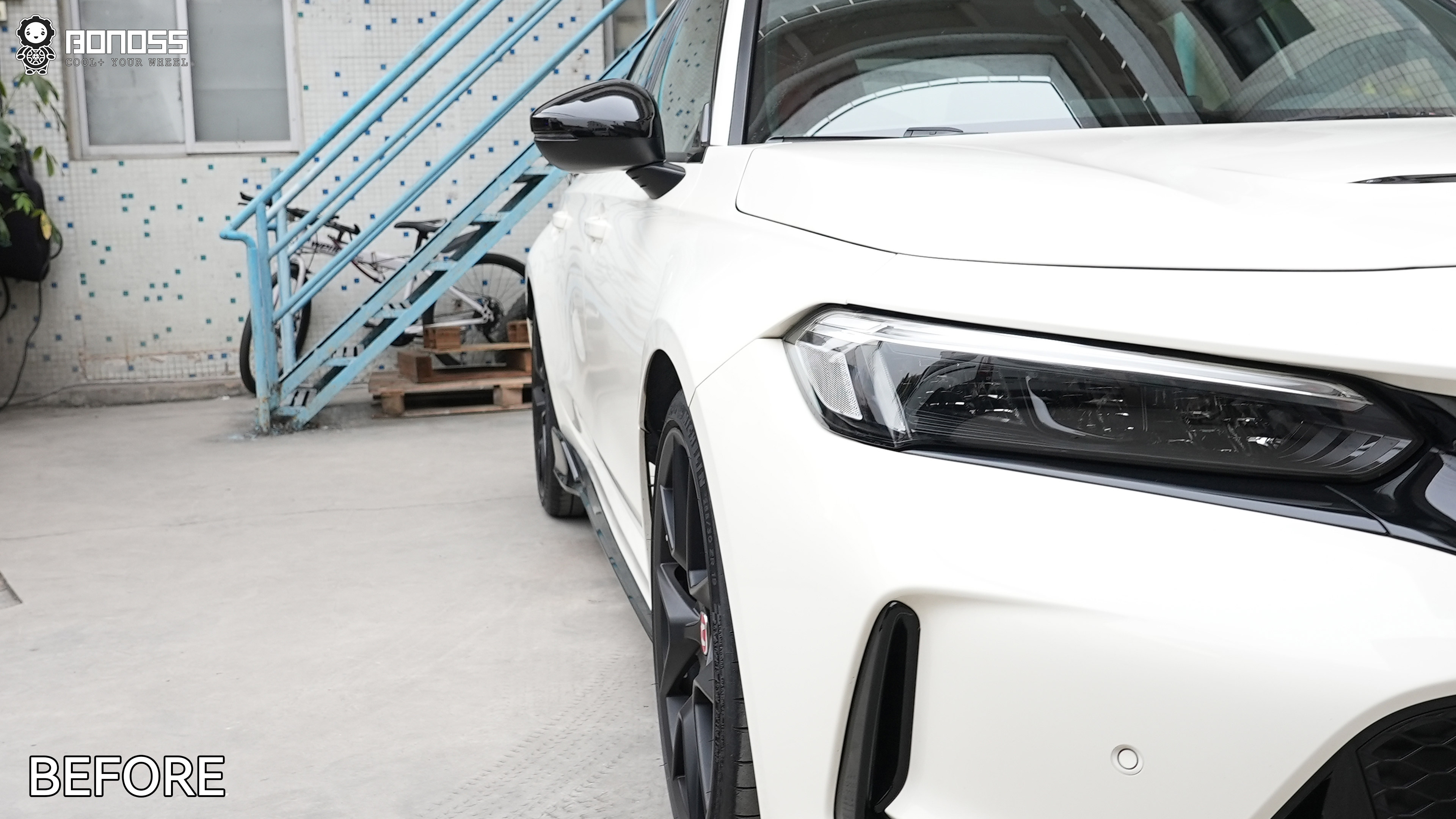
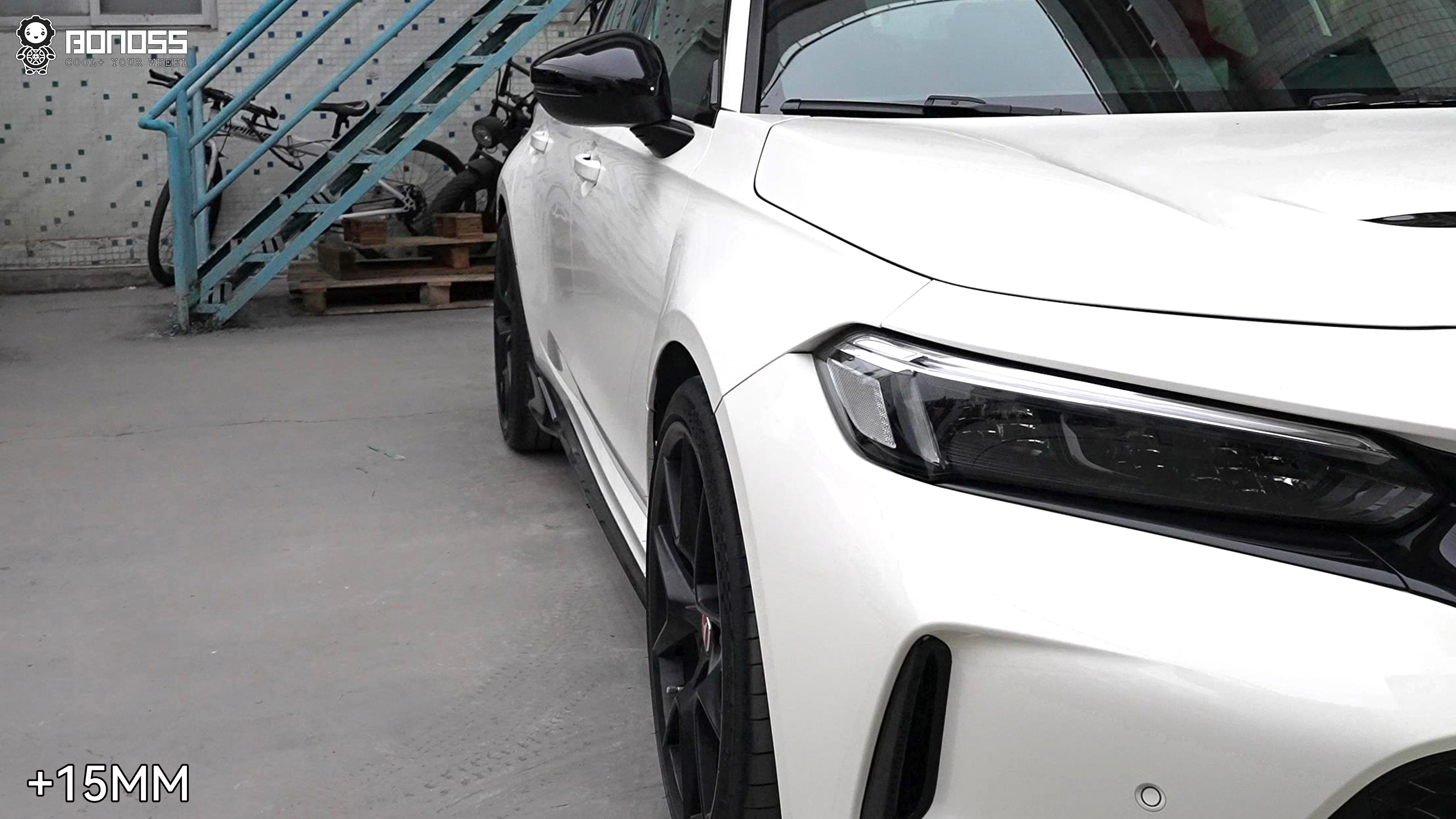
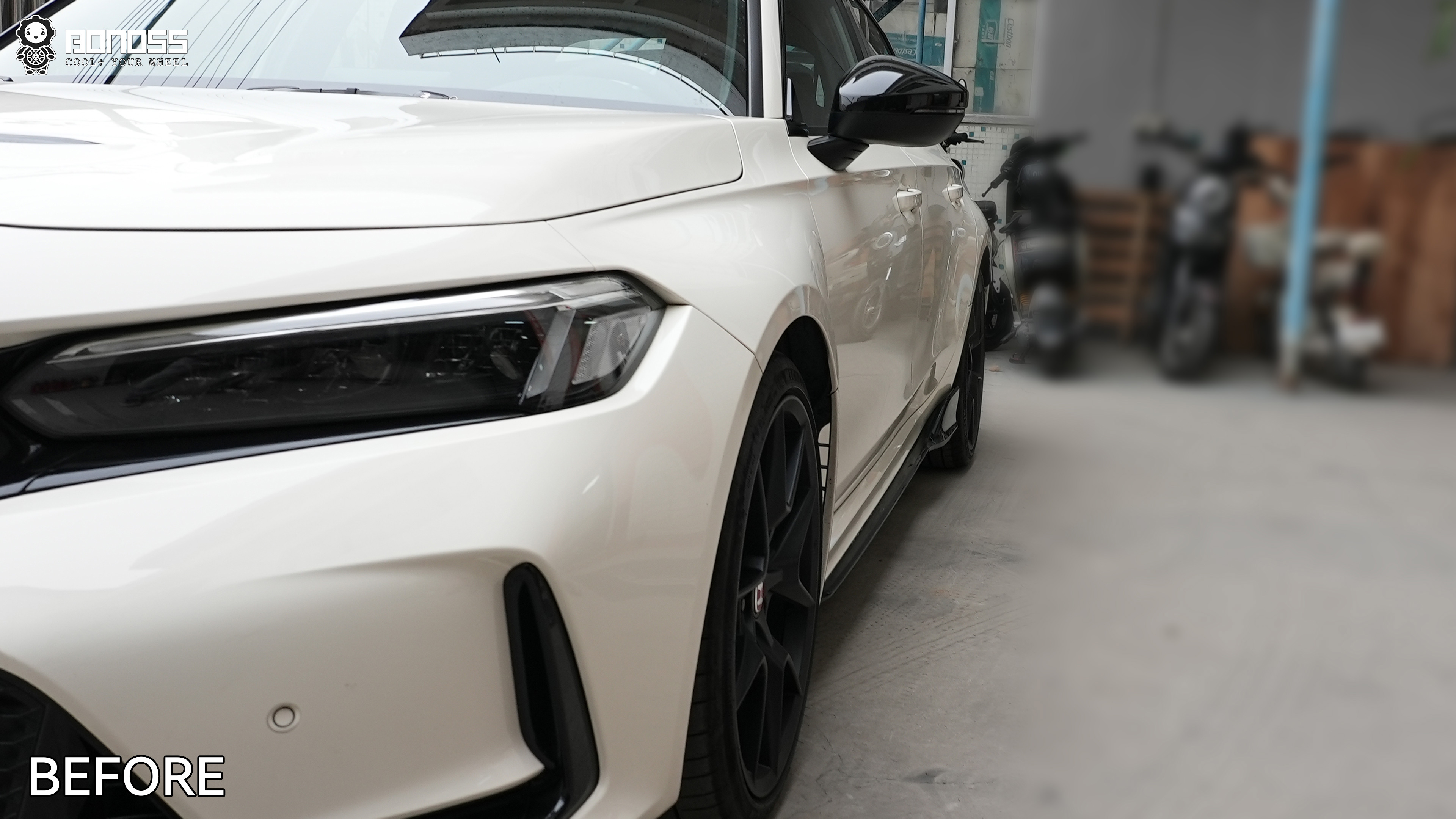
Before and After: Every Corner
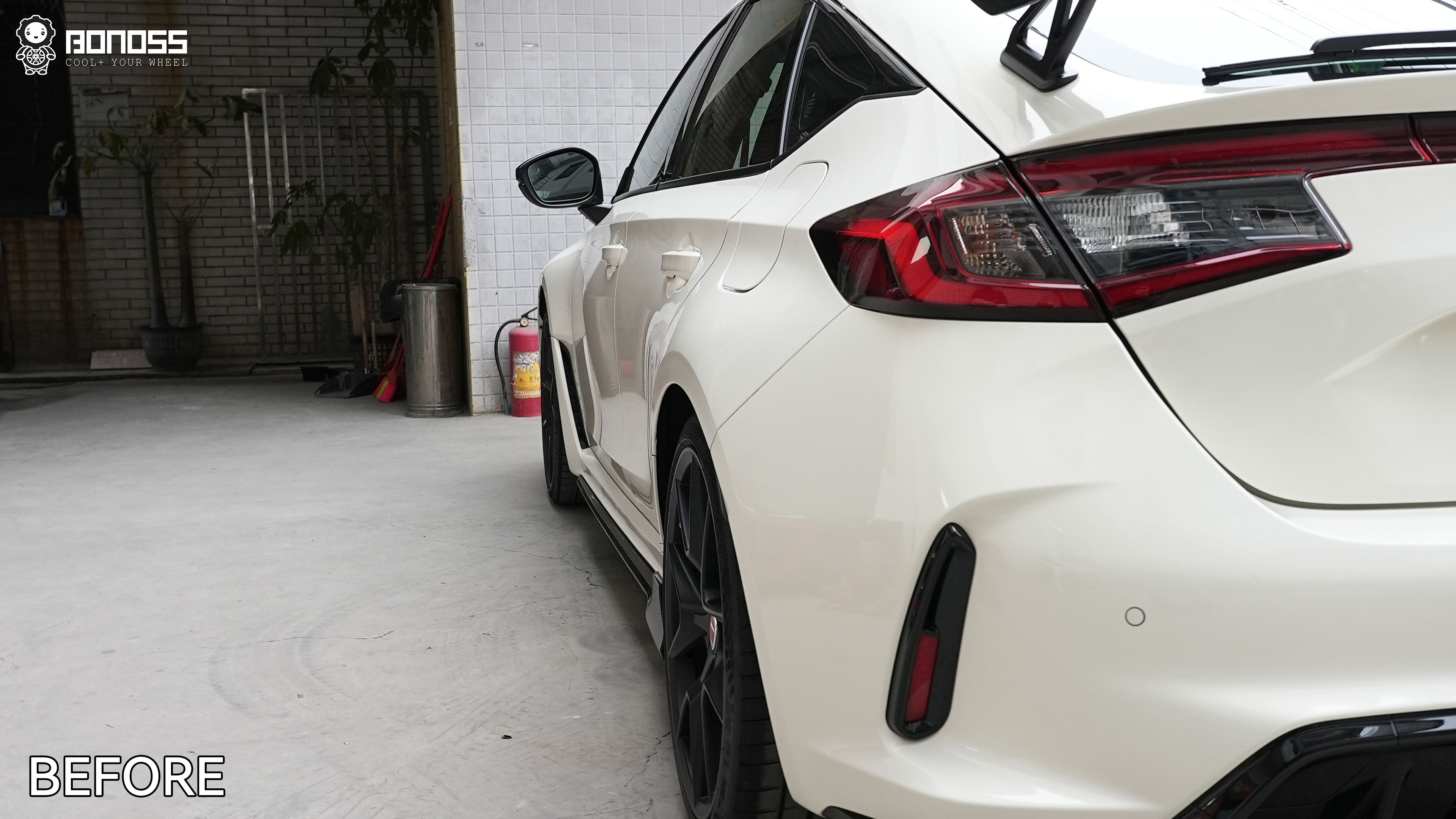
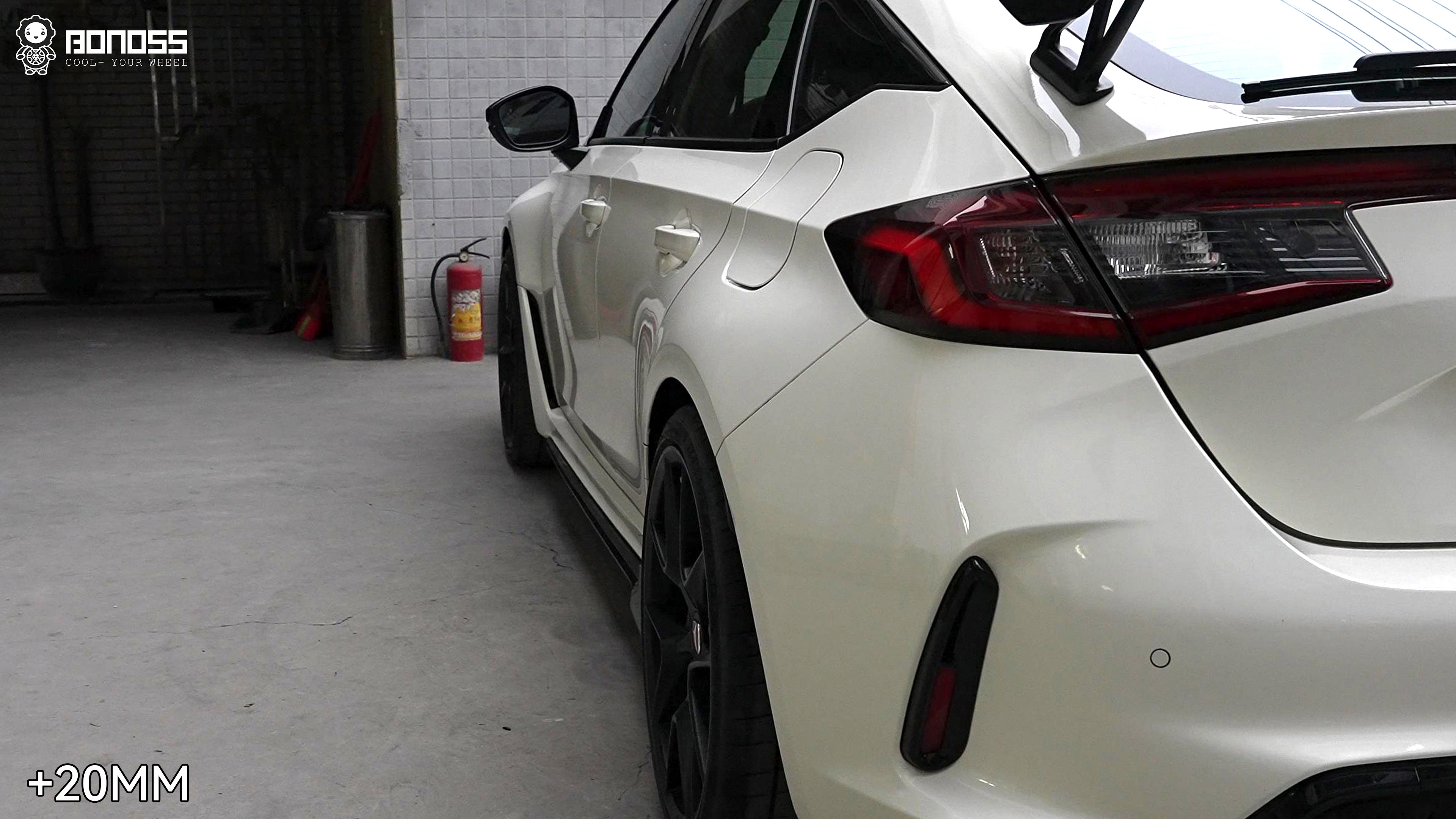
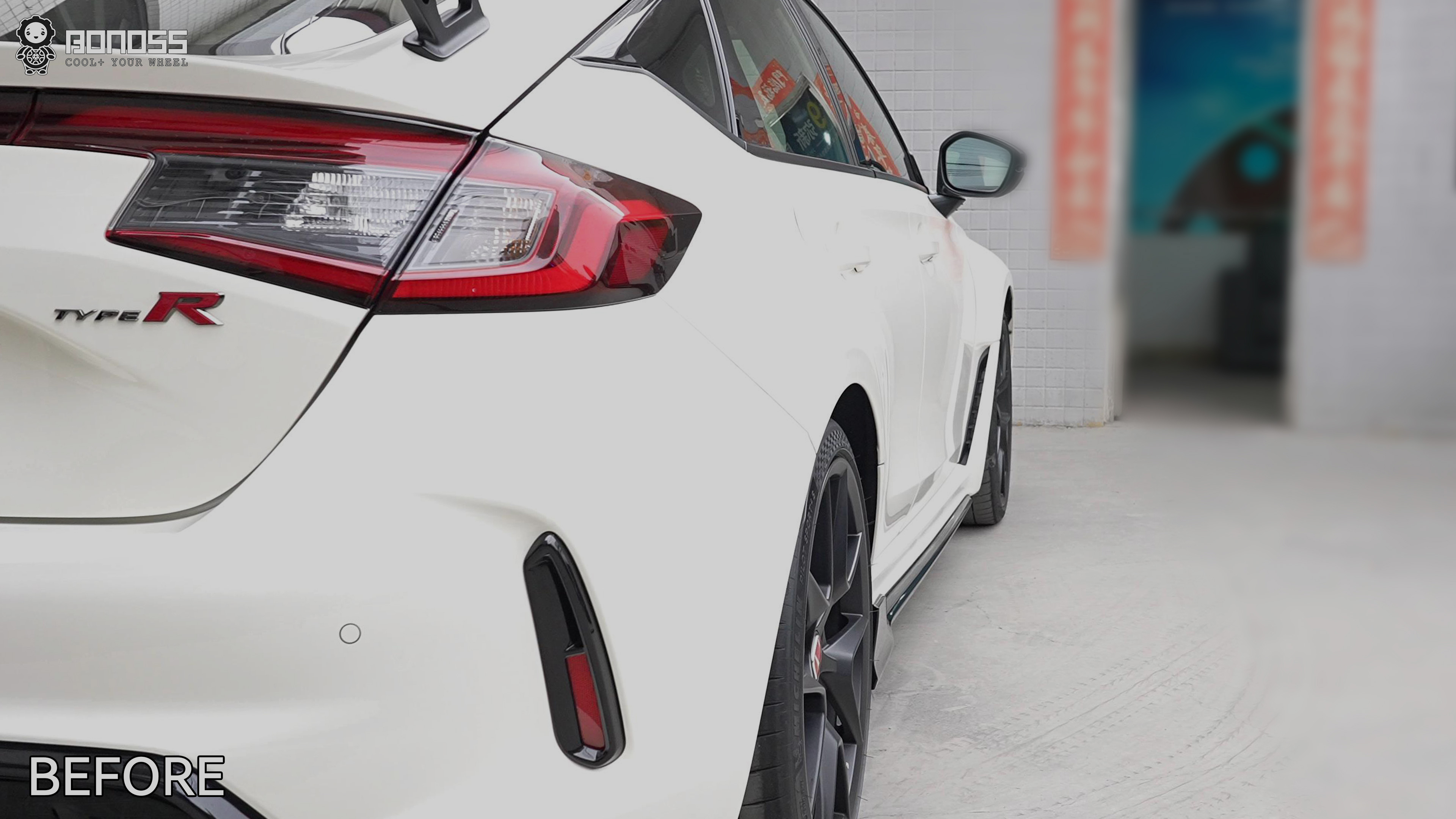
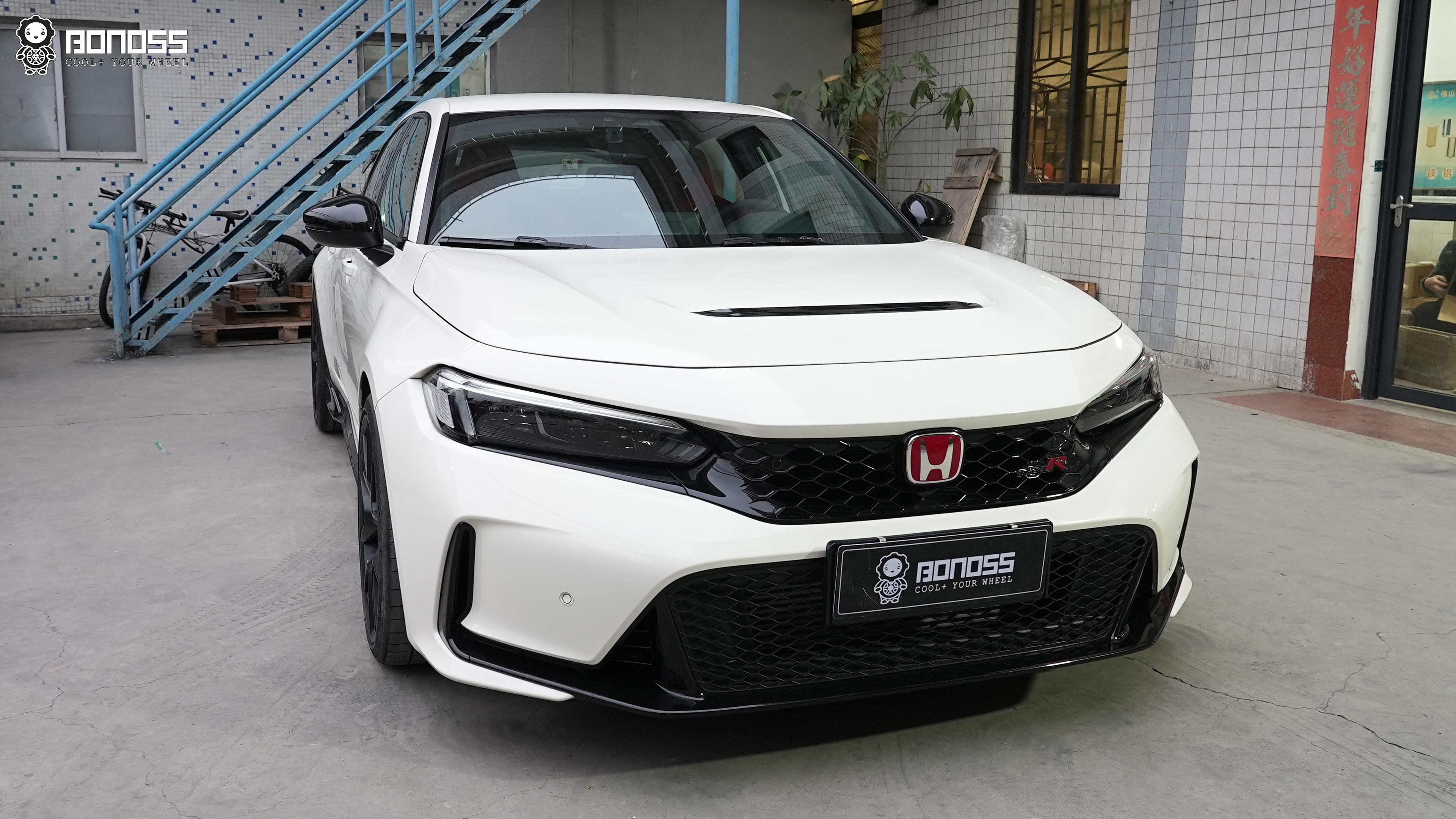
The difference is visible from any angle. No rubbing, no contact with the fender liner at full lock or full suspension compression, and no clearance issues with the factory brake calipers. If you’re weighing up thickness options, the 15mm front / 20mm rear split is the flush sweet spot on a 2023 Civic Type R FL5 with factory wheels; you can compare how the two thicknesses look side by side in this Civic Type R 15mm vs 20mm spacer breakdown. Here’s each corner, before and after:
4,500 Miles Later: The Verdict
Frank has now driven roughly 4,500 miles on the spacers since the January 20 install — street miles plus regular track days. Here’s his own summary:
“Picked up BONOSS spacers for my 2023 FL5 and they’re amazing. Don’t even have to cut the studs running 15mm. Quality is top-notch — these are the only spacers I’d trust on track. About 4,500 miles in, no issues at all. The difference in handling and stability really surprised me.”
On the safety question — the one that matters most for a track car — his take after 4,500 miles:
“7075-T6 is definitely the stronger choice over 6061-T6. Perfect for someone like me who hits the track regularly. I don’t settle when it comes to performance.”
And on the install experience and cost:
“BONOSS made it easy to pick the right size spacers for my FL5. Install was quick and they fit with zero issues… The price was fair, even after labor. 5/5.”
Total cost for the setup, spacers plus labor: about $400 USD. No vibration at highway speed, no loosened hardware at re-check, no unusual tire wear patterns, and no bearing or hub issues to report at the 4,500-mile mark. The wider track translated into noticeably more stability in fast transitions, which matches what the track-width math predicts.
FAQ
Are 15mm wheel spacers safe on a 2023 Civic Type R?
Yes — with hub-centric spacers, correct torque, and quality hardware, 15mm spacers are safe on the FL5, including for track use. Frank’s car is the evidence: 4,500 miles with regular track days, zero issues. The safety case rests on three things: hub-centric fitment (the hub carries the load, not the studs), forged 7075-T6 material with TÜV-certified hardness, and ISO Grade 12.9 studs with a certified proof load of 121 kN. A cheap lug-centric cast spacer is a different story — that’s where most “spacers are dangerous” stories come from.
Do I have to cut the wheel studs for 15mm spacers on an FL5?
No — not with the factory FL5 wheels. We measured it: the factory studs protrude 28.82mm (front) and 29.68mm (rear), leaving about 13.8–14.7mm exposed past a 15mm spacer, and the factory wheel pockets are 30.79mm deep. The wheel seats flat with the studs fully inside the pockets. The exception: some aftermarket wheels have shallow or no pockets, so measure your own wheels first.
Do I need extended studs for 15mm spacers?
No. Bolt-on spacers like these come with their own pre-installed studs. The factory studs hold the spacer to the hub, and the spacer’s studs hold the wheel — your original stud length is never the limiting factor. Extended studs are only a consideration with slip-on spacers, which are a different product entirely.
What is the bolt pattern on a 2023 Honda Civic Type R?
The FL5 Civic Type R uses a 5x120mm bolt pattern with a 64.1mm center bore and M14x1.5 wheel studs. That 5×120 PCD is shared across the FK2, FK8, and FL5 generations of the Type R, which is why spacers for these cars are largely cross-compatible — but always confirm the center bore and thread size for your specific year.
Will 20mm spacers rub on an FL5?
On a stock-bodied FL5 with factory 265/30R19 wheels and tires, 20mm rear spacers do not rub — that’s exactly what Frank runs, with 4,500 trouble-free miles including track use. Up front, 20mm would push the wheel past flush and risks contact with the fender edge under compression; 15mm is the right front thickness for a flush look. If your car is lowered or running wider-than-stock tires, re-check clearances before choosing a thickness.
What torque should I use for Civic Type R wheel spacers?
Use one value for every fastener: either 103.5 ft-lb (140 Nm) per BONOSS installation instructions, or the factory 94 ft-lb (127 Nm) per the owner’s manual — both are acceptable. The only wrong approach is mixing the two values on different fasteners. Re-torque after the first 50–100 miles.
Conclusion: The FL5’s Flush Stance, Sorted for $400
Frank’s 2023 Honda Civic Type R 15mm wheel spacers — 15mm front, 20mm rear, BONOSS forged 7075-T6 — delivered exactly what he wanted: a flush stance, no stud cutting, no rubbing, and no safety compromises, proven over 4,500 miles of street and track driving. The whole job took about an hour and cost around $400 (including labor).
If your FL5 has the same tucked-in factory stance, the measurements in this article are your roadmap: check your wheel pockets, confirm your fender gap, pick one torque value, and the rest is an hour in the driveway. The BONOSS forged active cooling hub-centric wheel spacers (5×120, 64.1mm CB) for the Honda Civic Type R are the exact set Frank runs. Get your set now!

About Robert Wall
Robert Wall is a Senior Automotive Engineer at BONOSS with over 9 years of experience in automotive component R&D, specializing in the structural design and safety validation of wheel spacers, wheel adapters, and high-strength fasteners. He is actively involved in product testing and on-track evaluation and is dedicated to translating engineering expertise into accessible modification knowledge — helping enthusiasts upgrade their vehicle’s stance and handling without compromising safety.