
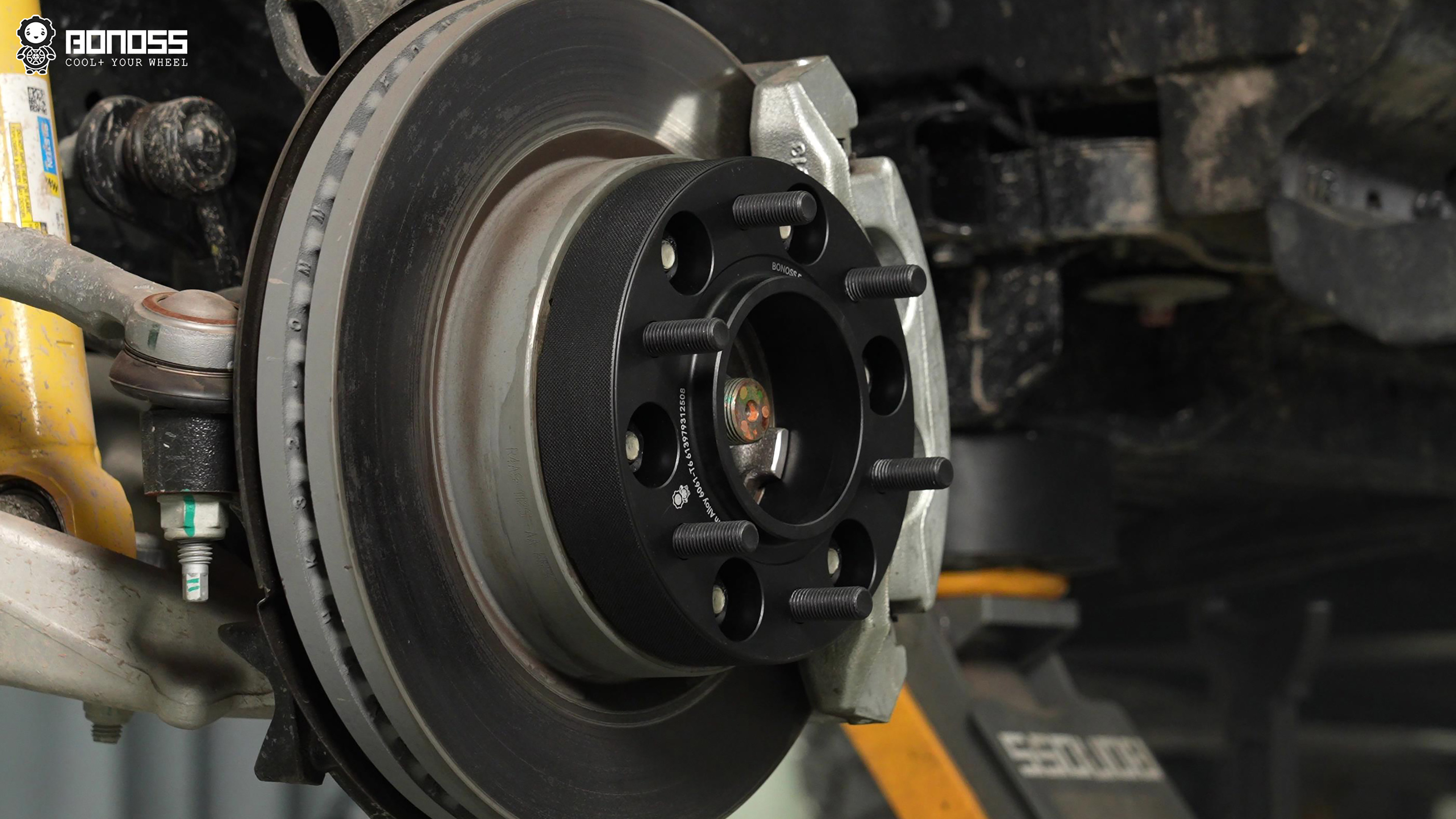
Looking for the right Bronco wheel spacers? This complete fitment chart walks you through everything you need to know, including the Bronco bolt pattern, center bore, thread size, wheel offset, and the suggested spacer sizes. We emailed 40+ owners in June 2026 to collect real data. “17.4 mpg over 40,000 miles”. That’s what one of our customers averaged on his 2022 Bronco Badlands after adding 1.5-inch spacers. In this post, let’s walk through a few questions. But first, let’s check out the basic data about one of the most adventurous vehicles on and off the road.
1966-2027 Ford Bronco Bolt Pattern & Torque Chart
| Model | Bolt Pattern | Center Bore | Thread Pitch | Wheel Offset | Suggested Spacer Sizes | Lug Nut Torque |
|---|---|---|---|---|---|---|
| 2021-2027 Bronco Base | 6×139.7mm | 93.1mm | M12x1.5 | 7Jx16 ET55 | 1 inch to 1.5 inches | 100 ft-lb / 135 Nm |
| 2021-2027 Bronco Big Bend | 6×139.7mm | 93.1mm | M12x1.5 | 7.5Jx17 ET55 | 1 inch to 1.5 inches | 100 ft-lb / 135 Nm |
| 2021-2027 Bronco Black Diamond | 6×139.7mm | 93.1mm | M12x1.5 | 7.5Jx17 ET55 | 1 inch to 1.5 inches | 100 ft-lb / 135 Nm |
| 2021-2027 Bronco Outer Banks | 6×139.7mm | 93.1mm | M12x1.5 | 7.5Jx18 ET55 | 1 inch to 1.5 inches | 100 ft-lb / 135 Nm |
| 2021-2027 Bronco Badlands | 6×139.7mm | 93.1mm | M12x1.5 | 8Jx17 ET55 | 1 inch to 1.5 inches | 100 ft-lb / 135 Nm |
| 2021-2027 Bronco Heritage Edition | 6×139.7mm | 93.1mm | M12x1.5 | 8.5Jx17 ET30 | 1.25 inches to 1.75 inches | 100 ft-lb / 135 Nm |
| 2021-2027 Bronco Everglades | 6×139.7mm | 93.1mm | M12x1.5 | 8.5Jx17 ET30 | 1.25 inches to 1.75 inches | 100 ft-lb / 135 Nm |
| 2021-2027 Bronco Wildtrak | 6×139.7mm | 93.1mm | M12x1.5 | 8.5Jx17 ET30 | 1.25 inches to 1.75 inches | 100 ft-lb / 135 Nm |
| 2021-2027 Bronco Heritage Limited | 6×139.7mm | 93.1mm | M12x1.5 | 8.5Jx17 ET30 | 1.25 inches to 1.75 inches | 100 ft-lb / 135 Nm |
| 2021-2027 Bronco Sasquatch Package | 6×139.7mm | 93.1mm | M12x1.5 | 8.5Jx17 ET30 | 1.25 inches to 2 inches | 100 ft-lb / 135 Nm |
| 2022-2027 Bronco Raptor | 6x135mm | 87.1mm | M14x1.5 | 8.5Jx17 ET34 | 1.25 inches to 2 inches | 150 ft-lb / 204 Nm |
| 1966-1996 Bronco I-V | 5×139.7mm | 87.1mm | 1/2″-20 UNF | 7Jx15 ET10 | 1 inch to 1.25 inches | 100 ft-lb / 135 Nm |
| 1984-1990 Bronco II | 5×114.3mm | 70.5mm | 1/2″-20 UNF | 7Jx15 ET12 | 1 inch to 1.25 inches | 100 ft-lb / 135 Nm |
| 2021-2027 Bronco Sport | 5x108mm | 63.4mm | M12x1.5 | 7Jx17 ET37.5 | 1 inch to 1.25 inches | 100 ft-lb / 135 Nm |
By far, there are multiple Bronco trims. It is not possible to choose only one spacer size for fitment. However, one of the best options available is the Bronco 1.25” wheel spacer. It starts at $160 a pair, making it a good “entry-level” way to get a wider stance.
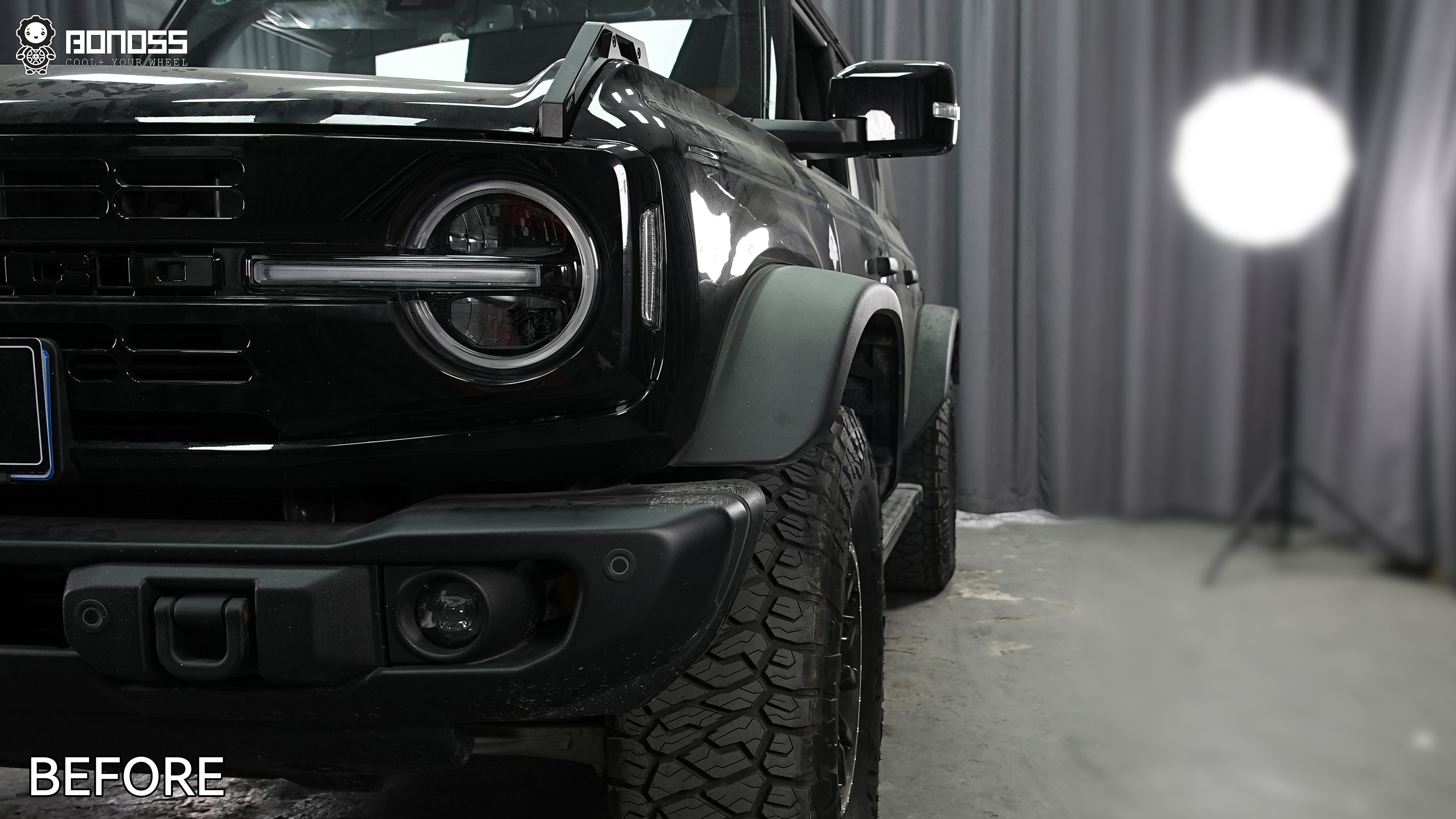
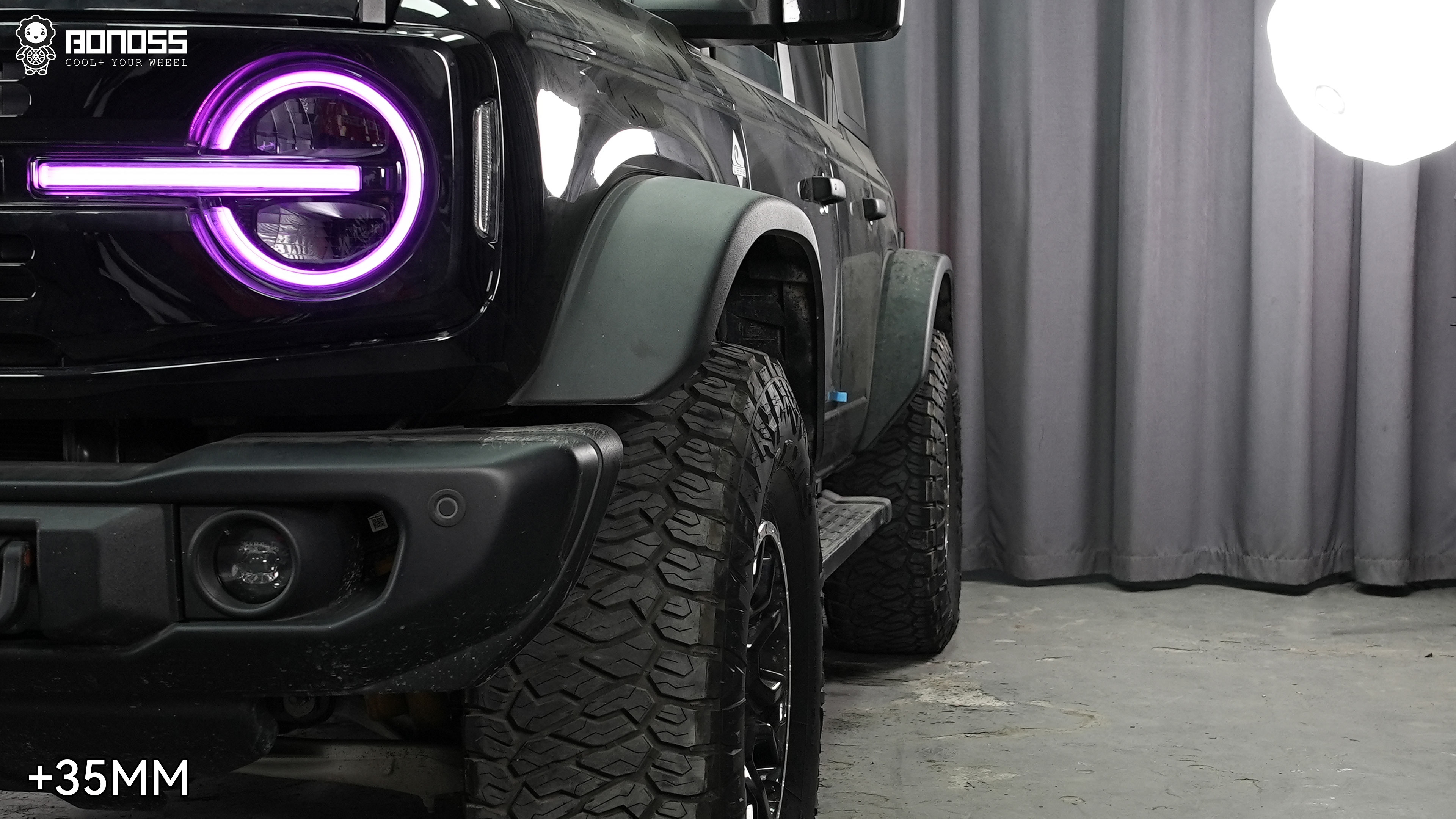
Bronco Wheel Spacers vs Offset Wheels
1. The Difference Between Them
Offset wheels are aftermarket wheels that come with various offsets – the distance from the hub mounting surface to the wheel centerline. The wheel offset is fixed. If you don’t like the initial choice, you have to change the whole rims.
On the other hand, Bronco wheel spacers are wheel parts that add extra clearance between the vehicle hub and the wheel. They are more flexible than offset rims, since you can easily remove them or try various sizes to get your ideal fitment.
2. Performance Impact & The Cost
The impacts on your vehicle’s performance are similar. Both routes get you a wider stance and sharper handling. The difference? Offset rims mean buying four new wheels; spacers run a few hundred bucks and keep your OEM wheels and tires. Consider starting with quality Bronco spacers if you’re on a limited budget.
3. Your Specific Requirements
Choosing between Bronco wheel spacers and offset rims based on your specific requirements.
Offset wheels are suitable for daily commuters. If all you need is a wider stance, just use offset rims. They don’t change your original suspension geometry — no re-torque schedule, no extra checks. On the other hand, the Ford Bronco wheel spacers may need more consideration and frequent maintenance.
For off-roaders, wheel spacers are a better choice for their versatility and quick adjustability. They create more space to fit larger AT tires. This allows you to modify your wheel position to pass various trail conditions. The Bronco wheel spacers are particularly useful for clearing a big brake kit without committing to expensive wheel sets.
Driving Experience of Bronco with Wheel Spacers
We surveyed 40+ owners. Below are five representative responses we selected from their feedback. How does it feel after installing Bronco spacers? Daily commute or rock crawl — the added track width earns its keep.
John Noel, from California, has installed Bronco 1.5” wheel spacers on a 2026 Ford Bronco Wildtrak for 3 months. “1.5-inch spacers cover the studs, so you don’t have to shave the studs. No rubbing and don’t need to roll fenders.
Charles Daley, from Houston, has installed Bronco 1.25” wheel spacers on a 2021 Ford Bronco Big Bend for 3 years. Thanks to the increased track width, the Bronco performs better in off-road driving. “Really changes the look! No annoying shake. Ride is much better as well.”
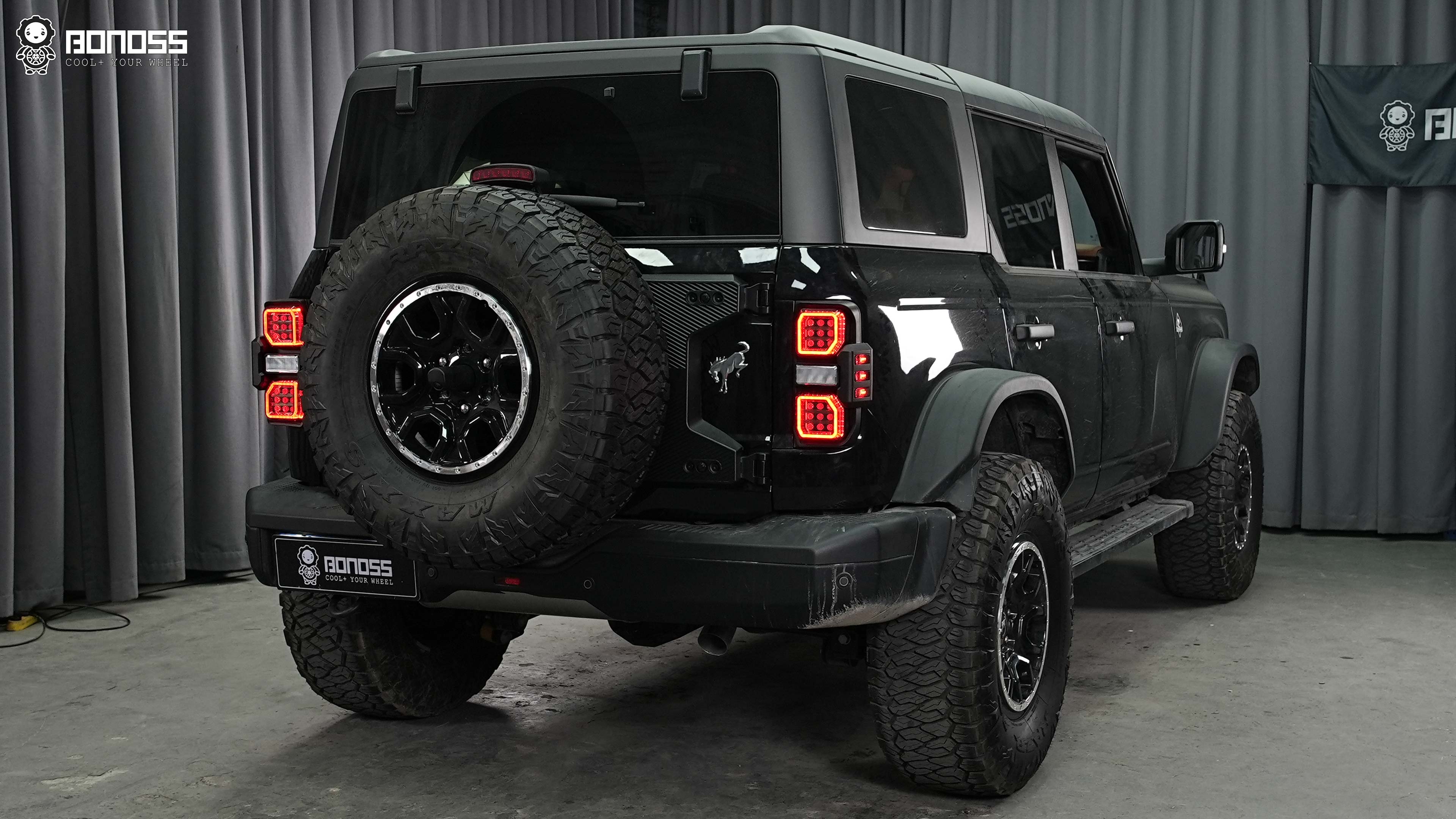
What most people care about is the fuel economy. The Broncos (non-Raptors) are rated between 17 mpg and 20 mpg in the EPA’s database. Peter River, from New York, has installed 2022 Ford Bronco wheel spacers. “I understand manufacturers keep the wheels tucked in tight for MPGs, but they look so much better when they’re more flush with the body. I have owned a turbocharged V6-powered 2022 Bronco Badlands and installed 1.5” spacers for over 3 years, and it averaged 17.4 mpg over the course of 40,000-plus miles.”
Dhirendra Carter, from Moreno Valley, has installed 2-inch wheel spacers on a 2024 Ford Bronco Raptor. “I ran these spacers for 2 years and 20,000 miles with no negative effect on towing capacity. I love the updated look and wider stance with wheel spacers.”
“Wheel nuts may loosen after going off-roading. Remember to give each wheel nut a check when you come back from adventures.” Timothy, from Texas, has installed 2021 Ford Bronco wheel spacers for 4 years.
Do I Need Hub-centric or Lug-centric Spacers for my Bronco?
We recommend using hub-centric spacers instead of lug-centric ones. Hub-centric Bronco spacers are centered by the axle hub, and the lugs can hold the wheels stably and firmly. This is a hub-centric connection, which keeps your vehicle from experiencing unnecessary vibration.
Lug-centric wheel spacers are built to fit different vehicles. The center bore is usually made bigger. That means there’s a gap between the spacer wheel bore and your vehicle hub. Most OEM wheels are hub-centric because the factory makes wheels specifically fit your car. Hub-centric connection is how every OEM wheel does it, and it’s how you should do it with Ford Bronco wheel spacers.
How Often Do You Check Wheel Spacers for Ford Bronco?
Regular inspections catch most spacer issues. It is always a good idea to give your Ford Bronco wheel spacers a check and retorque them about 5000 miles of driving. Immediately check them after heavy off-roading. Like any other suspension parts, the Bronco spacers need regular inspection to function safely.
1. Wheel Nut Tightness Check
The wheel nuts need to be tightened firmly. Set a calibrated torque wrench to the manufacturer’s torque specification, and use it to torque each wheel nut in a star pattern. Feel for the wrench to click. Checking by an impact gun is imprecise, as it may over-torque the lug nuts.
2. Wheel Alignment Check
Off-roaders should regularly check wheel alignments. Align the vehicle’s wheels at least every two years, especially when installing Bronco wheel spacers. Proper wheel alignment is critical for optimal handling and ride quality. Bad alignment leads to excessive tire wear.
3. When to Get New Wheel Spacers
If the Bronco spacers were worn down, it’s time to remove them or change to a new set. During the regular maintenance, when you see big cracks or cuts on spacers, it’s safer to get new ones. If you use cheap, low-quality wheel spacers, replace them with high-quality ones now. Even if they look fine, they might break unexpectedly.
Frequently Asked Questions
Q: What size wheel spacers are best for a Ford Bronco?
A: For most stock Broncos, 1-inch to 1.5-inch is the best wheel spacer size. If you like a perfect flush wheel stance, figuring out how much the fender gap helps you choose the correct ones. For example, if the wheel gap is 1.25 inches, then 1.25-inch spacers should make your wheels flush with the fender flares.
Q: What’s Bronco wheel spacer torque specs?
A: The recommended torque specs on the BONOSS wheel spacers are 83.3 ft-lb for M12x1.5 nuts and 103.5 ft-lb for M14x1.5 nuts. Alternatively, you may follow the factory specification of 100 ft-lb for M12x1.5 nuts and 150 ft-lb for M14x1.5 nuts from your owner’s manual. Both values are acceptable. Over-tightening wheel nuts causes stress fractures, leading to failure around the rotor. Under-tightening the wheel nuts, the clamping force will not be enough to secure the wheels.
Q: Do I need an alignment after Ford Bronco wheel spacers?
A: You don’t need an alignment if you just install Bronco wheel spacers. As long as you install them properly, quality wheel spacers don’t affect the alignment at all. Once it comes to changing the wheels and tires, we recommend an alignment after the installation.
Q: Are Bronco 1.5” wheel spacers safe?
A: Yes, using 1.5-inch wheel spacers is safe for a Bronco. To ensure safety, make sure you get high-quality forged wheel spacers and install them correctly. Apply proper torque to tighten each wheel nut and check the tightness in every routine maintenance to prevent potential risks.
Q: What are Ford Bronco bolt pattern/ center bore?
A: The bolt pattern and center bore of a Ford Bronco are 6×139.7mm/ 93.1mm for 2021-2027 models and 5×139.7mm/ 87.1mm for early 1966-1996 models. Vehicle-specific wheel spacers should come with the same bolt pattern and center bore to achieve a proper fit. This prevents dangerous vibration at highway speeds.
Q: Are Ford Bronco wheel spacers legal?
A: The Bronco spacers are legal in most countries and regions. By far, no existing federal law says wheel spacers and adapters are illegal. The key to keeping spacers legal is not to overdo it. Stay within your state’s guidelines, and you’ll be driving legally with wheel spacers.
Choose the Right Bronco Wheel Spacers Sizes
We cover the old model data to help you pick early Bronco wheel spacers. Although we have listed recommended sizes in the table, the perfect wheel spacer sizes rely on careful measurement.
1. Check Bolt Pattern & Center Bore
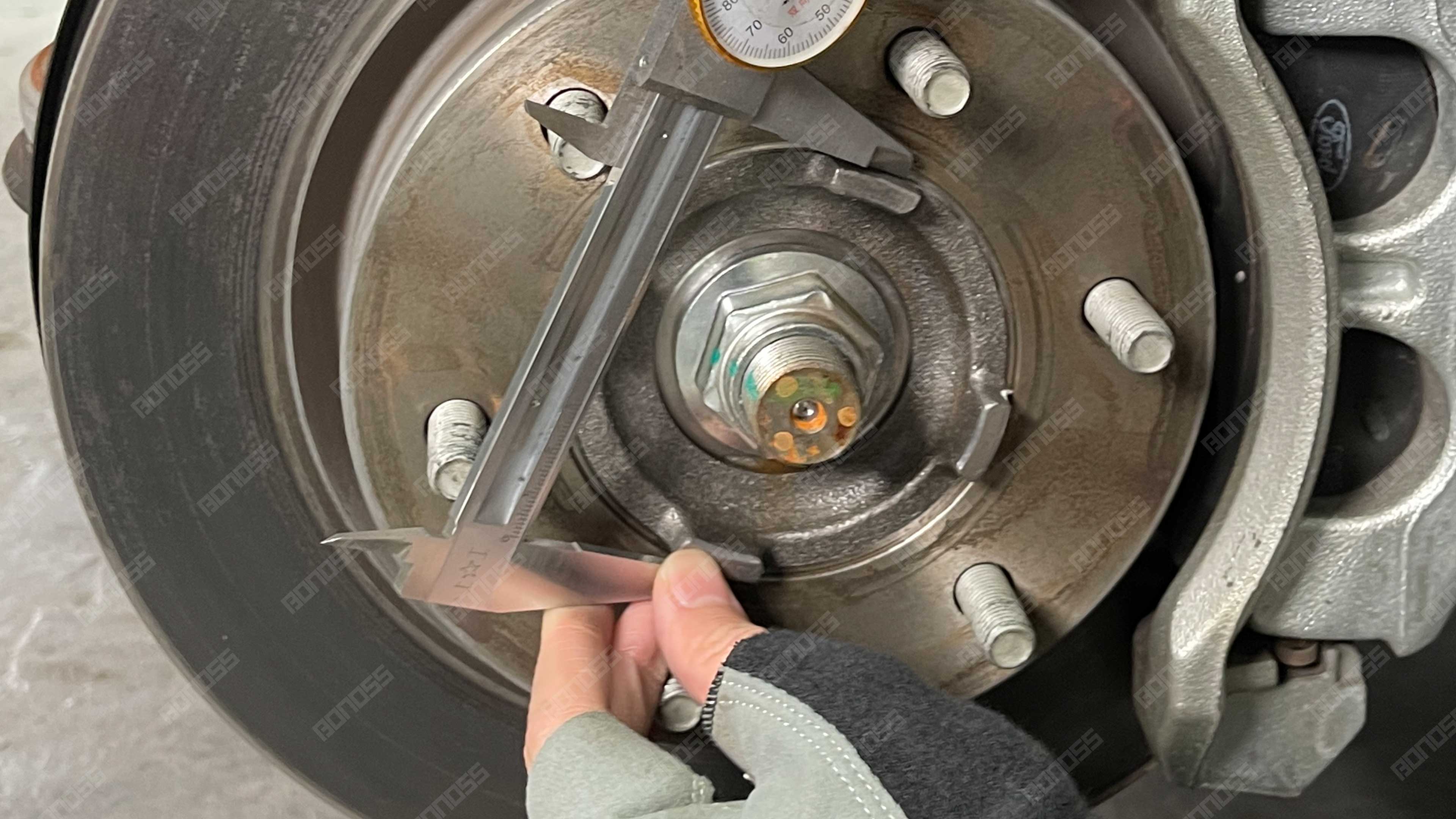
The bolt pattern (PCD) and center bore (CB) are important factors in identifying whether the wheel spacer matches. Unlike other measurements, it is hard for you to measure these two factors without a set of professional instruments.
Even minute errors can lead to wrong installation and serious safety risks. That is why we set up this Bronco spacer size table to help you find out the correct data quickly. For example, the bolt pattern of the 2026 Ford Bronco is 6×139.7mm, and the center bore is 93.1mm.
2. Stud Length Measurement
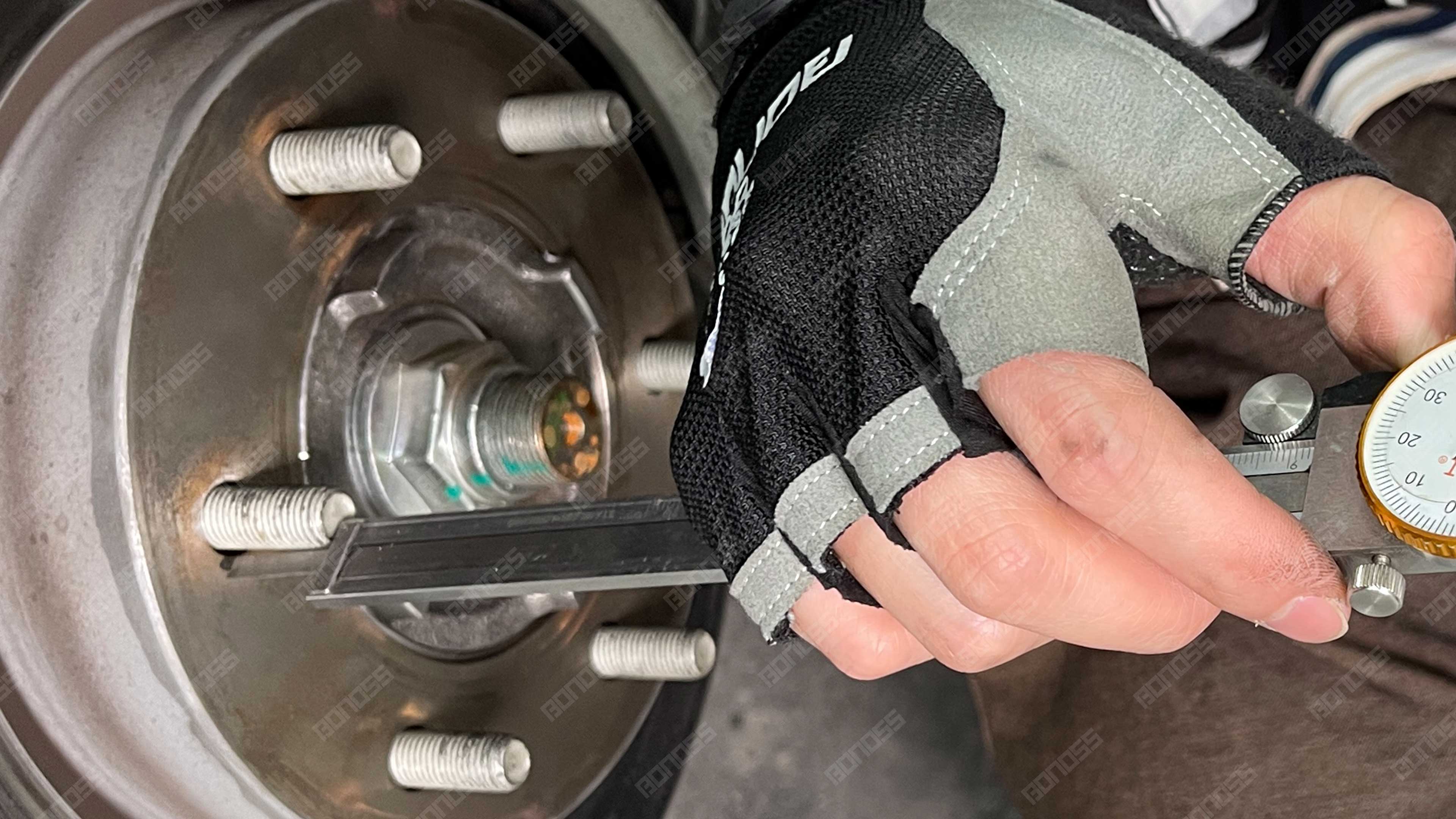
Proper vehicle wheel stud length ensures the wheel fits snugly with the spacers with no gap. It is necessary to determine whether you need to cut the factory wheel studs to fit the Bronco wheel spacers:
- Measure the protruding length of the car wheel studs,
- Check the depth and position of the wheel pockets.
Make sure the wheel pockets are aligned with the car wheel studs. As long as the wheel pocket depth plus spacer thickness is bigger than the protruding stud length, you can install Bronco spacers without trimming the vehicle wheel studs.
3. Fender Gap Measurement
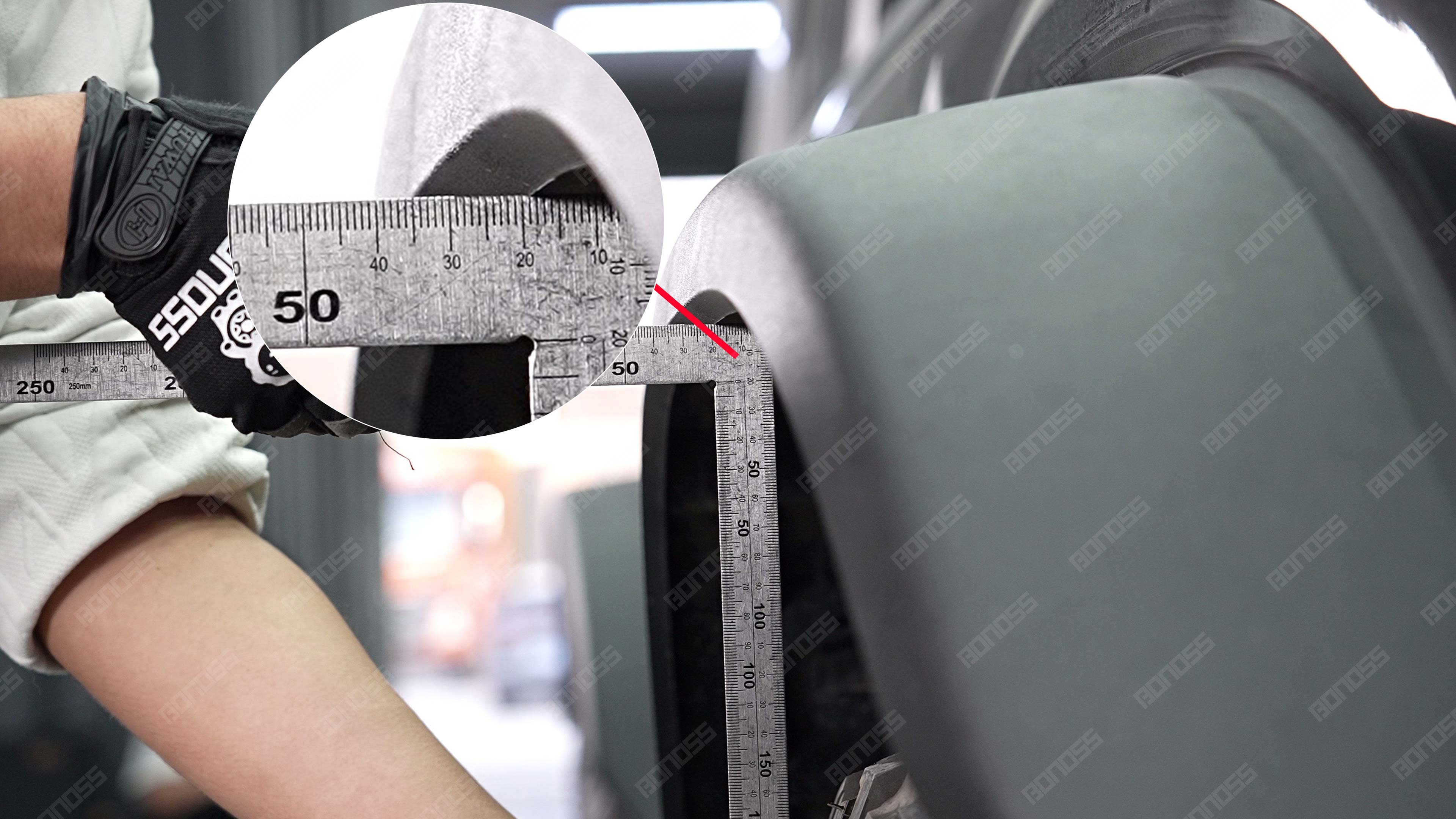
Here’s the measurement that actually matters: the fender gap. Grab a steel square, hold it against the outer edge of the tires, and measure the distance to the fender line. This distance should be the perfect wheel spacer size to achieve a flush style. Remember, the front and rear data may be different.
How to Install Bronco Wheel Spacers?
Park the car on level ground, set the EPB, and make sure nothing bumps the car. First of all, loosen all the lug nuts of one wheel, but do not completely remove them. Then lift the car, and use the correct jack stands to support it. It is recommended to work on only one wheel at a time.
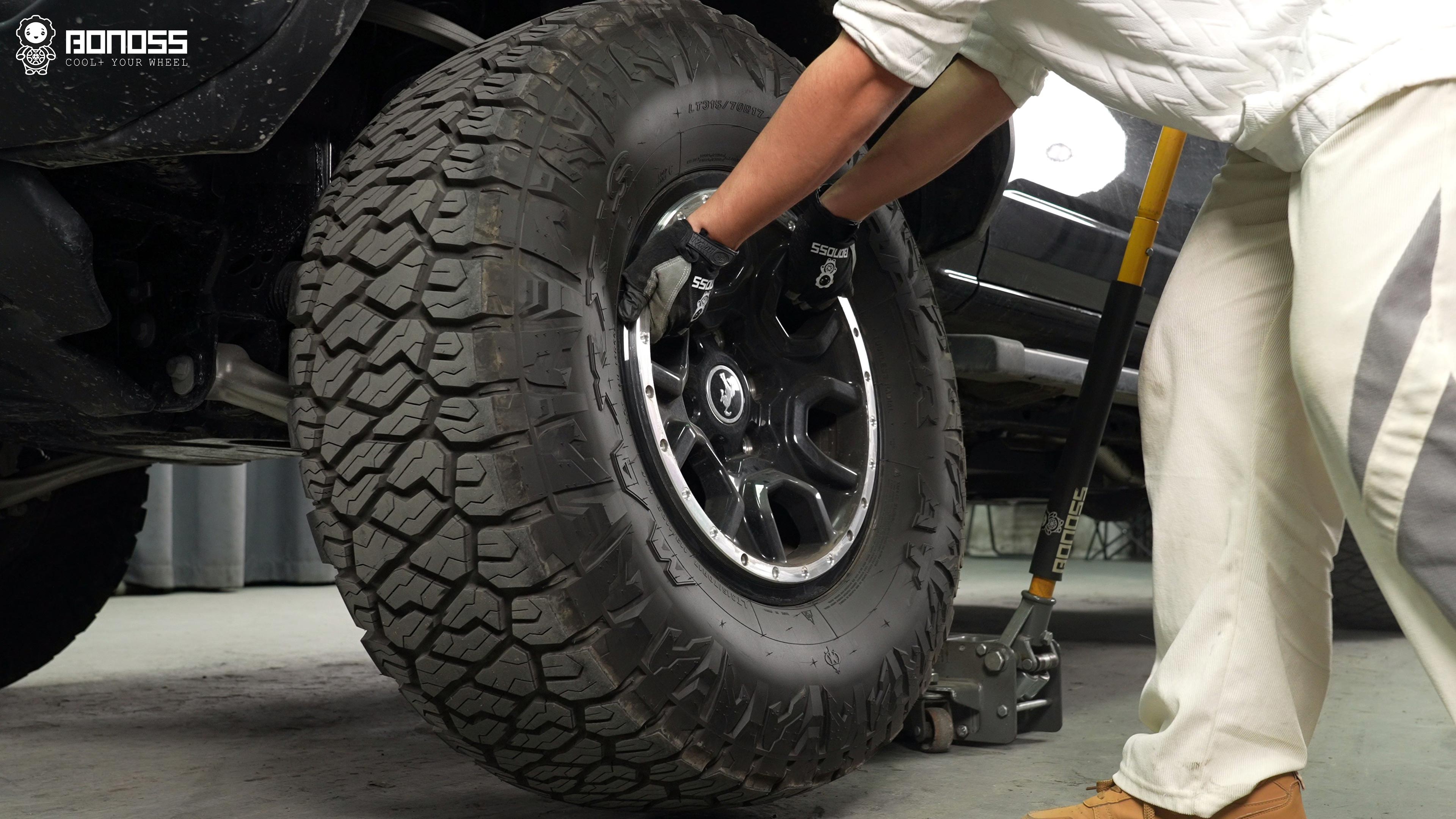
Step 1: Remove the Wheels
Now, you can completely remove the lug nuts. After removing all the lug nuts, take the wheel off the vehicle and carefully set it aside.
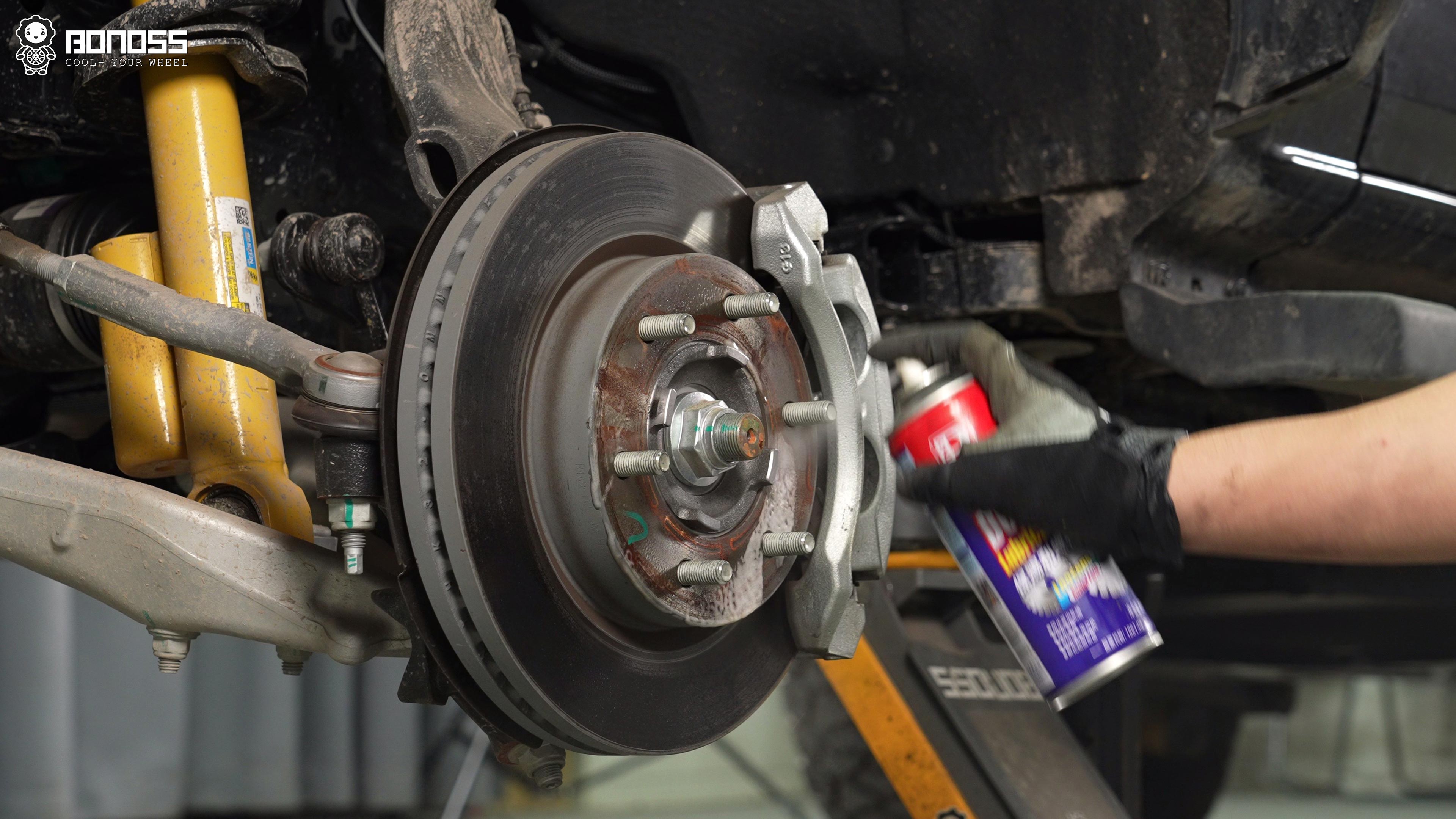
Step 2: Clean the Wheel Hub
Spray degreaser and use the wire brush to remove corrosion and dirt from the wheel hub. Wipe down the entire surface to ensure it is smooth.
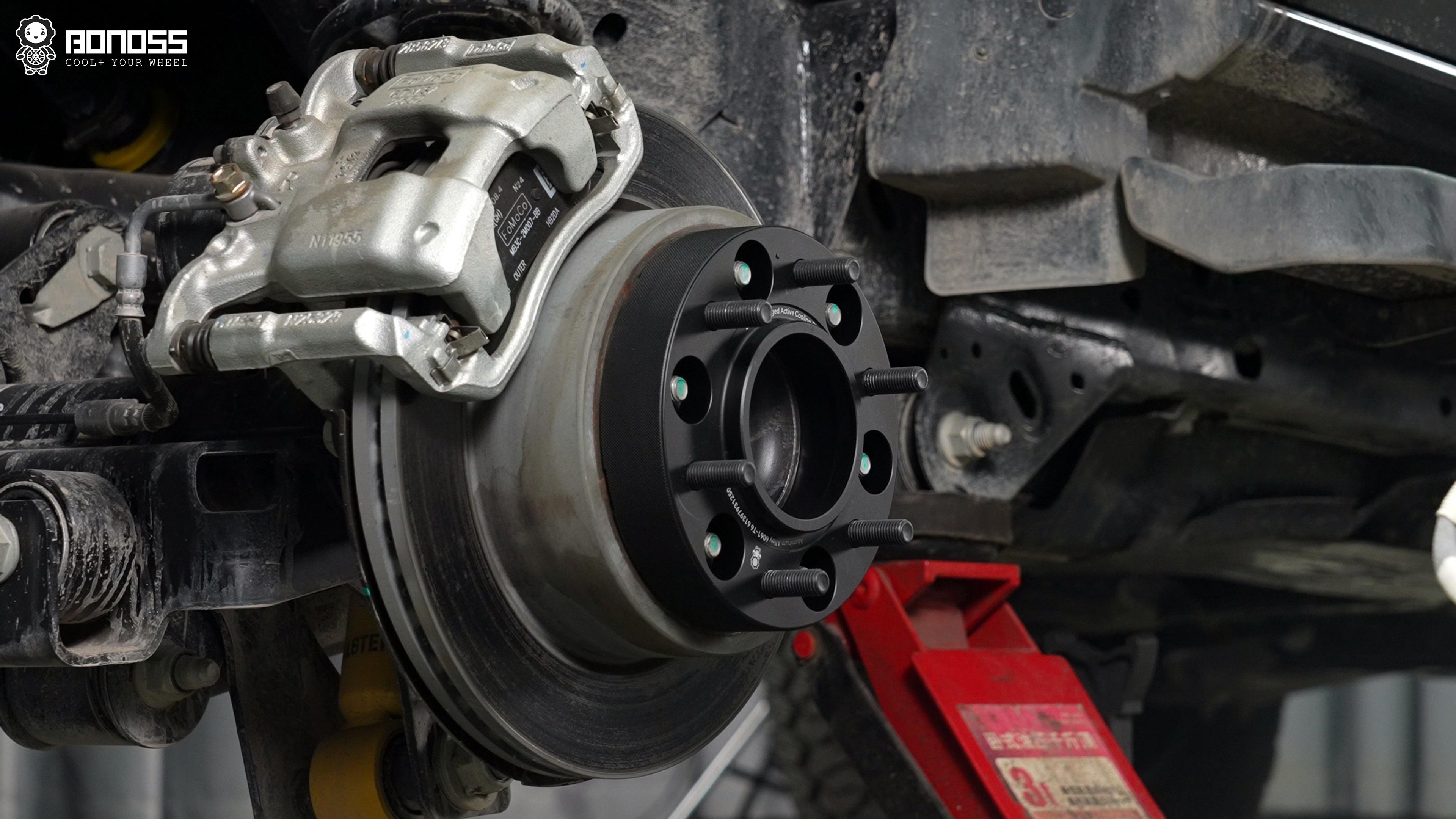
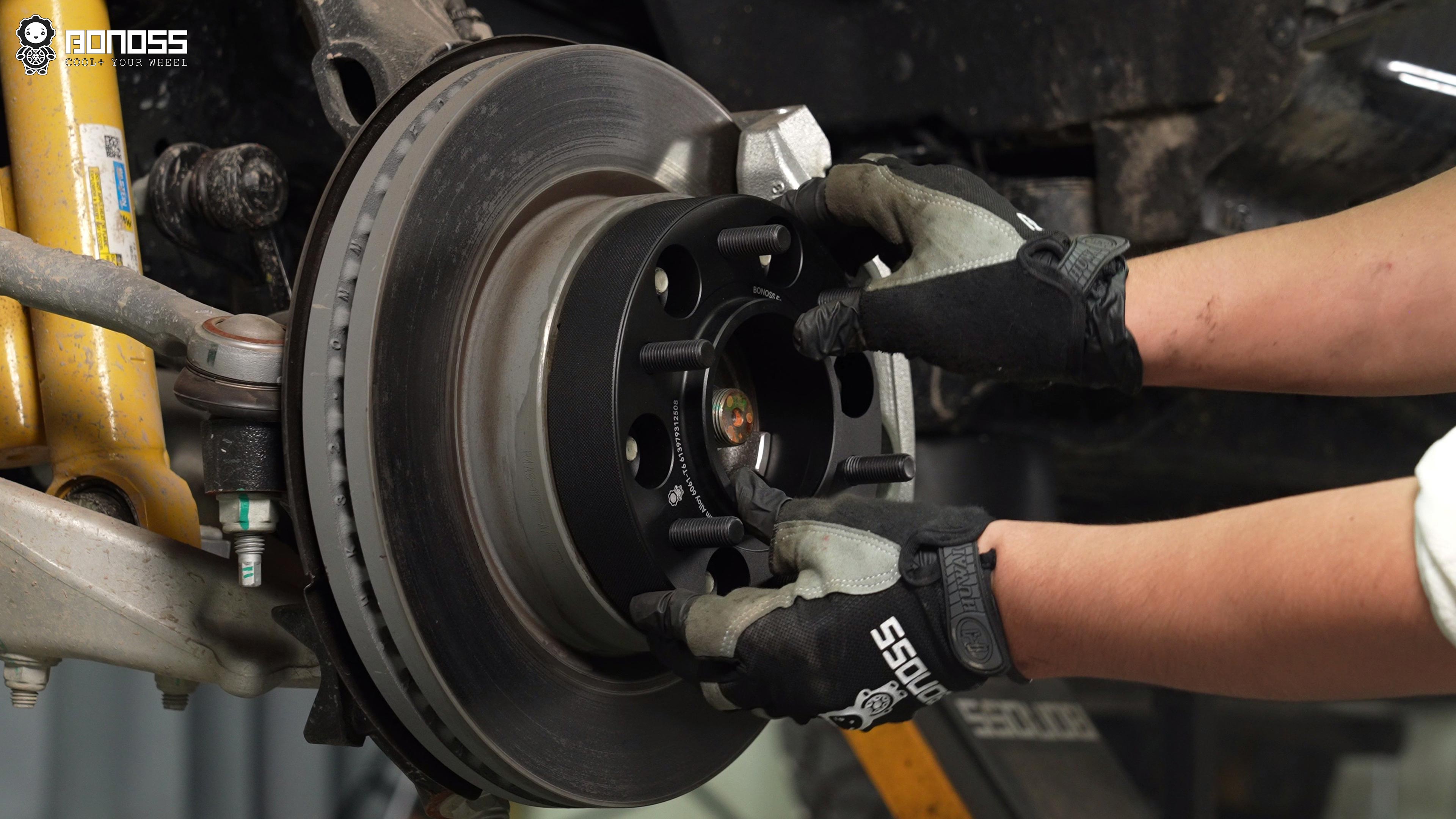
Step 3: Install Bronco Wheel Spacers
Slide the spacers onto the vehicle’s studs and hub, and make sure that the spacer firmly seats and flushes against the wheel hub.
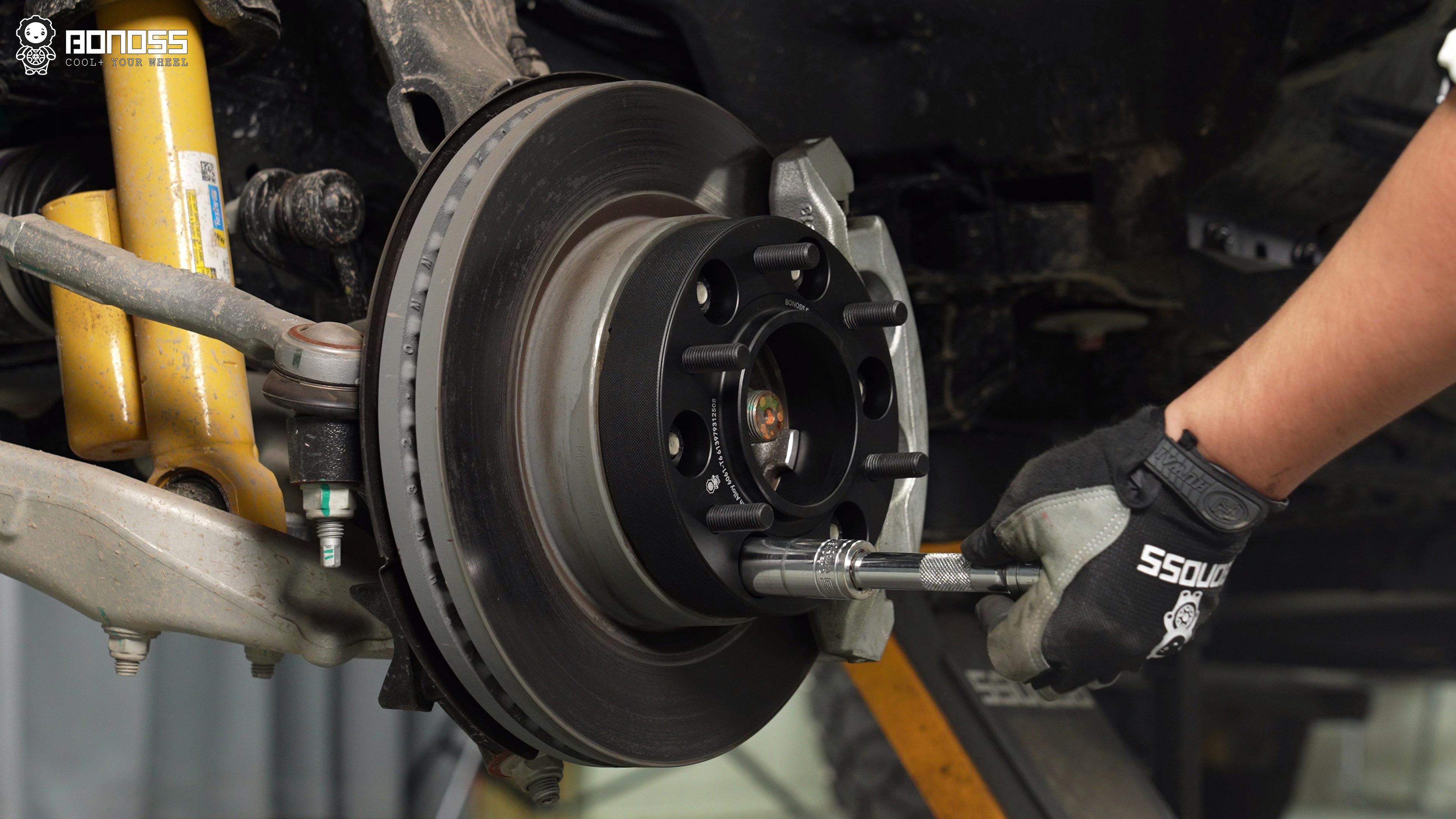
Step 4: Torque Bronco Wheel Spacers
Use the provided wheel nuts to fasten the spacer. Then tighten them in a star pattern using a torque wrench. The spacer lug nuts should be torqued to 83.3 ft-lb (113 Nm). Check REFERENCE torque spec for Bronco wheel spacers.
Step 5: Reinstall the Wheel
Carefully slide the wheel onto the spacer’s studs and tighten your factory lug nuts in a star pattern. Make sure there is no gap between the spacer surface and the back of the wheel or between the vehicle hub and the back of the spacer.
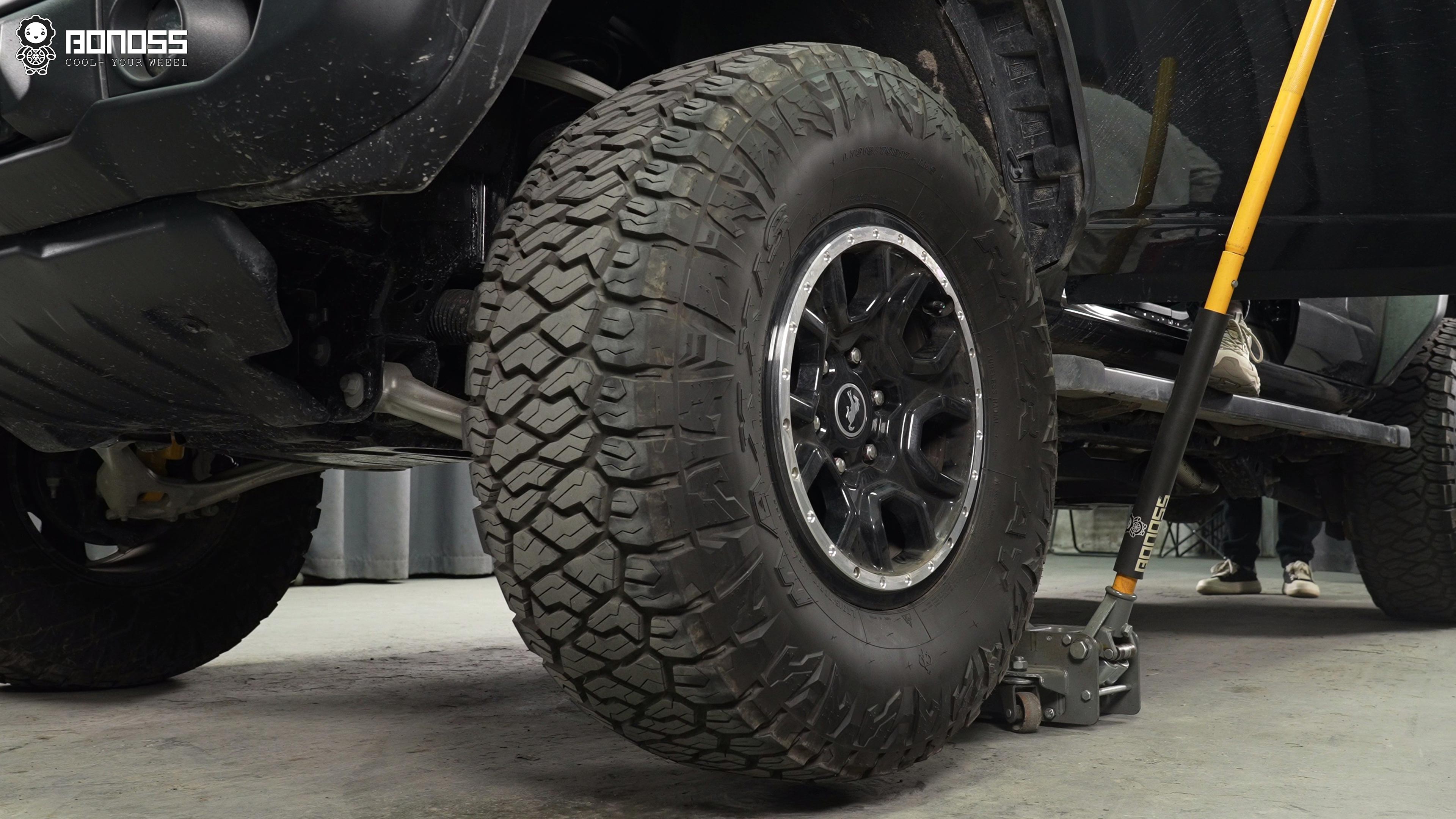
Step 6: Torque the Wheel Nuts
Carefully lower your vehicle back to the ground. Use a torque wrench to tighten the lug nuts in a star pattern. The factory wheel nuts should also be torqued to the manufacturer’s torque specification. Check the torque spec for a Ford Bronco.
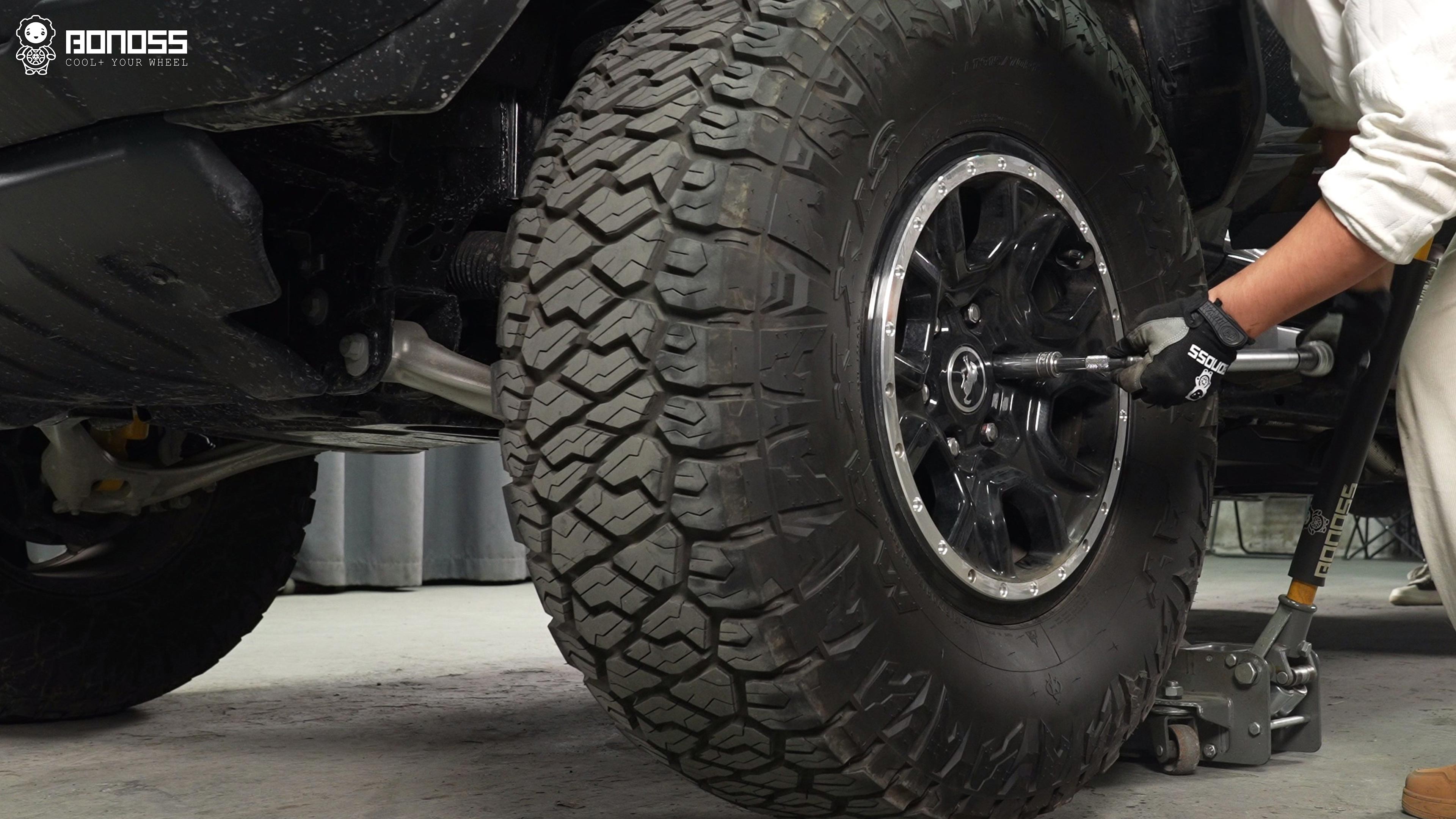
Step 7: Post-Install Bronco Spacers
Repeat these steps for all of the other wheels. After installing wheel spacers on the Ford Bronco, take your vehicle for a quick test drive to check if there is any abnormal noise or vibration. If there are no problems, you are ready to enjoy the new wheel spacers.
Special Note:
- If you install BONOSS wheel spacers, we recommend the same 83.3 ft-lb (113 Nm) to secure the M12x1.5 wheel nuts and 103.5 ft-lb (140 Nm) to secure the M14x1.5 wheel nuts. It is also acceptable to follow the factory specification of 100 ft-lb for M12x1.5 nuts and 150 ft-lb for M14x1.5 nuts, per your owner’s manual.
- It is crucial to re-torque your new wheel spacers after the first 50 to 100 driving miles. You may need to remove the wheels to tighten the lug nuts that secure the spacer onto the vehicle hub. Then, just re-torque them at every routine tire maintenance. Check the pro tips for Bronco spacer torque installation.
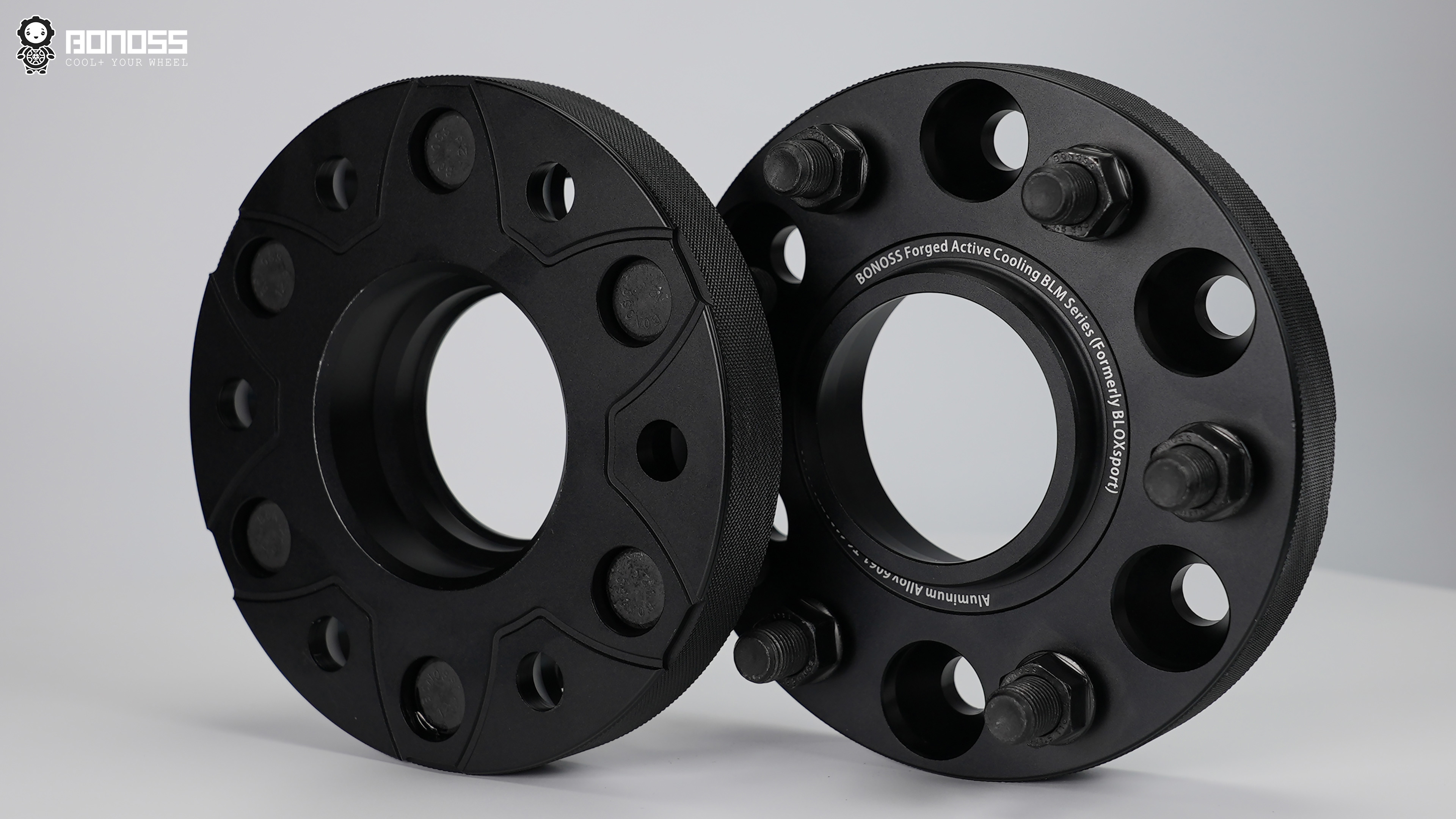
Bronco Wheel Spacers Pros and Cons
Pros:
- Achieve an impressive flush wheel stance
- Wider track enhances all-terrain capability
- Extra clearance to fit a big brake kit
- Allows for wider AT tires without rubbing
- Pleasant handling and comfort
Cons:
- Lug-centric spacers cause vibration at highway speeds
- Low-quality spacers can break down under hard driving
- Not legal in some countries and regions
Buying Tips for Ford Bronco Wheel Spacers in 2026
1. The Flush Look:
The main reason to use Bronco wheel spacers is to fix the tucked-in look of OEM wheels. Proper wheel spacers push the wheel out to align perfectly with the fender. This creates a more aggressive and powerful stance. If you never use wheel spacers, starting from 1.25-inch may be a good idea.
2. Material Selection:
Wrong spacers can crack on the trail — material is everything for safety. For off-roading adventures, high-quality forged 7075-T6 aluminum spacers are preferable as they are strong, durable, and light in weight. For daily driving, forged 6061-T6 aluminum spacers are all you need for street duty.
3. Proper Wheel Studs:
High-strength wheel studs and wheel nuts are necessary in off-roading adventures. As far as we can find, the best wheel fasteners for Bronco spacers are ISO grade 12.9 wheel studs and ISO grade 10 lug nuts.
4. Choose a Trusted Brand:
A reputable brand guarantees quality and backs it with a real warranty. Brands that invest in rigorous SGS TUV testing and quality control are more likely to provide safe and reliable Bronco wheel spacers.

About Robert Wall
Robert Wall is a Senior Automotive Engineer at BONOSS with over 9 years of experience in automotive component R&D, specializing in the structural design and safety validation of wheel spacers, wheel adapters, and high-strength fasteners. He is actively involved in product testing and on-track evaluation and is dedicated to translating engineering expertise into accessible modification knowledge — helping enthusiasts upgrade their vehicle’s stance and handling without compromising safety.
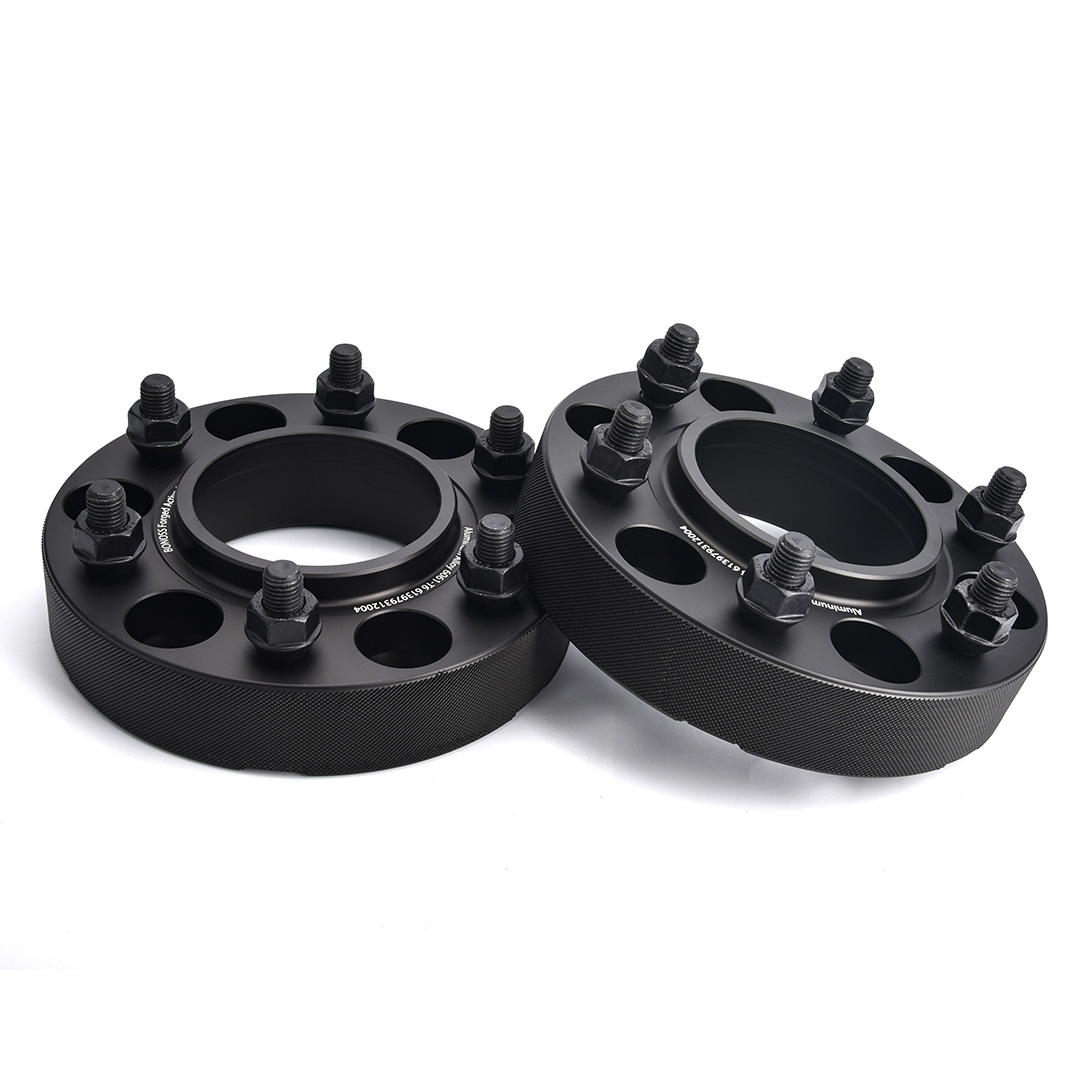
AL6061-T6 types (for daily driving)
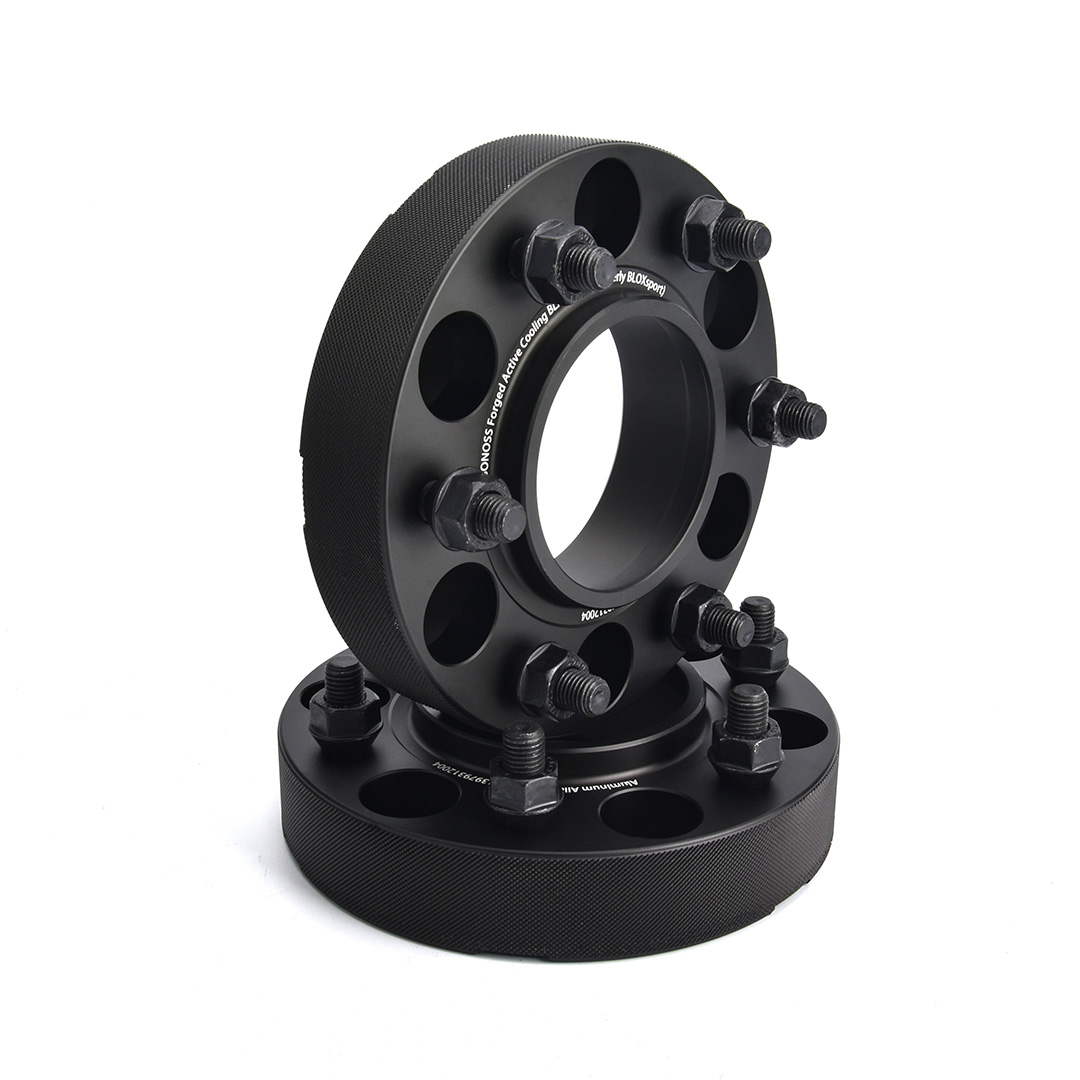
AL7075-T6 types (for off-roading)

Forged 50BV30 Steel Lug Nuts