
The Tesla Model Y wheel spacers can fit 2020 to 2027 models — the whole lineup shares a 5×114.3mm (5×4.5″) bolt pattern, a 64.1mm center bore, and M14x1.5 wheel hardware. What actually changes between trims is the factory wheel offset: most Model Y wheels sit at ET45, the 2025+ Standard drops to ET35.5, and the Model Y L runs front ET45 / rear ET51. That offset number is what decides your ideal spacer thickness.
For most owners, 15mm to 20mm hub-centric spacers deliver a flush stance without rubbing. Below you’ll find the full spec table, a generation-by-generation breakdown, a thickness selection method based on one simple measurement, correct torque values for both installation steps, and the stud-protrusion check you must do before buying anything. If you’re researching Tesla Model Y wheel spacers, this page is the hub: specs first, decisions second, product links last.
Tesla Model Y Wheel Spacer Specs: Quick Reference
| Generation / Year | Bolt Pattern | Center Bore | Thread Pitch | Wheel Offset | Suggested Spacer Sizes | Factory Lug Nut Torque |
|---|---|---|---|---|---|---|
| 2020-2025 Model Y Long Range | 5×114.3mm | 64.1mm | M14x1.5 | ET45 | 15mm to 20mm | 129 ft-lb / 175 Nm |
| 2020-2027 Model Y Performance | 5×114.3mm | 64.1mm | M14x1.5 | ET45 | 15mm to 20mm | 129 ft-lb / 175 Nm |
| 2020-2025 Model Y Standard Range | 5×114.3mm | 64.1mm | M14x1.5 | ET45 | 15mm to 20mm | 129 ft-lb / 175 Nm |
| 2025-2027 Model Y Premium | 5×114.3mm | 64.1mm | M14x1.5 | ET45 | 15mm to 20mm | 129 ft-lb / 175 Nm |
| 2025-2027 Model Y Standard | 5×114.3mm | 64.1mm | M14x1.5 | ET35.5 | 10mm to 18mm | 129 ft-lb / 175 Nm |
| 2025-2027 Model Y L | 5×114.3mm | 64.1mm | M14x1.5 | ET45 / ET51 | 18mm to 20mm | 129 ft-lb / 175 Nm |
Special Notes:
- Factory lug nut torque per the owner’s manual. Spacer-to-hub hardware uses a different value — see the spacer installation instructions.
- Suggested sizes assume factory wheels and factory tire sizes; aftermarket wheels with different offsets need thicker or thinner spacers.
- One thing worth flagging in that table: the bolt pattern, center bore, and thread pitch never change across the entire Model Y range. Tesla kept the hub hardware identical from the first 2020 builds through the 2025 “Juniper” refresh. The only fitment variable is offset — and that’s a wheel spec, not a car spec.
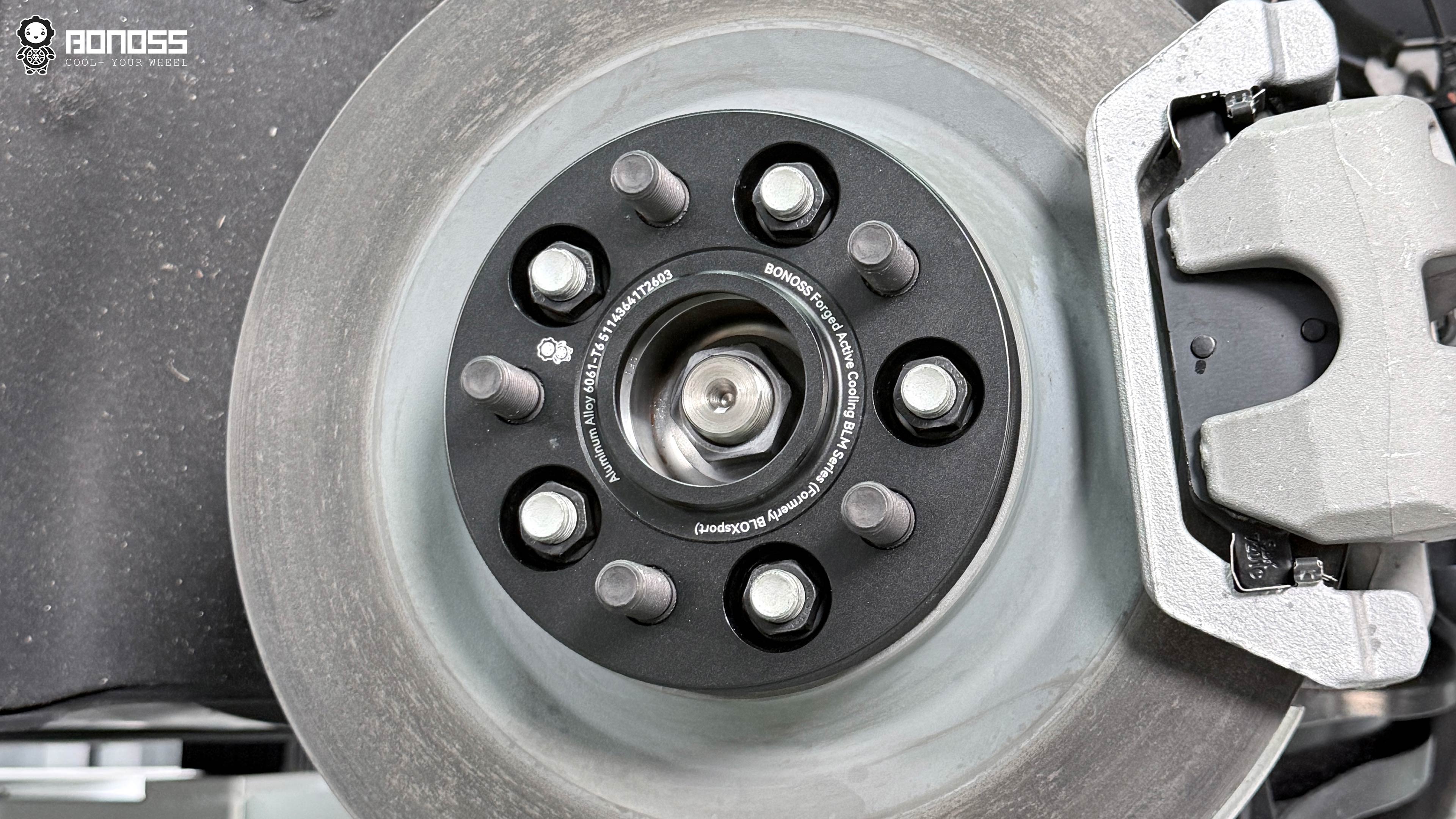
Fitment by Generation and Trim
2020–2025 Model Y Long Range
The Long Range is the volume seller, and its ET45 factory offset tucks the wheel inside the fender line on stock tires. A 15mm spacer gets you close to flush; 18mm is the aggressive end of the safe window. Owners running 275-width tires should measure first — you’re nearer the fender lip than the 255 crowd.
2020–2027 Model Y Performance
The Performance shares the same ET45 offset but ships with wider wheels and stickier rubber, and its owners tend to care more about stance. Model Y Performance wheel spacers in the 15–20mm range are the sweet spot: 15mm for a subtle OEM-plus look, 20mm for a genuinely flush street stance. At 20mm on stock suspension, rubbing is not an issue with factory tire sizes — but if you’ve lowered the car, measure at full suspension compression before committing.
2020–2025 Model Y Standard Range
Same hubs, same ET45, same story as the Long Range. 15–18mm works. The Standard Range often wears the 19-inch Gemini wheels, whose spoke design actually hides spacers well if you’re worried about aesthetics from behind.
2025–2027 Juniper Refresh: Premium, Standard, and Model Y L
The refreshed Model Y kept the 5×114.3mm / 64.1mm / M14x1.5 hardware — good news for parts compatibility. But pay attention to offset here. The 2025+ Standard sits at ET35.5, meaning its wheels already poke out nearly 10mm further than older trims. A 10mm spacer on an ET35.5 wheel puts you nearly where an 20mm spacer puts an ET45 car. The long-wheelbase Model Y L runs front ET45 / rear ET51. 18–20mm size is the right call to bring the wheel face out to the fender.
Key Terms, Decoded
Before you buy anything, get these five terms straight. Every fitment mistake we’ve seen traces back to one of them.
Bolt Pattern (PCD)
PCD — pitch circle diameter — is the diameter of the imaginary circle running through the center of your wheel studs. The Model Y uses 5×114.3mm, also written 5×4.5 inches. Your spacers must match this exactly. “Close enough” does not exist in bolt patterns.
Center Bore and Hub-Centric Design
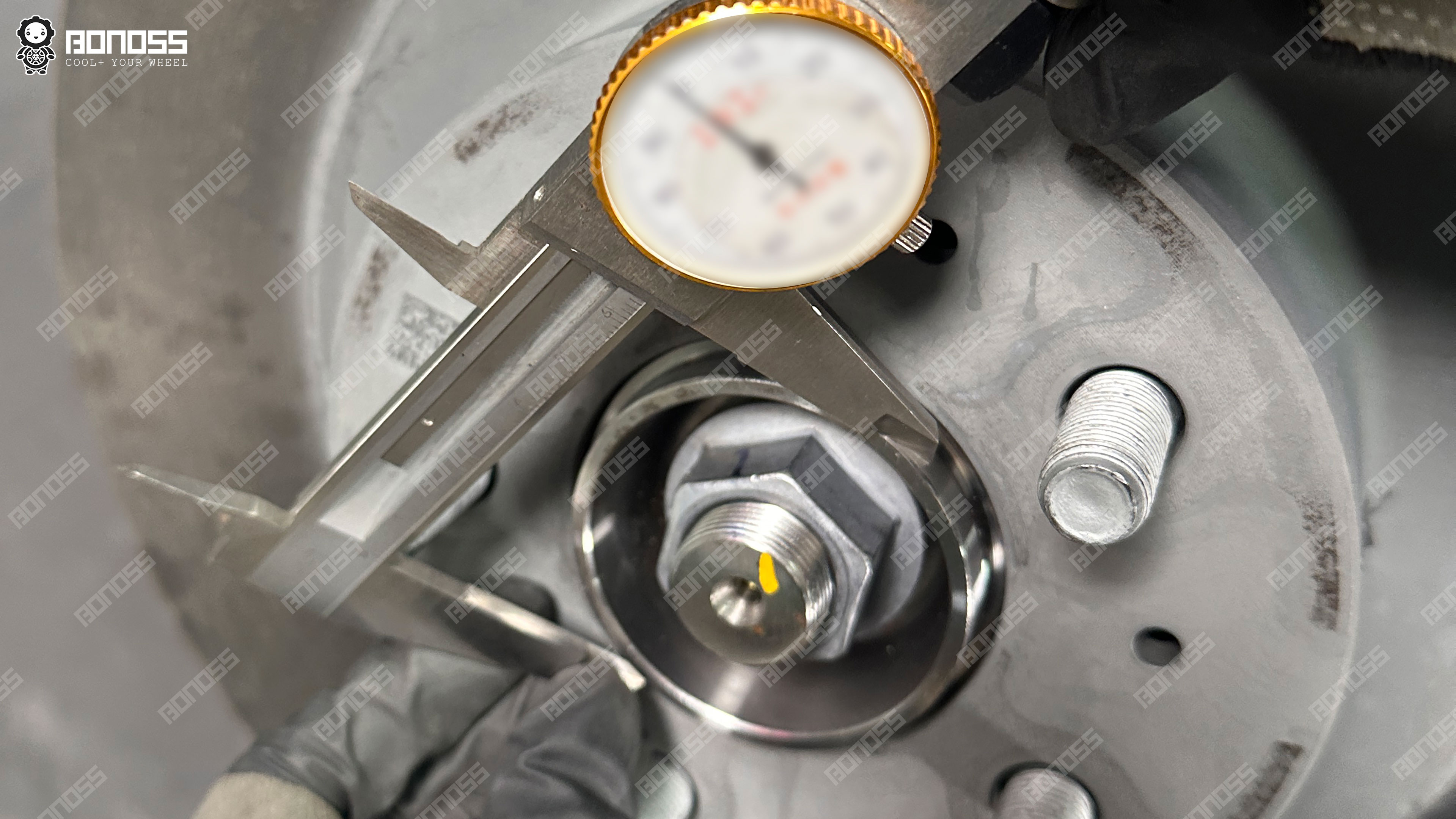
The center bore is the hole in the middle of the wheel — and the lip on the hub it centers on. The Model Y hub measures 64.1mm, which you can verify yourself with a vernier caliper.
A hub-centric spacer carries the wheel’s weight on that center lip, exactly like the factory wheel does. A lug-centric spacer hangs the wheel off the studs alone. Studs are strong in tension but they’re not designed to locate a wheel — that’s how you get the 70-mph steering wheel shimmy people blame on “spacers.” For a 4,400-pound EV with instant torque, hub-centric isn’t an upgrade. It’s the baseline.
Thread Pitch and Seat Type
Model Y studs are M14x1.5 with a conical (tapered) seat. Spacer nuts and wheel nuts must match both the thread and the seat profile of whatever they’re clamping. Mixing ball-seat wheel nuts onto cone-seat wheels is a slow-motion failure.
Offset and Fender Gap
Offset (ET, from the German Einpresstiefe) is the distance from the wheel’s mounting face to its centerline, in millimeters. Higher ET tucks the wheel inboard; lower ET pushes it out. A spacer effectively subtracts its thickness from your offset — an ET45 wheel on a 15mm spacer sits exactly like an ET30 wheel. The fender gap is what you see: the distance from the tire’s outer edge to the fender lip.
Torque Spec
Torque is the clamp load that keeps everything attached, and it’s the spec people get wrong most often. The Model Y factory lug nuts torque to 129 ft-lb (175 Nm) per the owner’s manual. Spacer hardware has its own value — covered in the installation section, because the two values are not interchangeable.
Choosing a Thickness for a Flush Stance
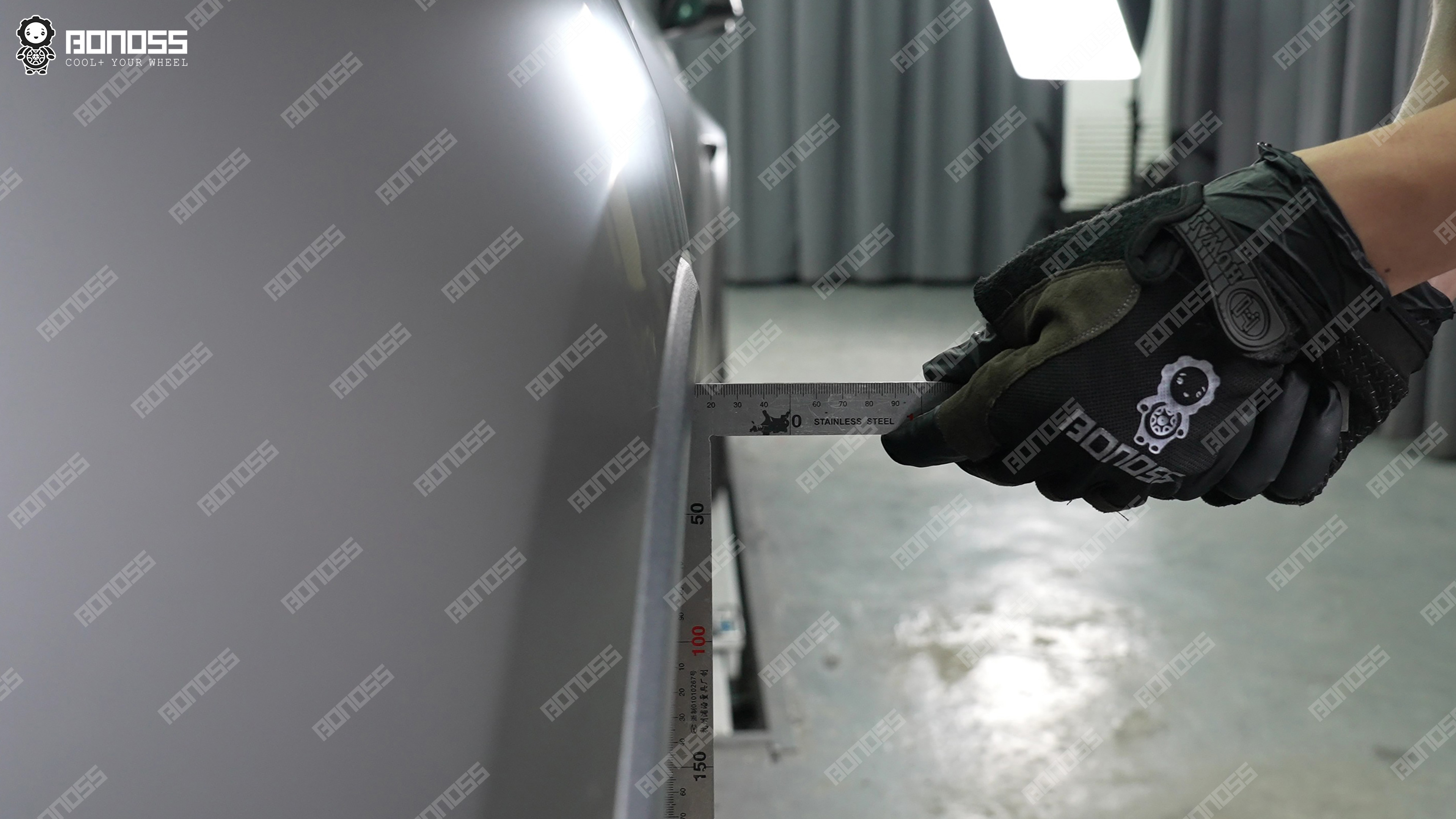
Here’s the method that works, and it takes five minutes. Park on level ground, hold a straight edge vertically against the fender lip, and measure the distance from the tire’s outer edge to the fender edge. That measurement is your flush spacer size. Front and rear are often different — measure both corners.
What each size actually does on a stock Model Y:
| Spacer Thickness | Effective Offset (from ET45) | Stance Result | Notes |
|---|---|---|---|
| 5mm | ET40 | Barely visible | Subtle; mainly clears brake calipers on some aftermarket wheels |
| 10mm | ET35 | Noticeable, still conservative | Good first step for ET35.5 Model Y wheels |
| 15mm | ET30 | OEM-plus, near flush | The safest recommendation for most trims |
| 18mm | ET27 | Flush on most setups | Measure first on 255-width tires |
| 20mm | ET25 | Aggressively flush | Best on Performance; check clearance if lowered |
| 25mm to 50mm | ET20 to ET-5 | Poke territory | Beyond flush on stock bodywork — not recommended without fender work |
The classic debate is 15mm vs 20mm Model Y spacers, and honestly it’s less dramatic than forums make it. On an ET45 car, 15mm reads as “factory done right” and 20mm reads as “deliberate.” Neither rubs on stock suspension and stock tires. If you want to see the difference on a real car before deciding, this flush fitment on a 2026 Model Y shows exactly what the gap measurement translates to in photos.
Here’s a before/after from our own installation car, right front corner:
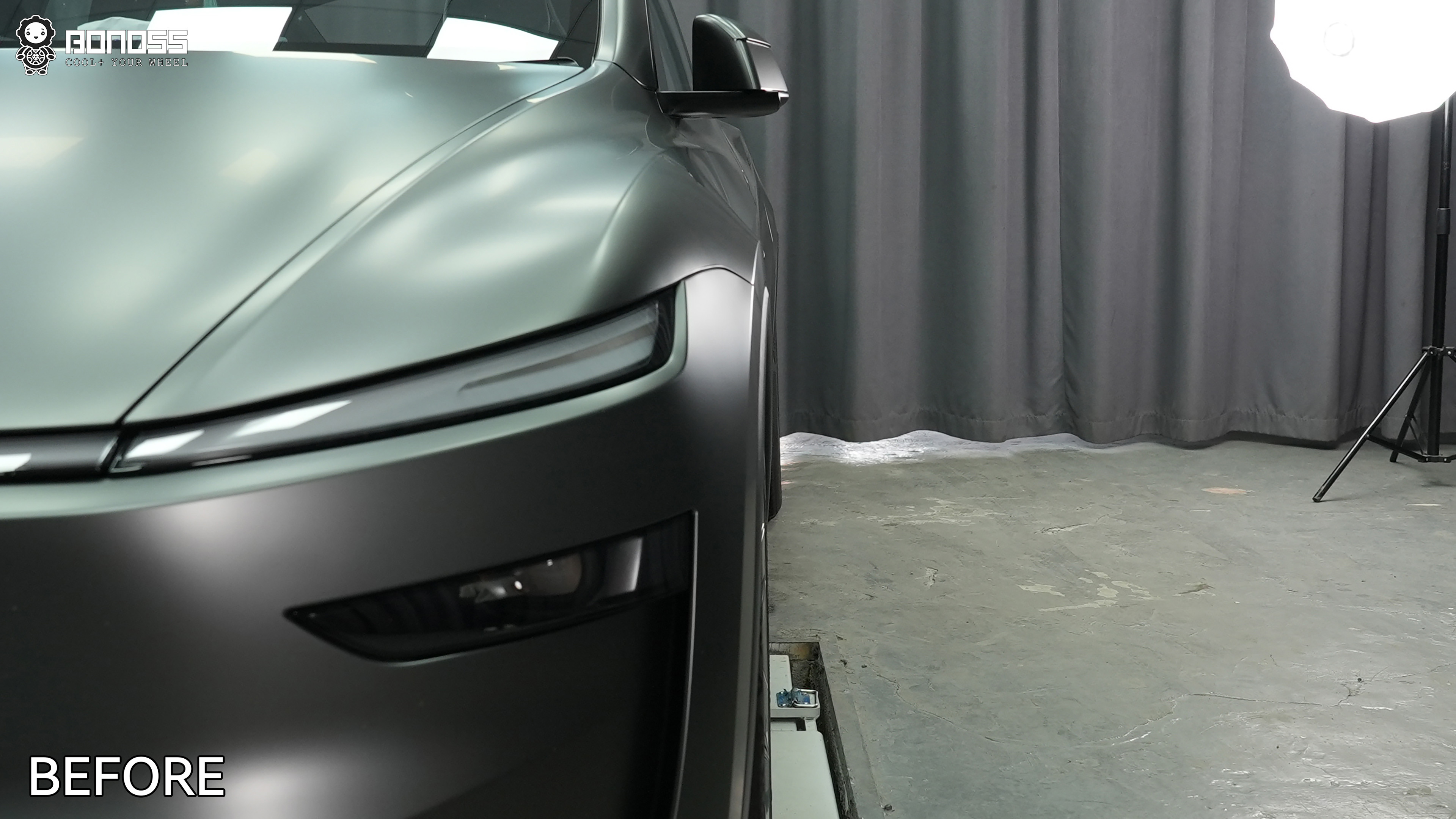
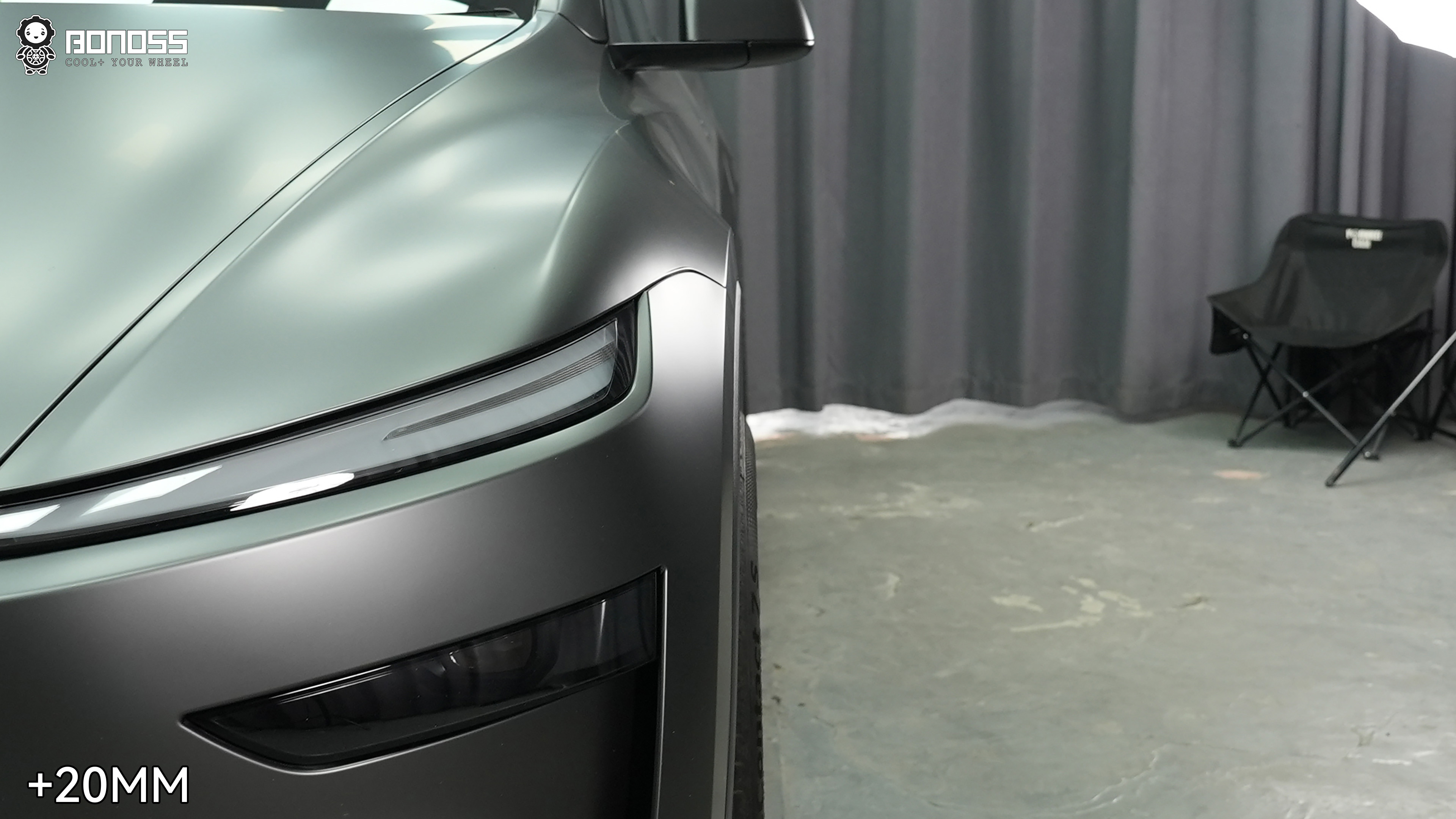
For more before-and-after references on stock-body cars, these installation case galleries are worth two minutes of your time.
Do You Need to Trim the Factory Studs?
Sometimes, yes — and it’s a three-minute check, not a mystery. When a spacer is thinner than the length your factory studs stick out, the stud tips can bottom against the back of the wheel. That prevents the wheel from seating flat. Here’s the check:
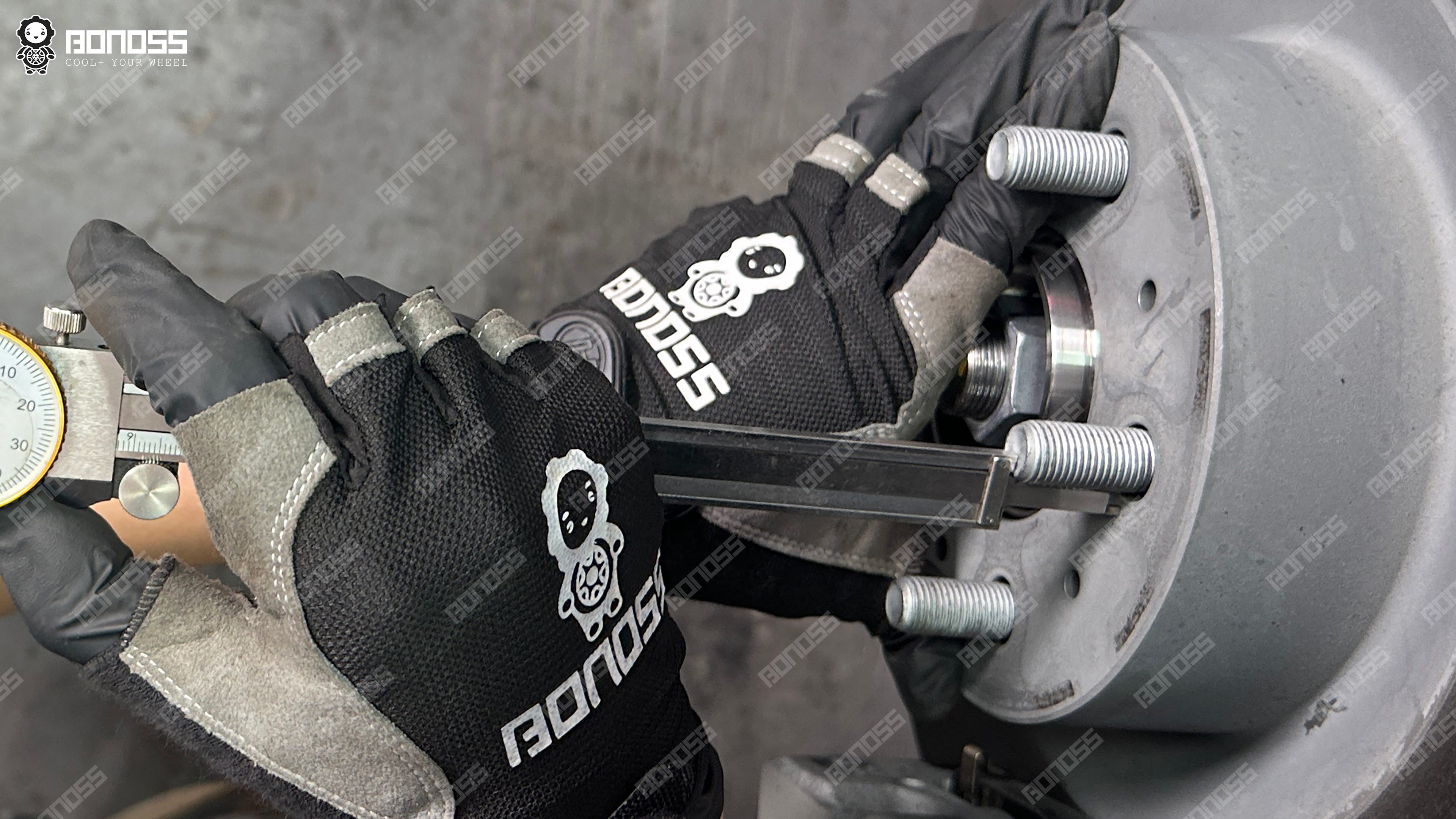
Measure stud protrusion. With the wheel off, measure how far the factory stud extends past the hub face.
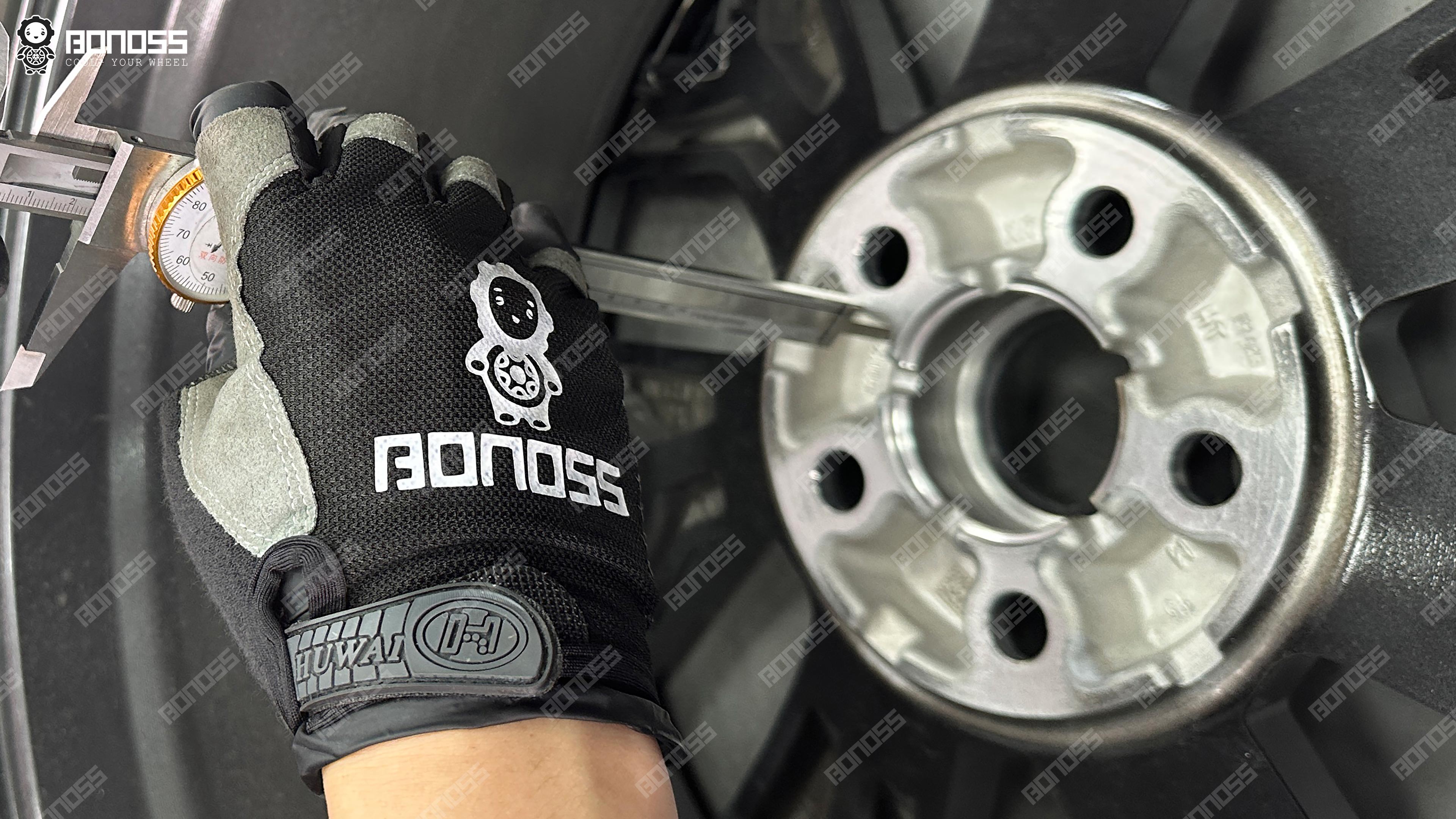
Measure the wheel’s pocket depth. Most wheels have cast pockets between the lug holes on the back pad. Measure how deep those pockets are, and confirm the pockets line up with the stud positions.
Do the math. If (pocket depth + spacer thickness) > stud protrusion, the stud tips disappear into the pockets and nothing touches. Install away, no trimming. If the math fails, the studs need shortening — a shop charges little for it, but it’s permanent, so measure twice.
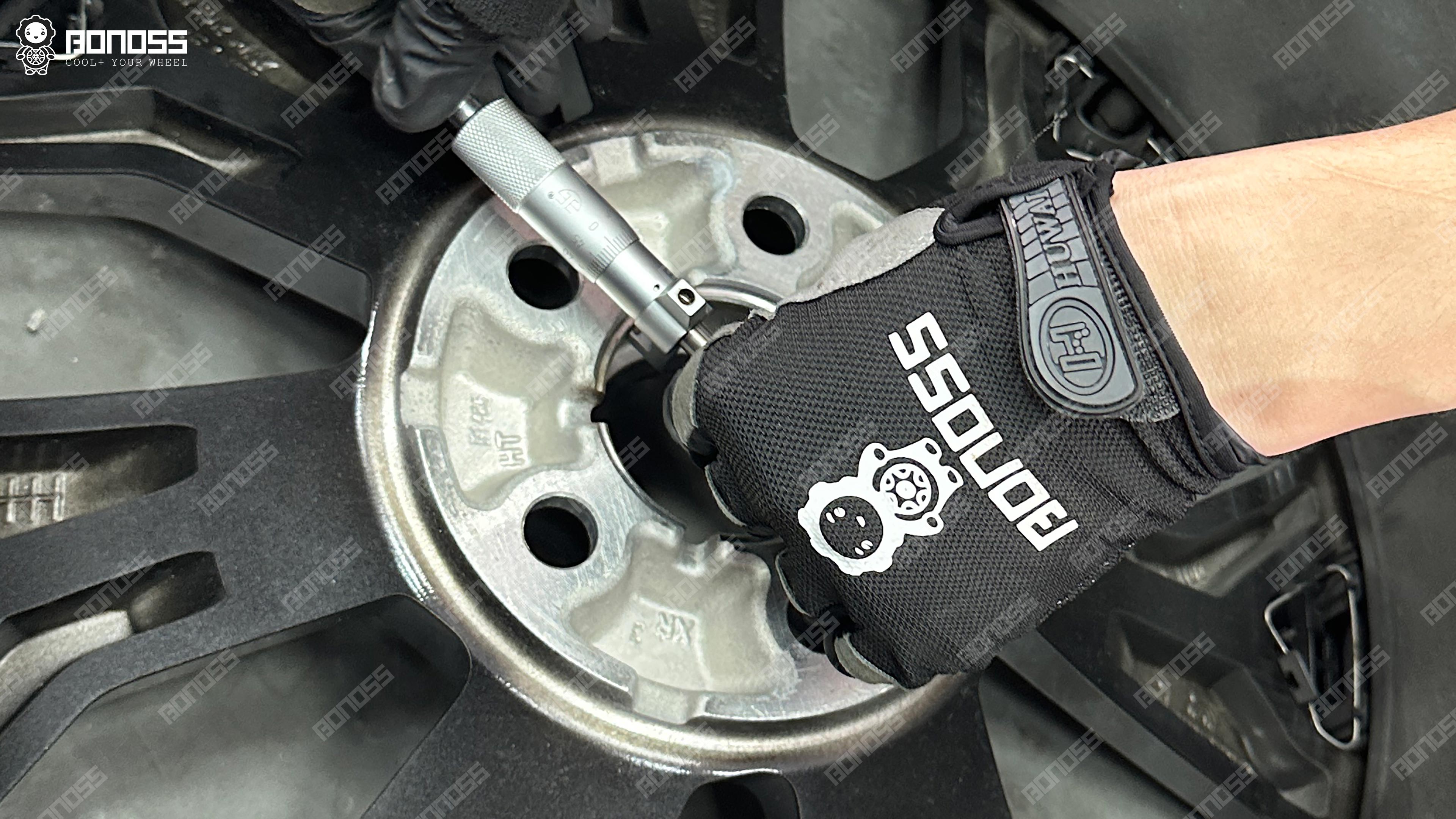
While you’re measuring things, run that micrometer across the wheel’s center bore too. Aftermarket wheels often ship with a larger bore plus hub rings; your spacer’s hub lip and the ring need to agree.
What Tesla Model Y Wheel Spacers Can and Can’t Do
Let’s be blunt about both sides, because the internet oversells one direction and fearmongers the other.
What they do: Spacers widen track width, which pushes the tire face out toward the fender — that’s the whole aesthetic point. A wider track also adds a small amount of mechanical grip in corners and can clear a brake caliper that an aftermarket wheel’s spokes would otherwise kiss. On a Model Y, 15–20mm makes the car look the way it should have left the factory.
What they don’t do: Spacers won’t fix a bent wheel, won’t cure an alignment problem, and won’t transform tire width — a 30mm total track increase is a subtle change in a two-ton crossover, not a suspension overhaul. They add one more joint to maintain: two sets of hardware to torque and re-check instead of one. And cheap cast lug-centric spacers genuinely are the vibration machines people warn about. The part isn’t the problem. The spec is.
Torquing Model Y Spacers Re-Check
Installation is a two-stage job with two different torque values, and mixing them up is the single most common install error. Get this right:
Stage 1 — spacer to hub. Clean the hub face of rust and debris, seat the spacer on the vehicle hub, and torque the spacer’s own nuts in a star pattern. BONOSS spacer hardware torques to 140 Nm (103.5 ft-lb) per BONOSS installation instructions.
Stage 2 — wheel to spacer. Mount the wheel onto the spacer’s studs and torque the factory-style wheel nuts to 175 Nm (129 ft-lb) per the owner’s manual.
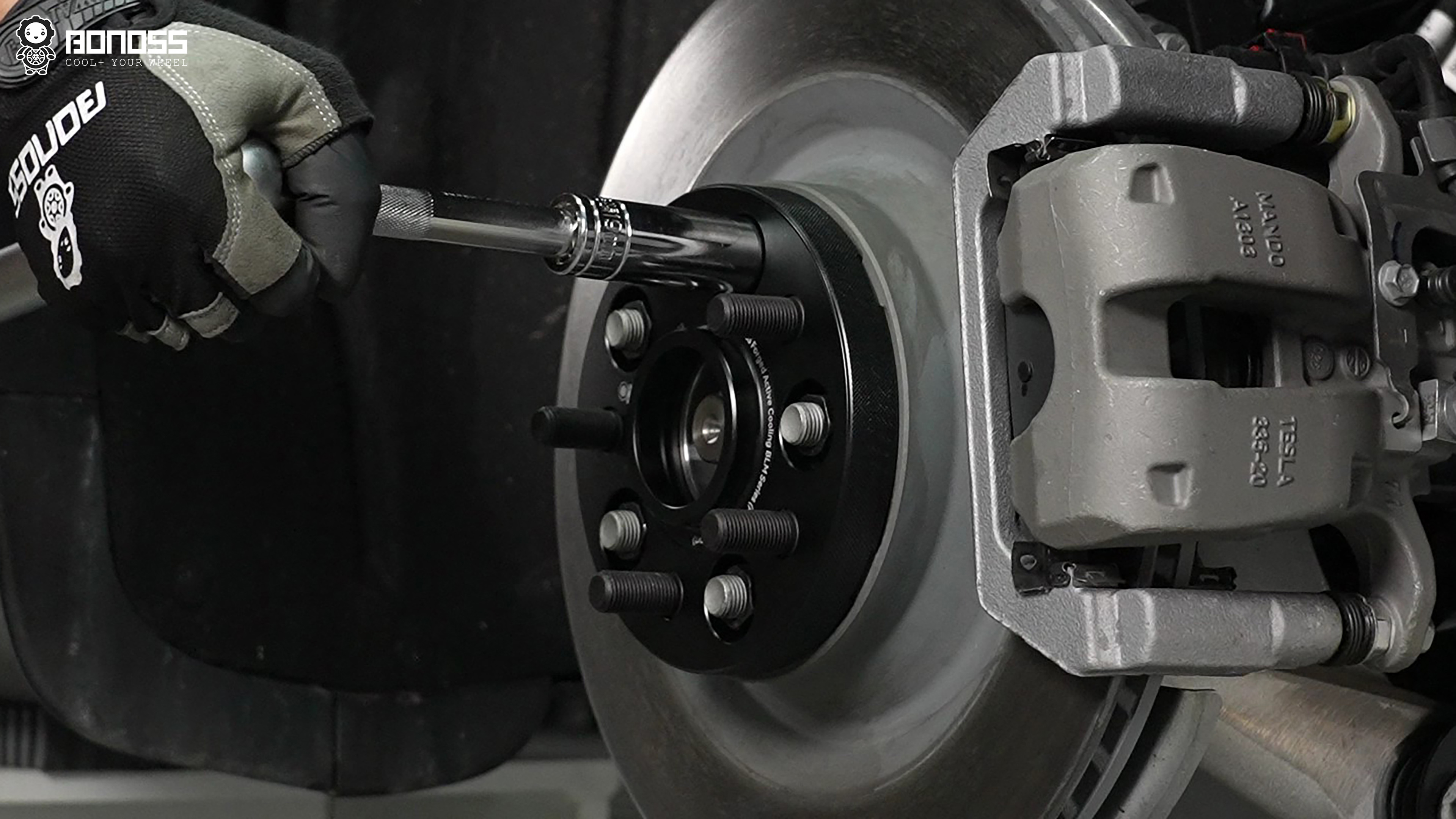
Use ONE torque value per fastening stage for the entire installation. The spacer-to-hub nuts get the BONOSS value; the wheel nuts get the Tesla value. Both are correct — for their own joint. Never split the difference, never use one value for both stages.
A few hard rules: never use an impact gun on spacer hardware (torque wrench only), apply no lubricant to the threads unless the instructions call for it, and re-torque both stages after the first 50–100 miles. That re-check isn’t optional paranoia — new joints settle, and five minutes with a torque wrench is the whole job. For a deeper walkthrough of the torque sequence, see this Model Y Performance spacer torque guide, and if you’re weighing stud options for thicker setups, this breakdown of Model Y spacer stud choices covers the engineering.
6061-T6 vs 7075-T6: Which Alloy?
Both are forged, both are fine — the difference is margin.
Daily driving: forged 6061-T6 aluminum handles everything a paved road throws at it. It absorbs impact without cracking, machines beautifully, and costs less. For a commuting Model Y, it’s the rational choice.
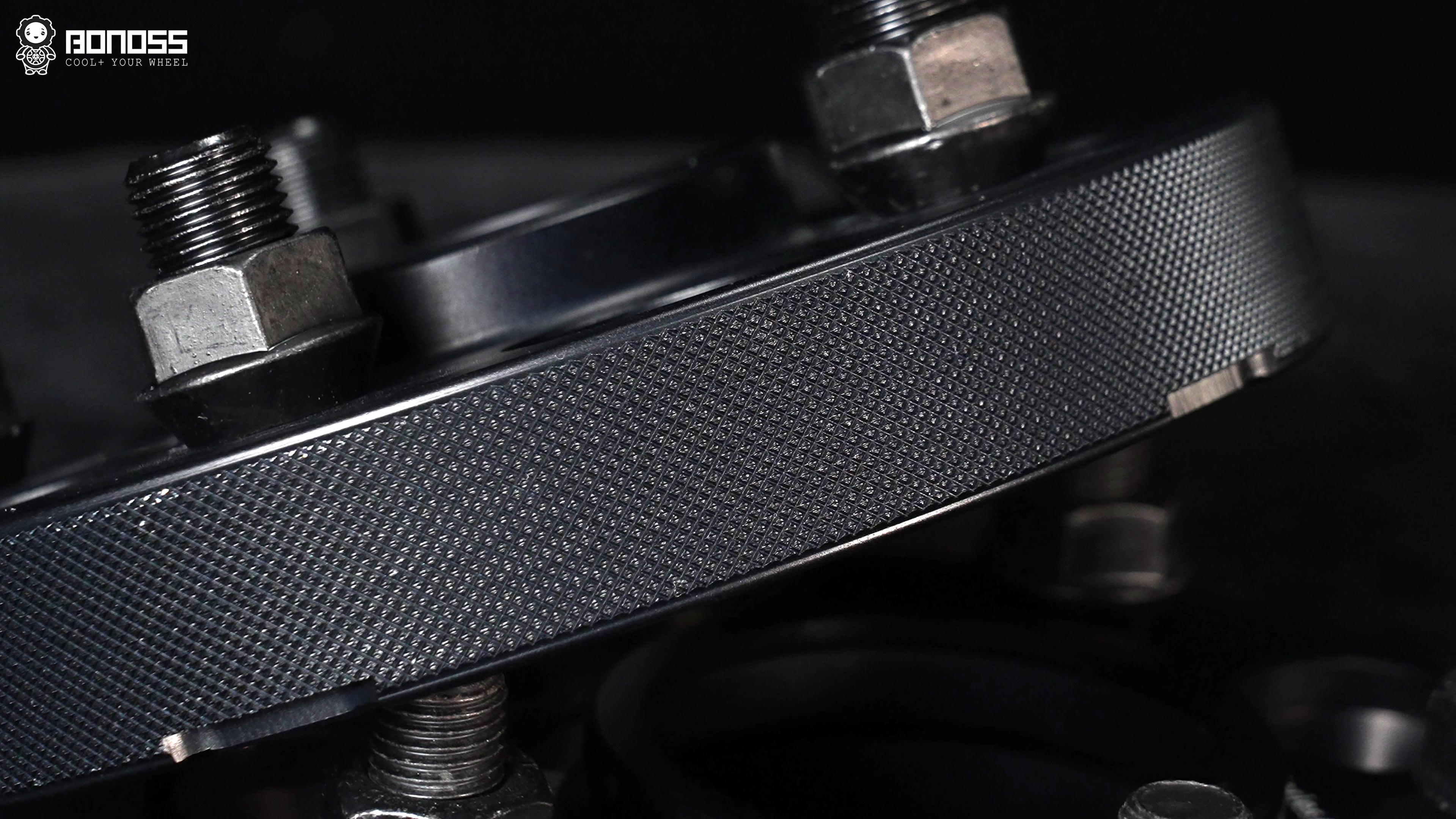
Hard use: if you track the car, drive mountain roads aggressively, or just want maximum headroom, forged 7075-T6 is meaningfully stronger. TÜV hardness testing puts the BONOSS 6061-T6 spacer at 101–103 HBW and the 7075-T6 at 146 HBW 5/250 (both per ISO 6506-1:2014) — that roughly 45% hardness gap is why 7075-T6 resists deformation under violent load cycles. For a Model Y Performance that sees canyon duty, that’s the one we’d pick, and there’s a dedicated 7075-T6 hub-centric variant for the Model Y.
Pre-Purchase Checklist and Buying Recommendations
Before you click buy on any Tesla Model Y spacers, run this list:
- Confirm your trim and wheel offset from the table above — 2025+ Standard and Model Y L differ from older cars.
- Measure the fender gap at all four corners.
- Do the stud-protrusion math.
- Insist on hub-centric with a 64.1mm bore and a multi-stage hub-centric lip that also pilots the wheel.
- Verify the hardware grade — ISO Grade 12.9 studs and ISO Grade 10 nuts, with actual test reports, not marketing claims.
- Check the warranty. Ten years is the benchmark for a serious manufacturer.
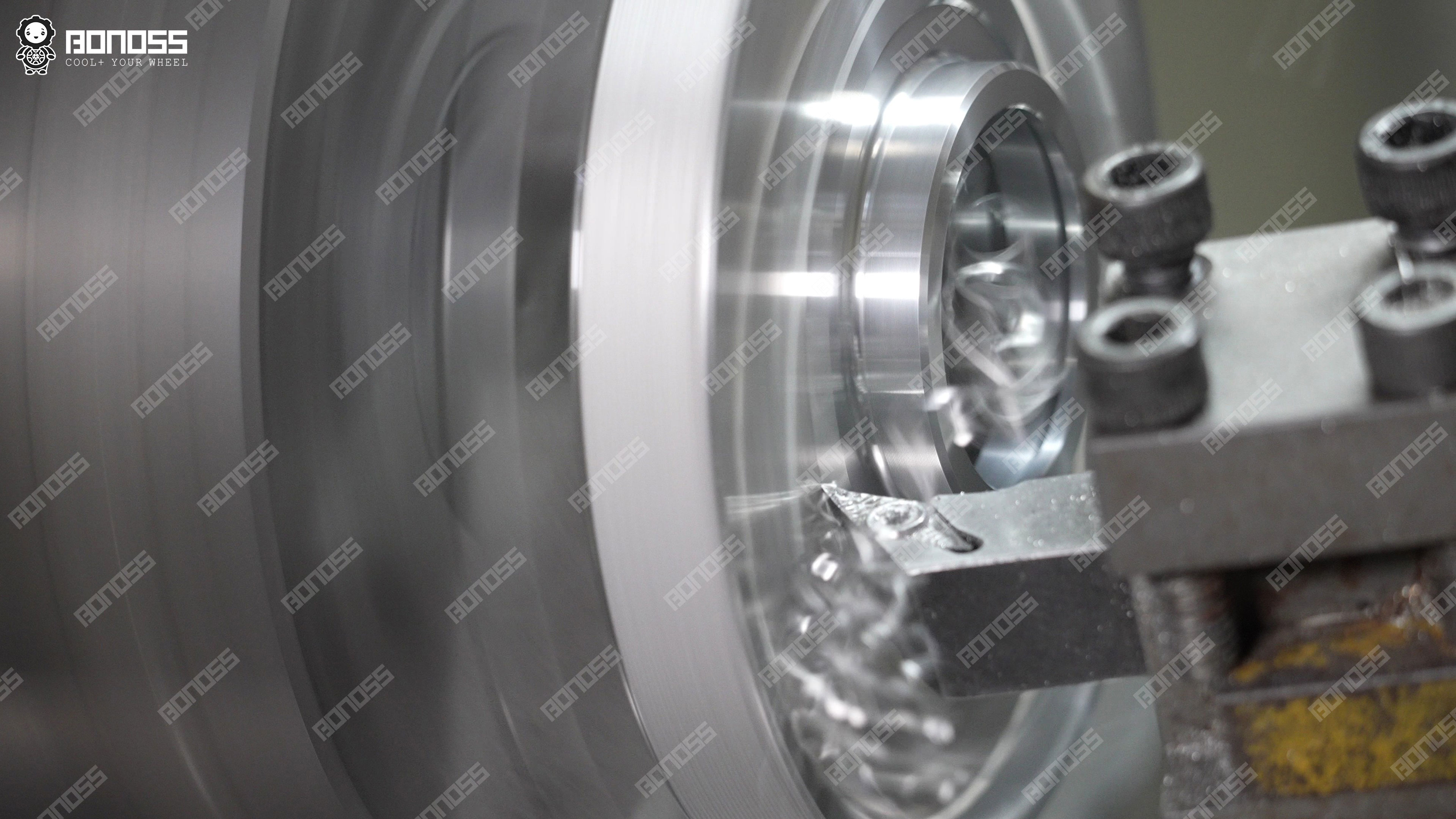
On the product side, we’ll keep this short because the specs do the talking. BONOSS forged active cooling wheel spacers are machined from forged 6061-T6 or 7075-T6 aluminum to a 0.02mm CNC tolerance, hard anodized for corrosion resistance, and built around ISO Grade 12.9 studs with ISO Grade 10 nuts. Three design details matter in daily use:
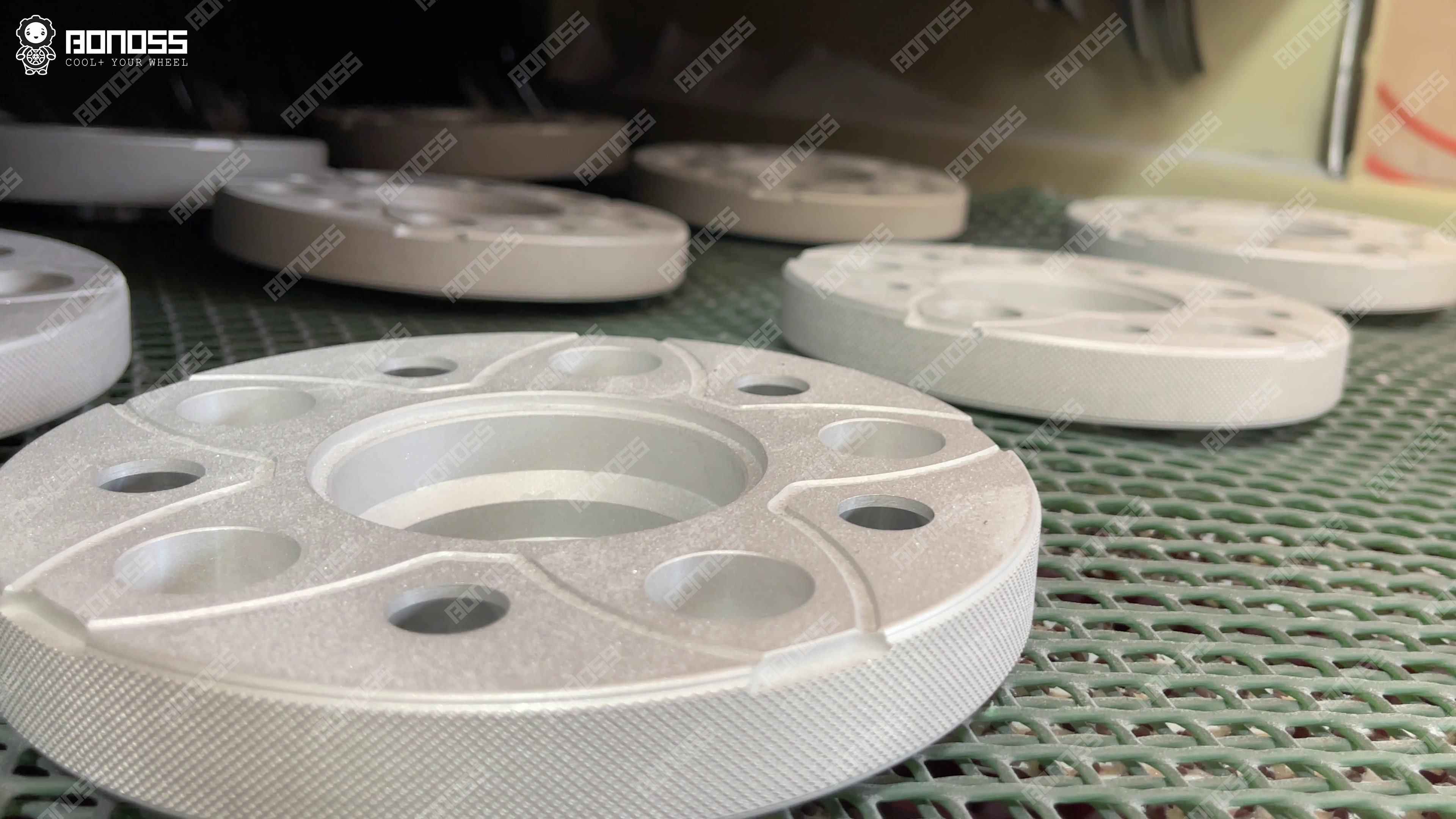
The active cooling grooves are the feature we wouldn’t give up. An EV’s brakes already work differently thanks to regen — when you do lean on the friction brakes hard, they tend to be heat-soaked from sitting against a warm hub. The grooved petal design actively pumps air through that interface as the wheel turns. Combined with the knurled sidewalls, it’s a spacer that behaves like a heat sink rather than a heat dam.
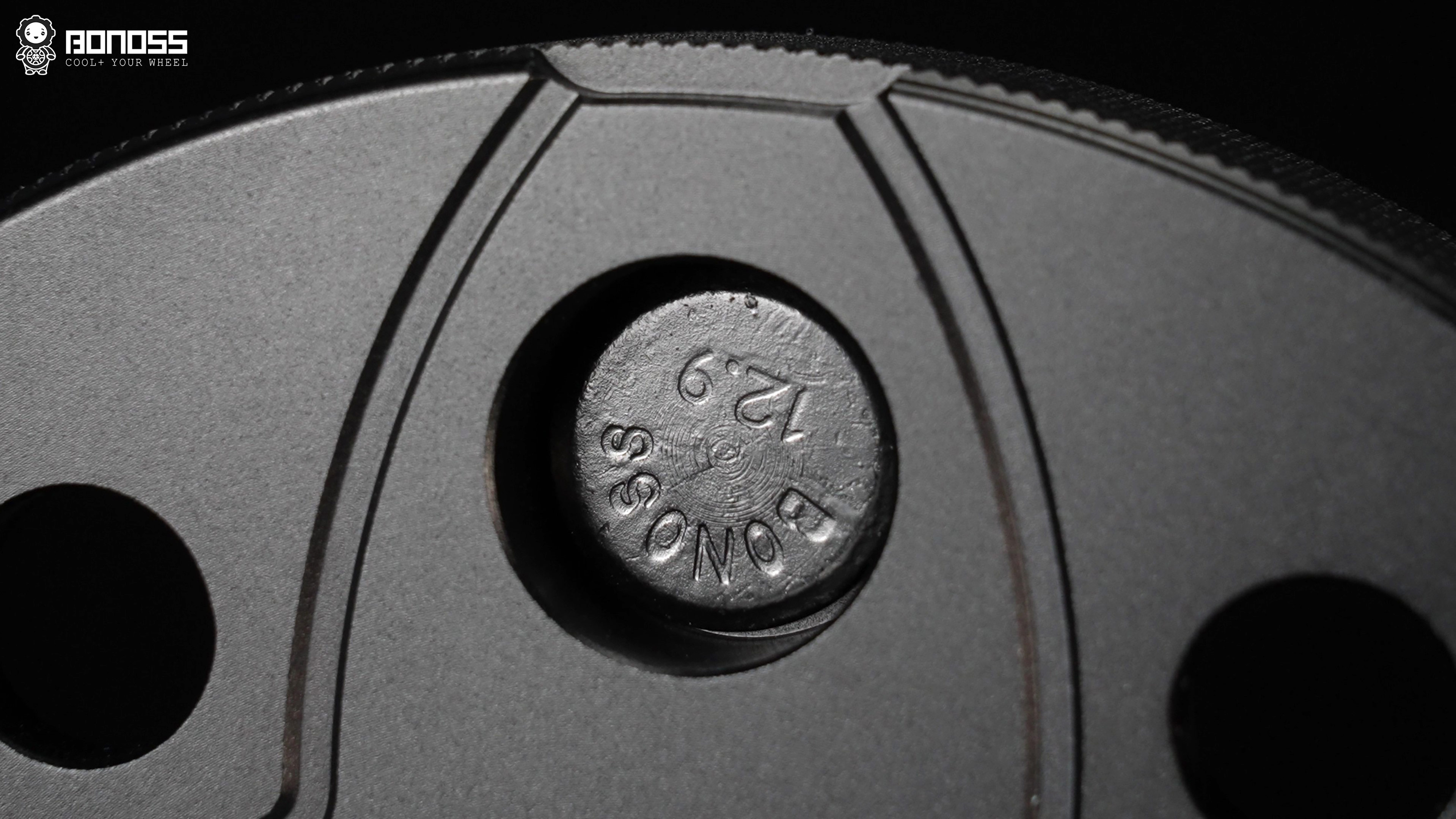
On verification: BONOSS holds over 75 SGS and TÜV test reports, and the numbers are worth understanding rather than just quoting. The M14x1.5 ISO Grade 12.9 studs tested at 1268 MPa tensile strength (SGS, per ISO 898-1:2013) with 391–401 HV10 hardness (per ISO 6507-1:2018) and a 121 kN proof load. A TÜV lab independently tested the same stud spec at 1233 MPa — slightly lower, and that’s normal: different labs, different samples, and ordinary measurement error always produce different readings. What matters is that both results clear the Grade 12.9 threshold with room.
The ISO Grade 10 nuts tested at 358–362 HV0.5 hardness and 138.8 kN proof load (per ISO 898-2:2012) — different numbers from the studs because a nut is a different part with different thread engagement, not because something is off. Same logic applies across thread sizes: an M14x1.5 stud and an M14x1.25 stud are different parts with different ratings, so always read the report for your exact spec rather than assuming one number covers everything.
For a stock-offset Model Y, the 15mm and 20mm hub-centric spacers for the Model Y in 6061-T6 cover most buyers; heavier use points to the 7075-T6 version above. If you’re only after caliper clearance on aftermarket wheels, the 5mm lightweight-plus spacer does that one job cheaply. Every spacer carries a 10-year warranty. One more real-car reference: this BONOSS Model Y spacer photo set shows the installed result on a daily-driven car.
Frequently Asked Questions
Are wheel spacers safe on a Tesla Model Y?
Yes — hub-centric spacers with Grade 12.9 studs, correctly torqued and re-checked, are safe on a Model Y. Virtually every failure story traces back to lug-centric cast spacers, wrong torque, or skipped re-torques. The full engineering case is laid out in this Model Y spacer safety analysis.
Do Model Y spacers cause vibration?
Not if they’re hub-centric and torqued correctly. Vibration comes from lug-centric parts that let the wheel center itself on the studs, or from debris trapped between the spacer and hub. Clean both faces, torque in a star pattern, and vibration is a non-issue. Using Tesla Model Y wheel spacers on the front or rear wheels only won’t cause any shaking issues.
Will 20mm spacers rub on a Model Y?
On stock suspension and factory tire sizes, no — 20mm sits flush with the fender, not past it. Lowered cars and 255+ tire widths should measure at full compression before committing. Proper-size wheel spacers can prevent wheels and tires from scratching the fenders.
What torque should I use for Model Y wheel spacers?
Two values, two stages: 140 Nm (103.5 ft-lb) for the spacer-to-hub nuts per BONOSS installation instructions, and 175 Nm (129 ft-lb) for the wheel nuts per the owner’s manual. Re-torque both after 50–100 miles.
Do I need extended studs for Model Y spacers?
Not with bolt-on spacers in the 15–25mm range — the spacer brings its own pressed-in Grade 12.9 studs. Extended studs only enter the conversation with slip-on spacers under 10mm, which is a different product category entirely.
What is the Tesla Model Y bolt pattern?
Every Model Y from 2020 to 2027 uses 5×114.3mm (5×4.5″) with a 64.1mm center bore and M14x1.5 thread pitch. The pattern never changed across generations — only wheel offsets did.
Conclusion: The Short Version
The Model Y makes spacer fitment easy: one bolt pattern, one center bore, one thread spec across seven model years. Your only real decisions are thickness — measured at the fender, not guessed — and material, where 6061-T6 covers daily duty and 7075-T6 covers hard use. Get hub-centric parts, respect the two-stage torque procedure, re-check after the first hundred miles, and a set of Tesla Model Y wheel spacers becomes one of the highest-visual-impact, easiest mods on the platform. Ready to buy Tesla Model Y wheel spacers? Start with the BONOSS active cooling range for the Model Y — pick your measured thickness, and the hard part is already done.

About Jack Miller
Jack Miller is a certified automotive technician specializing in wheel and tire systems, with over a decade of hands-on repair experience. He has served as a senior technical specialist at BONOSS for the past 7 years, advising on wheel spacer fitment, wheel bolt & wheel nut selection for thousands of customer builds. Jack’s technical guides on BONOSS are grounded in real customer cases — not theory.