
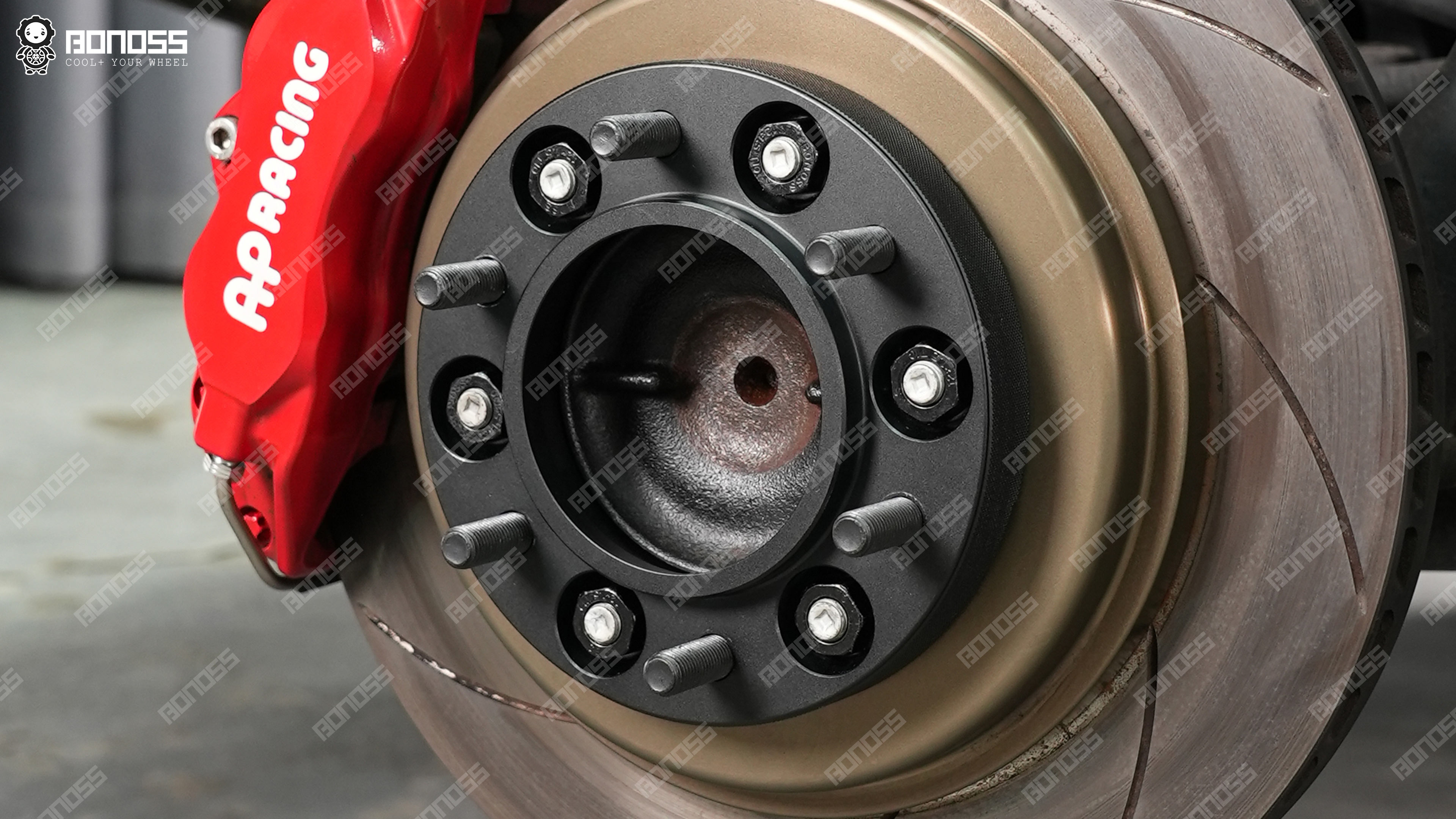
If you drive a Lexus GX — whether it is a first-generation GX 470 on the J120 platform, a GX 460 on the long-running J150, or the new J250-based GX 550 — you have probably noticed the wheels sit tucked well inside the fenders. That sunken factory stance is the single biggest reason owners start researching Lexus GX wheel spacers. But here is the fork in the road: do you bolt on spacers to push the wheels outward, or do you replace the entire wheel with a lower-offset aftermarket set?
Quick answer: if your factory wheels are in good shape and the only thing bugging you is the tucked look, spacers win on cost, reversibility, and installation time. If you are chasing a specific wheel design, significant weight savings, or a much wider track than spacers alone can deliver, new offset rims are the better play. Most GX owners — especially those who already like their OEM alloys — land on spacers, and the cost math backs that up. Let us break down the real comparison with actual specs, not marketing talk.
Spec Quick Reference: Every Lexus GX Generation
Before you pick a path, you need to know what your GX actually rolls with. The table below covers every generation and trim from the 2002 GX 470 through the 2027 GX 550. The bolt pattern stays constant at 6×139.7mm (also written 6×5.5″), which is why Lexus GX wheel spacers share PCD compatibility with the Toyota 4Runner, Tacoma, and Tundra. But the center bore and thread pitch shift between generations — and that matters.
| Year / Trim | Bolt Pattern | Center Bore | Thread Pitch | Wheel Offset | Suggested Spacer Sizes | Factory Lug Nut Torque |
|---|---|---|---|---|---|---|
| 2023-2027 GX 550 Premium | 6×139.7mm | 95.1mm | M14x1.5 | ET50 / ET60 | 25mm to 30mm | 97 ft-lb / 131 Nm |
| 2023-2027 GX 550 Premium+ | 6×139.7mm | 95.1mm | M14x1.5 | ET50 / ET60 | 25mm to 30mm | 97 ft-lb / 131 Nm |
| 2023-2027 GX 550 Luxury | 6×139.7mm | 95.1mm | M14x1.5 | ET50 / ET60 | 25mm to 30mm | 97 ft-lb / 131 Nm |
| 2023-2027 GX 550 Luxury+ | 6×139.7mm | 95.1mm | M14x1.5 | ET50 / ET60 | 25mm to 30mm | 97 ft-lb / 131 Nm |
| 2023-2027 GX 550 Overtrail | 6×139.7mm | 95.1mm | M14x1.5 | ET50 / ET60 | 25mm to 35mm | 97 ft-lb / 131 Nm |
| 2023-2027 GX 550 Overtrail+ | 6×139.7mm | 95.1mm | M14x1.5 | ET50 / ET60 | 25mm to 35mm | 97 ft-lb / 131 Nm |
| 2023-2027 GX 550 L | 6×139.7mm | 95.1mm | M14x1.5 | ET50 / ET60 | 25mm to 30mm | 97 ft-lb / 131 Nm |
| 2020-2022 GX 460 Executive 5 | 6×139.7mm | 106.1mm | M12x1.5 | ET25 | 25mm to 30mm | 76 ft-lb / 103 Nm |
| 2020-2022 GX 460 Executive 5 Sport | 6×139.7mm | 106.1mm | M12x1.5 | ET25 | 25mm to 30mm | 76 ft-lb / 103 Nm |
| 2009-2022 GX 460 Premium | 6×139.7mm | 106.1mm | M12x1.5 | ET25 | 25mm to 35mm | 76 ft-lb / 103 Nm |
| 2020-2022 GX 460 Premium Sport | 6×139.7mm | 106.1mm | M12x1.5 | ET25 | 25mm to 30mm | 76 ft-lb / 103 Nm |
| 2009-2022 GX 460 Luxury | 6×139.7mm | 106.1mm | M12x1.5 | ET25 | 25mm to 35mm | 76 ft-lb / 103 Nm |
| 2014-2019 GX 460 Standard | 6×139.7mm | 106.1mm | M12x1.5 | ET25 | 25mm to 30mm | 76 ft-lb / 103 Nm |
| 2014-2019 GX 460 Comfort | 6×139.7mm | 106.1mm | M12x1.5 | ET25 | 25mm to 30mm | 76 ft-lb / 103 Nm |
| 2014-2019 GX 460 Executive | 6×139.7mm | 106.1mm | M12x1.5 | ET25 | 25mm to 30mm | 76 ft-lb / 103 Nm |
| 2002-2008 GX 470 | 6×139.7mm | 106.1mm | M12x1.5 | ET25 | 25mm to 35mm | 83 ft-lb / 112 Nm |
Two things jump out. First, the GX 550 (J250) dropped the center bore from 106.1mm to 95.1mm and switched to M14x1.5 thread pitch — so 6×139.7 wheel spacers Lexus GX parts are not automatically cross-generation. A spacer built for a GX 460 will not fit a GX 550 without the correct hub-centric ring. Second, the factory offset jumped from ET25 on older models to ET50/ET60 on the GX 550, which changes how much spacer you need for a flush look.
Lexus GX Wheel Spacers vs. Offset Rims: Which Upgrade Fits Your Build?
| Factor | Wheel Spacers | Offset Rims |
|---|---|---|
| Cost | $120-350 per set of 4 | $800-2500 per set of 4 |
| Visual Effect | Pushes existing wheels outward, achieves flush | Changes entire wheel design and stance |
| Reversibility | Fully reversible — unbolt and return to stock | Not reversible without buying new wheels |
| Maintenance | Re-torque after 50 miles, then periodically | Standard wheel rotation and balance |
| Best For | Owners happy with factory wheel design | Owners wanting new aesthetics or weight savings |
If that table already settled it for you, scroll down to the sections that matter. If you are still on the fence, the details below will push you one way or the other.
Effect Comparison: Track Width, Flush Fit, and Handling
Track Width and Visual Stance
Both approaches widen your track. A 25mm spacer pushes each wheel out exactly 25mm — that is 50mm of total track width gain per axle. A set of offset rims with ET0 instead of factory ET25 does the same thing, just built into the wheel casting. The visual result is nearly identical at the same effective offset.
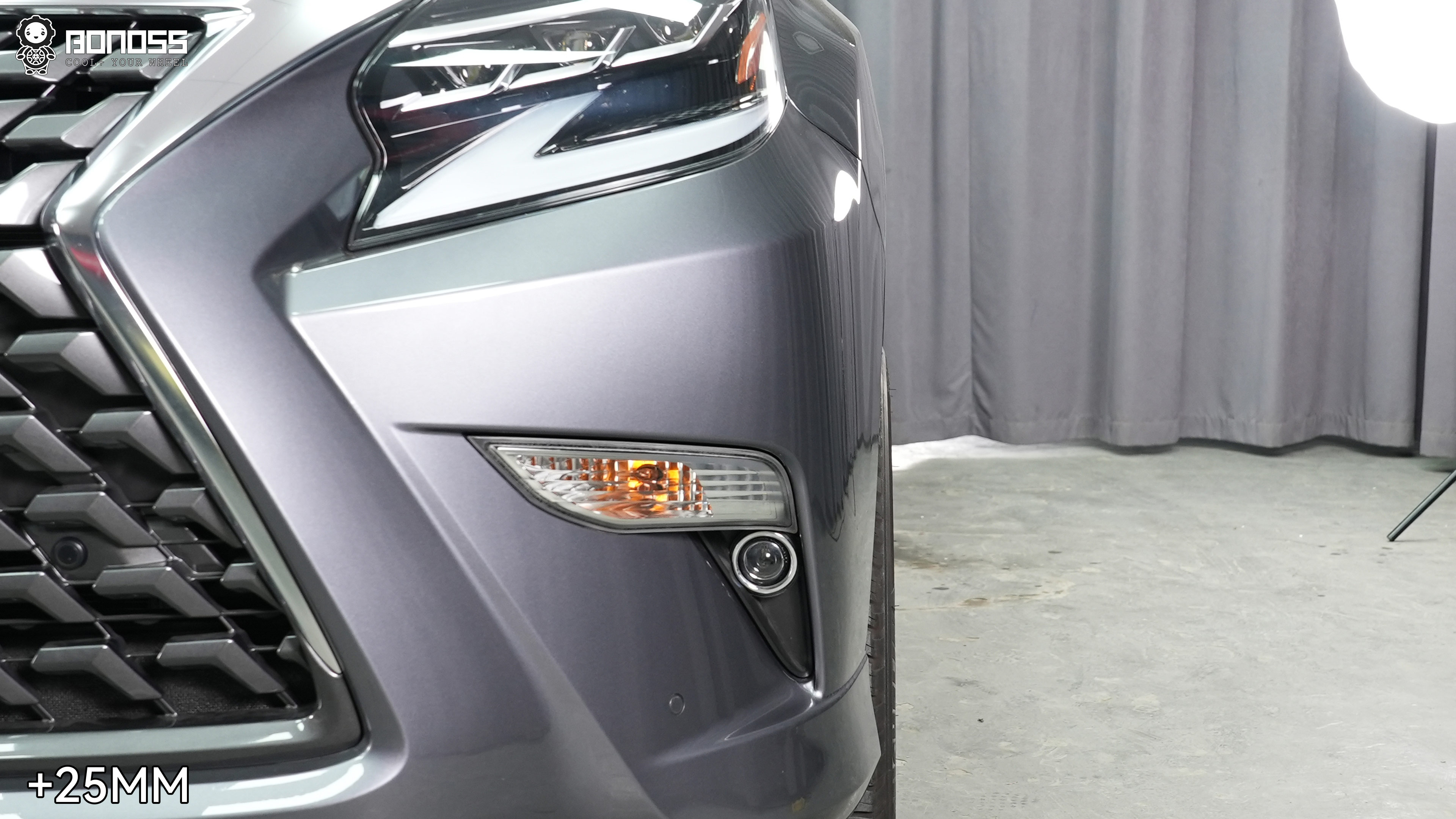
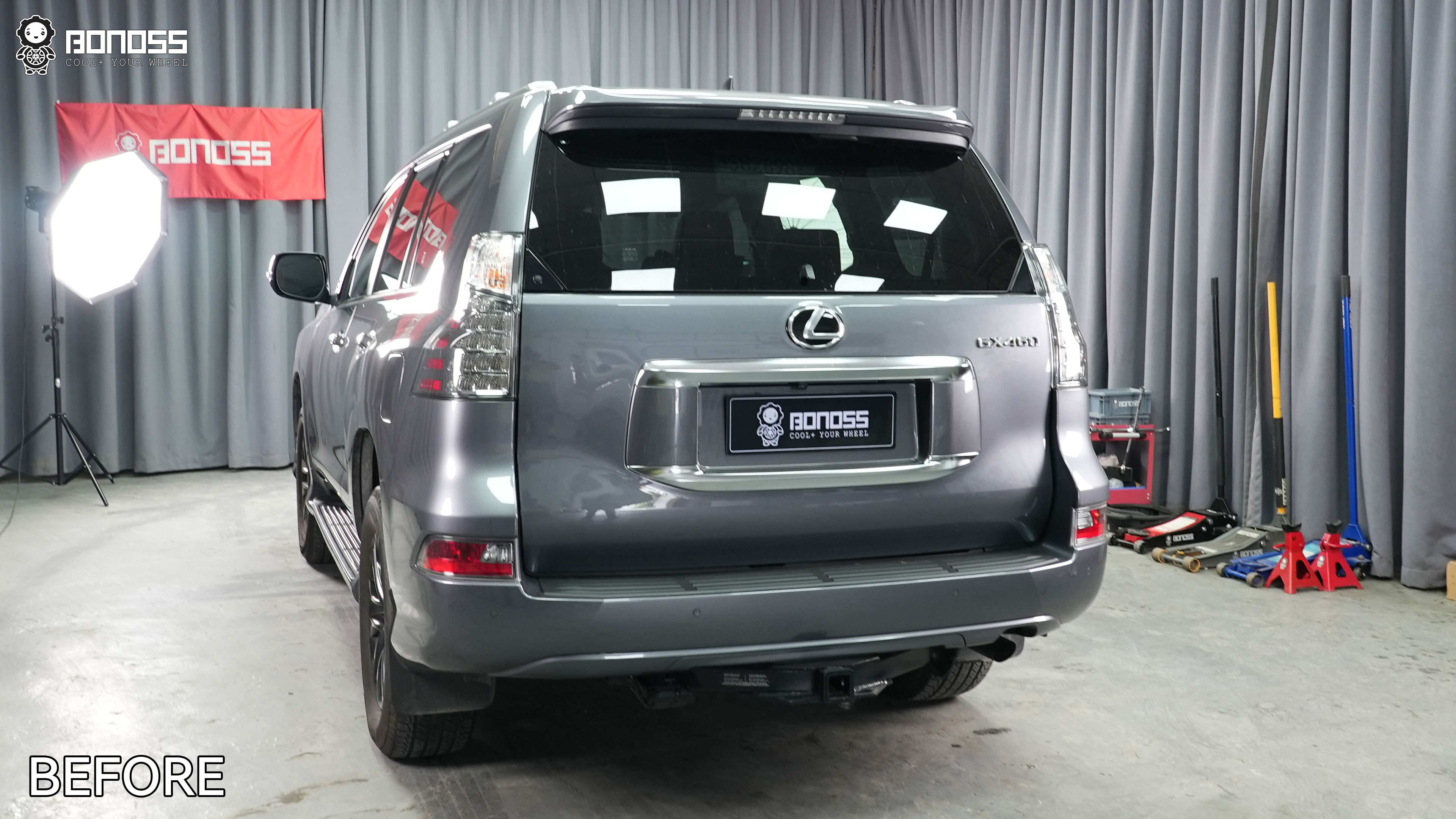
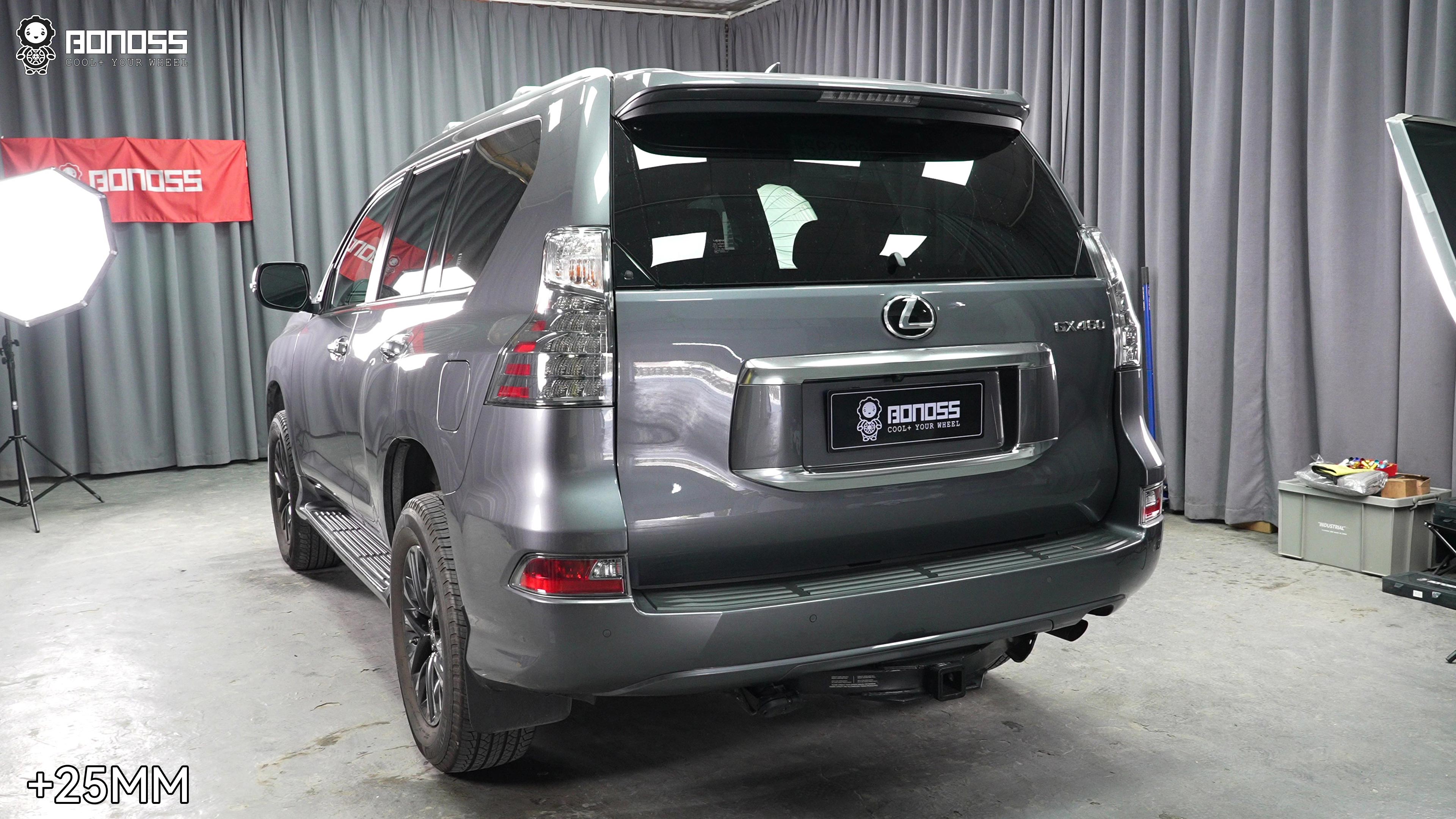
The difference is in how you get there. Spacers let you keep the wheel you already have. If you like the GX’s factory 18-inch or 20-inch design but hate the tucked look, a 25mm to 30mm spacer fixes it in an afternoon. Want to see what that looks like? This real-world GX 460 spacer install shows the transformation on a J150 platform with 25mm BONOSS spacers front and rear.
Flush Fitment: How to Measure
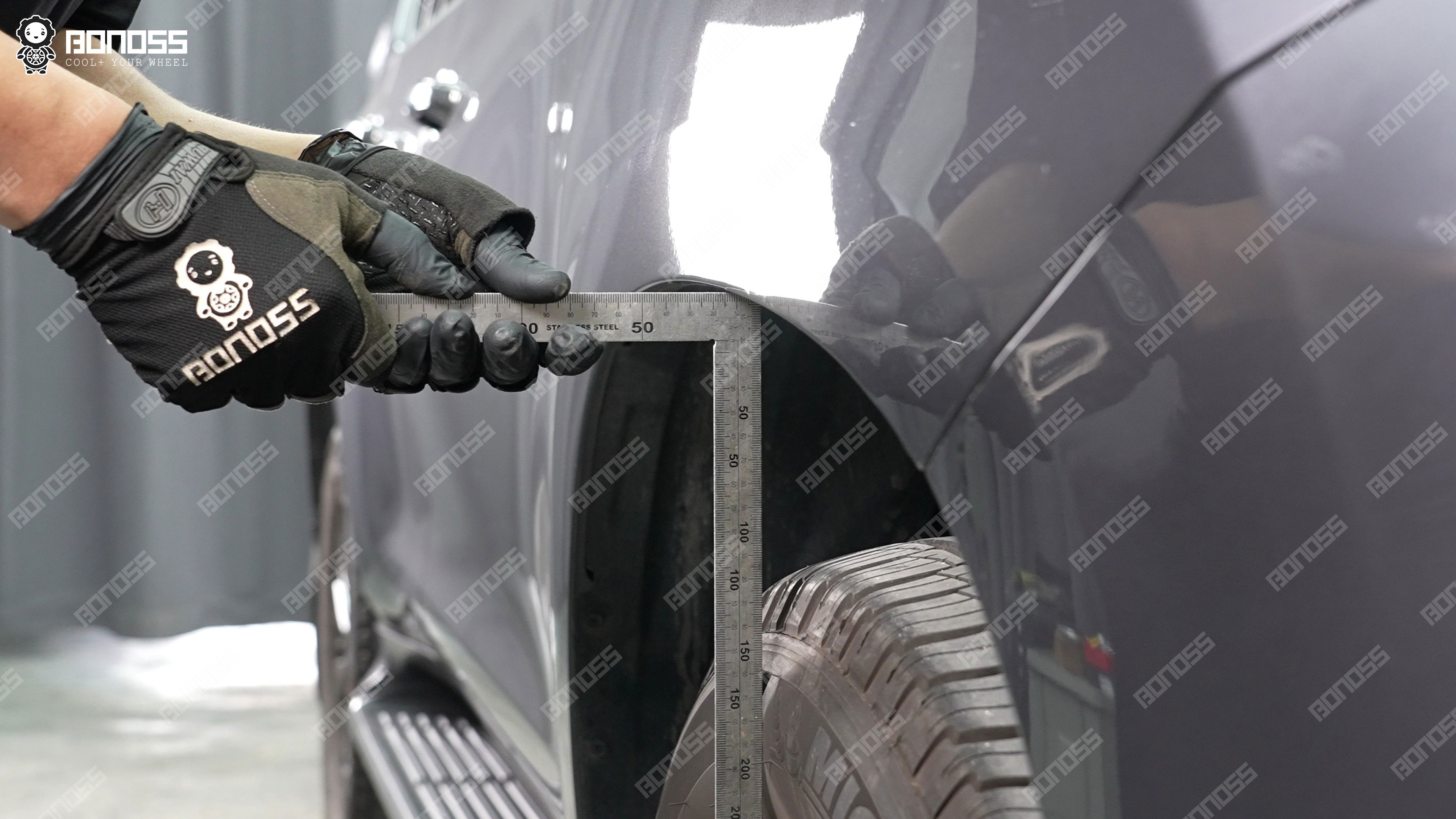
Here is where a lot of owners get it wrong. Do not guess the spacer size — measure it. Take a straight edge across the tire sidewall and measure the gap from that edge to the inner fender lip. That gap is your target spacer thickness for a flush look. Front and rear measurements often differ. On the GX 460, the front typically calls for 25mm while the rear takes 25mm or 30mm to fill the arch evenly.
A high-accuracy ruler gives you the number in about two minutes. The result is a stance that sits right at the fender line — not poking past it, not hiding inside it.
Handling and Stability
Widening the track does change handling. More track width reduces load transfer during cornering, which generally improves stability. The GX is a tall, heavy SUV, and even a 25mm-per-side track gain makes the vehicle feel more planted in lane changes and crosswinds. That said, going too wide — 50mm per side or more — increases scrub radius and steering effort, and on the GX 550’s EPS system you may notice heavier steering at parking speeds. Stick with the suggested range in the spec table and you will not run into issues.
Lexus GX Wheel Spacers Cost Comparison
The Spacer Route
A set of four hub-centric Lexus GX wheel spacers runs roughly $120 to $350 depending on material and thickness. BONOSS forged 6061-T6 spacers sit in the lower-mid range; 7075-T6 costs more but brings higher hardness for off-road abuse. Either way, you are looking at a fraction of what new wheels cost, and you keep your factory rubber mounted.
The Offset Wheel Route
A decent set of aftermarket wheels in 18-inch or 20-inch fitment for the GX starts around $200 per wheel and climbs fast. By the time you factor in mounting, balancing, and possibly new TPMS sensors, you are easily past $1,000. If you want forged wheels — which you should if you off-road — expect $400 to $700 per wheel before tires. The upside is you can change bolt pattern, width, and offset all at once, and forged aftermarket wheels are often lighter than the cast factory alloys.
Maintenance: Re-Torque vs. Standard Wheel Care
Spacers require one extra step that new wheels do not: re-torque after the first 50 miles. The settling process compresses the mating surfaces, and a re-torque catches any relaxation. After that initial check, inspect at every tire rotation — every 5,000 miles or so. That is it.
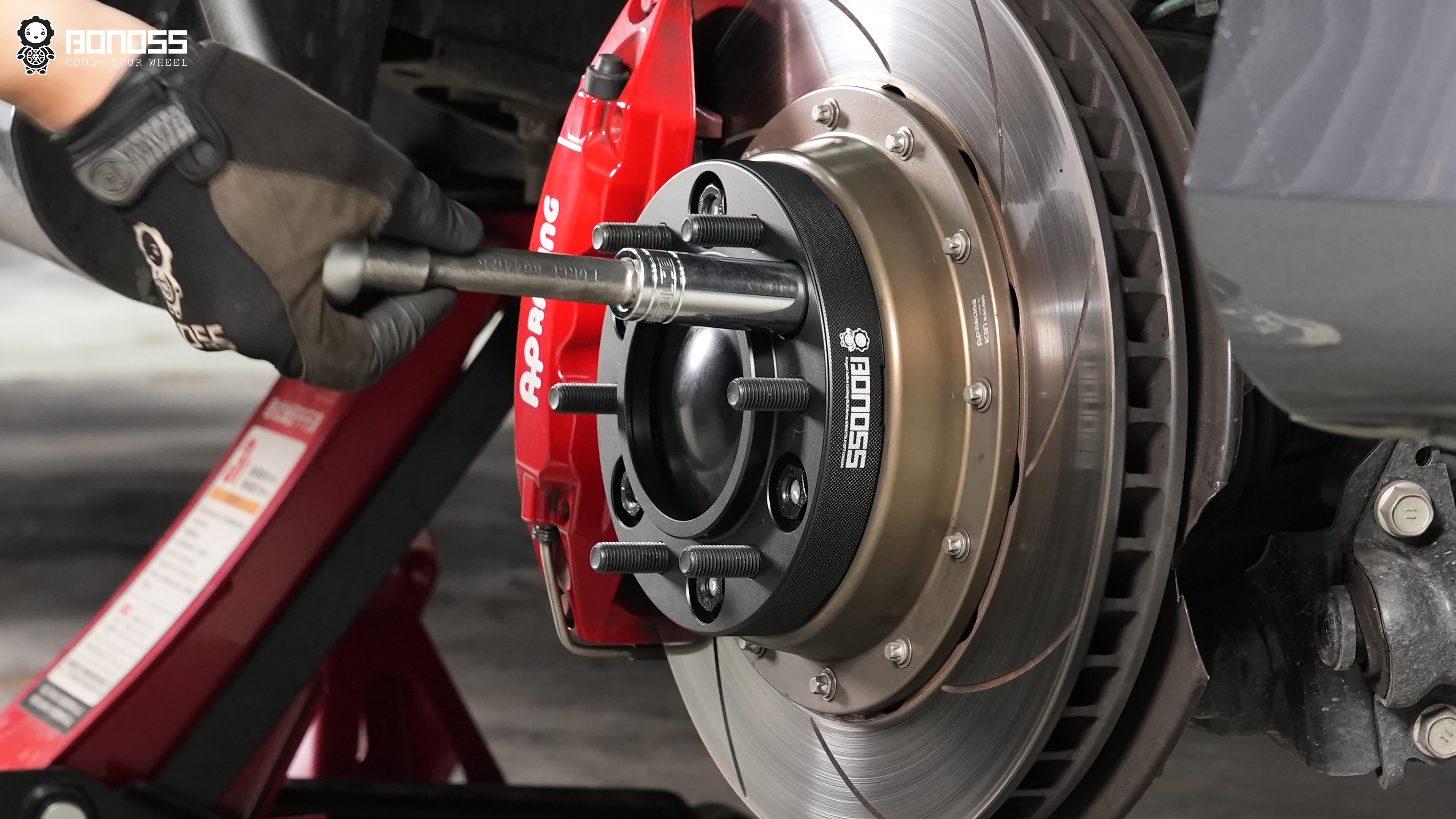
Here is the part that matters more than most owners realize: do not use an impact gun. Impact wrenches deliver torque in hammering bursts, and the actual clamping force varies wildly between lugs — one might see 140 ft-lb while the next gets 60 ft-lb, even if the gun is set the same. That uneven clamping is a leading cause of vibration and loosening. Worse, the hammering can gall and damage the M12x1.5 or M14x1.5 thread pitch. Use a torque wrench with a calibrated click at your target value, tighten in a crisscross (star) pattern, and you will not have problems.
New offset wheels skip the re-torque conversation entirely — standard rotation and balance is all they need. That said, if you are running aftermarket wheels, you still need to torque them properly with a wrench, not an impact gun. The maintenance gap between the two options is smaller than people think.
When Wheel Spacers Make More Sense
Budget-Conscious Builds
If your total upgrade budget is under $400, spacers are the only option that makes sense. You get the visual change, the wider track, and the flush fitment without touching your wheels or tires. There is no remounting, no rebalancing, no TPMS hassle.
You Already Like Your Factory Wheels
The GX 550 Overtrail ships with a genuinely good-looking 18-inch wheel. The GX 460 Luxury’s 18-inch split-spoke is clean. If you like the design but hate the offset, spacers are the surgical fix. You keep the look, you fix the stance.
PCD Adaptation: Running F-150 or 4Runner Wheels on a GX
This is where spacers pull double duty. The 6×139.7mm bolt pattern is shared with the Ford F-150 (pre-2021), Toyota 4Runner, Tacoma, and Tundra — but the center bore and hub register differ. A hub-centric adapter spacer can convert the GX hub to accept a wheel with a different hub bore.
For example, a GX owner wanting to run take-off F-150 wheels needs a spacer that matches the GX hub on the vehicle side and the F-150 center bore on the wheel side. This is a legitimate use case that new offset wheels alone cannot solve — you would need custom-drilled wheels, which is expensive and hard to find.
You Want to Return to Stock Later
Leasing your GX? Planning to sell it stock? Spacers unbolt in 20 minutes per corner. New wheels mean storing a second set somewhere and swapping them back. For reversibility, spacers win without contest.
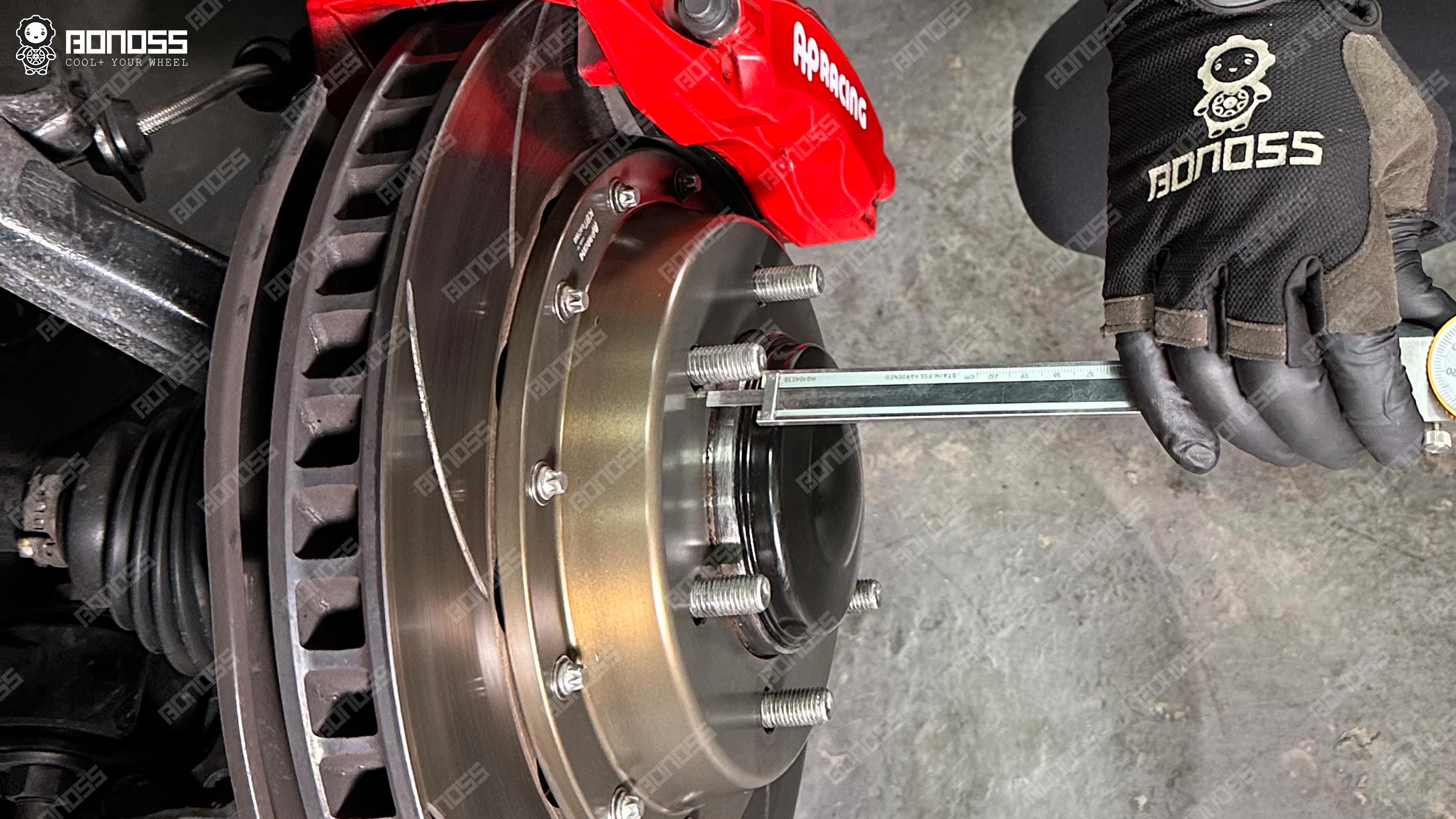
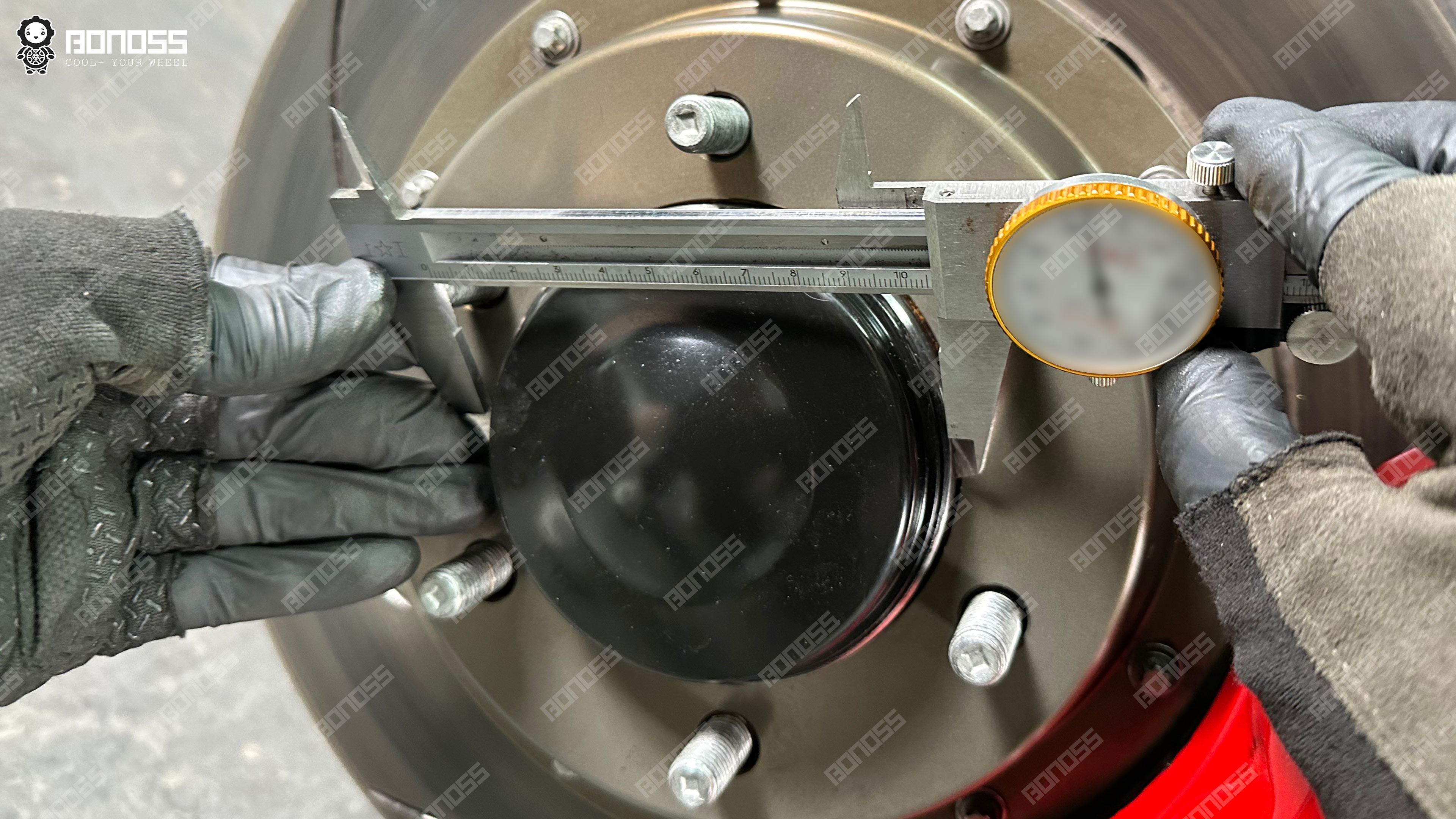
One question that comes up constantly: do you need to trim the factory studs? It depends on two measurements. First, measure the stud protrusion — how far the factory wheel studs extend past the hub face. Second, check the wheel pocket depth on the back of your wheel — the recessed area where the studs sit when the wheel is mounted.
As long as the wheel pocket depth plus the spacer thickness is greater than the stud protrusion, the studs tuck into the pockets and you do not need to cut anything. If the studs bottom out in the pockets, you either trim them or choose a bolt-on spacer design with its own shorter studs.
When New Offset Rims Win
Unlimited Budget and a Specific Look
If you have $2,000+ to spend and you want a completely different wheel design — say, a 17-inch beadlock for overlanding or a 22-inch deep-dish for street stance — spacers cannot give you that. You need new wheels.
Damaged or Worn Factory Wheels
Curb rash, bent barrels, cracked spokes — if your factory wheels are compromised, replacing them with a lower-offset set solves two problems at once. Putting spacers on damaged wheels is throwing good money after bad.
Weight Reduction Matters
Factory GX wheels are heavy. A quality forged aftermarket wheel can drop 4 to 8 pounds per corner of unsprung weight. If you are building a performance-oriented GX, forged wheels are the call.
Hybrid Approaches That Actually Work
High-Offset Wheels Plus Spacers for Fine-Tuning
Say you found a set of wheels you love, but the offset is ET40 and you need ET15 to sit flush. Rather than hunting for a wheel with exactly ET15 (which may not exist in the design you want), buy the ET40 wheel and add a 25mm spacer. This is a common and legitimate approach — you get the wheel design you want and the precise fitment you need. Just make sure the spacer is hub-centric and the combined stack-up does not exceed safe spacer thickness (generally 50mm max for a bolt-on).
Big Brake Caliper Clearance
Upgraded brake kits often need 3mm to 10mm of clearance between the caliper and the wheel spokes. A thin spacer solves this without requiring new wheels. This is one of the few cases where spacers are not just a cosmetic choice — they are a functional necessity.
Types of Lexus GX Wheel Spacers
Hub-Centric vs. Lug-Centric
This is not a matter of preference — hub-centric is the only design you should consider for a vehicle as heavy as a GX. A hub-centric spacer centers on the hub register (that machined ring on the axle), carrying the vehicle’s weight through the hub rather than through the lug studs. Lug-centric spacers center on the lugs themselves, which on a 5,000-plus-pound SUV is a recipe for vibration and stud fatigue.
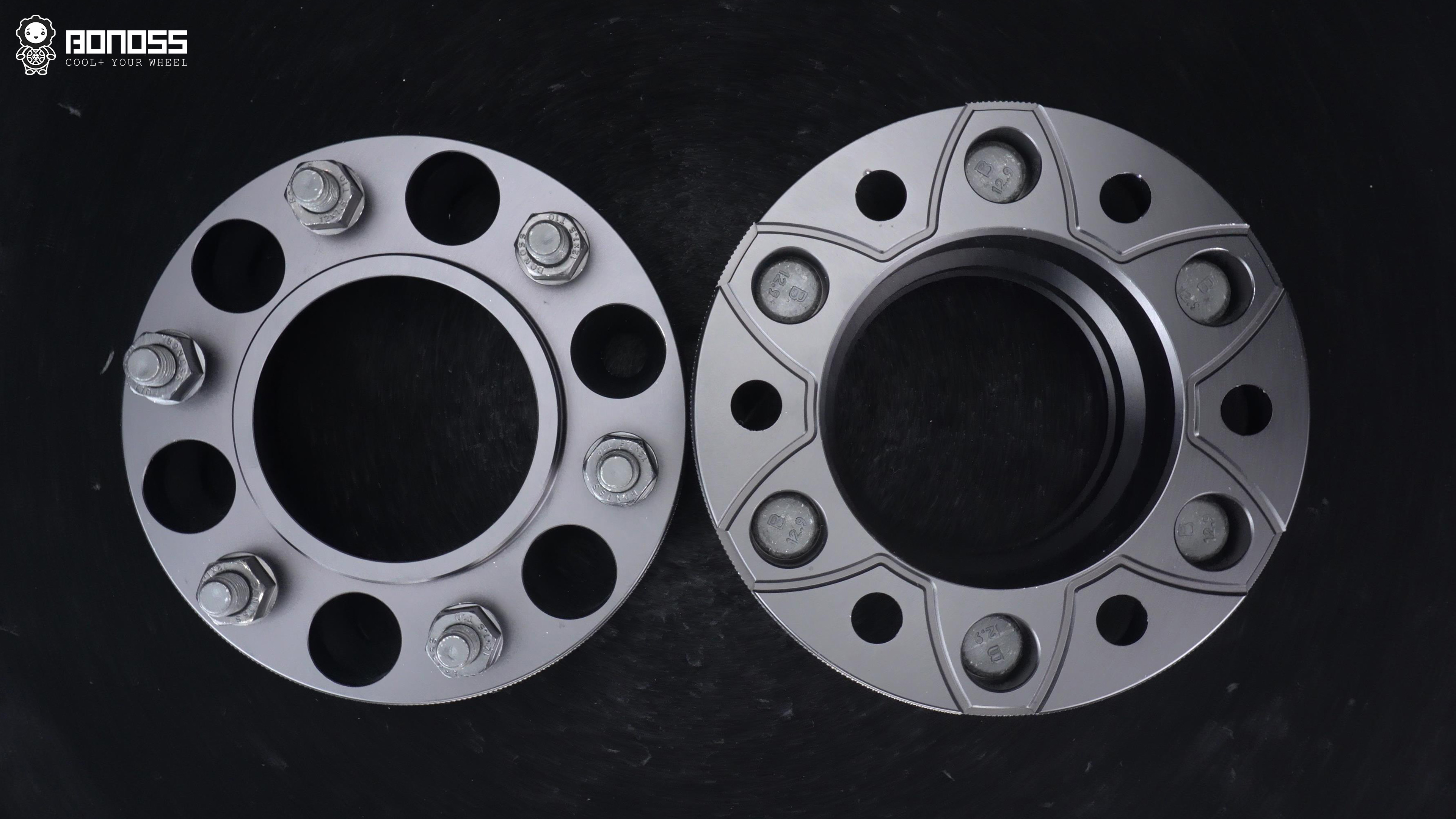
BONOSS Lexus GX hub-centric wheel spacers use a multi-stage hub-centric design — meaning the hub ring is machined in stages that match the factory hub taper. This distributes the clamping load across a wider contact area than a single-ring design, which matters on a vehicle that sees both highway speeds and trail abuse.
Slip-On vs. Bolt-On
Slip-on spacers slide over the existing studs and are held in place by the wheel. They are limited to thinner sizes — usually 8mm to 15mm — because the factory studs need to protrude through the spacer. Bolt-on spacers (also called stud-embedded) bolt directly to the hub using the provided lugs, then present their own wheel studs for the wheel to mount onto. Bolt-on is the correct choice for the 25mm to 35mm sizes the GX typically needs.
Material and Manufacturing: What Actually Matters
Forged 6061-T6 vs. 7075-T6
This is the most common question, and the answer depends on how you use your GX.
For daily driving on paved roads — commuting, highway trips — forged 6061-T6 aluminum is more than sufficient. BONOSS 6061-T6 spacers carry a TÜV-tested hardness of 101–103 HBW (tested per ISO 6506-1:2014, Brinell method). That hardness level handles normal road impacts, potholes, and curb strikes without cracking. You can verify the full BONOSS 6061-T6 TÜV hardness test report here.
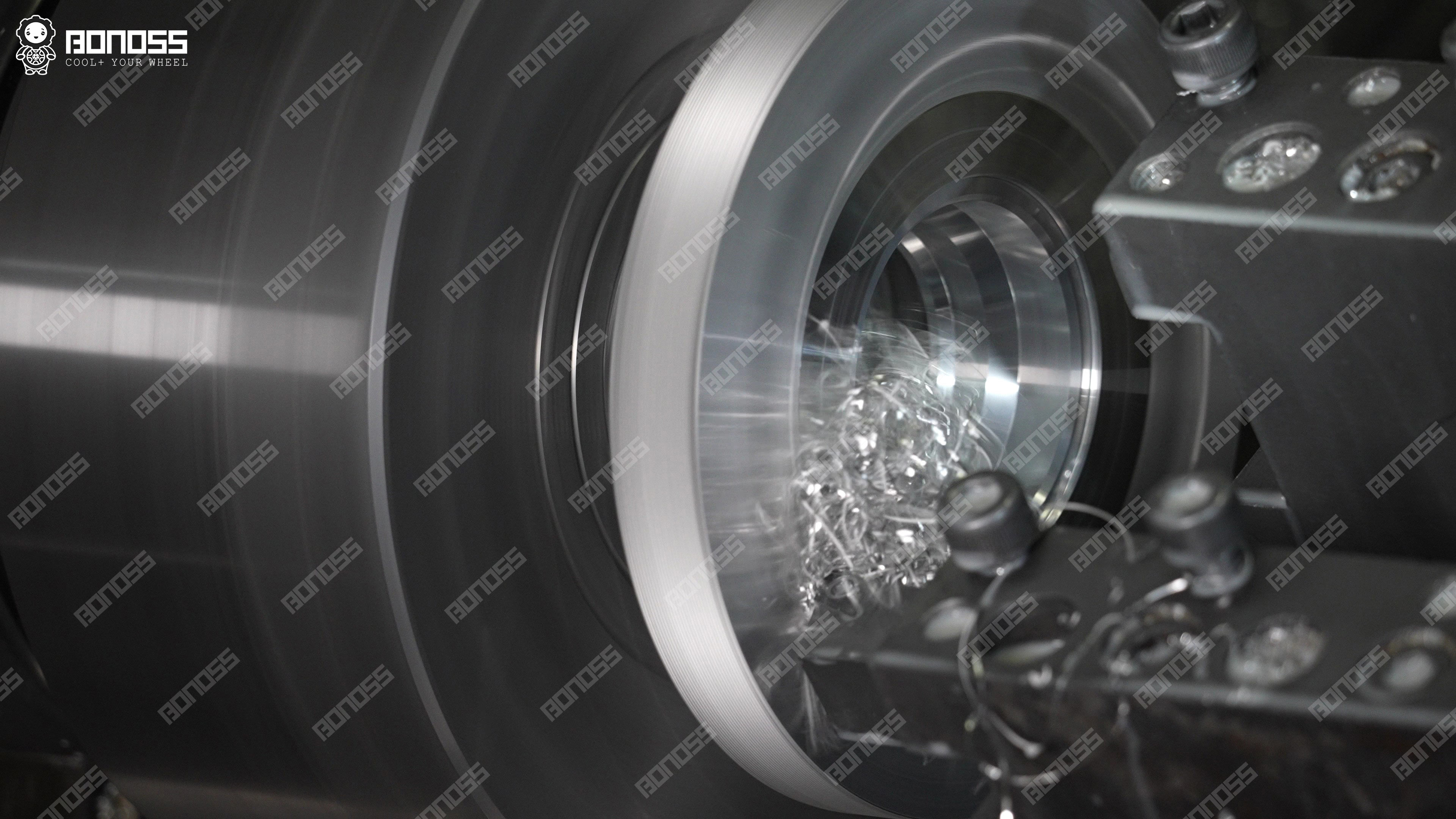
For off-road use — Overtrail models hitting trails, owners running aired-down tires on rocks — forged 7075-T6 is the better choice. The TÜV-tested hardness for BONOSS 7075-T6 comes in at 146 HBW 5/250 (also tested per ISO 6506-1:2014), which is roughly 45% harder than the 6061-T6 variant. That extra hardness translates to better resistance against bending and cracking under aggressive impacts. The 7075-T6 TÜV hardness test report is available here.
A practical note: different labs, different samples, and normal measurement variance can produce slightly different readings. The numbers above are specific to the BONOSS samples tested under the stated ISO method — treat them as verified reference points, not universal constants for all 6061-T6 or 7075-T6 aluminum.
Hard Anodizing and Surface Treatment
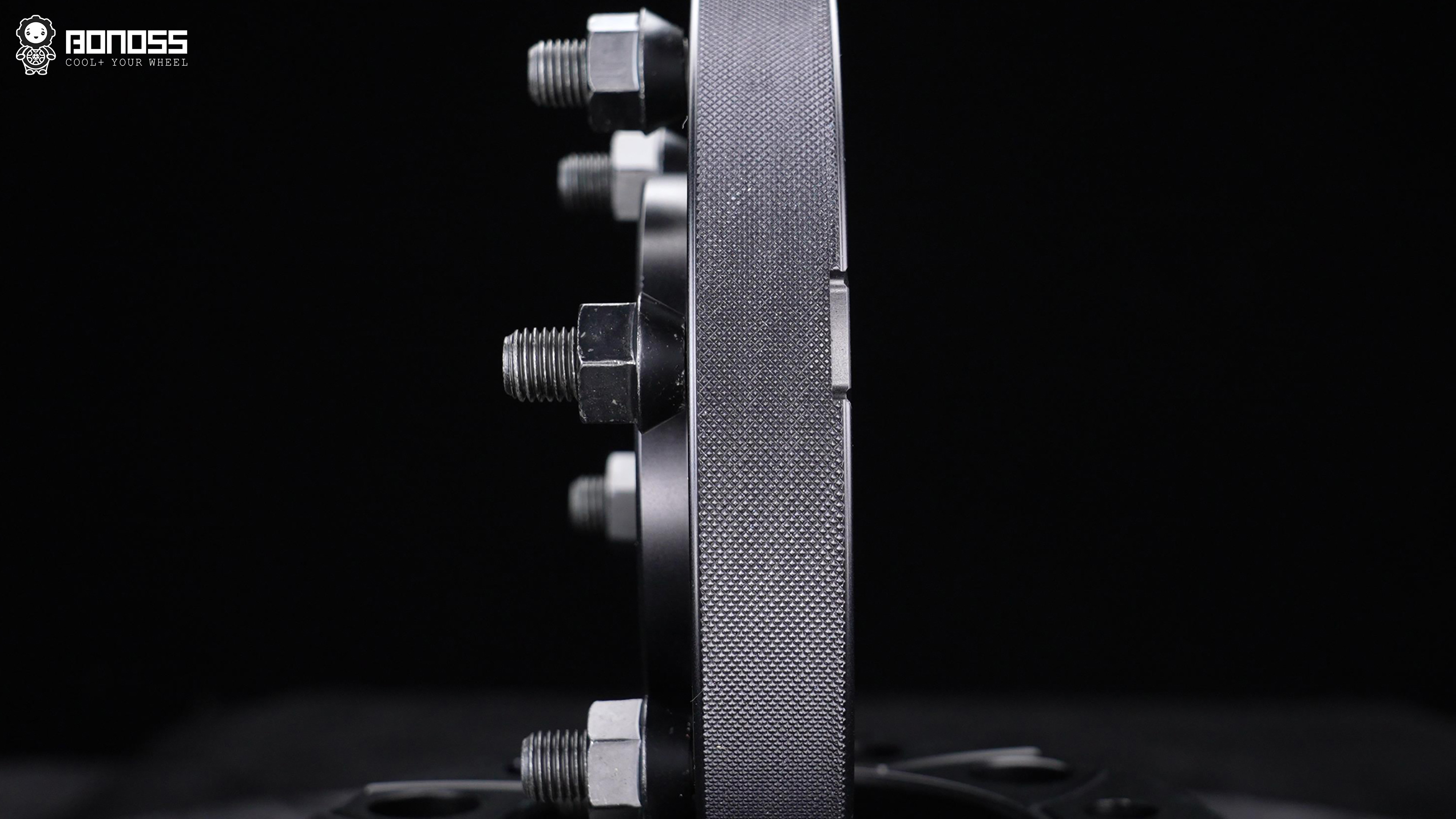
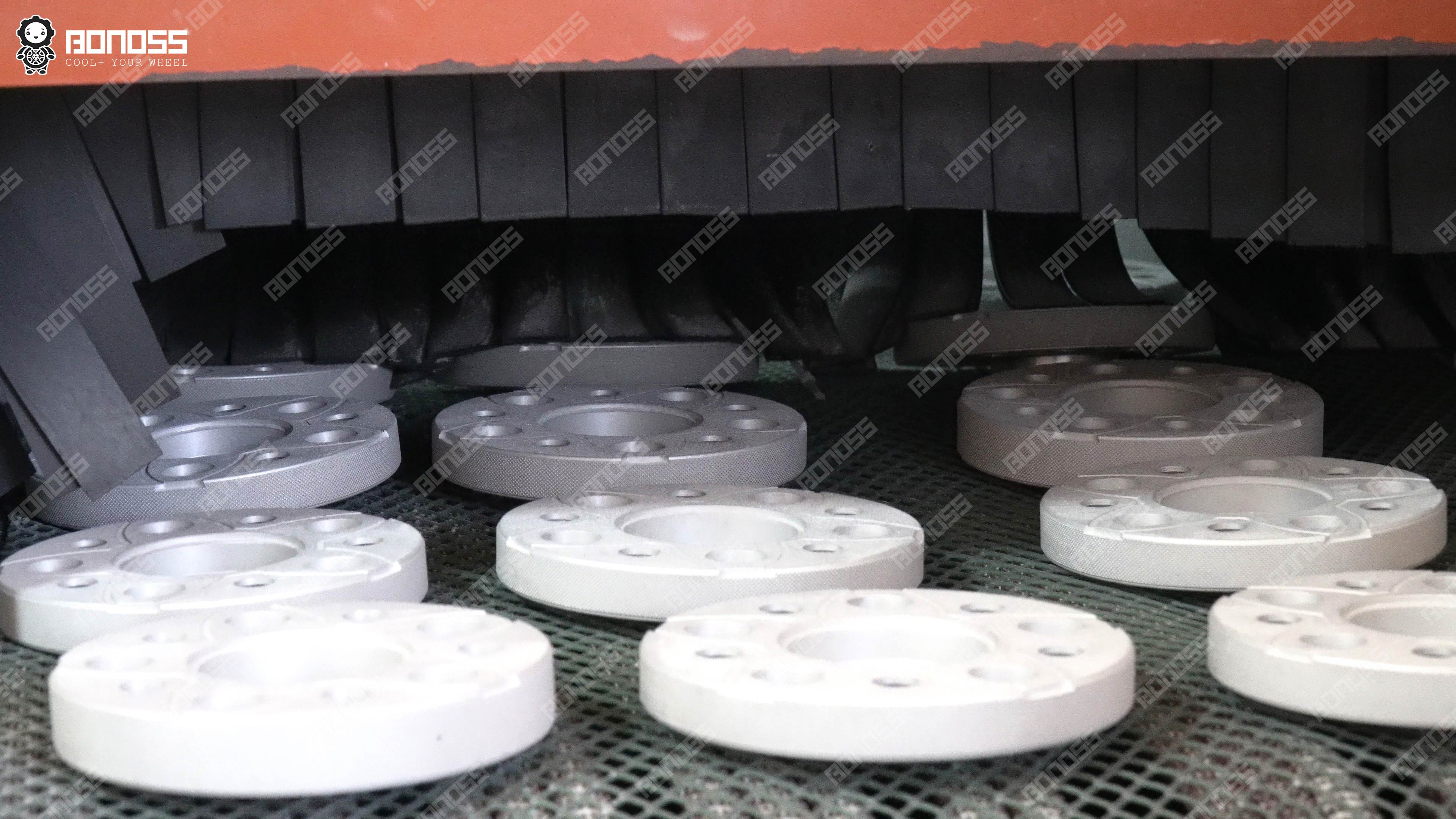
After machining, each spacer goes through a hard anodizing process that grows an oxide layer into the aluminum surface. This is not paint — it is a conversion coating that becomes part of the metal. Hard anodizing resists corrosion (important if you live where roads are salted), prevents galling between aluminum and steel hub surfaces, and gives the spacer a durable finish that does not chip off.
ISO Grade 12.9 Studs vs. OEM Studs
The wheel studs embedded in BONOSS bolt-on spacers are ISO Grade 12.9 — the “12.9” refers to tensile strength of 1,200 MPa minimum, which is the highest standard grade for metric threaded fasteners. OEM Lexus studs are typically Grade 10.9 (1,000 MPa minimum). The Grade 12.9 hardware is paired with ISO Grade 10 wheel nuts, and both are machined to match the M12x1.5 or M14x1.5 thread pitch your GX uses.
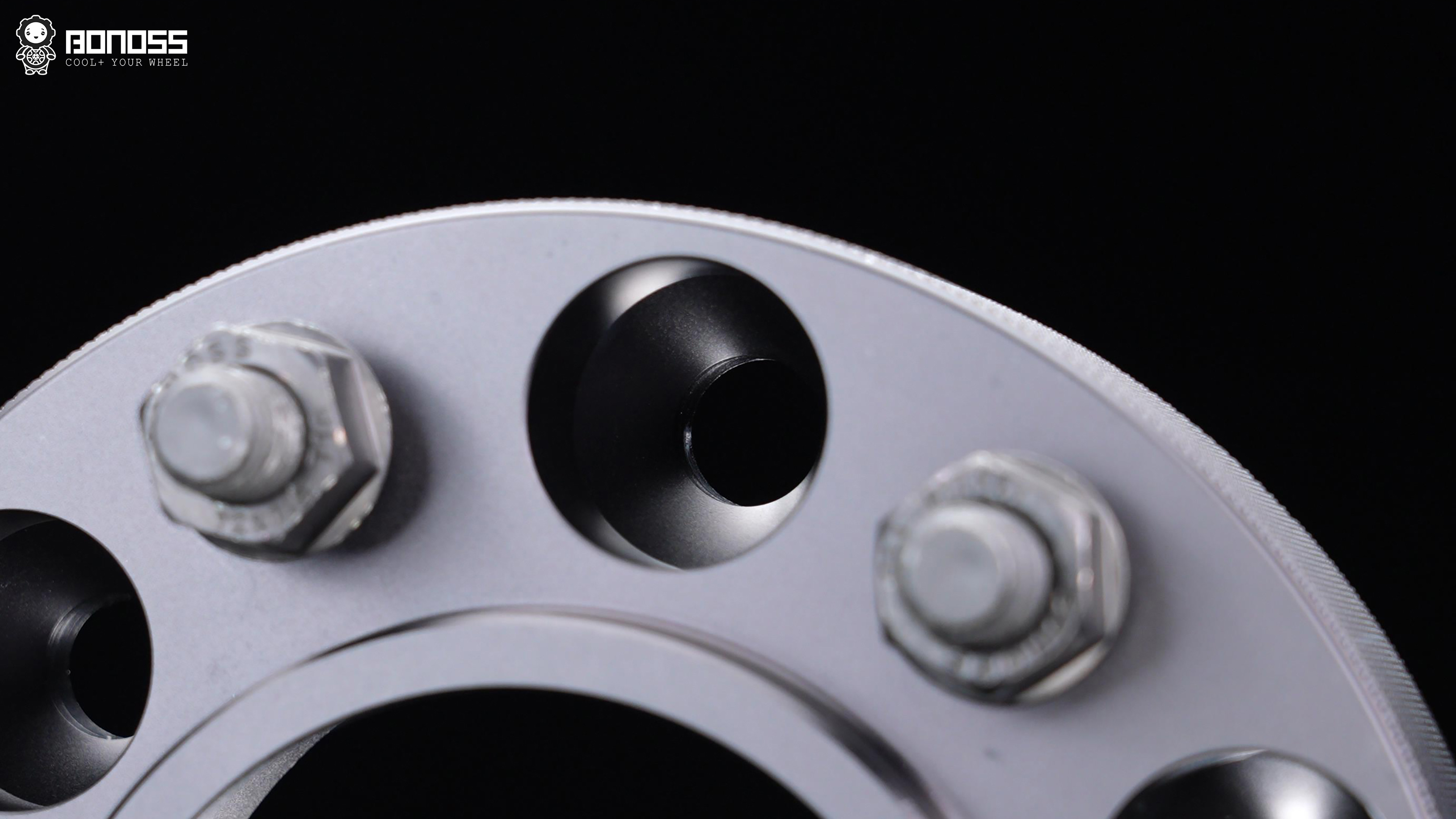
Does this mean OEM studs are unsafe? No. Grade 10.9 meets factory requirements for the GX’s weight and torque specs. But the Grade 12.9 hardware gives you a wider safety margin, particularly if you off-road or tow. For a vehicle that weighs over 5,000 pounds loaded, that margin is not overkill.
Torque Specifications: Two Operations, Two Values
This is where installations go wrong. The GX spacer installation involves two separate fastening operations, each with its own torque value.
| Fastening Operation | Hardware | Torque Value | Source |
|---|---|---|---|
| Spacer to hub (M12x1.5) | BONOSS nuts | 113 Nm (83.3 ft-lb) | per BONOSS installation instructions |
| Spacer to hub (M14x1.5) | BONOSS nuts | 140 Nm (103.5 ft-lb) | per BONOSS installation instructions |
| Wheel to spacer | OEM lug nuts | Ssee spec table above | per the owner’s manual |
Use ONE torque value for each fastening operation — do not mix BONOSS and OEM torque values within the same operation. Both BONOSS and OEM values are acceptable for their respective operations. When in doubt about which applies, take the more conservative (lower) value and confirm hardware compatibility.
Tighten in a crisscross sequence, not in a circle. Start at the top, go to the opposite bottom, then alternate. Re-torque after the first 50 miles of driving. And again: put the impact gun away. A torque wrench is the only tool that gives you a repeatable, measurable clamping force.
FAQ
What size wheel spacers are safe for a Lexus GX?
25mm to 35mm per side is the safe range for Lexus GX wheel spacers across all generations. The GX 460 and GX 470 typically take 25mm front and 25mm to 35mm rear. The GX 550, with its higher factory offset of ET50/ET60, usually needs 25mm to 30mm. Always measure your fender gap before buying.
Do Lexus GX wheel spacers fit every generation?
No — and this catches people off guard. All GX generations share the 6×139.7mm bolt pattern, but the center bore differs: 106.1mm on the GX 470 (J120) and GX 460 (J150), and 95.1mm on the GX 550 (J250). The thread pitch also changes from M12x1.5 to M14x1.5 on the GX 550. J120 vs J150 vs J250 spacer compatibility means you must order the correct hub-centric ring and thread size for your specific generation.
Do I need to trim studs for Lexus GX spacers?
Not necessarily. Measure the factory stud protrusion length past the hub face, then check the wheel pocket depth on the back of your wheel. If pocket depth plus spacer thickness exceeds stud protrusion, the studs tuck in cleanly and no trimming is needed. Slip-on spacers typically eliminate the trimming question entirely. However, you may need longer wheel studs.
Can wheel spacers cause vibration on a Lexus GX?
No, vibration issues always due to installation error, not the spacer itself. The three common causes are: using a lug-centric spacer instead of hub-centric, uneven torque from an impact gun, or failing to re-torque after the initial settling period. A properly installed hub-centric spacer, torqued with a wrench in a crisscross pattern and re-torqued after 50 miles, will not vibrate.
Is it safe to tow with wheel spacers on a GX 460?
Yes, provided you use hub-centric spacers within the recommended thickness range (25mm to 30mm for towing) and torque them correctly with a wrench. The GX 460 is rated to tow up to 6,500 lbs from the factory. Hub-centric spacers do not reduce this capacity because the load path still goes through the hub register, not the studs. Avoid lug-centric spacers for any towing application.
What torque should I use when installing Lexus GX wheel spacers?
Two values, two operations. When mounting the spacer to the hub with BONOSS hardware: 113 Nm (83.3 ft-lb) for M12x1.5 or 140 Nm (103.5 ft-lb) for M14x1.5, per BONOSS installation instructions. When mounting the wheel to the spacer with OEM nuts: use the factory value from your owner’s manual — 76 ft-lb (103 Nm) for the GX 460, 83 ft-lb (112 Nm) for the GX 470, 97 ft-lb (131 Nm) for the GX 550. Use one torque value per operation and tighten with a torque wrench, not an impact gun.
Conclusion
For the majority of GX owners — those who like their factory wheels, want a flush stance, and do not want to spend $1,500 on new rubber — Lexus GX wheel spacers are the pragmatic choice. They are cheaper, reversible, and they work. The key is buying hub-centric, forged aluminum spacers with Grade 12.9 studs, and installing them with a torque wrench in a crisscross pattern.
If you are ready to buy Lexus GX wheel spacers, BONOSS offers forged active cooling wheel spacers in both 6061-T6 aluminum for daily driving and 7075-T6 aluminum for off-road abuse, both in the 6×139.7mm PCD with the correct 106.1mm or 95.1mm hub bore for your generation. You can also explore the full BONOSS forged Lexus GX wheel spacer lineup or check Lexus GX spacers for additional platform variants.
Measure your fender gap, match your center bore and thread pitch to the spec table, torque with a wrench, and you will have a stance that finally fills those fenders.

About Jack Miller
Jack Miller is a certified automotive technician specializing in wheel and tire systems, with over a decade of hands-on repair experience. He has served as a senior technical specialist at BONOSS for the past 7 years, advising on wheel spacer fitment, wheel bolt & wheel nut selection for thousands of customer builds. Jack’s technical guides on BONOSS are grounded in real customer cases — not theory.