
Here is the short version before we get into twenty-five years of Lexus IS history: every IS ever built, from the 1999 XE10 to the current facelifted XE30, runs the same 5×114.3 bolt pattern and the same 60.1mm center bore. That part never moved. If you are shopping for Lexus IS wheel spacers, hub-centric fitment on a 60.1mm bore is non-negotiable on every single model year.
What did move is everything around that hub. Factory offset drifted between ET45 and ET60 depending on trim. Torque specs jumped by nearly 40% on newer cars. And in 2021, Lexus changed how the wheel physically attaches to the car — nuts gave way to bolts, and that one change dictates which spacer design you can even buy. This guide walks generation by generation through what changed, what it breaks if you ignore it, and the spacer setup that actually works for each chassis.
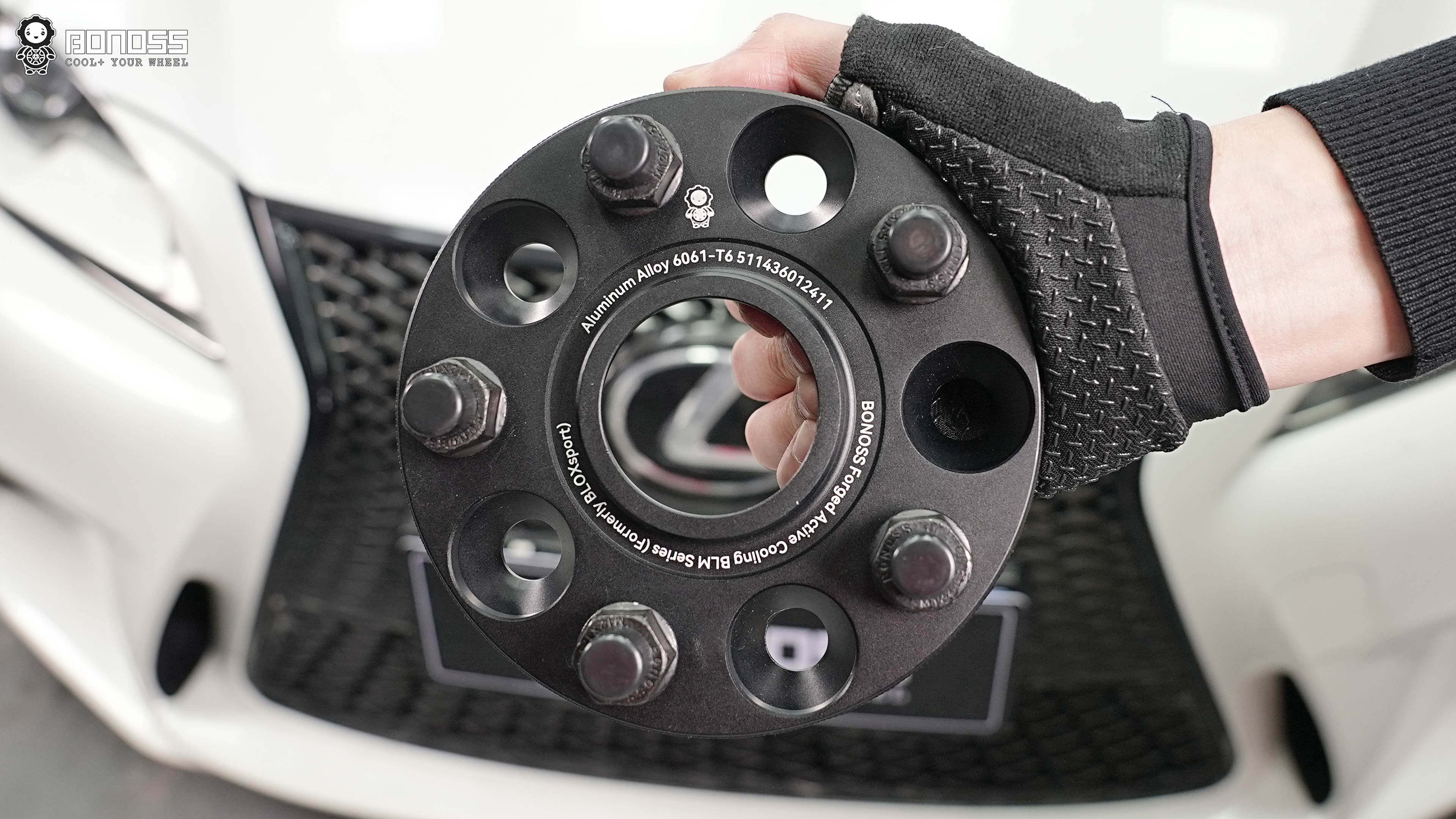
Lexus IS Wheel Spacers Spec Quick Reference
Bookmark this table. It covers every IS sold from 1999 to 2027, and the rest of the article explains the rows that need explaining.
| Generation / Year | Chassis | Bolt Pattern | Center Bore | Thread Pitch | Wheel Offset | Suggested Spacer Sizes | Factory Lug Bolt/Nut Torque |
|---|---|---|---|---|---|---|---|
| 2021-2027 IS350 | XE30 Facelift | 5×114.3mm | 60.1mm | M14x1.5 (bolts) | ET45 / ET60 | 15mm to 25mm | 103.5 ft-lb / 140 Nm |
| 2021-2027 IS300 | XE30 Facelift | 5×114.3mm | 60.1mm | M14x1.5 (bolts) | ET45 | 15mm to 20mm | 103.5 ft-lb / 140 Nm |
| 2021-2025 IS500 | XE30 Facelift | 5×114.3mm | 60.1mm | M14x1.5 (bolts) | ET45 / ET60 | 15mm to 25mm | 103.5 ft-lb / 140 Nm |
| 2017-2022 IS350 | XE30 Facelift | 5×114.3mm | 60.1mm | M12x1.5 (nuts) | ET45 / ET50 | 15mm to 25mm | 76 ft-lb / 103 Nm |
| 2017-2020 IS300 | XE30 Facelift | 5×114.3mm | 60.1mm | M12x1.5 (nuts) | ET45 / ET50 | 15mm to 25mm | 76 ft-lb / 103 Nm |
| 2013-2016 IS200t | XE30 | 5×114.3mm | 60.1mm | M12x1.5 (nuts) | ET45 / ET50 | 15mm to 25mm | 76 ft-lb / 103 Nm |
| 2013-2016 IS300h | XE30 | 5×114.3mm | 60.1mm | M12x1.5 (nuts) | ET45 / ET50 | 15mm to 25mm | 76 ft-lb / 103 Nm |
| 2013-2016 IS350 | XE30 | 5×114.3mm | 60.1mm | M12x1.5 (nuts) | ET45 / ET50 | 15mm to 25mm | 76 ft-lb / 103 Nm |
| 2013-2016 IS250 | XE30 | 5×114.3mm | 60.1mm | M12x1.5 (nuts) | ET45 / ET50 | 15mm to 25mm | 76 ft-lb / 103 Nm |
| 2010-2012 IS200d | XE20 | 5×114.3mm | 60.1mm | M12x1.5 (nuts) | ET45 | 15mm to 25mm | 76 ft-lb / 103 Nm |
| 2005-2012 IS220d | XE20 | 5×114.3mm | 60.1mm | M12x1.5 (nuts) | ET45 | 15mm to 25mm | 76 ft-lb / 103 Nm |
| 2005-2012 IS250 | XE20 | 5×114.3mm | 60.1mm | M12x1.5 (nuts) | ET45 / ET50 | 15mm to 25mm | 76 ft-lb / 103 Nm |
| 2005-2012 IS300 | XE20 | 5×114.3mm | 60.1mm | M12x1.5 (nuts) | ET45 | 15mm to 25mm | 76 ft-lb / 103 Nm |
| 2005-2012 IS350 | XE20 | 5×114.3mm | 60.1mm | M12x1.5 (nuts) | ET45 | 15mm to 25mm | 76 ft-lb / 103 Nm |
| 1999-2004 IS200 | XE10 | 5×114.3mm | 60.1mm | M12x1.5 (nuts) | ET50 | 15mm to 30mm | 76 ft-lb / 103 Nm |
| 2001-2004 IS300 | XE10 | 5×114.3mm | 60.1mm | M12x1.5 (nuts) | ET50 | 15mm to 30mm | 76 ft-lb / 103 Nm |
Two torque values appear in this article and they are not interchangeable. When you bolt a BONOSS spacer to the hub using BONOSS-supplied fasteners, use the BONOSS recommended installation torque — M12x1.5 hardware at 113 Nm (83.3 ft-lb), M14x1.5 hardware at 140 Nm (103.5 ft-lb), per BONOSS installation instructions.
When you bolt the wheel onto the spacer using the factory nuts or bolts, use the factory torque per the owner’s manual — 76 ft-lb (103 Nm) for M12 nut cars, 103.5 ft-lb (140 Nm) for M14 bolt cars. Use ONE torque value per fastening operation for the entire installation — do not mix values mid-job. Both are acceptable as long as each fastener gets the value matched to its source.
First, Confirm Which IS You Actually Have
Lexus sold three distinct generations under the IS badge, and the facelift boundaries matter more than the badge on the trunk.
- XE10 (1999-2005): the original IS200 and IS300, sold as the Altezza in Japan. Boxy and light.
- XE20 (2005-2013): the second generation — IS250, IS350, IS220d, IS200d, and the US-market IS300. Sharper styling, tighter fenders.
- XE30 (2013-present): the current car. This is where it gets tricky, because the XE30 had two facelifts, and the 2021 facelift changed the wheel hardware itself. An early XE30 and a late XE30 do not take the same fasteners.
If you own a 2021 or 2022 car, pop a wheel and look before you order anything. Those two model years shipped with both wheel nuts and wheel bolts depending on production date. From 2023 onward, every IS uses wheel bolts.
3rd Gen XE30 (2013-Present): The Generation That Changed How the Wheel Bolts On
The XE30 arrived in 2013 on a reworked platform shared with the GS. Factory wheels ran ET45 or ET50, which tucks the tire noticeably inside the fender on a stock car — awkward for stance.
What Changed
The big one is the fastener. Early XE30 cars (2013-2020) use M12x1.5 wheel studs pressed into the hub with flat seat wheel nuts — the traditional Japanese layout. Starting with the 2021 facelift, Lexus moved to M14x1.5 R14 ball seat wheel bolts that thread directly into the hub, the German way. As noted above, 2021-2022 is a transition window with both systems in the wild; 2023 and newer is bolts only.
Torque climbed with it. The M12 nut cars spec 76 ft-lb (103 Nm) per the owner’s manual. The M14 bolt cars spec 103.5 ft-lb (140 Nm). That is not a rounding difference — it is a fundamentally different clamping load, and your torque wrench needs to know which car it is working on.
What Didn’t Change
PCD stayed 5×114.3. Center bore stayed 60.1mm. Any 5×114.3 wheel spacers for Lexus IS built hub-centric to 60.1mm physically fit every XE30 ever made. The spacer is not the problem. The fastener strategy around the spacer is.
Thickness and Hardware Under the New Rules
This is where the nut-versus-bolt split actually bites you.
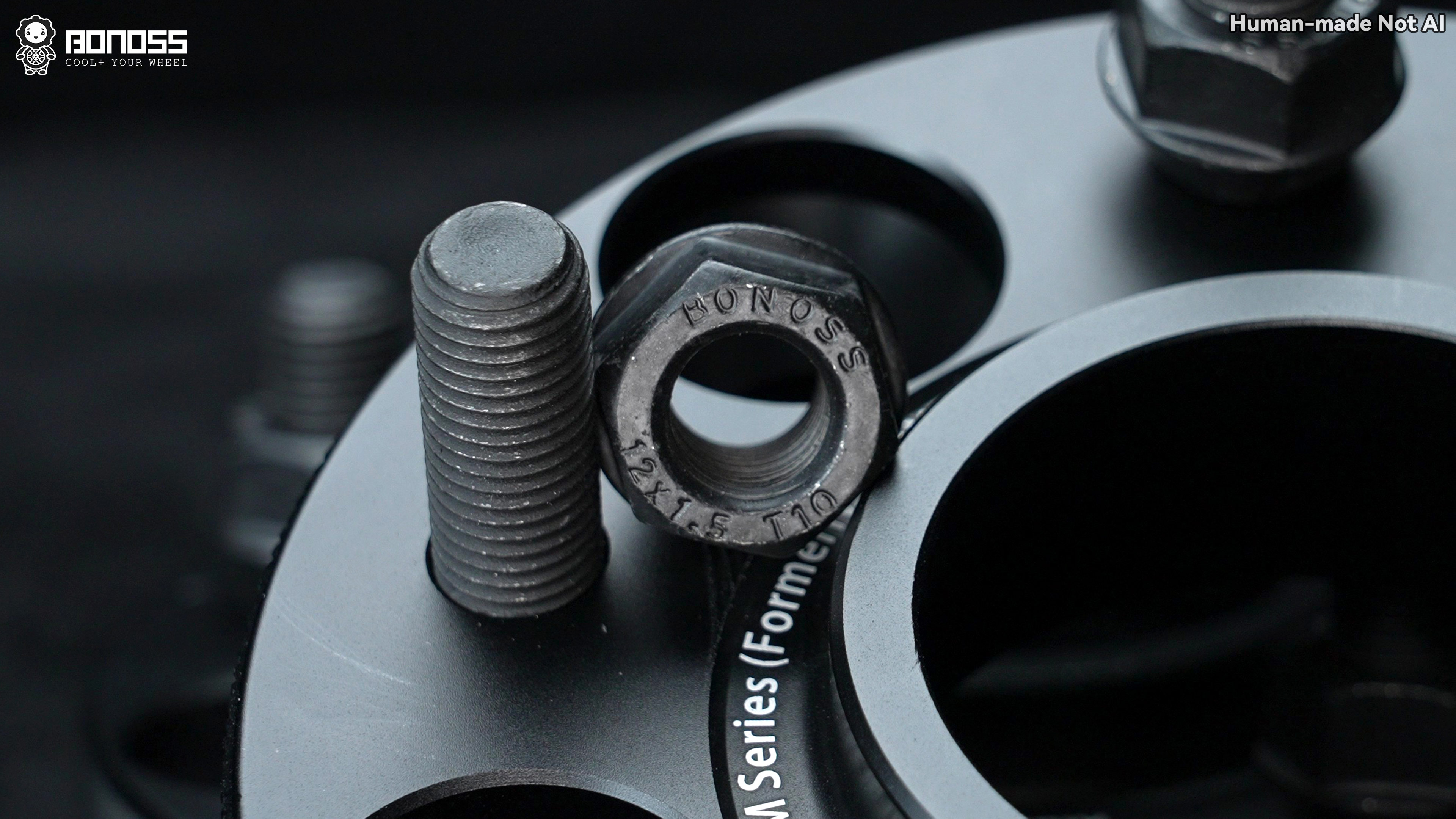
Nut cars (2013-2020, plus early 2021-2022): At 15mm and beyond, a bolt-on spacer with its own pressed-in studs is the cleaner answer — BONOSS’s BLM series exists exactly for this case: the spacer bolts to the hub, your factory nuts bolt the wheel to the spacer’s own studs. But for 15mm and 20mm you should verify stud protrusion against the wheel pockets (full method in the install section below).
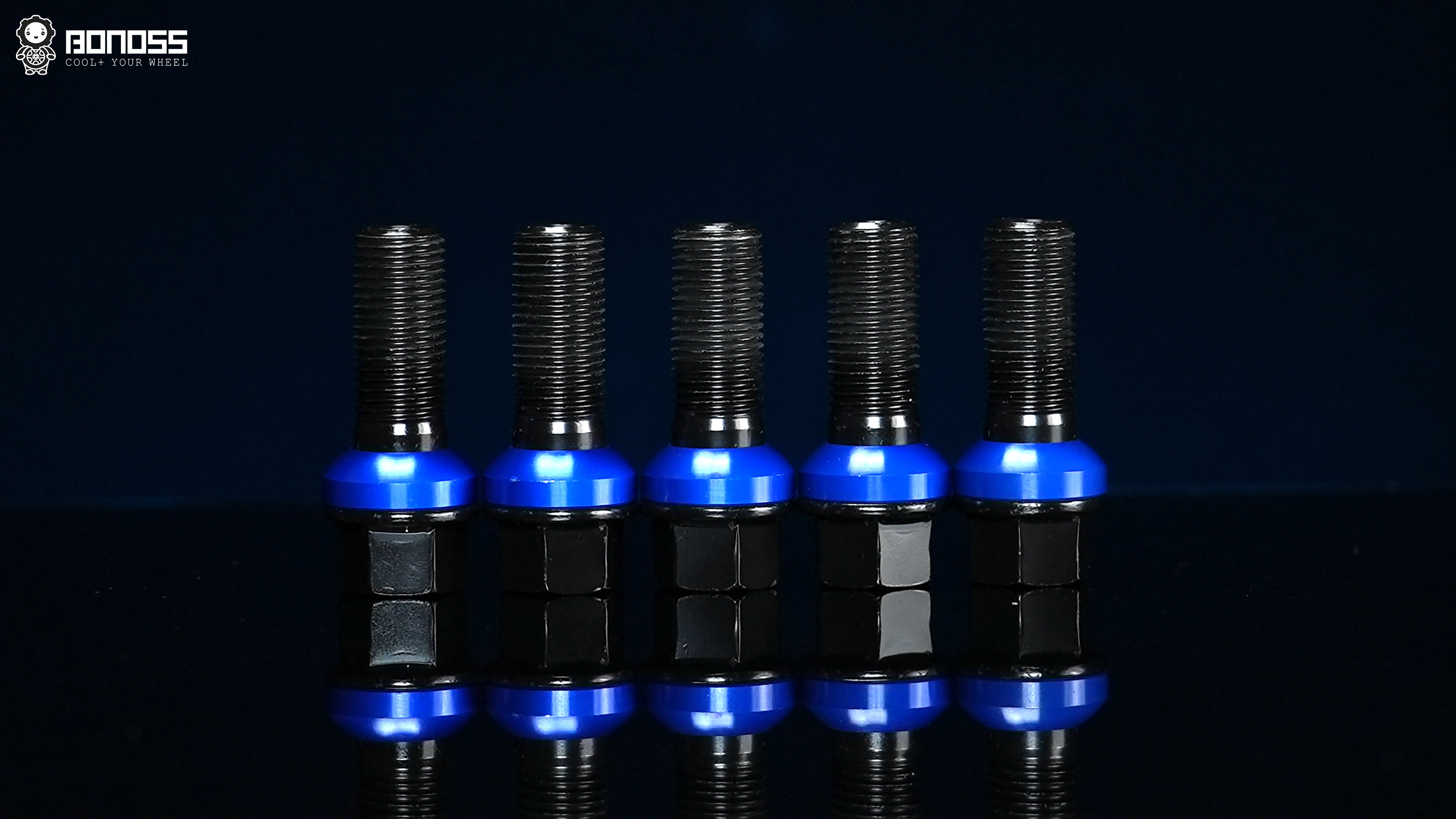
Bolt cars (2021+, confirmed bolts): slip-on spacers from 5mm to 20mm require extended wheel bolts, because the factory bolt loses thread engagement equal to the spacer thickness. The general rule is engagement of at least one bolt diameter — about 14mm of thread, or six to eight full turns, for an M14 fastener. At 25mm and up, a bolt-on spacer with pre-embedded nuts (the BLA layout) lets you reuse factory-length bolts to attach the wheel, while the spacer itself is fixed to the hub with the supplied hardware.
Real Insatll Case from a 2013 IS250
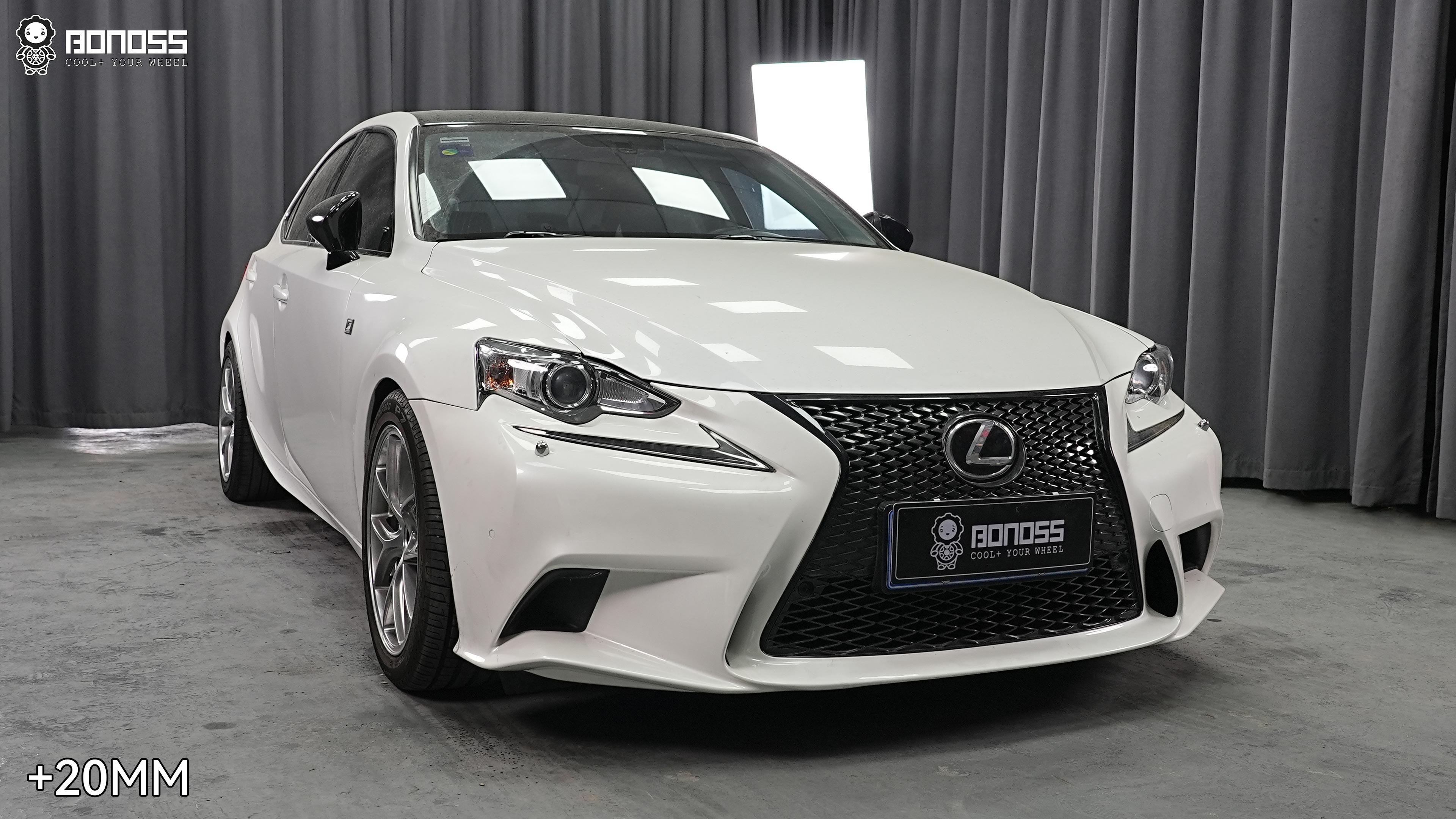
Theory is cheap, so here is a measured case. Our test car is a 2013 IS250 (XE30, M12 nut car) running stock suspension and stock wheels. Stock, the right front sat visibly inside the fender line — the classic XE30 sunken look. We measured the gap from the tire’s outer edge to the fender lip with a high-accuracy ruler, then repeated the measurement on the left front.
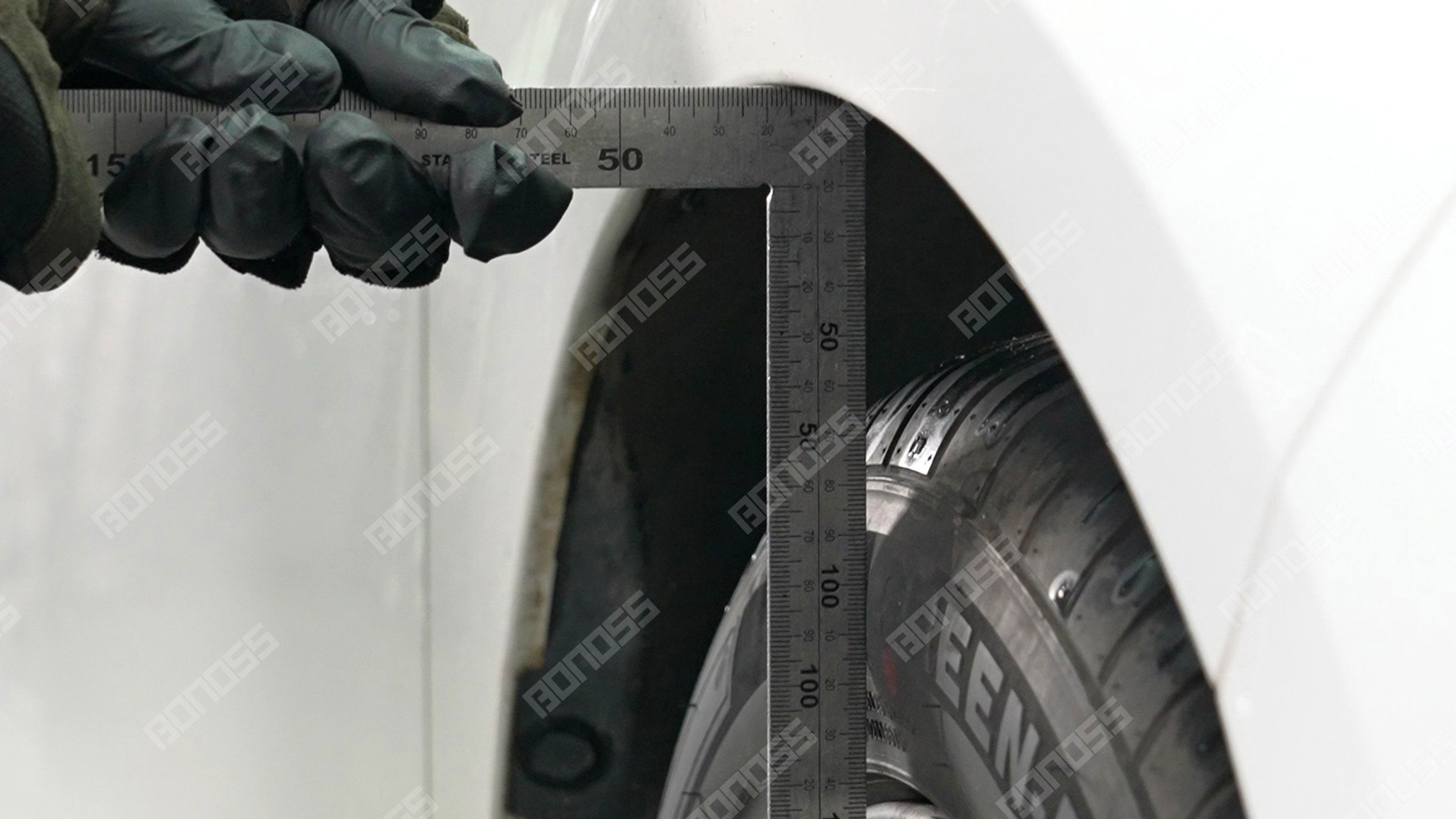
That measured distance is your target spacer thickness. On this car the front called for 20mm. With the 20mm spacer installed, the tire face landed flush with the fender edge.
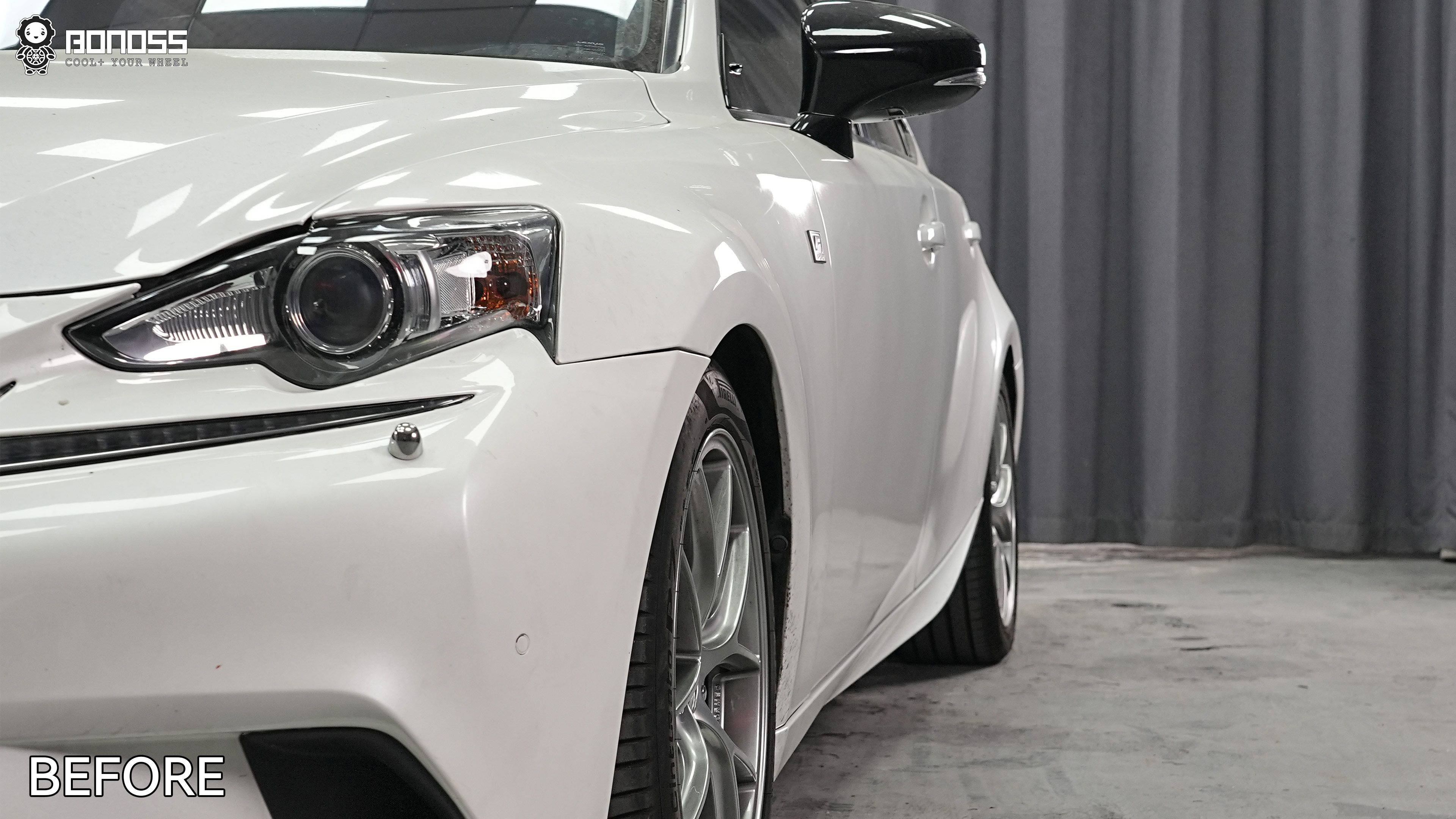
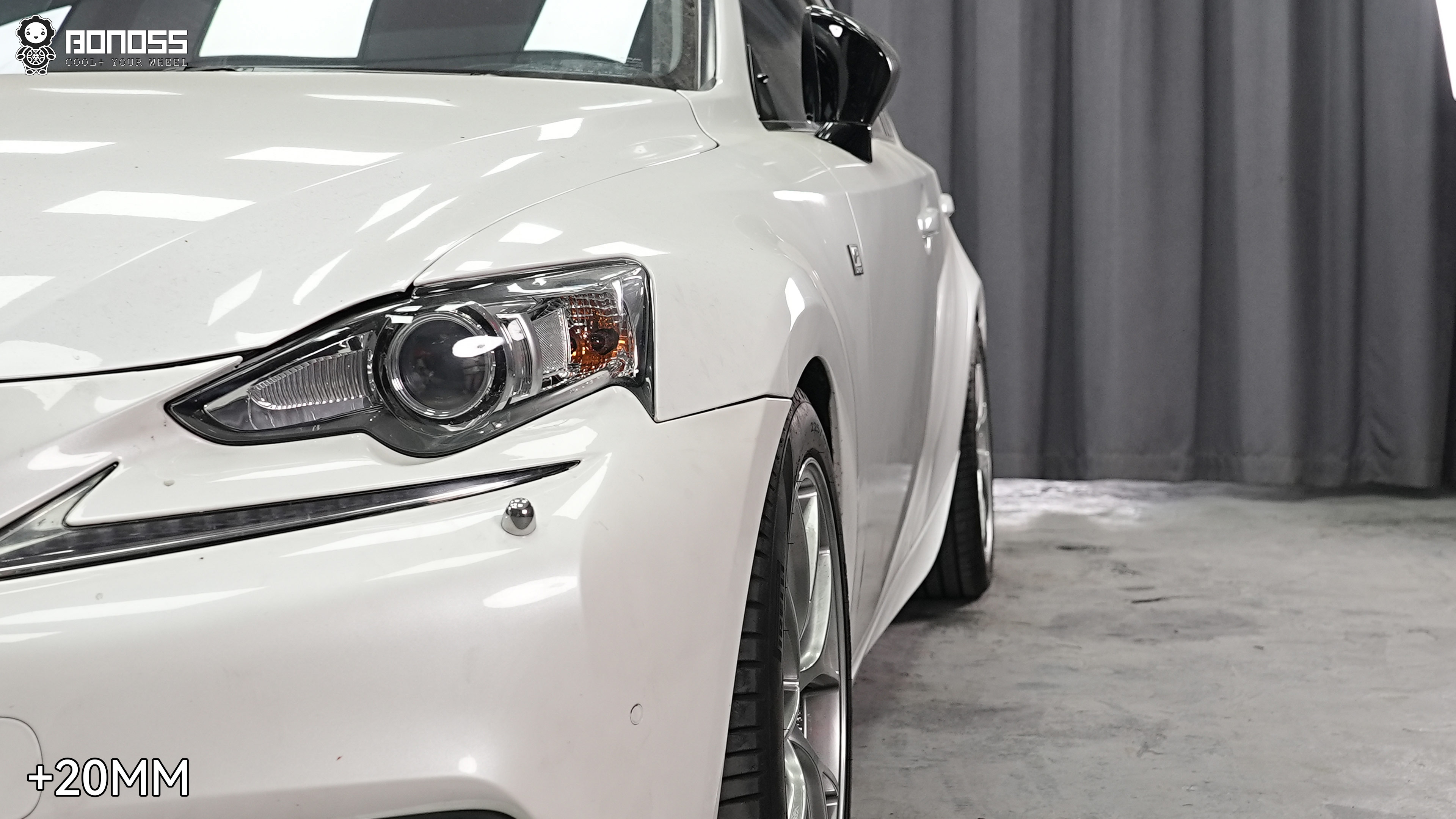
The rear told a different story. The left rear measured wider — XE30 rear fenders have more room — so it took a 25mm spacer to reach flush.
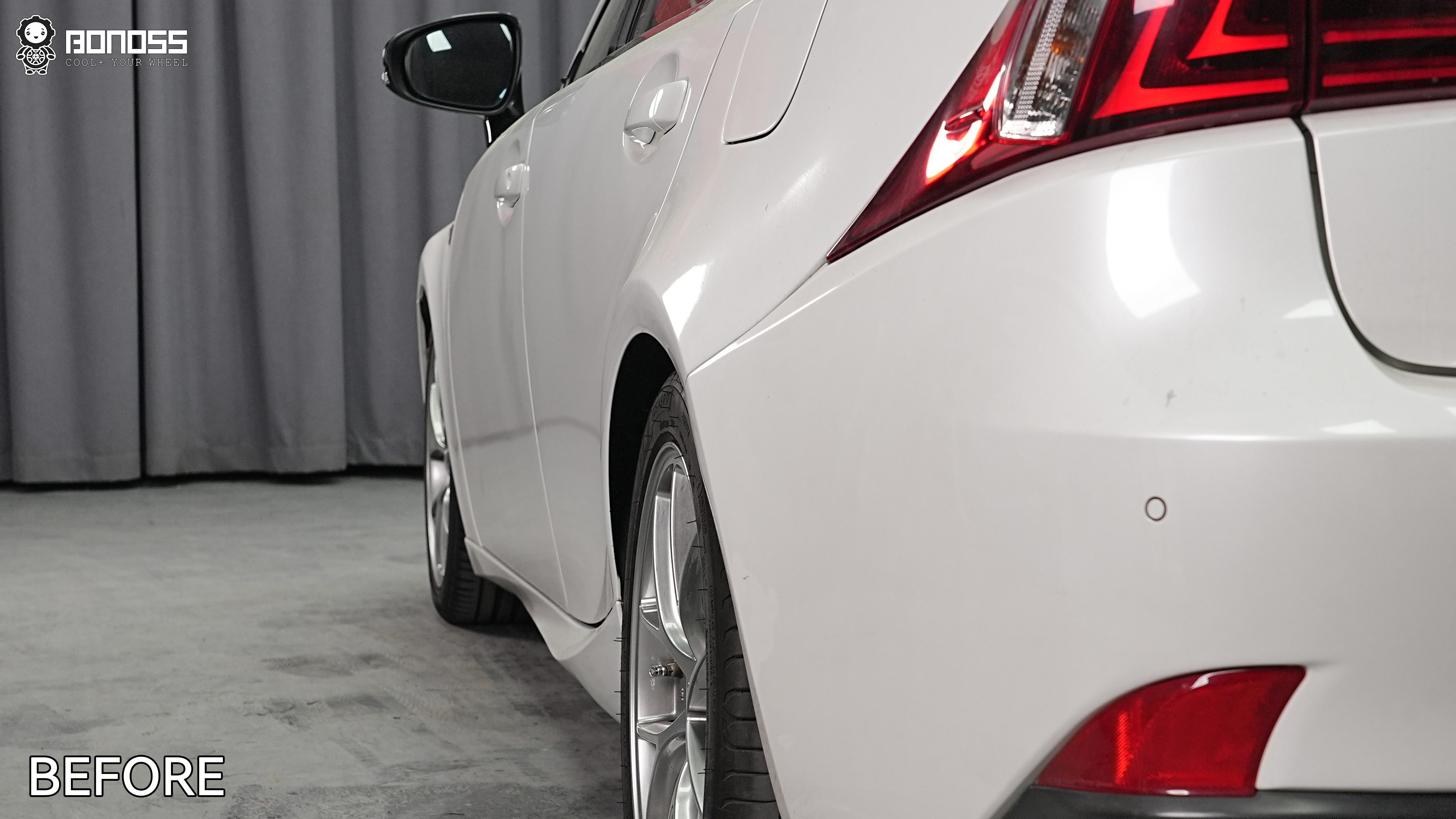
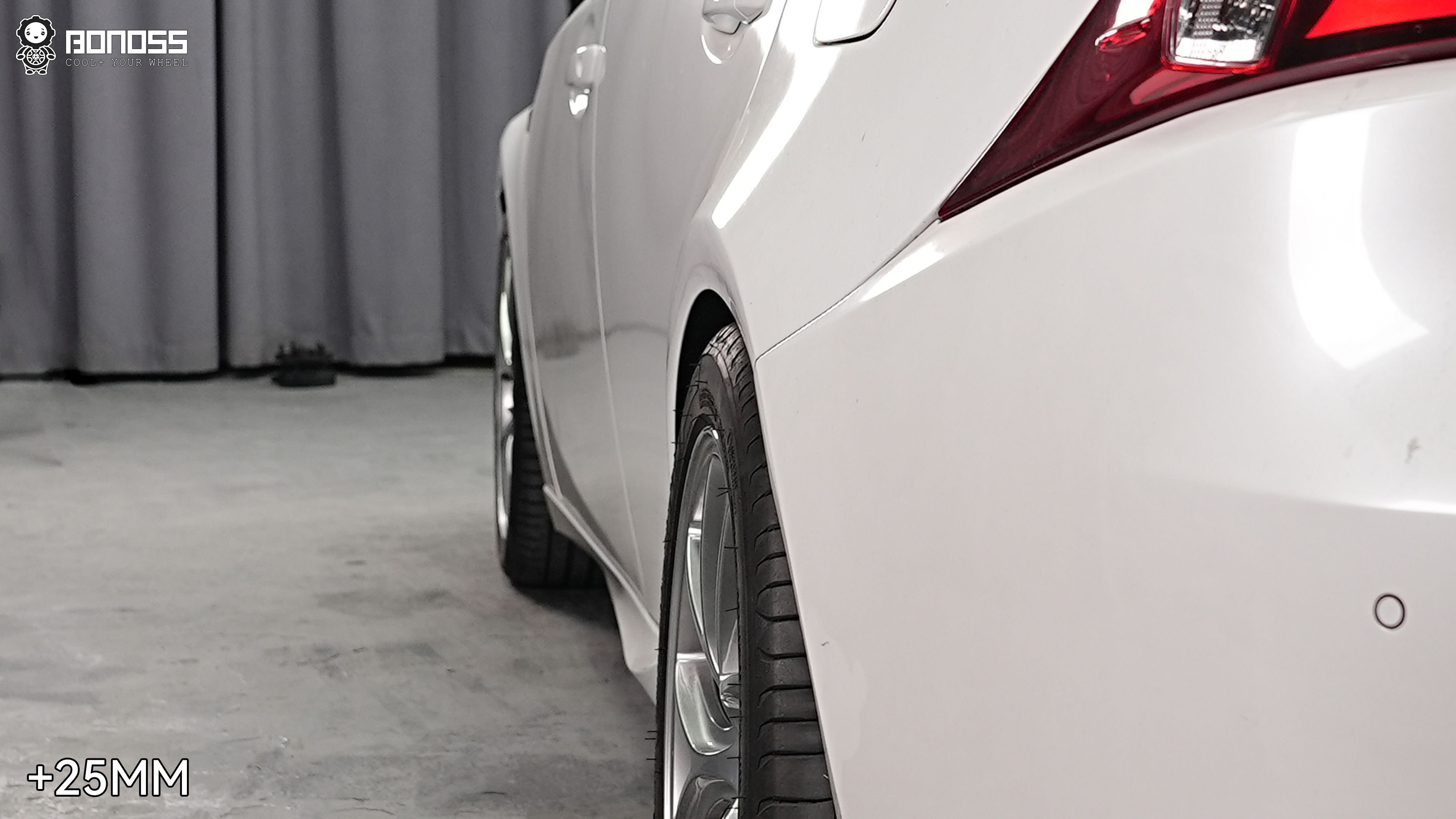
Front and rear measurements differing is normal, not a mistake. Measure each corner. The full photo walkthrough of this car lives in the 2013 Lexus IS250 spacer install with photos case study.
For IS250 wheel spacers, IS300 wheel spacers, IS350 wheel spacers and IS500 wheel spacers on the XE30, 15mm to 25mm covers nearly every flush fitment goal on stock bodywork. The IS500 and F Sport trims with ET60 rear wheels have the most to gain — 20mm to 25mm brings those rears out to the fender line properly.
2nd Gen XE20 (2005-2013): The Quiet Middle Child
The XE20 changed less than people think. Platform, brakes, and suspension geometry were all new versus the XE10, but the wheel-side story is simple.
What Changed
Factory offset. XE20 wheels moved to ET45 across most trims (ET45/ET50 on the IS250), down from the XE10’s ET50. Fender clearance also tightened — the XE20’s arches sit closer to the tire, which is why the suggested range caps at 25mm.
What Didn’t Change
Everything mechanical at the hub: 5×114.3 PCD, 60.1mm center bore, M12x1.5 studs with flat seat wheel nuts, and the 76 ft-lb (103 Nm) factory torque per the owner’s manual. If you know how to spacer an early XE30, you already know how to spacer an XE20 — the procedure is identical, right down to the stud protrusion check.
Thickness and Torque Under These Specs
15mm to 25mm is the working range. On ET45 wheels, 20mm all around is the most common flush result we see; conservative setups start at 15mm. Torque stays 76 ft-lb (103 Nm) on the factory nuts, and 113 Nm (83.3 ft-lb) per BONOSS installation instructions on the spacer-to-hub hardware if you run a bolt-on kit.
1st Gen XE10 (1999-2005): The One That Takes 30mm
The original IS — IS200 in Europe and Asia, IS300 in the US — is the friendliest generation for spacers, for one reason: ET50 factory offset combined with genuinely generous fender clearance.
Nothing about the hub hardware is unusual. 5×114.3, 60.1mm bore, M12x1.5 studs and nuts, 76 ft-lb (103 Nm) per the owner’s manual. What sets the XE10 apart is room. Stock fenders swallow up to 30mm of track increase per side without rubbing on an unmodified car at stock ride height, which is why its suggested range runs 15mm to 30mm.
Two honest caveats for a twenty-year-old car. First, check the hub surface for rust scale before mounting anything — a wire brush and a thin coat of anti-seize on the hub face saves future headaches. Second, many XE10s on the road today sit on lowering springs or coilovers, and lowered cars change the clearance math entirely. Measure your own car rather than trusting the 30mm ceiling.
Generation Change Timeline
| Years | Generation | What Changed | What Stayed |
|---|---|---|---|
| 1999-2005 | XE10 | Baseline: 5×114.3, 60.1mm bore, M12x1.5 nuts, ET50 | — |
| 2005-2013 | XE20 | Offset moved to ET45/ET50; fender clearance tightened; spacer ceiling dropped to 25mm | PCD, bore, M12 nuts, 76 ft-lb torque |
| 2013-2020 | XE30 (early) | Platform change; offset ET45/ET50 | PCD, bore, M12 nuts, 76 ft-lb torque |
| 2021-2022 | XE30 (facelift transition) | M14x1.5 wheel bolts introduced; nuts and bolts both in circulation; torque up to 103.5 ft-lb on bolt cars | PCD, bore |
| 2023-present | XE30 (facelift) | Wheel bolts standard across the range; ET60 rear option on IS350/IS500 | PCD, bore |
Searches like “did the Lexus IS change bolt pattern” come up constantly, and the honest answer is: no — the pattern never changed. The fastener did. That distinction decides what you buy.
How to Measure for a Flush Stance
The method is the same on every generation. Park on level ground, hold a straight edge vertically against the fender lip, and measure the distance from the straight edge to the outermost face of the tire. That number, in millimeters, is the spacer thickness that puts the tire flush with the fender.
Measure all four corners. Front and rear are frequently different — our 2013 test car wanted 20mm front and 25mm rear — and left-to-right differences of a millimeter or two are common on older, higher-mileage cars. Round down when you land between sizes. A tire 2mm inside the fender looks intentional; a tire 2mm past it looks like a mistake and may rub over bumps.
The Stud Protrusion Question (Nut Cars) and the 5mm Limit
On nut cars running bolt-on spacers, the factory studs pass through the spacer and must either fit into the wheel’s rear pockets or be trimmed. Do this check in order:
- Measure how far the factory studs protrude past the hub.
- Check the depth and position of the pockets on the back of your wheel.
- If pocket depth plus spacer thickness exceeds stud protrusion, and the pockets align with the stud positions, the studs hide inside the pockets and nothing gets cut.
Most factory Lexus wheels have generous pockets, which is why 15mm and 20mm spacers usually install cleanly. Verify on your own wheels anyway — aftermarket wheels vary wildly.
About 5mm spacers on a Lexus IS, specifically: treat 5mm as a conditional, temporary-purpose thickness, not a regular recommendation alongside 15mm. A 5mm spacer does not preserve hub-centric support — the factory hub lip is largely consumed by the spacer itself — and running lug-centric at speed can introduce vibration. If you do run 5mm, confirm three things in this order:
- Remaining hub lip. Measure the hub pilot’s protrusion with calipers, subtract 5mm, and confirm at least 8mm of pilot still engages the wheel’s center bore.
- Center bore chamfer. If the back of your wheel has a chamfered bore edge, effective engagement is shorter than your measured lip. Be extra cautious pairing chamfered wheels with thin lug-centric spacers.
- Thread engagement. This is a separate safety axis from the hub lip. Confirm the nuts or bolts still get full engagement — at least one fastener diameter of thread (roughly 12mm for M12, or six to eight full turns). If the factory hardware comes up short, extended fasteners are mandatory. No compromise on this one.
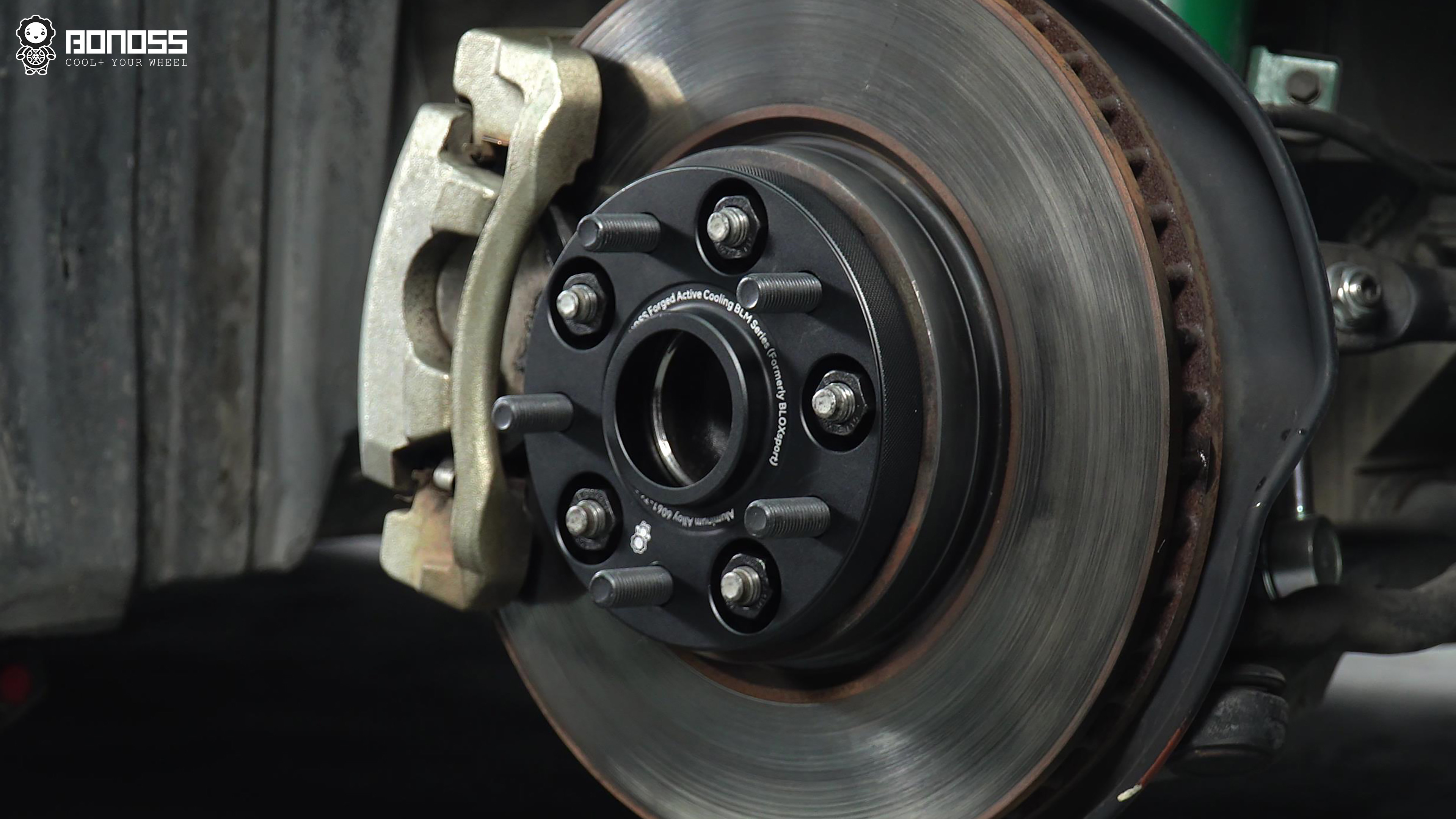
Installation Steps and Torque Re-Check
The procedure below applies to all three generations. The only step that forks is the fastener type.
- Lift the car, support it on stands, and remove the wheels.
- Clean the hub face and the wheel’s mounting pad. Corrosion or debris under the spacer is the number one cause of post-install vibration.
- Test-fit the spacer on the hub. A hub-centric 60.1mm spacer should seat with zero play.
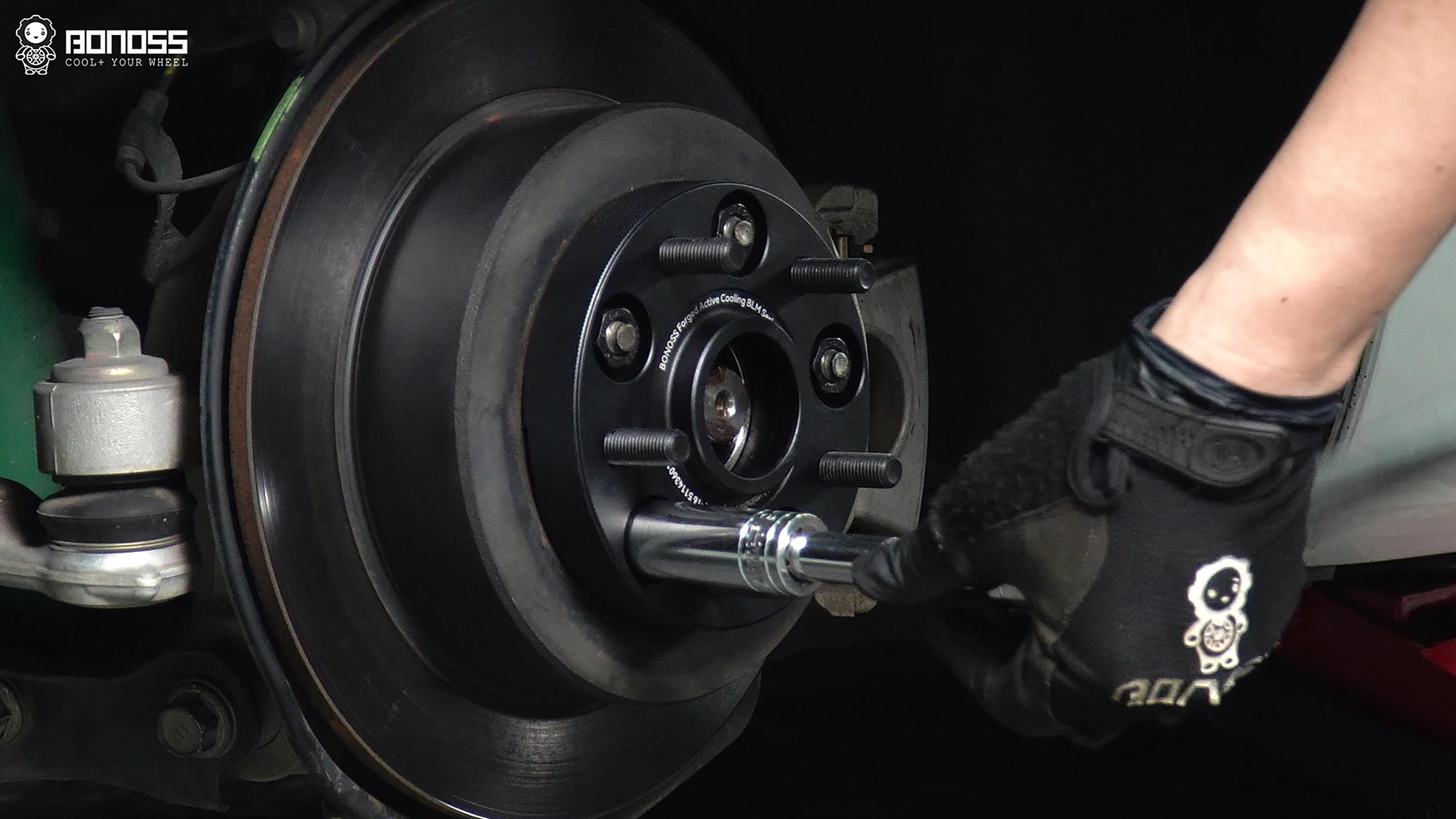
- Properly torque the wheel spacers and remount the wheels.
- Lower the car, re-verify torque with the wheels at ride height, and re-torque again after the first 50-100 miles. Aluminum and steel seat against each other in the first heat cycles; skipping the re-torque is how properly installed spacers get blamed for loose-wheel problems.
One more note for AWD owners: spacers do not interact with the drivetrain at all. RWD and AWD IS models share identical hub hardware, so nothing in this guide changes with driven axles.
Which BONOSS Series Fits Your IS
Three product families cover every scenario above, and the naming tells you the structure:
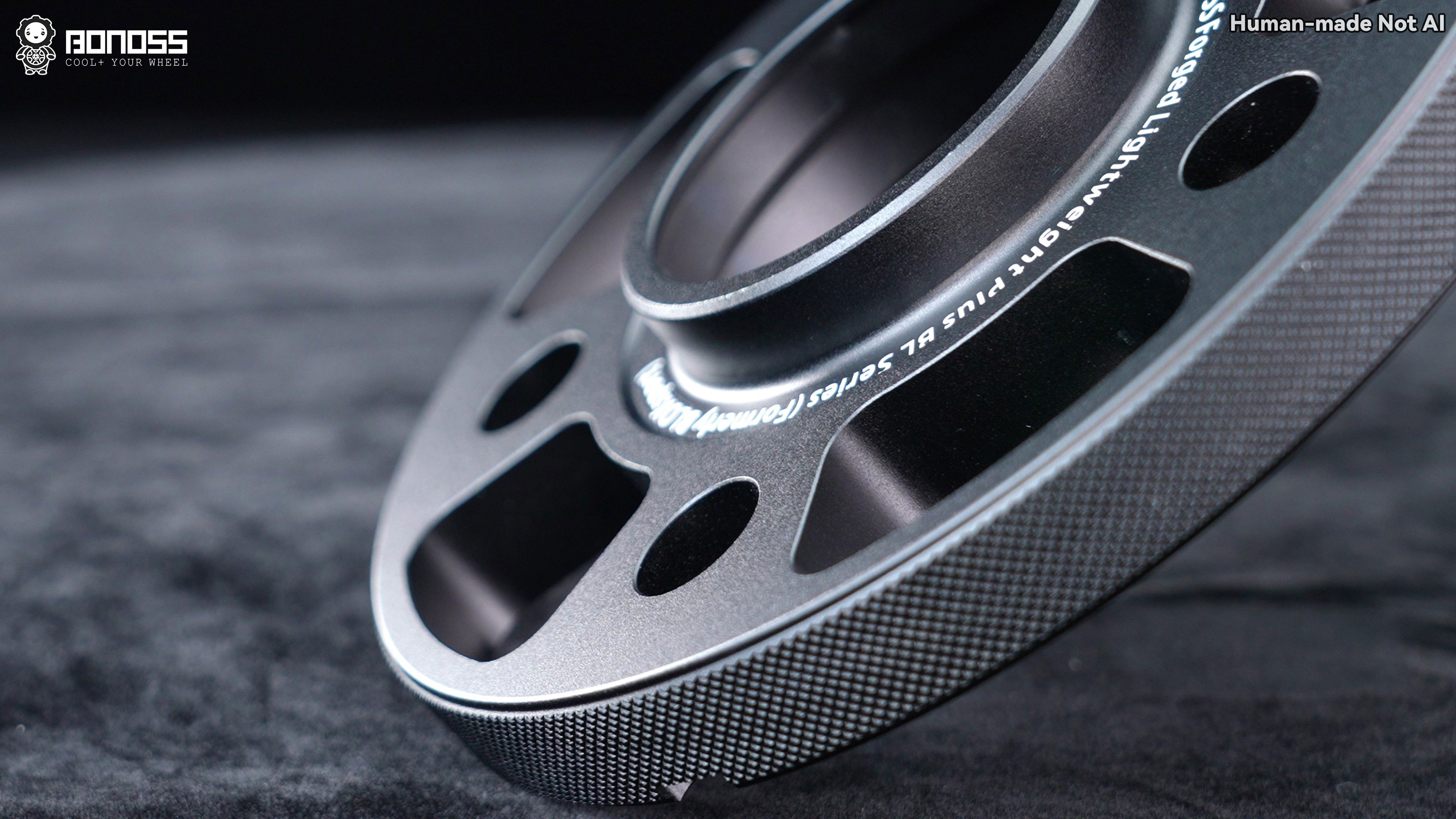
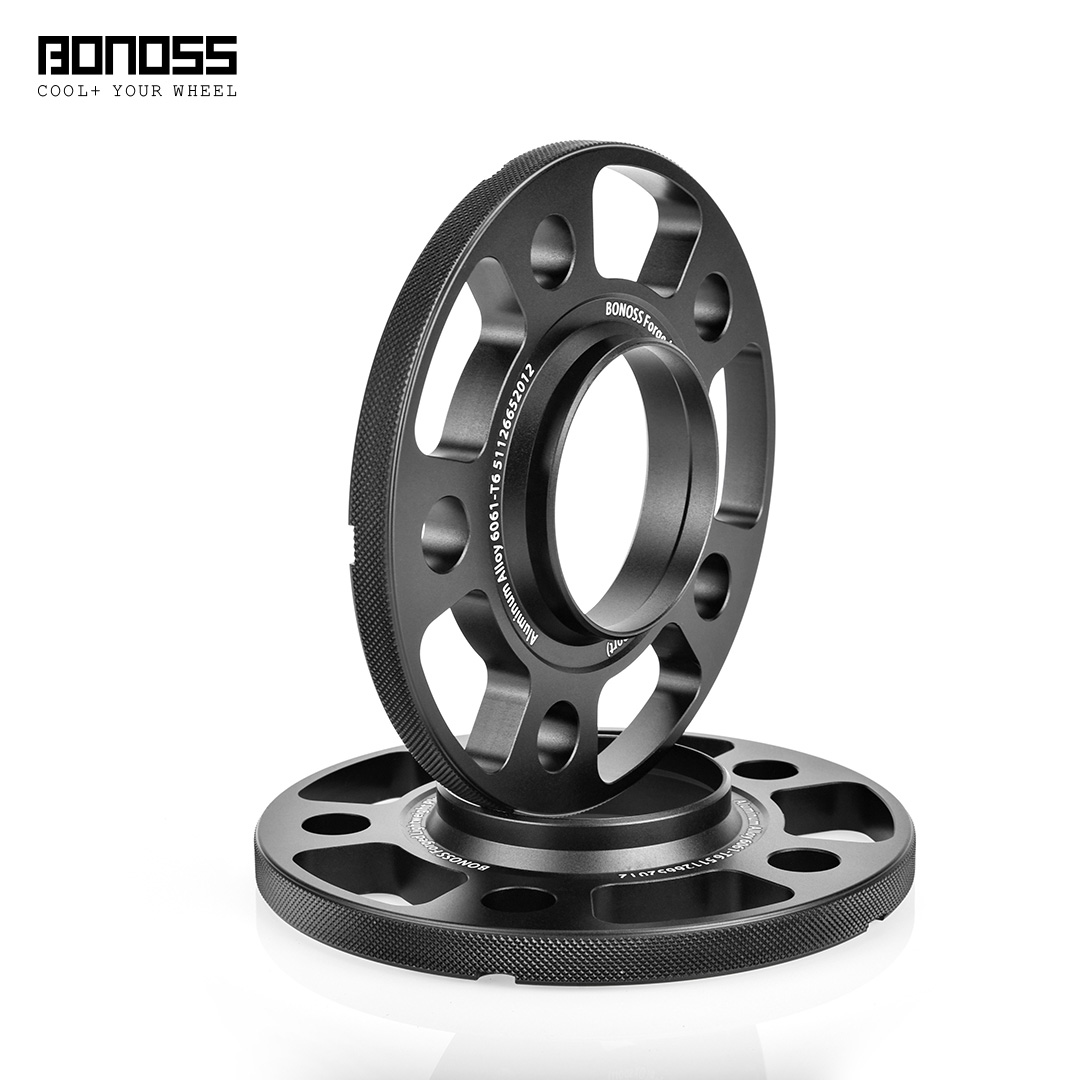
- BONOSS forged lightweight plus BL series wheel spacers: slip-on design, 5mm to 20mm. Material is pocketed to cut spacer weight. On bolt cars, pair with BONOSS ISO grade 12.9 extended wheel bolts; on nut cars, confirm stud protrusion first.
- BONOSS forged active cooling BLM series wheel spacers: bolt-on design, 15mm to 50mm, with ISO grade 12.9 wheel studs pre-pressed into the spacer. Built for cars that use wheel nuts from the factory — the wheel bolts onto the spacer’s own studs with your factory nuts.
- BONOSS forged active cooling BLA series wheel spacers: bolt-on design, 25mm to 50mm, with nuts pre-embedded in the spacer body. Built for bolt cars — the spacer fastens to the hub with supplied bolts, and your factory R14 ball seat bolts attach the wheel directly. No extended bolts needed at these thicknesses.
The logic is deliberate: the spacer mirrors whatever fastening system Lexus gave your car, so you are never adapting an adapter.
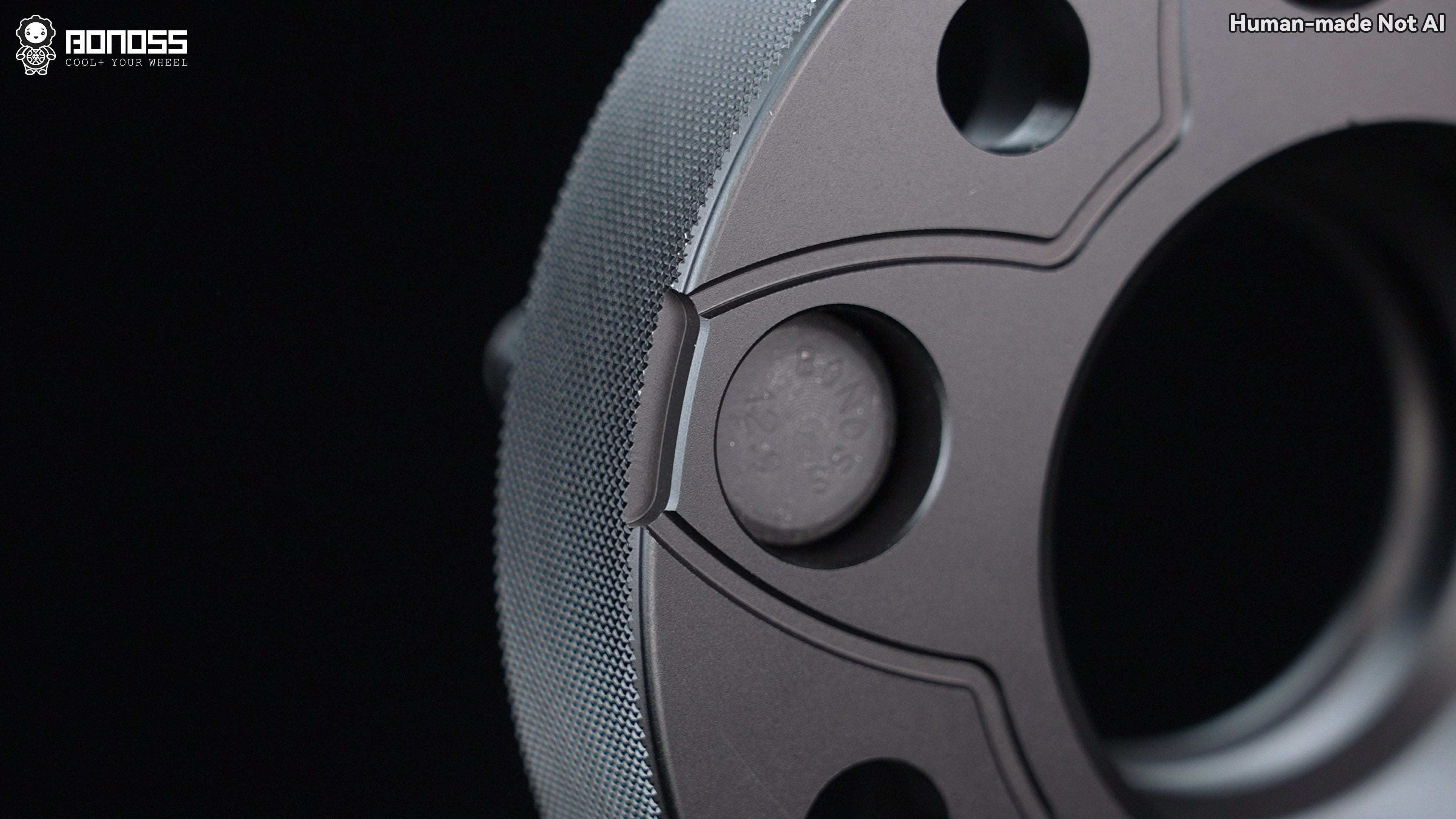
Two design details are worth a closer look. The active cooling fins on the BLM and BLA series are not decoration — the slots pull air through the spacer as the wheel rotates, moving heat away from the hub and brake hat area. And the multi-stage hub-centric lip steps down in diameter so the spacer centers on the hub first and the wheel centers on the spacer second, with no gap at either interface.
What the Paperwork Says
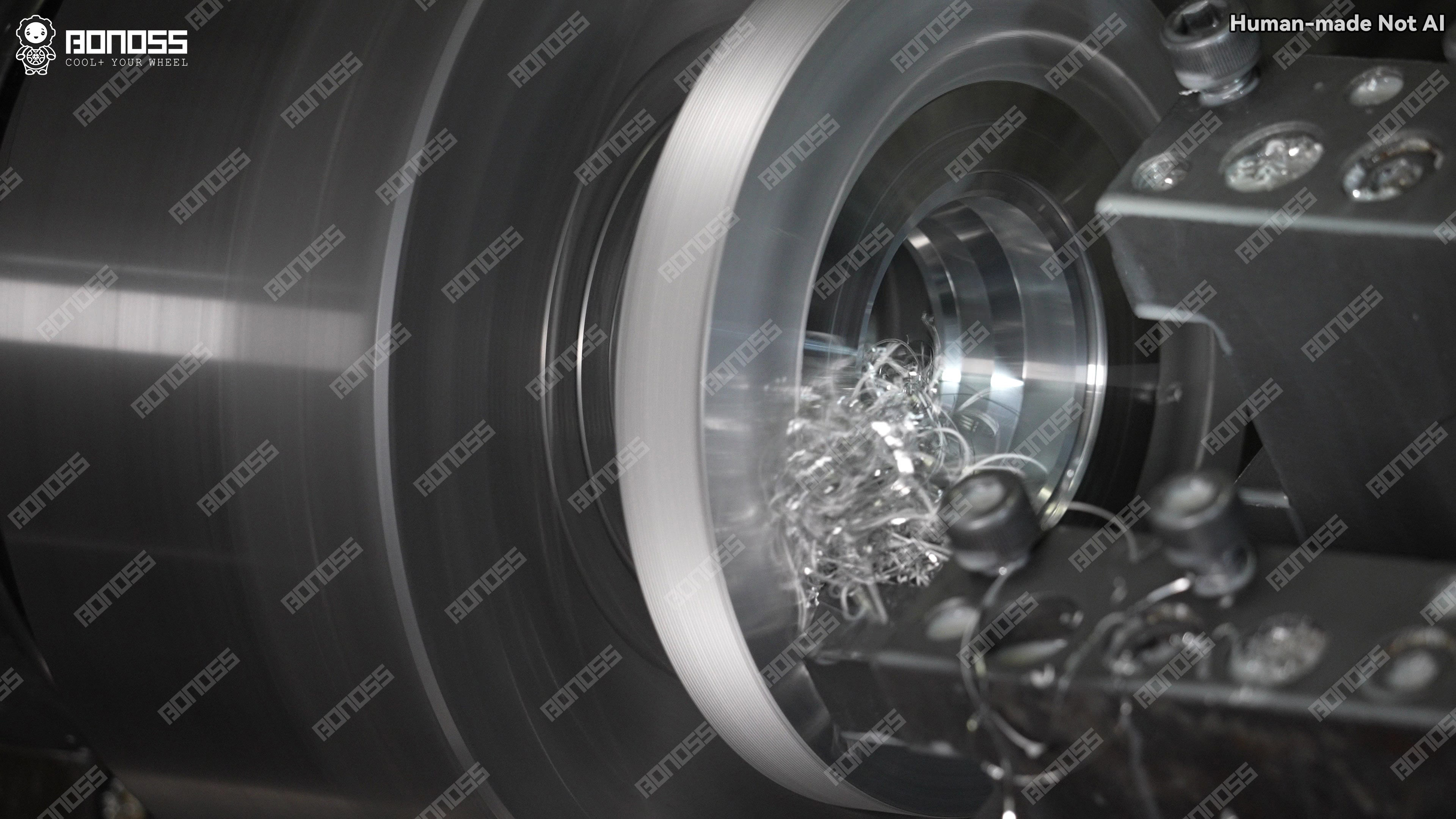
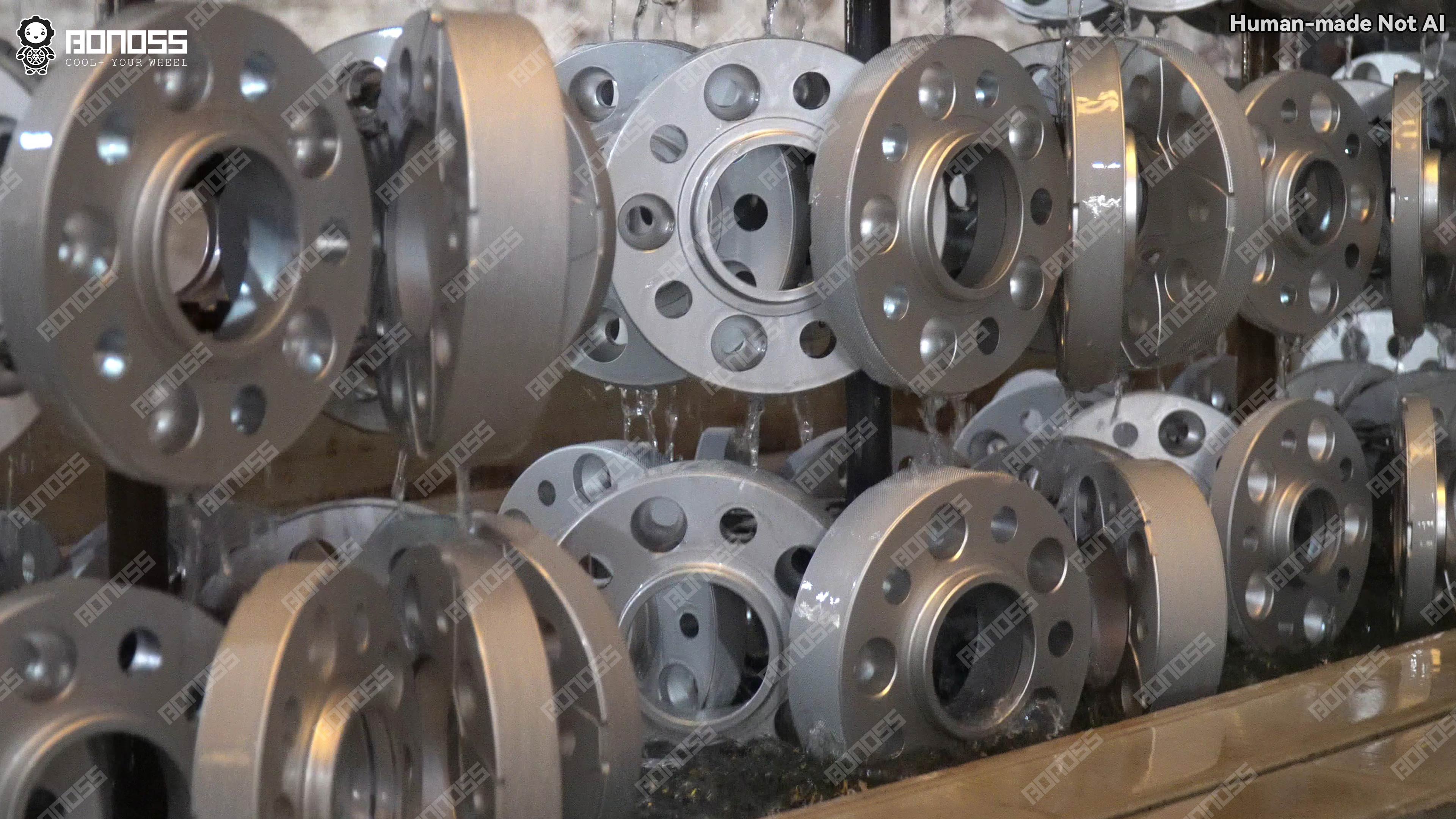
We would rather point at test data than adjectives. BONOSS spacers are machined from forged 6061-T6 or forged 7075-T6 aluminum billet on CNC equipment holding 0.02mm tolerances, then hard anodized — and the material claims are backed by third-party reports, with over 75 SGS and TÜV test reports on file. Three representative ones:
TÜV Test Report for BONOSS 6061-T6 Wheel Spacers Hardness Test (No: 01 220 CHN-T-2500961+) — hardness measured at 101-103 under test method ISO 6506-1:2014. Read the report summary.
TÜV Test Report for BONOSS 6061-T6 Wheel Spacers Neutral Salt Spray Test (No: 01 220 CHN-T-2500958-1+) — 240 hours of salt spray exposure with no defects, under ISO 9227:2022+Amd 1:2024. In plain terms: the anodized finish survived ten straight days in a corrosive salt fog without surface failure, which is the test that matters if you drive through winters. Read the report summary.
TÜV Test Report for BONOSS 7075-T6 Wheel Spacers Hardness Test (No: 01 220 CHN-T-2501547+) — hardness result 146 HBW 5/250 under ISO 6506-1:2014, reflecting the 7075 alloy’s higher strength ceiling. Read the report summary.
Fair disclosure: different labs, different samples, and normal measurement error all produce different readings, so treat these numbers as verified results for the tested samples rather than universal constants. Every kit is covered by a 10-year warranty.
FAQ
What bolt pattern and center bore do Lexus IS wheel spacers need?
Every Lexus IS from 1999 to 2027 uses a 5×114.3 bolt pattern and a 60.1mm center bore, so your spacers must be machined hub-centric to 60.1mm. Universal or lug-centric spacers that ignore the bore are how vibration complaints start.
Did the Lexus IS switch from wheel nuts to wheel bolts?
Yes — the 2021 facelift replaced M12x1.5 studs and flat seat wheel nuts with M14x1.5 R14 ball seat wheel bolts, and from 2023 onward all IS models use bolts. Model years 2021-2022 are a mixed transition, so physically check your car before ordering hardware.
Can I reuse factory lug bolts with 5mm spacers on a Lexus IS?
No — not safely on bolt cars, because a 5mm slip-on spacer removes 5mm of thread engagement and the factory bolt no longer reaches enough thread. Use extended bolts sized to the spacer thickness, and remember 5mm spacers are not hub-centric, so treat them as a temporary or clearance-purpose option only.
What torque should I use for Lexus IS wheel spacers?
Match the torque to the fastener’s source: BONOSS-supplied hardware gets 113 Nm (83.3 ft-lb) for M12x1.5 or 140 Nm (103.5 ft-lb) for M14x1.5 per BONOSS installation instructions, while factory nuts or bolts get factory spec — 76 ft-lb (103 Nm) or 103.5 ft-lb (140 Nm) respectively — per the owner’s manual. Re-torque everything after 50-100 miles.
Do I need to cut the factory studs for 15mm spacers on an IS?
Usually not — if your wheel’s rear pockets are deep enough that pocket depth plus 15mm exceeds the stud protrusion, the studs sit inside the pockets untouched. Measure your specific wheels, because pocket depth varies between factory and aftermarket designs.
Do Lexus IS and Toyota 86 share wheel spacers?
No — the Toyota 86 uses a 5×100 bolt pattern and a 56.1mm center bore, which is dimensionally incompatible with the IS. Never cross-fit spacers between the two platforms.
Conclusion
The Lexus IS makes spacer shopping easy in one way and tricky in another. Easy: 5×114.3 and 60.1mm hub-centric fitment covers every car from 1999 to today, so Lexus IS hub-centric wheel spacers are a single-spec purchase. Tricky: the 2021 bolt swap means the right product depends on your exact model year, and 15mm to 25mm of thickness is a measurement, not a guess.
Measure each corner, confirm your fastener type, and match the series to your hardware — BL slip-ons with extended bolts on bolt cars, BLM bolt-ons for nut cars, BLA bolt-ons for bolt cars at 25mm and up. If you are ready to buy Lexus IS wheel spacers, the product pages linked above list every thickness with live fitment notes, and the 10-year warranty covers the hardware for the long haul. Quality Lexus IS spacers are a solved problem — the only variable left is your tape measure.
BONOSS forged lightweight plus BL series wheel spacers
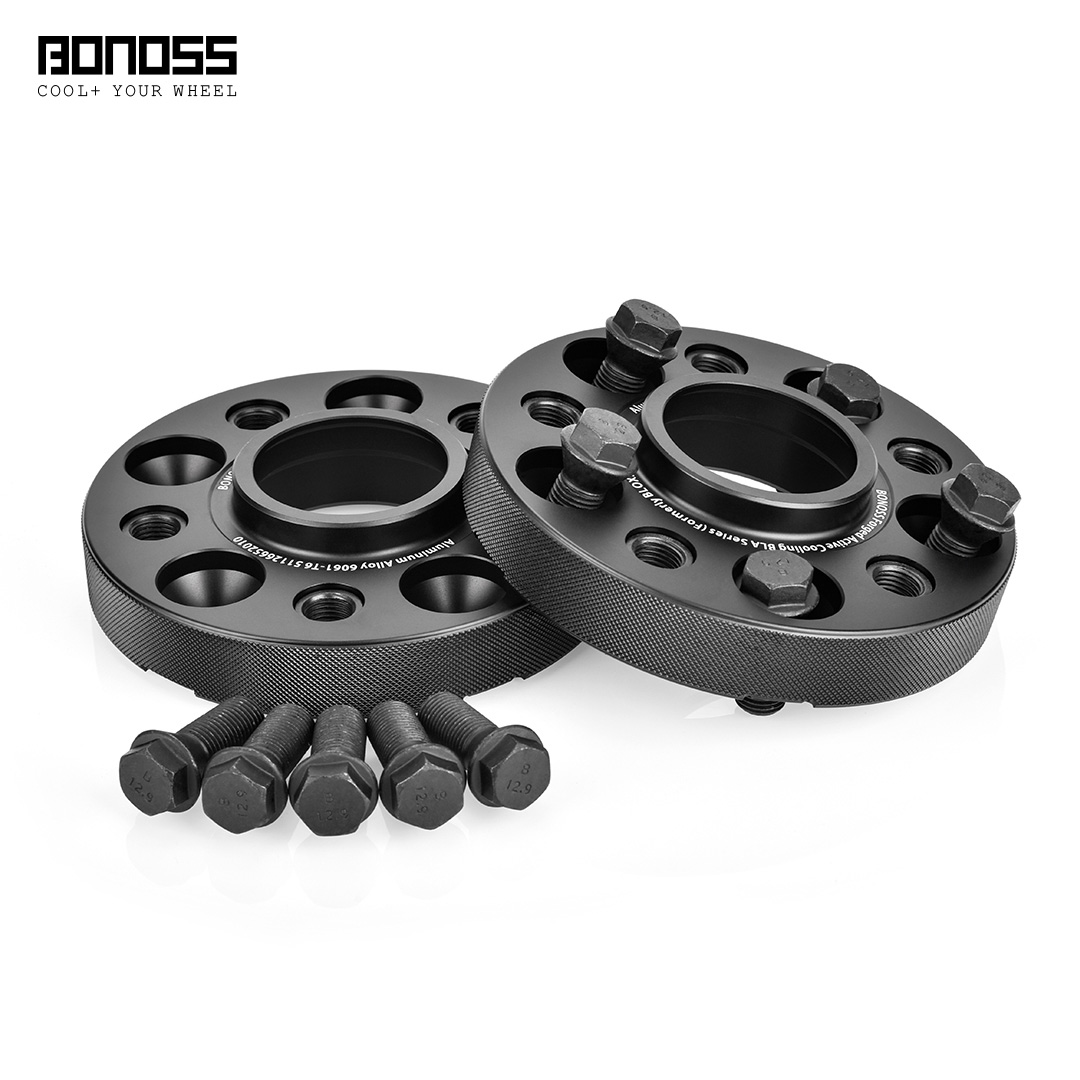
BONOSS forged lightweight plus BLA series wheel spacers

BONOSS forged lightweight plus BLM series wheel spacers

About Jack Miller
Jack Miller is a certified automotive technician specializing in wheel and tire systems, with over a decade of hands-on repair experience. He has served as a senior technical specialist at BONOSS for the past 7 years, advising on wheel spacer fitment, wheel bolt & wheel nut selection for thousands of customer builds. Jack’s technical guides on BONOSS are grounded in real customer cases — not theory.