
Two spec families. That is the entire Toyota 4Runner wheel spacer story in one breath — everything from 1984 to 2027 splits cleanly at a single year: 2025. Before that year, every 4Runner from the first generation onward ran a 106.1mm center bore and M12x1.5 wheel studs. From 2025 on, the sixth-generation truck switched to a 95.1mm hub bore and M14x1.5 studs. Same 6×139.7 bolt pattern the whole way through, but the hub changed, and that one change is the thing that decides whether a spacer fits or does not fit your truck.
Get this part right and the rest is just measuring. Get it wrong and you will be wrestling with a spacer that will not seat, or a wheel that shakes at 70 mph. That is why this page exists — it is the hub for every Toyota 4Runner wheel spacers question, organized by what actually matters: the spec family, not the model-year badge on the tailgate.
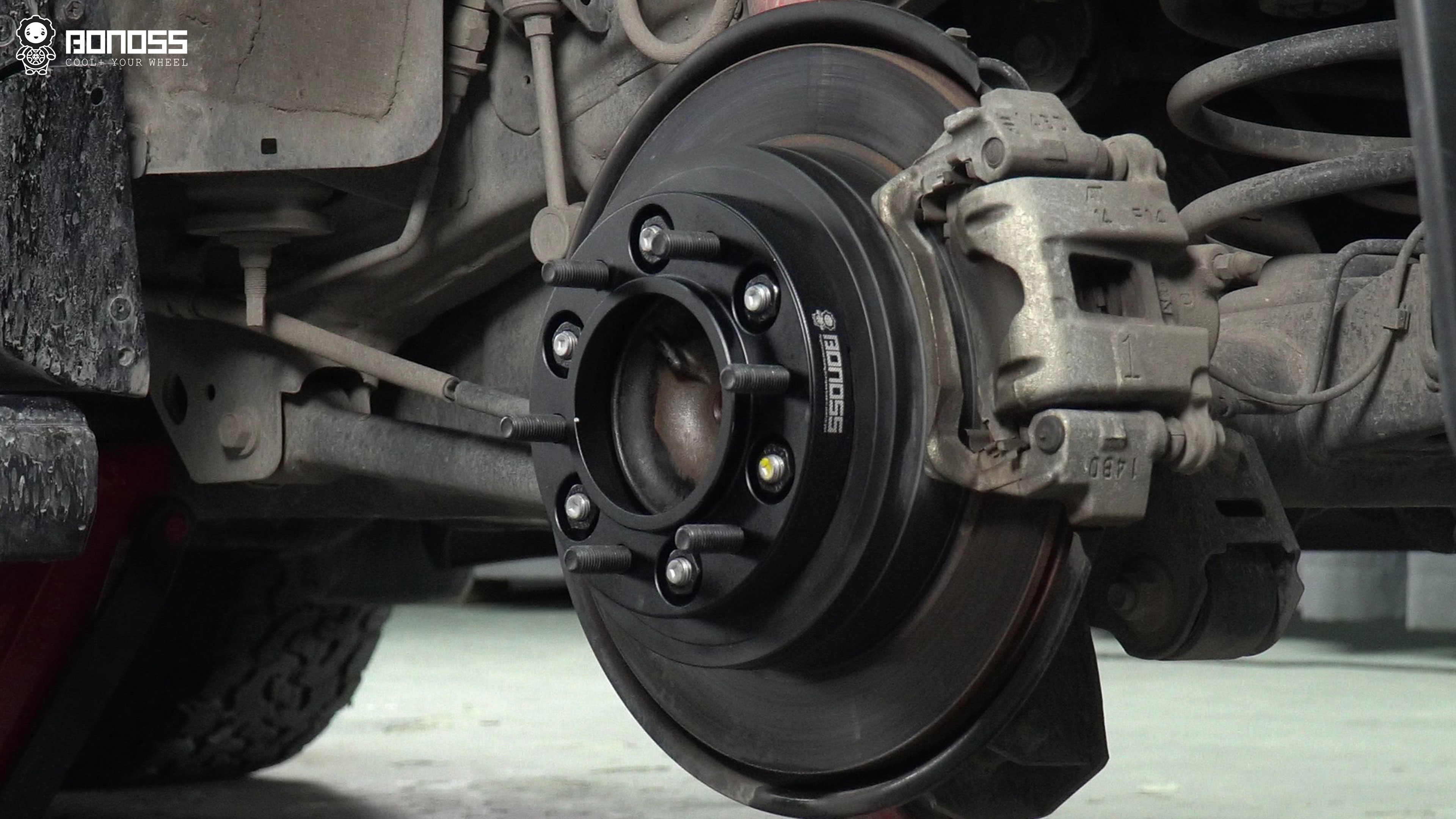
Spec Quick Reference
Here is the whole 4Runner spacer universe in one table. Bookmark it. Every value below is factory service data for each generation, and the torque figures are the factory lug nut specs pulled from each owner’s manual.
| Generation / Year | Bolt Pattern | Center Bore | Thread Pitch | Wheel Offset | Suggested Spacer Sizes | Factory Lug Nut Torque |
|---|---|---|---|---|---|---|
| 2025-2027 4Runner SR5 | 6×139.7mm | 95.1mm | M14x1.5 | ET50 / ET45 | 25mm to 35mm | 96 ft-lb / 131 Nm |
| 2025-2027 4Runner Limited | 6×139.7mm | 95.1mm | M14x1.5 | ET50 / ET45 | 25mm to 35mm | 96 ft-lb / 131 Nm |
| 2025-2027 4Runner TRD Pro | 6×139.7mm | 95.1mm | M14x1.5 | ET55 / ET45 | 25mm to 35mm | 96 ft-lb / 131 Nm |
| 2010-2024 4Runner SR5 | 6×139.7mm | 106.1mm | M12x1.5 | ET15 | 20mm to 30mm | 76 – 82 ft-lb / 103 – 112 Nm |
| 2010-2024 4Runner SR5 Premium | 6×139.7mm | 106.1mm | M12x1.5 | ET15 | 20mm to 30mm | 76 – 82 ft-lb / 103 – 112 Nm |
| 2010-2024 4Runner TRD Off-Road | 6×139.7mm | 106.1mm | M12x1.5 | ET15 | 25mm to 35mm | 76 – 82 ft-lb / 103 – 112 Nm |
| 2010-2024 4Runner TRD Off-Road Premium | 6×139.7mm | 106.1mm | M12x1.5 | ET15 | 25mm to 35mm | 76 – 82 ft-lb / 103 – 112 Nm |
| 2010-2024 4Runner Limited | 6×139.7mm | 106.1mm | M12x1.5 | ET15 | 20mm to 30mm | 76 – 82 ft-lb / 103 – 112 Nm |
| 2010-2024 4Runner TRD Pro | 6×139.7mm | 106.1mm | M12x1.5 | ET15 | 25mm to 35mm | 76 – 82 ft-lb / 103 – 112 Nm |
| 2010-2024 4Runner TRD Sport | 6×139.7mm | 106.1mm | M12x1.5 | ET15 | 25mm to 35mm | 76 – 82 ft-lb / 103 – 112 Nm |
| 2010-2024 4Runner Trail Special Edition | 6×139.7mm | 106.1mm | M12x1.5 | ET15 | 25mm to 35mm | 76 – 82 ft-lb / 103 – 112 Nm |
| 2003-2009 4Runner SR5 | 6×139.7mm | 106.1mm | M12x1.5 | ET30 / ET25 | 20mm to 35mm | 81 ft-lb / 110 Nm |
| 2003-2009 4Runner Sport Edition | 6×139.7mm | 106.1mm | M12x1.5 | ET30 / ET25 | 20mm to 35mm | 81 ft-lb / 110 Nm |
| 2003-2009 4Runner Limited | 6×139.7mm | 106.1mm | M12x1.5 | ET30 / ET25 | 20mm to 35mm | 81 ft-lb / 110 Nm |
| 1995-2002 4Runner SR5 | 6×139.7mm | 106.1mm | M12x1.5 | ET15 / ET38 / ET6 / ET12 | 20mm to 35mm | 81 ft-lb / 110 Nm |
| 1995-2002 4Runner Limited | 6×139.7mm | 106.1mm | M12x1.5 | ET15 / ET38 / ET6 / ET12 | 20mm to 35mm | 81 ft-lb / 110 Nm |
| 1989-1994 4Runner SR5 | 6×139.7mm | 106.1mm | M12x1.5 | ET0 | 20mm to 25mm | 81 ft-lb / 110 Nm |
| 1989-1994 4Runner Limited | 6×139.7mm | 106.1mm | M12x1.5 | ET0 | 20mm to 25mm | 81 ft-lb / 110 Nm |
| 1984-1988 4Runner SR5 | 6×139.7mm | 106.1mm | M12x1.5 | ET8 / ET0 | 25mm to 30mm | 81 ft-lb / 110 Nm |
Look at the center bore column first — that is your first filter. 2025 or newer, you are in the 95.1mm family. 2024 or older, you are in the 106.1mm family. The center bore is what a hub-centric spacer locates on, so mixing families means the spacer will not center on the hub. The 6×139.7 bolt pattern is the one constant across all six generations; a 6×139.7 spacer with the wrong center bore is still the wrong spacer.
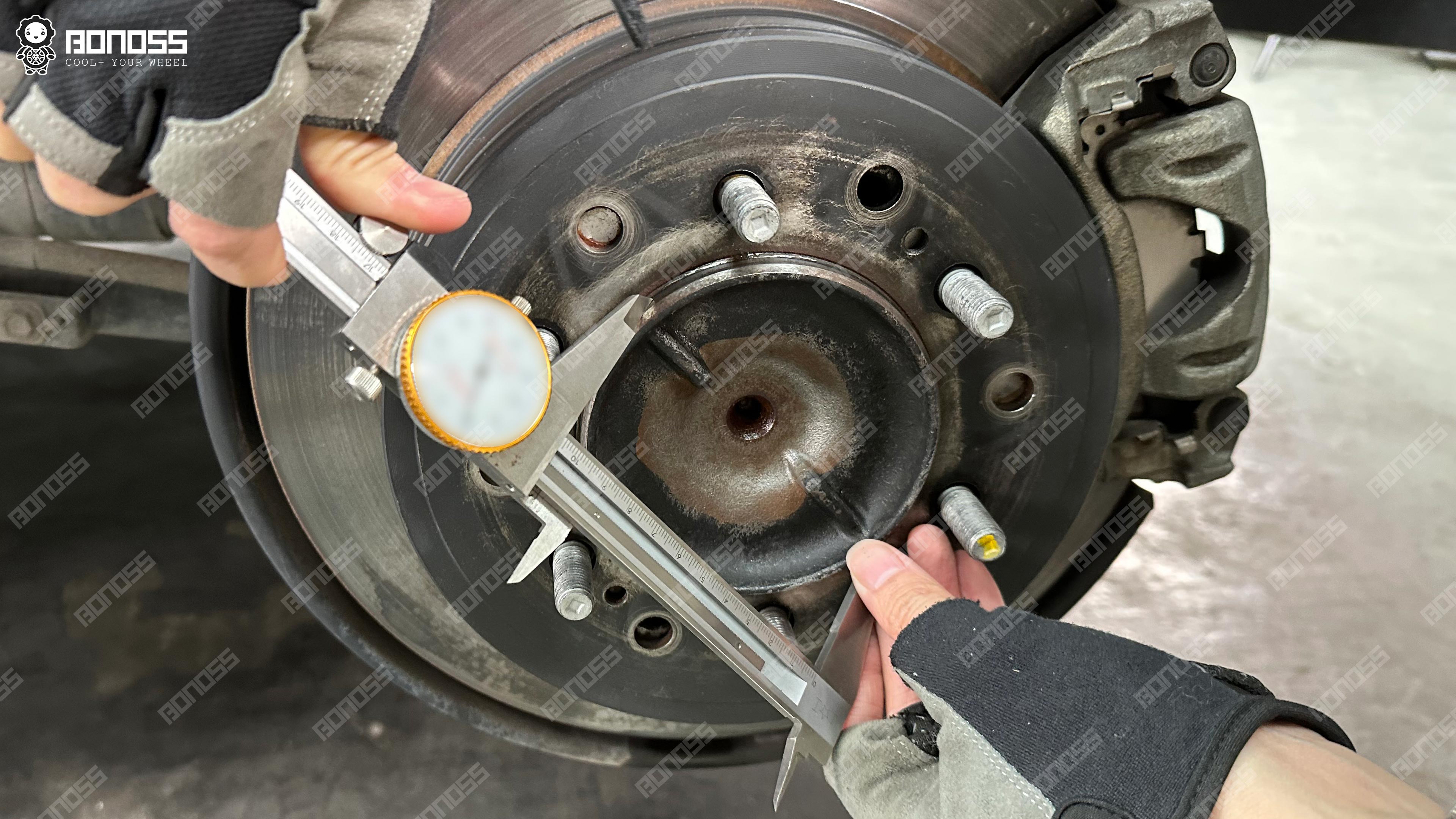
The 106.1mm hub bore being verified with a vernier caliper — the number the entire 5th Gen family hangs on. Every spec on this table was measured or cross-checked the same way, not copied off a forum.
6th Gen (2025–2027): The New 95.1mm Family
Toyota finally redid the 4Runner’s hub for 2025. The sixth-generation truck — chassis code N500, on Toyota’s latest global platform — kept the 6×139.7 bolt pattern but shrank the center bore to 95.1mm and stepped the studs up to M14x1.5. That is not a cosmetic change; it is a clean break from every 4Runner built before it.
Offset, gap, and what fits
Factory offset on the 6th Gen runs ET45 to ET55 depending on trim — the TRD Pro sits at ET55, while SR5 and Limited land around ET50/ET45. Fender clearance on these trucks is tighter than the 5th Gen, so 25mm to 35mm is the sweet spot for a flush stance. Past 35mm, stock rubber usually pokes past the fender.
Torque for the 6th Gen
Two torque numbers apply here, and they are for two different bolts. When you bolt a spacer to the hub and tighten the M14x1.5 spacer nuts, use 140 Nm (103.5 ft-lb) per BONOSS installation instructions. When you mount the wheel onto the spacer and tighten the factory lug nuts, use 96 ft-lb (131 Nm) per the owner’s manual.
This is the generation where most people get into trouble, because they assume a friend’s 5th Gen spacer will bolt on. It will not. The 95.1mm hub bore spacers for a 4Runner are a different animal — more on that below. If you want 6th-Gen 4Runner wheel spacers that actually fit, start with the BONOSS 6th Gen 4Runner wheel spacers matched to the 95.1mm hub, or the forged 6th Gen 4Runner wheel spacers if you want the strongest option.
5th Gen (2010–2024): The 106.1mm Family, Fourteen Years Strong
The 5th Gen — chassis code N280 — ran from 2010 to 2024 with a 106.1mm center bore and M12x1.5 studs the entire time. Fourteen model years, zero hub changes. That is why this generation is the easiest one to shop for: if you have a 5th Gen, you have more proven 4Runner spacers to choose from than anyone else.
Offset, gap, and what fits
Stock offset is ET15 across the 5th Gen line. That low offset already pushes the wheels out further than the 6th Gen, so the fender gap is smaller to begin with. Most 5th Gen owners land on 20mm to 30mm for a flush look on factory wheels; the TRD Off-Road and TRD Pro trims, with their wider stance and different fender shape, often go 25mm to 35mm.
Here is the before-and-after from a 30mm install on a 2021 truck — the same one our 2021 Toyota 4Runner 30mm wheel spacers case study documents in detail.
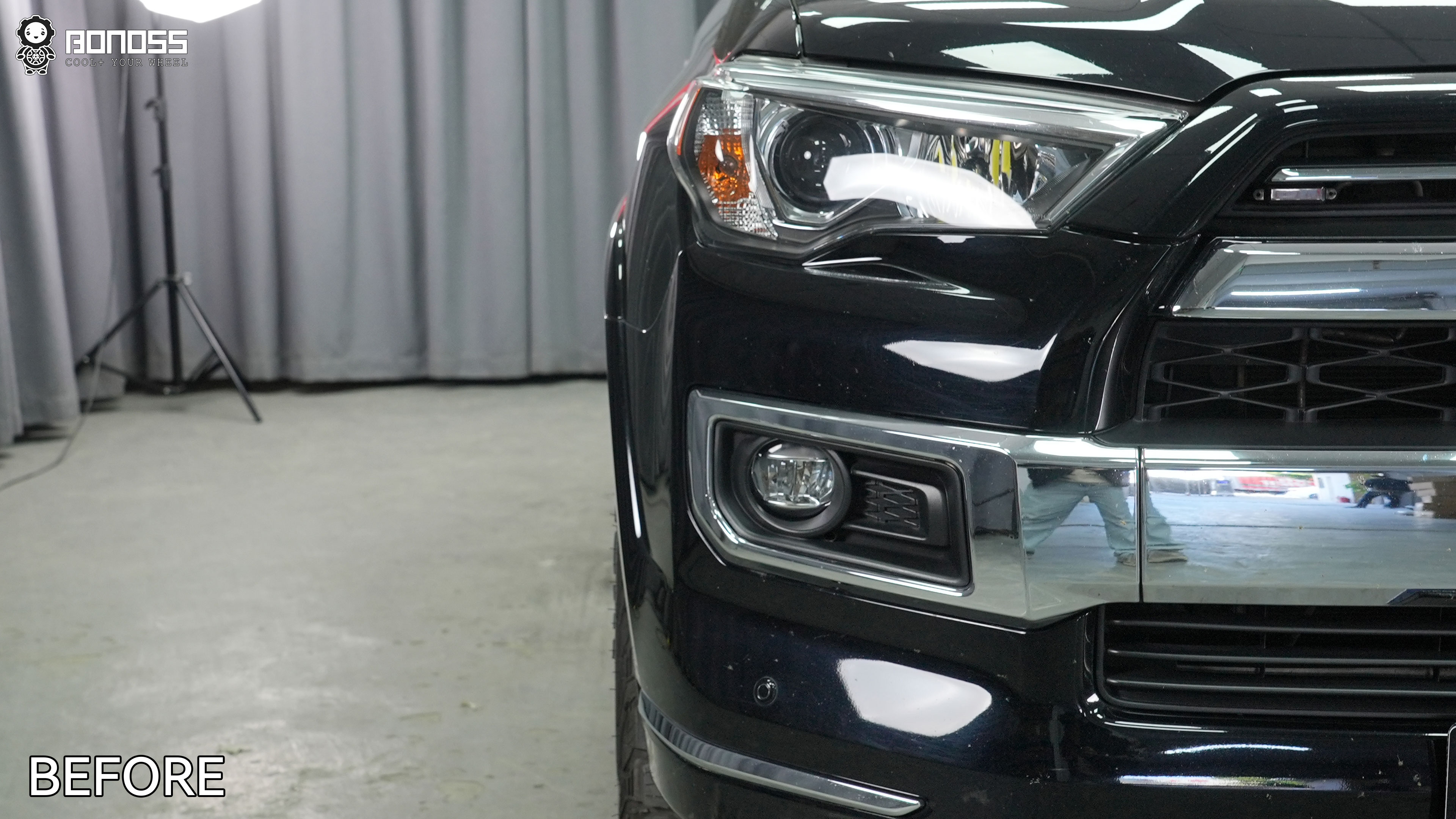
Stock wheel, tucked inside the fender. Nothing wrong with it — just a little shy.
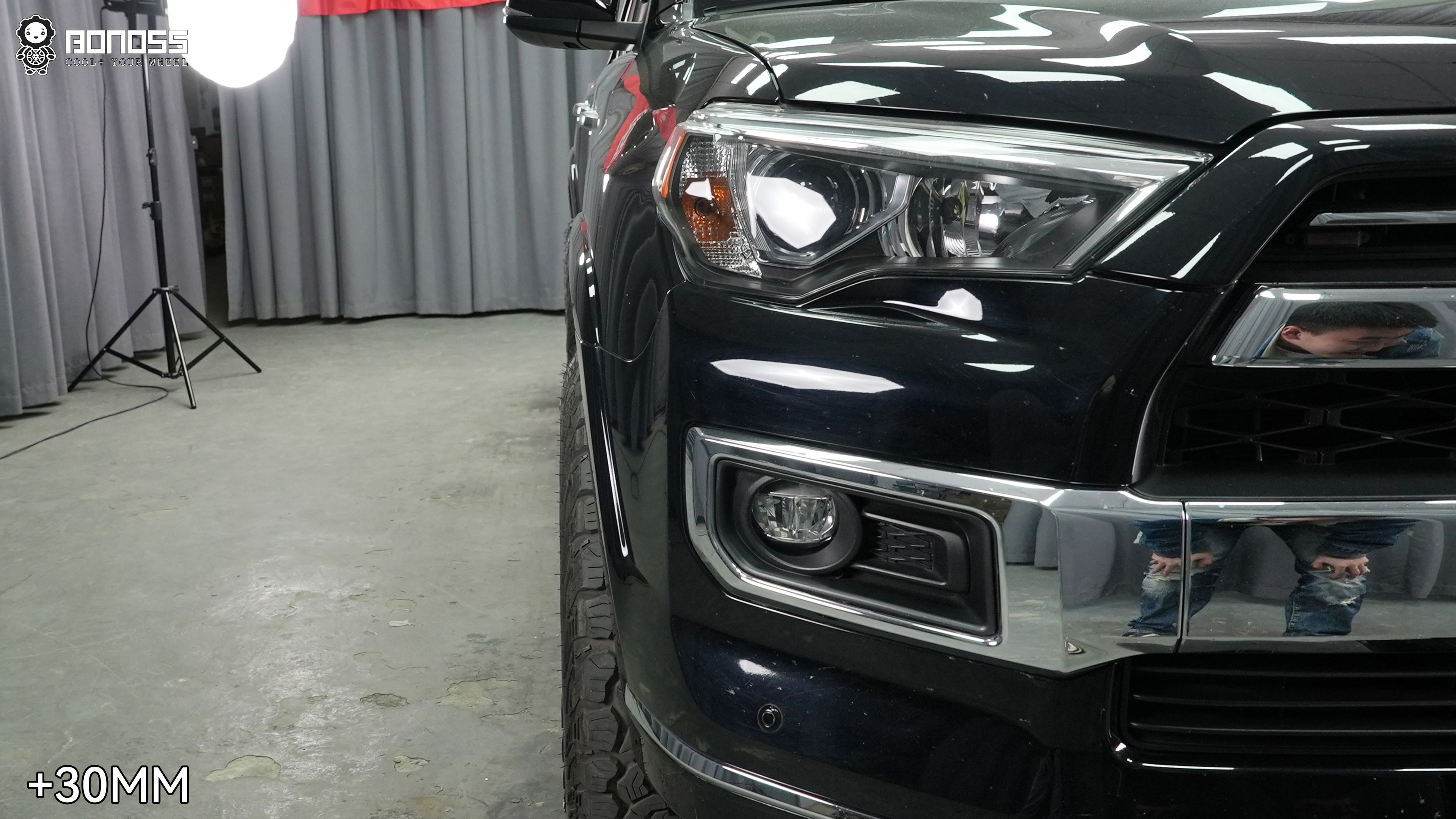
Same corner, same wheel, with 30mm of spacer behind it. The tire now sits even with the fender instead of hiding inside it.
The right way to pick thickness is to measure, not guess. Run a ruler from the tire’s outer sidewall to the fender lip — the gap you see is the spacer size that closes it. Front and rear usually measure differently, so measure both.
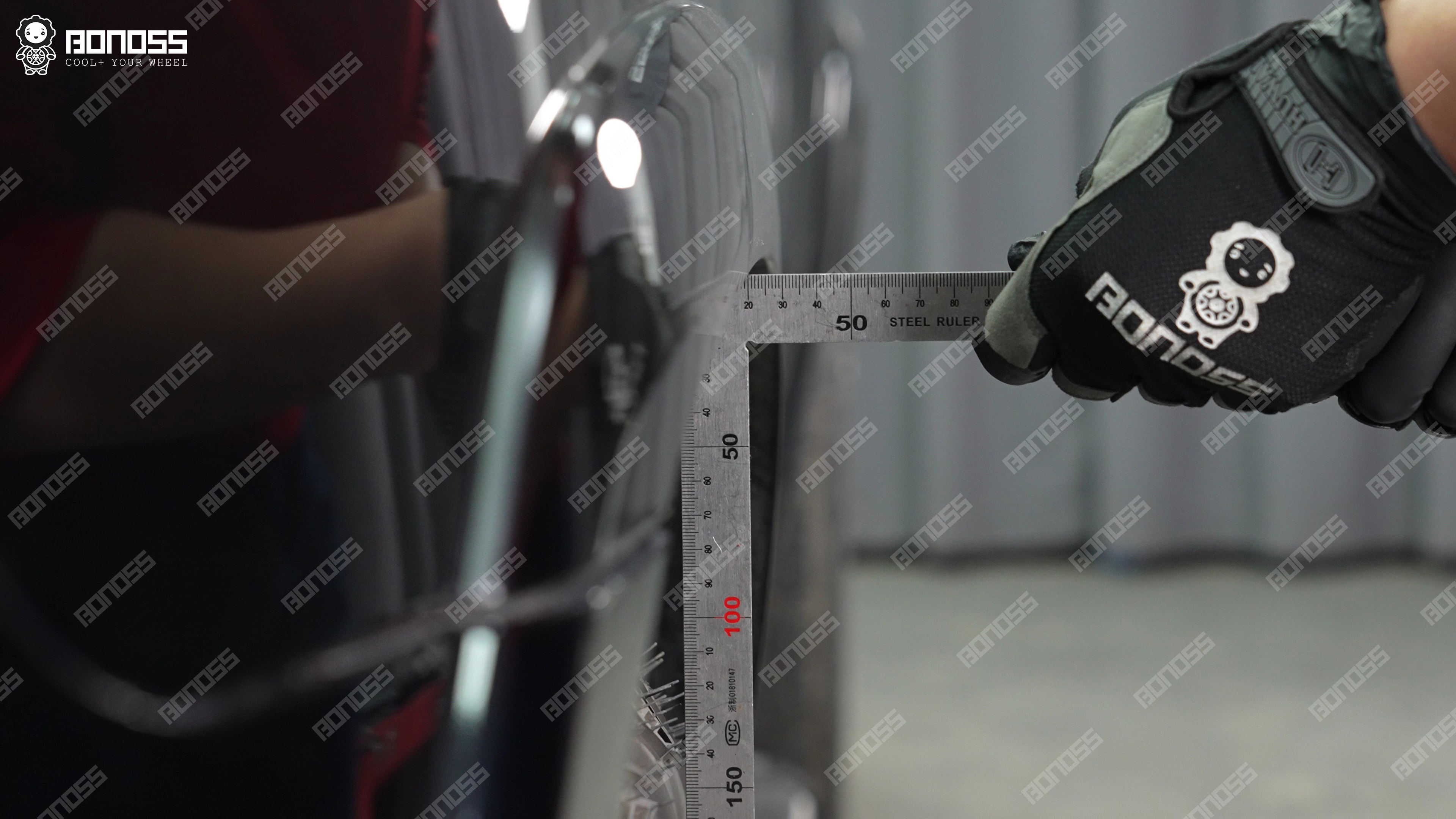
Torque for the 5th Gen
For a spacer on a 5th Gen, tighten the M12x1.5 spacer nuts to 113 Nm (83.3 ft-lb) per BONOSS installation instructions. Then mount the wheel and tighten the factory lugs to 76–82 ft-lb (103–112 Nm) per the owner’s manual.
4th Gen (2003–2009): Same Hub, Different Offset
The 4th Gen — chassis code N210 — kept the 106.1mm center bore and M12x1.5 studs, so hub-wise it is identical to the 5th Gen. What changed is the offset: factory wheels sit at ET30 or ET25 here, noticeably higher than the 5th Gen’s ET15.
That higher offset means more fender gap to work with. 20mm to 35mm spacers are the range, with 25mm to 30mm being the most common pick for a flush look on stock wheels.
Torque for the 4th Gen
Same pattern as the rest of the 106.1mm family: 113 Nm (83.3 ft-lb) on the M12x1.5 spacer nuts per BONOSS installation instructions, and 81 ft-lb (110 Nm) on the factory lugs per the owner’s manual.
3rd Gen (1995–2002): The 106.1mm Family’s Wild Card
The 3rd Gen — chassis code N180 — is where offsets get messy. Depending on trim and wheel, factory offset ran ET15, ET38, ET6, or ET12 — four different numbers across the line. The hub stayed 106.1mm with M12x1.5 studs, so the spacer still mounts, but you cannot copy one trim’s thickness to another.
20mm to 35mm is the safe range. Because the offset varies so much, measure your own gap instead of trusting a forum number from a different trim.
Torque for the 3rd Gen
113 Nm (83.3 ft-lb) on the M12x1.5 spacer nuts per BONOSS installation instructions; 81 ft-lb (110 Nm) on the factory lugs per the owner’s manual.
2nd Gen (1989–1994): ET0 and the Narrowest Window
The 2nd Gen ran ET0 — effectively zero offset — so the wheels already sat fairly wide. That leaves the narrowest spacer window in the whole family: 20mm to 25mm. Same 106.1mm hub, same M12x1.5 studs, and the same torque story as the 3rd Gen.
1st Gen (1984–1988): The Original, ET8/ET0
The first 4Runner used ET8 or ET0 depending on the wheel, and the same 106.1mm hub bore and M12x1.5 studs that Toyota carried for four more decades. 25mm to 30mm spacers are the practical range.
These early trucks are forty years old now, so before you order, check the hub face for corrosion — a pitted hub will never seat a spacer cleanly, no matter how good the spacer is.
Reverse Lookup: Which Family Is Your 4Runner In
If you would rather work backwards from a spec than read a generation history, here is the whole thing flipped.
| If your 4Runner has… | …you are in | Spacer range | Notes |
|---|---|---|---|
| 95.1mm center bore, M14x1.5 | 6th Gen (2025–2027) | 25–35mm | New hub; nothing pre-2025 fits |
| 106.1mm center bore, M12x1.5, ET15 | 5th Gen (2010–2024) | 20–35mm | Most options, most common truck |
| 106.1mm center bore, M12x1.5, ET30/ET25 | 4th Gen (2003–2009) | 20–35mm | More gap than 5th Gen |
| 106.1mm center bore, M12x1.5, mixed ET | 3rd Gen (1995–2002) | 20–35mm | Offset varies by trim, measure |
| 106.1mm center bore, M12x1.5, ET0 | 2nd Gen (1989–1994) | 20–25mm | Narrowest window |
| 106.1mm center bore, M12x1.5, ET8/ET0 | 1st Gen (1984–1988) | 25–30mm | Check hub for corrosion |
Installation and Re-check: The Two Things People Skip
Mounting a spacer is not hard, but two steps separate a smooth install from a vibration you will chase for weeks.
First, the stud trimming question. Whether you have to cut your factory studs comes down to one measurement: stud protrusion. Measure how far the stud sticks past the hub face, then check the depth of the pockets in the back of your wheel. If pocket depth plus spacer thickness is greater than stud protrusion, the studs clear and you trim nothing.
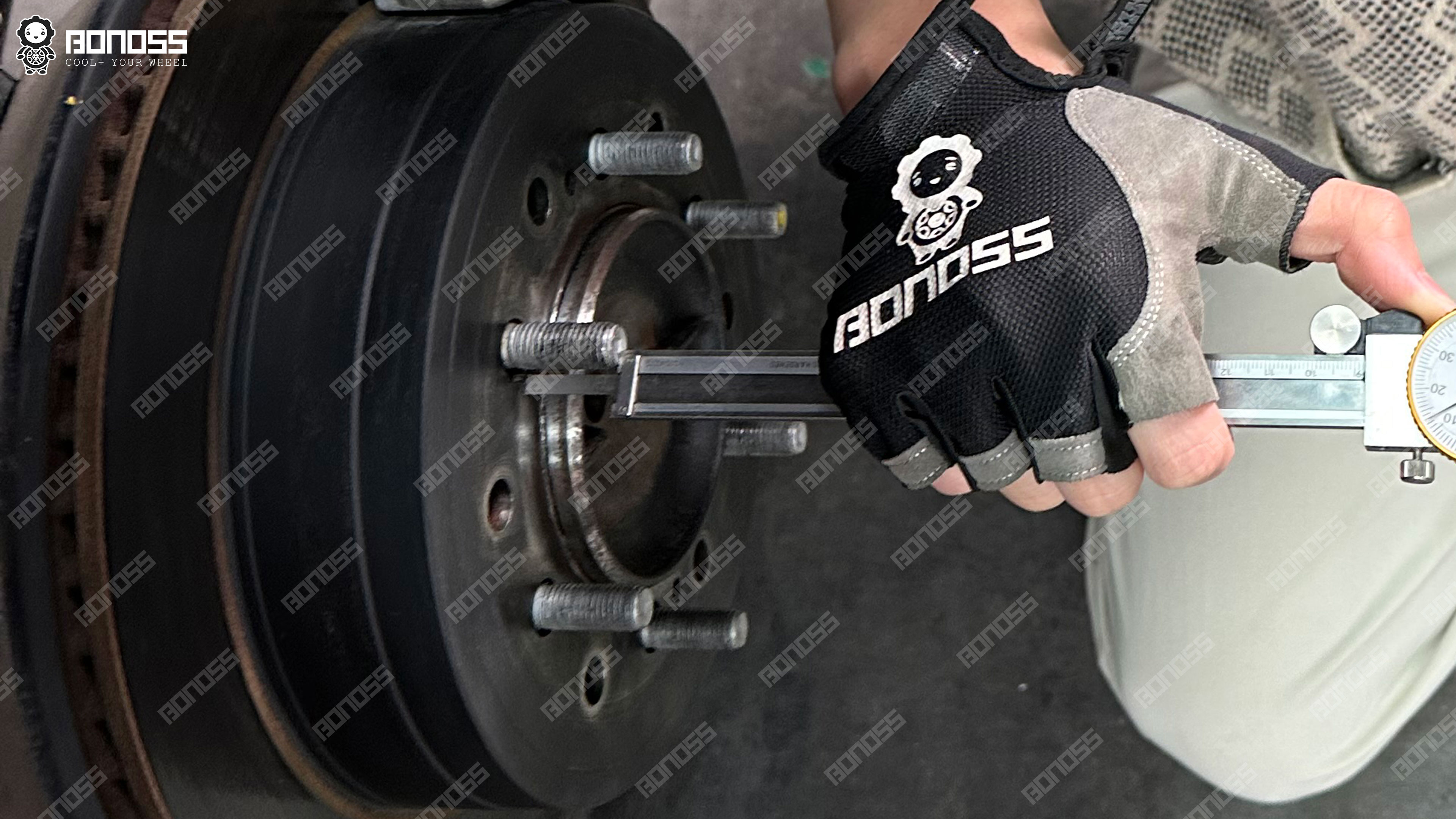
Stud protrusion on a 5th Gen, measured with a caliper — the number you compare against wheel pocket depth before deciding on trimming. The other measurement is the hub step, the small lip the spacer’s center bore registers on.
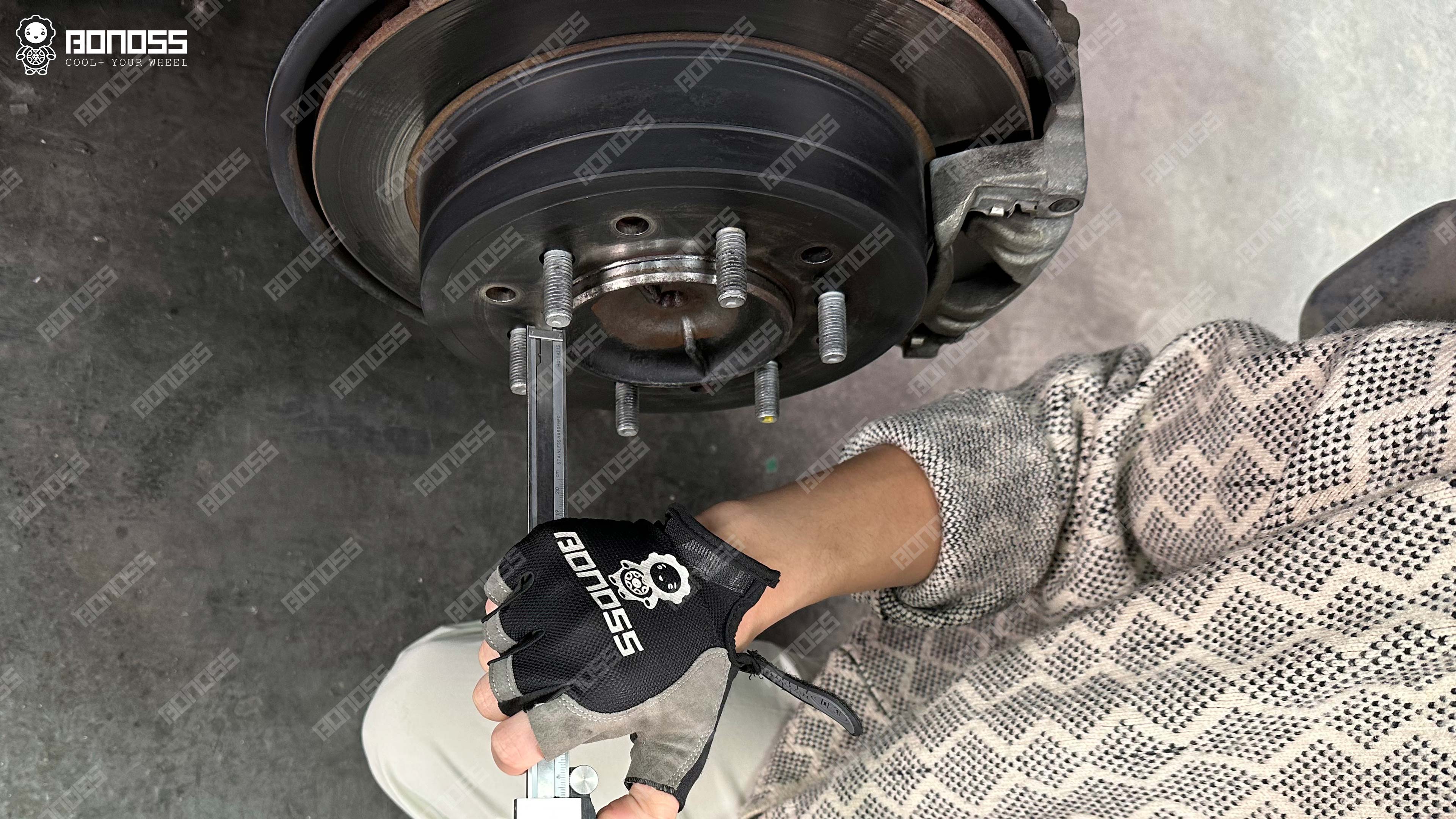
If that lip is corroded, the spacer will not seat squarely. Hub step height on the same truck. Clean this surface to bare metal before mounting anything.
On corrosion: the hub face on an older 4Runner will have rust. That rust is what causes the spacer to sit a fraction off-center, and off-center is what causes the 70 mph shimmy. Spray a rust remover, work the face with emery cloth, and get it clean before the spacer goes on. No amount of spacer quality compensates for a dirty hub.
Then torque, in a crisscross sequence, to the correct value, and re-check it after the first 50 miles or so. Here is the process mid-install.
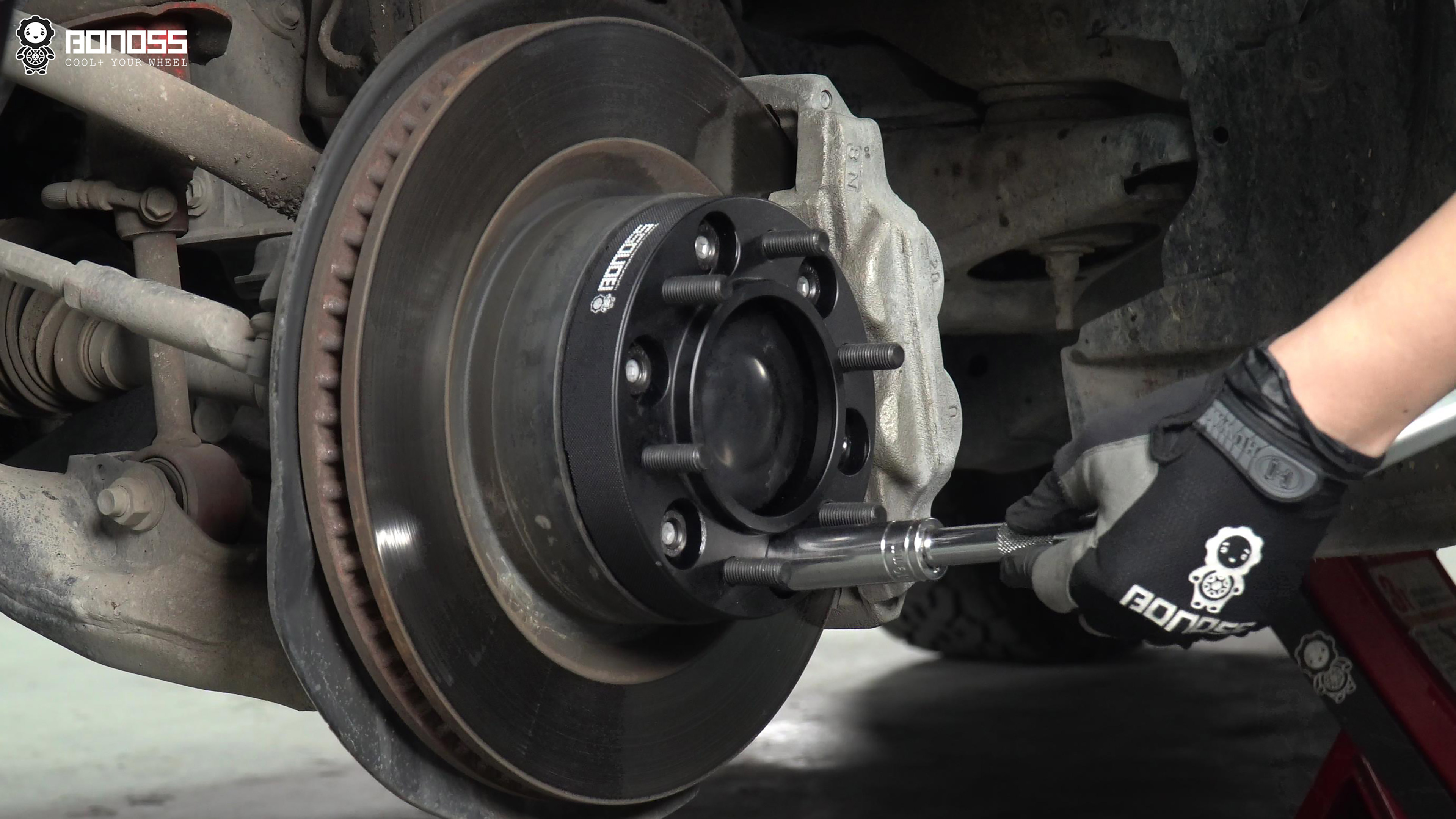
Torquing the spacer nuts on the rear hub with a torque wrench — crisscross pattern, one value, done properly.
One torque, one rule. Use BONOSS fasteners with BONOSS torque and factory fasteners with factory torque. Do not split the difference.
| Fastener | Thread | Torque | Source |
|---|---|---|---|
| Spacer nuts (spacer to hub) | M12×1.5 | 113 Nm (83.3 ft-lb) | BONOSS installation instructions |
| Spacer nuts (spacer to hub) | M14×1.5 | 140 Nm (103.5 ft-lb) | BONOSS installation instructions |
| Factory lug nuts (wheel to spacer) | M12×1.5 (5th Gen and earlier) | 76–82 ft-lb (103–112 Nm) | Owner’s manual |
| Factory lug nuts (wheel to spacer) | M14×1.5 (6th Gen) | 96 ft-lb (131 Nm) | Owner’s manual |
Use one torque value for the entire installation — the BONOSS value when you use BONOSS fasteners, the factory value when you use factory fasteners. Both are acceptable; just never mix the two on the same joint. If a number is missing for your truck, refer to your owner’s manual or BONOSS instructions rather than guessing.
Offset Rims vs Wheel Spacers: The Honest Version
You can get the same stance two ways, and I will not pretend they are equal for everyone.
An offset rim bakes the offset in. If you want a different offset later, you buy new wheels — the whole set. A wheel spacer changes the offset on the wheels you already have, and you can swap thickness whenever you want. A 25mm spacer moves the track out roughly 25mm; a 35mm spacer moves it roughly 35mm. Same visual result as a low-offset wheel, except you keep your factory wheels and tires, and the cost is a fraction of a new wheel set. The savings can go into other upgrades instead.
The trade-off is real, so here it is plainly. A spacer adds a bolted joint, and that joint is only as good as the spacer’s machining and your torque procedure. A hub-centric, forged spacer installed and torqued correctly is a non-event on the road. A cheap lug-centric spacer with the wrong torque is a problem waiting to happen. That is the entire debate in two sentences, and it is why hub-centric 4Runner wheel spacers — where the spacer physically centers on the hub lip instead of relying on the studs — are the standard worth holding.
Can I Use 5th Gen Wheels on a 6th Gen 4Runner?
Yes, with the right adapter — and this is the one place adapters, not spacers, are the correct tool.
The 6th Gen hub is 95.1mm; a 5th Gen wheel is bored for 106.1mm. So the 6th Gen’s smaller hub cannot center a 5th Gen wheel, and a 5th Gen’s larger hub cannot seat a 6th Gen wheel at all. Going one direction — larger hub into smaller wheel — physically fails. Going the other — smaller hub into larger wheel — technically slips on but cannot be hub-centric, which is exactly the failure mode you do not want.
If you want 5th Gen wheels on a 6th Gen, use a 95-to-106 wheel adapter. That adapter steps the 6th Gen’s 95.1mm hub up to the 5th Gen wheel’s 106.1mm bore and restores hub-centric fitment. It is a different part from a spacer, so do not reach for a spacer to solve this problem.
What the Materials and Machining Actually Buy You
Since a spacer’s quality comes down to the aluminum and the machining, here is what the numbers mean in plain terms.
BONOSS forges its active cooling spacers from 6061-T6 or 7075-T6 aluminum, and the hardness is measured, not claimed. The TÜV Test Report for BONOSS 6061-T6 Wheel Spacers Hardness Test (No: 01 220 CHN-T-2500961+) records hardness of 101–103 HBW under the ISO 6506-1:2014 method. The 7075-T6 version lands at 146 HBW 5/250 under the same method, per the TÜV Test Report for BONOSS 7075-T6 Wheel Spacers Hardness Test (No: 01+220+CHN-T-2501547+).
Corrosion resistance gets tested too. The TÜV Test Report for BONOSS 6061-T6 Wheel Spacers Neutral Salt Spray Test (No: 01 220 CHN-T-2500958-1+) exposed the spacers to a neutral salt spray for 240 hours with no defects, per ISO 9227:2022+Amd 1:2024. Different labs and different samples will read slightly different numbers — that is normal measurement variance — but the pattern is consistent.
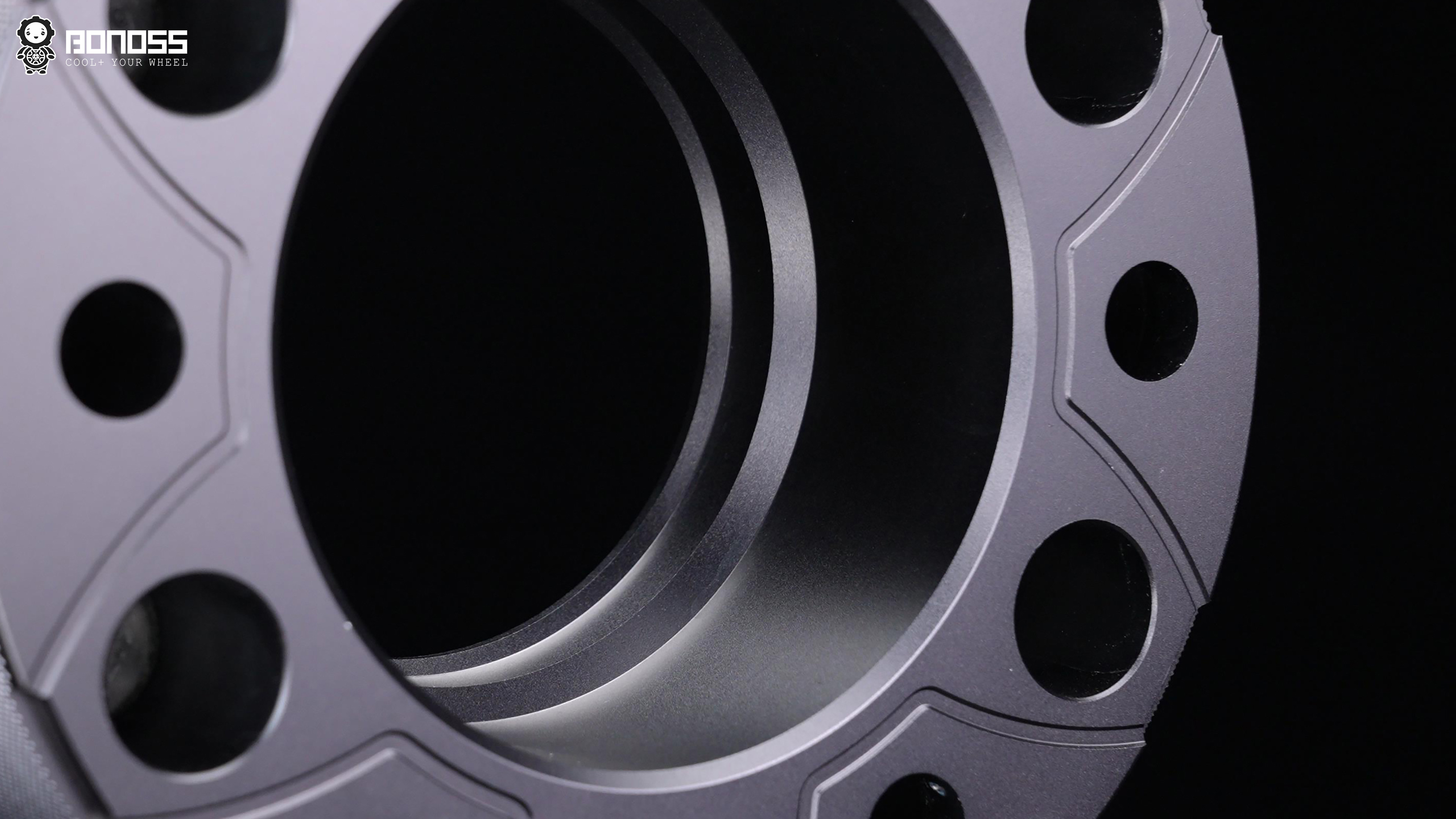
The active cooling channels and multi-stage hub-centric lip on a BONOSS spacer — the grooves and the stepped hub ring are what keep the wheel centered. The hardware matters as much as the billet. These spacers use ISO Grade 12.9 wheel studs and ISO Grade 10 wheel nuts.
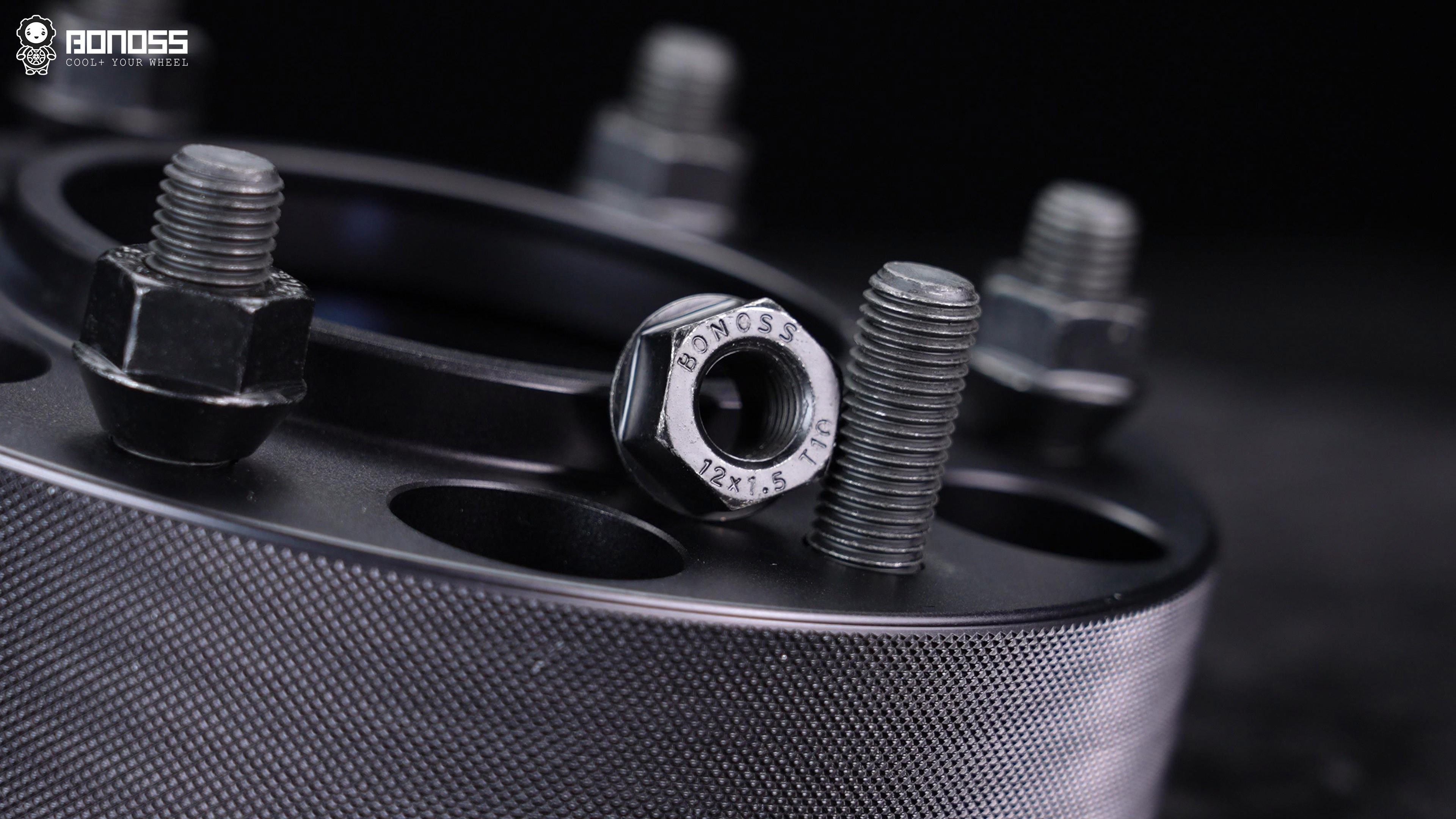
ISO Grade 12.9 wheel studs — the highest strength grade in common automotive use. And the tolerance comes from a CNC process, not a casting.
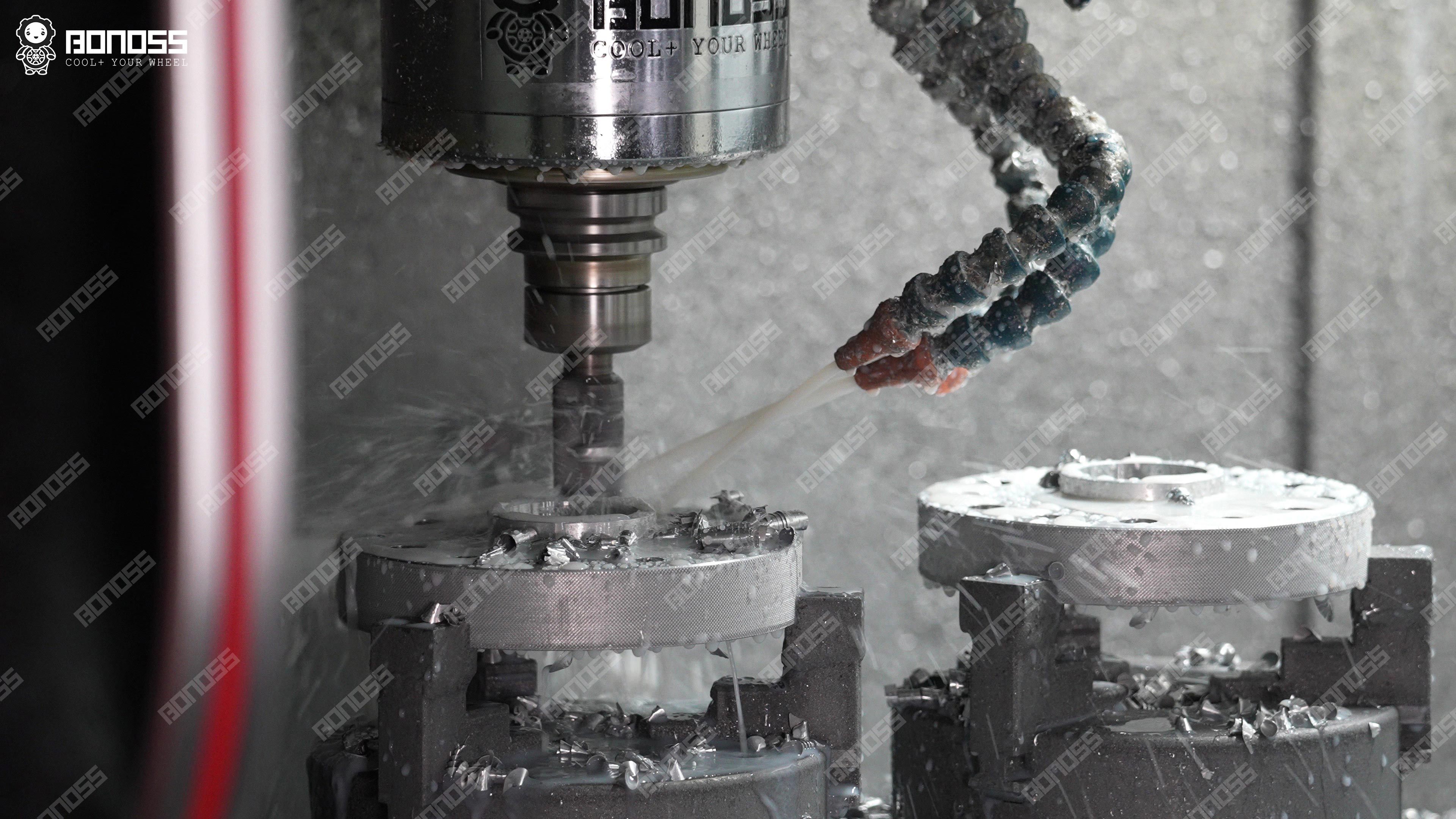
A spacer being CNC machined — this is where the 0.02mm tolerance comes from. That tolerance starts on a screen, where the part is designed and validated before a chip is ever cut.
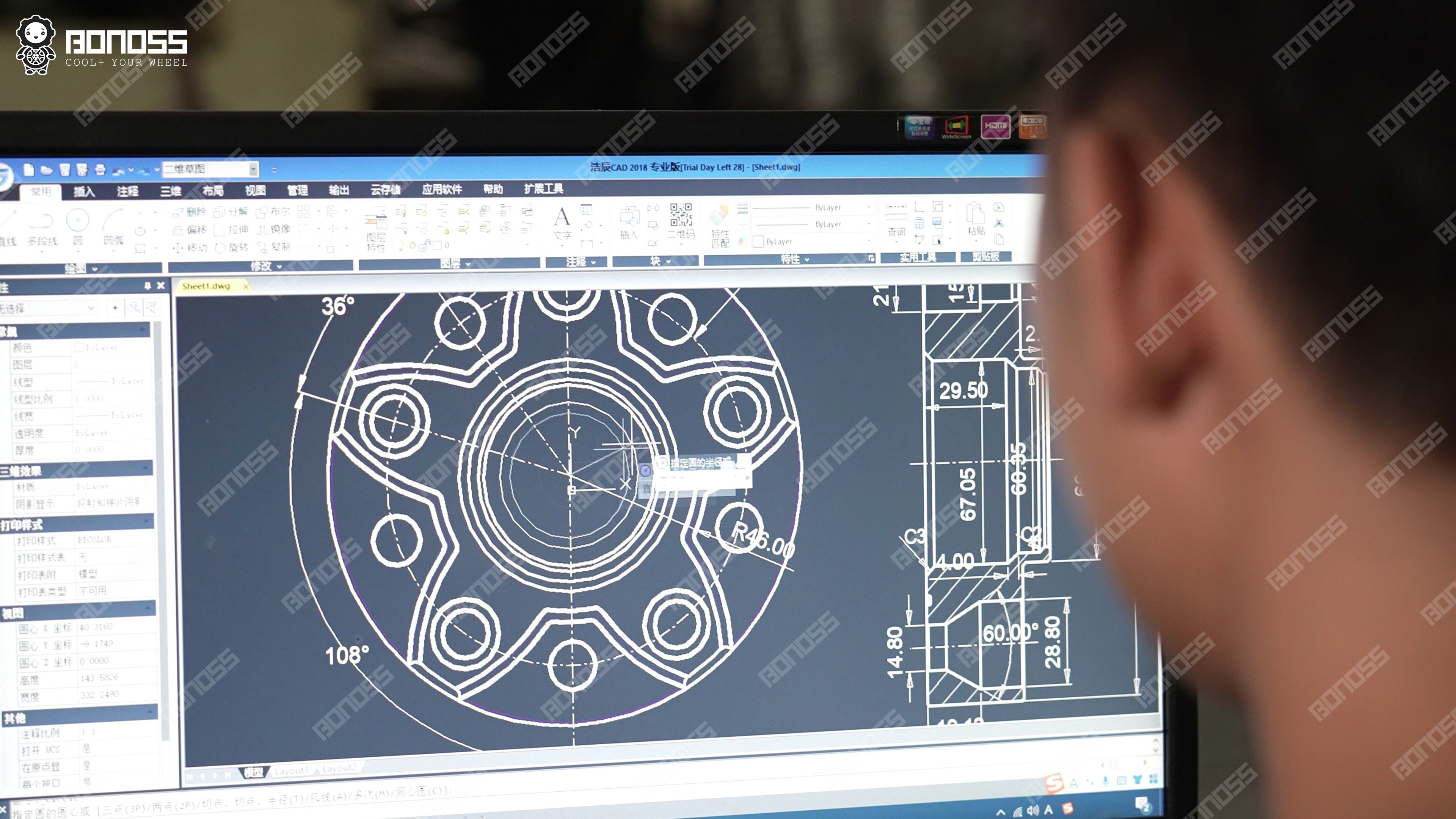
BONOSS engineering staff working from CAD drawings — the design step before any metal is cut. None of this changes the torque procedure, the hub cleaning, or the measurement step. Those are on you. What the material and machining change is whether the spacer is even worth bolting on in the first place.
FAQ
What bolt pattern and center bore does a 5th Gen 4Runner use for spacers?
A 5th Gen 4Runner uses a 6×139.7 bolt pattern with a 106.1mm center bore and M12x1.5 studs. That exact combination ran unchanged from 2010 through 2024, which is why 5th-Gen 4Runner wheel spacers are the easiest to find and the most proven.
Will 5th Gen 4Runner spacers fit a 2025 6th Gen?
No. The 6th Gen 4Runner changed to a 95.1mm center bore and M14x1.5 studs, so a 5th Gen’s 106.1mm spacer will not seat hub-centrically on the new hub. If you are moving 5th Gen wheels onto a 6th Gen truck, use a 95-to-106 wheel adapter instead.
Do 30mm spacers on a 4Runner require stud trimming?
Not necessarily. Whether you trim depends on stud protrusion versus wheel pocket depth. If the pocket depth plus the 30mm spacer thickness exceeds the stud protrusion, the studs clear and no trimming is needed — measure both before you reach for a cutoff wheel.
What torque should I use for 4Runner wheel spacers?
Use one value for the whole job. Tighten spacer nuts to 113 Nm (83.3 ft-lb) for M12x1.5 or 140 Nm (103.5 ft-lb) for M14x1.5 per BONOSS installation instructions, then tighten factory lugs to the value in your owner’s manual — 76–82 ft-lb for a 5th Gen, 96 ft-lb for a 6th Gen.
Should I use thread locker on 4Runner wheel spacers?
Follow the spacer manufacturer’s guidance; BONOSS does not call for thread locker on its spacer nuts. What it does call for is clean threads, correct torque, and a re-torque check after the first drive — those matter more than any chemical.
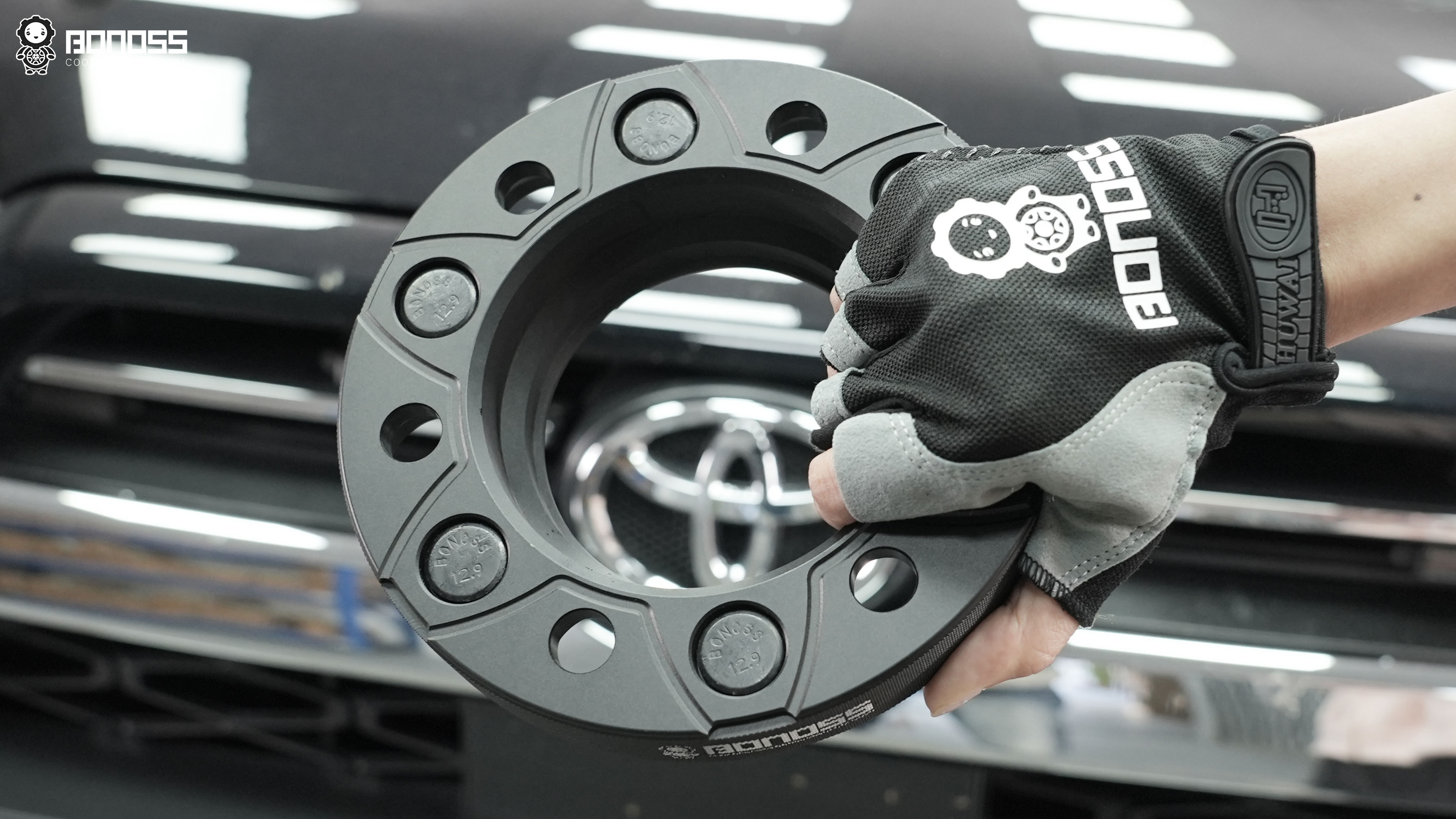
The Short Answer
There are two Toyota 4Runner wheel spacer families, and 2025 is the line between them. Everything from 1984 to 2024 shares the 106.1mm center bore and M12x1.5 studs; from 2025 on, it is 95.1mm and M14x1.5. Figure out which side of the line your truck is on, measure your fender gap, check your stud protrusion, and the right spacer is obvious.
If you want the best wheel spacers for a Toyota 4Runner and prefer to skip the guesswork, start with a hub-centric, forged set matched to your generation’s center bore — the forged active cooling 6061-T6 wheel spacers or 7075-T6 4Runner wheel spacers for the 106.1mm family, and a matched 95.1mm set for the new 6th Gen.

About Daisy Harris
Daisy Harris has worked for 6 years at BONOSS as an automotive technician, installing and testing wheel spacers, wheel nuts, and wheel bolts. She has personally installed and verified more than 200 wheel-spacer setups across sport sedans, SUVs, and EVs. Her installation guides and reviews are built on real installs, measured clearances, and long-term wear notes — not on spec sheets.