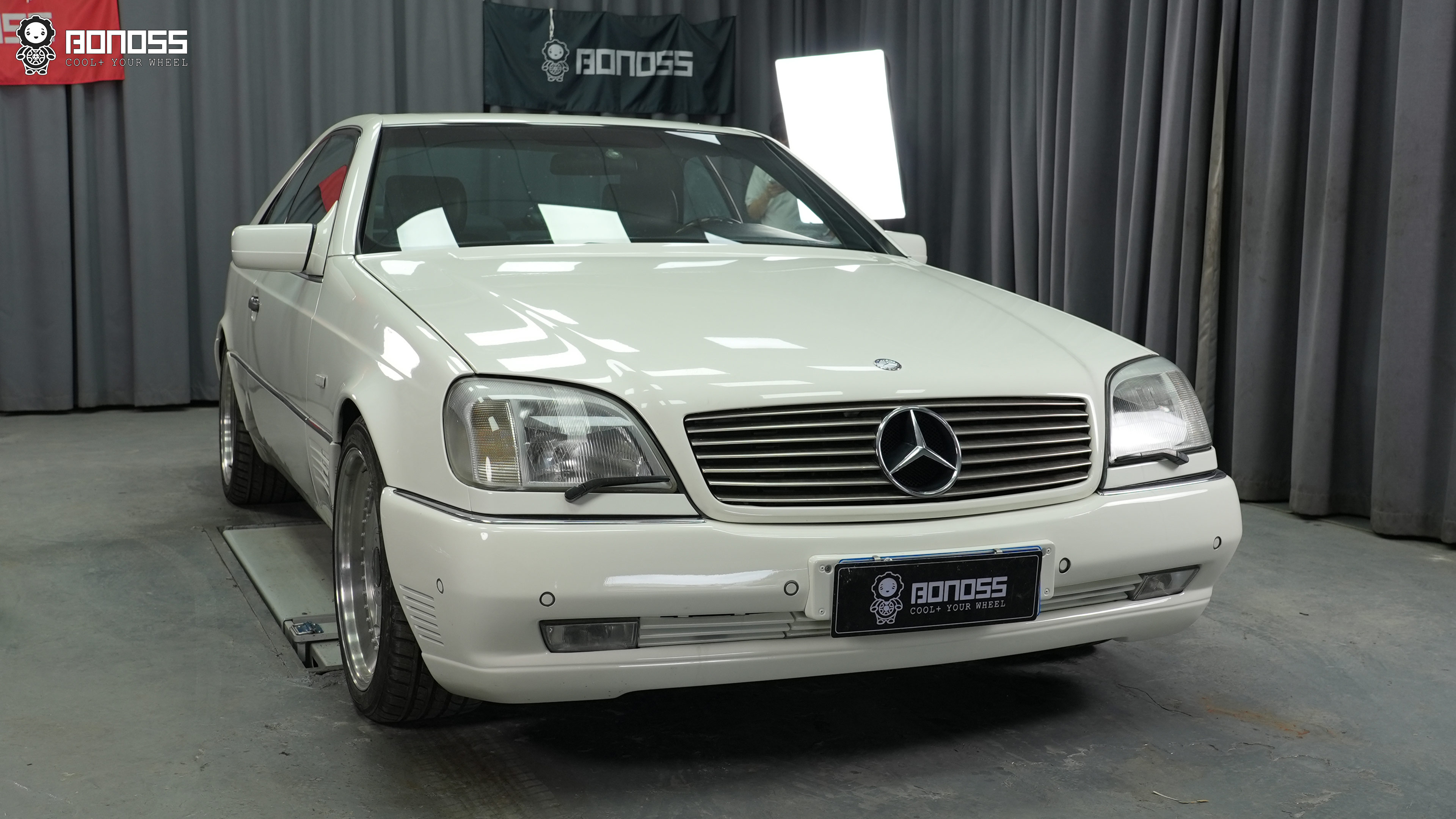
Chris Hall is a fitness coach from South Richmond Hill, New York. He’s also the long-time owner of a 1996 Mercedes-Benz CL500 (C140) — and after two years of driving on a set of 1996 Mercedes-Benz CL500 wheel spacers, he has a story worth telling. His new aftermarket wheels rubbed the brake calipers. His first fix, a pair of 3mm spacers, made the car shake on the highway. This is how he ended up on BONOSS forged lightweight plus wheel spacers, front 10mm and rear 8mm, and why he says he’d do it again.
The Owner and His Car
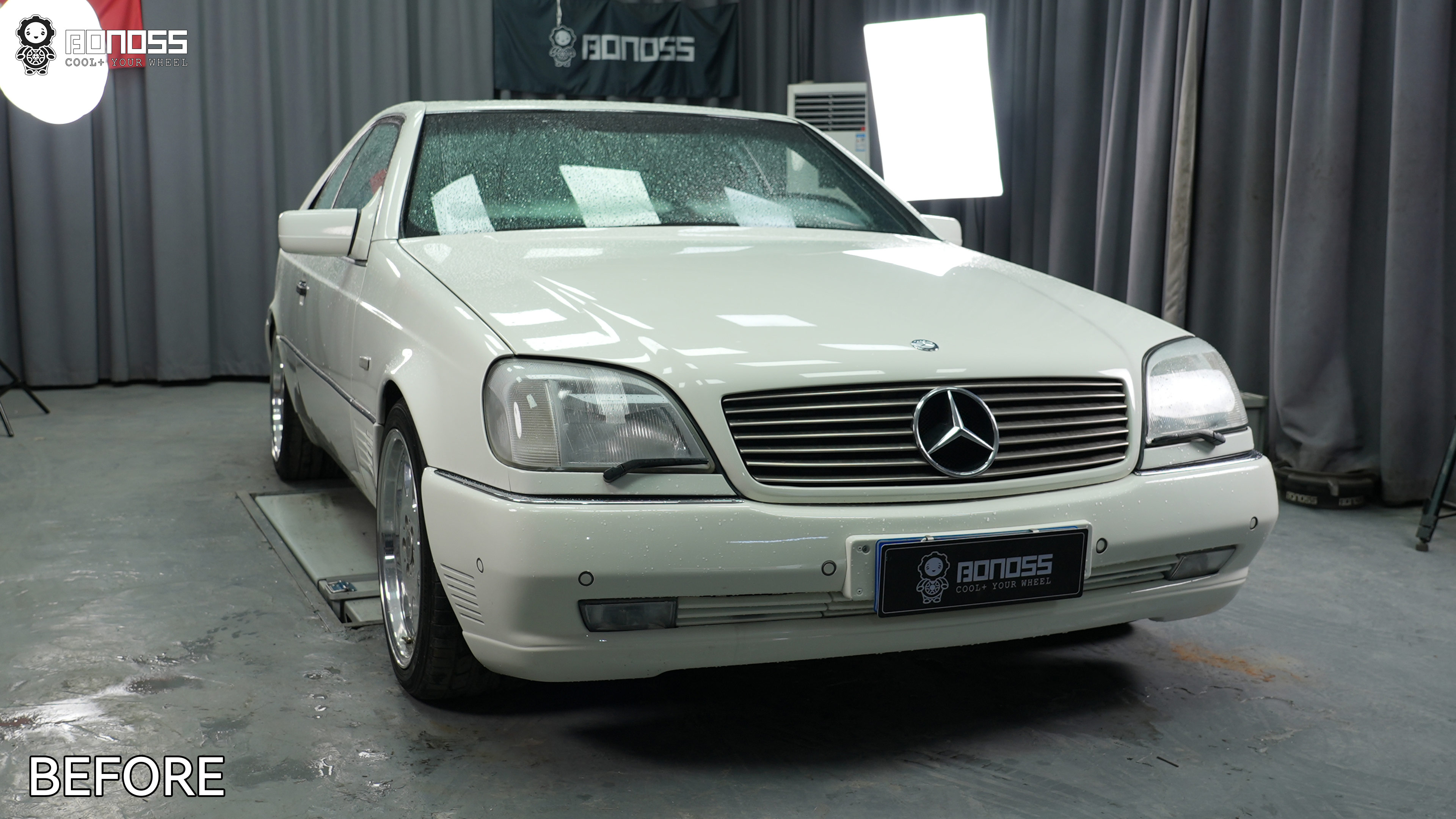
If you know the C140, you know why Chris keeps his. The 1996 CL500 is the pillarless coupe flagship of its era — a 5.0-liter V8, a long hood, and a stance that looks right from the factory. Chris uses it as his weekend car and the occasional client-meeting arrival piece. “It’s the one car I’ve never thought about selling,” he told us.
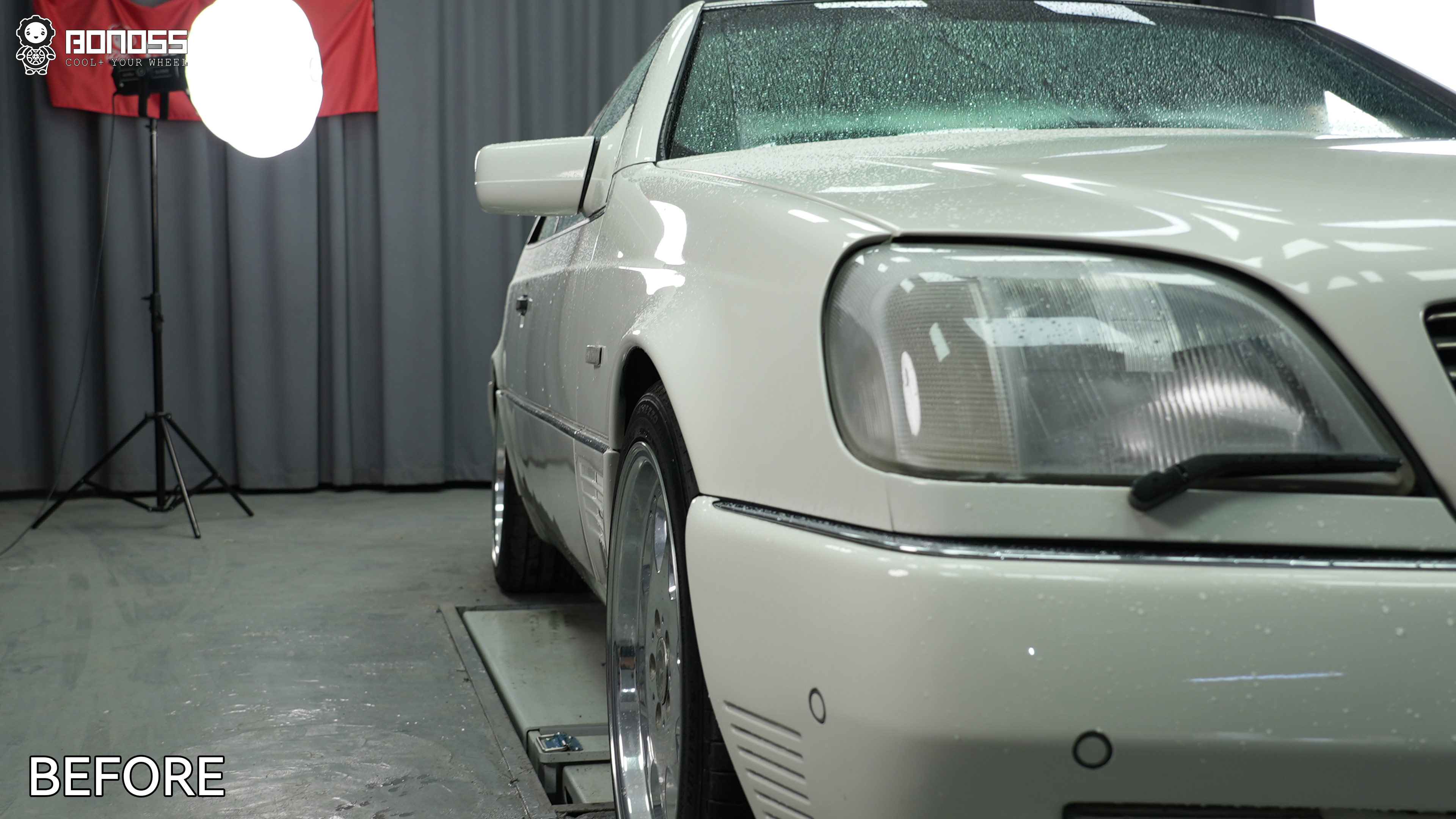
Earlier in 2024, he picked up a set of aftermarket wheels he’d been hunting for months. The moment he test-fitted the front wheels, he hit the classic C140 problem: the inner barrel of the new wheel made contact with the brake caliper. The wheel physically would not sit flush against the hub.
The 3mm Spacer Mistake
Like most owners, Chris reached for the cheapest fix first: a pair of thin 3mm slip-on spacers, just enough to push the wheel face past the caliper. The wheels bolted on. The car drove. Then he took it on the highway.
“Above about 55 mph, I could feel a shake through the seat and the steering wheel,” he said. “It wasn’t violent, but it was always there. New wheels shouldn’t feel worse than the old ones.”
He’d already had a suspicion about why. As he put it later: “I’ve seen guys use 3mm spacers to clear the brake calipers, but then you risk the wheel not being hubcentric.”
He was right. Thin slip-on spacers in the 3–5mm range are almost always lug-centric — there’s no center bore lip on them, so the wheel is located only by the bolts. Worse, on this car the factory hub step that centers the wheel is only 8.8mm tall. Slip a 3mm spacer over it, and you’ve spent a third of the centering surface before the wheel even goes on. The result is exactly what Chris felt: micro-movement at speed, felt as vibration.
How Chris Found BONOSS
Chris did what most of us do — he Googled the exact question in his head: *”do 3mm spacers need to be hubcentric.”* He spent an evening reading forum threads and blog posts, and two BONOSS articles kept coming up: one on whether 3mm spacers need to be hub-centric and one on why hub-centric design matters for wheel spacers in the first place.
“After reading those, I was fairly convinced the vibration was the 3mm spacers,” Chris said. “But without spacers, I couldn’t run the wheels at all. So I was stuck.”
He messaged BONOSS support. The first thing our team asked him to do was measure the hub step height on his car. “Honestly, I didn’t really get what they were asking for,” he admitted. “I’d never measured a hub in my life.” Instead of going back and forth over email, he booked a visit and brought the car in.
The Measurements That Solved It
With the car on the lift, the whole picture came together in about twenty minutes:
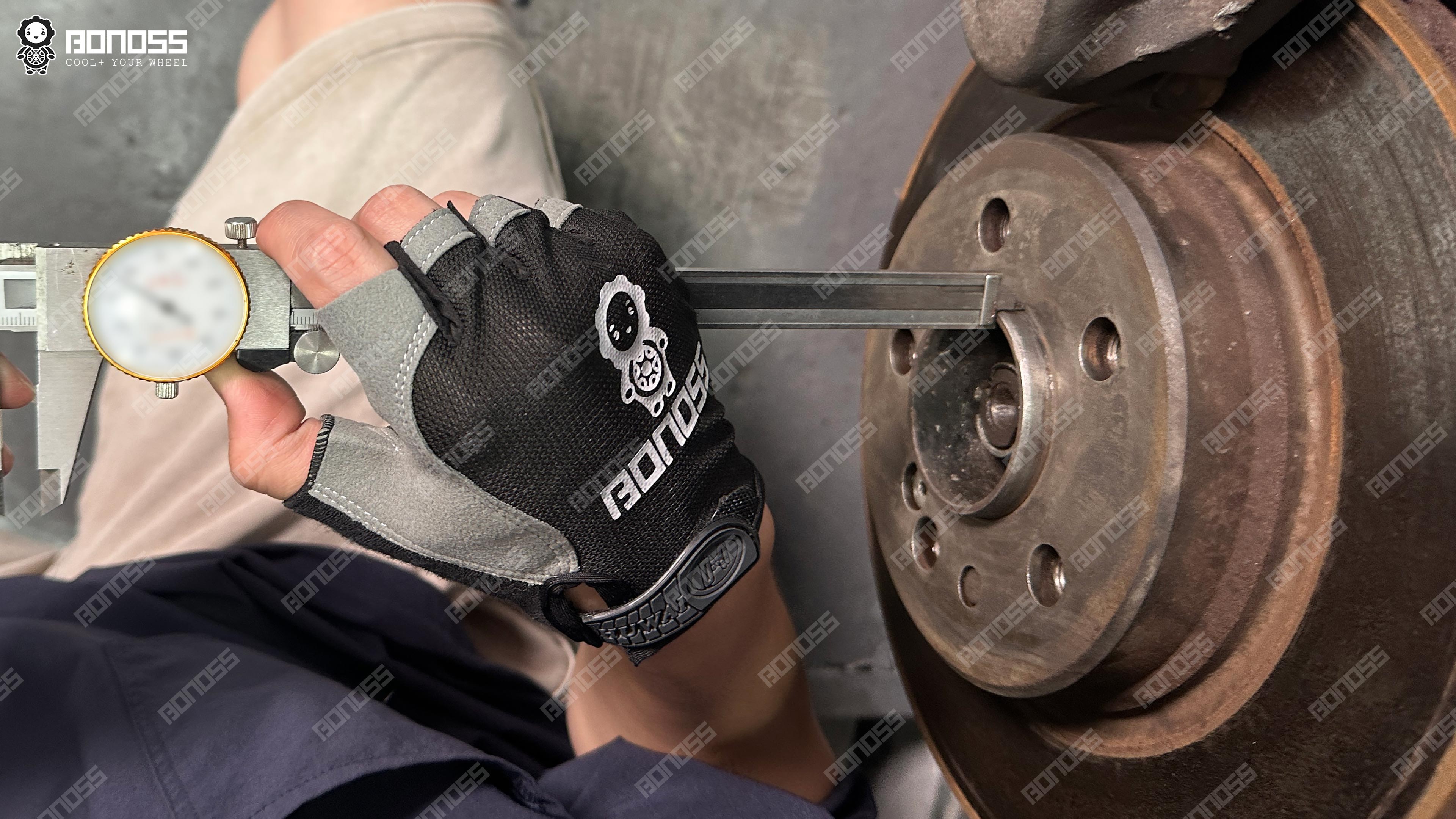
Hub step height: 8.8mm. With a 3mm spacer installed, only about 5.8mm of centering step remained for the wheel — not enough to safely carry and locate it. This confirmed the vibration diagnosis.
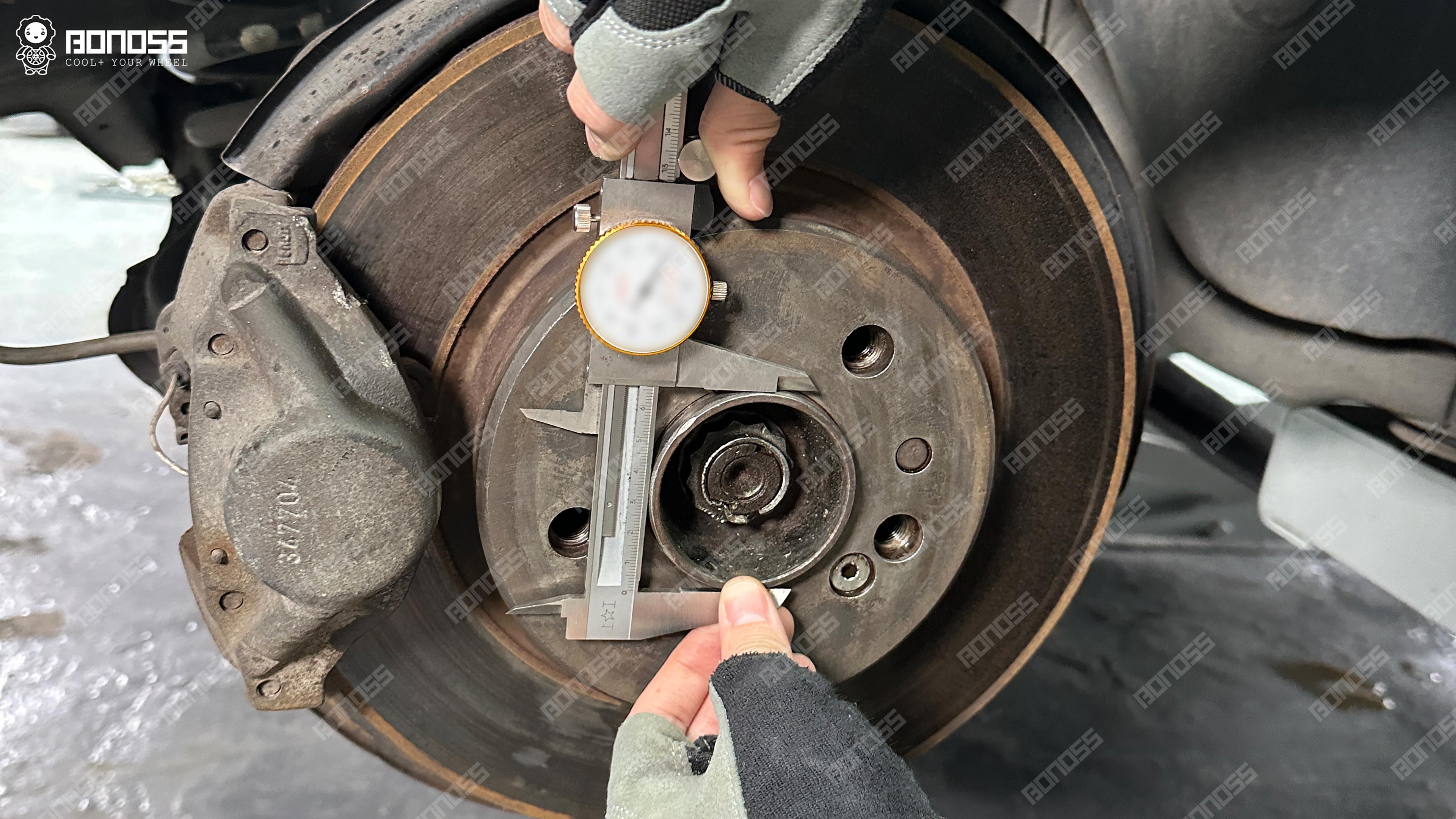
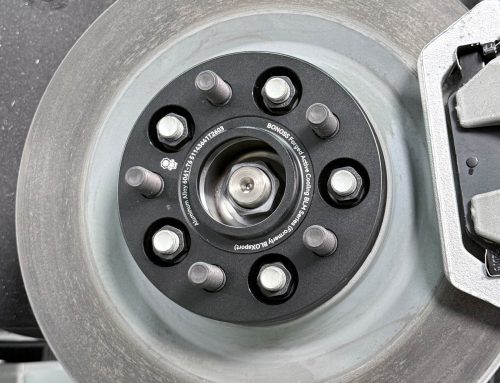
Hub center bore: 66.55mm. Any spacer for this car has to be machined to a 66.55mm center bore with a matching hub lip, or you’re back to lug-centric mounting. The bolt pattern (PCD) of this C140 is 5x112mm. BONOSS kit matches.
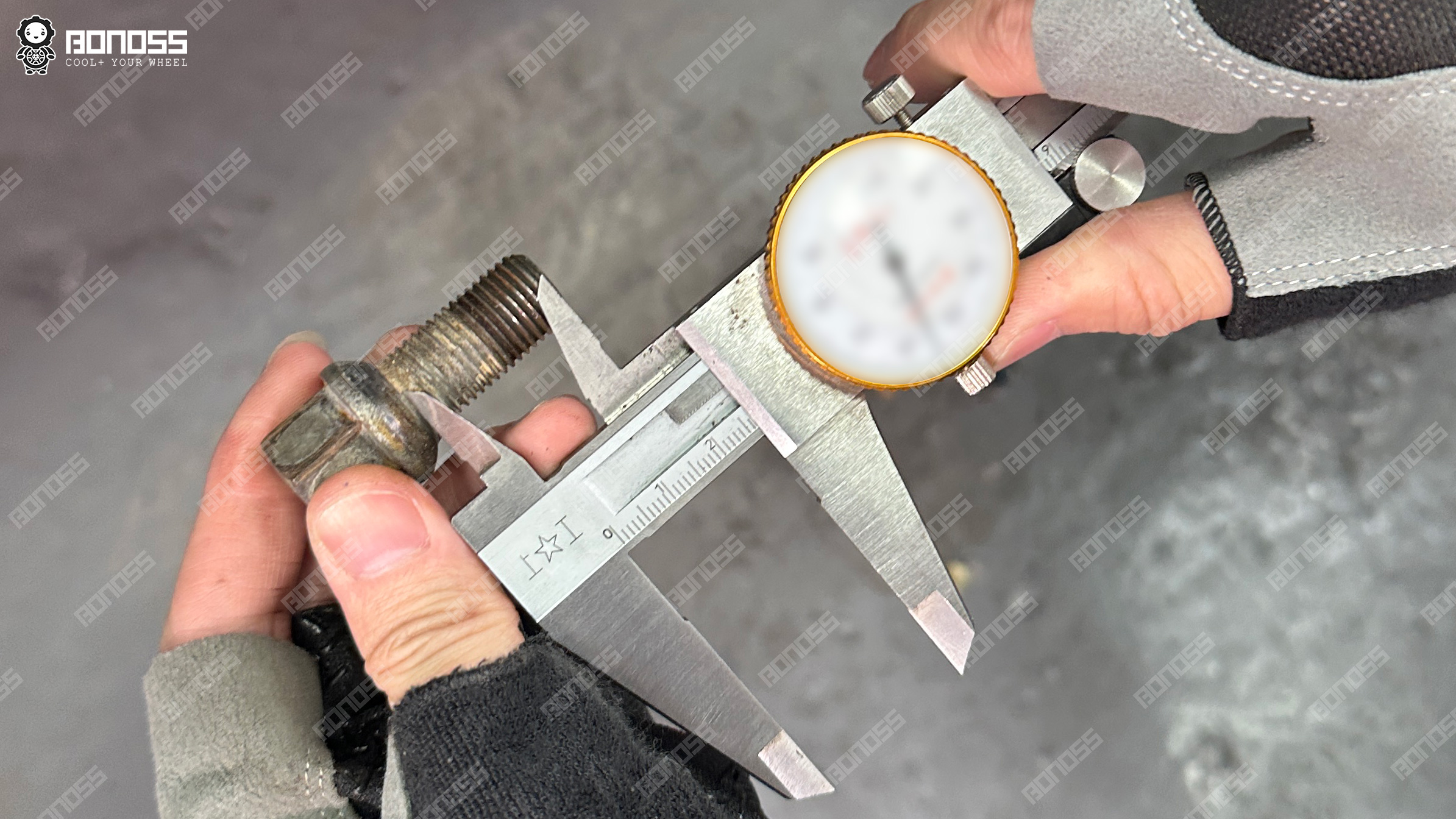
Stock wheel bolts: R14 ball seat, 27mm thread length. Add a 10mm spacer up front, and the stock bolts only engage about 17mm of thread — not safe. The rule of thumb is to keep engagement at least equal to the original 27mm, which means 37mm extended bolts for the front and 35mm for the rear.
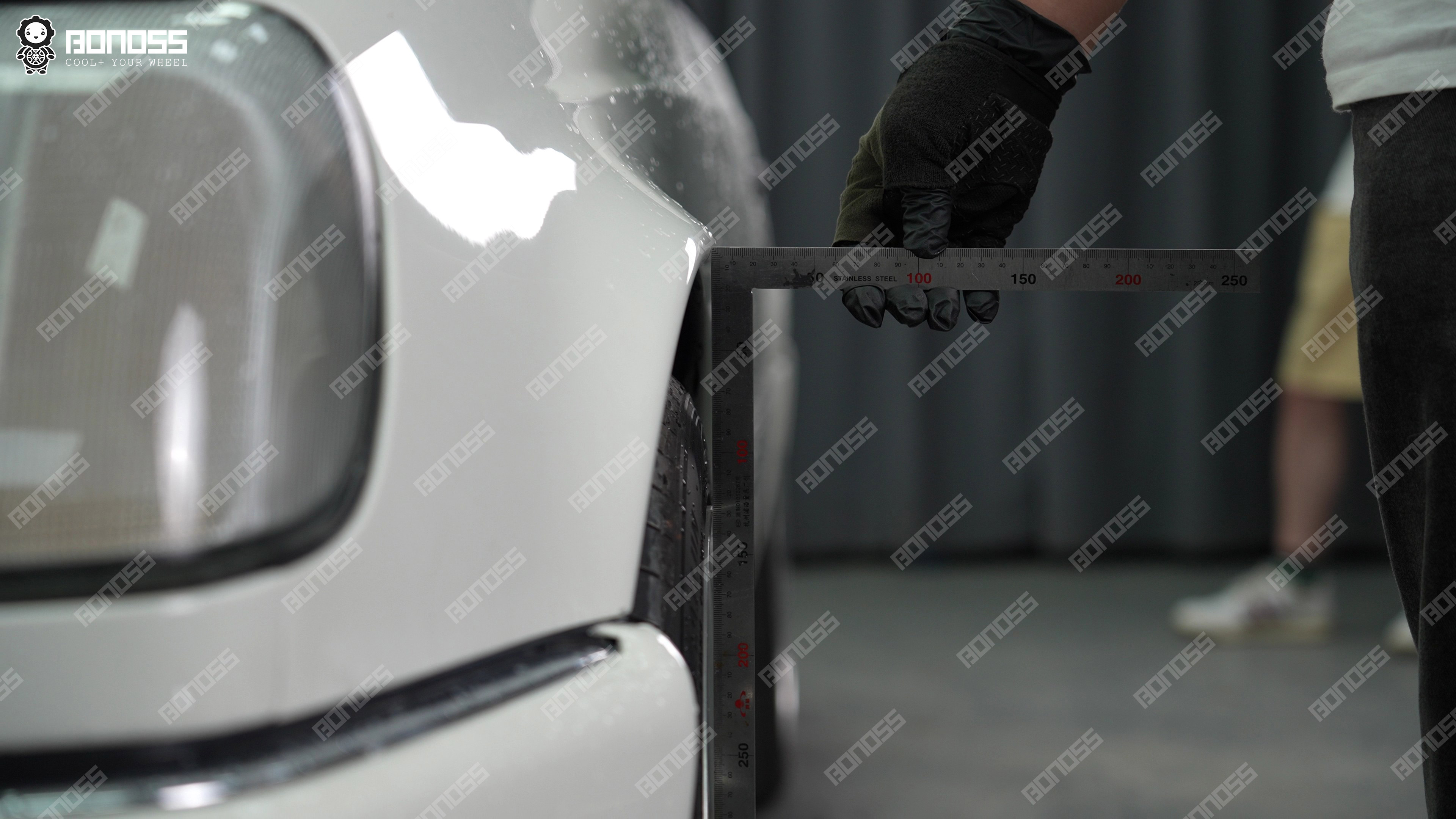
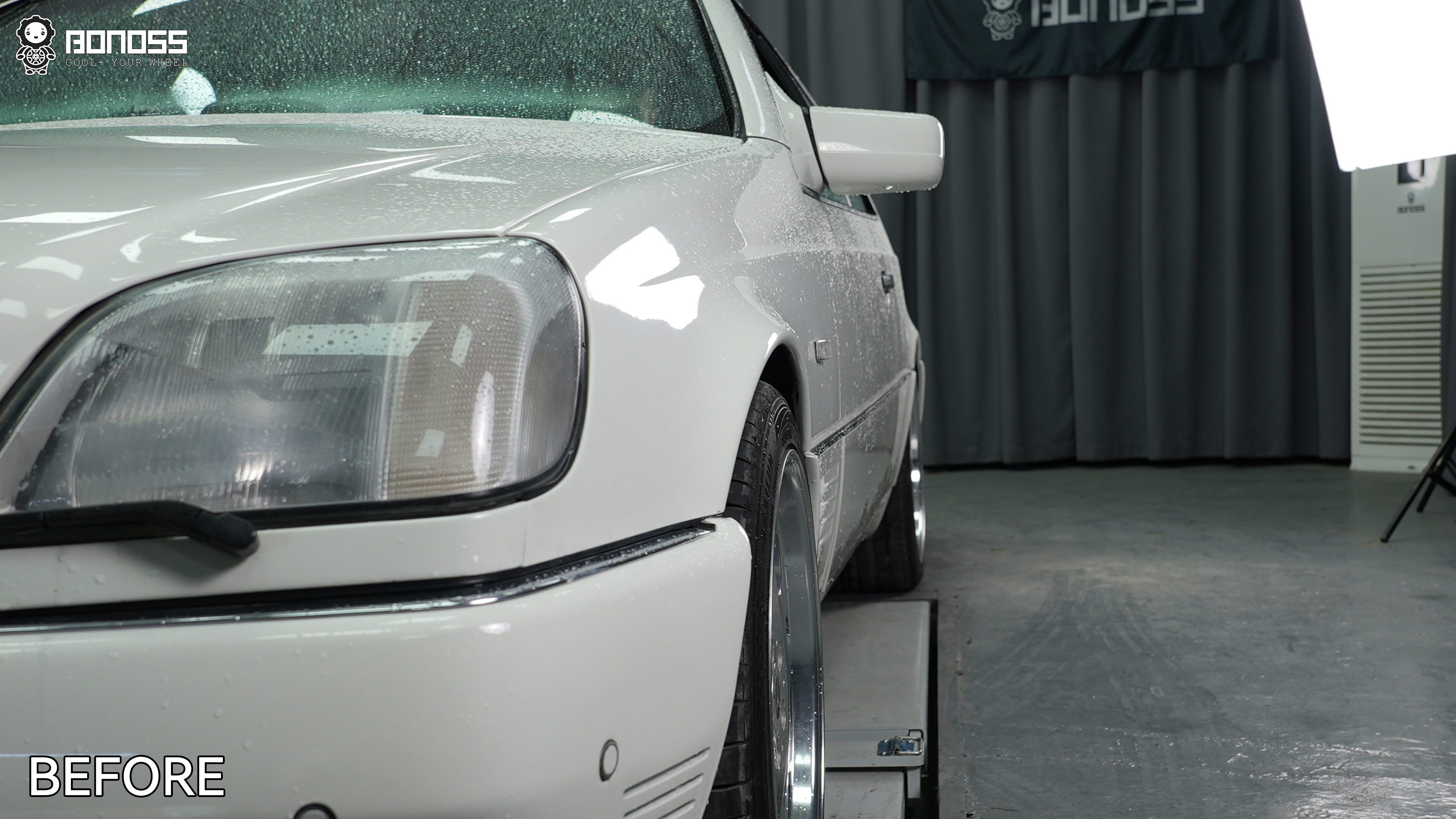
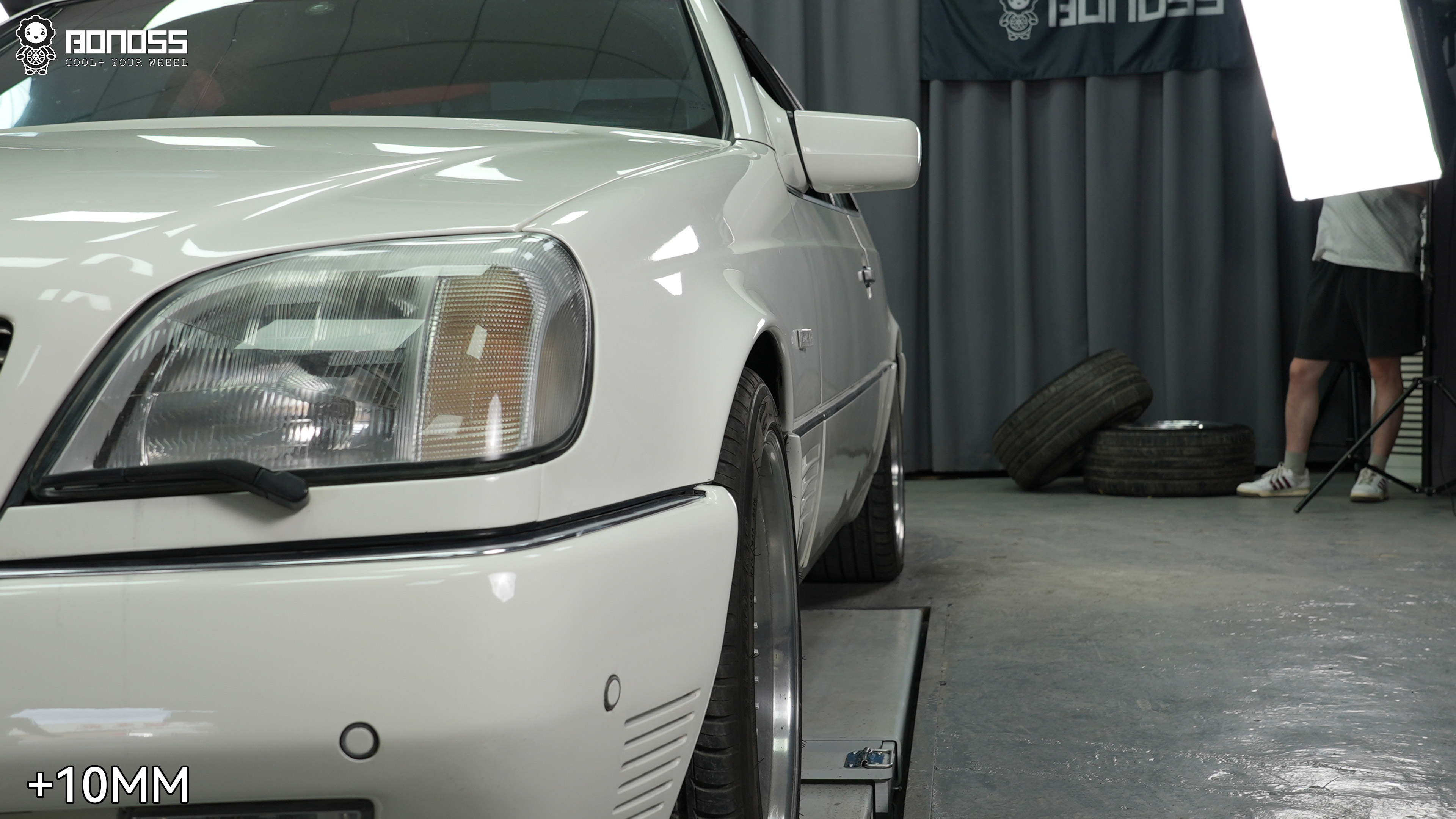
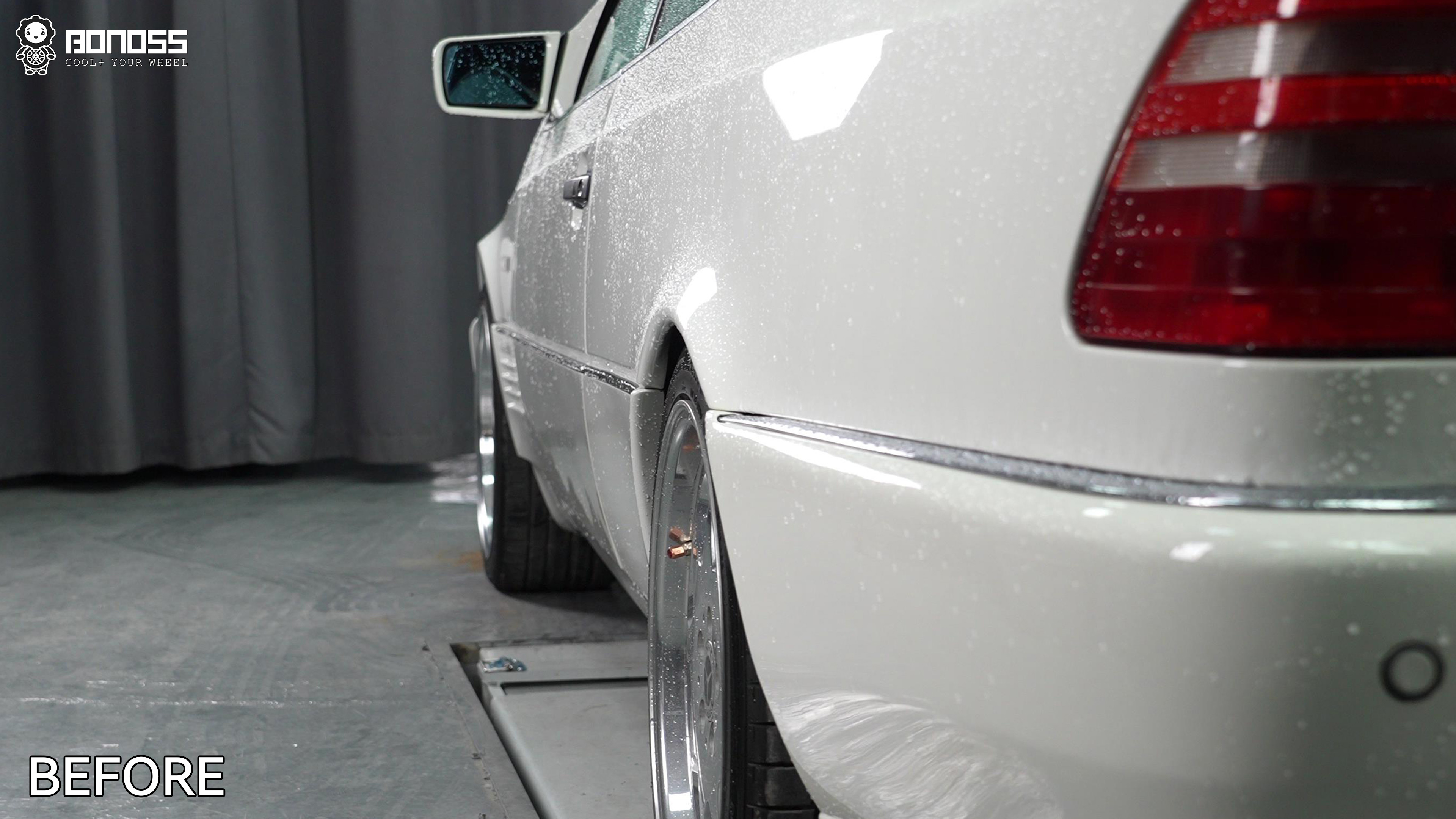
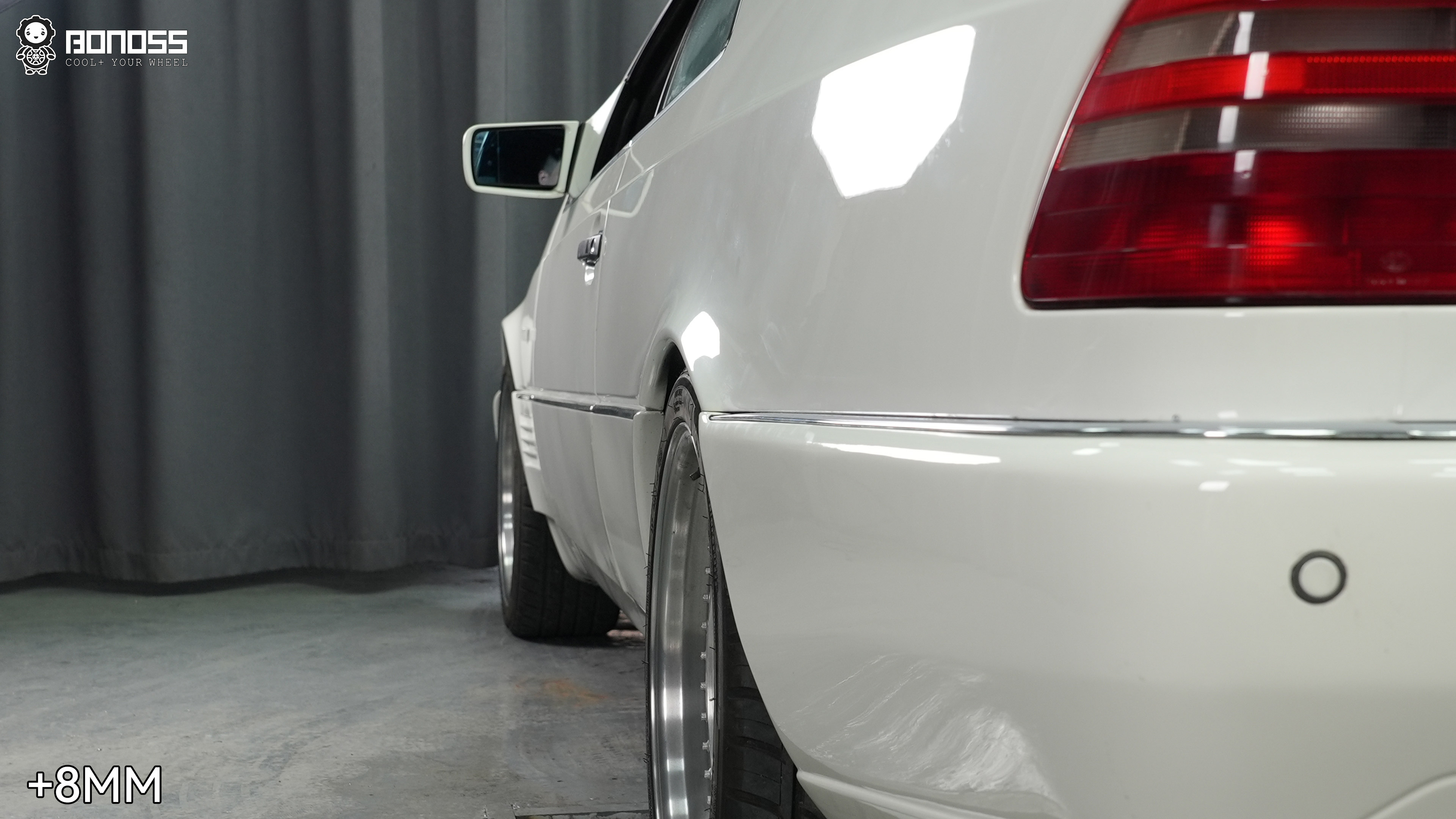
Wheel gap, front and rear. We measured how far the wheel face needed to move to clear the caliper *and* sit flush with the fender. The answer: 10mm front, 8mm rear.
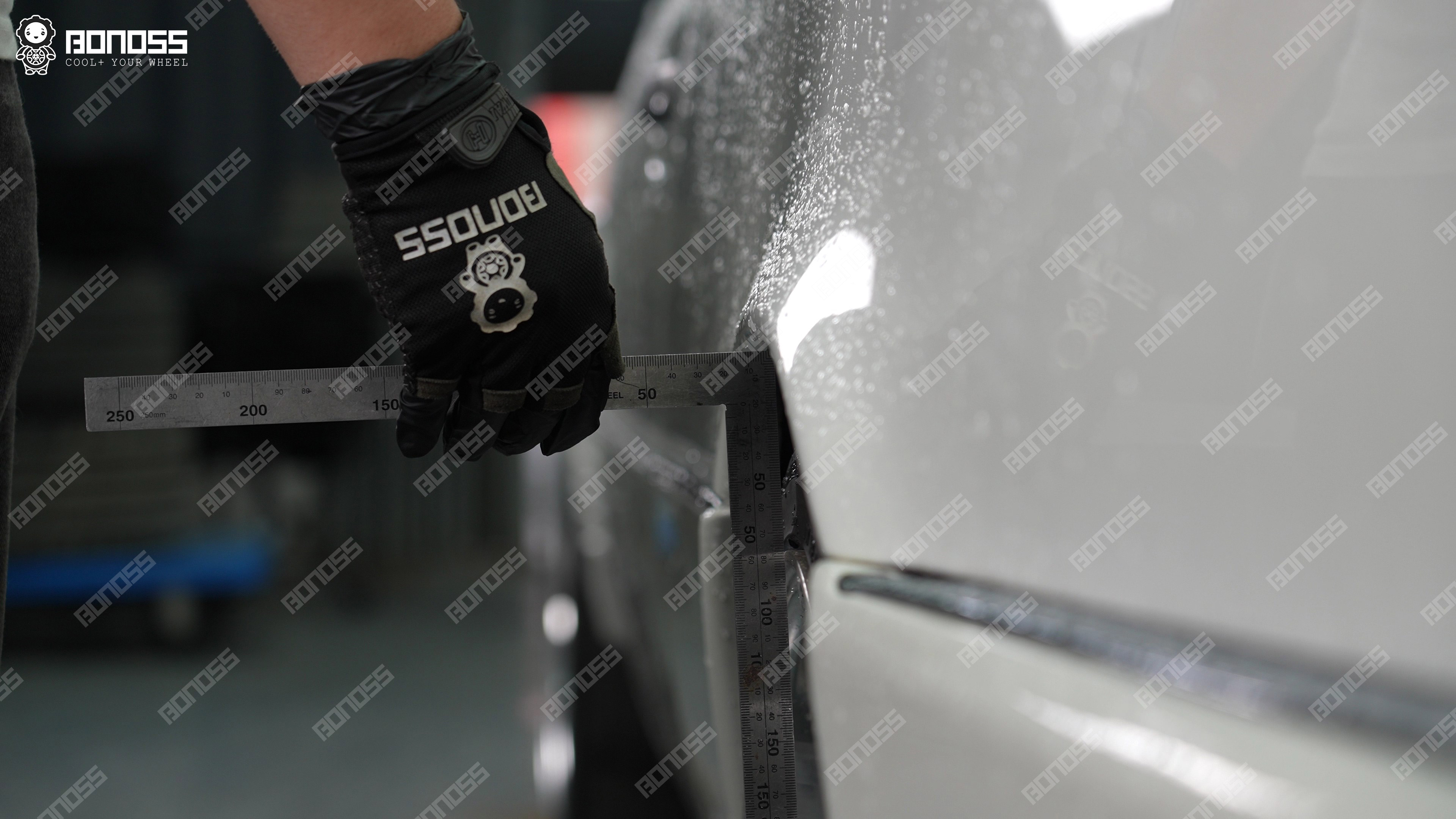
Enough to clear the brakes with margin, thin enough to keep the hub step fully engaged through the spacer’s own hub-centric lip, and it gave the car the flush stance Chris wanted.
One more check mattered: the seat shape. Aftermarket wheels don’t always match the factory bolt seat, and a mismatched seat is another classic cause of vibration. Chris didn’t know what his new wheels used, so he called the wheel shop. The answer came back: R14 ball seat — same as stock. The extended bolts we supplied matched perfectly.
Why He Chose BONOSS Over the Other Options
To be fair to Chris, he didn’t buy from the first brand he found. While he was researching, he contacted a few other spacer brands with the same questions. “Some of them just sent me a link to a generic size chart,” he said. “BONOSS asked for measurements and explained *why* before recommending anything. That felt different.”
He did hesitate once — on price. “I’ll be honest, when I heard the quote I thought it was expensive for spacers,” he said. His reasoning for spending anyway was simple: “A wheel spacer is the one part standing between my wheel and the car. That’s not where you save money.”
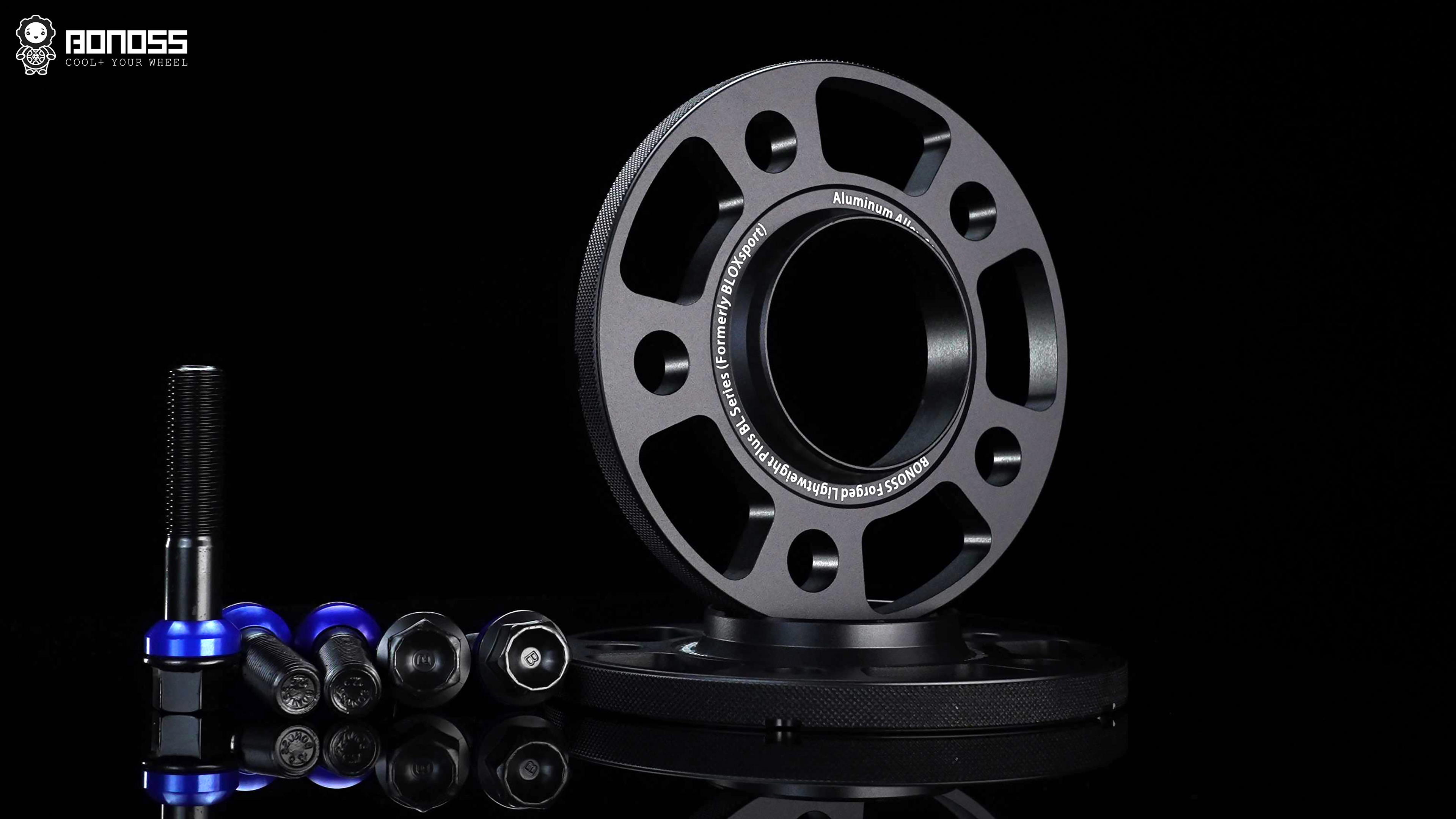
Two things closed the deal. First, material. He’d read enough to have an opinion: “Get hub-centric spacers made of quality material. The 7075-T6 has a higher tensile strength and hardness than 6061-T6. In the case of a wheel spacer, 7075-T6 might be a better choice.” The BONOSS forged lightweight plus spacers for his car are machined from forged 7075-T6 aluminum, so that box was checked.
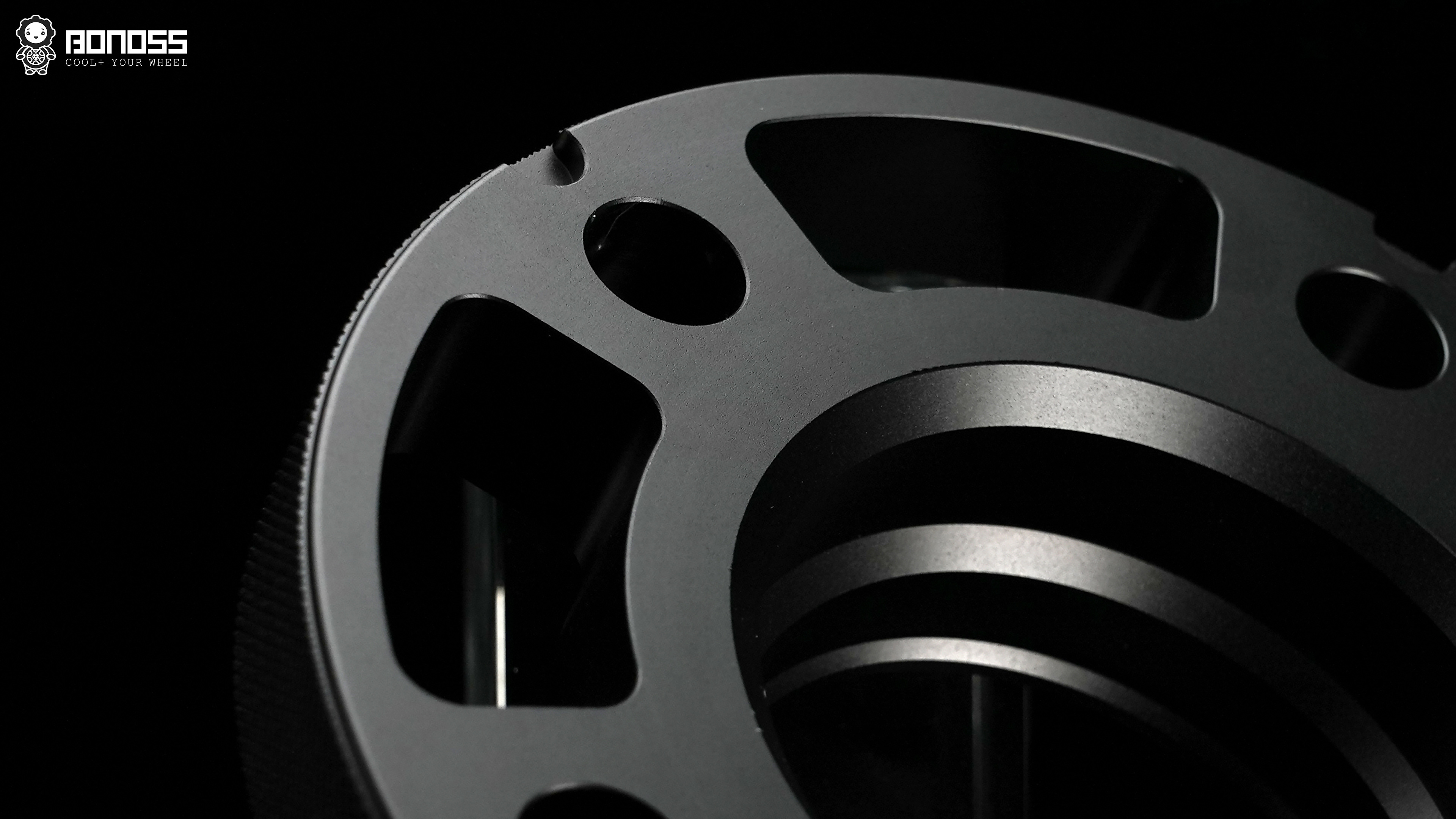
Second, holding them. He’d watched plenty of installation videos on YouTube, but the in-person visit is what convinced him. “Once I actually had the spacer in my hand, the quality was obvious,” he said. “The lightweight plus pocketing, the fit of the hub-centric lip — it was clearly better made than the spacers I’d used before.” The vehicle-specific hub-centric design for the C140’s 66.55mm bore, plus a 10-year warranty, made the decision easy.
He ordered the set: BONOSS forged lightweight plus hub-centric wheel spacers for Mercedes-Benz CL500 (C140/W140), 7075-T6.
Installation: What Actually Happened (May 20, 2024)
The full install took about an hour. Here’s the problem-and-solution sequence, exactly as it played out:
1. Problem: New wheels rubbed the front brake calipers.
Solution: Instead of guessing a thickness, we measured the wheel gap at each corner and fitted 10mm spacers up front and 8mm in the rear — enough clearance for the calipers with a flush fender line. If you’re running bigger brakes, this measuring step is non-negotiable.
2. Problem: 3mm lug-centric spacers caused highway vibration.
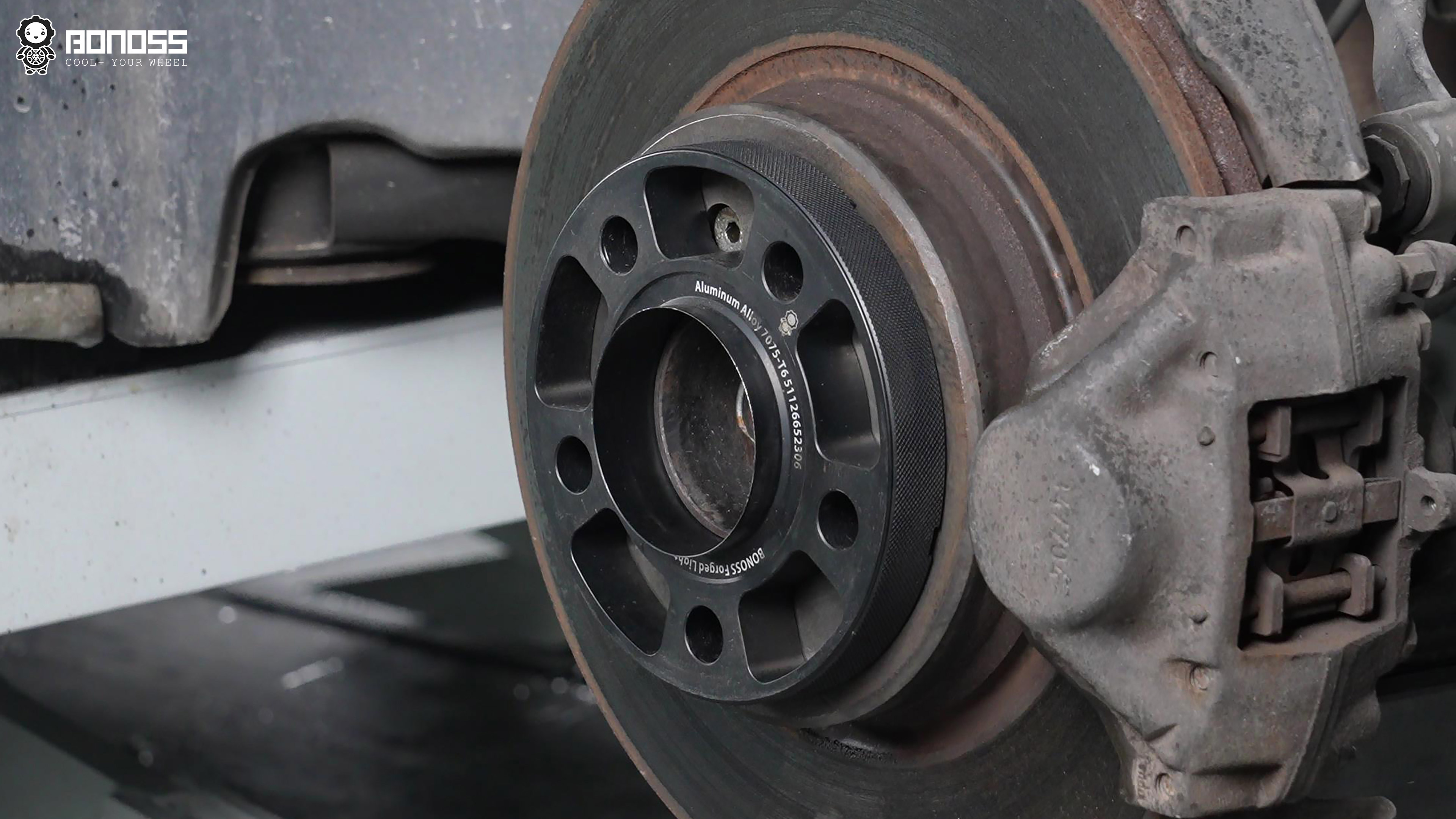
Solution: The hub height on this car is only 8.8mm tall. The BONOSS 10mm spacers are hub-centric with a 66.55mm center bore and their own locating lip, so the wheel centers on the spacer exactly the way it centered on the factory hub. Lug bolts only clamp; they never locate the wheel.
3. Problem: Stock 27mm bolts were suddenly too short.
Solution: With a 10mm spacer, stock bolts would engage only ~17mm of thread. We measured the originals and supplied extended bolts — 37mm thread up front, 35mm in the rear — keeping full thread engagement. Both use the R14 ball seat, matching the aftermarket wheels (confirmed with the wheel shop), so there was no seat mismatch.
4. Problem: Getting torque right.
Solution: Each spacer was test-fitted on the hub first, then torqued in a star pattern to spec, wheels on, extended bolts torqued the same way. No thread locker shortcuts, no impact-gun guessing on final torque.
From arrival to the car back on the ground: about one hour.
Two Years Later: The Results
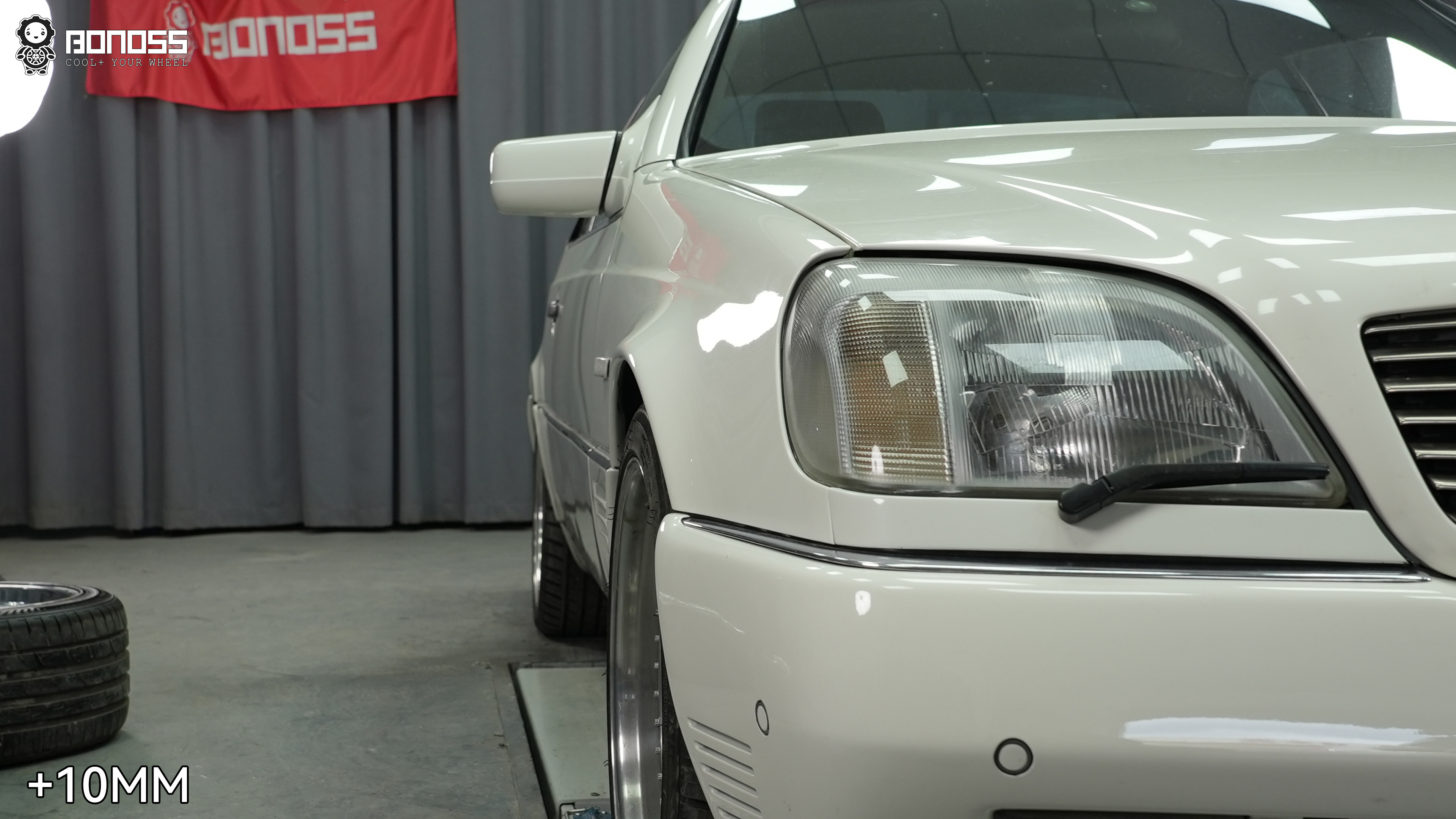
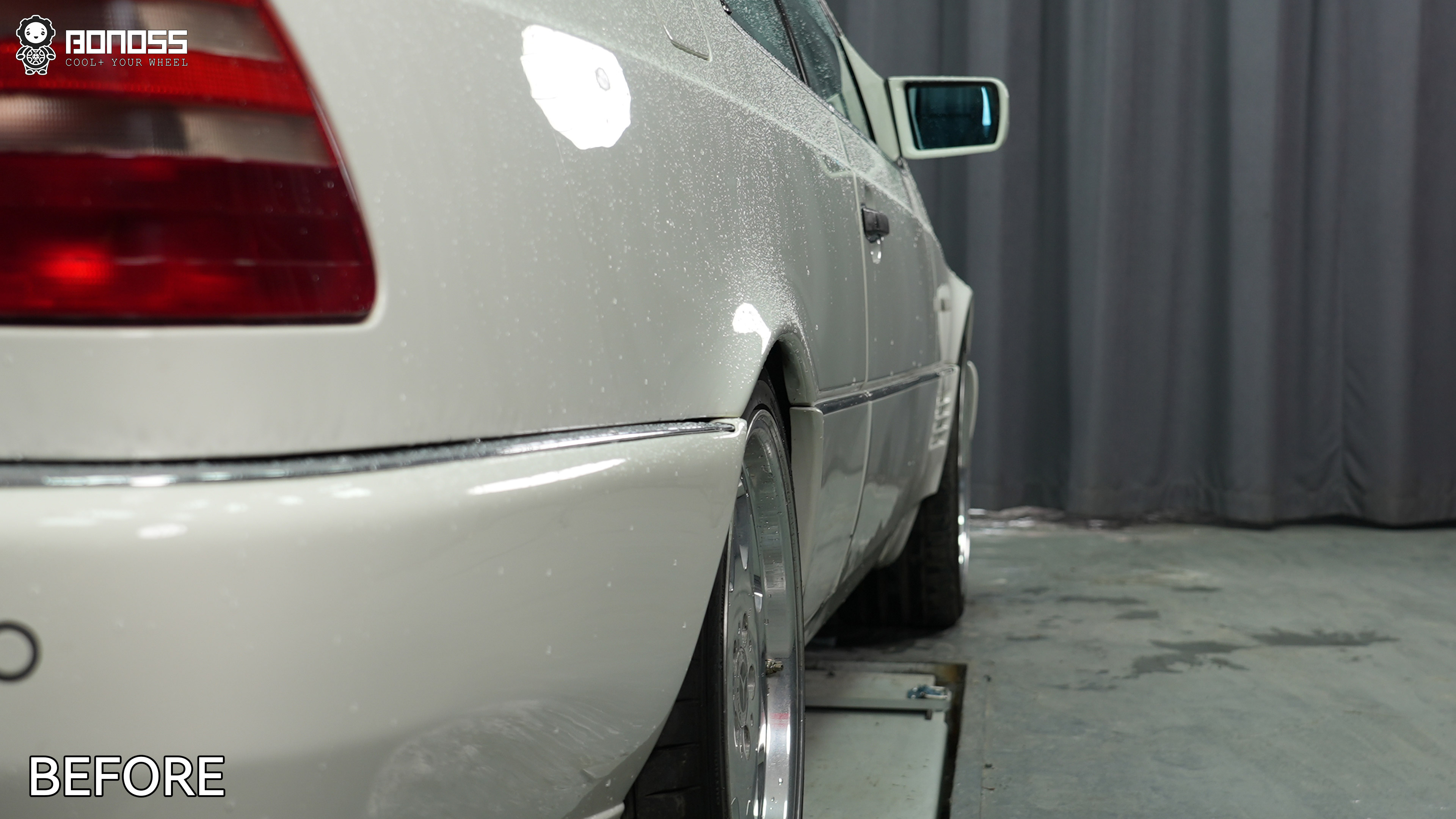
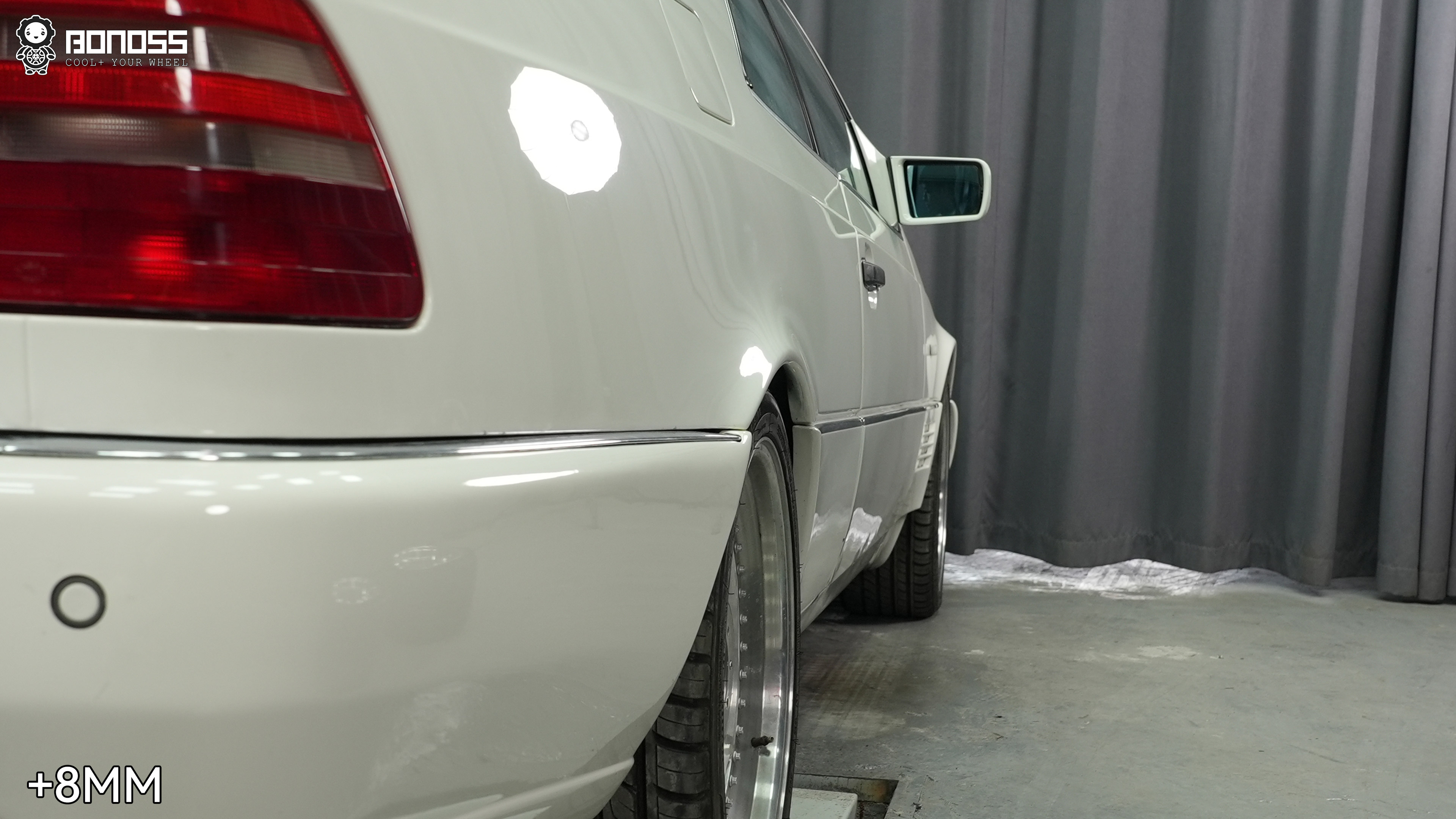
The first thing Chris noticed wasn’t the stance — it was the silence. The highway shake was gone. But the stance is what everyone else notices: the wheels now sit flush with the fenders, and the big coupe finally looks the way he always thought it should.
“8-10mm spacers just provide enough space for brake calipers. Yep. Looks much better,” he said. “Make sure your lug bolts still engage the threads well enough to hold the wheel safely.”
After two years of use, his report is about as clean as it gets: “I’ve installed these BONOSS spacers for 2 years… no vibration. The car runs smoother at high speeds (~70 mph and above). I’ve always thought of spacers as purely cosmetic. Now, I think it is worth a shot.”
And on the question everyone asks — what about the wheel bearings? “I ran these BONOSS spacers for 2 years and the spacers never broke. The wheel bearings are fine. Just make sure you get high-quality ones and install them safely.”
An 8–10mm offset change is well within what the C140’s wheel bearings see from common aftermarket wheel offsets, and Chris’s car is the proof: two years, zero issues.
FAQ: 1996 CL500 Wheel Spacers
Are wheel spacers safe on a 1996 Mercedes-Benz CL500?
Yes — provided three conditions are met: the spacers are hub-centric to the car’s 66.55mm center bore, they’re made from quality forged material (7075-T6 or 6061-T6), and thread engagement on the bolts is maintained with extended bolts where needed. Chris’s car has run 10mm front / 8mm rear spacers for two years with no vibration and no bearing wear.
Do 3mm wheel spacers need to be hub-centric?
Ideally, yes — and on the C140 it’s nearly impossible, which is the problem. The factory hub step is only 8.8mm tall, so a 3mm spacer leaves under 6mm of centering surface, and most 3mm spacers have no hub lip at all. That’s why thin slip-ons are a common source of vibration. A 10mm hub-centric spacer with its own locating lip is often the safer way to get brake clearance.
What size wheel spacers do I need to clear brake calipers?
Measure, don’t guess. Put the wheel against the hub, measure the gap between the wheel and the caliper at the tightest point, and add a safety margin of a few millimeters. On Chris’s CL500 the answer was 10mm front and 8mm rear — but every wheel-and-caliper combination is different.
Do I need longer wheel bolts with spacers?
Almost always, yes. The rule is simple: keep thread engagement at least equal to stock. The C140’s stock bolts have 27mm of thread, so with a 10mm spacer you need roughly 37mm bolts, and with an 8mm spacer roughly 35mm. Also confirm the seat type — this car uses R14 ball seat bolts.
Is 7075-T6 better than 6061-T6 for wheel spacers?
Both are proven spacer materials when properly forged and machined. 7075-T6 has higher tensile strength and hardness, so it allows designs like BONOSS’s lightweight plus pocketing without giving up strength. For a heavy car like the CL500, it’s the spec we’d choose.
Will wheel spacers wear out my wheel bearings?
A spacer changes load on the bearing the same way a lower-offset wheel does. Small changes in the 8–15mm range are comparable to common aftermarket wheel offsets and are generally well tolerated. Two years on Chris’s car: bearings checked, no play, no noise.
The Bottom Line
Chris came to us stuck between two bad options: wheels that hit his calipers, or thin spacers that made his car shake. The fix wasn’t a thicker version of the same spacer — it was measuring the car properly and matching the part to it: 10mm front and 8mm rear hub-centric spacers in forged 7075-T6, with the right extended bolts.
If your C140 (or W140) is in the same situation, start with the measurements — or just do what Chris did and ask us. You can also browse our full Mercedes-Benz fitment guide here.
Ready to fix your fitment the right way? Check out the BONOSS forged lightweight plus hub-centric wheel spacers for the Mercedes-Benz CL500 — vehicle-specific 66.55mm hub-centric design, forged 7075-T6, and a 10-year warranty.

About Robert Wall
Robert Wall is a Senior Automotive Engineer at BONOSS with over 9 years of experience in automotive component R&D, specializing in the structural design and safety validation of wheel spacers, wheel adapters, and high-strength fasteners. He is actively involved in product testing and on-track evaluation and is dedicated to translating engineering expertise into accessible modification knowledge — helping enthusiasts upgrade their vehicle’s stance and handling without compromising safety.