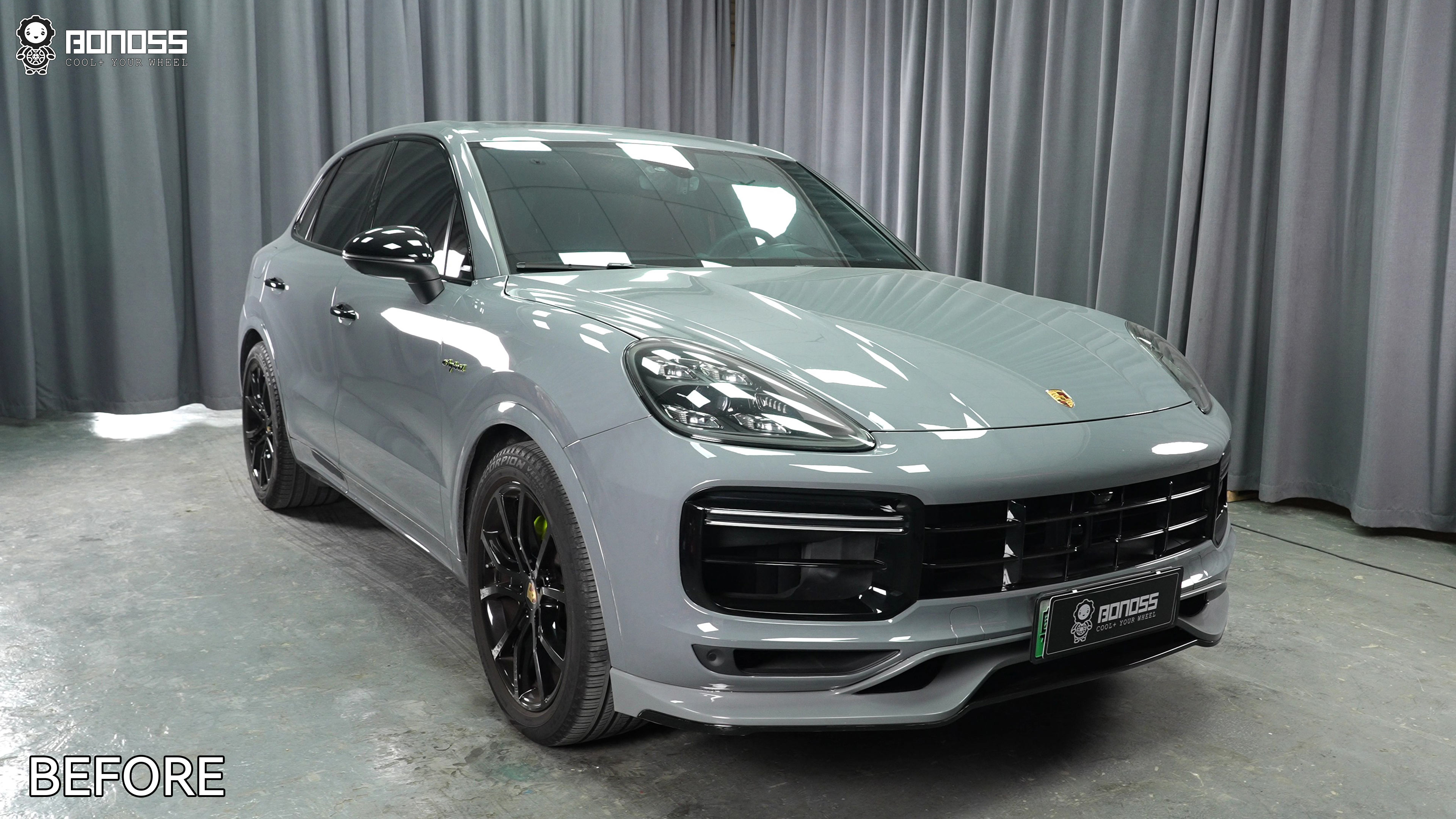
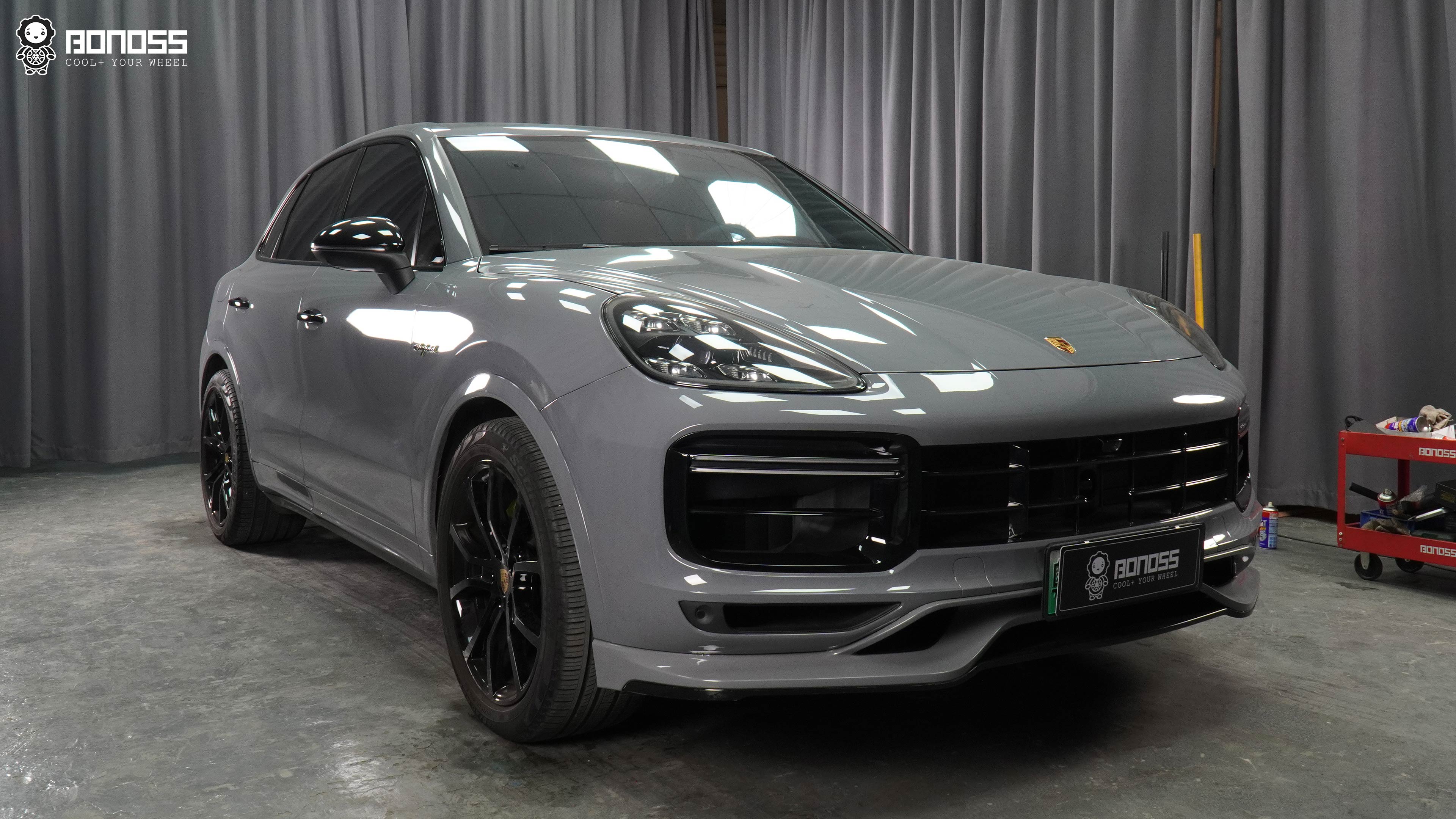
Ten millimeters doesn’t sound like much. On a 2023 Porsche Cayenne — the third-generation E3/9Y — it’s exactly the difference between wheels that sit tucked inside the fenders and a stance that runs perfectly flush with the bodywork. That was Mr. Karl’s entire goal when he brought his car in on November 6, 2023: no new wheels, no lowering kit, no other mods. Just a clean, factory-plus stance.
If you’re researching 2023 Porsche Cayenne 10mm wheel spacers, this case covers what actually matters: the measurements taken before a single bolt was touched, the spec that made 10mm look impossible on paper, the extended-bolt math most buyers never hear about, and how the setup has held up across 28,500 miles of real driving. Every number below was measured on this car with a vernier caliper, a micrometer, and a high-accuracy ruler — not copied from a forum post.
2023 Porsche Cayenne 10mm Wheel Spacers at a Glance
| Item | Spec (as measured on this car) |
|---|---|
| Vehicle | 2023 Porsche Cayenne (E3 / 9Y), stock suspension |
| Stock wheels | Front 285/40R21 ET46 / Rear 315/35R21 ET58 |
| Spacer thickness | Front 10mm / Rear 10mm |
| Spacer material | BONOSS forged lightweight plus wheel spacers, 7075-T6 |
| Effective offset after spacers | Front ET36 / Rear ET48 |
| Bolt pattern (PCD) | 5x130mm |
| Vehicle hub bore | 71.41mm (measured) |
| Wheel center bore | 71.6mm (measured) |
| Factory wheel bolt size | M14x1.5, R14 ball seat |
| Bolt socket | 17mm hex |
| Hardware used | 4× 10mm spacers + 20× 42mm M14x1.5 extended wheel bolts, ISO grade 12.9 |
| Torque — BONOSS extended bolts | 140 Nm (103.5 ft-lb), per BONOSS installation instructions |
| Torque — OEM bolts | 160 Nm (118 ft-lb), per the owner’s manual |
A word on torque, because this is where installs go wrong. Use ONE torque value for the entire installation, chosen based on which fastener is actually on the car. This Cayenne runs BONOSS extended bolts, so every wheel bolt was torqued to 140 Nm per BONOSS installation instructions. The 160 Nm figure applies only to the original Porsche bolts, per the owner’s manual. Both values are correct — each for its own hardware. Mixing them is not.
Fitment databases list this generation as E3, 9Y, or 9YA. The figures above are specific to this car as measured; the third-generation Cayenne shares the 5×130 bolt pattern and 71.6mm center bore across the range, including the Coupe.
How “Flush” Was Measured (and Why 10mm/10mm)
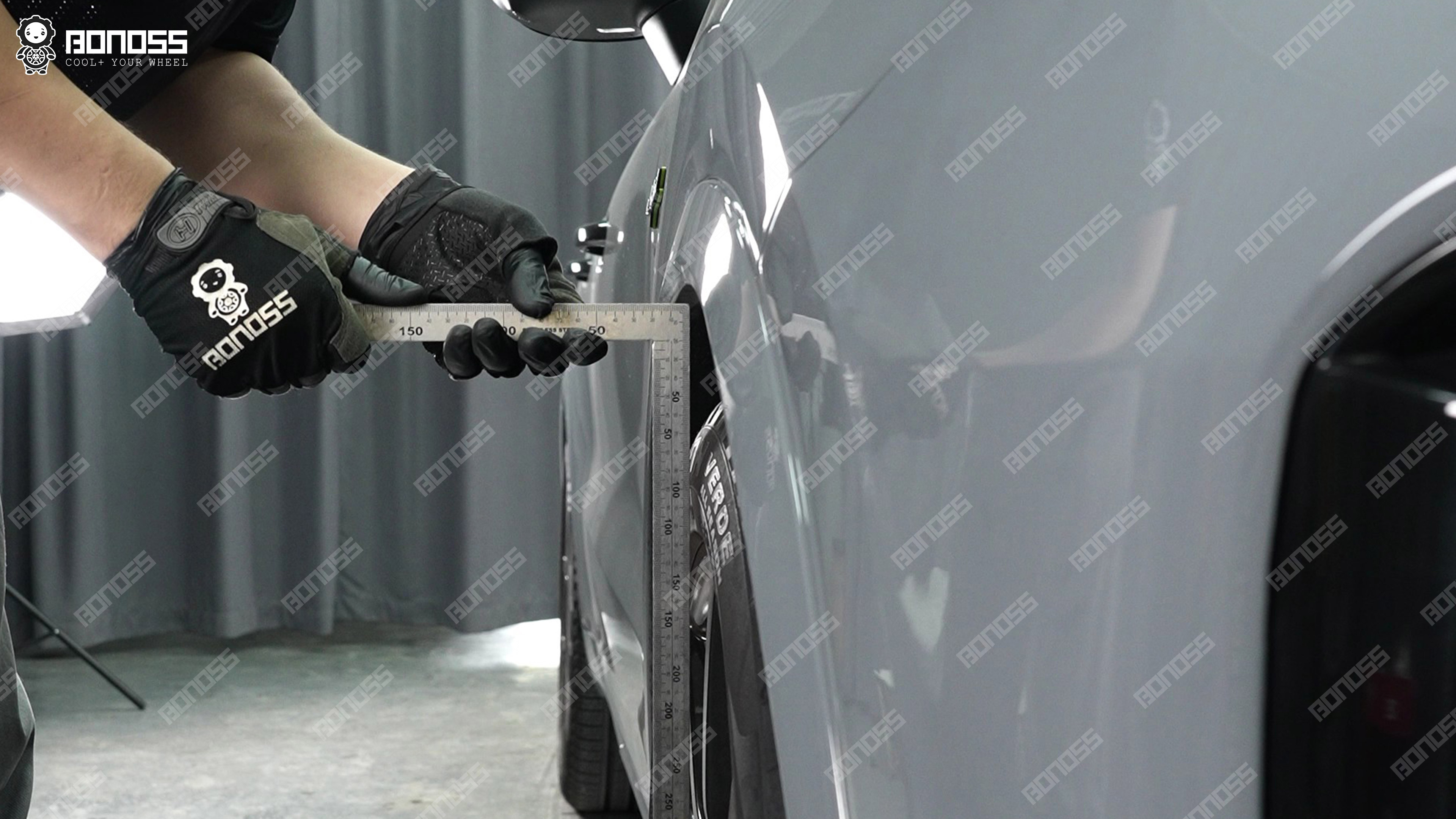
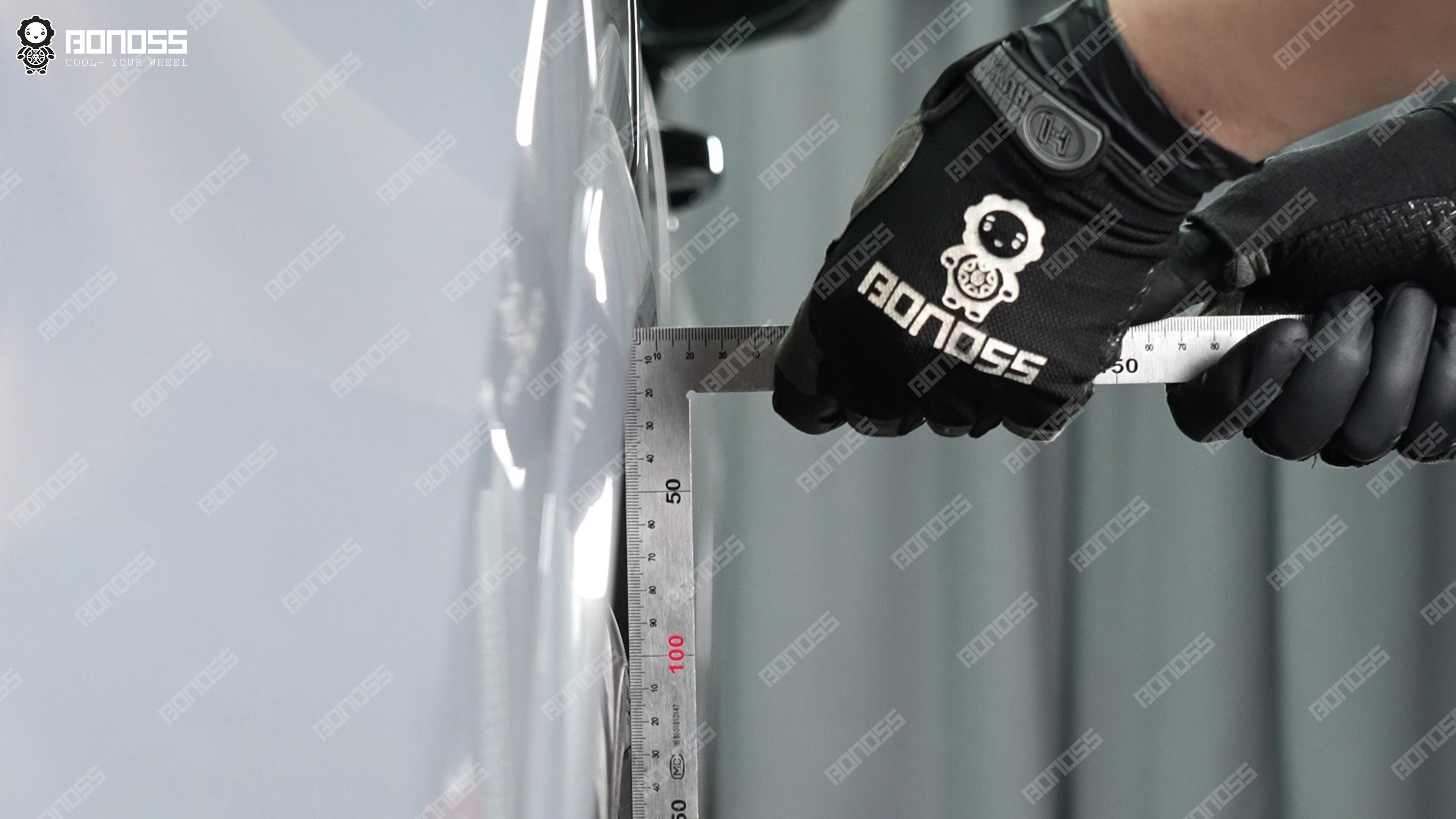
“Make it flush” sounds simple until you realize flush is a number, not a vibe. Our technicians measured the fender-to-tire gap at all four corners with a high-accuracy ruler, then worked backward from the stock offsets — ET46 front, ET58 rear — to find the thickness that would bring the wheel face exactly level with the fender lip. The answer came out the same at both ends: 10mm front, 10mm rear. No guessing, no “one size bigger for effect.”
Choosing a thickness shouldn’t be guesswork either. If you’re still comparing sizes, our wheel spacer fitment guide for the Cayenne walks you through the sizing logic before you spend a dollar.
Cayenne 10mm Wheel Spacers Before and After: Corner by Corner
The stock setup wasn’t ugly — it was just cautious. Porsche leaves a visible lip of fender over the tire. The 10mm Cayenne spacers pull each wheel out to exactly level with the fender, nothing more.
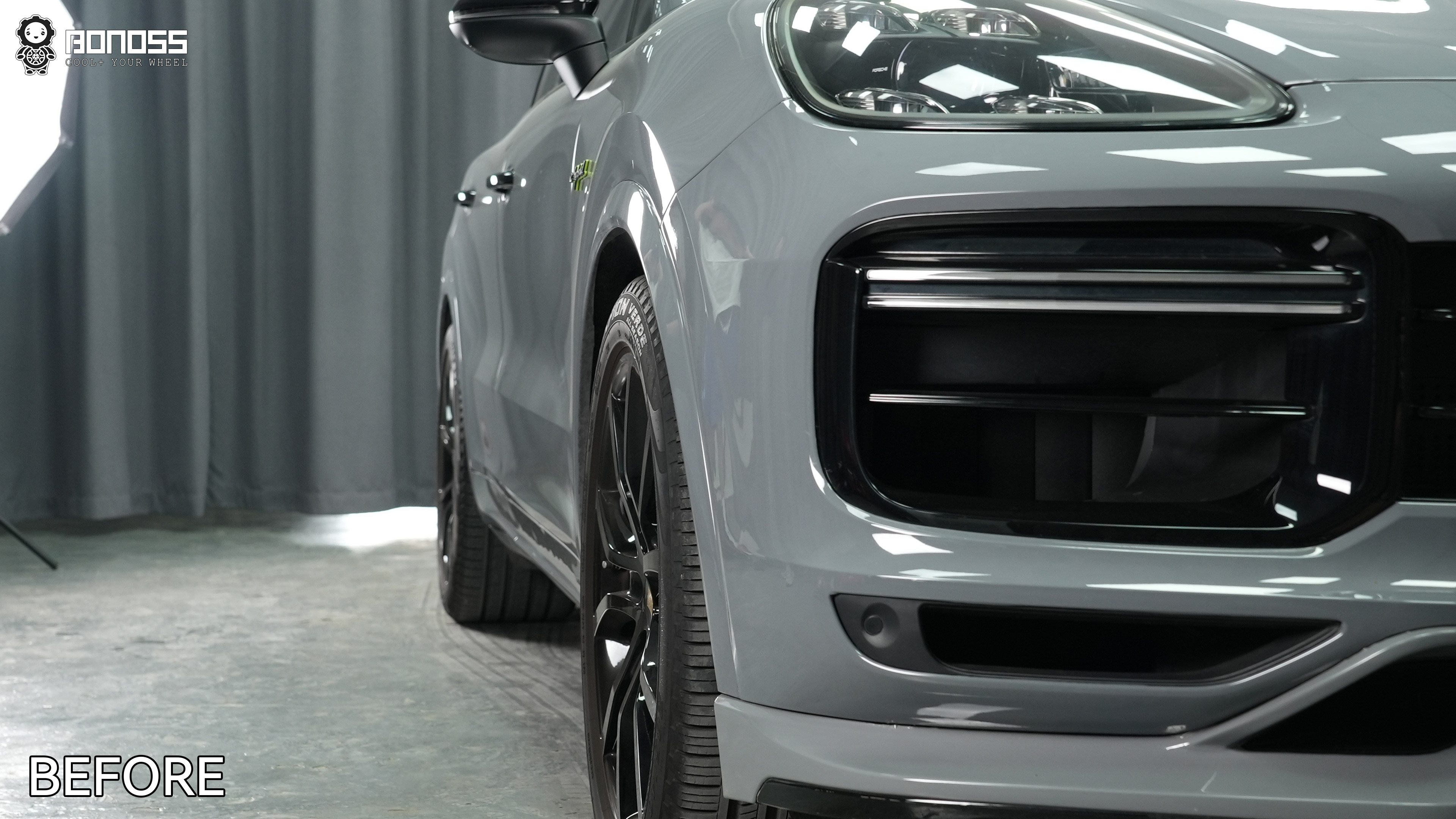
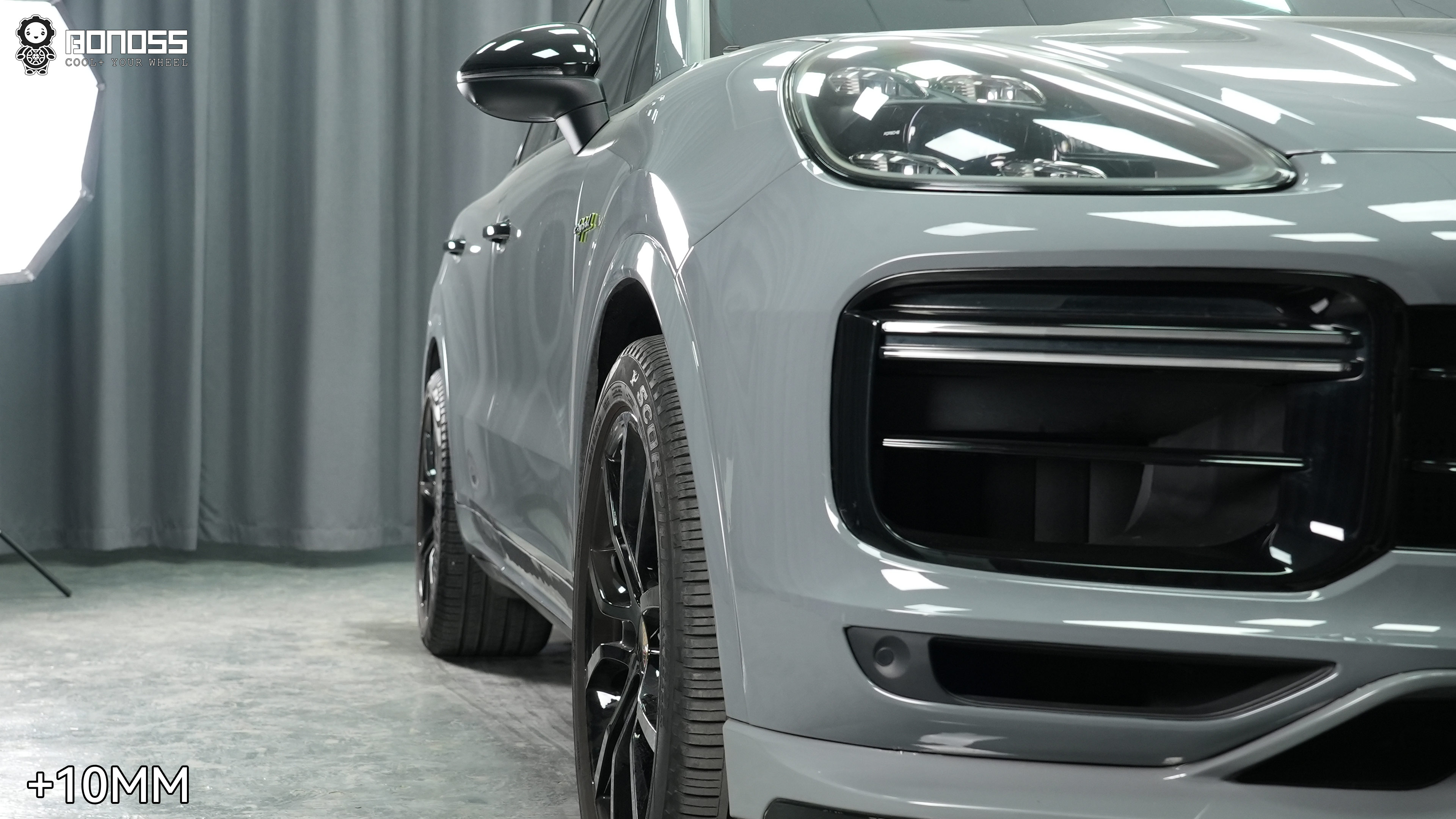
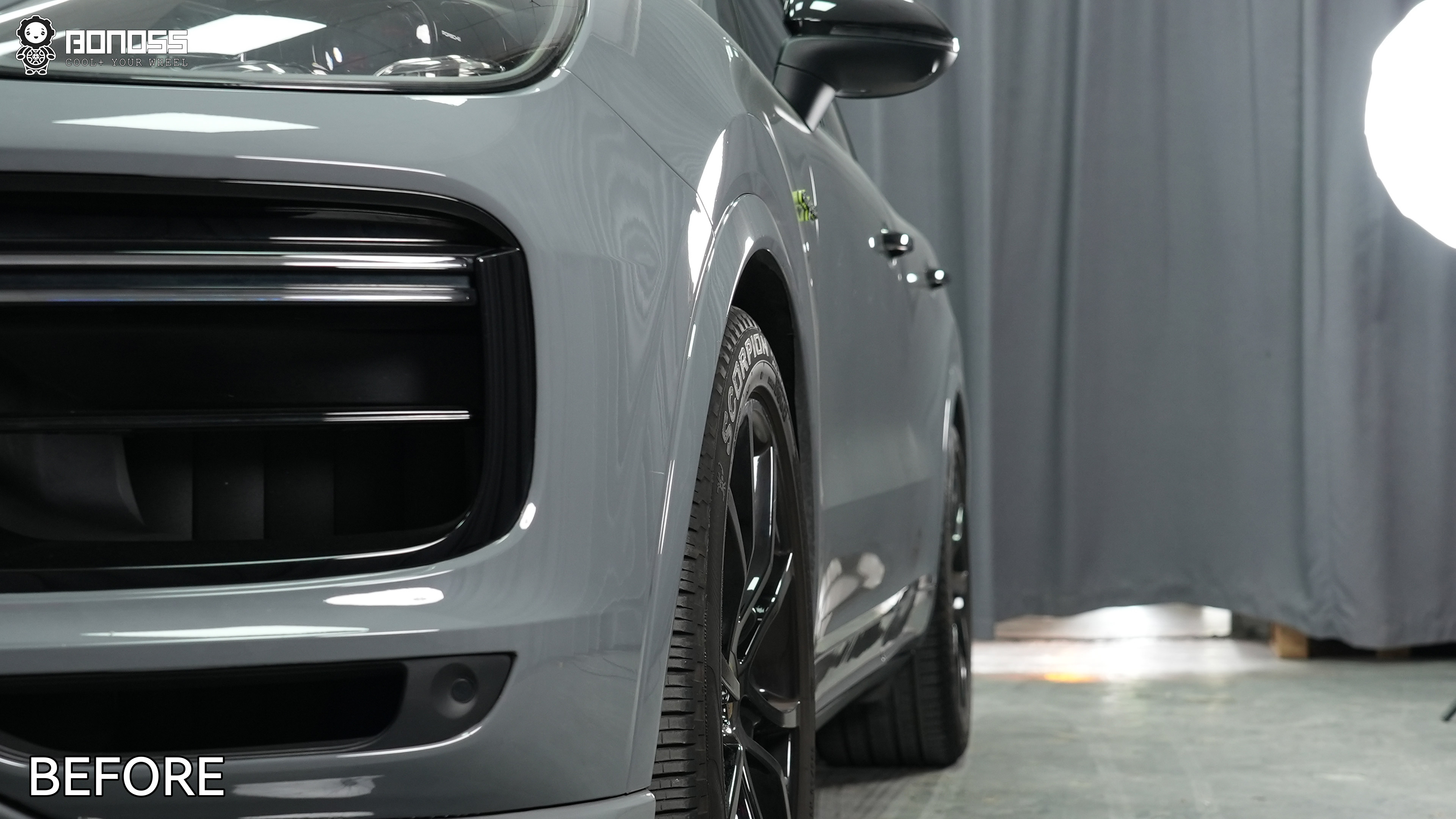
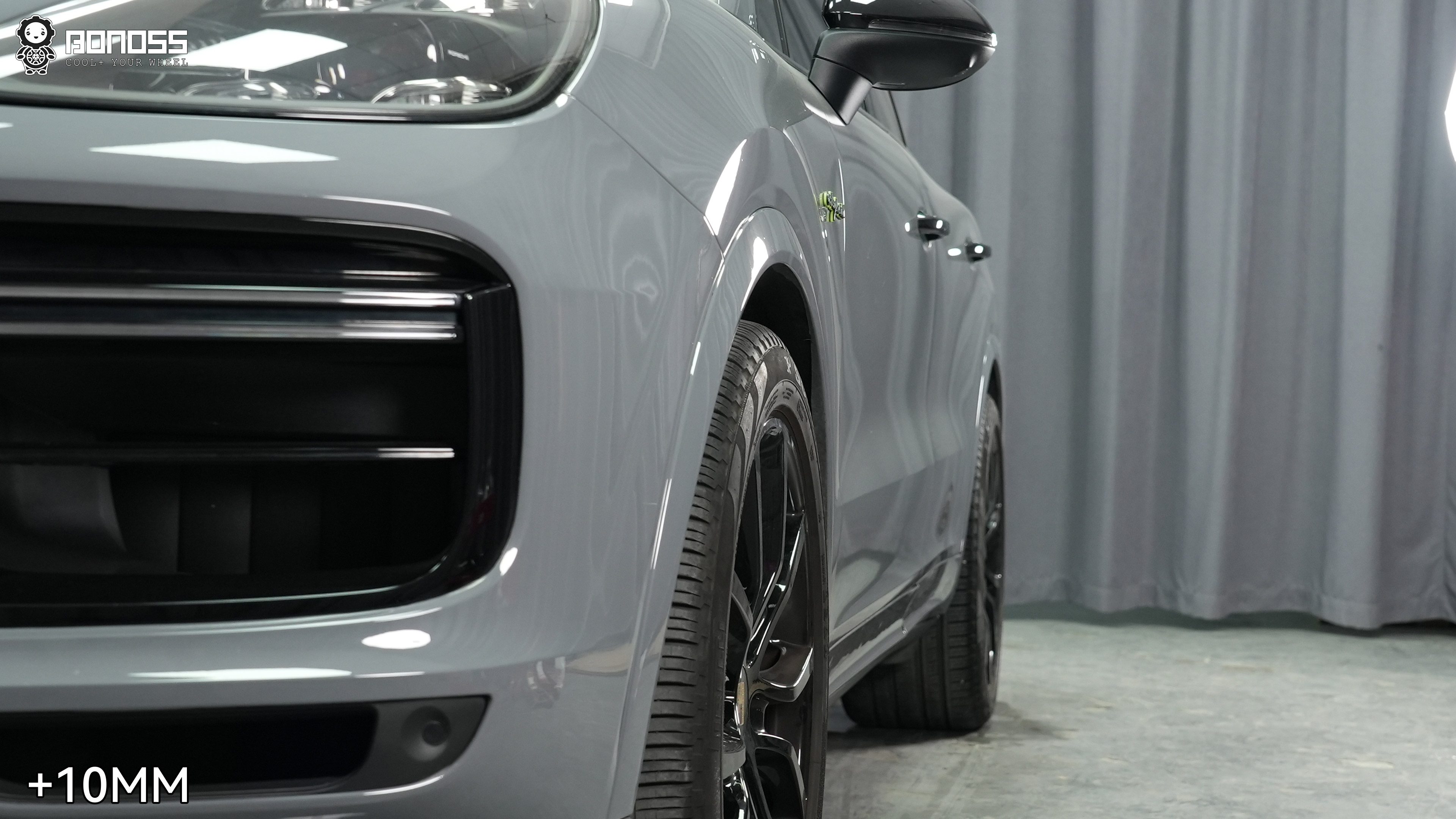
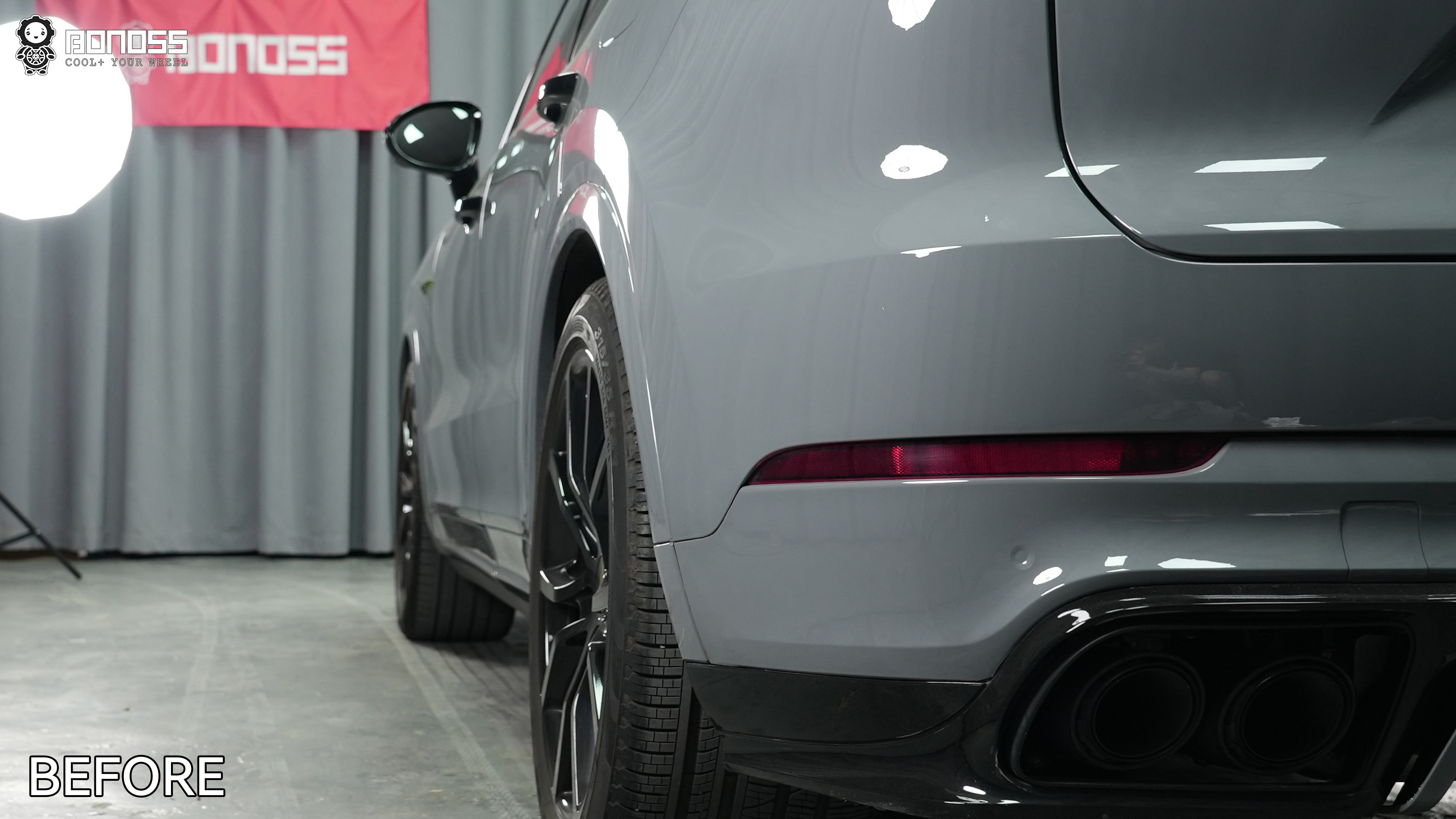
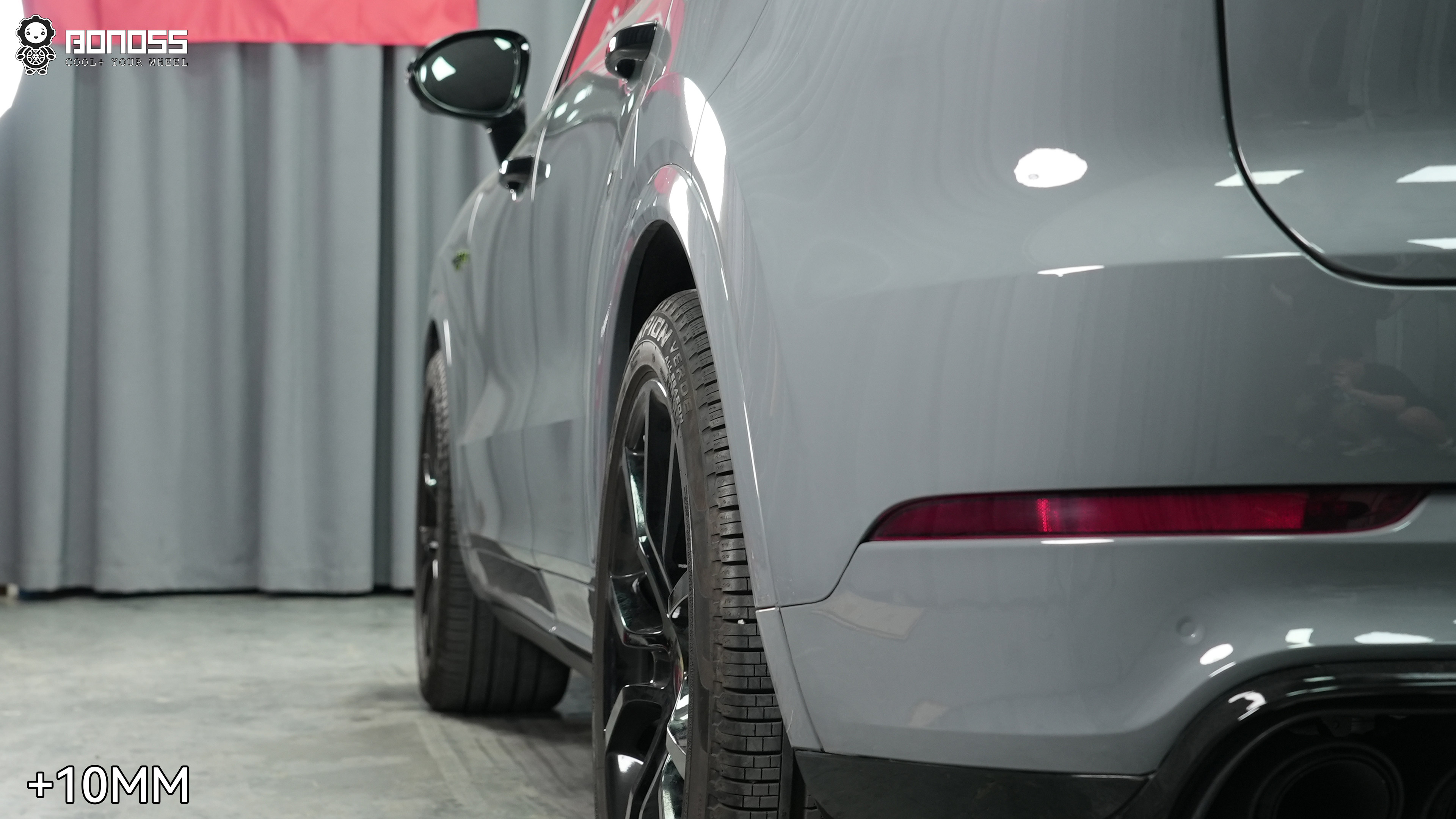
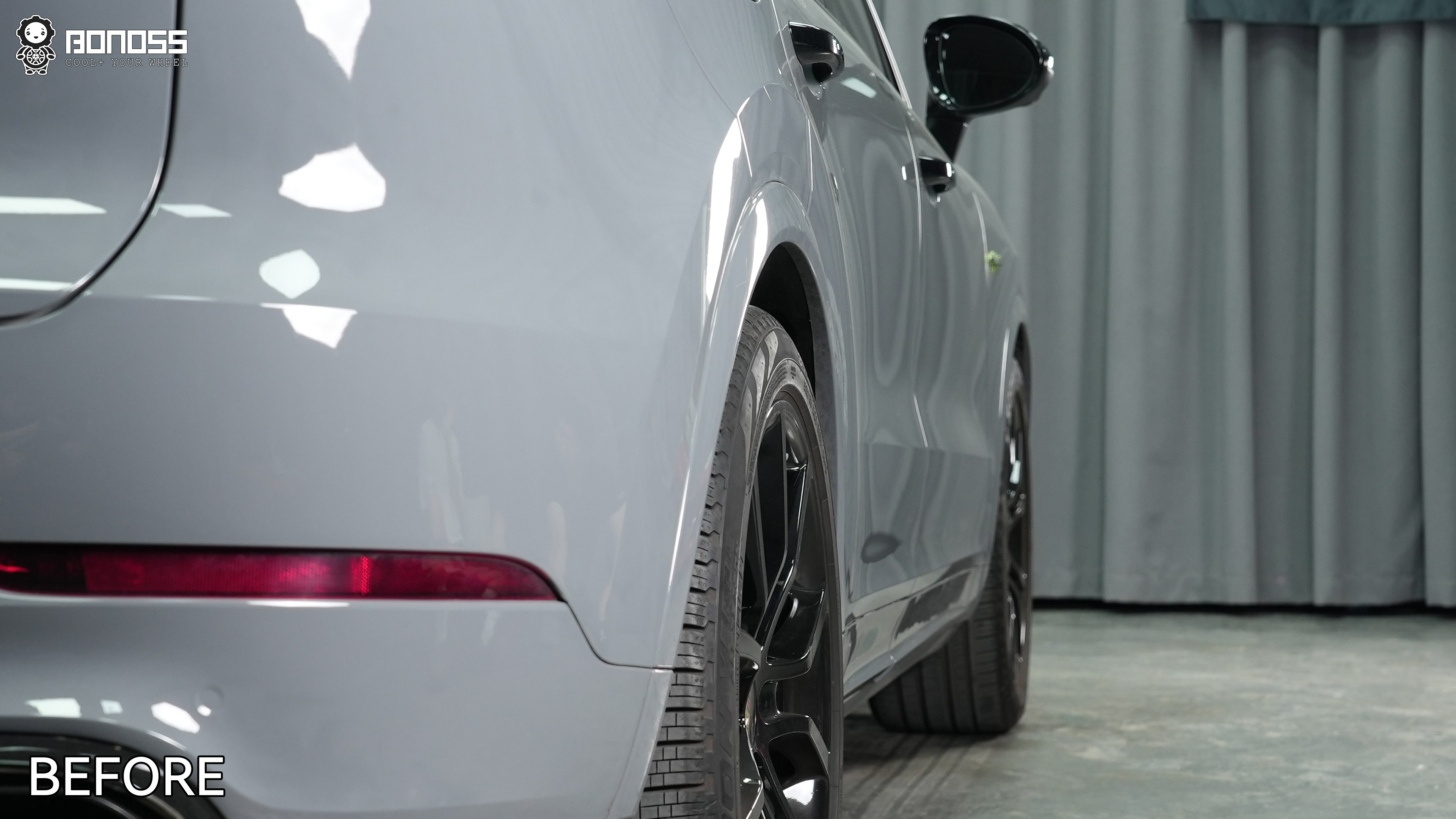
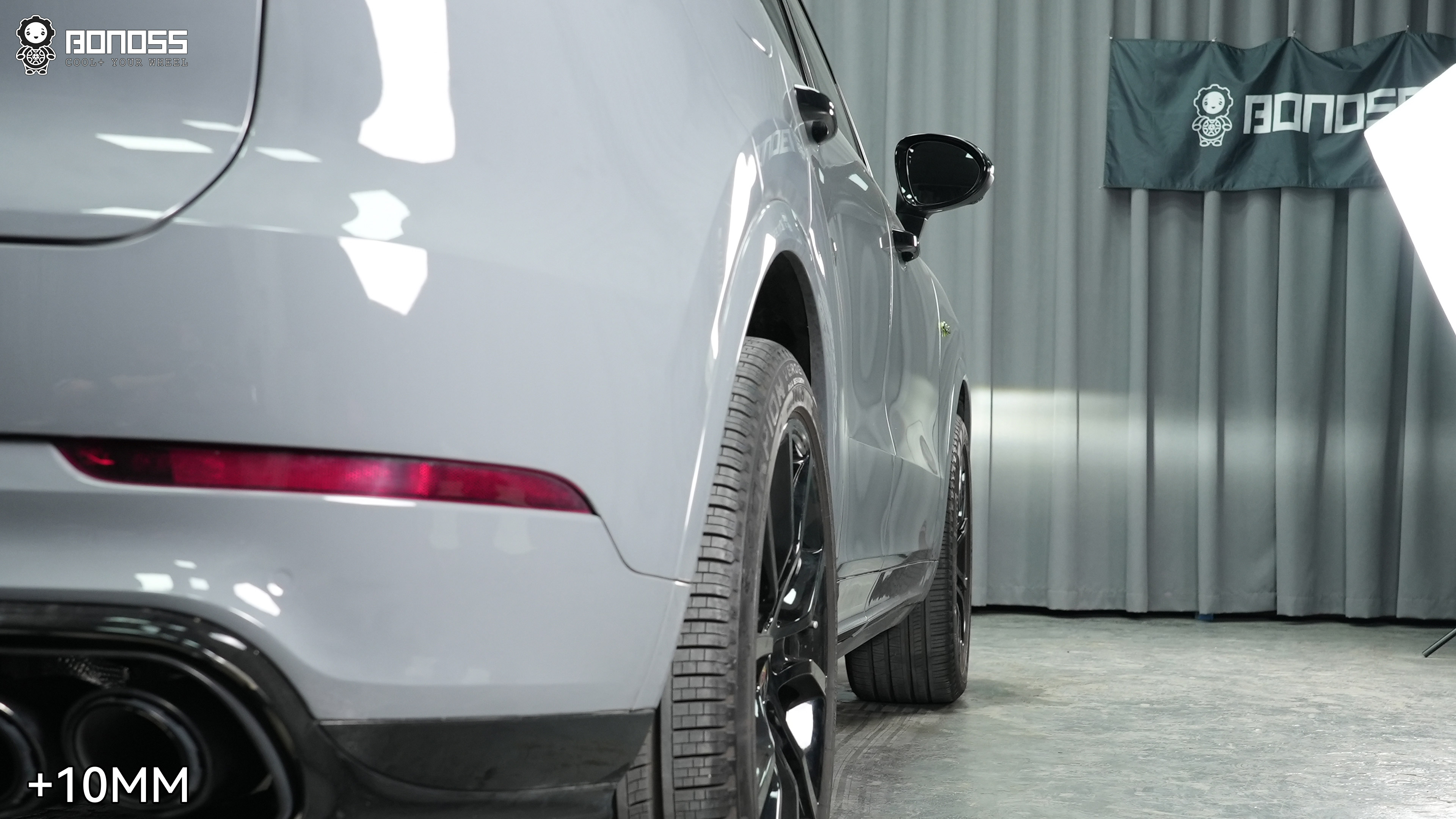
The effective offsets land at ET36 front and ET48 rear — a subtle push outward that keeps the wheels inside the fenders with zero rubbing. On stock suspension, with stock 285/40R21 and 315/35R21 tires, that’s the whole visual difference the car needed.
There’s a mechanical side to that arithmetic too. A 10mm spacer on each side of an axle widens the track width by 20mm per axle, front and rear. Wider track, same wheels, same tires — the car sits more planted visually, and the stock suspension geometry is untouched because nothing about the spring, damper, or alignment changed. That’s the appeal of a modest spacer over a more aggressive one: you keep every millimeter of clearance the factory engineered in, and spend only the gap it left on the table.
The Spec That Made 10mm Look Impossible
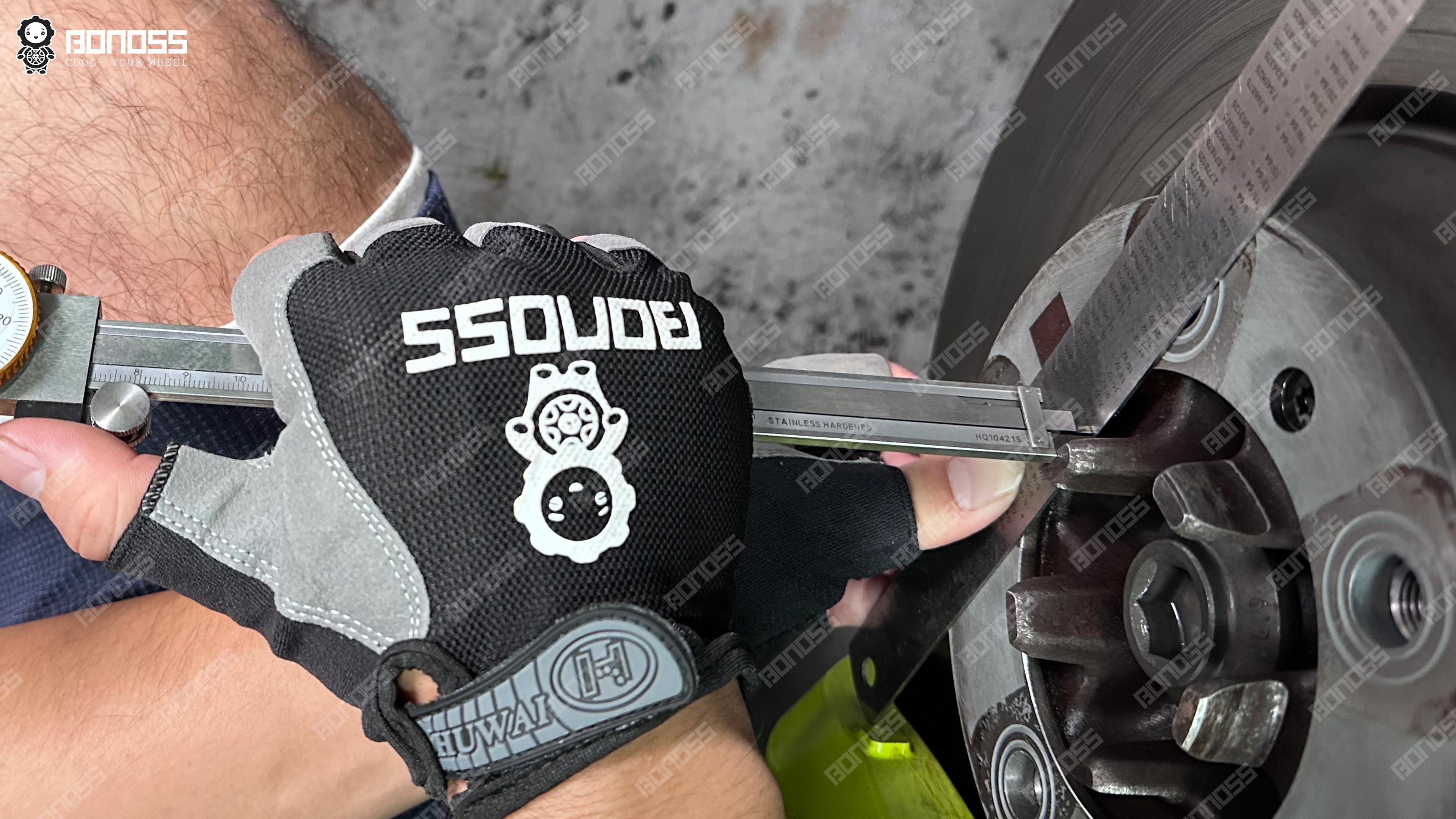
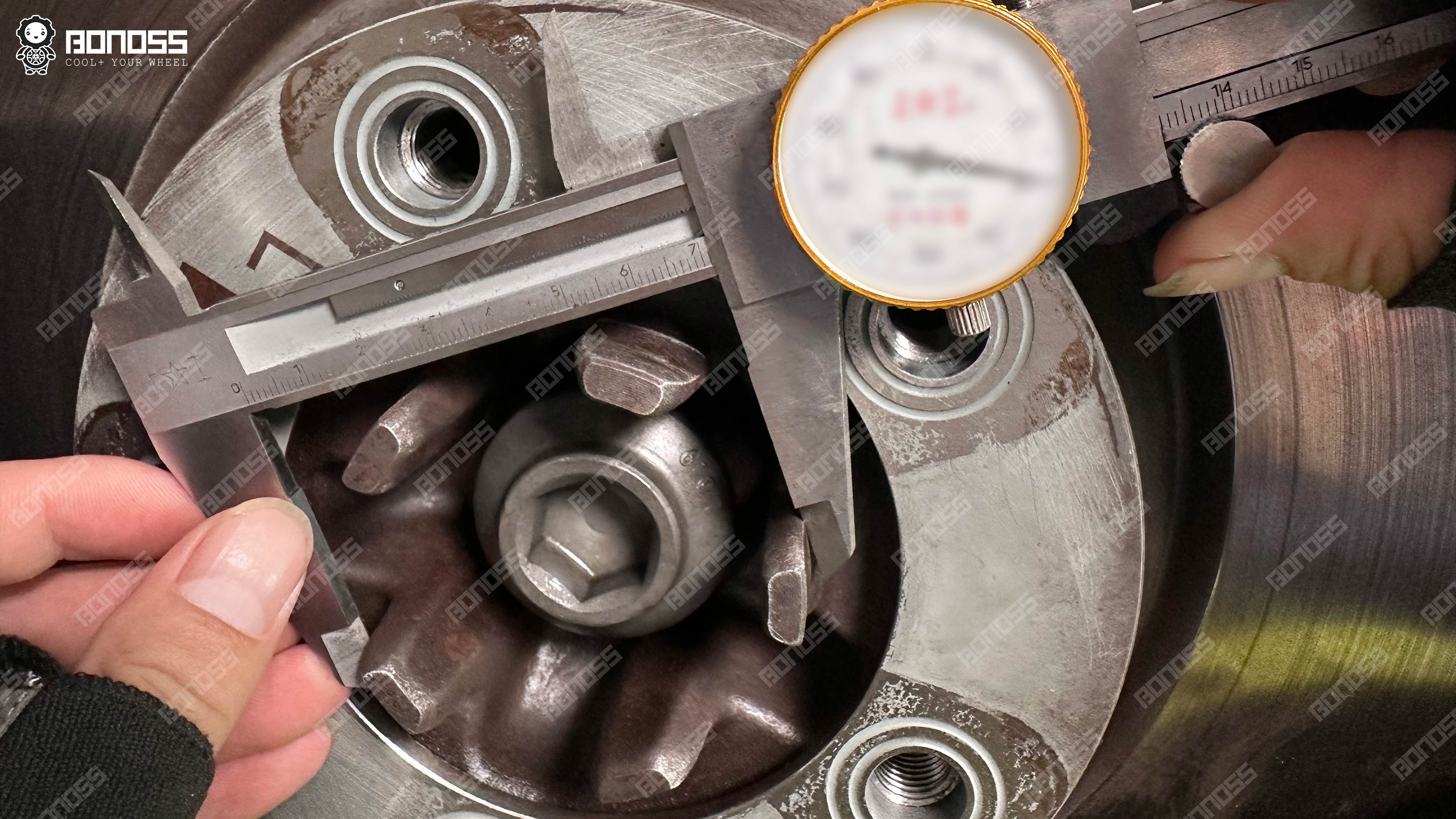
Here’s the part that trips people up. The conventional rule of thumb says a spacer should be at least as thick as the hub step it has to clear. A vernier caliper on this Cayenne told a different story: the front hub step measured 9.95mm, but the rear hub step came in at 11.86mm. A 10mm spacer is, by definition, thinner than an 11.86mm step. On paper, that shouldn’t work.
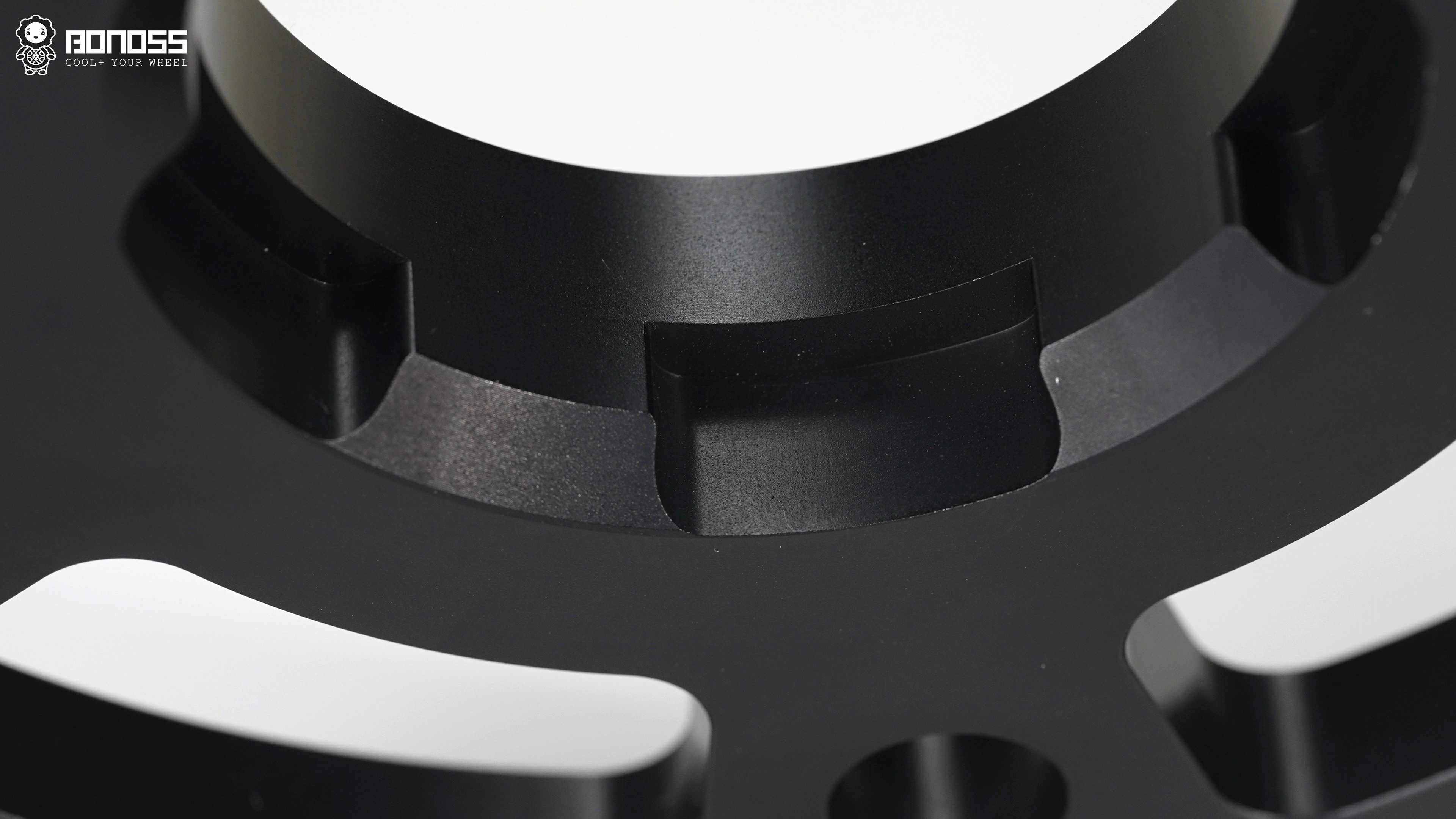
It works because of how these spacers are made. BONOSS machines the hub-centric ring of its Porsche-specific design with several hollow notches, each shaped to match the third-generation Cayenne’s five-finger hub. The fingers of the hub step seat into those notches, so the step recesses deeper into the spacer than the nominal 10mm thickness suggests — while the ring itself still centers the wheel on the hub.
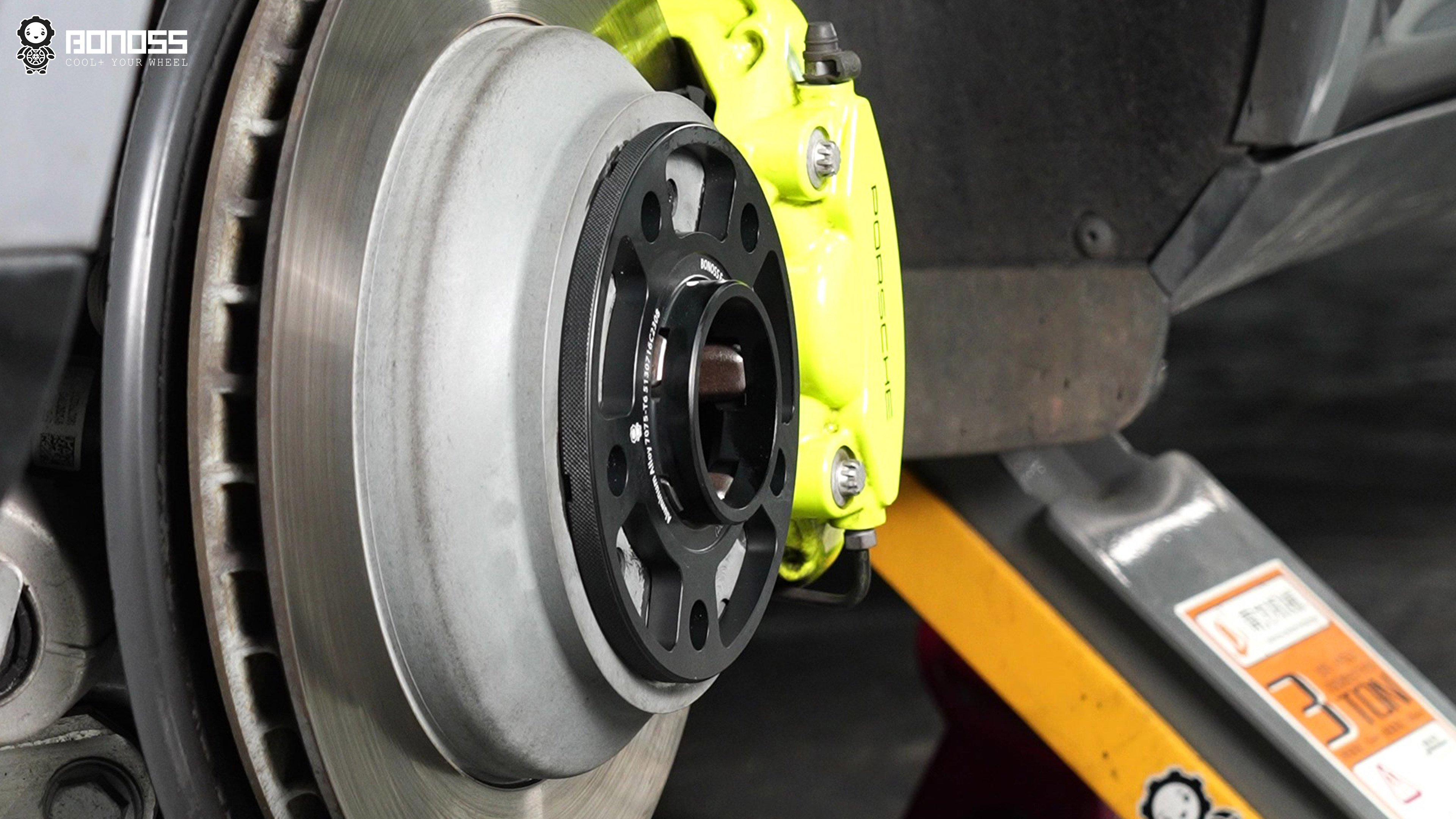
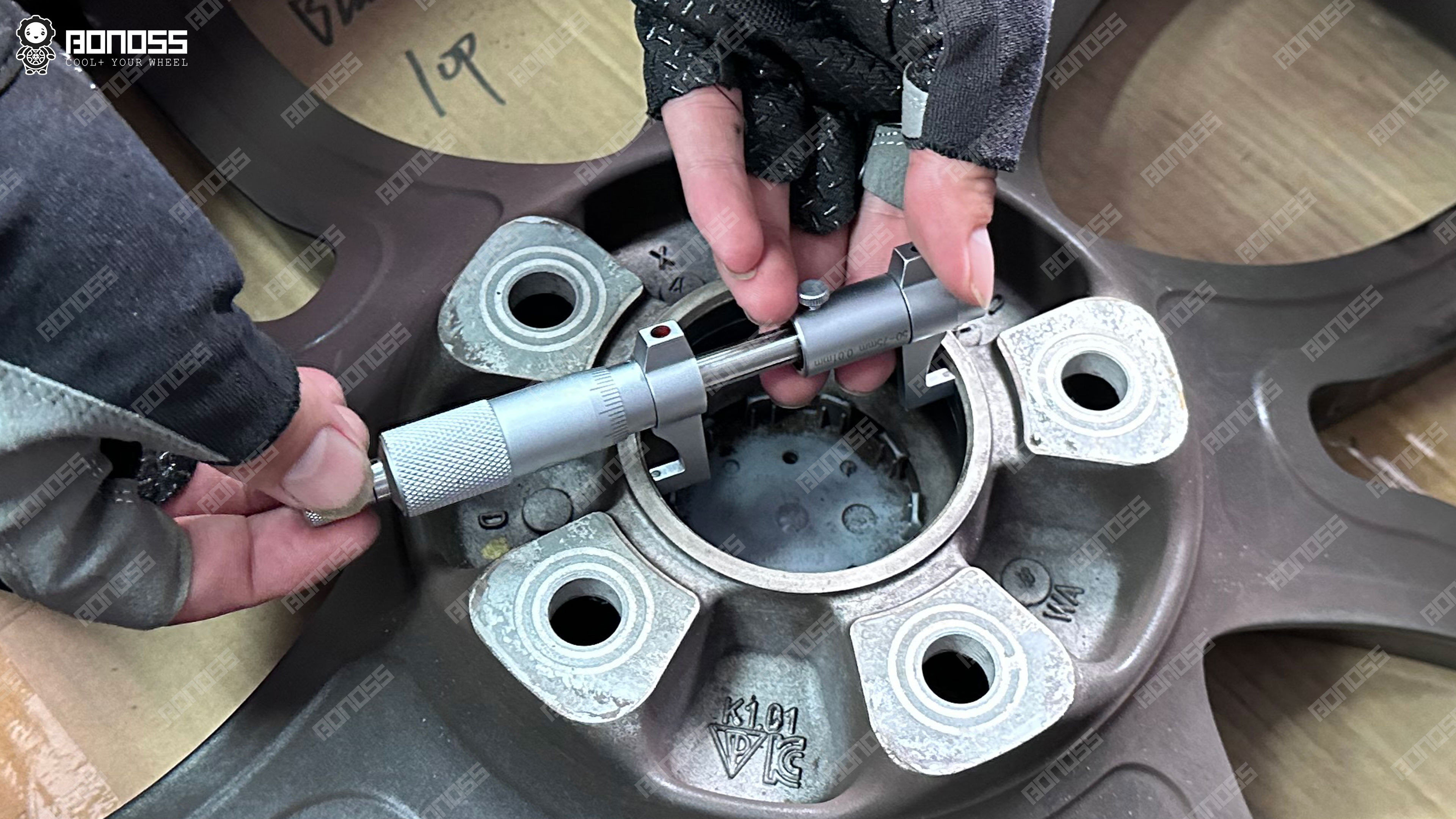
This matters because centering is what kills high-speed vibration. The wheel’s center bore measured 71.6mm; the axle hub measured 71.41mm. The spacer’s machined hub-centric lip bridges that difference and carries the wheel’s centering load on the hub, not on the bolts. That’s the difference between Cayenne 10mm hub-centric spacers and a cheap flat disc with holes drilled in it.
One flag, stated plainly: this clearance solution exists only because of the notched, Porsche-dedicated hub-centric design. Do not assume any generic 10mm spacer clears an 11.86mm rear step. Measure your own hub before ordering anything.
The Bolt Math Nobody Tells You About
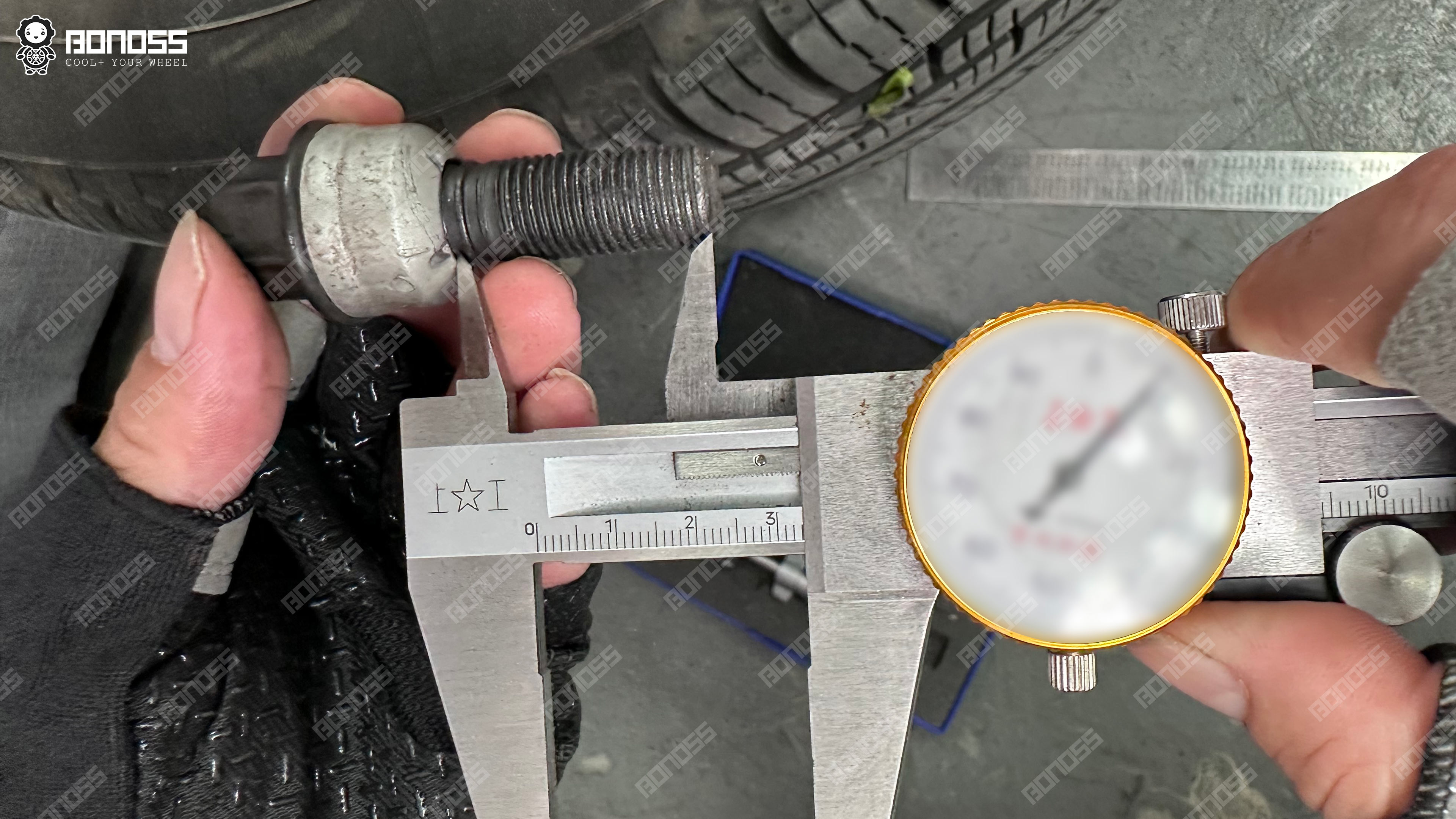
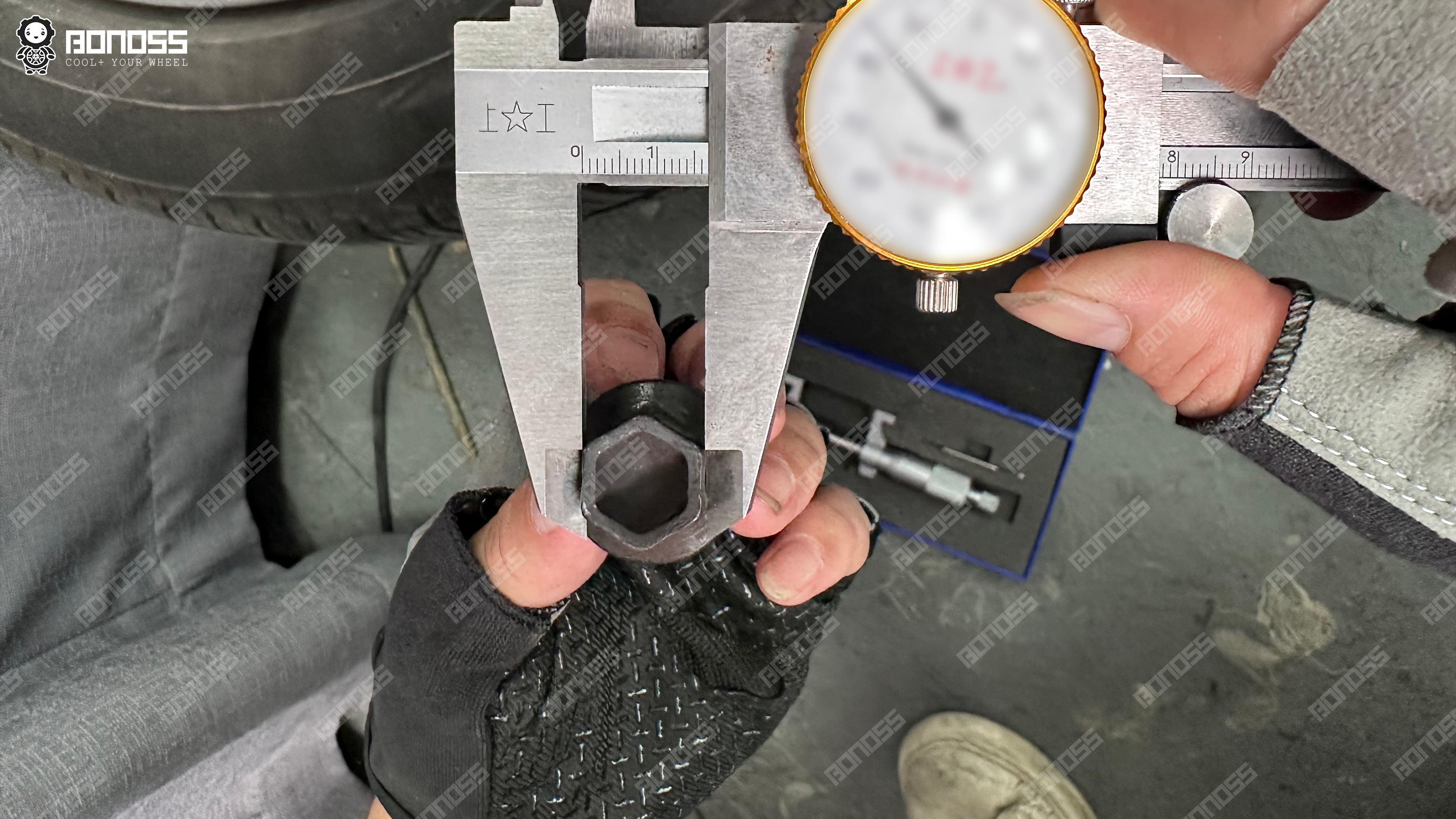
Mr. Karl had heard a rumor before coming in: “10mm spacers mean replacing your bolts.” It turned out to be true, and the reason is arithmetic. A vernier caliper on the original wheel bolts showed M14x1.5 thread, an R14 ball seat, a 17mm hex head — and 32mm of thread below the contact surface. Add a 10mm spacer between the hub and the wheel, and that engagement shrinks by exactly 10mm. Our technicians ran the numbers and specified 42mm extended bolts so the thread engagement stays where it should be.
Two details matter when you swap bolts. First, the seat: this Cayenne uses R14 ball-seat hardware, so the replacements must be ball seat too — a conical-seat bolt on a ball-seat wheel is a genuinely bad day. Second, the count: five lugs times four wheels means 20 extended bolts, not 16. The full kit for this install was 4× 10mm 7075-T6 spacers plus 20× 42mm ISO grade 12.9 extended bolts.
Install Day: November 6, 2023
The job itself was uneventful, which is exactly what you want. Hubs cleaned, spacers seated over the five-finger steps until the notches engaged, wheels hung, bolts hand-started so nothing cross-threaded, then torqued in a star pattern to 140 Nm per BONOSS installation instructions. For anyone comparing notes: full torque specs for this platform are in our guide to Porsche Cayenne wheel spacers torque.
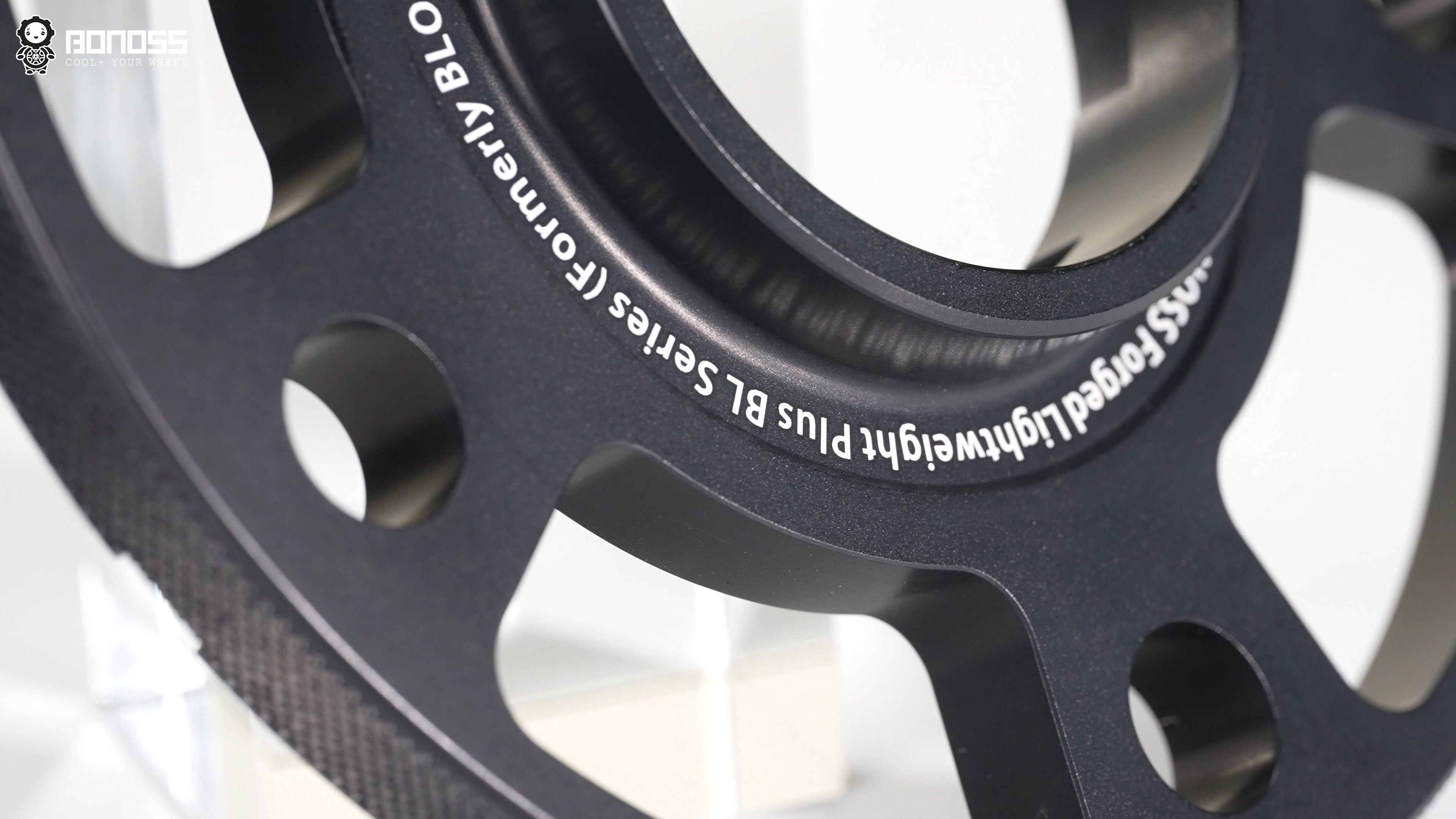
Two small design details show up during the install, and both earn their keep later. The side knurling on the spacer’s outer edge gives the fitter something to grip when the hub is oily and the part is cold — a small thing, until you’ve chased a smooth aluminum disc across a garage floor. The disassembly grooves machined into the face do the opposite job months down the road: when it’s time to rotate tires or remove a wheel, a pry point exists so the spacer comes off the hub without drama. Corrosion between aluminum spacer and steel hub is a real thing after a winter of road salt, and a part designed to come apart is worth more than one designed to look pretty on day one.
The parts bill came to $300 for the four spacers and twenty extended bolts; labor was $20. Twenty dollars. This is not a job that requires heroic spending — it requires correct hardware and a torque wrench.
28,500 Miles Later
The car went back on the road the same day. Mr. Karl’s first reaction:
“Fitment is spot on, wheels look way better now, quality is solid, and the price was fair. I just had to take it out for a spin as soon as they were on.”
A few weeks in:
“So excited to finally have the right wheel spacers on! I’m confident they’ll hold up well in the long run.”
And at the 28,500-mile mark, the answer to the question everyone actually asks — do Porsche Cayenne wheel spacers hold up, or do you get vibrations and regrets:
“Ran it at 70 mph on the highway—zero vibes. Huge difference. Car looks awesome and rides smoothly at speed. I was torn between cheaper generic spacers online and these guys, but the SGS & TÜV testing plus the 10-year warranty sold me. Fast forward 28,500 miles and not a single issue. Glad I went with them. Everything’s been great.”
Seventy miles per hour, zero vibration, zero issues across 28,500 miles. That’s the whole review, and it’s a real owner’s words, not our marketing department’s.
Why BONOSS (the Short Version)
We’ll keep this tight, because the measurements above already did most of the talking. Three things earned their place on this car.
Lightweight plus design. The forged 7075-T6 aluminum construction keeps unsprung weight down while staying stiff where it counts. Independent lab work backs the material: a TÜV hardness test on BONOSS 7075-T6 spacers returned 146 HBW 5/250 (Brinell test with a 5mm indenter ball at 250 kgf load, per ISO 6506-1:2014).
Multi-stage hub-centric machining. The notched ring covered earlier is the reason a 10mm spacer clears this Cayenne’s 11.86mm rear step at all. It’s CNC-machined to a 0.02mm tolerance — the kind of fit that makes “zero vibes at 70 mph” boring, which is precisely what you want.
Tested hardware, in writing. The ISO grade 12.9 extended bolts carry their own paper trail. SGS testing measured tensile strength of 1236 MPa (ISO 898-1:2013+Cor-1:2013), hardness of 390–394 HV10 (ISO 6507-1:2018), a proof load of 121 kN, and a limited-life-range test of two million cycles (ISO 3800:1993). TÜV Rheinland testing on the same M14x1.5 hardware measured 1273 MPa tensile, 395–402 HV10 hardness, and 192 hours of neutral salt spray (ISO 9227:2017). Both labs’ tensile results clear the 1,220 MPa floor for ISO grade 12.9.
Why don’t the numbers match exactly across reports? Because different laboratories, different test samples, and plain measurement error all move the readings slightly. And if you ever see a nut and a bolt with different values, that’s not a typo — nuts and bolts load their threads differently. Even two bolt pitches of the “same” M14 differ: M14x1.5 and M14x1.25 produce different data, so always check the report for your exact part. BONOSS holds over 75 SGS and TÜV test reports, all public — start with the 7075-T6 spacer hardness report and the extended-bolt tensile, hardness, proof load, fatigue life, and salt spray results.
Then there’s the warranty, which in this category says more than any brochure. A 10-year warranty on a consumable-adjacent part means the maker expects it to outlast most ownership periods of the car it bolts onto. It’s also what tipped Mr. Karl from “cheaper generic spacers online” to this kit — his words, not ours.
FAQ
Are 10mm spacers safe on a 2023 Porsche Cayenne?
Yes — when the spacer is hub-centric, the bolts are the correct grade and length, and torque is done to spec. Safety comes from centering the wheel on the 71.6mm hub bore instead of the bolts, keeping full thread engagement with 42mm extended bolts, and using 7075-T6 spacers with ISO grade 12.9 hardware. The 28,500-mile case above is the practical proof. A flat, lug-centric disc with mystery bolts is a different product entirely.
Do I need extended lug bolts for 10mm spacers on a Cayenne?
On this car, yes. The stock M14x1.5 bolts measured 32mm of thread below the seat; adding a 10mm spacer leaves too little engagement, so 42mm extended bolts were required. Match the R14 ball seat — mixing seat types is one of the more common and most dangerous spacer mistakes — and order 20 bolts (five per wheel).
Will 10mm spacers rub with stock 21-inch wheels?
Not on this setup — the wheels sit exactly flush with zero rubbing after 28,500 miles. Rubbing depends on your specific wheel width, offset, and tire, so measure your fender clearance the way we did before ordering.
What torque should I use for Porsche Cayenne wheel spacers?
Use 140 Nm (103.5 ft-lb) for BONOSS extended bolts, per BONOSS installation instructions. The 160 Nm (118 ft-lb) figure from the owner’s manual is for the original OEM bolts only. Pick one value based on which fastener is installed — never average the two.
Do 10mm spacers clear the Cayenne’s hub step?
Only if they’re designed to. This car’s rear hub step measured 11.86mm — thicker than a 10mm spacer. BONOSS’s Porsche-specific multi-stage hub-centric spacers clear it because the notched ring lets the five-finger step seat deeper. Measure your hub before assuming any 10mm spacer fits.
Can I install wheel spacers myself?
You can, if you own a torque wrench and work safely on jack stands. Clean the hub, seat the spacer, hand-start every bolt, torque in a star pattern, and re-check torque after the first 50–100 miles. If any of that sounds beyond your comfort level, the labor on this install cost $20 at a shop.
The Verdict
Ten millimeters, two calipers, one torque wrench, and 28,500 miles of confirmation. The stance is flush, the highway is smooth, and the only regret in the owner’s own words is not doing it sooner. If you’re weighing 2023 Porsche Cayenne 10mm wheel spacers, this is what “done right” looks like — measured, torqued, and verified in the real world, one mile at a time.
Ready to spec your own setup? The exact hardware from this install is the BONOSS forged lightweight plus wheel spacers for the Porsche Cayenne — 5×130 PCD, 71.6mm hub bore, 7mm–12mm thickness range, 10-year warranty included.

About Robert Wall
Robert Wall is a Senior Automotive Engineer at BONOSS with over 9 years of experience in automotive component R&D, specializing in the structural design and safety validation of wheel spacers, wheel adapters, and high-strength fasteners. He is actively involved in product testing and on-track evaluation and is dedicated to translating engineering expertise into accessible modification knowledge — helping enthusiasts upgrade their vehicle’s stance and handling without compromising safety.