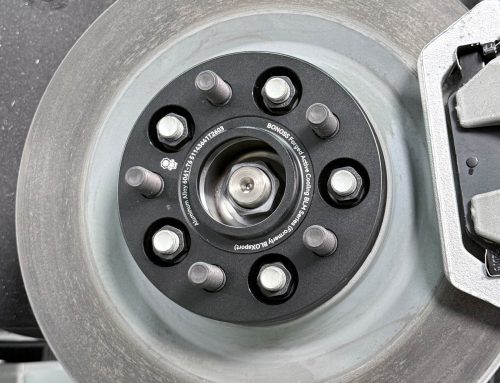
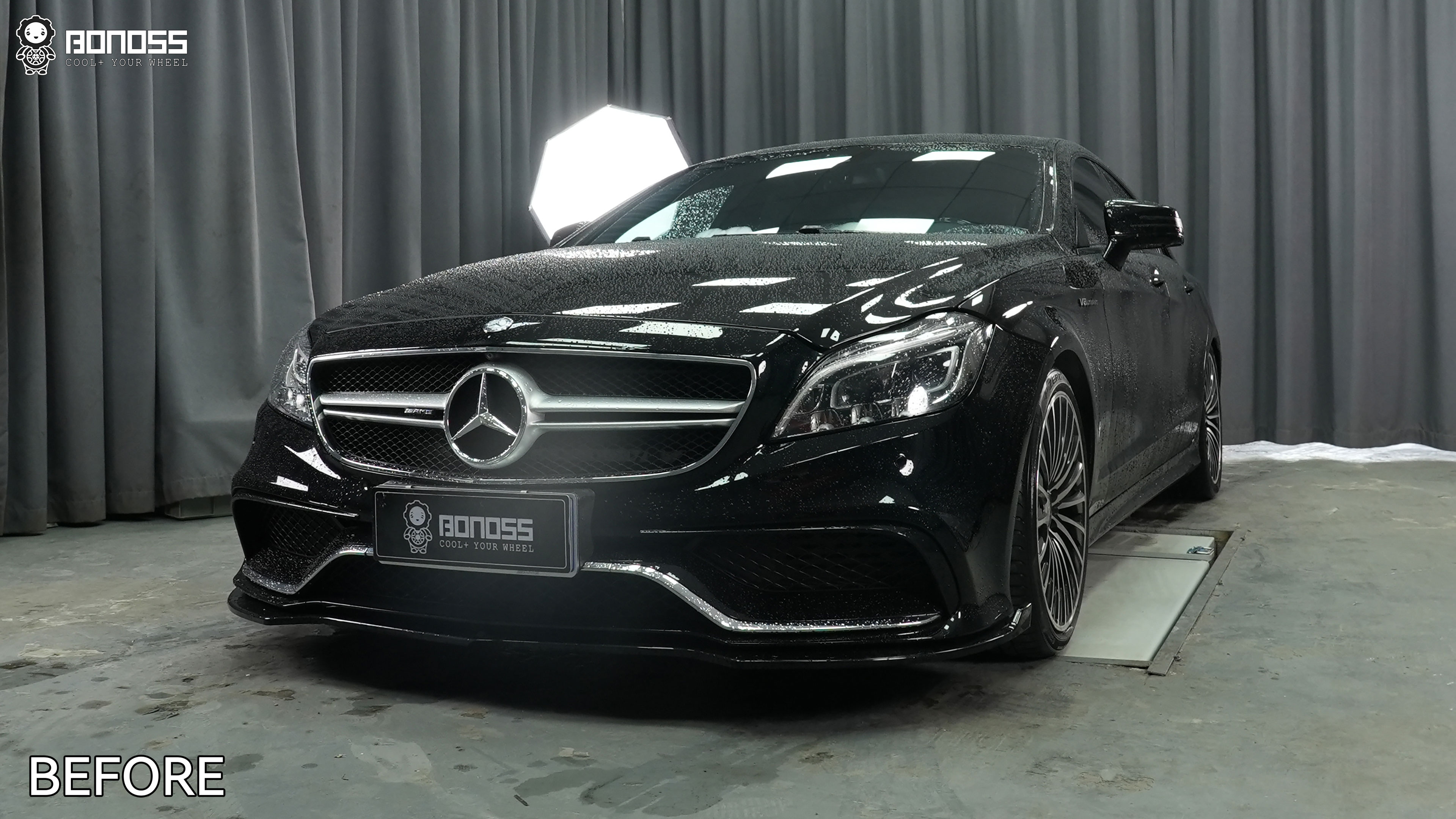
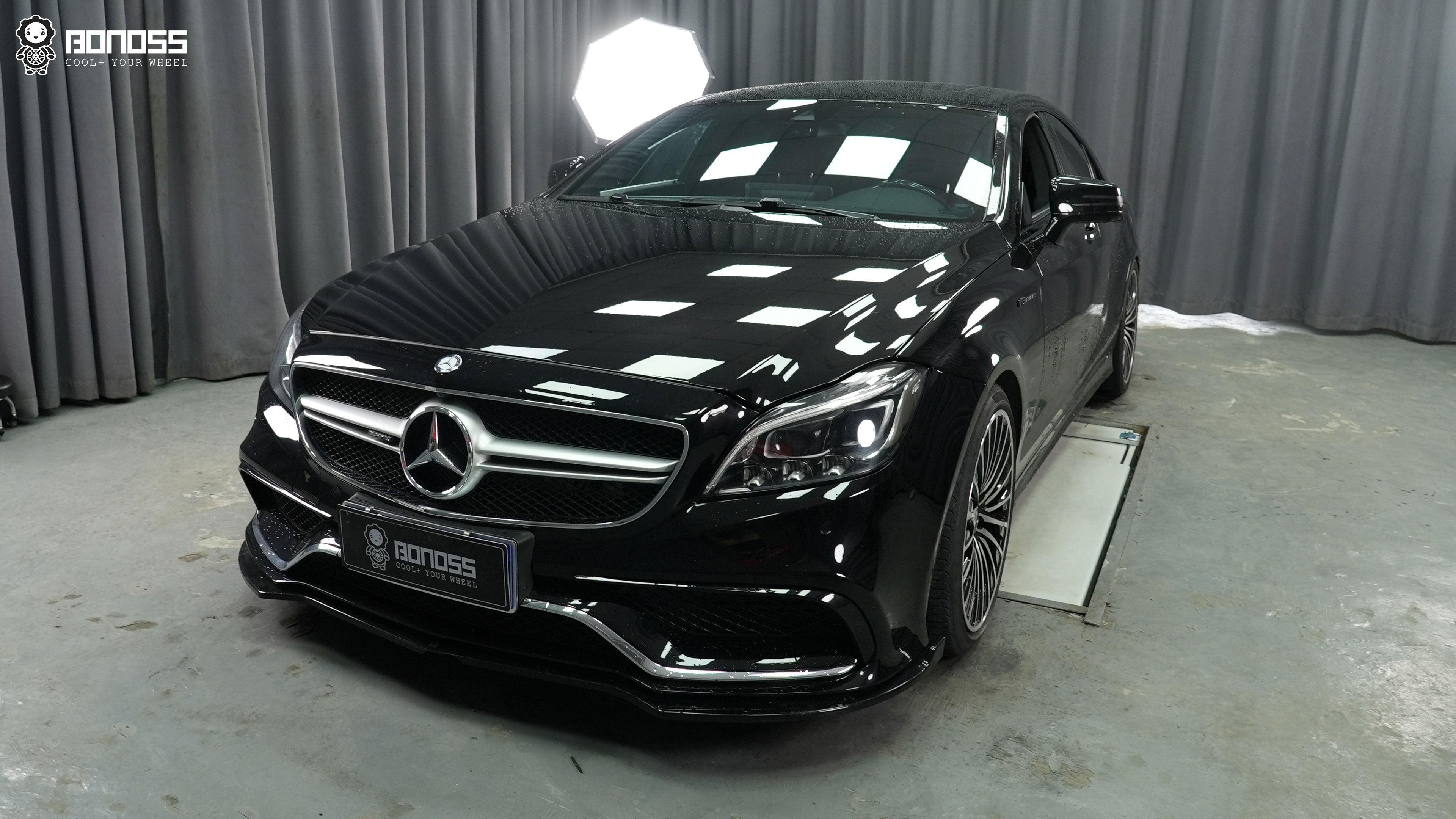
The 2017 Mercedes-Benz CLS 12mm spacers install below is a case most shops would have turned away. Paul Brown bought the car for the look, and the look wasn’t finished. His W218 — the last of Mercedes’ low-slung four-door coupe line before the nameplate folded into the E-Class — sat on aftermarket wheels and lowered suspension, but the wheels still tucked inside the fenders. He wanted them flush. The answer was a set of 12mm front and 15mm rear spacers. The catch, which no listing mentions, is that a standard 12mm spacer won’t physically seat on this car’s front hubs.
The reason is a long dust cap and spindle protrusion on the CLS front hub, measuring 26.54mm. The usual rule of thumb — spacer thickness must match or exceed the hub protrusion — pushes most people toward a 25mm or 30mm spacer. That’s too much. It would poke the wheels past the fender instead of sitting flush, and Brown didn’t want that. The fix was a BONOSS Forged Lightweight Plus wheel spacer with a thin hub-centric design, machined so its rear chamfer clears the protrusion and a true 12mm still fits.
This isn’t a catalog claim. It’s a documented install: measured with a vernier caliper and a high-accuracy ruler, finished on July 28, 2025, and driven 11,386 miles since. Here’s the whole thing.
Spec Quick Reference
| Item | Spec |
|---|---|
| Vehicle | 2017 Mercedes-Benz CLS-Class (W218) |
| Wheel bolt pattern (PCD) | 5×112 mm |
| Hub center bore (CB) | 66.5 mm nominal (66.45 mm measured on this car) |
| Thread size | M14 x 1.5 |
| Wheel bolt seat | R14 ball seat, 17 mm hex socket |
| Spacer thickness | Front 12 mm / Rear 15 mm |
| Spacer material | Forged 7075-T6 aluminum, hard anodized |
| Wheel bolt torque — BONOSS extended bolts | 140 Nm (103.5 ft-lb) per BONOSS installation instructions |
| Wheel bolt torque — OEM bolts | 130 Nm (96 ft-lb) per the owner’s manual |
| Required extended bolts | Front 39 mm / Rear 42 mm, ISO Grade 12.9 |
| Price — front 12mm set | 2 spacers + 10× 39mm extended bolts = $150.99 |
| Price — rear 15mm set | 2 spacers + 10× 42mm extended bolts = $157.99 |
| Labor | $20.00 |
| Install date / miles since | July 28, 2025 / 11,386 miles |
Two torque values are listed because this car’s bolts were replaced. Use ONE value for the entire installation — either 140 Nm (103.5 ft-lb) with BONOSS extended bolts, or 130 Nm (96 ft-lb) with the original bolts. Don’t mix them. On this car, BONOSS extended bolts went in, so every lug was torqued to 140 Nm (103.5 ft-lb).
Why a Normal 12mm Spacer Won’t Fit This CLS
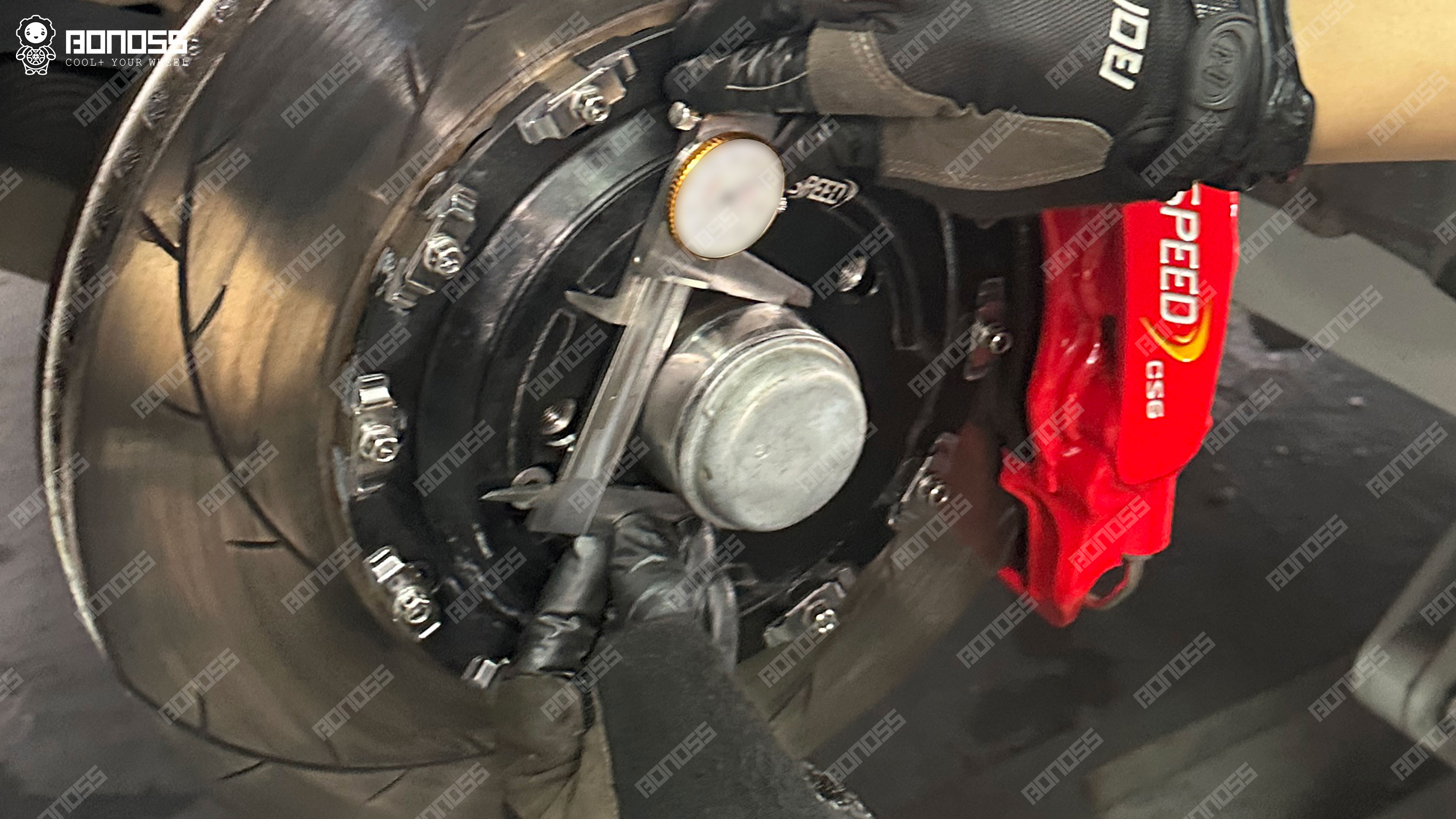
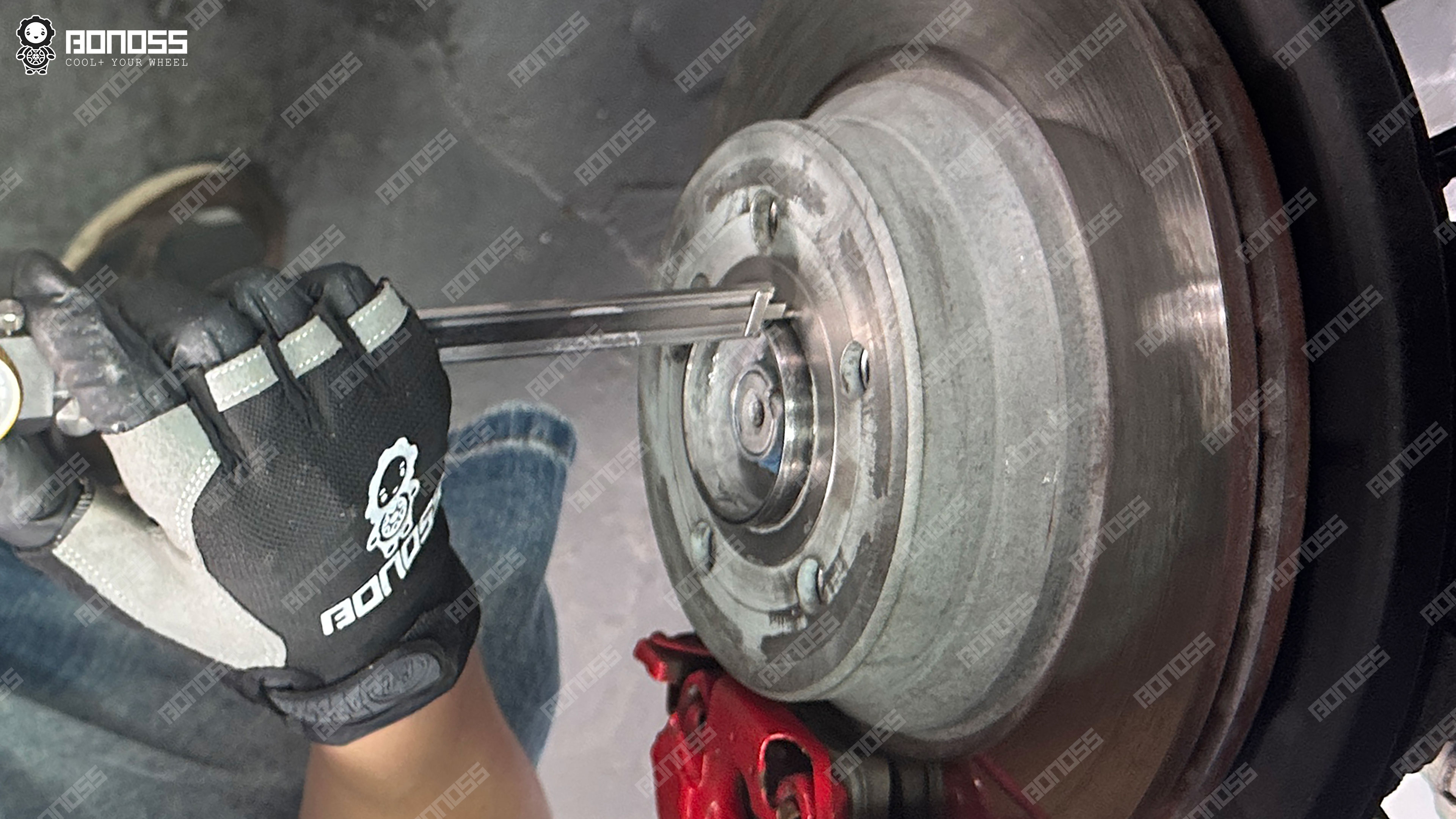
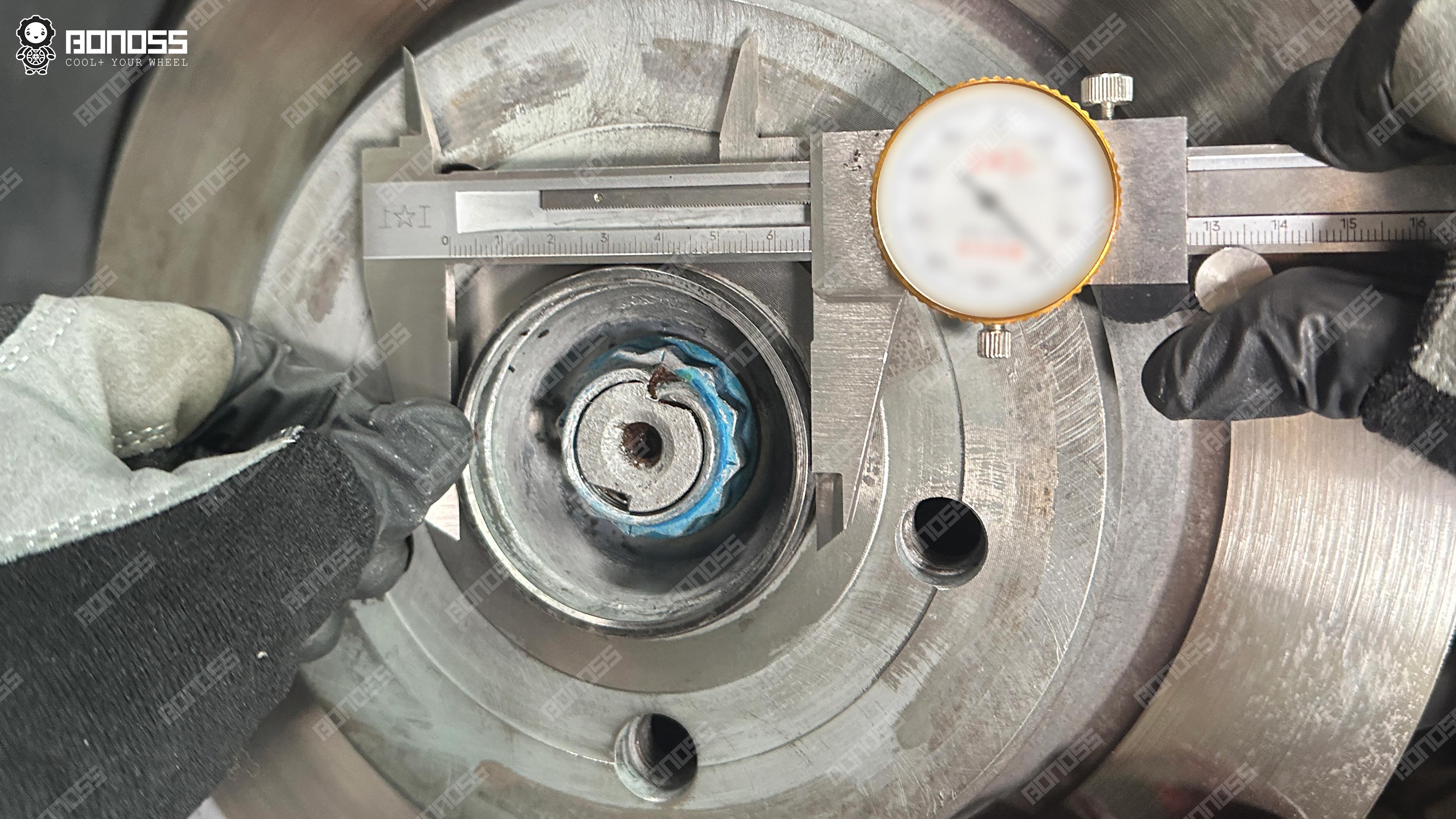
Pull a front wheel off a W218 and you’ll see what drives most of the “do CLS spacers even work?” threads: a long dust cap and spindle protrusion sticking out of the hub face. On Brown’s car it measured 26.54mm with a vernier caliper.
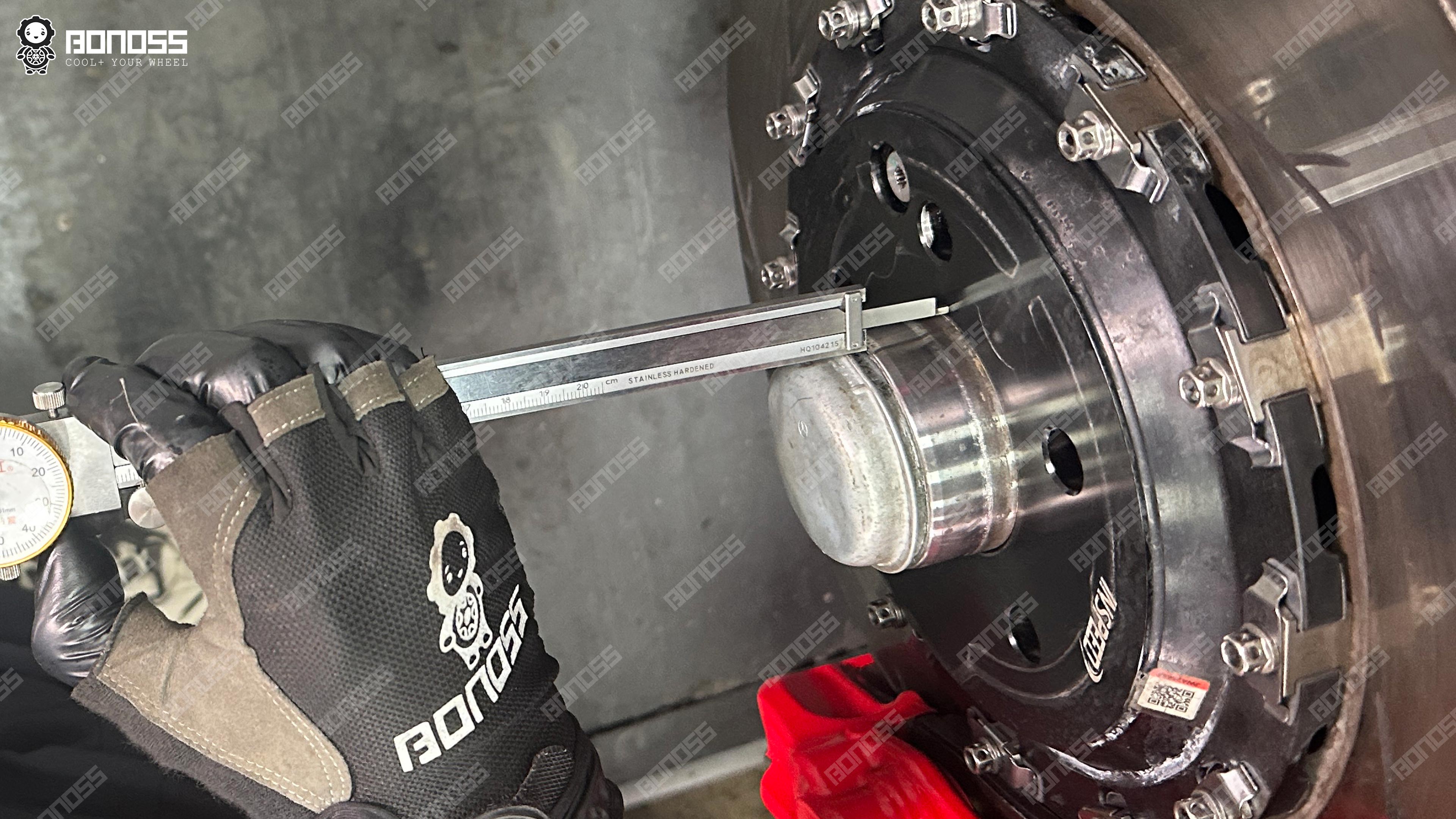
The standard hub-centric rule is that spacer thickness has to be at least as tall as the hub protrusion. Otherwise the back of the spacer collides with the dust cap before the spacer seats flat against the rotor. A generic 12mm spacer carries a full-depth hub ring, so on this car it simply won’t sit down. The math looks impossible: 26.54mm of protrusion versus a 12mm spacer.
That’s exactly why Brown was told, at first, that he’d have to jump to a 30mm spacer to clear it. He considered it — and then realized a 30mm spacer would shove the wheels out past the fenders. He wanted flush, not poke. The two goals, thin and cleared, are usually mutually exclusive on this car. They aren’t with the right machining.
How the Thin Hub-Centric Ring Actually Works
The trick is in the geometry of the CLS hub. The base of the protrusion — the section closest to the brake rotor — is the full 66.45mm center-bore diameter. The forward section tapers smaller, and the aftermarket wheel’s center bore is slightly larger than stock. BONOSS machines the spacer’s hub-centric ring unusually thin, which keeps the rear chamfer on the spacer minimal. The result: that long 26.54mm protrusion never bottoms out against the spacer, and the 12mm spacer seats flush.
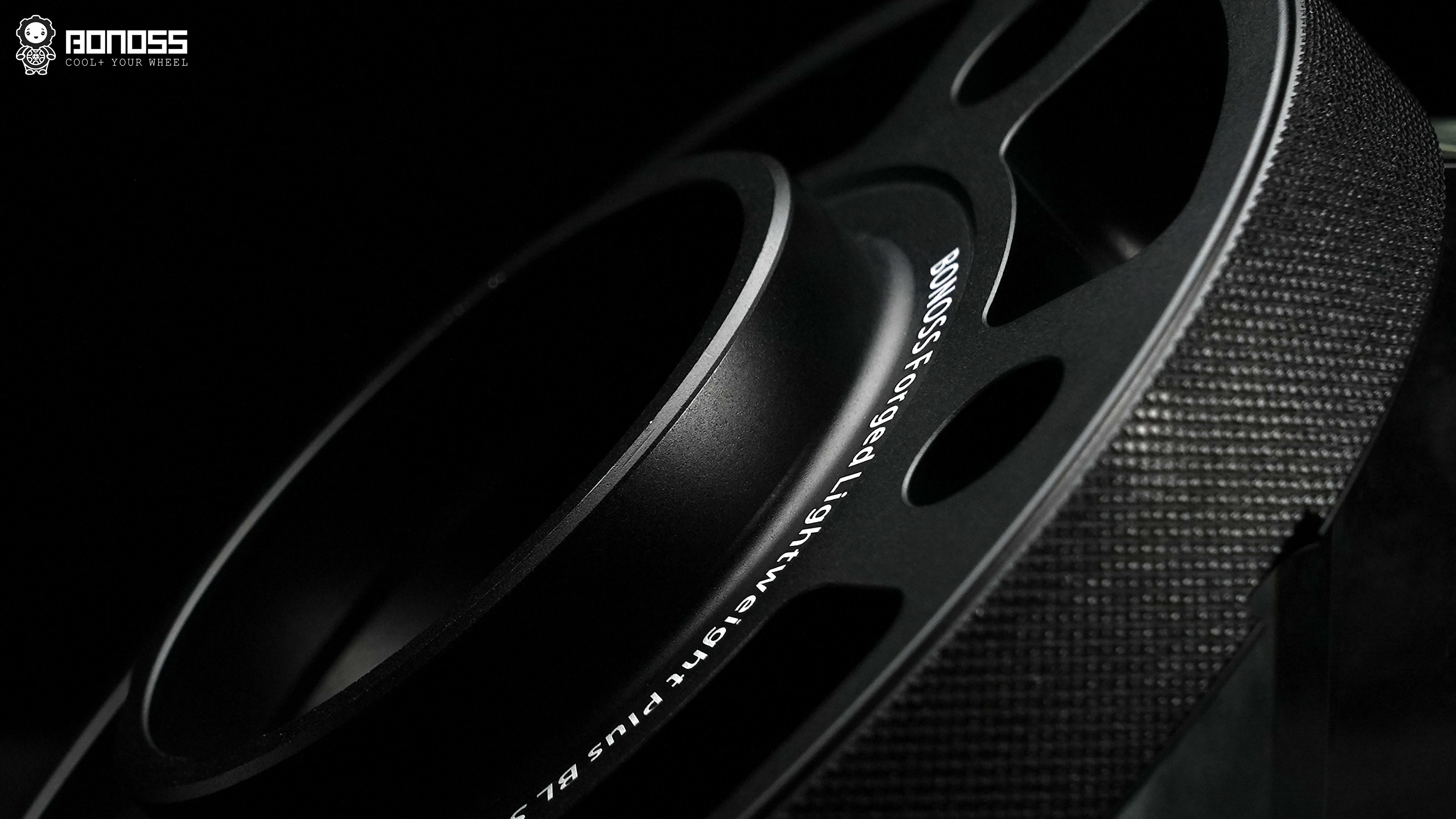
Two things fall out of that. First, you get to run the thinner 12mm spacer Brown actually wanted — the number the fender clearance said was right — instead of being forced into a 30mm. Second, because the protrusion is still there doing its job, the wheel picks up an extra centering surface, which is part of why this car has stayed vibration-free.
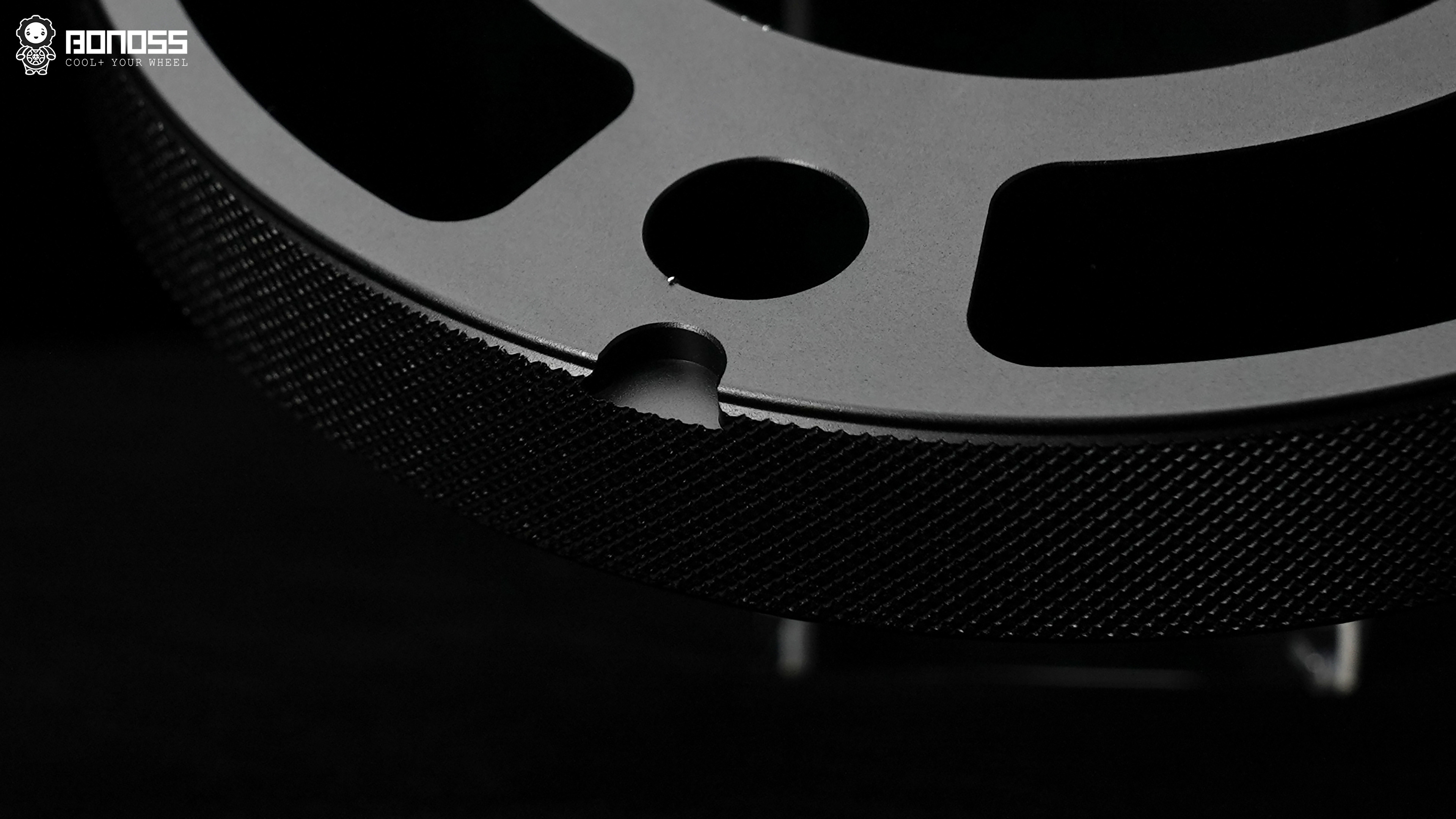
The machining details matter beyond the ring. These spacers are forged 7075-T6 aluminum, hard anodized, with disassembly grooves so a spacer that’s been heat-cycled for a year can still be pried off cleanly. None of that is decorative; it’s what keeps a part this thin from being a pain to live with.
One caveat, stated plainly: this fitment only works with a BONOSS thin hub-centric spacer. Do not read this and assume any 12mm spacer will clear a CLS front hub. A standard full-depth 12mm spacer will not.
The Numbers Behind the Fitment
Nothing here was guessed. The spacer thickness came from measuring the actual fender clearance with a high-accuracy ruler, and the hub dimensions came from a vernier caliper.
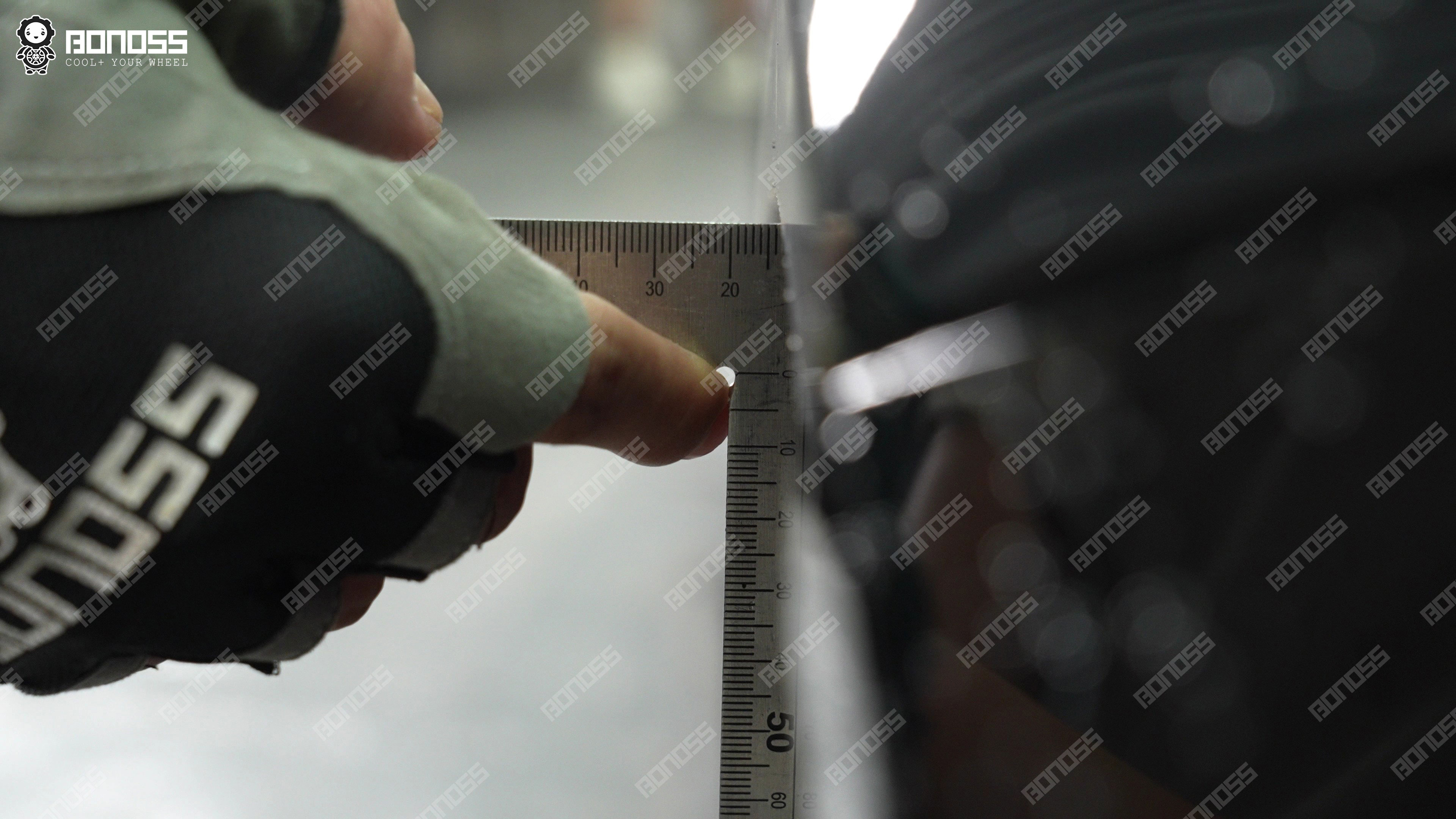
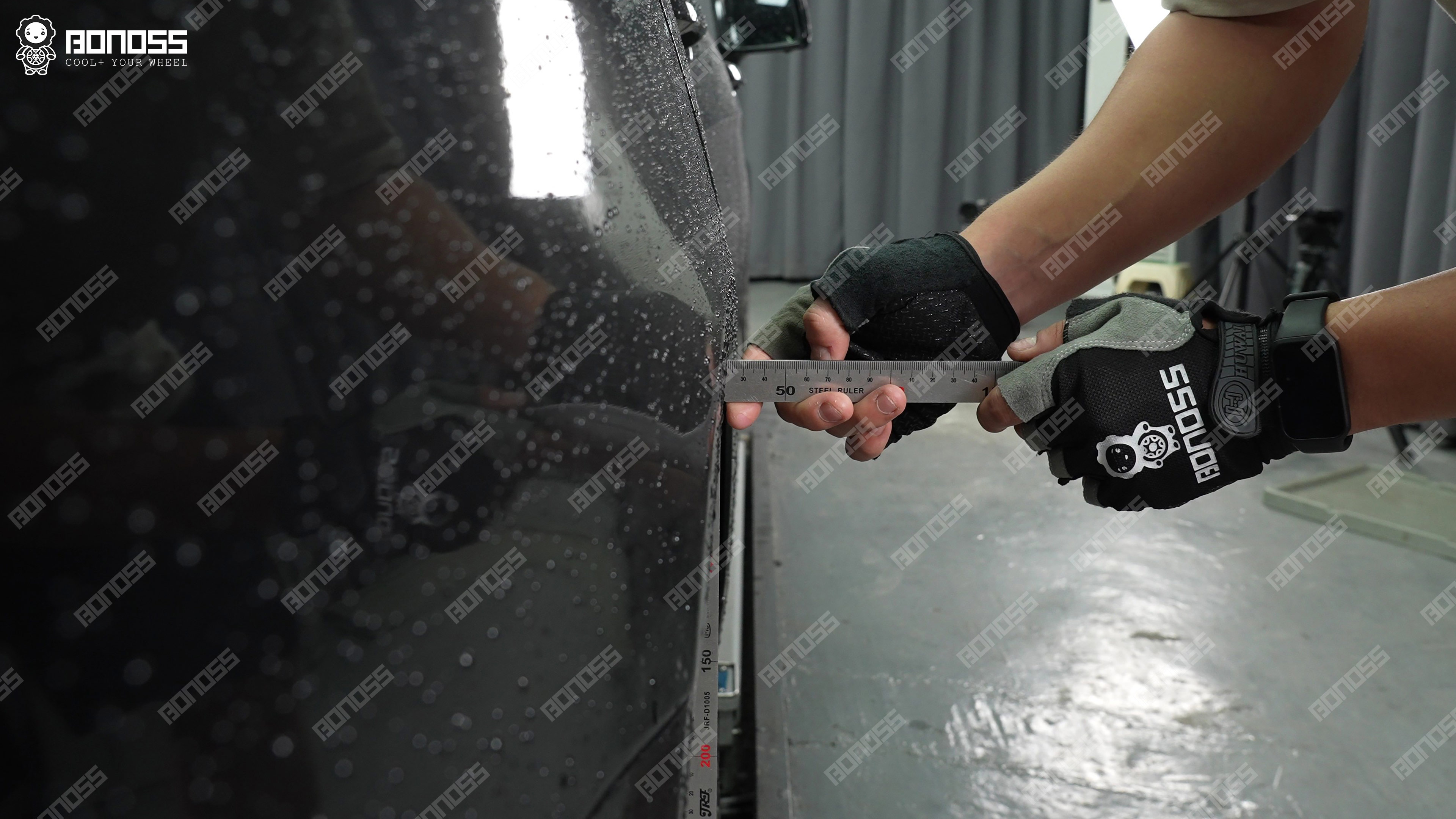
The front wheels needed 12mm to sit flush; the rear needed 15mm. The rear is a normal lip — 8.76mm of protrusion — so a standard 15mm multi-stage hub-centric spacer drops straight on. The front, as covered above, is the special case.
The center bore measured 66.45mm — the standard Mercedes 66.5mm hub bore within normal manufacturing tolerance. A spacer has to match two faces at once, the car-side hub and the wheel-side bore, which is why this is a precision part. BONOSS machines these to a 0.02mm-level CNC tolerance so the mating faces sit tight and the wheel stays concentric. That tolerance is the difference between “fits” and “fits without a shimmy at 80 mph.” If you want to verify your own hubs before ordering, here’s how to measure hub height and the inner wheel bevel.
Front 12mm vs Rear 15mm: The Split That Made It Flush
A flush stance isn’t the same number all around. The rear fenders on the W218 have more room than the front, and Brown’s aftermarket wheels carry their own offset. Measuring each corner individually — instead of assuming a square set — is what got the stance right: front 12mm, rear 15mm.
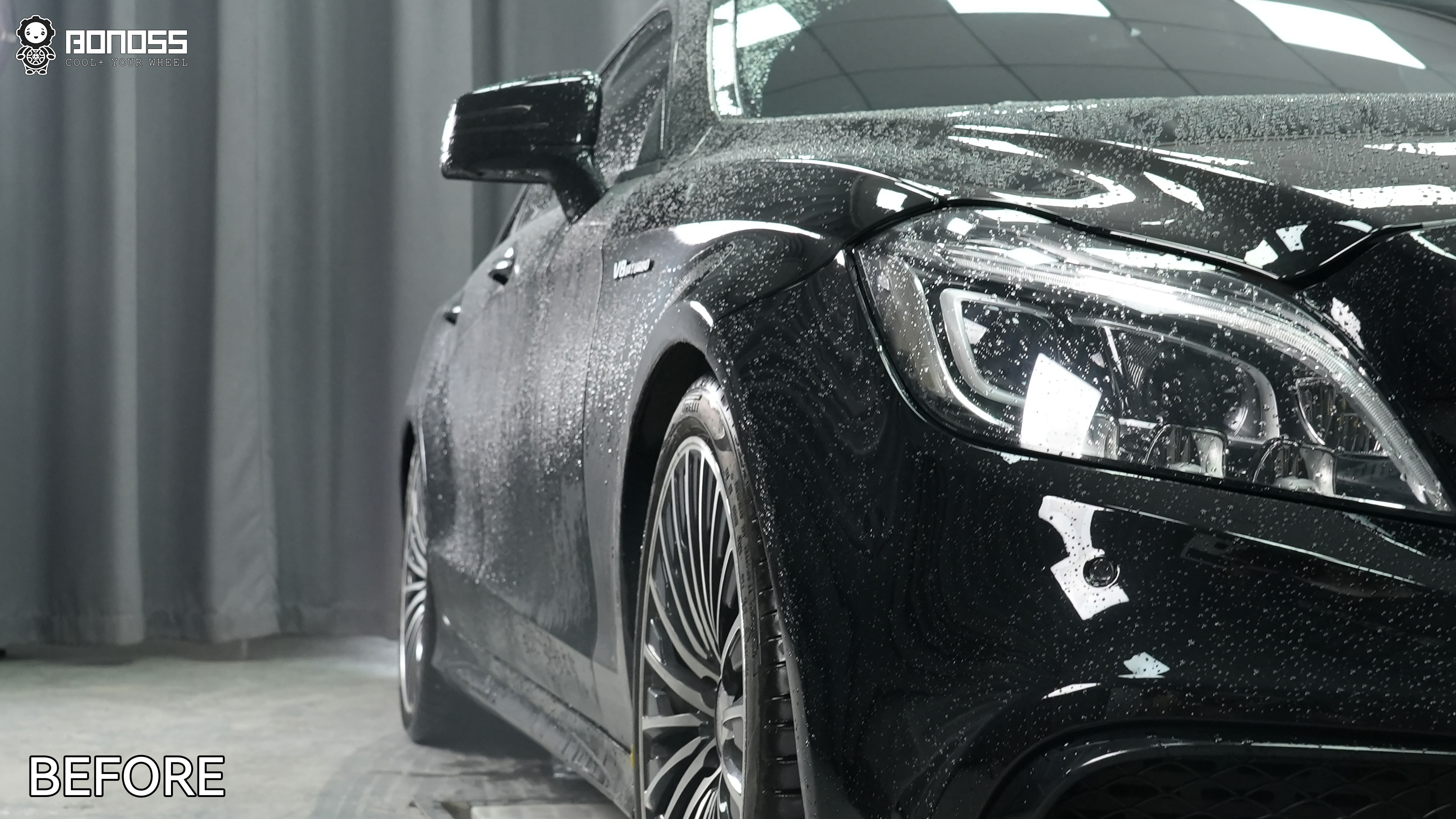
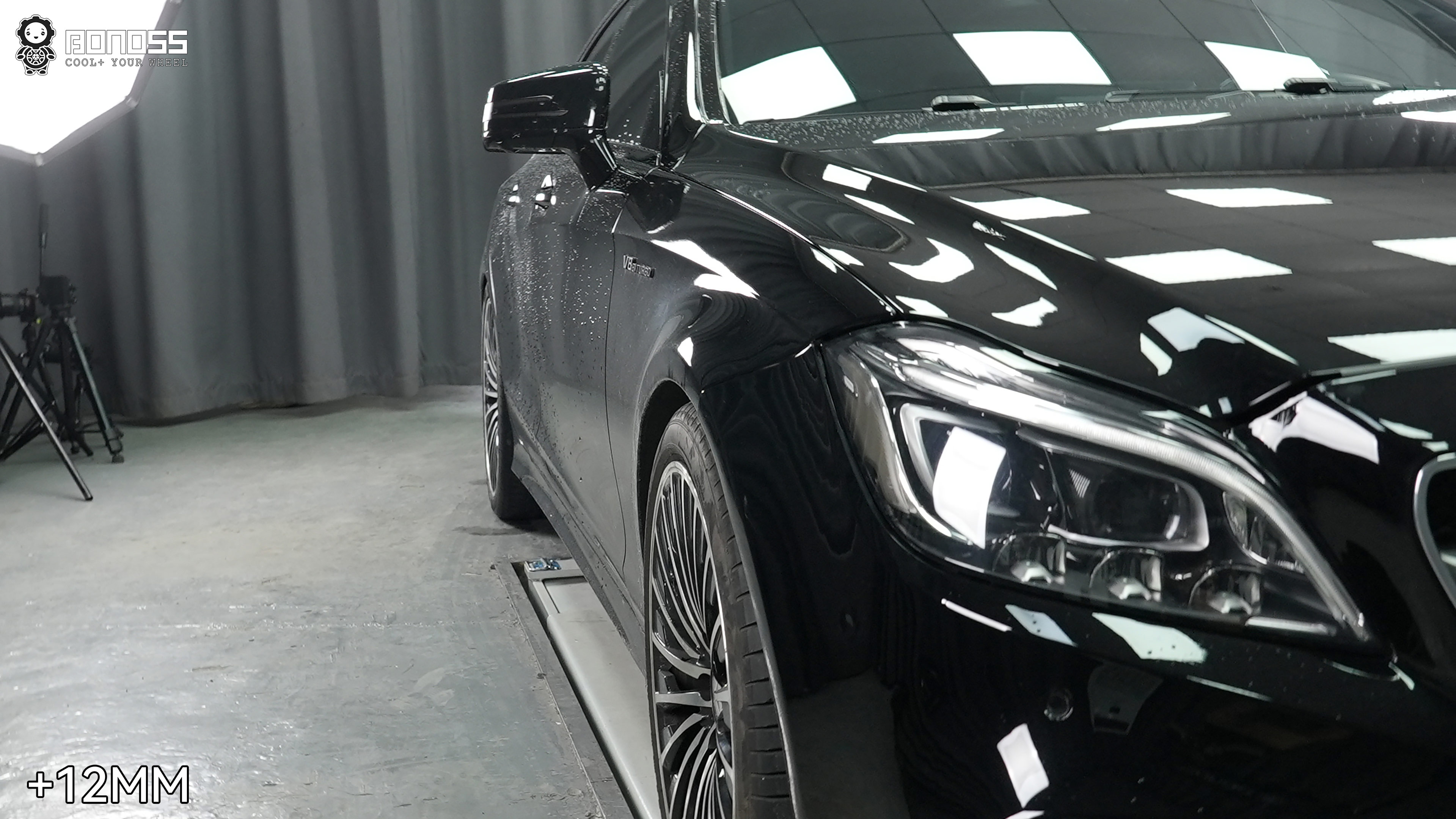
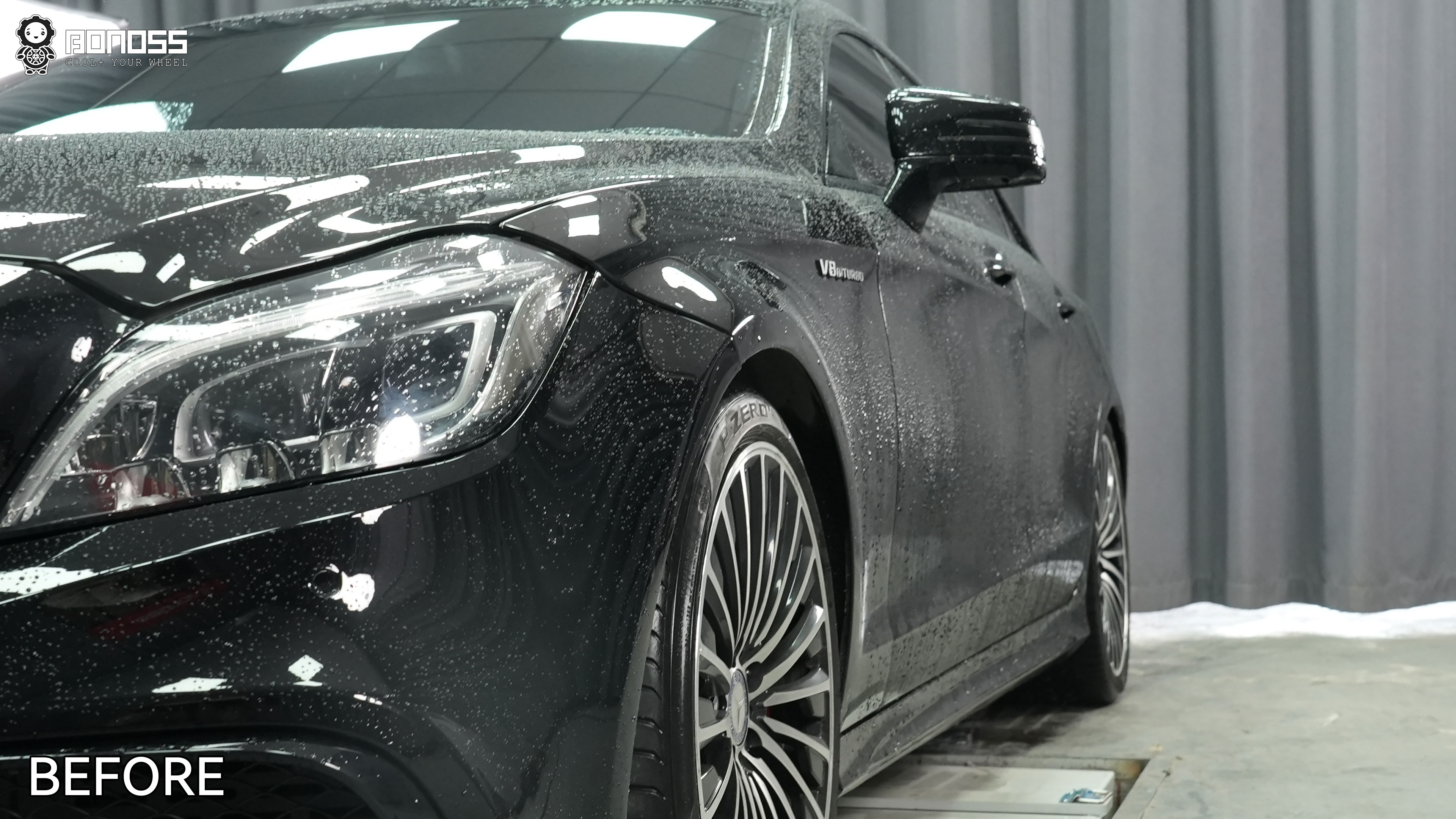
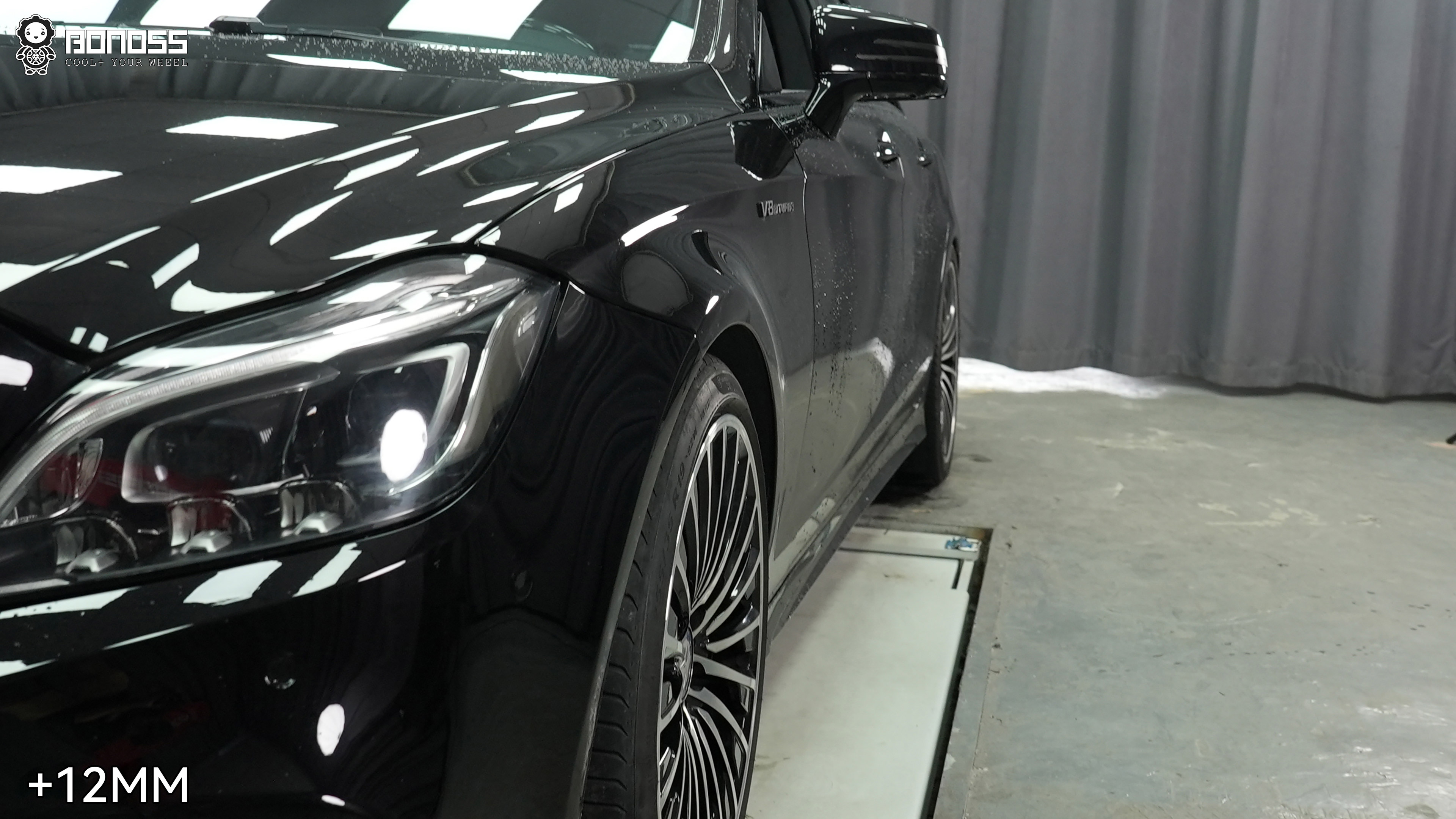
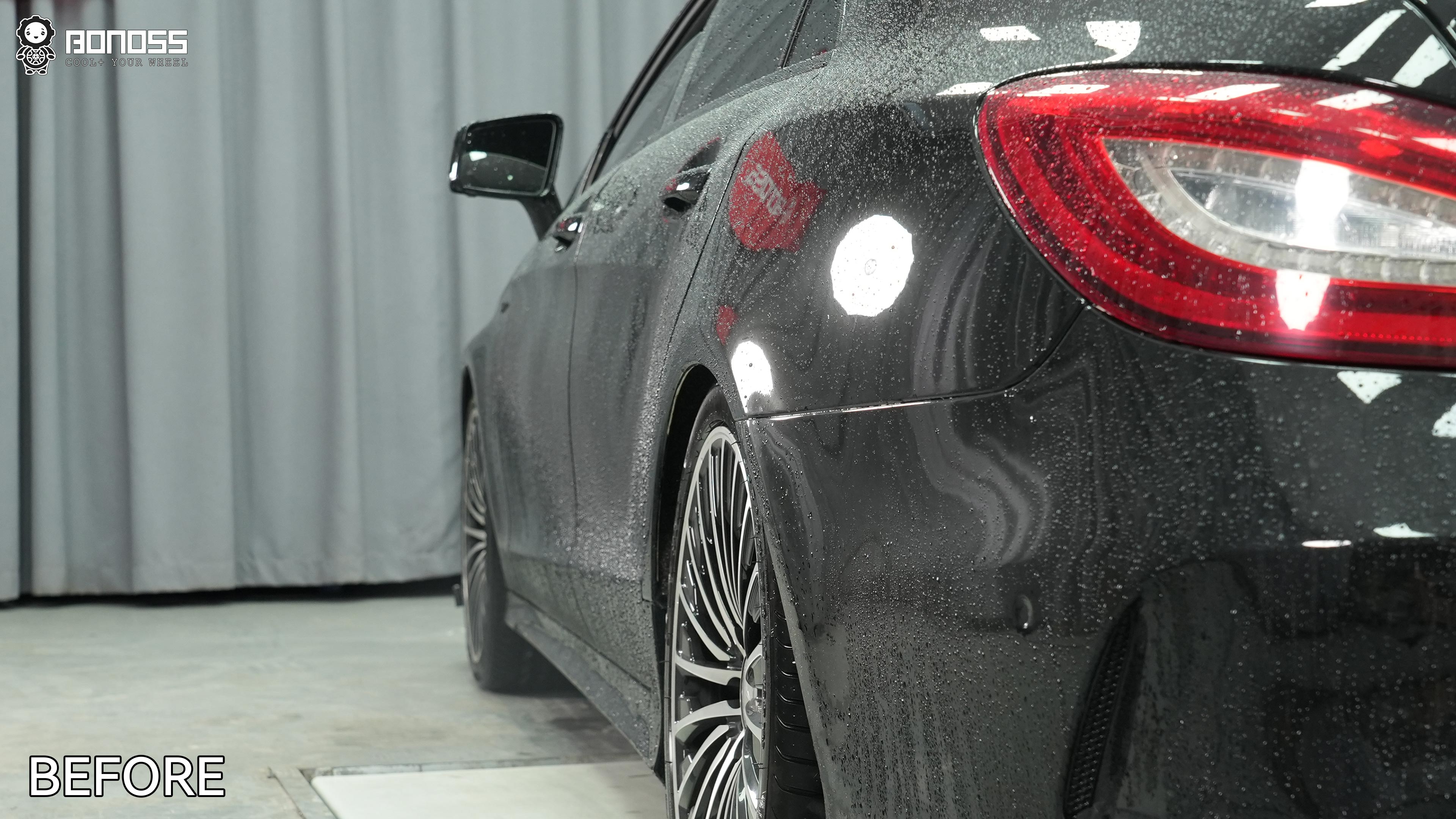
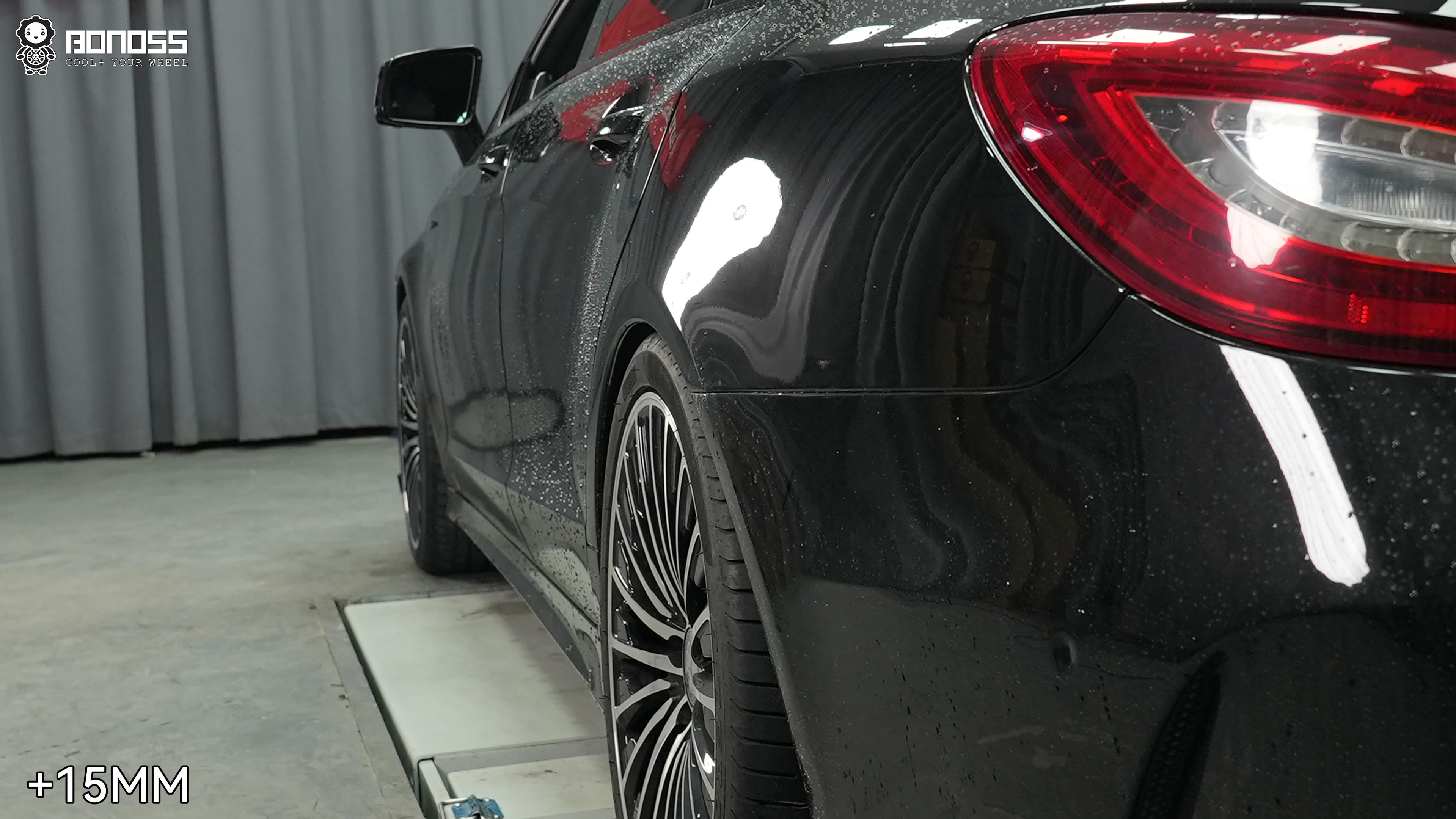
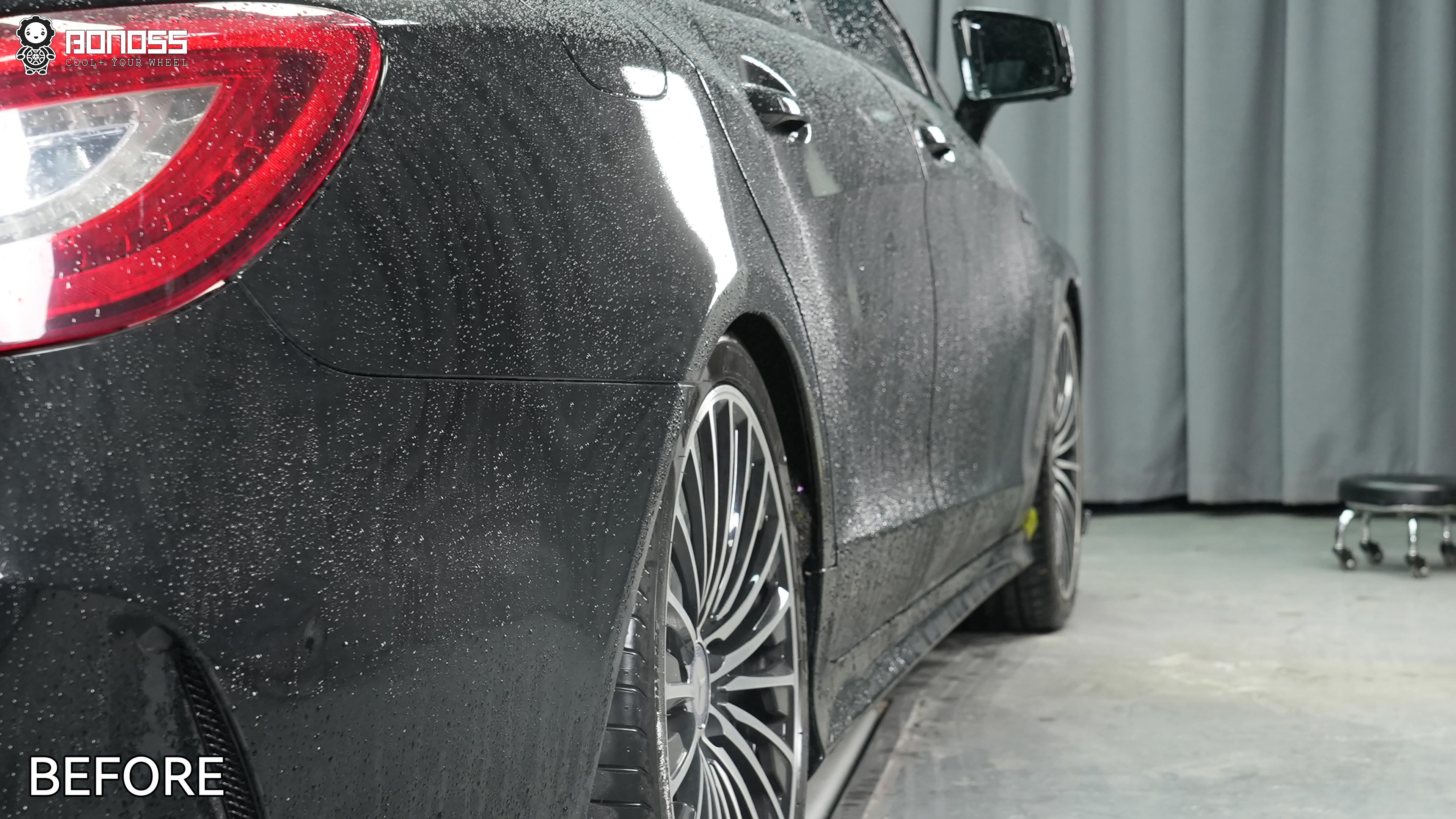
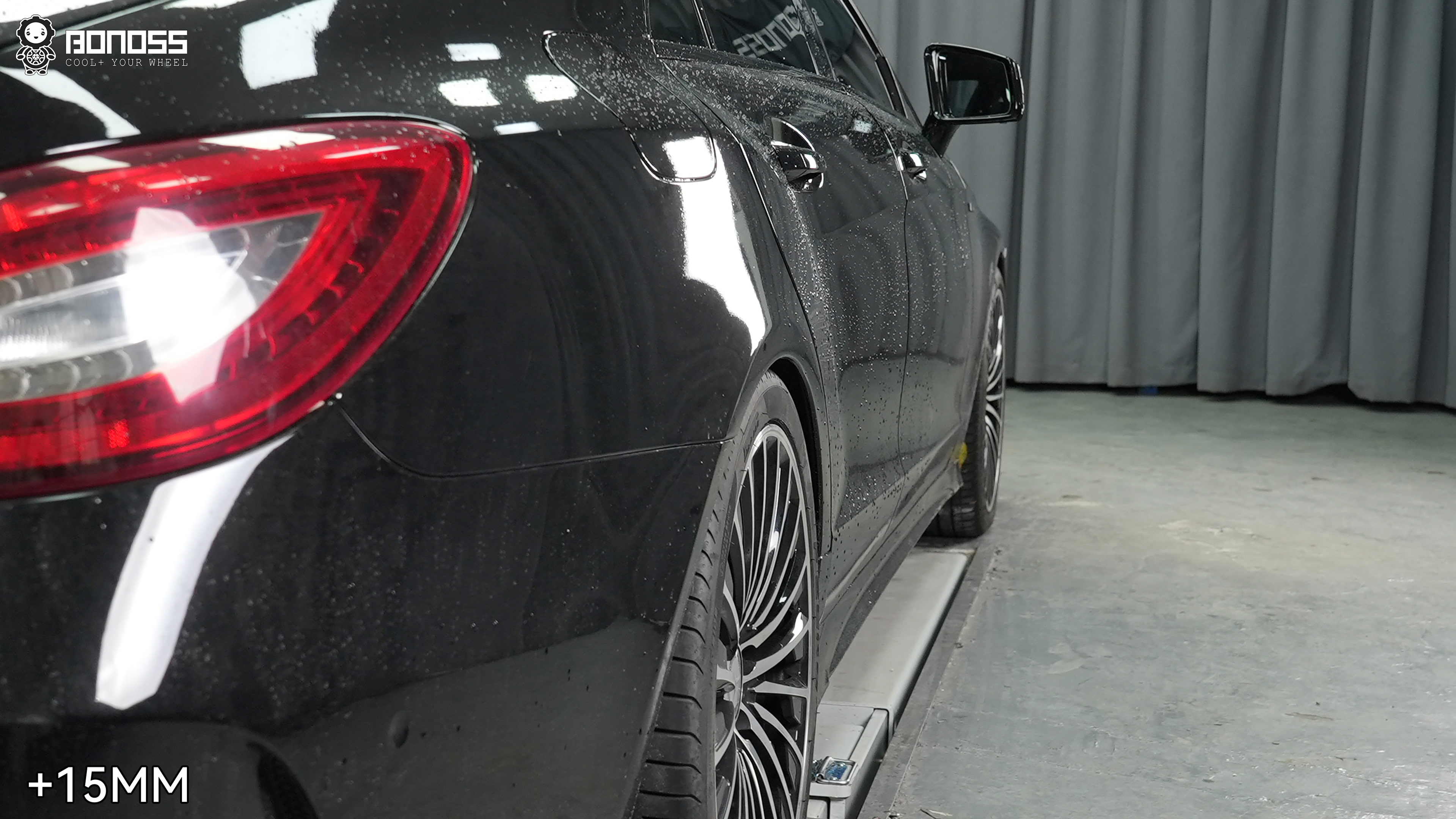
The before-and-after tells the whole story: the same wheel goes from sunken to flush without the tire poking past the arch. This is the “12mm vs 15mm” question answered with a real car instead of a forum guess. The wider track width is a mild bonus — a touch more lateral stability — but the actual point was the stance.
Extended Bolts: The 27mm That Forced a Swap
Add a spacer and you add distance between the wheel and the hub, which means the factory bolts no longer reach far enough to engage the threads properly. On Brown’s CLS the factory bolts measured 27mm of thread below the contact surface. Do the arithmetic: 27mm + 12mm = 39mm for the front, and 27mm + 15mm = 42mm for the rear.
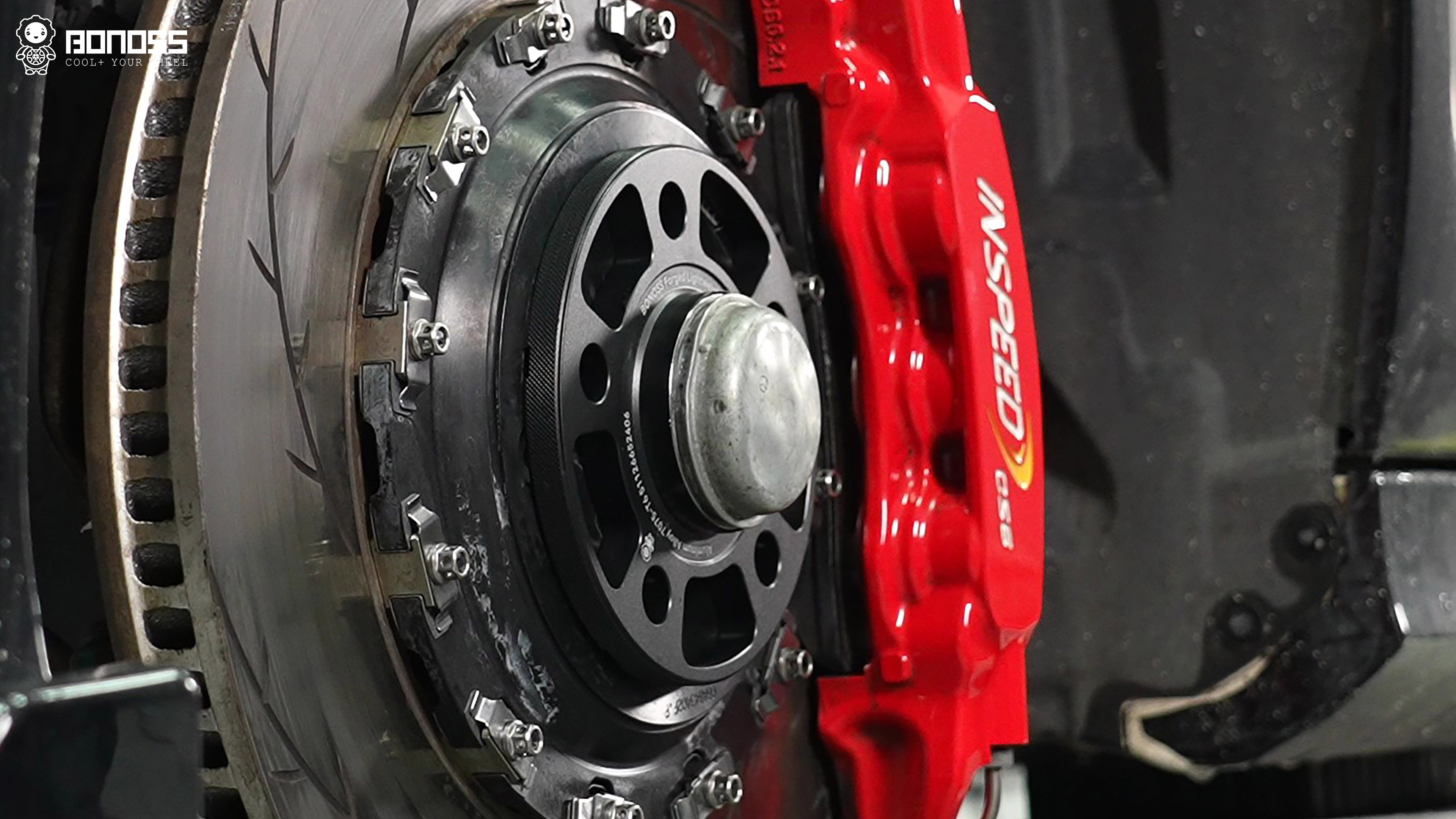
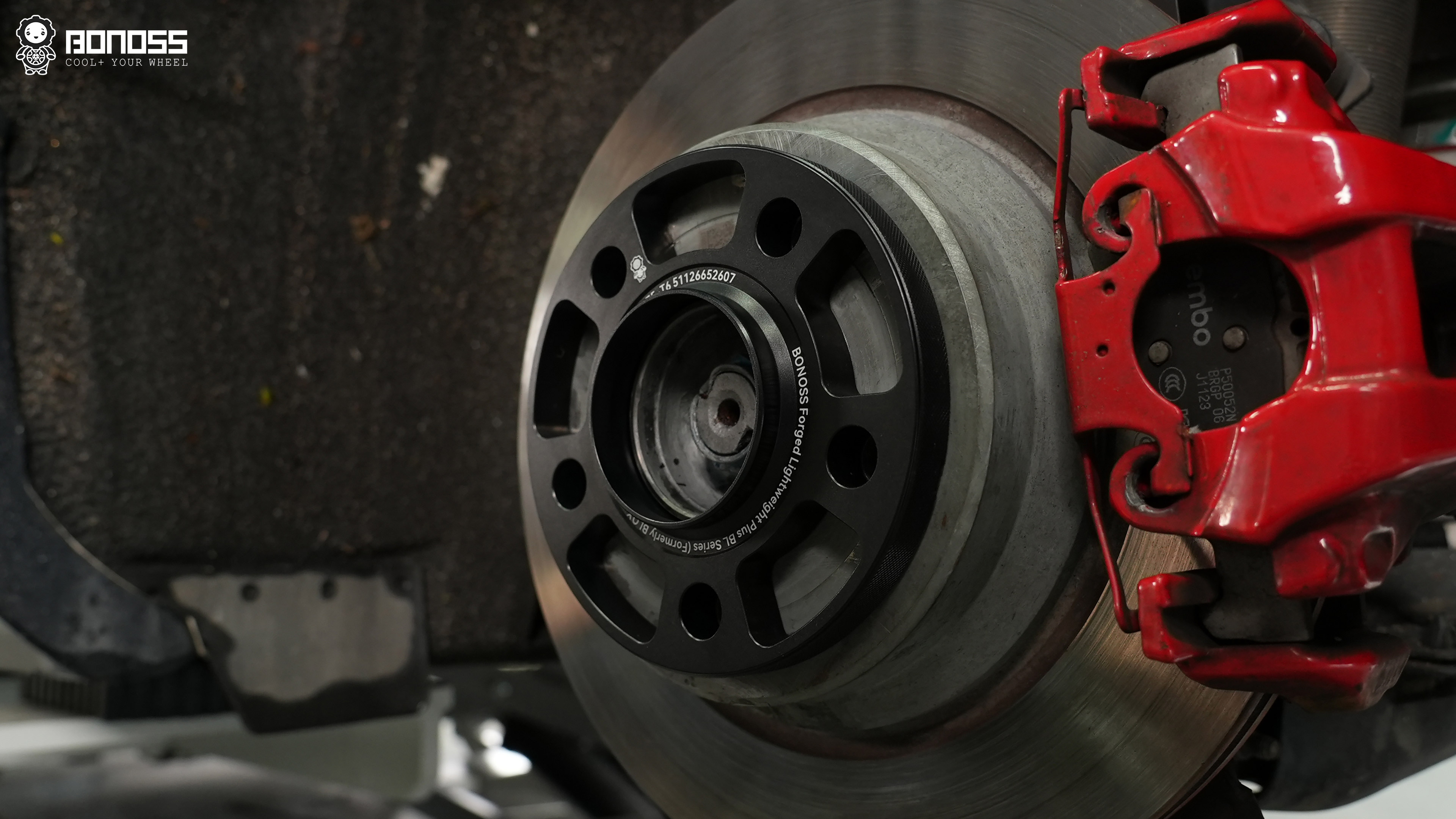
So yes, you need longer bolts, and the lengths are specific: 39mm up front, 42mm out back, both in M14 x 1.5 with the R14 ball seat to match the CLS’s stock seating and a 17mm hex socket. These are ISO Grade 12.9 extended wheel bolts, and the paperwork backs them up — SGS tensile testing at 1236 MPa, proof load of 121 kN, and a two-million-cycle limited-life test (SGS tensile report), plus TÜV Rheinland tensile at 1273 MPa and a 192-hour neutral salt spray (TÜV salt spray report).
A note on those numbers so nobody gets confused. Test results vary between labs, between samples, and with measurement error. Bolt and nut figures also differ because they engage threads differently, and M14 x 1.5 data won’t match M14 x 1.25. The figures above are for the exact parts on this car; the full certification reports are linked, and that’s what you should check.
11,386 Miles Later: Zero Vibration, All Bolts Intact
Brown’s feedback is the part that actually matters. In his words:
“All four spacers fit perfectly. Ran me $328.98 total for parts and labor. The staff was super helpful and friendly too. Plus the parts come with a 10-year warranty. I was happy with the install overall.”
“Their thin hub-centric design clears the hub protrusion, which is great because I wasn’t tryna deal with vibrations.”
“Put BONOSS spacers on my ’17 CLS. 11k miles later, still running perfectly—zero vibrations. Bolts, bearings, all good. Really happy with how smooth the whole process was.”
That last quote is the one to weigh: 11,000-plus miles, zero vibrations, bolts and bearings all good. Vibration is the thing everyone worries about with spacers, and it’s the thing this car doesn’t have — because the spacers are hub-centric, concentric to a 0.02mm tolerance, and running the correct-length bolts at a single consistent torque.
What These Spacers Did — and What They Didn’t
Be clear-eyed about what you’re buying. The spacers gave this CLS a flush stance, cleared the front hub protrusion, and held that result for over 11,000 miles with no vibration. They’re also reversible — unbolt them and the car is stock again.
What they didn’t do: they didn’t change the wheel’s offset (the wheel does that), didn’t fix any suspension geometry, and the track-width gain is a mild handling benefit, not a transformation. If you’re after a stance fix and a vibration-free result, this is the tool.
Misconceptions Worth Clearing
- “Any 12mm spacer fits a CLS.” No. The 26.54mm front hub protrusion rules out standard 12mm hub-centric spacers. You need a thin hub-centric design.
- “You need a 30mm spacer to clear the dust cap.” No. That was the trap Brown almost fell into. 30mm clears the protrusion but pokes the wheel out. The thin hub-centric 12mm clears it without overshooting.
- “Extended bolts are optional at 12mm.” No. The factory bolts have 27mm of thread below the contact surface. At 12mm you need 39mm, at 15mm you need 42mm.
- “Spacers always cause vibration.” Only lug-centric spacers with a loose center bore do that. A hub-centric spacer machined to the correct 66.5mm bore, on the right bolts, doesn’t. This car is the proof.
How to Buy the Right Set for Your W218
The spec that matters on a CLS is narrow, so buy to it: 5×112 PCD, a 66.5mm hub bore, M14 x 1.5 threads with an R14 ball seat, and forged 7075-T6 aluminum (TÜV hardness-tested at 146 HBW — report). Match your extended bolts to the spacer thickness, and check the seller’s test reports before you pay. For a fuller walkthrough of the options, how BONOSS Mercedes spacers compare is explained here. The hub-centric, 5×112 spacers built for the W218 are the direct fit for this car.
FAQ
Are 12mm spacers safe on a 2017 Mercedes-Benz CLS?
Yes, when they’re hub-centric, matched to the 5×112 PCD and 66.5mm bore, and installed with the correct extended bolts and torque — this car has run them for 11,386 miles with zero vibration. The one exception is the front hub: only a thin hub-centric 12mm spacer clears the 26.54mm protrusion, so a generic 12mm won’t even seat.
Do I need extended lug bolts for 12mm spacers on a CLS?
Yes. The factory bolts have 27mm of thread below the contact surface, so a 12mm spacer needs 39mm bolts and a 15mm spacer needs 42mm bolts, in M14 x 1.5 with an R14 ball seat.
Will 12mm spacers rub on a 2017 CLS W218?
Not if you measure per corner. On this car, 12mm front and 15mm rear produced a flush fit with no rub. Assuming a square 12mm set would have left the rear tucked; a 30mm set would have poked.
What torque should I use for Mercedes CLS wheel spacers?
Pick one value for the whole install: 140 Nm (103.5 ft-lb) per BONOSS instructions with BONOSS extended bolts, or 130 Nm (96 ft-lb) per the owner’s manual with OEM bolts. Don’t mix them.
Does a 15mm spacer have a hub lip?
Yes. A hub-centric 15mm spacer carries its own hub lip to center the wheel, and it clears the CLS rear’s normal 8.76mm lip without issue. The rear uses a standard multi-stage hub-centric spacer.
Can I install wheel spacers on a CLS myself?
Yes, if you can safely lift the car and have a torque wrench. The measurements matter more than the wrenching — verify your hub bore, protrusion height, and bolt length first, then torque every lug to one consistent value. If you’re unsure about the hub measurements, have a shop do them.
The Bottom Line
The 2017 Mercedes-Benz CLS 12mm spacers question comes down to one detail most listings never mention: the 26.54mm front hub protrusion. Standard 12mm won’t clear it, 30mm will overshoot, and the thin hub-centric design lands exactly in between. On Paul Brown’s W218, that meant a flush stance on 12mm front and 15mm rear spacers, correct 39mm and 42mm extended bolts, and 11,386 vibration-free miles. Total cost for this exact setup: $328.98 — $150.99 for the 12mm set with 39mm bolts, $157.99 for the 15mm set with 42mm bolts, plus $20 labor. If you’re shopping quality Mercedes-Benz CLS spacers, buy to the spec — 5×112, 66.5mm, M14 x 1.5 — and read the details in our Mercedes-Benz wheel spacers safety guide before you torque a single bolt.

About Daisy Harris
Daisy Harris has worked for 6 years at BONOSS as an automotive technician, installing and testing wheel spacers, wheel nuts, and wheel bolts. She has personally installed and verified more than 200 wheel-spacer setups across sport sedans, SUVs, and EVs. Her installation guides and reviews are built on real installs, measured clearances, and long-term wear notes — not on spec sheets.