“10mm won’t fit. Not front, not rear.”
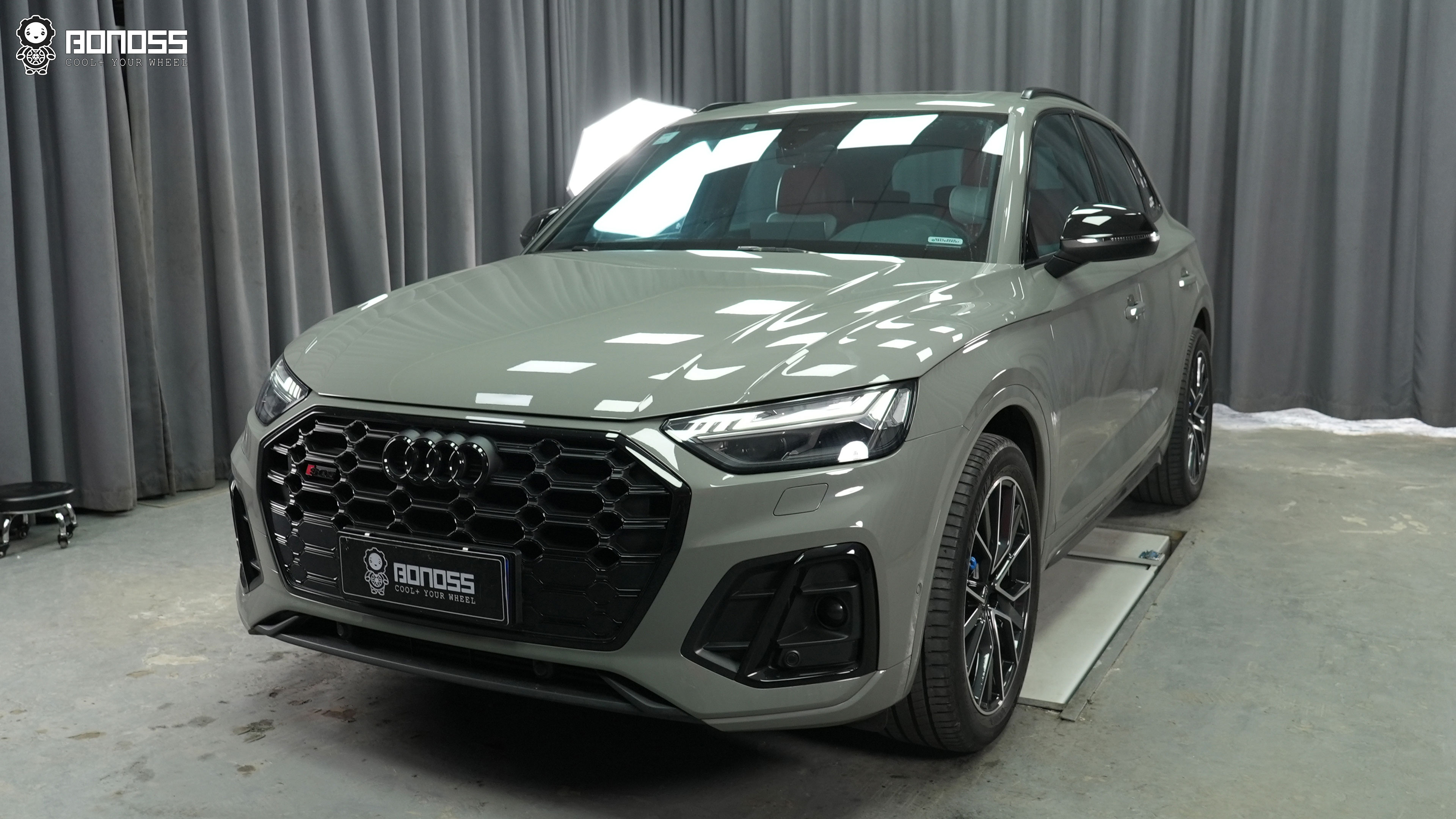
That’s the sentence that started this job, and it’s probably the reason you’re reading this. A customer rolled up to the shop with a box of 10mm and 12mm wheel spacers, planning a tidy 10-front / 12-rear stagger on his 2021 Audi SQ5. Twenty minutes later, he’d learned what we tell people in here every single day: on this car, the hub lip does not care about your plan.
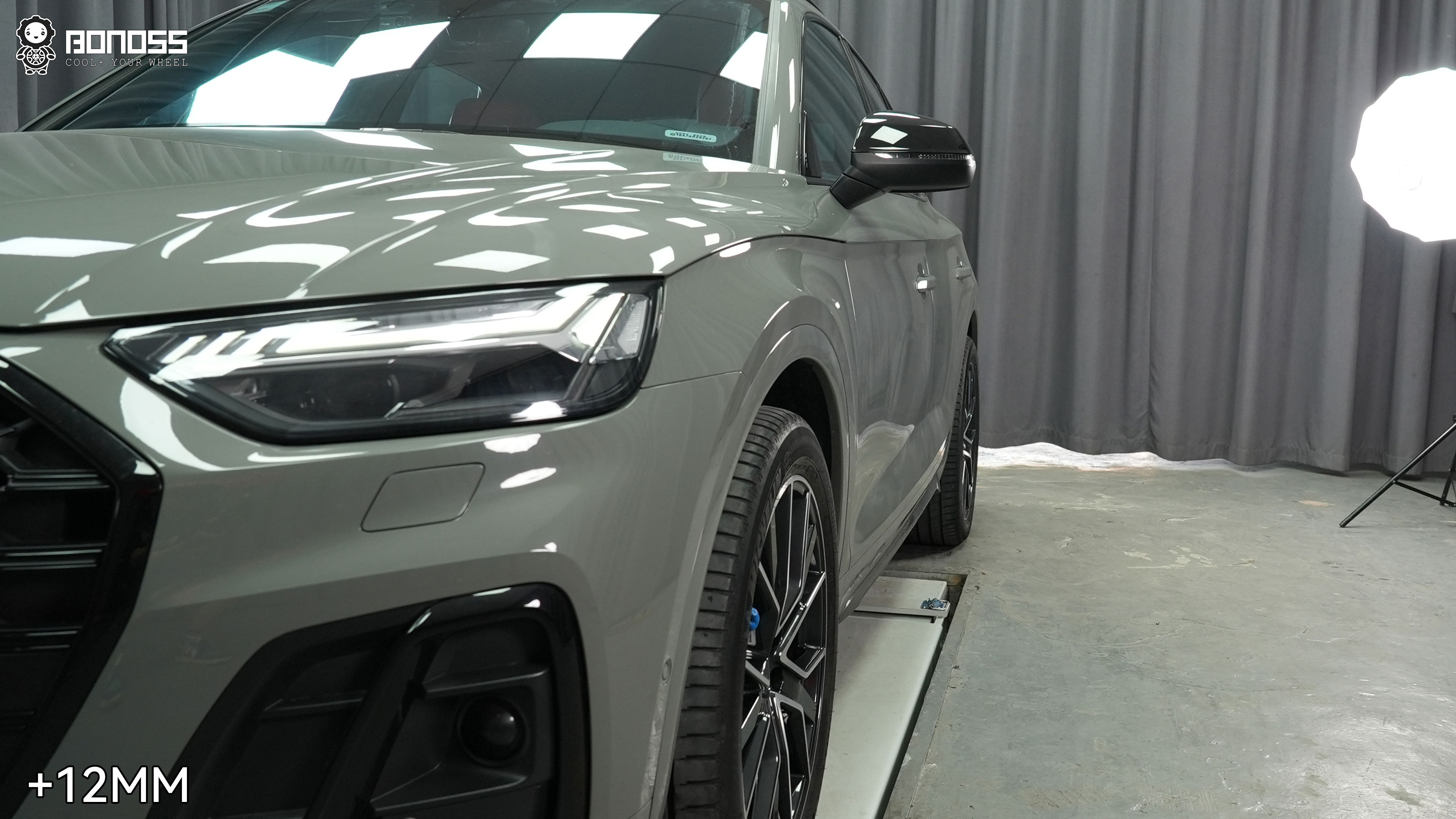
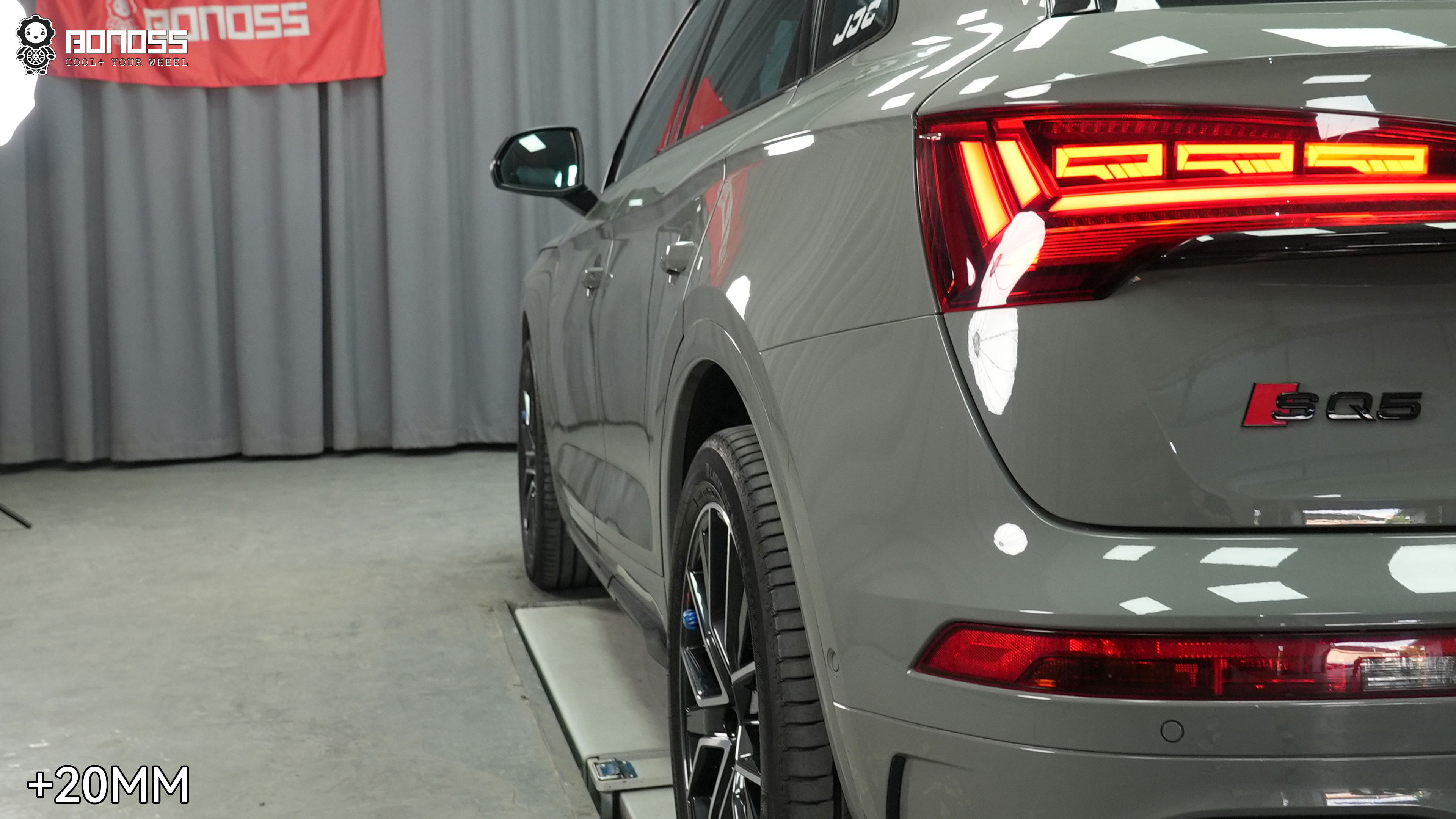
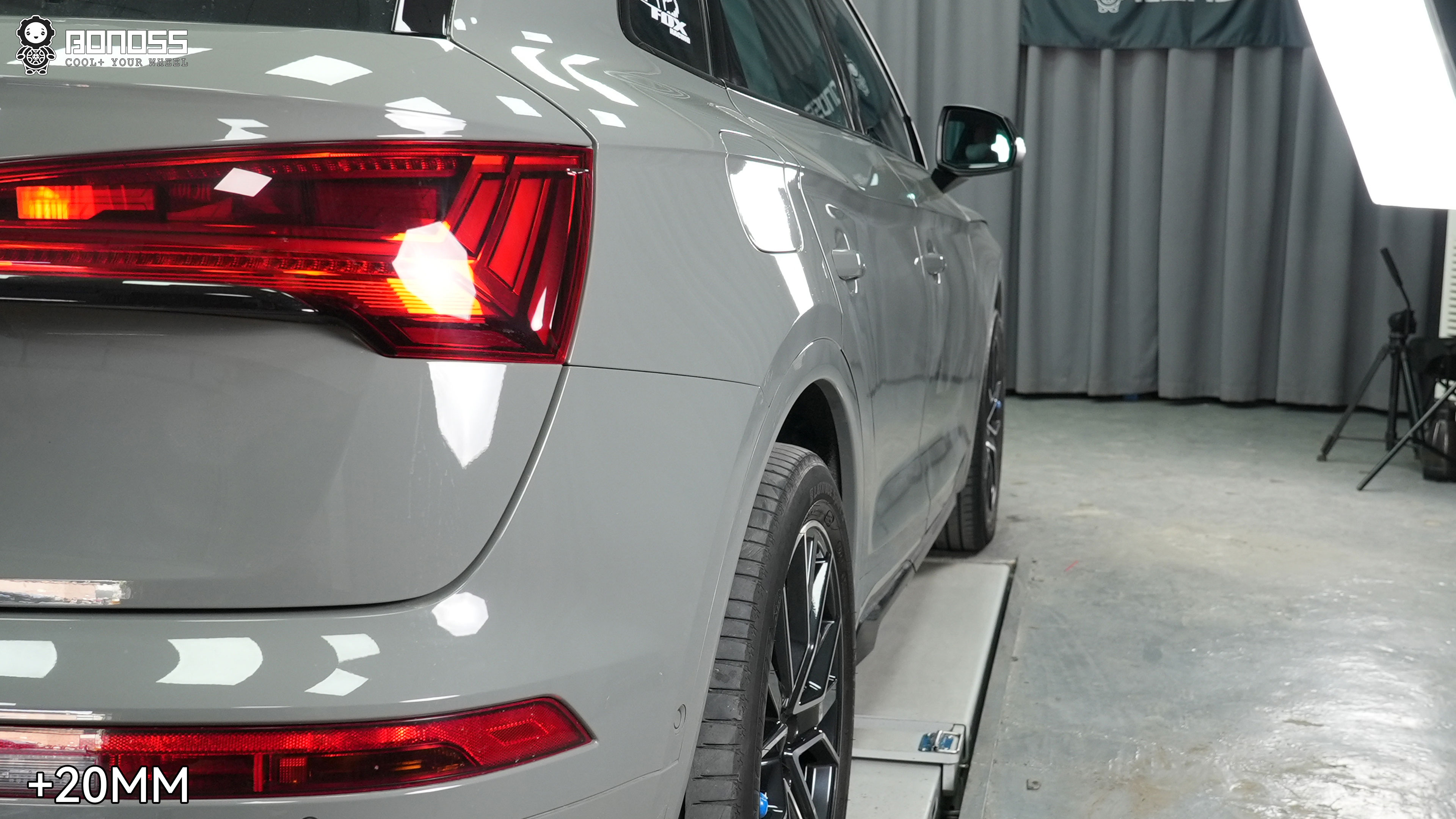
Here’s the short version so you can skip the same mistake. On the SQ5, a 10mm spacer physically will not clear the front hub lip — and it won’t clear the rear one either. The lip is just too tall. This car wants hub-centric spacers, full stop. We measured, and the setup that actually worked was 12mm up front and 20mm in the rear — forged, lightweight, multi-stage hub-centric, no vibration, with the rear sitting exactly flush and never touching the fender. That’s the whole job in a paragraph. Keep reading for the numbers, the photos, and the one thing most people get wrong.
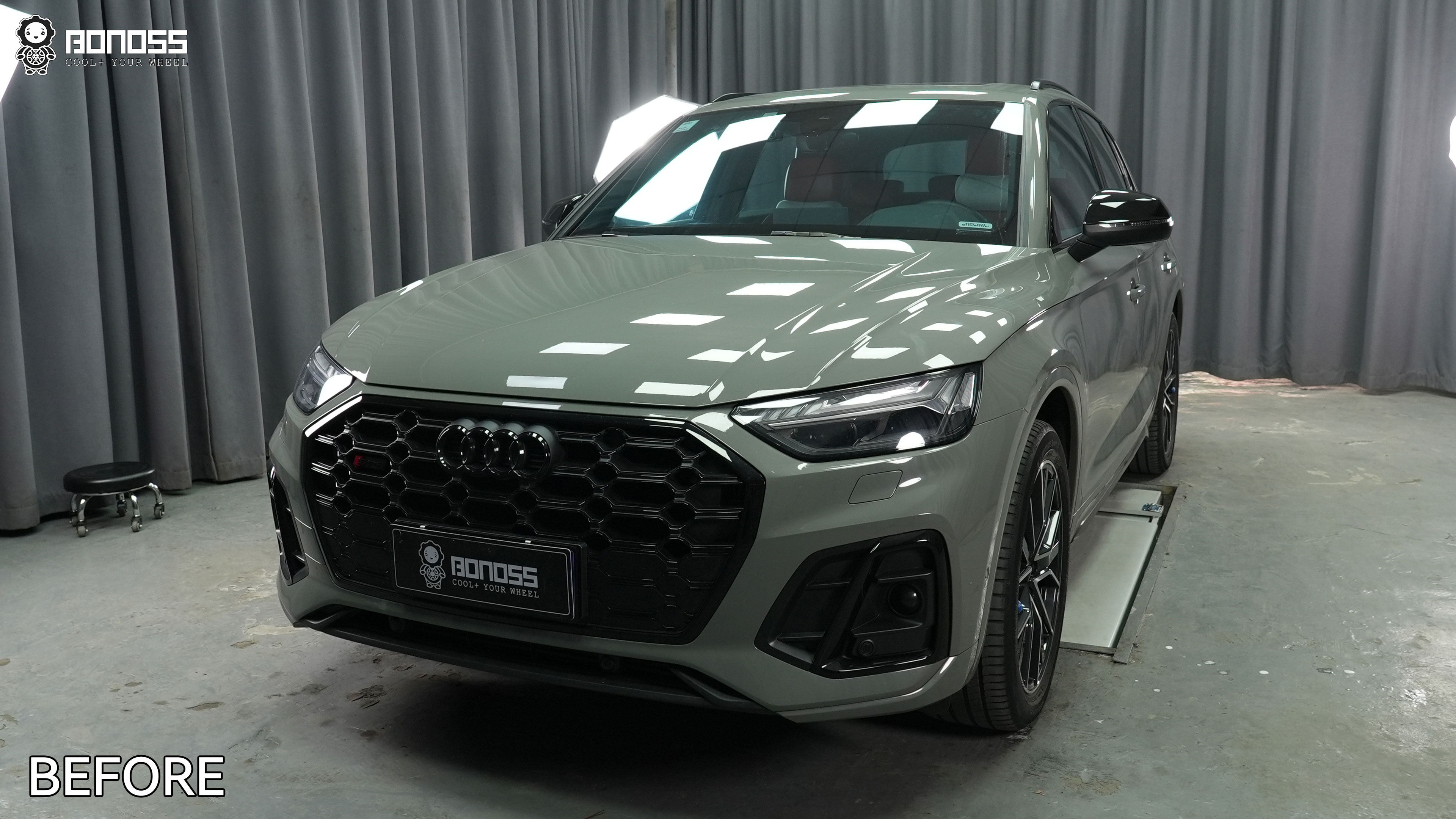
The owner, the car, the numbers
- Owner: Barry Smith
- Job: Senior Software Engineer
- Vehicle: 2021 Audi SQ5 (FY), factory-spec, unmodified
- Wheels: 255/45R20, factory ET+39 offset
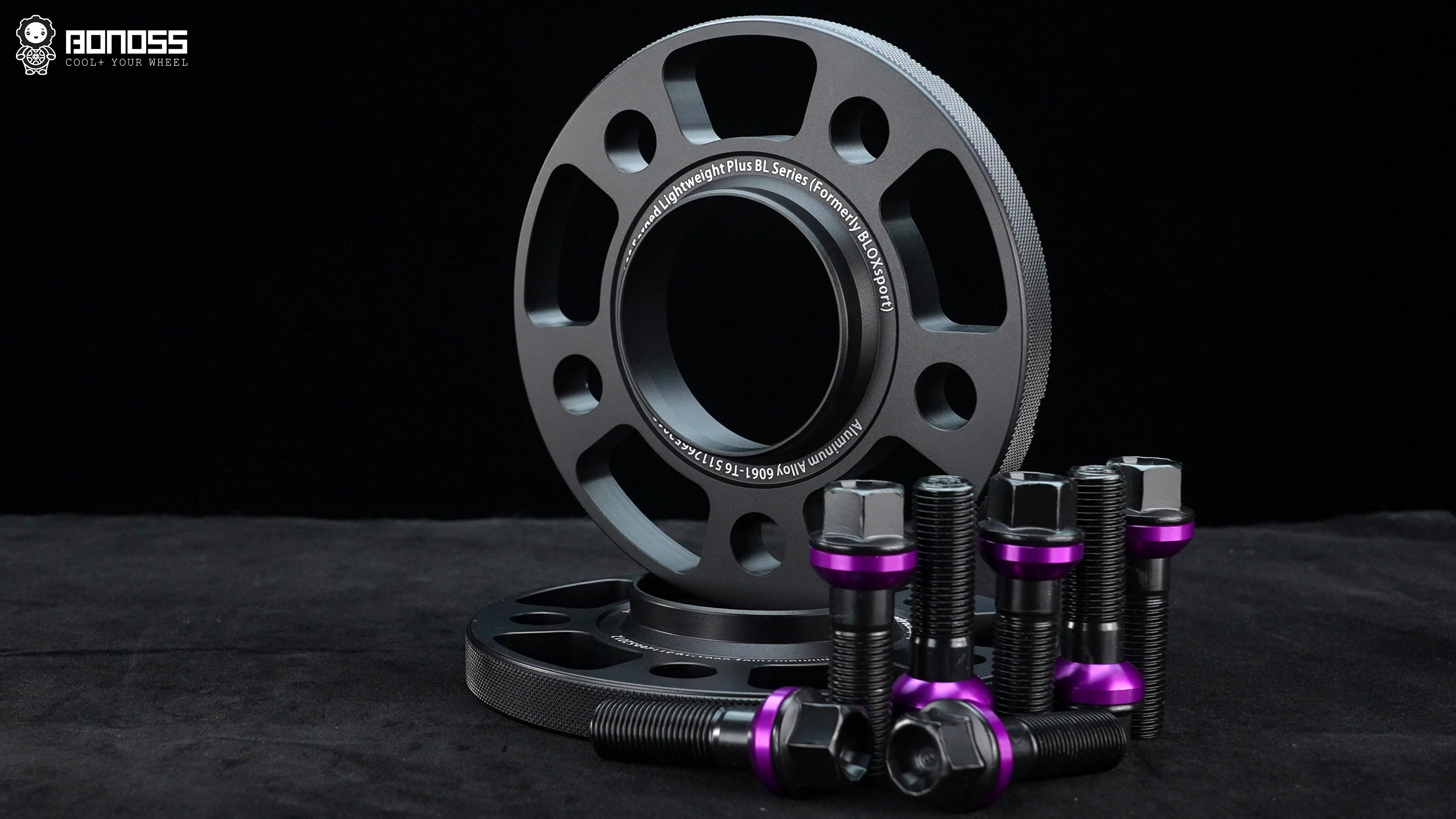
- Spacers installed: 12mm front / 20mm rear — BONOSS forged lightweight plus, multi-stage hub-centric
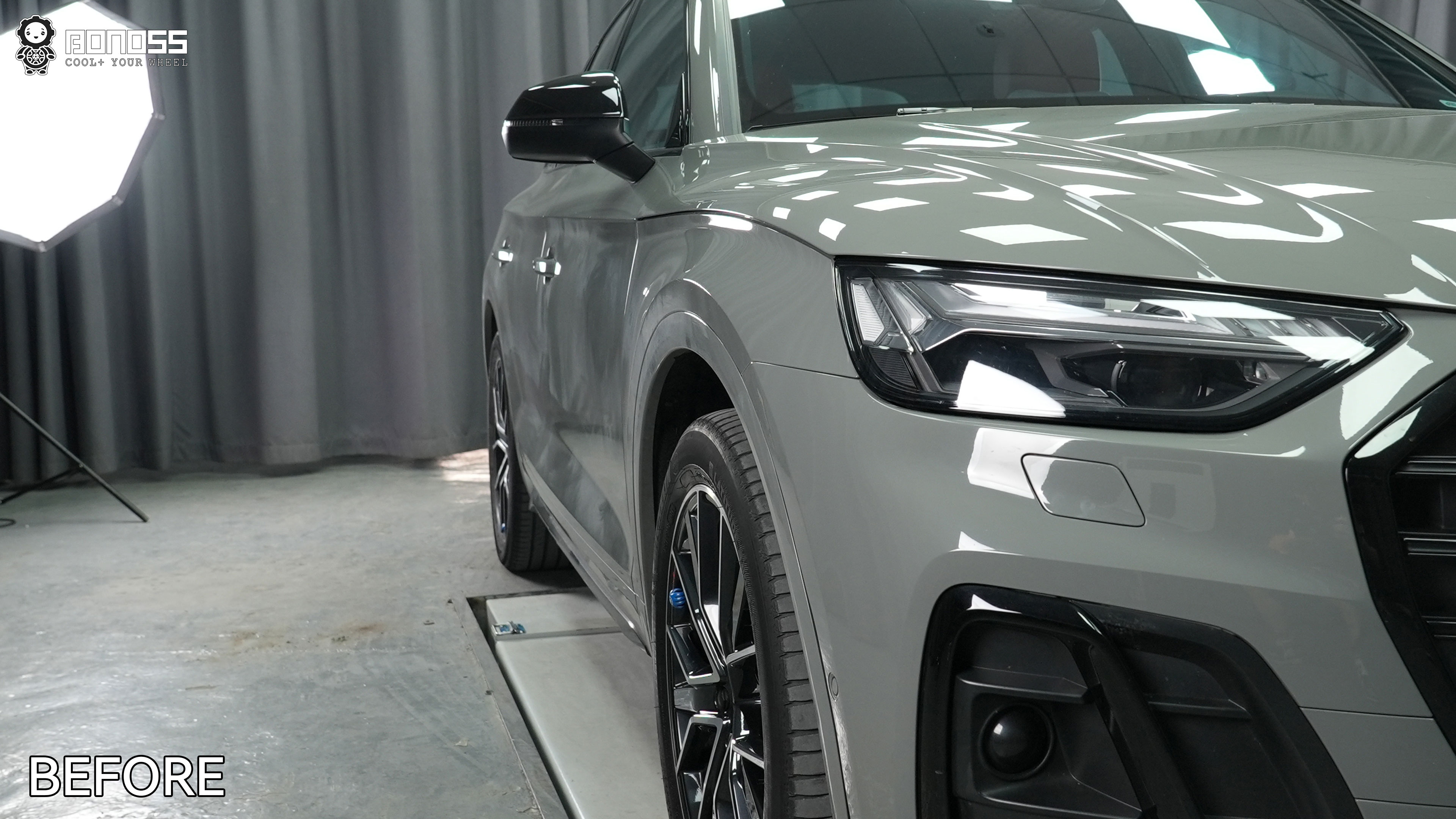
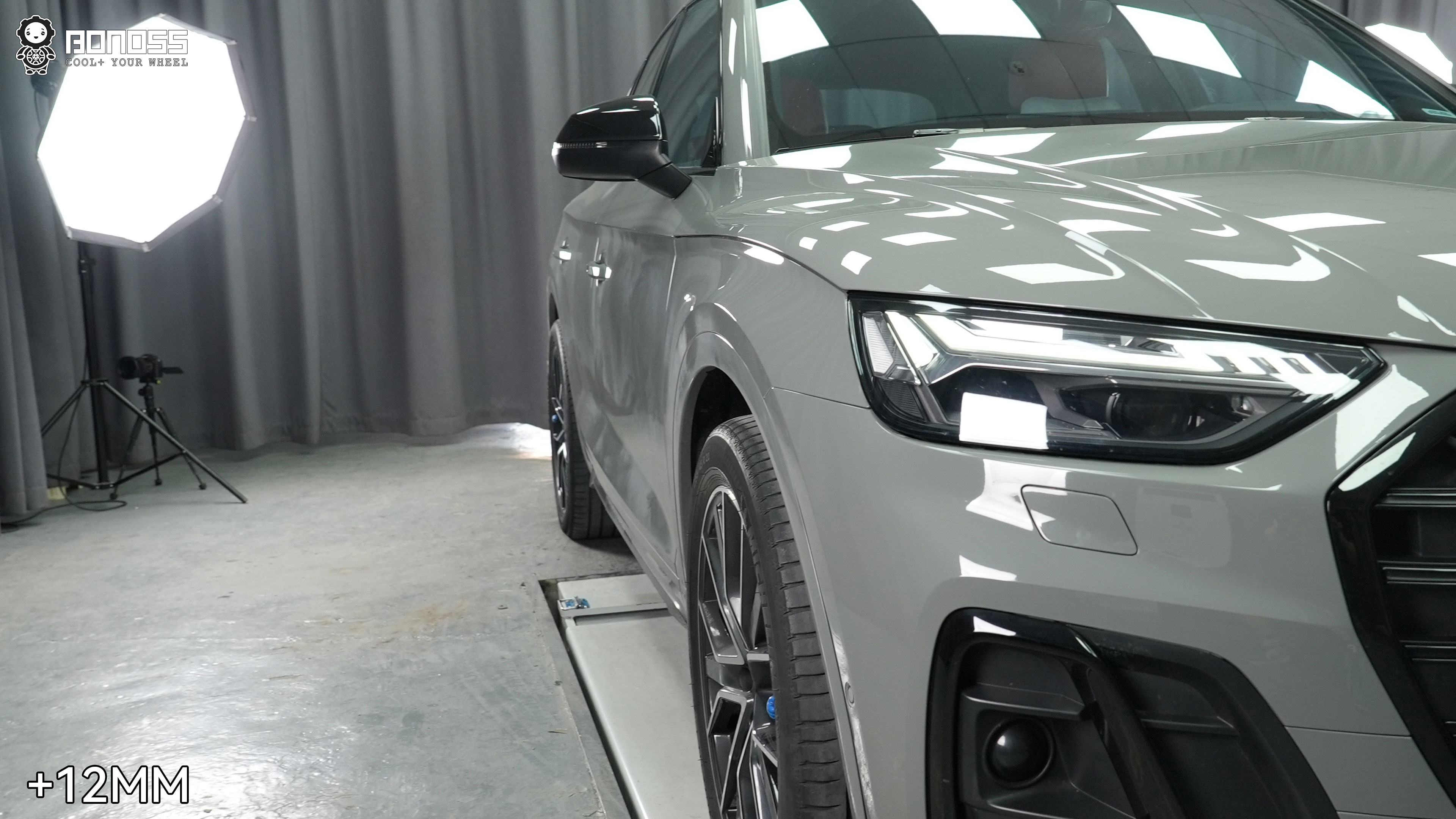
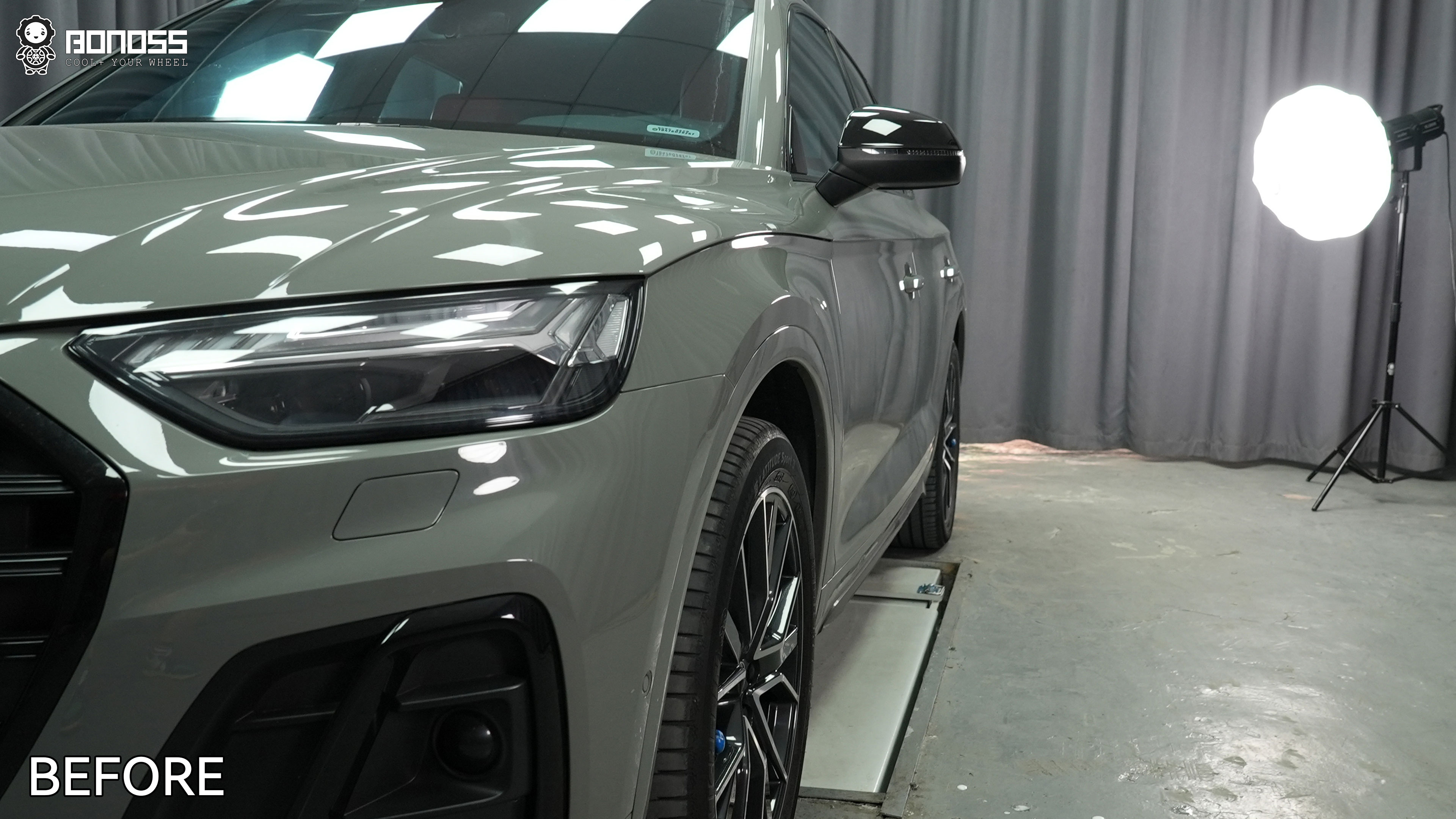
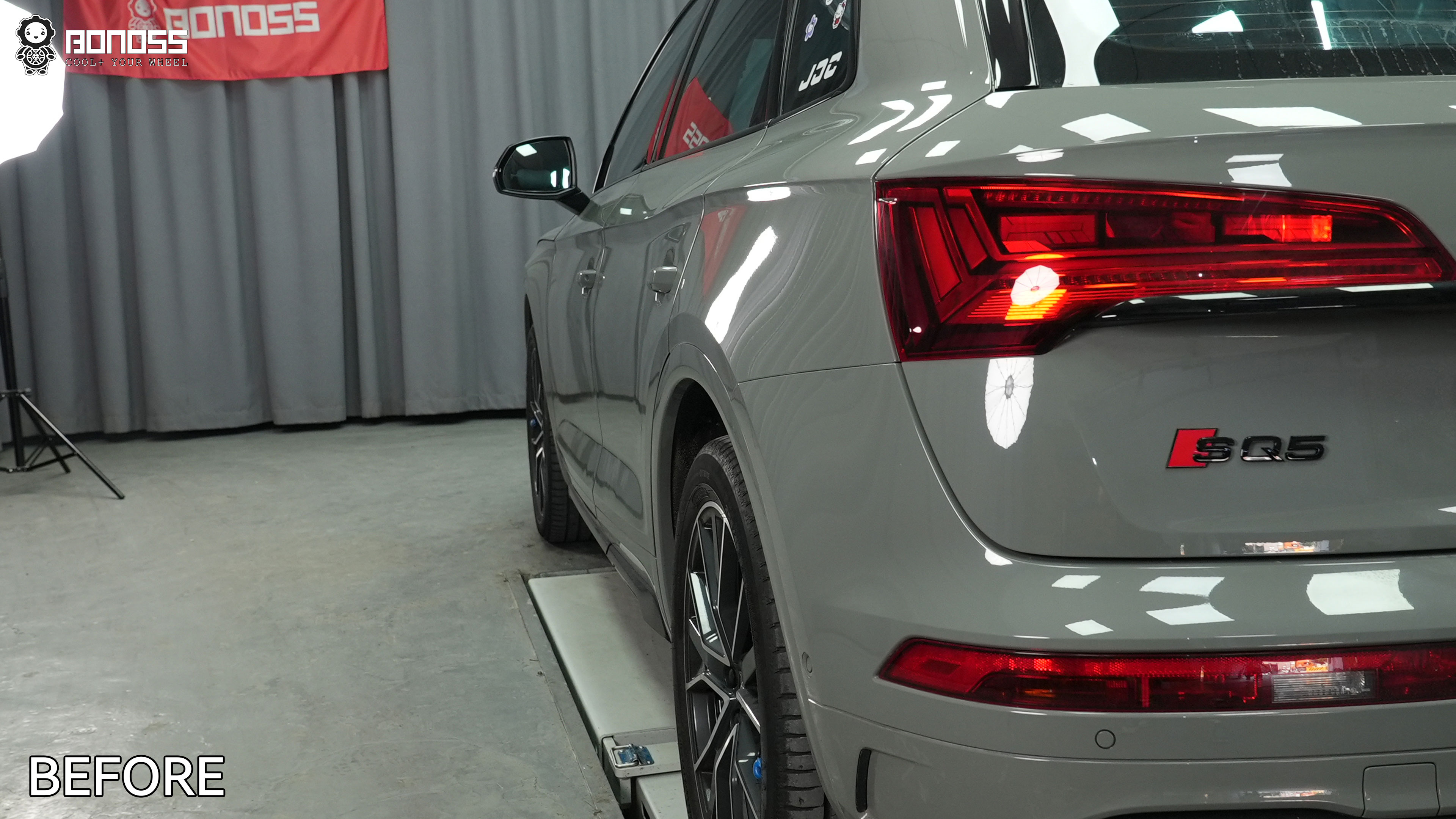
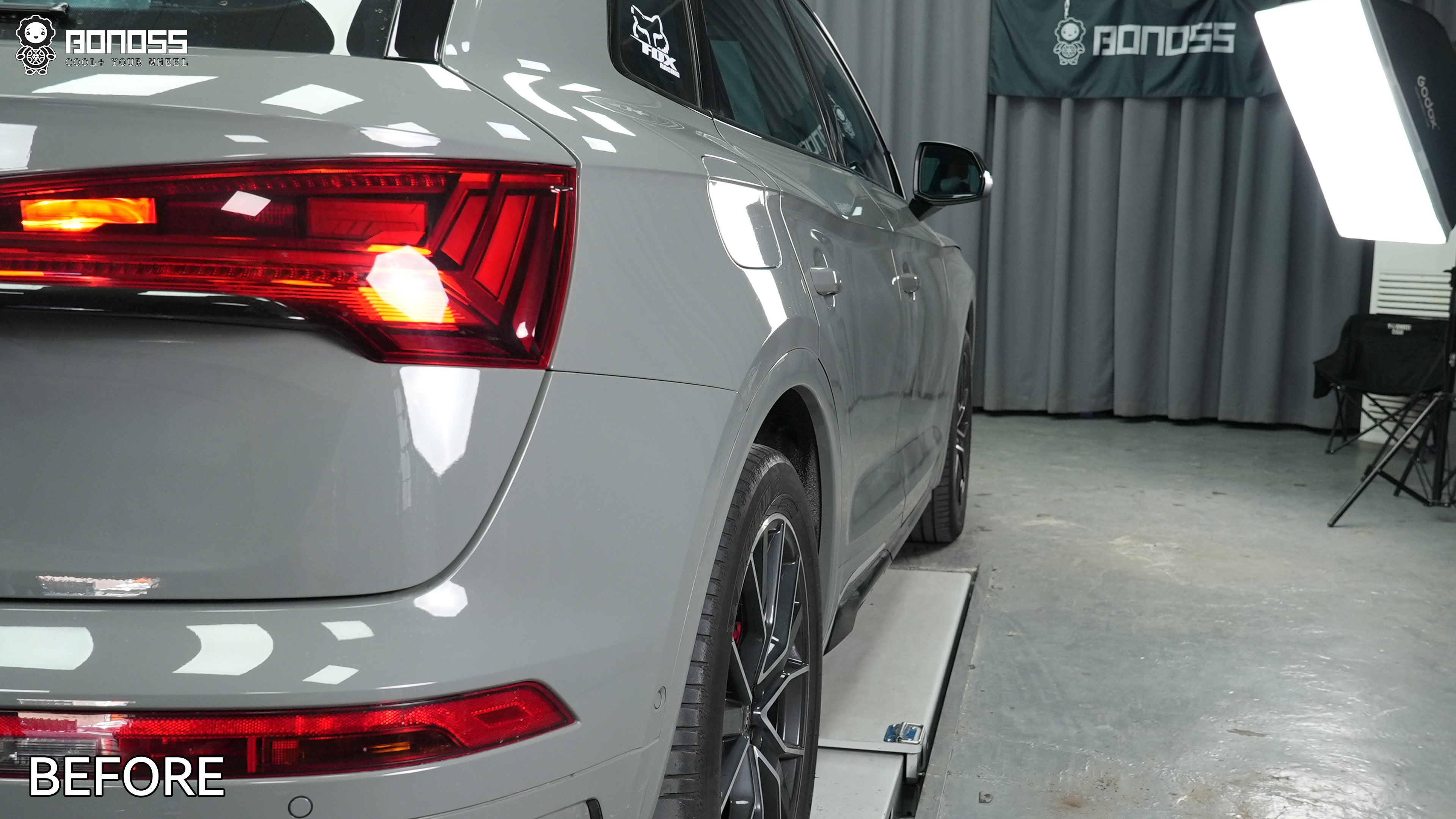
- Result: Front ET+27, Rear ET+19, flush and rub-free
- Install date: November 20, 2025
- Install time: about an hour
Why this install is worth writing down
A software engineer walks in with a theory and a box of parts. We see that every week. What made this one worth writing down is that he did the single most common thing buyers do — and it’s the thing that costs them money.
He bought two sizes without measuring the hub first. That’s not a dig at him. It’s the number-one SQ5 fitment mistake we see, and it happens because people google “2021 Audi SQ5 wheel spacers,” grab whatever looks reasonable, and assume thin means safe. Thin doesn’t mean it fits. On a car with a tall hub lip, thin is exactly what fails. Barry’s case is a clean, honest example of why measuring before you buy saves you a return, a re-order, and a week of driving a car that looks half-finished.
So here’s the stance we’re taking, and we’ll own it: never run lug-centric spacers on this car. If a seller offers you a spacer that “fits anything,” they’re selling you the vibration you’ll feel at 75 mph. The SQ5 deserves a spacer that actually locates on the hub, and we measured ours to prove it.
How he found us (and what he tried first)
Barry didn’t land on BONOSS first. Like most owners, he started with a guess and a search.
His original plan was 10mm front, 12mm rear. He ordered both, pulled the front wheel, and the 10mm spacer wouldn’t sit flat against the rotor. He tried again, checked the back of the spacer, and realized the hub lip was bottoming out in the center pocket before the face ever touched the rotor. He swapped in the 12mm — that one seated perfectly. Then he moved to the rear, and the 10mm wouldn’t fit there either. Worse, the 12mm wouldn’t clear the rear hub lip.
Frustrated, he went back to Google and the forums, searching why his spacers wouldn’t seat. That search eventually dropped him onto an article we wrote about picking the right SQ5 spacer size, and after reading it, he reached out. In his own words:
“So yeah, 10mm spacers aren’t gonna fit front or rear. 12mm will work up front, but no dice on the rear. Ended up running 20mm in the rear, and honestly the flush look is exactly what I wanted.”
Why he picked BONOSS over the others
He didn’t just email us. He’d already talked to a couple of other spacer brands about the exact same problem, comparing answers. What tipped it wasn’t a discount or a flashy ad — it was the reply.
Here’s the difference. Other sellers wanted to ship him lug-centric spacers and call it a day. On paper, a lug-centric spacer “fits” anything because it doesn’t locate on the hub, so there’s no lip to hit. The catch? That’s exactly why they shake. A spacer that doesn’t seat on the hub center leans on the wheel bolts alone to hold everything concentric, and at highway speed “close enough” turns into a steering-wheel shimmy.
We told him the thing most sellers won’t: don’t do lug-centric on this car. Measure the hub, then pick the thinnest hub-centric spacer that clears the lip. That’s the whole philosophy, and it’s why he came to us.
There was one more factor. He’d already watched a couple of install videos on YouTube and liked how the BONOSS spacers were machined. So when the fitment math worked out and the price wasn’t absurd, he pulled the trigger.
The install, step by step
The real work started with a measuring tape and a set of calipers, because that’s the only way to do this right.
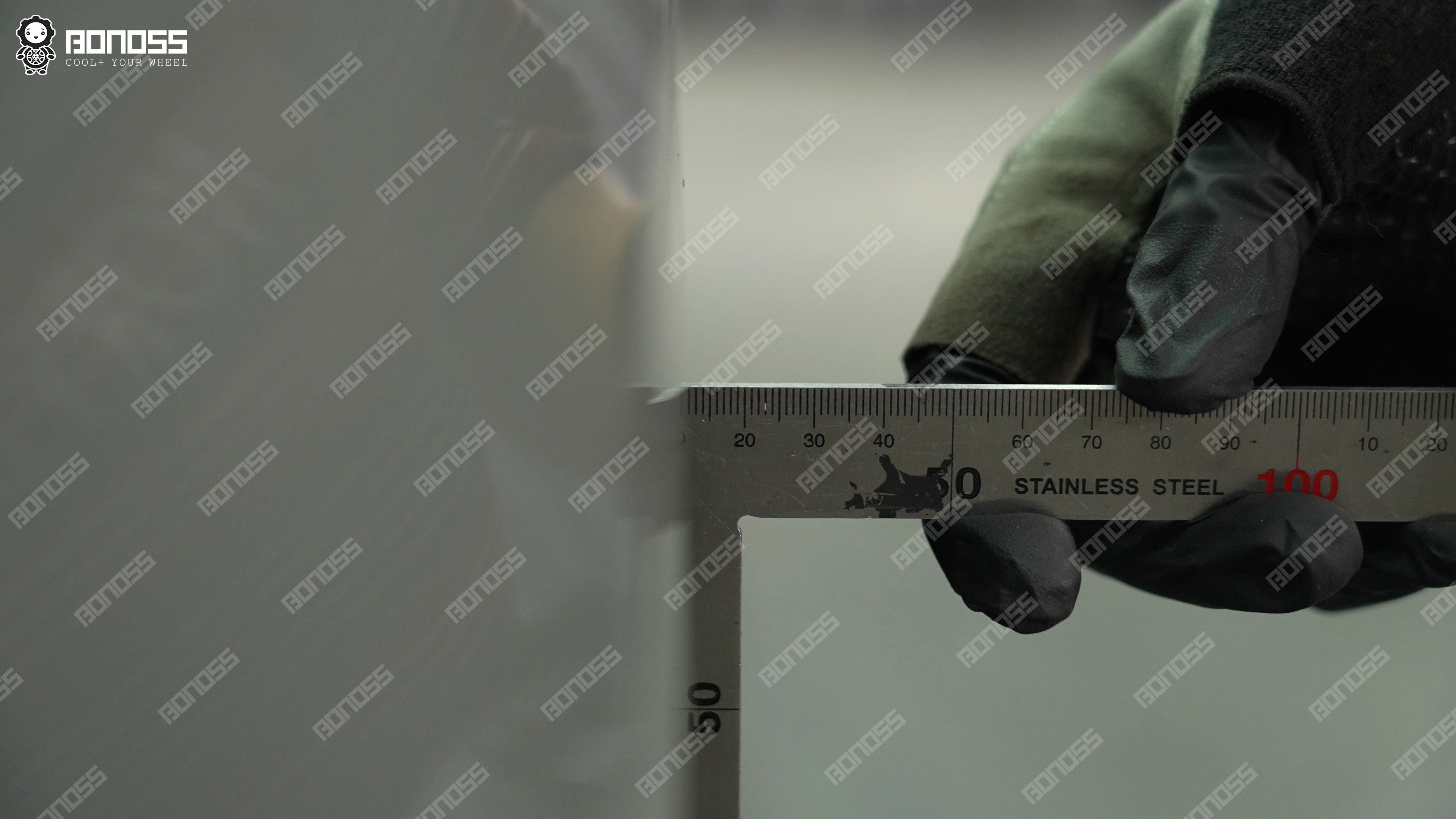
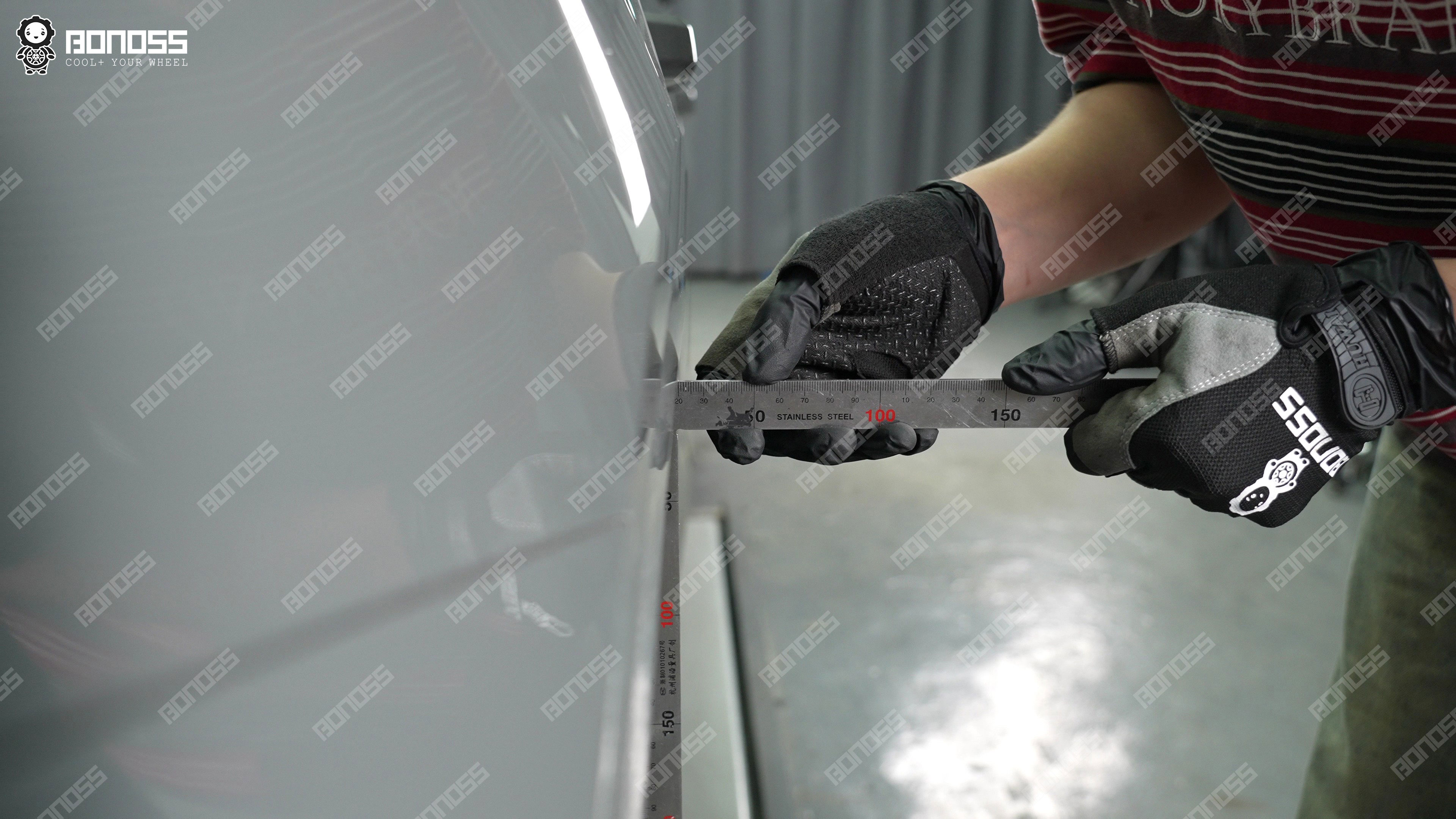
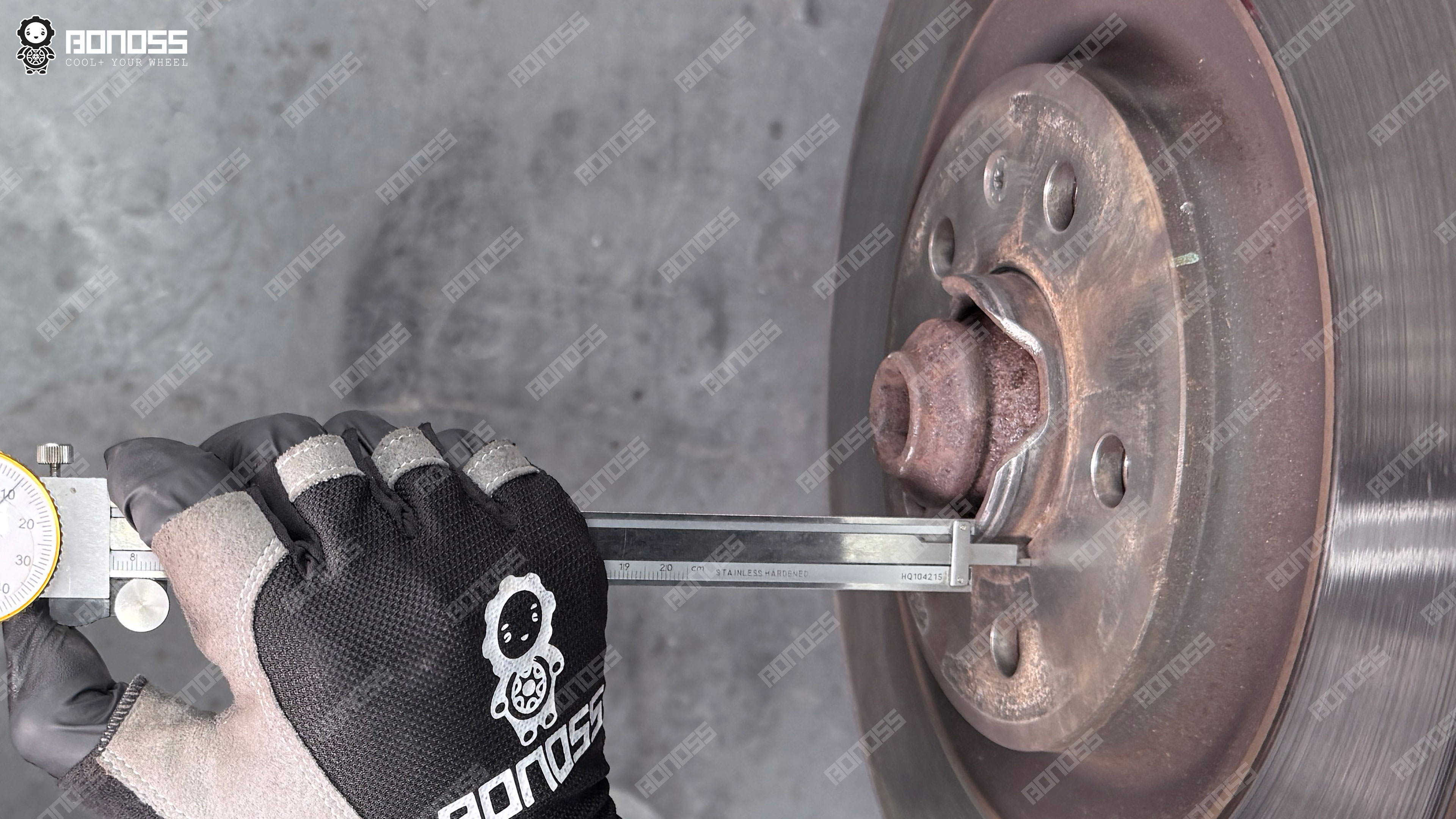
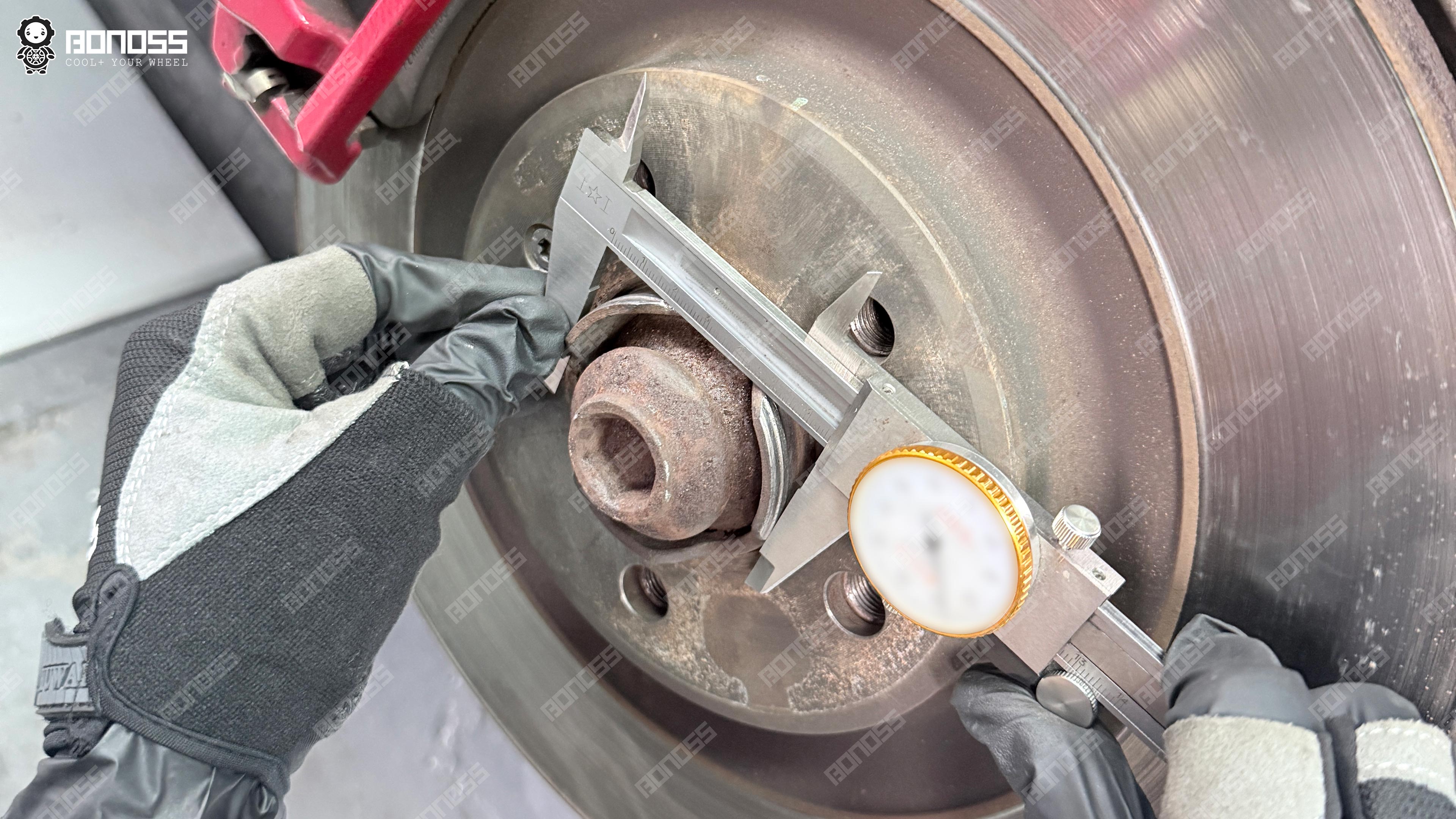
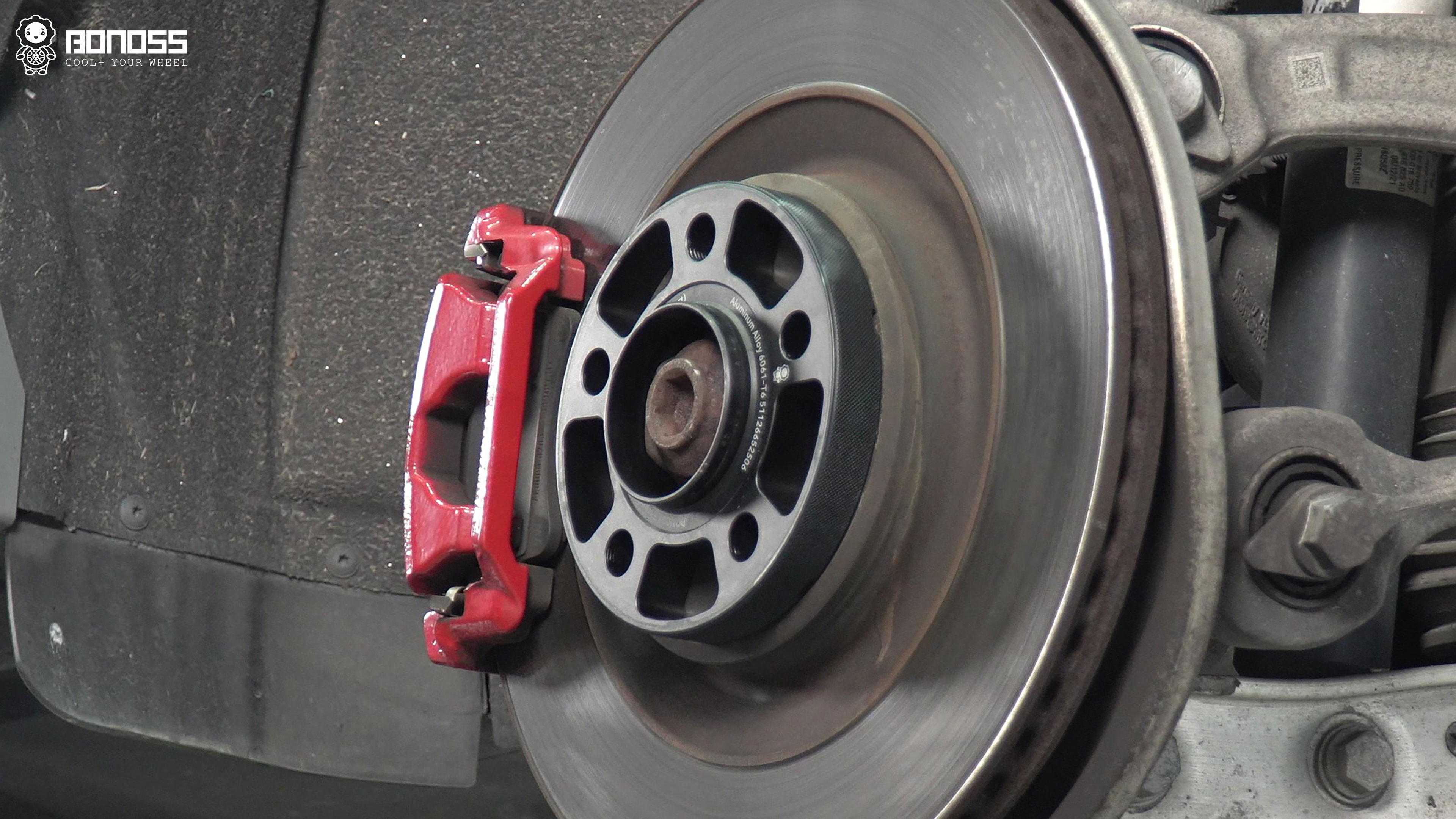
Step one — figure out why 10mm failed. We pulled a front wheel and measured the hub step, the raised lip that centers the factory wheel. On the front, it read 13.5mm tall. That’s the killer. A 10mm spacer’s center bore is supposed to swallow that lip, but there physically isn’t enough depth to clear a 13.5mm step. The lip bottoms out in the pocket before the spacer face ever reaches the rotor. It’s not a defect — it’s geometry.
Step two — the rear was taller. The rear hub step measured 14.2mm, which is exactly why even the 12mm spacer wouldn’t seat in the back. Same problem, more lip. So the rear wasn’t going to accept anything thinner than what cleared 14.2mm plus a hair of breathing room.
A note on the math before we go further, because this is where the story looks wrong on paper. The front lip is 13.5mm, and we fitted a 12mm spacer — 12 is less than 13.5, and our usual rule of thumb says spacer thickness has to clear the lip height. So how does a thinner spacer swallow a taller lip? It doesn’t — not the way a flat-face spacer would. The BONOSS spacer uses a multi-stage hub-centric design with a chamfer cut into the back of the center bore, so the lip tucks into the spacer deeper than the spacer’s nominal thickness. That chamfered pocket of a BONOSS 12mm spacer will accept a hub lip up to 13.5mm — no more.
That single number ties the whole job together. The front lip measures 13.5mm, right at the ceiling, so the 12mm spacer seats fully and runs true. The rear lip measures 14.2mm, past the ceiling, so the lip bottoms out in the pocket and the spacer never sits flush. Same rule on both axles: the chamfered center caps out at 13.5mm. Under it, the spacer seats; over it, it doesn’t. That’s why 12mm worked up front, and 20mm was the fix out back.
Step three — pick sizes that clear, not sizes that “look right.” Up front, the 12mm spacer seated fully against the hub face — its chamfered center accepting the 13.5mm lip right at the limit, no room to spare. It fits, and it fits true. One thing we want to be crystal clear about, because it’s the difference between a clean install and a boxed-up return: a 12mm spacer clearing the 13.5mm front lip is not something every 12mm spacer can do. It’s specific to BONOSS’s multi-stage hub-centric design.
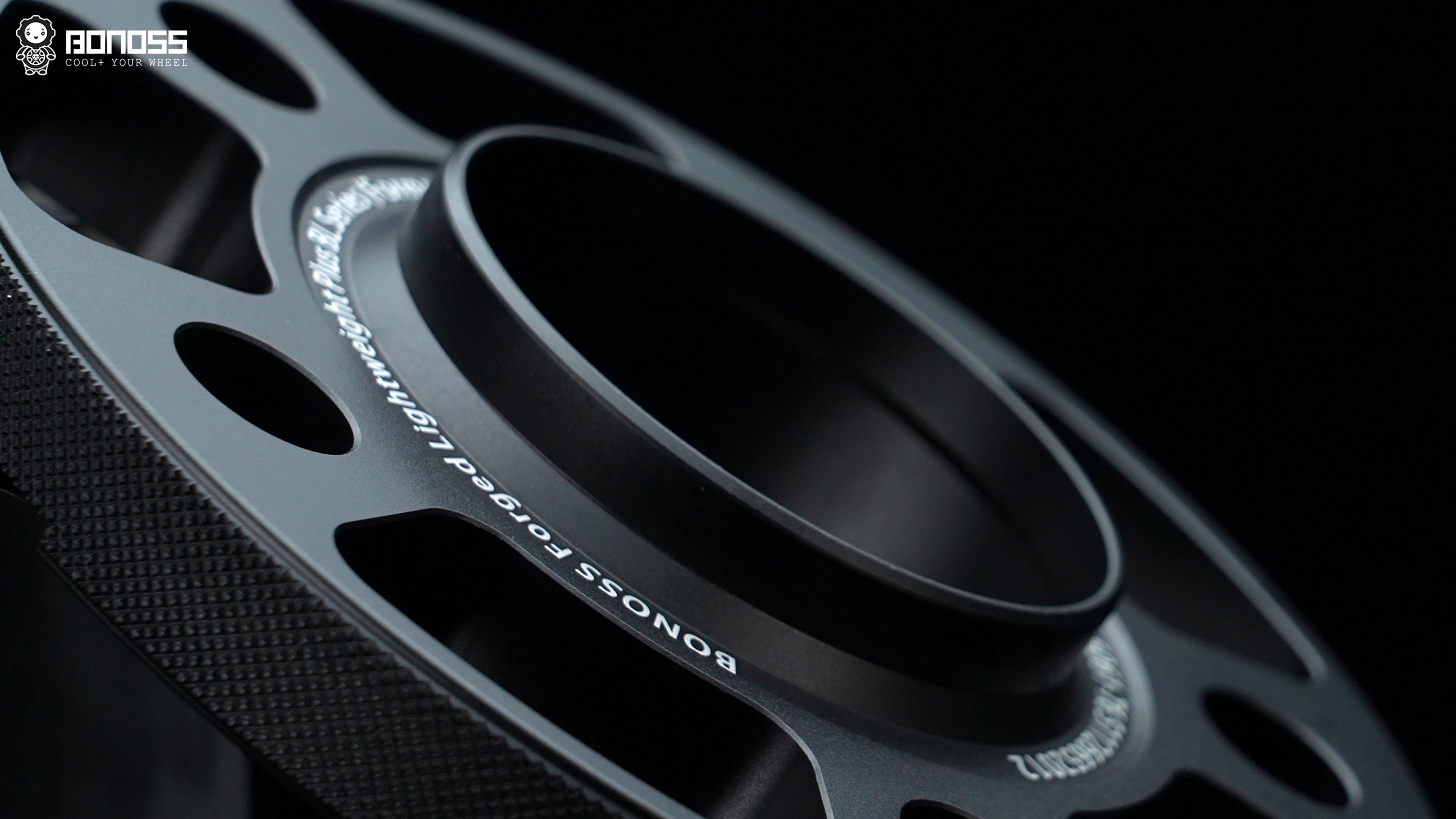
Here’s the mechanics in plain terms. A regular, single-stage 12mm spacer only has a center bore deep enough to swallow a lip shorter than itself — throw a 13.5mm lip at it and the lip bottoms out, exactly the way the 10mm spacer failed up front. The BONOSS spacer isn’t built like that. Its center bore is cut in stages, so the lip settles into a pocket deeper than the spacer’s face-to-face 12mm thickness would suggest. That staged pocket is the whole reason a 12mm clears a 13.5mm hub lip. Check the pic of a multi-stage hub-centric cross-section.
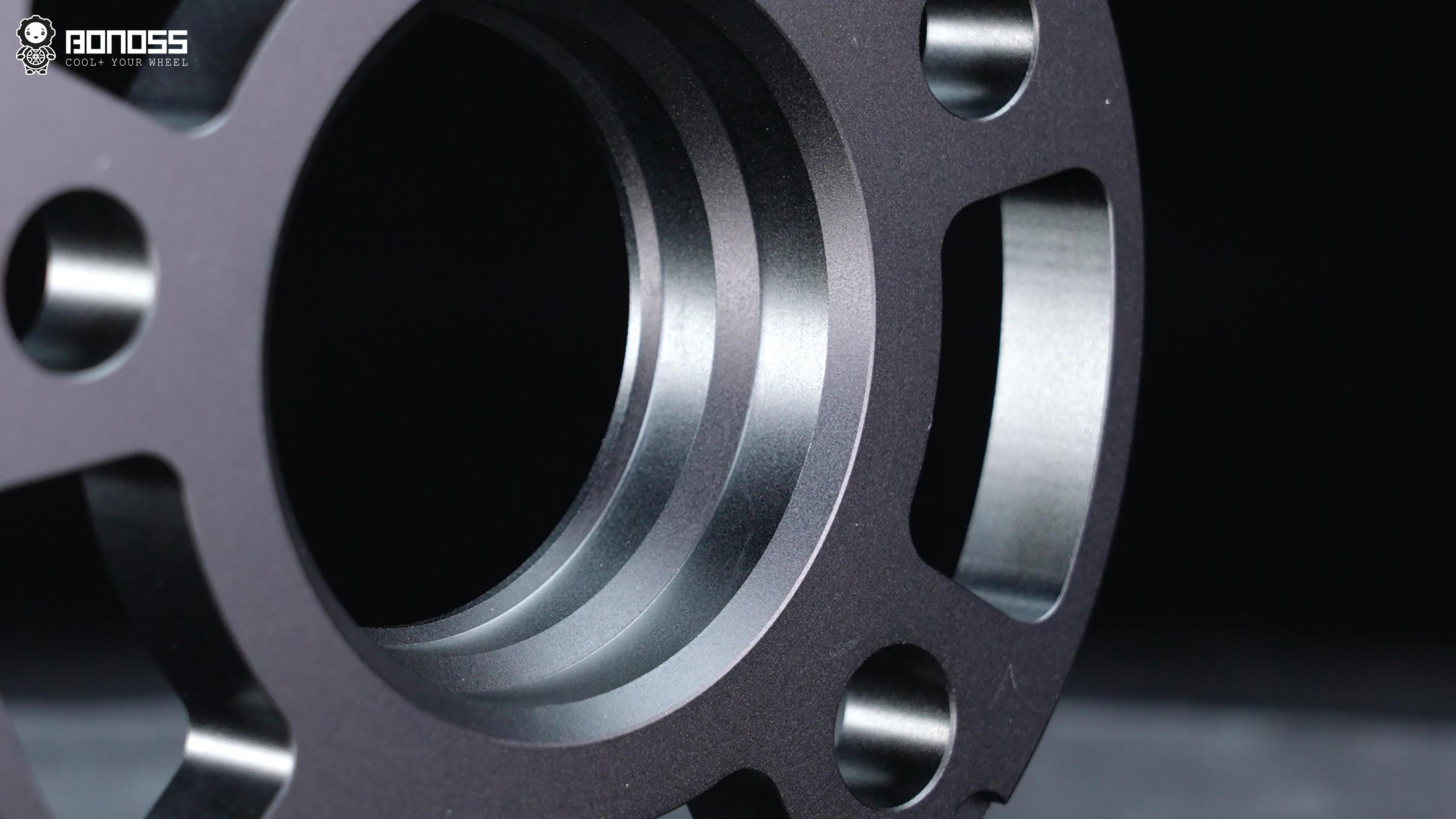
So when we say “12mm works up front,” read that with the fine print: a BONOSS 12mm multi-stage hub-centric spacer works. Grab a generic 12mm from another shelf, and you could land right back in the same hole Barry started in. And the rear lip at 14.2mm sits past even that staged pocket’s ceiling — which is exactly why the rear moved up to 20mm.
In the rear, we measured the wheel gap — the space between tire and fender at rest — and landed on 20mm. That’s what clears the 14.2mm lip and pushes the rear tire out to exactly flush. No poke, no tuck. While we were in there, we confirmed the center bore: 66.51mm on the hub. That number matters because a hub-centric spacer has to match it, not just be “close.” The BONOSS spacers are machined to 66.5mm and slip onto the lip with the kind of snug, concentric fit that keeps the wheel running true.
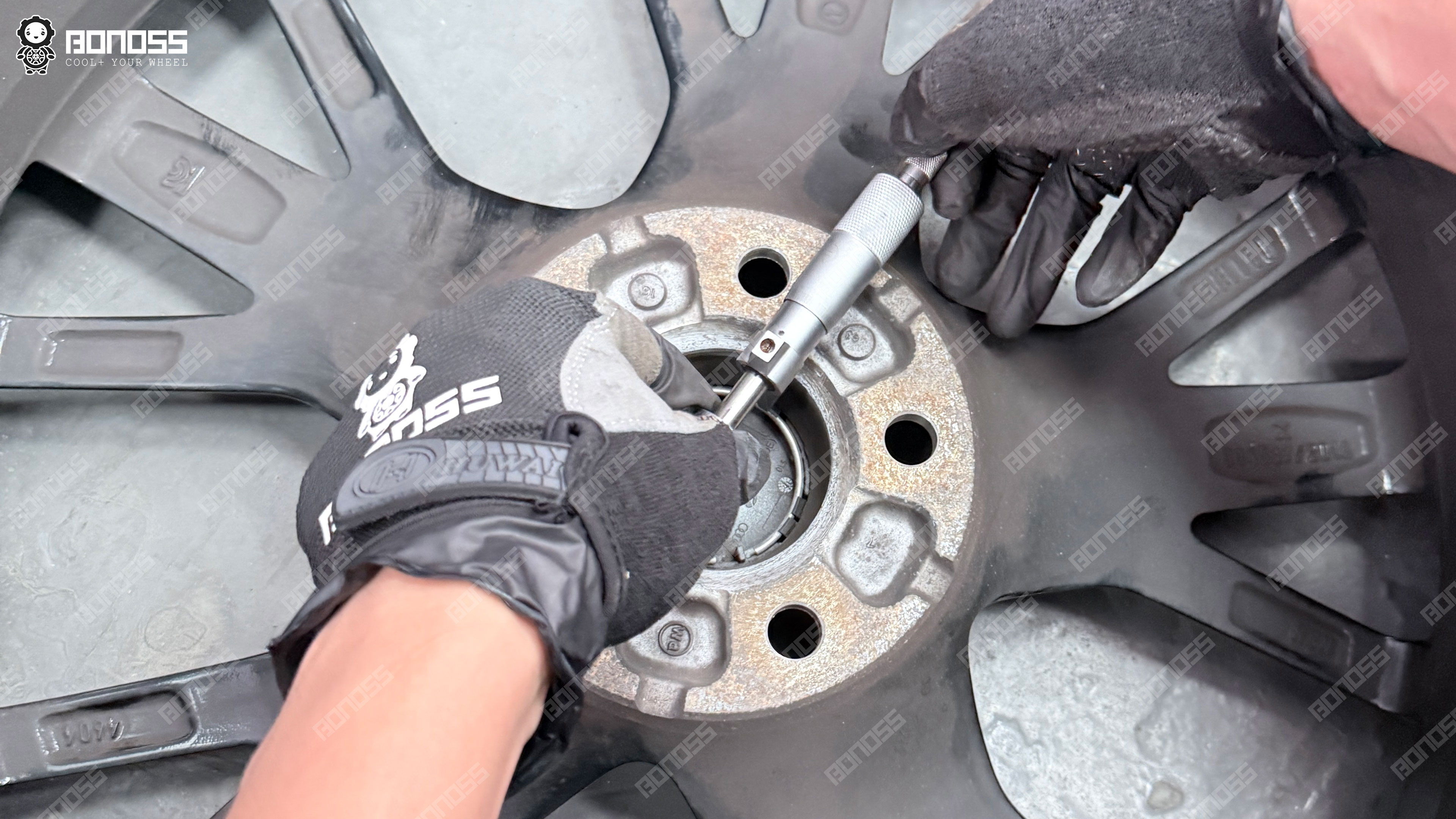
Step four — bolts. The stock SQ5 hardware is M14x1.5, R13 ball-seat, with 30mm of thread and a 17mm hex head. Add a spacer and those 30mm have to reach through the wheel and into the hub by enough turns to actually clamp. With the 12mm spacer up front we needed 42mm of thread; out back with the 20mm spacer we needed 50mm. So extended bolts went in — same pitch, same ball seat, just longer. Skip this step and you’re torquing a bolt that’s only biting three threads, and that’s a wheel that leaves the car.
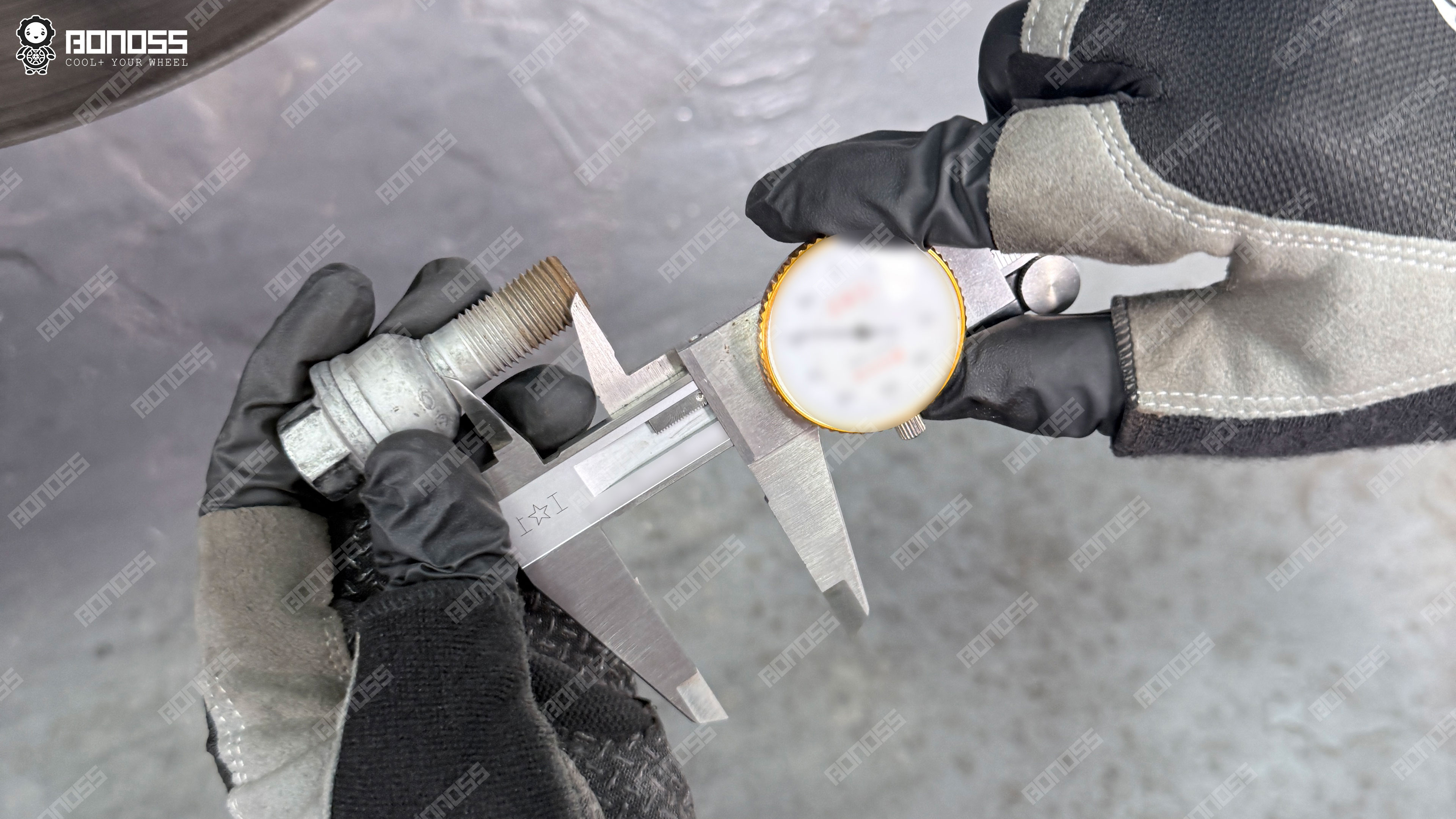
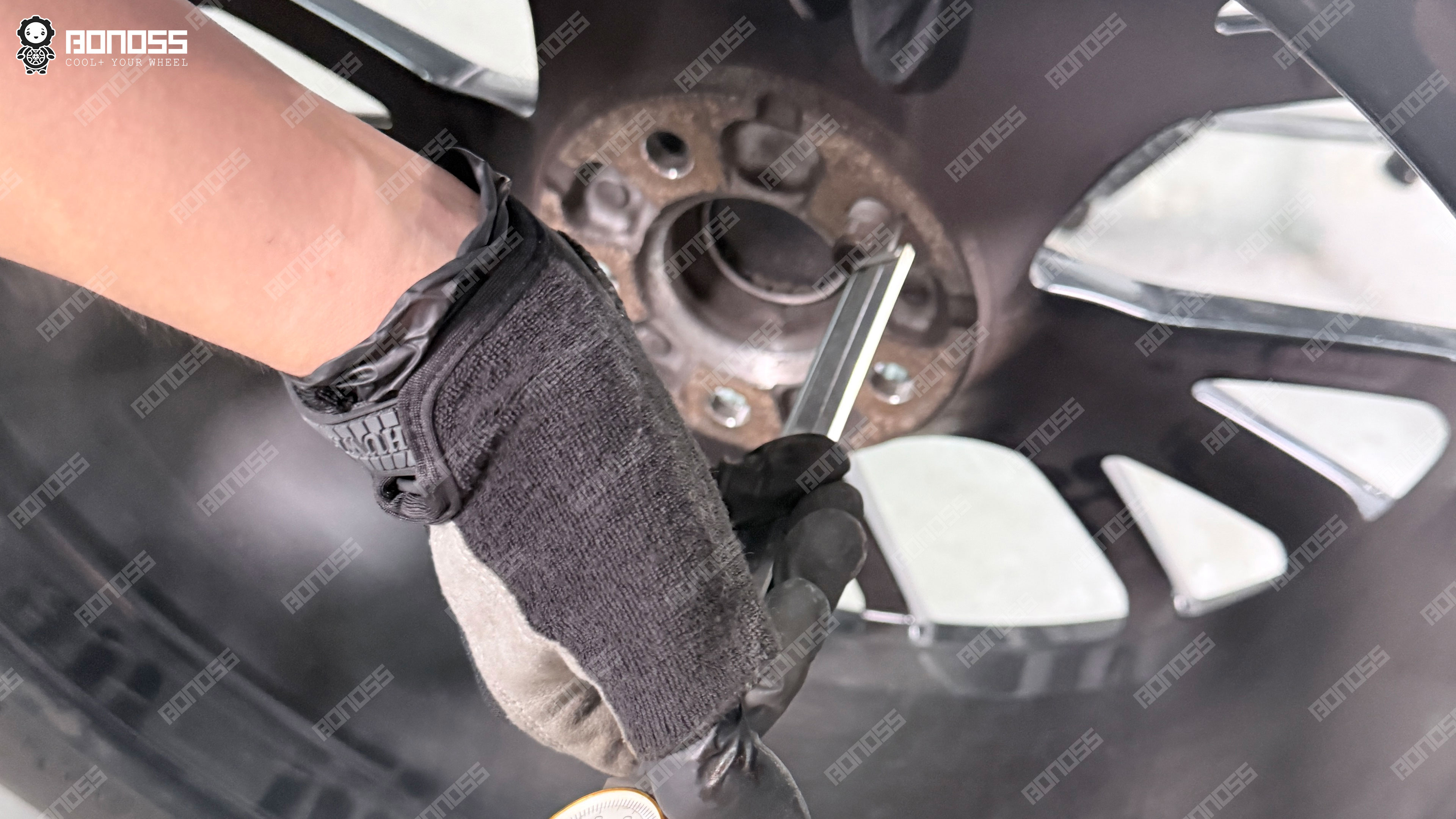
Step five — mount and torque. Spacer onto the hub, seated flush on the lip. Wheel on, bolts run down by hand in a star pattern, then torqued to 140 Nm (or your OEM spec if the manual says otherwise) in two passes. Four corners, measure, mount, torque — the whole job took right around an hour.
The one worry — fender rub. Barry’s entire hesitation was the 20mm rear. He wanted flush but not aggressive, and he was half-convinced the tire would kiss the inner fender on a bump. So once it was all bolted up, we checked the tire and fender. Nothing touched. No contact at the flare. Flush without the risk.
The result, in his words and in numbers
A while later — and a lot of miles — Barry came back with a follow-up. His words, not ours:
“Super happy with the flush stance and it rides better now. Big props to the BONOSS team—they knocked out the spacer install fast and did an awesome job.”
And the line that stuck with us, because it’s the entire point of doing this hub-centric:
“I always run hub-centric spacers. Not tryna deal with vibes at any speed. The 10mm didn’t fit the hub, but no way I was gonna settle for lug-centric. 9,000 miles later, turns out I was right.”
“These are solid quality spacers, fully forged and pretty light. I’ve heard less unsprung weight helps with performance, so that’s a win. Dig the design.”
The numbers, laid out plain:
| Spec | Factory | After install |
|---|---|---|
| Front offset | ET+39 | ET+27 (12mm spacer) |
| Rear offset | ET+39 | ET+19 (20mm spacer) |
| Hub step, front/rear | 13.5mm / 14.2mm | — |
| Center bore | 66.51mm | Match |
| Bolt thread (stock) | M14x1.5, R13 ball seat, 30mm | — |
| Bolt thread (extended) | — | 42mm front / 50mm rear |
| Torque | 140 Nm | 140 Nm |
| Install time | — | ~1 hour |
| Bolt Pattern (PCD) | 5x112mm | Match |
Why this matters beyond looks: a lighter forged spacer adds less unsprung weight than a cast or steel chunk, and the multi-stage hub-centric design keeps the assembly running true so the wheel doesn’t shake at speed. Barry put 9,000 miles on this exact setup with no vibration, and that’s the only review that counts.
FAQ
What size wheel spacers fit a 2021 Audi SQ5?
12mm front and 20mm rear is the flush, hub-centric combo we used here. A 10mm spacer won’t clear the hub lip on either axle.
Do I need hub-centric or lug-centric spacers for the SQ5?
Hub-centric, always. The SQ5 has a tall hub lip — 13.5mm front, 14.2mm rear. Lug-centric spacers bolt on but don’t locate on the hub, which is how you end up with highway vibration.
Will 20mm rear spacers rub the fender?
Not on a factory-spec SQ5 at factory ride height. We tested lock-to-lock after install and had zero contact.
Do I need longer wheel bolts?
Yes. The stock M14x1.5 bolts only have 30mm of thread. With spacers, you need 42mm up front and 50mm in the rear.
What torque should I use on the SQ5 wheel bolts?
140 Nm in a star pattern, two passes — or your OEM manual’s spec if it differs.
Are these spacers forged or cast?
Forged 6061-T6 aluminum, lightweight, with a multi-stage hub-centric step.
The bottom line
Here’s what we’d tell anyone shopping for 2021 Audi SQ5 wheel spacers: measure first, and don’t settle for lug-centric just because it’s “easier.” Ten minutes with a caliper told us this car wants 12mm front and 20mm rear, hub-centric — and the result is a flush stance that drives straight and smooth, 9,000 miles later.
If you’re trying to sort out your own SQ5 fitment, or you’re tired of guessing, send us your hub measurements, and we’ll tell you exactly what clears. No obligation, and no upselling you into lug-centric parts we wouldn’t run ourselves.
Get Your BONOSS SQ5 Spacer Set

About Daisy Harris
Daisy Harris has worked for 6 years at BONOSS as an automotive technician, installing and testing wheel spacers, wheel nuts, and wheel bolts. She has personally installed and verified more than 200 wheel-spacer setups across sport sedans, SUVs, and EVs. Her installation guides and reviews are built on real installs, measured clearances, and long-term wear notes — not on spec sheets.