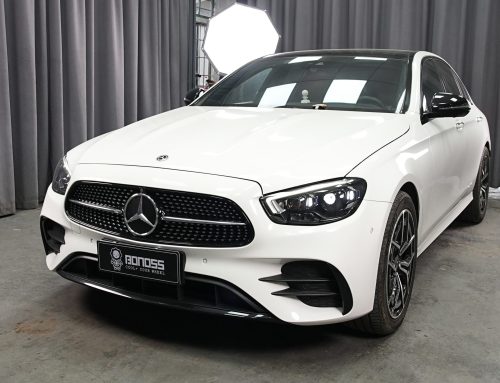
Online advice on F56 spacers is a tangle of secondhand claims. Search around and you’ll run into the same three statements: “12mm is the only front thickness that fits,” “hub-centric 10mm spacers can’t physically clear the front hub,” and “spacers will vibrate your car to pieces at highway speed.” Two of those don’t hold up under measurement. The third needs some important context.
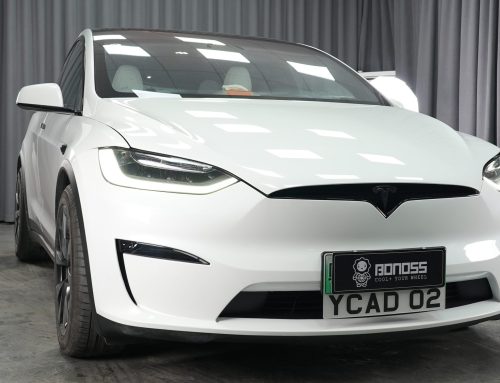
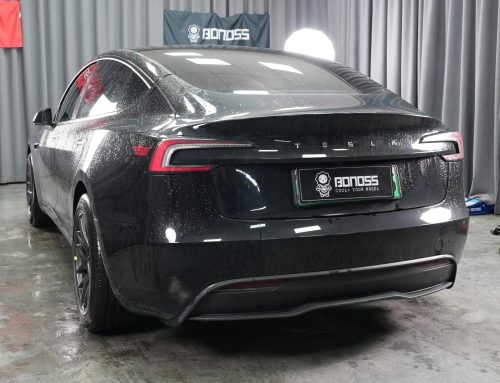
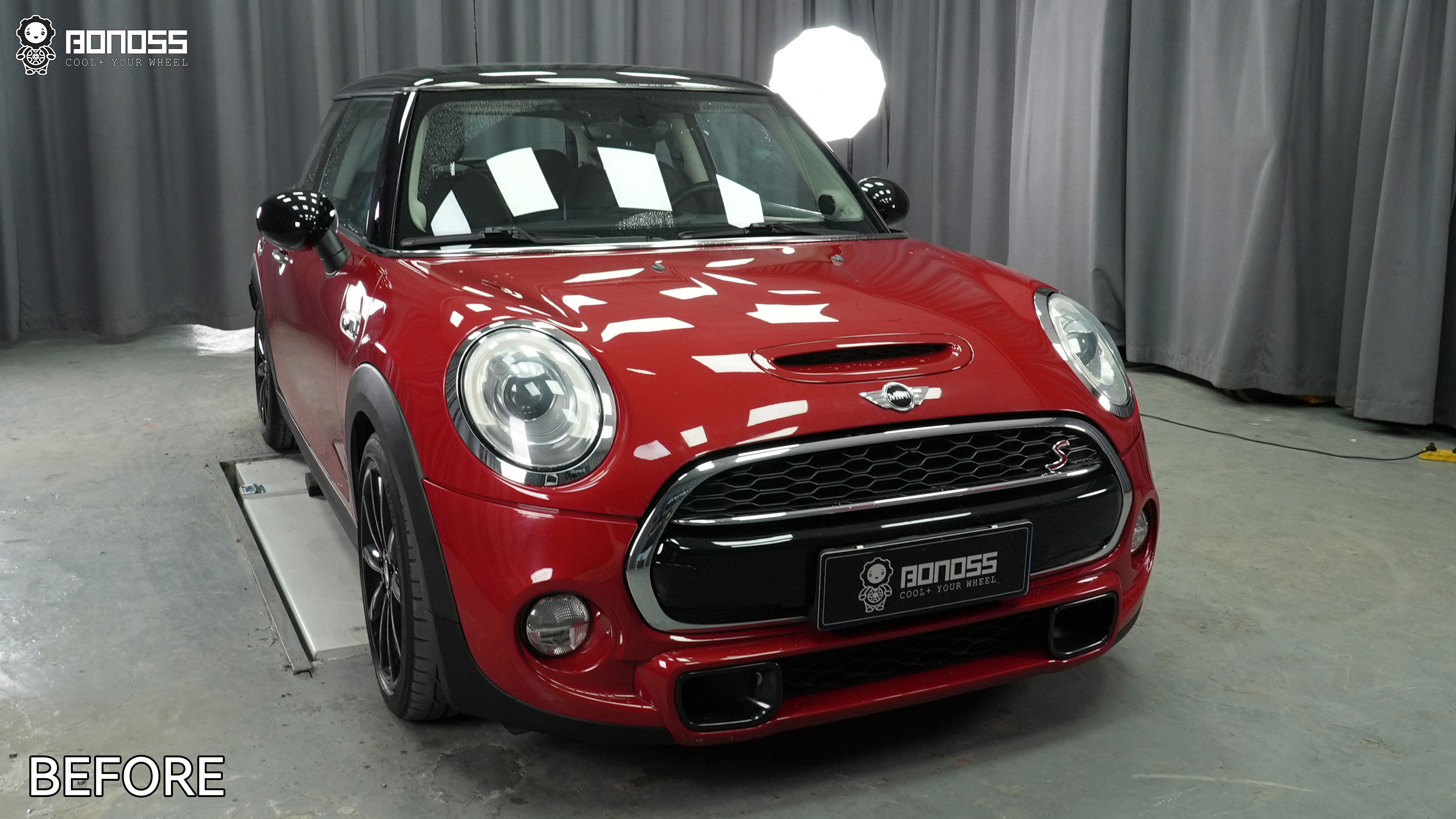
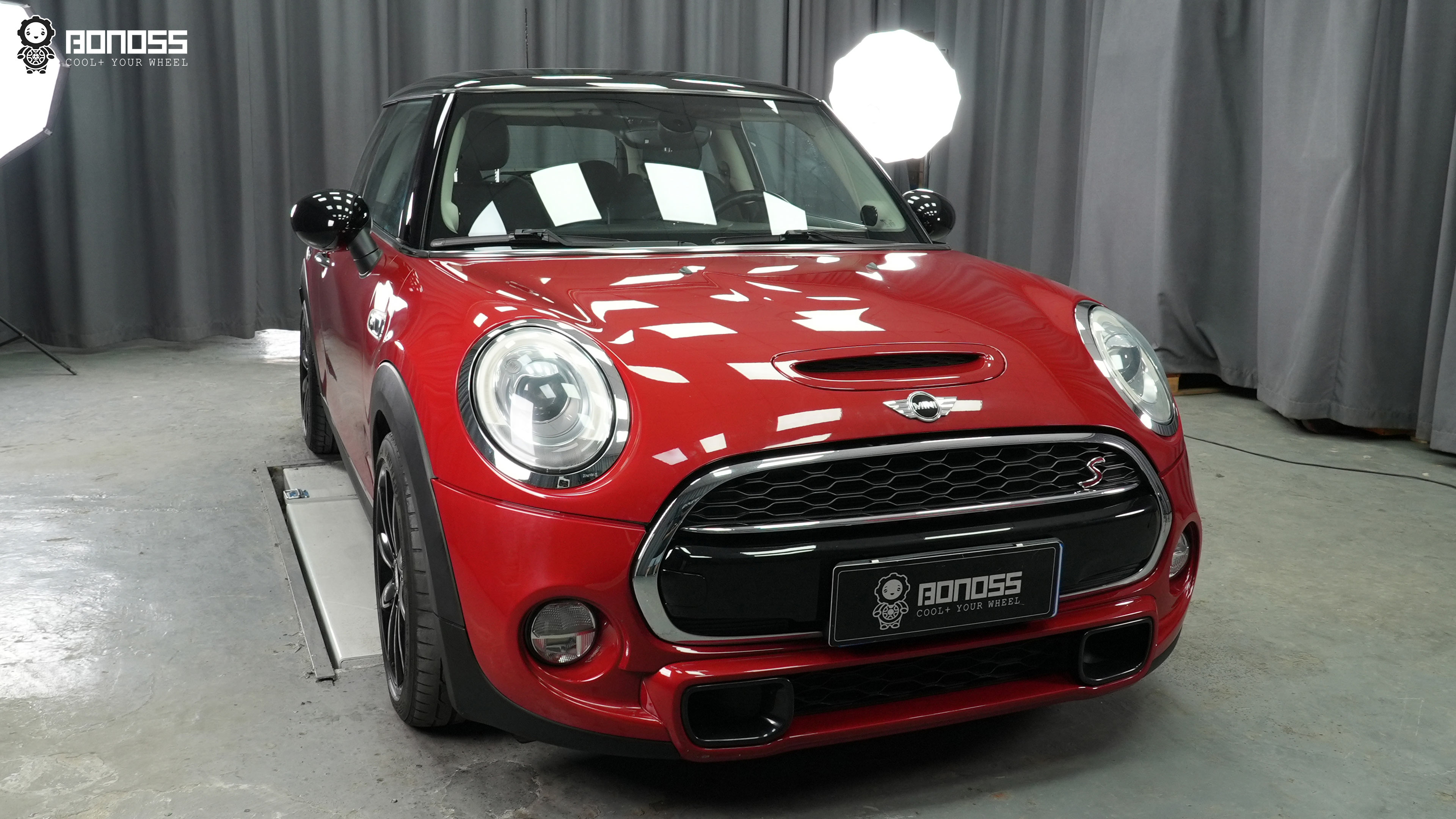
This install is on a 2014 MINI Cooper S 10mm spacers up front paired with 18mm out back. The owner, Ken Evans, runs the car with aftermarket lowering springs already in place. We bolted the spacers on August 12, 2024. Fifteen thousand miles later—highway pulls, daily commutes, rough city pavement—the setup has zero vibrations, zero rubbing, zero bolt issues.
Every claim in this article is backed by parts we physically measured with a vernier caliper, a micrometer, and a high-accuracy ruler before we touched a wrench. No online hearsay. No borrowed specs. Let’s get into the three myths, the numbers behind them, and what actually works on this car.
Spec Quick Reference
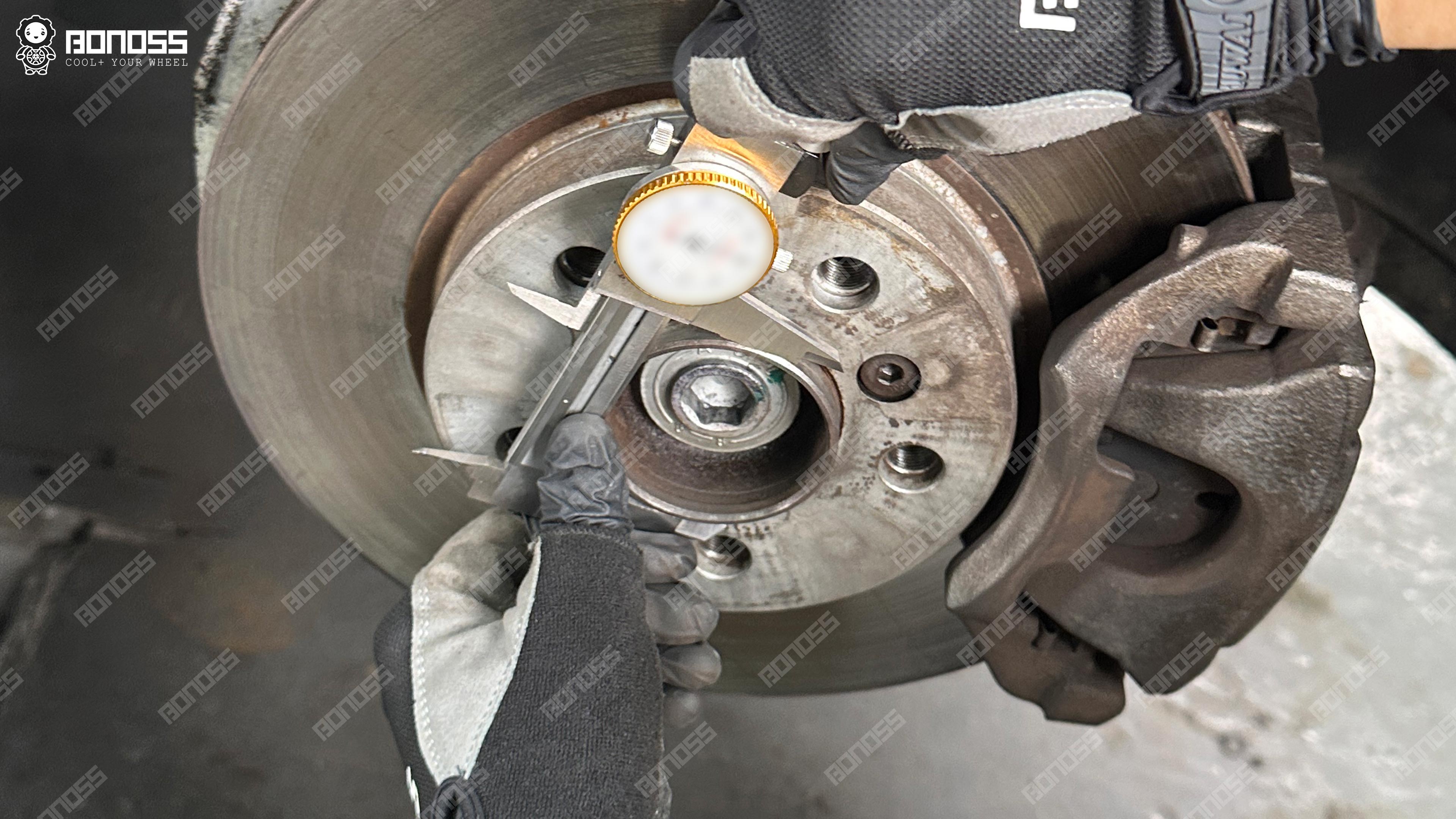
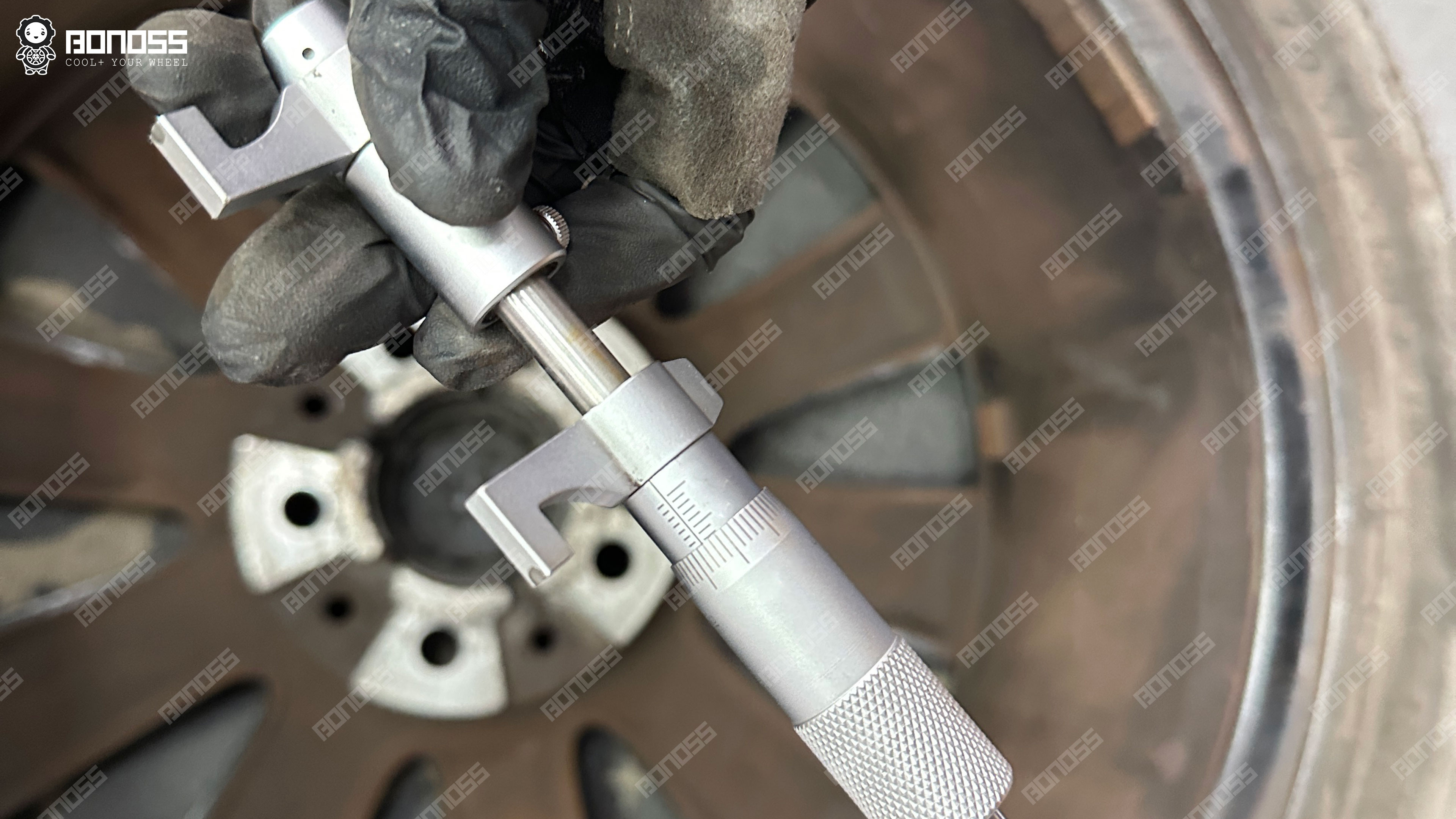
Before we start busting myths, here’s the full measured spec sheet. Every number came off a real tool on this specific car, not a spec sheet pulled from an online post.
| Specification | Measured Value |
|---|---|
| Vehicle | 2014 MINI Cooper S (F56 Hatchback) |
| Bolt Pattern (PCD) | 5×112mm |
| Hub Bore (axle OD, measured) | 66.46mm (vernier caliper) |
| Wheel Center Bore (measured) | 66.68mm (micrometer) |
| Thread Size | M14×1.25mm, conical seat |
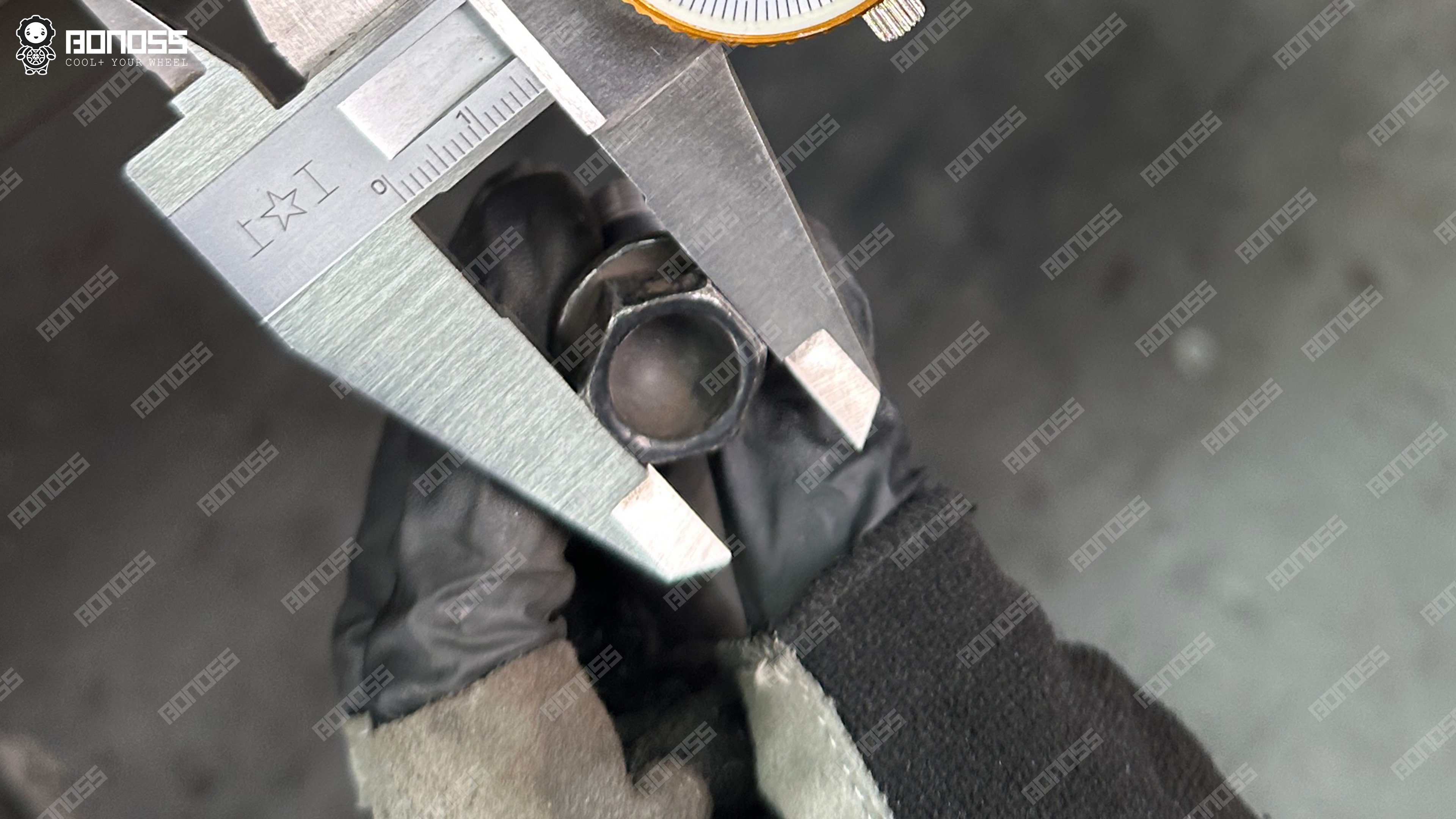
| Wheel Bolt Socket | 17mm Hex (vernier caliper) |
| OEM Wheel | 205/45ZR17, ET54 |
| Spacer Thickness | Front 10mm / Rear 18mm |
| Post-Spacer ET | Front ET44 / Rear ET36 |
| Spacer Material | 6061-T6 forged aluminum |
| Torque — BONOSS extended bolts | 140 Nm (103.5 ft-lb) per BONOSS installation instructions |
| Torque — OEM factory bolts | 140 Nm (103.5 ft-lb) per the owner’s manual |
Use ONE torque value for the entire installation. When using BONOSS extended wheel bolts, follow BONOSS installation instructions.
Online Claims vs. Measured Reality
Three claims circulate constantly. Here’s the scorecard before we dig into the evidence.
| Online Claim | Measured Reality |
|---|---|
| “12mm is the only front spacer that fits the F56” | BONOSS 10mm multi-stage hub-centric fits perfectly; owner confirmed after 15,000 miles |
| “Hub-centric 10mm spacers can’t clear the F56 front hub” | Front hub boss = 10.72mm; BONOSS multi-stage bore accommodates up to 11.5mm |
| “Spacers will vibrate your F56 at speed” | 15,000 miles, zero vibration; 0.02mm CNC precision ensures concentricity |
Test Vehicle & Measurement Method
The car: a 2014 MINI Cooper S, chassis code F56—the third-generation hardtop hatch that shares its 5×112 platform with contemporary BMWs. Ken had already swapped the factory springs for a lowering setup, which is what kicked off the whole project. He wanted a flush fender stance without buying new wheels. The factory 205/45ZR17 rubber on ET54 wheels sits tucked—functional, but visually conservative for someone who’s already gone lower.
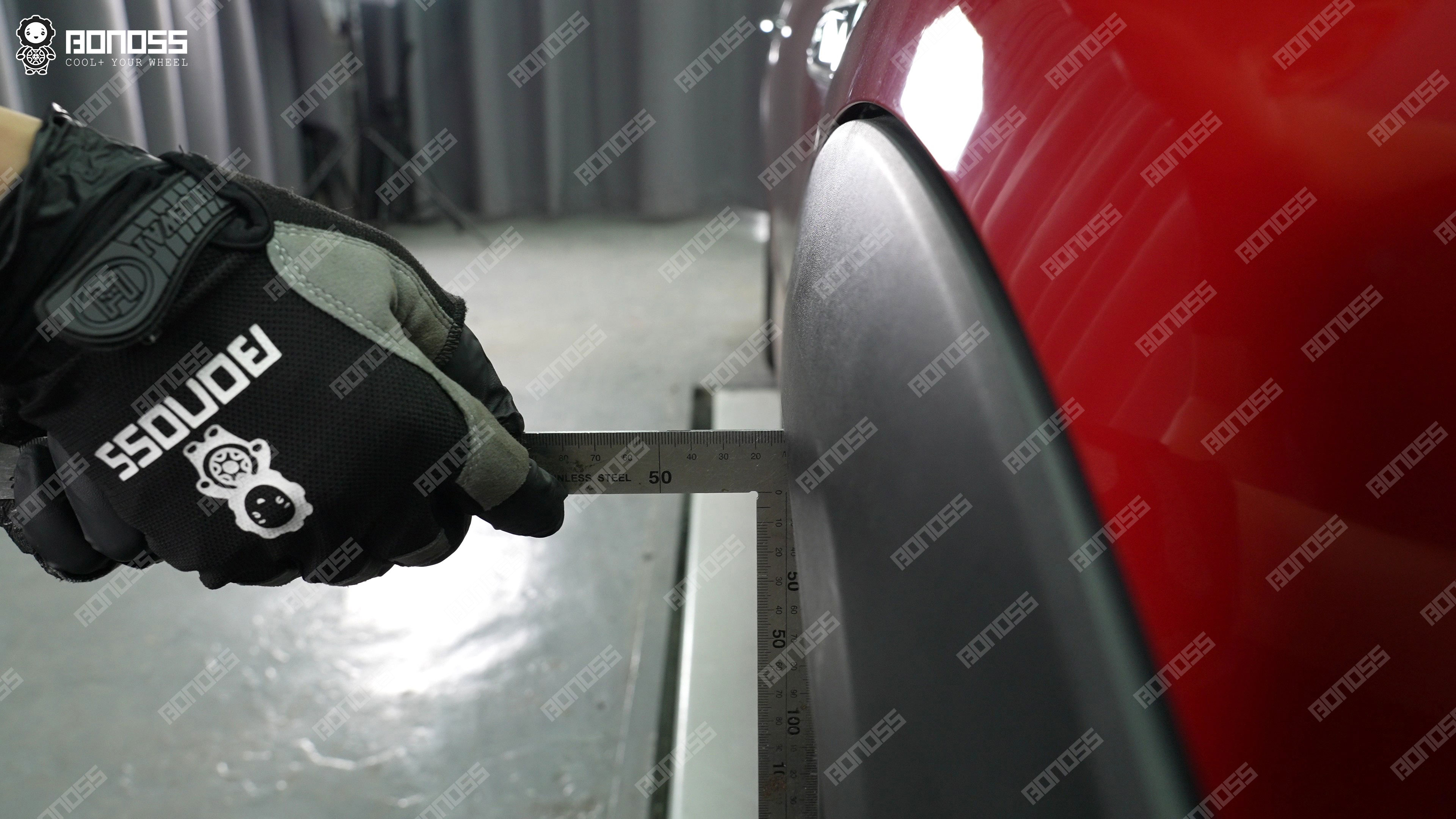
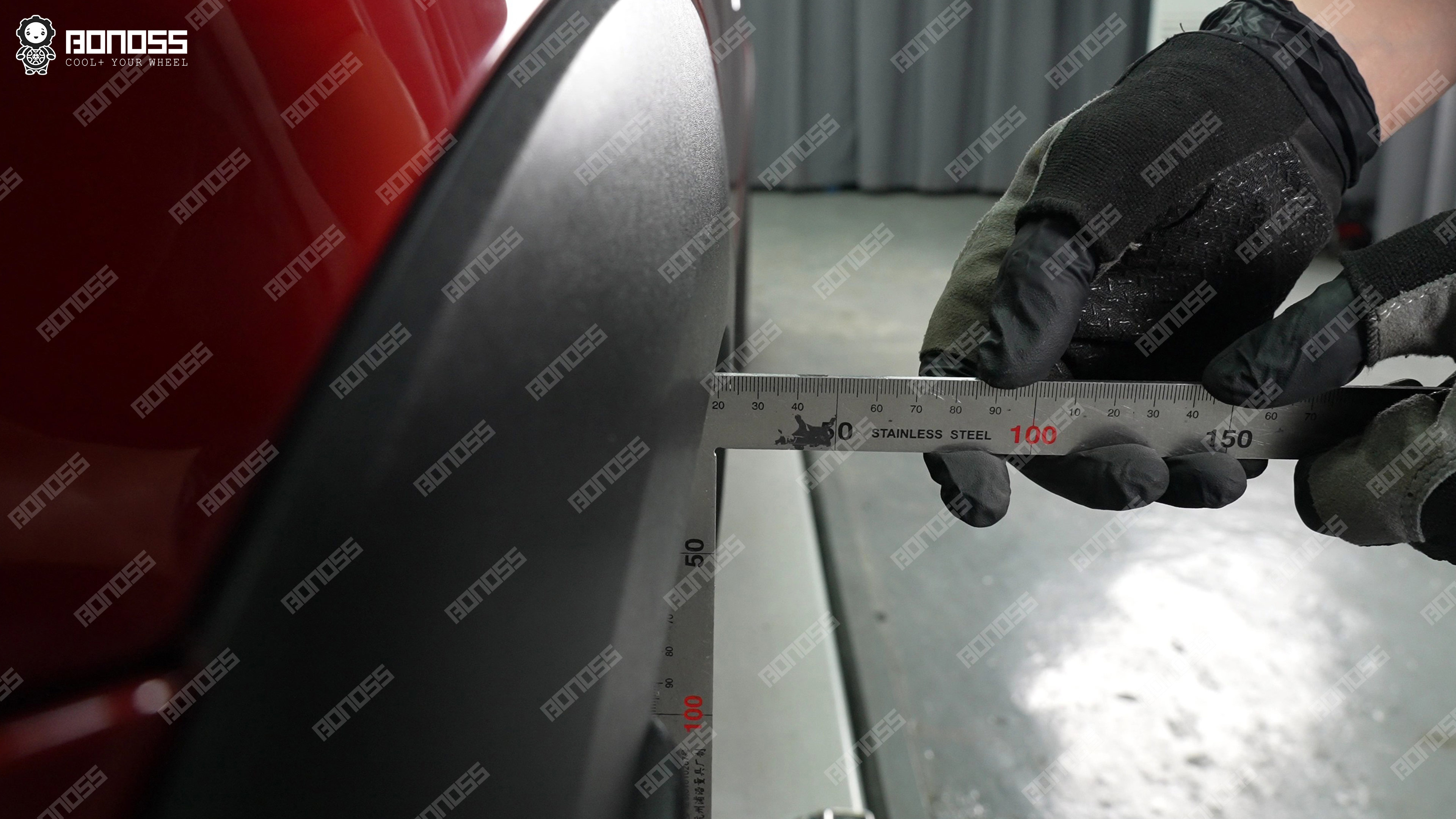
We measured fender clearance at all four corners with a high-accuracy ruler before recommending thicknesses. Front needed 10mm to reach flush. Rear needed 18mm. That’s not a guess—it’s the gap between the tire sidewall and the inner fender lip, measured on a leveled surface. The split thickness (10 front, 18 rear) exists because the F56 has different front and rear track geometry, and a single “one size fits all” spacer kit would either poke the front or tuck the rear. These are 5×112 wheel spacers MINI Cooper S F56 owners need to spec per axle, not per guess.
Myth 1: “12mm Is the Only Front Spacer That Fits the F56”
Verdict: Doesn’t hold up. The BONOSS 10mm fits, and it tends to be the better choice for a lowered car.
Where the claim comes from
This one circulates online like it’s handed down from the factory. The logic usually goes: the F56 front hub has a tall pilot (hub boss), so anything thinner than 12mm can’t seat properly over it. People repeat it, other people repeat their repetition, and gradually “12mm only” becomes conventional wisdom.
What we actually measured
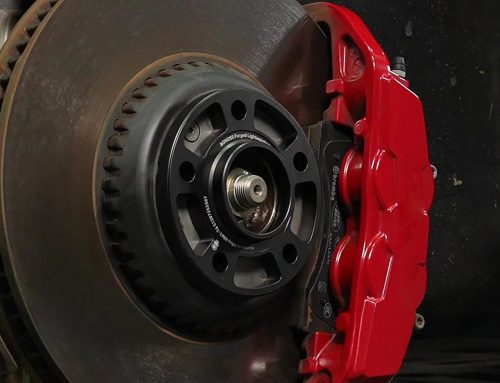
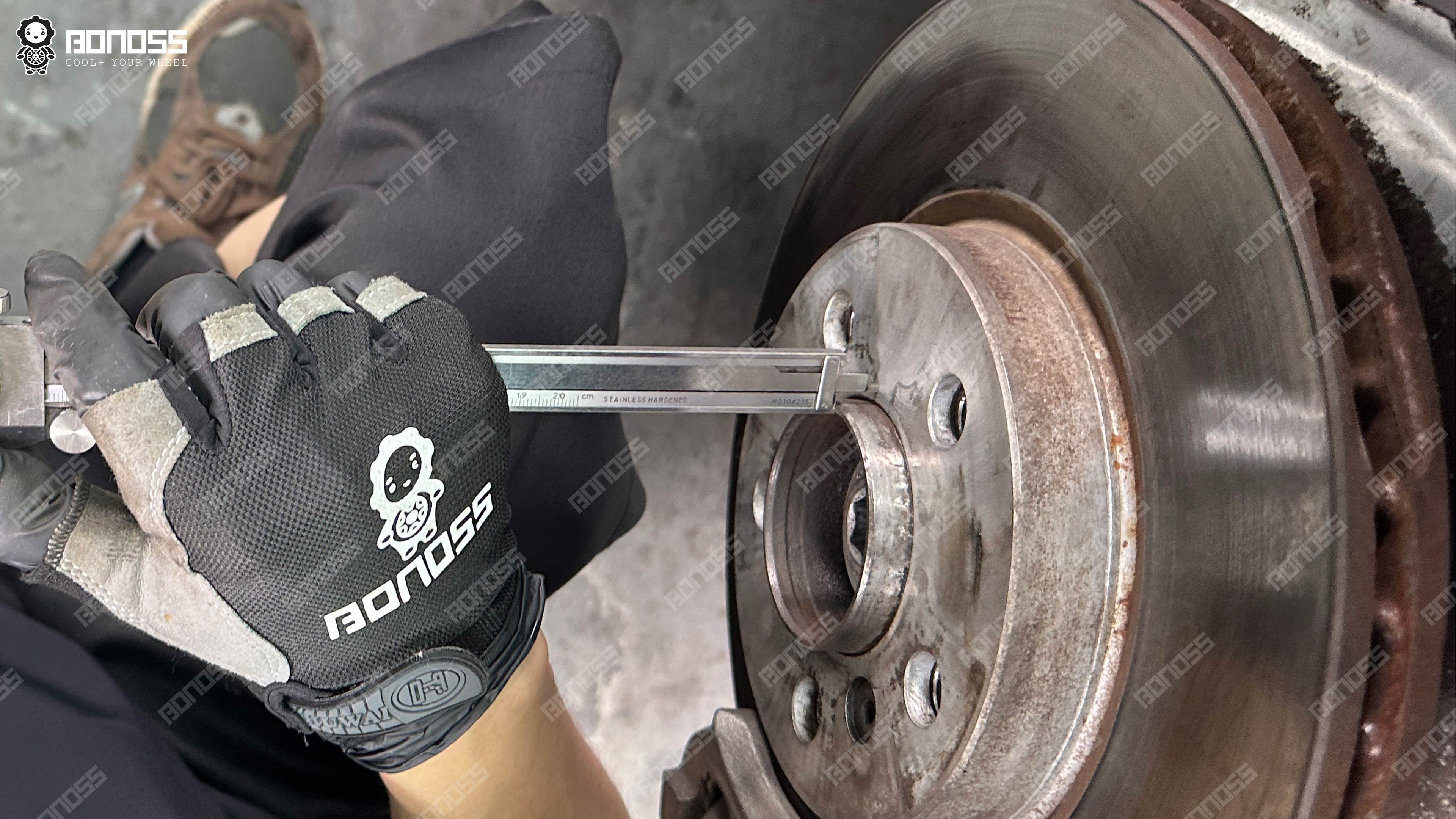
The front hub boss—the raised centering ring on the axle that locates the wheel—measured 10.72mm tall with a vernier caliper. That’s the number that supposedly makes 10mm spacers impossible. And here’s the nuance: if you’re running a standard single-stage hub-centric 10mm spacer, that advice isn’t entirely without merit. A conventional 10mm unit with a flat bore would likely bottom out on the boss before the spacer face contacts the hub.
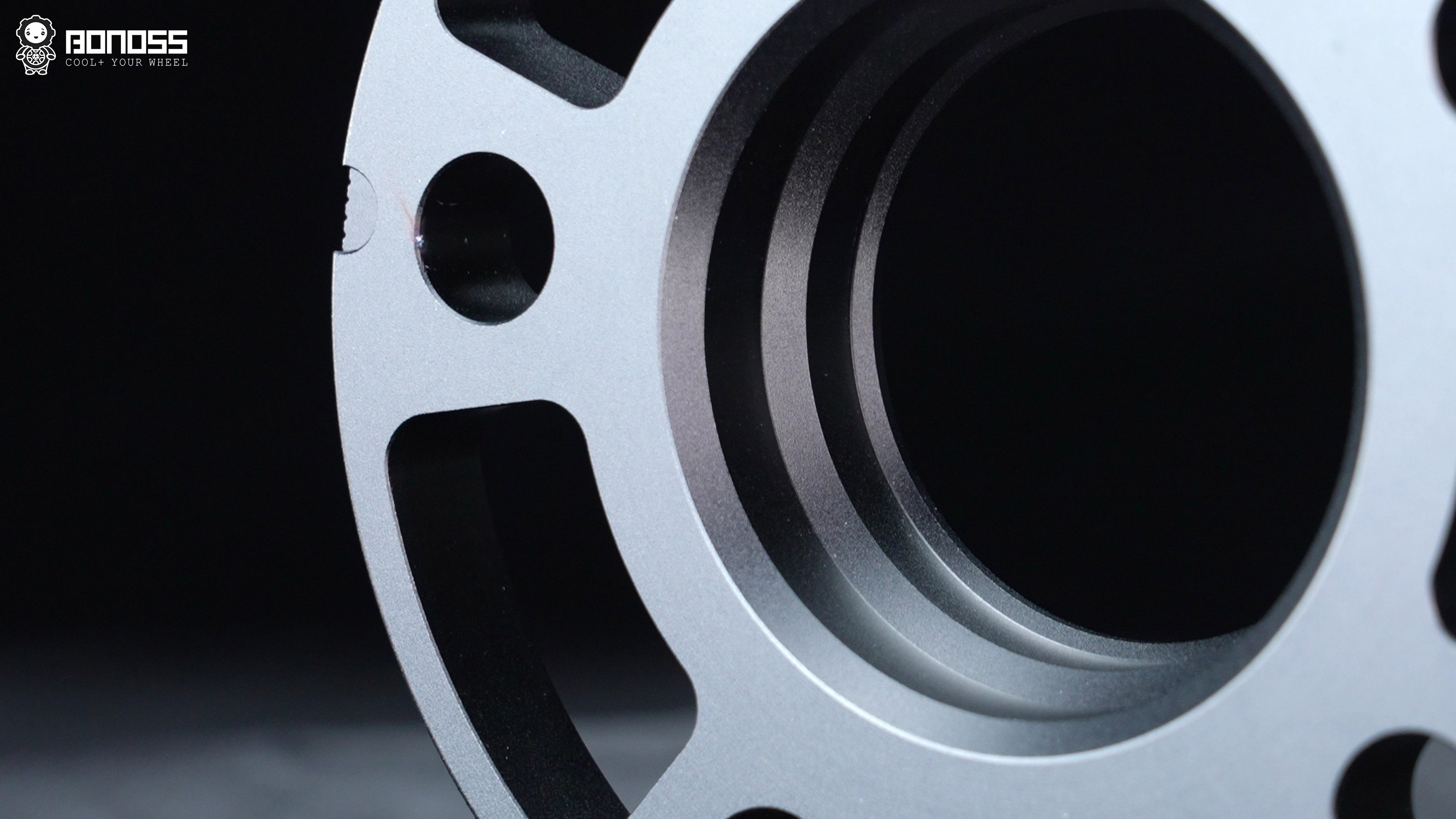
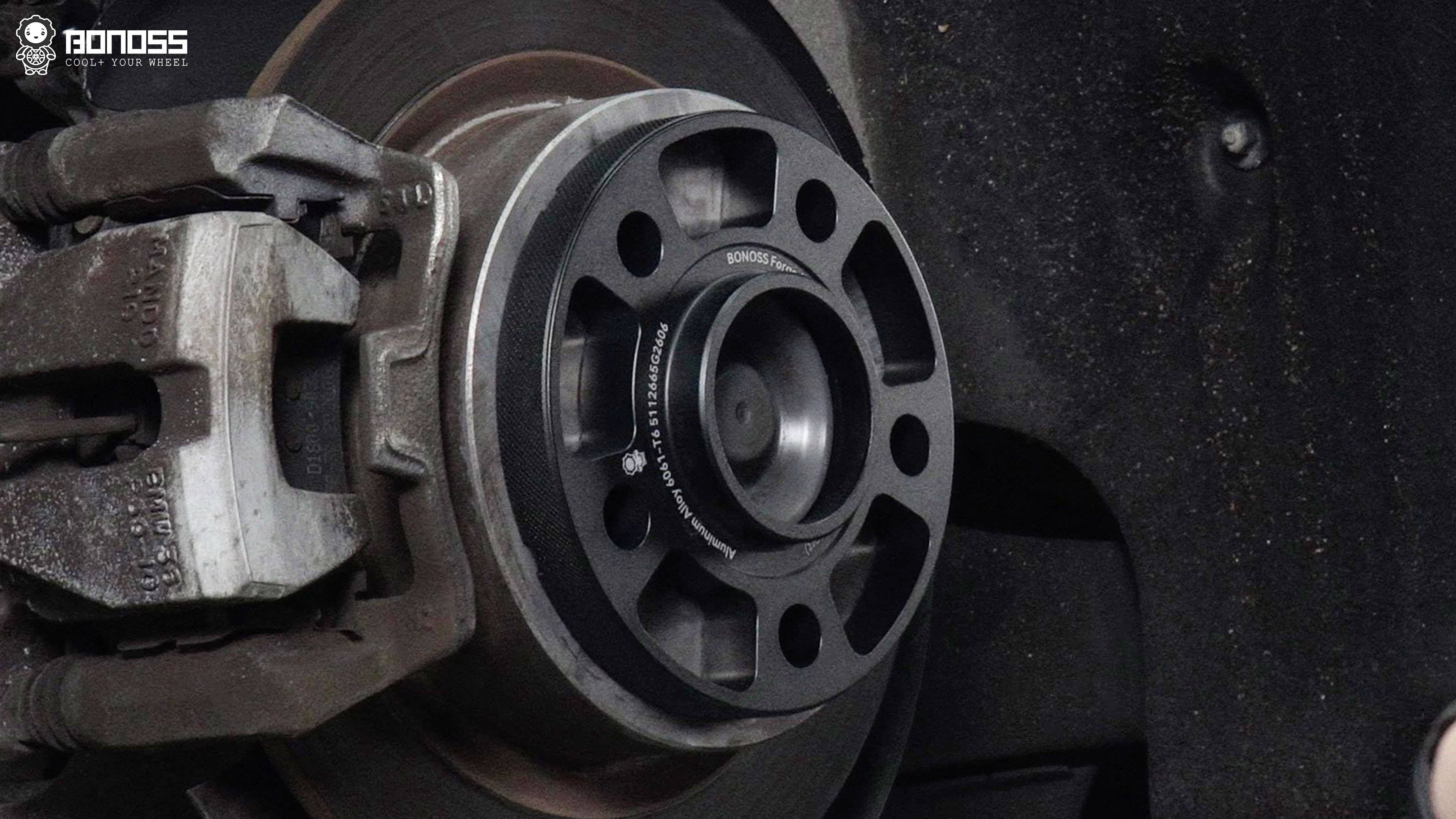
But that’s not what we installed. The BONOSS forged lightweight plus wheel spacers use a multi-stage hub-centric bore. The center hole isn’t one diameter all the way through—it’s machined with stepped relief pockets that physically accommodate up to 11.5mm of hub boss length. So a 10mm-thick disc can still clear a 10.72mm boss, because the boss extends into the relief step rather than hitting a flat floor.
The owner’s take
Ken put it bluntly: “Honestly, 12mm up front was a little too much for me. Everyone kept saying 12mm was the only option, but luckily BONOSS makes a 10mm that fits. Finally nailed the fitment!”
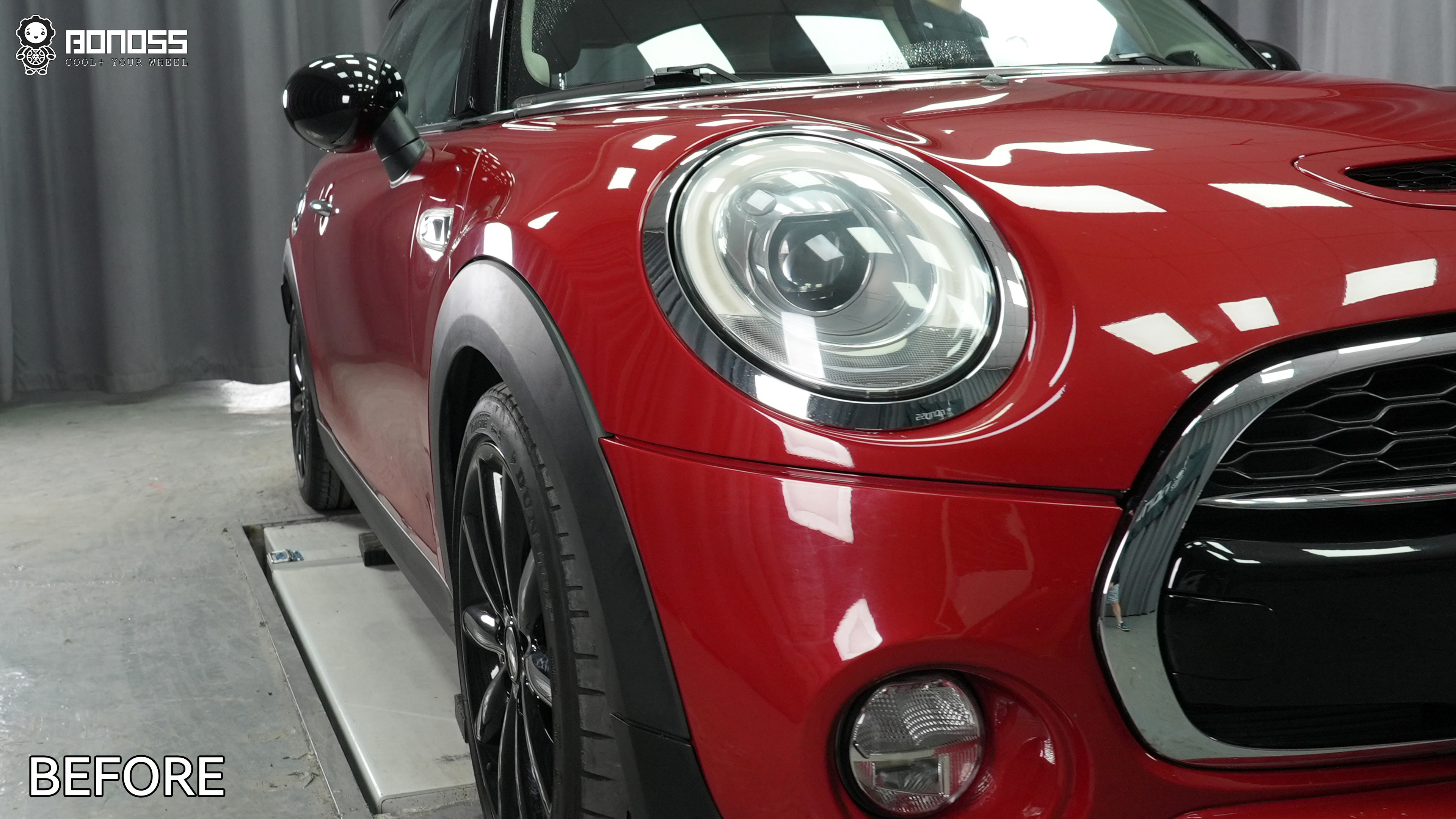
He’d tried 12mm before. On a lowered car, 12mm pushed the front tires past flush and into mild poke—functional, but not the look he wanted. The 10mm brought the tire flush with the fender, which is what he was after. The difference between 10mm vs. 12mm on a lowered F56 isn’t academic. It’s the difference between “flush” and “poke.”
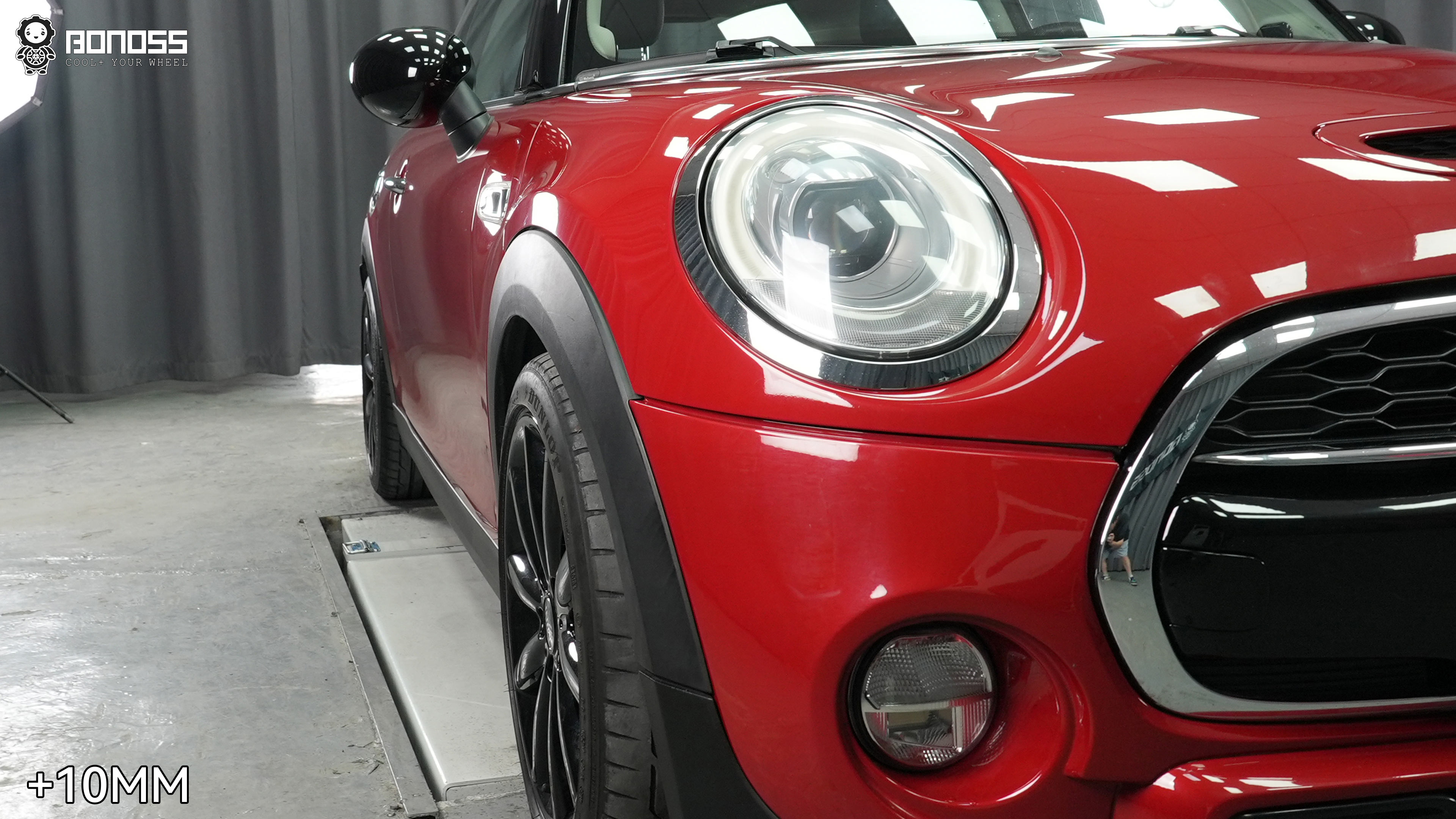
Important: the multi-stage design is specific to BONOSS multi-stage hub-centric 10mm spacers. Do not assume any 10mm spacer on the market will clear the F56 front hub. A standard flat-bore 10mm will not fit this application. MINI Cooper 10mm wheel spacers only work here when the bore geometry is designed for it.
Myth 2: “Hub-Centric 10mm Spacers Can’t Clear the F56 Front Hub”
Verdict: True for standard 10mm spacers, false for BONOSS multi-stage 10mm spacers. The distinction matters.
The engineering problem
This myth is really the mechanical underpinning of Myth 1, and it deserves its own unpacking because it’s where most of the bad advice originates. The rule “spacer thickness must be greater than or equal to hub boss height” is sound engineering for conventional spacers. The F56 front hub boss is 10.72mm. A standard 10mm hub-centric spacer is, well, 10mm thick. Boss exceeds spacer. The spacer can’t seat. That math is sound for conventional spacers.
How BONOSS solves it
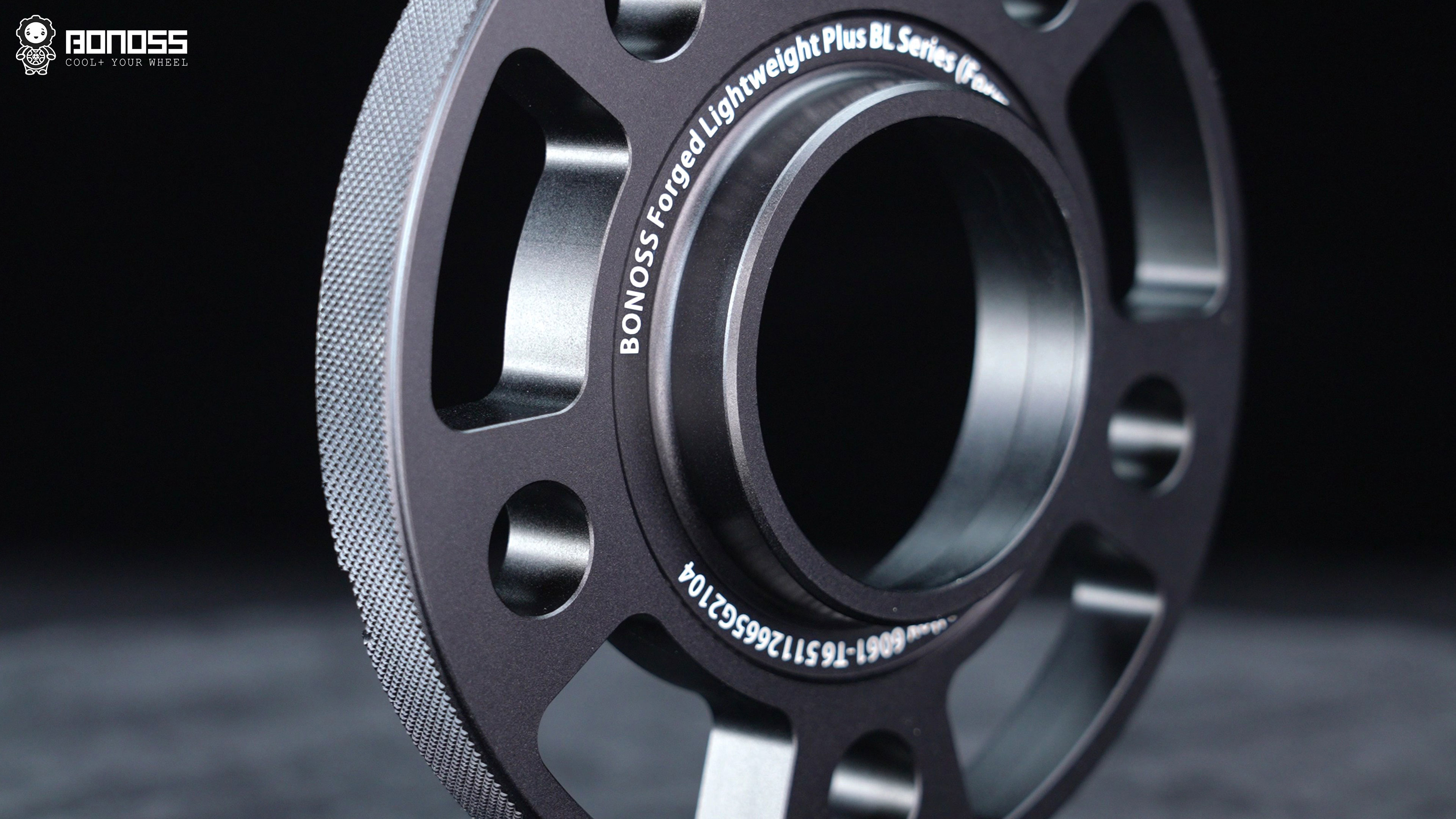
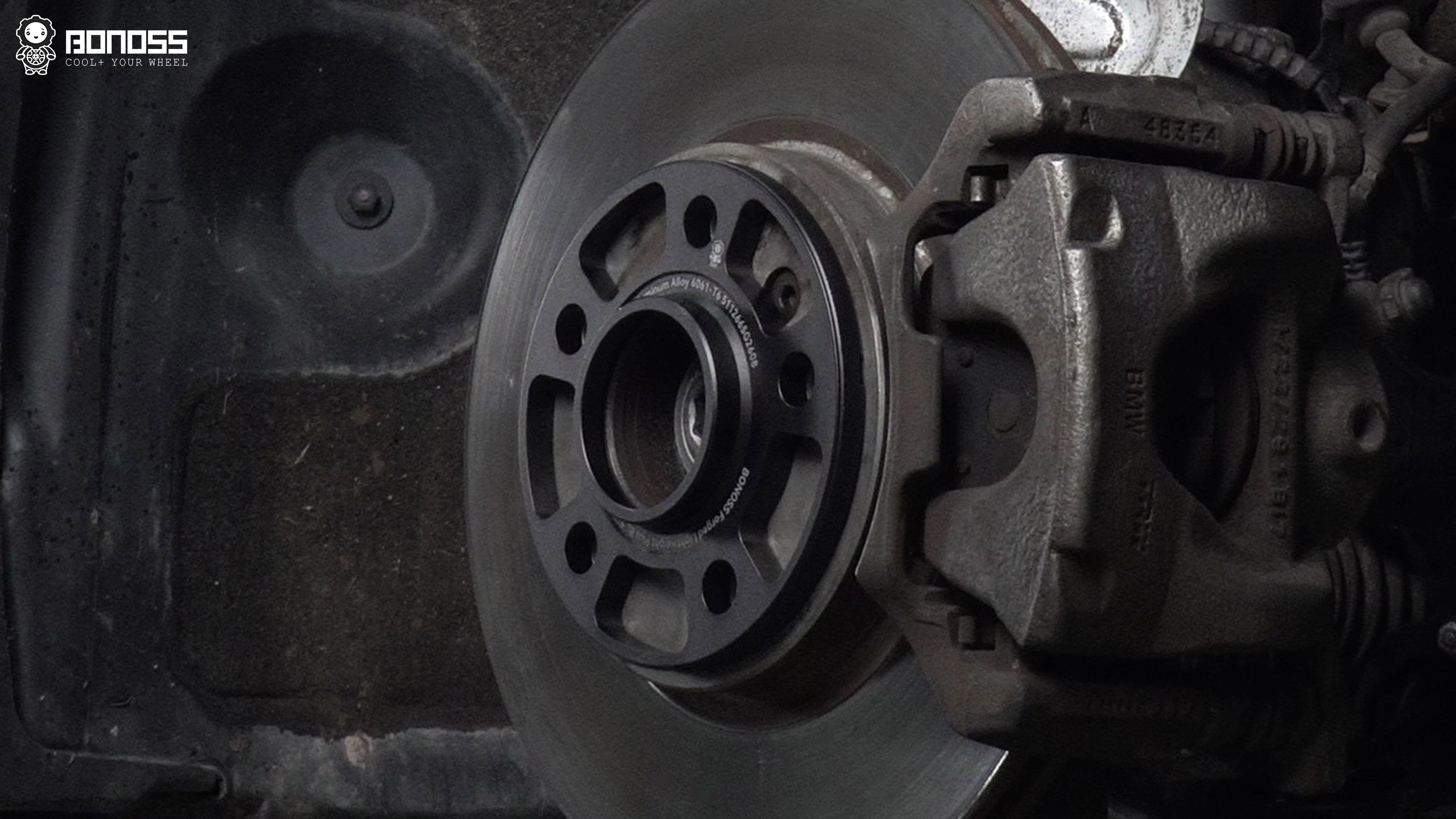
The BONOSS multi-stage hub-centric 10mm spacer doesn’t fight the rule—it rewrites the geometry. Instead of a single-diameter bore, the center hole is CNC-machined with stepped relief pockets. The hub boss (10.72mm) extends into the first step, which is relieved to accept up to 11.5mm of boss length. The outer portion of the bore still provides the hub-centric locating surface against the hub’s primary diameter.
This does two things. First, it lets you run a thinner spacer than the boss height would normally allow—which on a lowered F56 means you can hit flush without overshooting into poke. Second, the multi-stage contact actually improves concentricity. More contact surfaces mean better centering, which means less chance of the slight runout that causes highway-speed vibration. These are the Cooper S hubcentric spacers that solve a problem most people don’t even know exists until they try to install a 10mm unit.
The clearance math that matters
Here’s something that rarely gets mentioned online: the F56’s hub-to-wheel clearance isn’t zero from the factory. We measured the axle hub OD at 66.46mm (vernier caliper) and the wheel center bore at 66.68mm (micrometer). That’s roughly 0.22mm of diametral clearance built in from the factory—assembly tolerance, thermal expansion room, and a touch of corrosion allowance. The factory wheel isn’t zero-clearance hub-centric; it’s close-fit hub-centric.
The BONOSS spacer sits between those two surfaces. Its outer locating diameter is 66.5mm, which creates a 0.18mm diametral clearance with the wheel bore (0.09mm per side). On the vehicle side, the spacer’s multi-stage inner bore mates to the 66.46mm axle hub. That’s a 0.02mm-class precision fit, achieved through CNC machining at that tolerance level.
The takeaway: the spacer has to match two different diameters—axle side and wheel side—simultaneously, and getting both right is why machining precision matters more than spacer thickness. A slip-on spacer with sloppy bore tolerance will vibrate no matter how thick it is.
Myth 3: “Spacers Will Vibrate Your F56 at Highway Speeds”
Verdict: Not with properly machined hub-centric spacers and correct hardware. Ken’s 15,000-mile log backs this up.
Why people believe this
This one has roots in reality—just not the kind that applies here. Lug-centric spacers (the cheap universal ones with no centering ring) can cause vibration, because the wheel is located by the lug bolts alone, not by a precision-machined hub pilot. If the spacer bore doesn’t locate the wheel concentrically, you get runout, and runout at 70 mph feels like a bent wheel. The hub-centric vs. lug-centric 5×112 debate isn’t academic—it’s the difference between a smooth highway pull and a steering wheel that shimmies.
But that’s a hardware problem, not a physics problem. A hub-centric spacer machined to the correct tolerance locates the wheel with precision comparable to the factory hub. Runout is minimized, and vibration becomes unlikely.
What the data says
Ken’s been running this setup since August 2024. Fifteen thousand miles. Here’s his direct feedback: “Picked up these BONOSS spacers and been running them on my Cooper S for about two years now. They’ve performed great—no rubbing, no vibrations. Good spacers for the quality and price.”
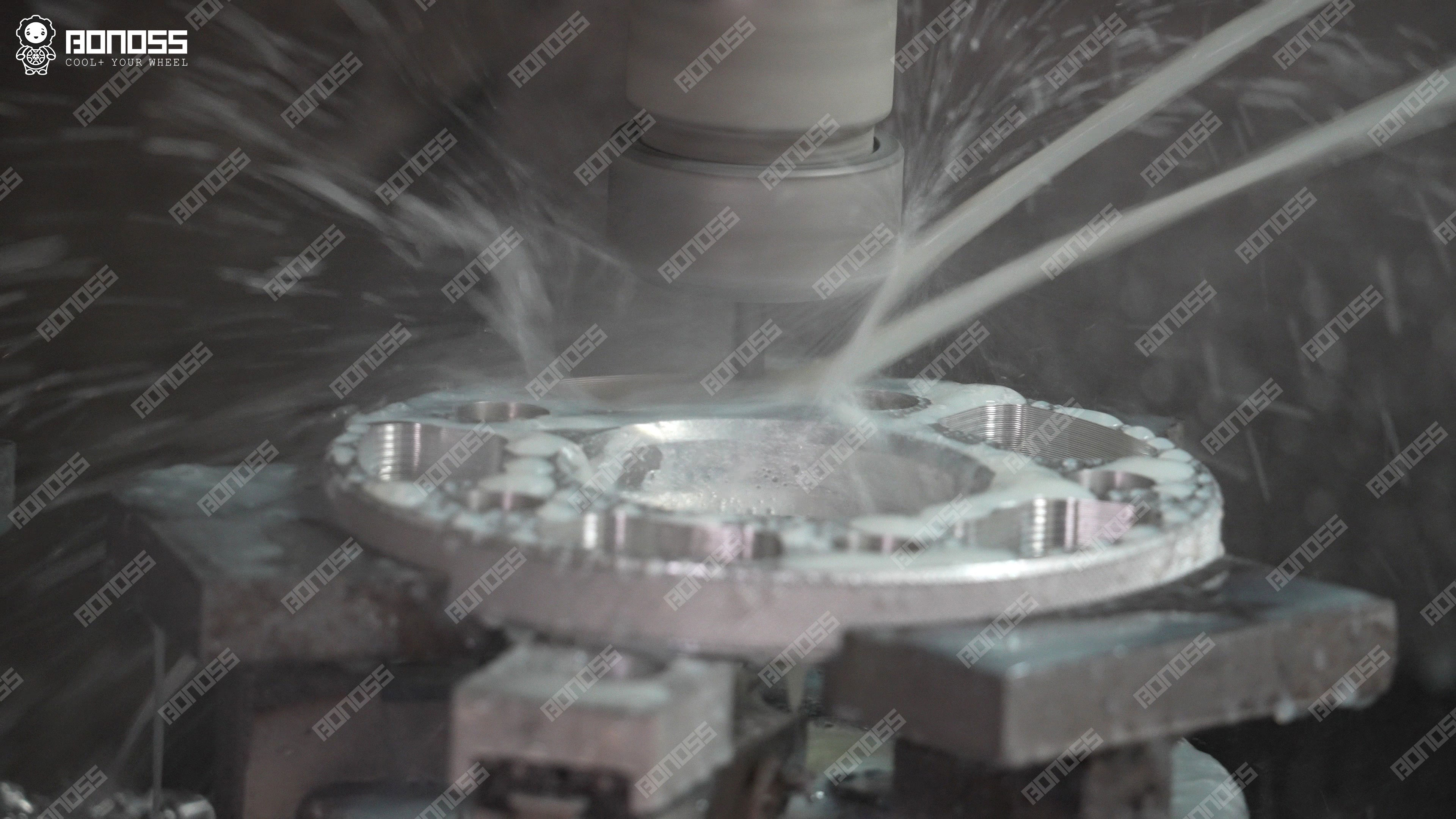
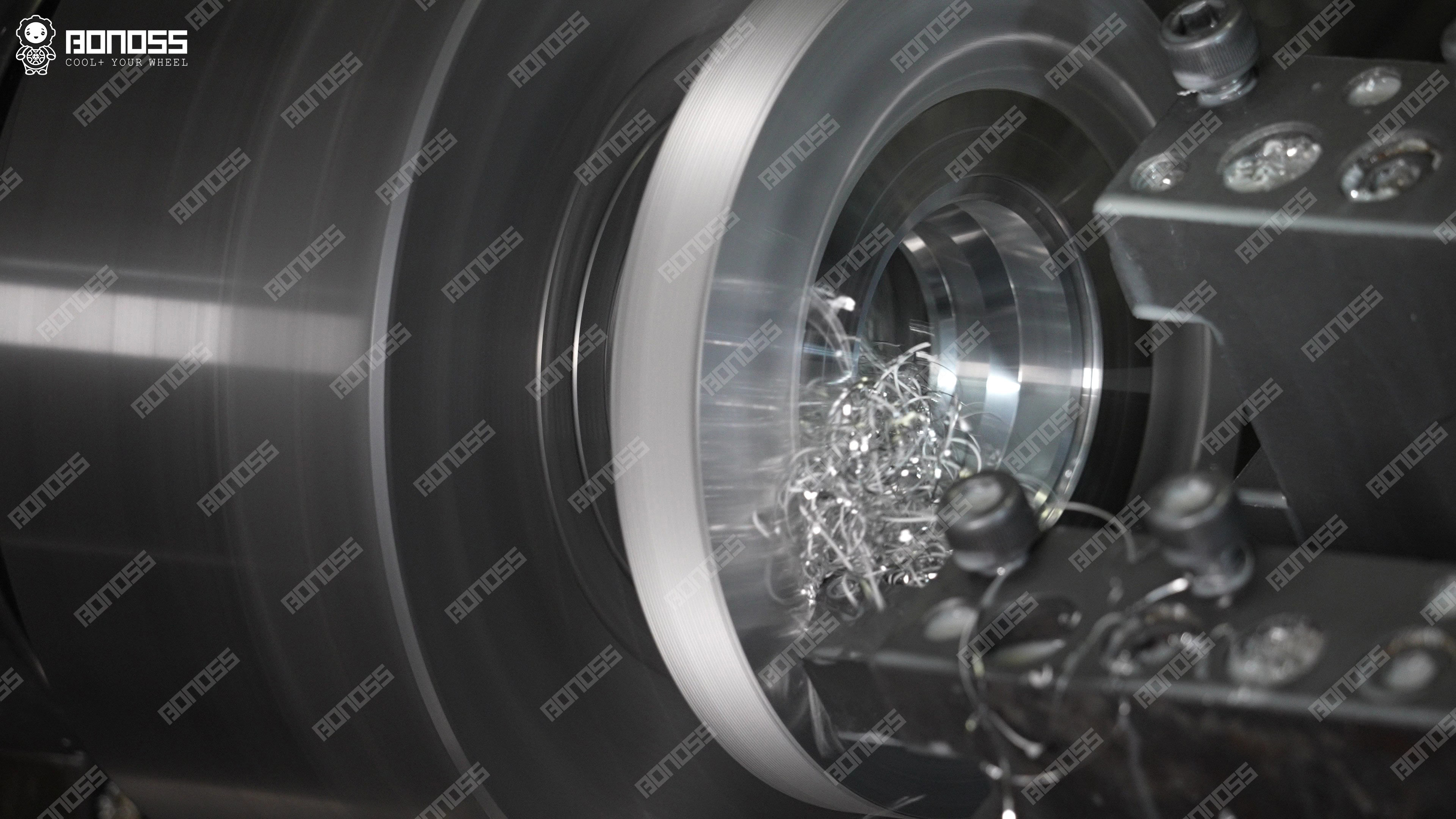
Ken reported no vibration at any speed, no shimmy under braking, no steering wheel shake. The reason is the machining: BONOSS spacers are CNC-machined to 0.02mm precision, which keeps the locating surfaces concentric with the bolt circle. When the wheel seats on a spacer that’s concentric to the hub, the assembly behaves much like a wheel bolted directly to the axle. Alignment stays true, brake caliper clearance stays consistent, and the main thing that changes is the track width.
The hardware that makes it safe
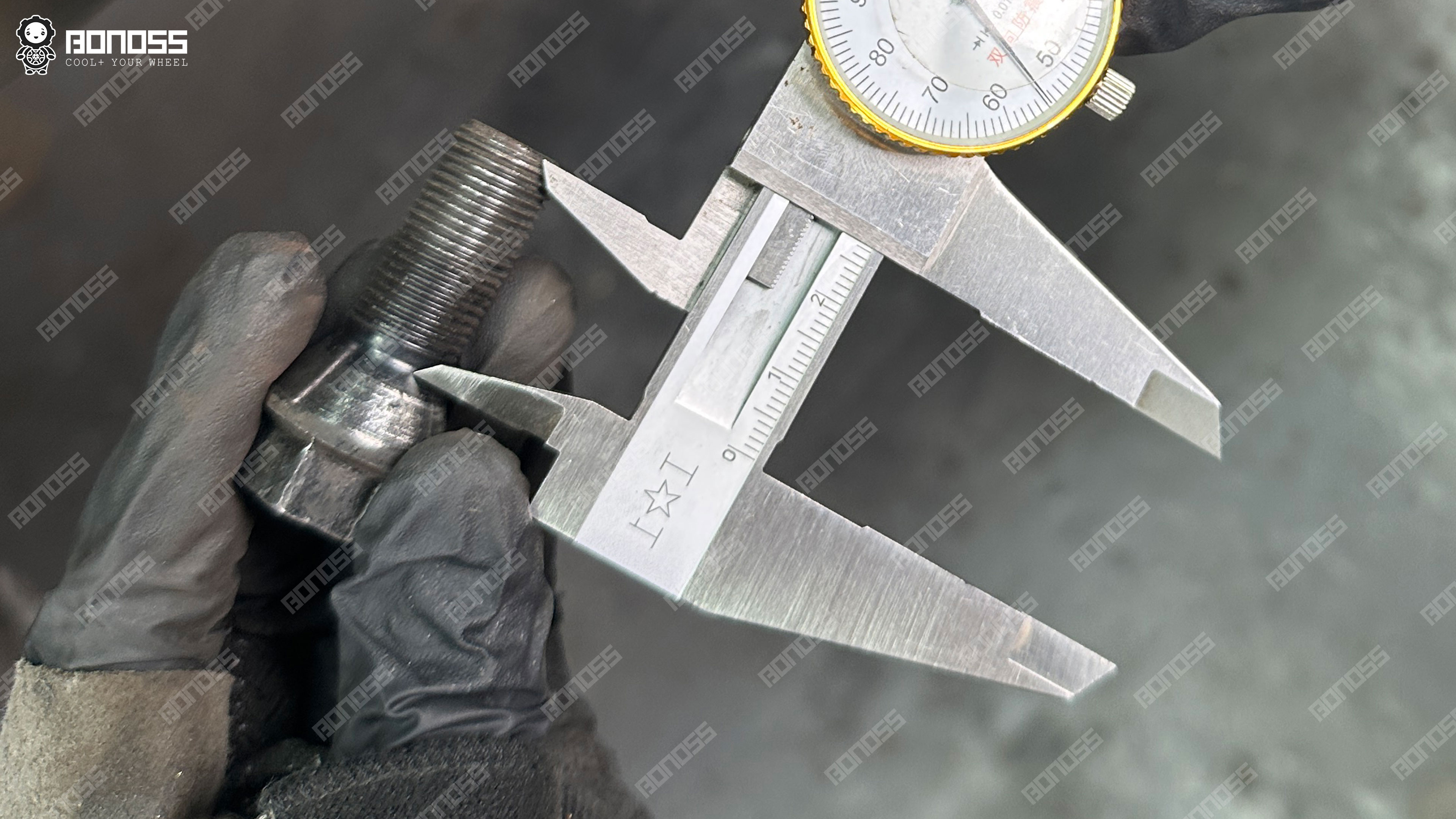
This is where most spacer installs go wrong—not the spacer, but the bolts. The factory wheel bolts on the F56 have 27mm of usable thread below the contact face (measured with a vernier caliper). When you add a 10mm spacer, you’ve consumed 10mm of that thread engagement. Reusing stock bolts means you’re running on 17mm of thread—not enough for a safe clamping load on a 5×112 pattern running M14×1.25 hardware.
We replaced all bolts with BONOSS ISO Grade 12.9 extended wheel bolts. For the 10mm front spacers, we used 37mm thread-length bolts. For the 18mm rear spacers, 45mm thread-length bolts. These aren’t generic hardware-store studs—the material is tested to ISO Grade 12.9 spec, and the numbers come from independent lab reports:
- SGS tensile test (M14×1.25): 1272 MPa tensile strength (ISO 898-1:2013+Cor-1:2013)
- TÜV Rheinland tensile test (M14×1.25): 1256 MPa (ISO 898-1:2013+Cor-1:2013)
- TÜV Rheinland proof load: 125 kN (ISO 898-1:2013+Cor-1:2013)
- SGS hardness: 394 HV10 (ISO 6507-1:2018)
- TÜV Rheinland hardness: 397 HV10 (ISO 6507-1:2018)
- TÜV salt spray (spacers, 6061-T6): 240 hours, zero defects (ISO 9227:2022+Amd 1:2024)
- TÜV hardness (spacers, 6061-T6): 101-103 (ISO 6506-1:2014)
Different labs, different samples, different measurement methods—that’s why SGS and TÜV Rheinland return slightly different numbers for the same bolt spec. A nut tested on the same thread will read differently from a bolt because the engagement geometry differs. Even between bolts, an M14×1.5 and an M14×1.25 won’t produce identical results because thread pitch changes the stress distribution.
The point isn’t which number is “more correct”—it’s that every value comes from a documented ISO test method on an independent report, not a marketing claim. Over 75 SGS and TÜV test reports back this product line.
The Right Way: Installation & Torque
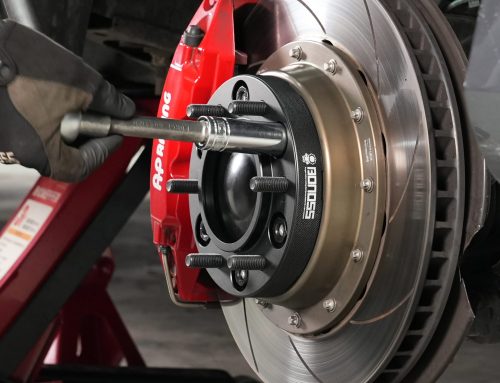
Here’s the condensed version of what a correct F56 spacer install looks like. For the full step-by-step, the wheel spacers fitment guide covers the procedure in detail—this is the quick version.
- Measure first. Fender gap, hub boss height, axle OD, wheel bore, existing bolt thread length. All five before ordering.
- Order the right thickness. Front 10mm, rear 18mm for flush fitment on this MINI Cooper. Different cars and ride heights will vary.
- Use extended bolts. 37mm thread for 10mm spacers, 45mm thread for 18mm spacers. Never reuse stock bolts on spacers this thick.
- Torque to spec. 140 Nm (103.5 ft-lb) using BONOSS extended bolts, per BONOSS installation instructions. The OEM value is the same—140 Nm per the owner’s manual—but you follow the source that matches your hardware.
- Torque in sequence. Star pattern—140 Nm.
- Re-torque after 50 miles. Always. New hardware settles.
This F56 10mm front 18mm rear spacer kit isn’t complicated to install, but skipping any of these steps is how you end up as another cautionary tale.
MINI Cooper 10mm Spacers Before and After: The Flush Stance
Numbers are one thing. The visual is another. Here’s every corner, before and after the 10mm front / 18mm rear split.
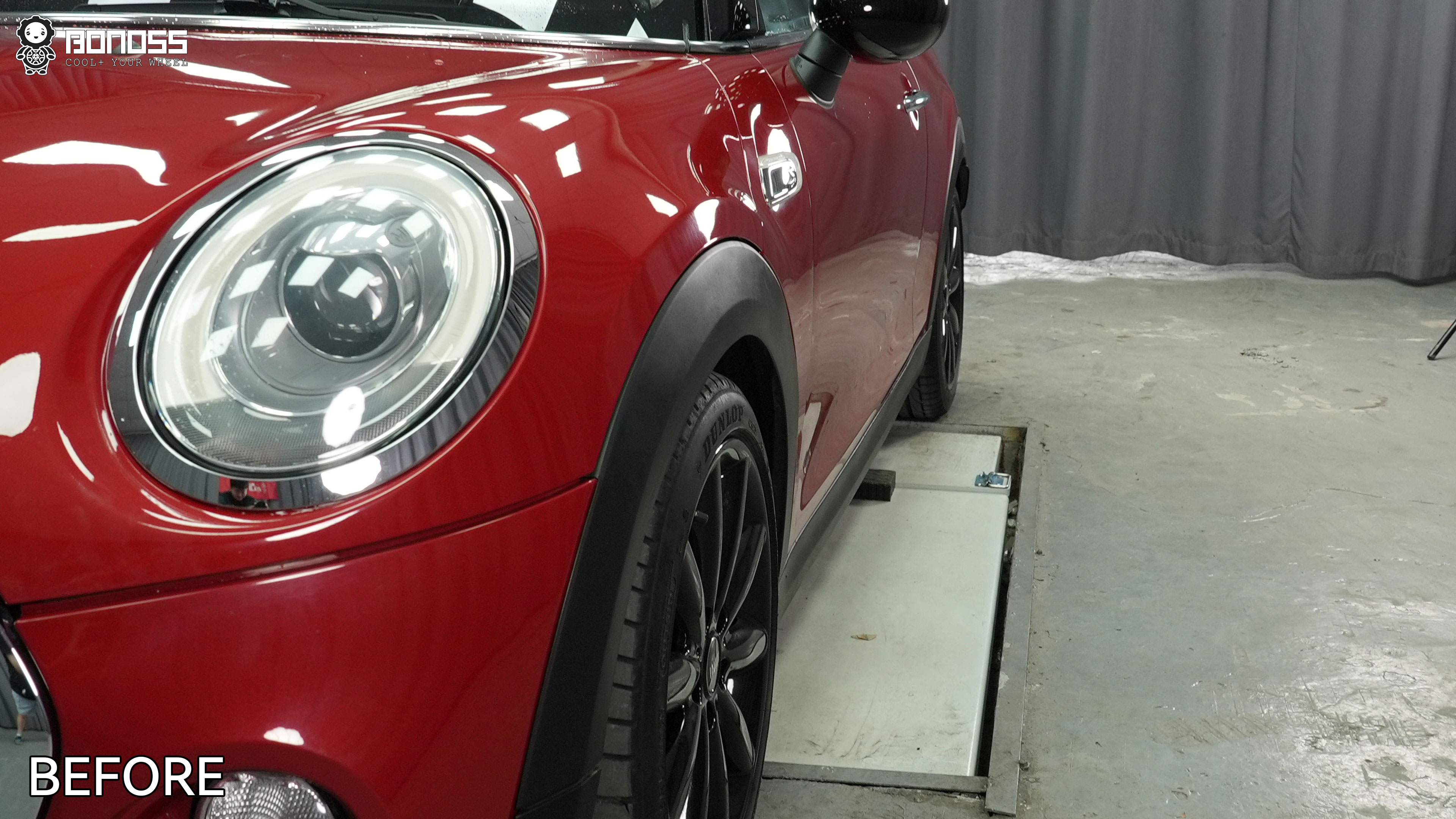
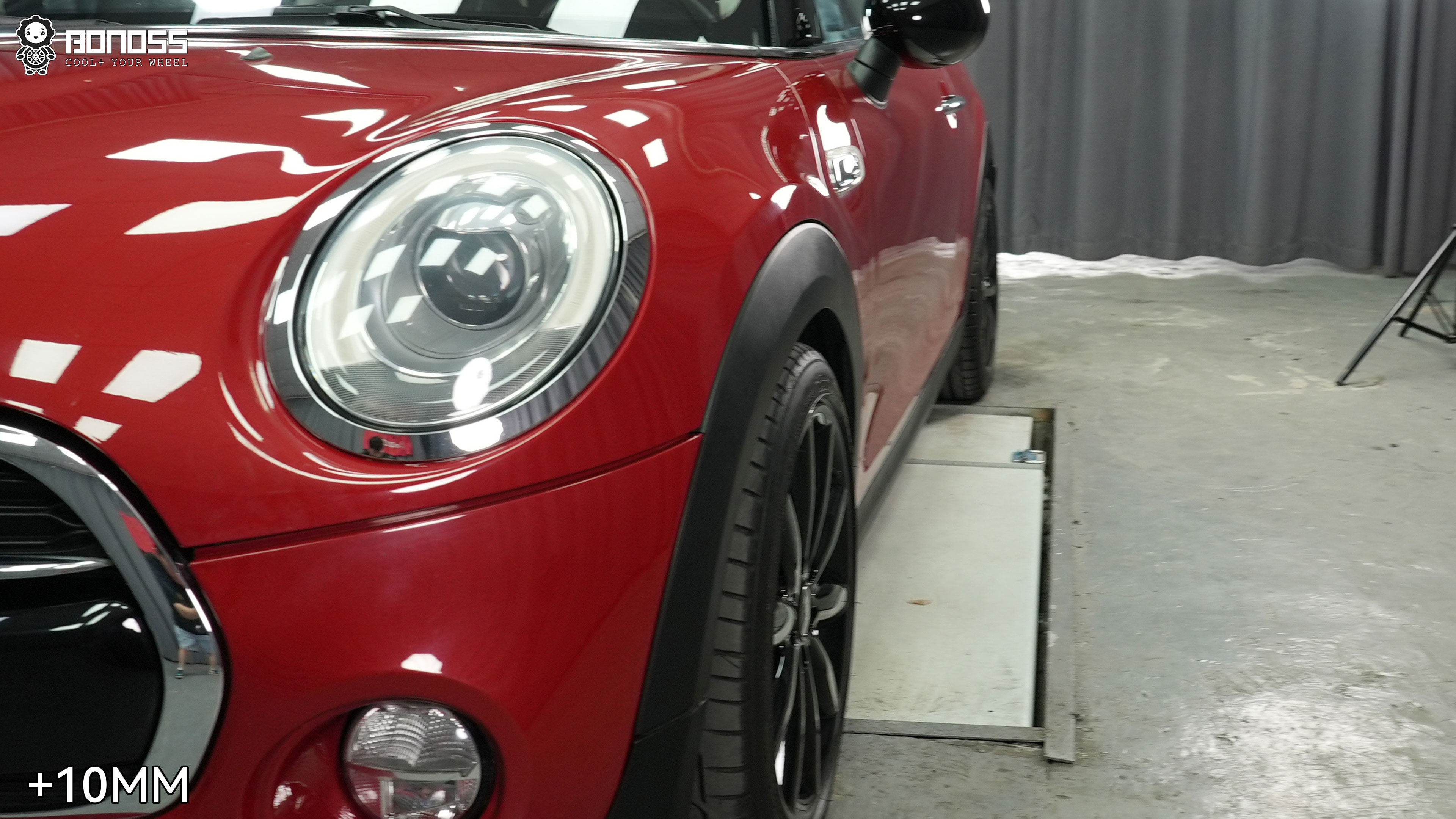
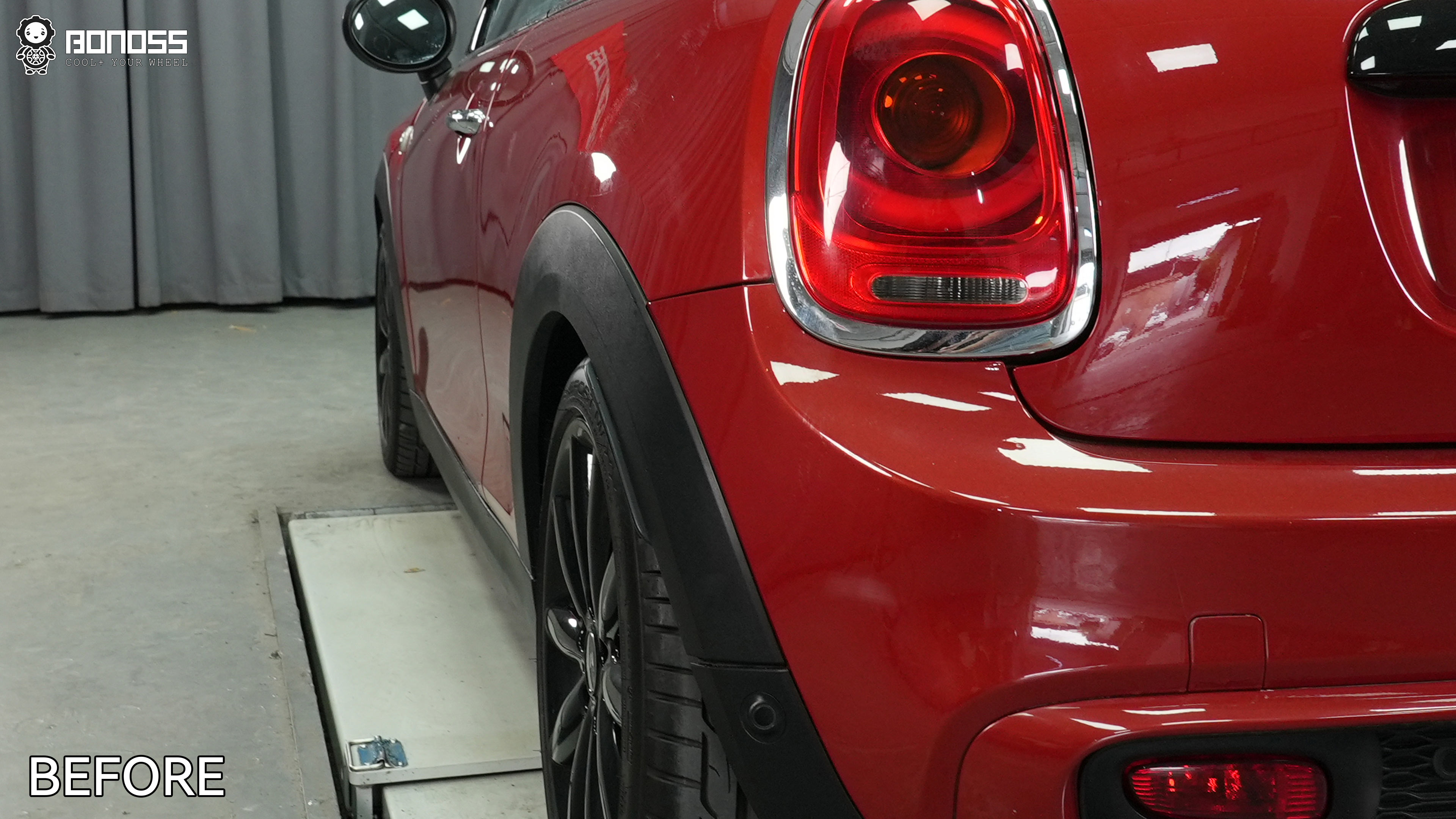
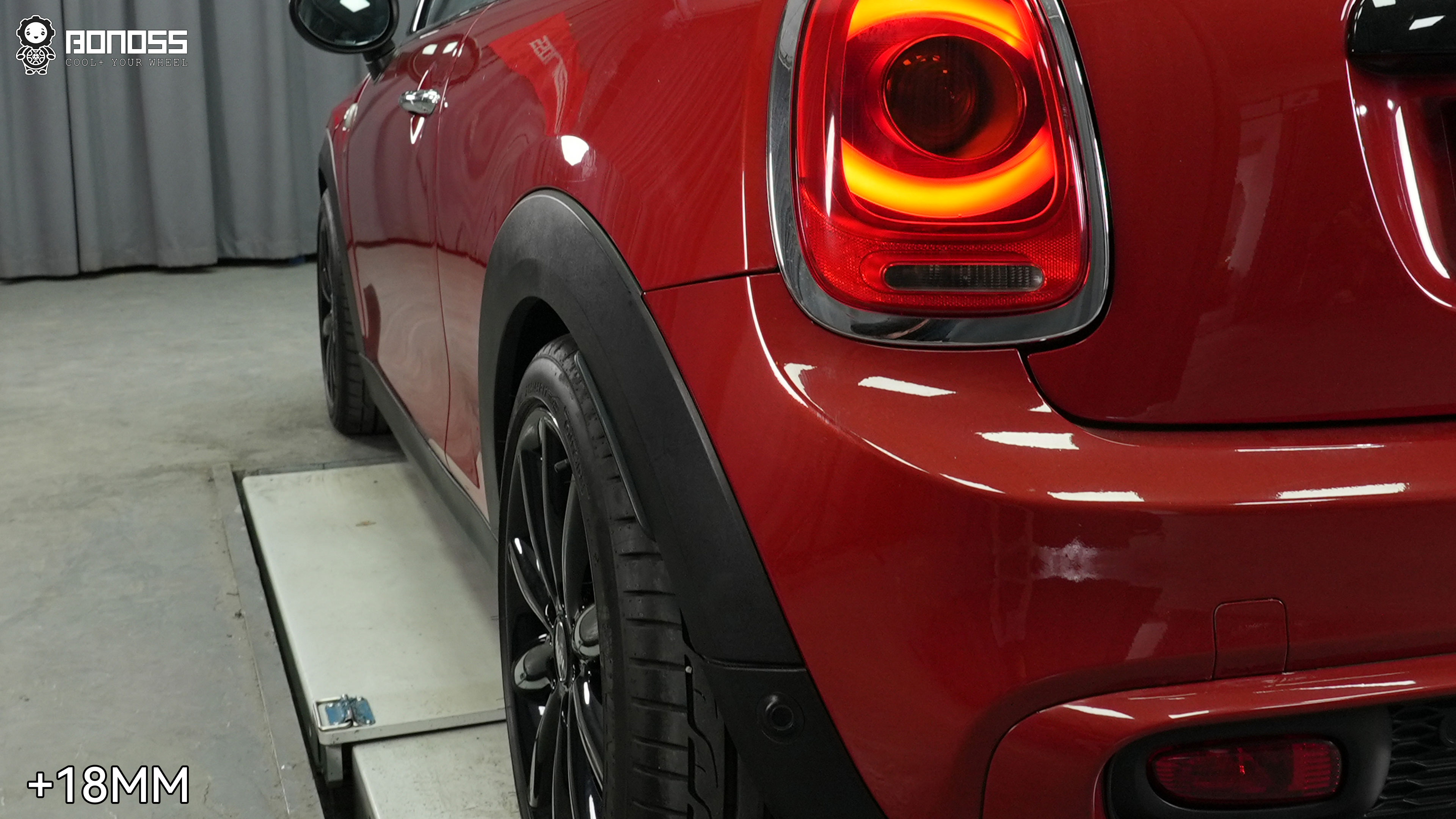
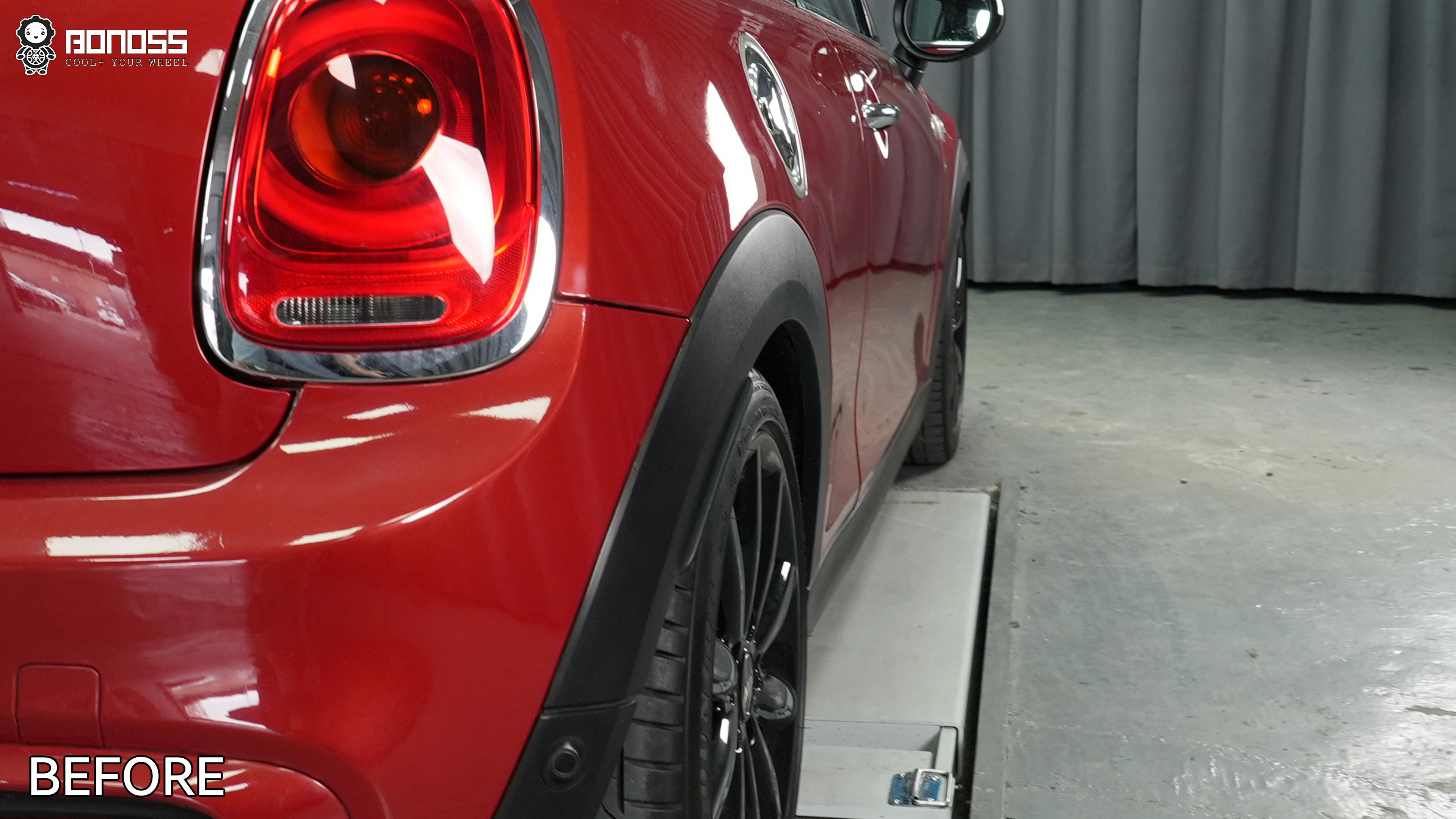
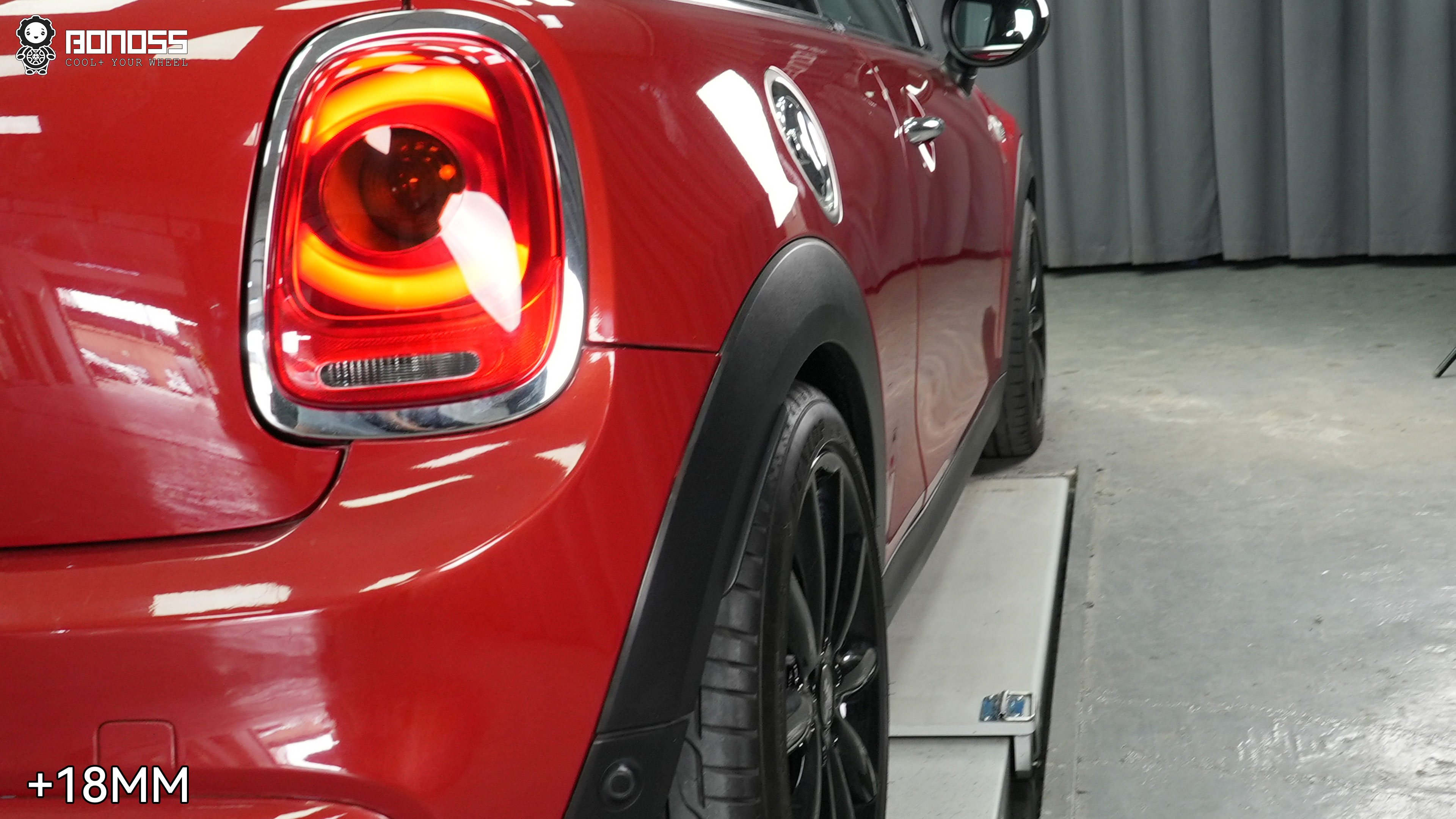
The factory ET54 tucks the 205/45ZR17s inside the fenders—clean but conservative. Drop the front ET by 10mm (to ET44) and the rear by 18mm (to ET36), and the tires sit flush with the arches. On Ken’s lowered car, that’s the difference between “stock-looking car on lowering springs” and “properly stance’d car that still clears the fender under compression.” Track widening goes up by 20mm front and 36mm rear, which doesn’t just look better—it marginally reduces load transfer in corners.
No rubbing reported. No trimming needed. The 205-section tire on a 17-inch wheel has enough sidewall to clear the rolled fender lip even at full lock and full compression. These F56 18mm wheel spacers out back and 10mm up front hit the sweet spot that a single-thickness kit often can’t match.
What It Cost
Full transparency on the bill:
| Item | Price (USD) |
|---|---|
| 2 pcs 10mm spacers (6061-T6) + 10 pcs 37mm extended bolts | $117.99 |
| 2 pcs 18mm spacers (6061-T6) + 10 pcs 45mm extended bolts | $130.99 |
| Labor | $20.00 |
| Total | $268.98 |
That’s four spacers, twenty extended bolts, and professional install for under $270. The spacer kit alone (spacers + bolts) came to $248.98. Compare that to a set of aftermarket wheels with the right offset—you’re looking at $1,200+ for anything worth putting on an F56. The spacers deliver the same visual result at a fraction of the cost, using the factory wheels you already own. Even JCW F56 wheel spacers owners chasing the same flush look could apply this thickness logic to their own setup.
FAQ
Do 10mm wheel spacers fit a 2014 MINI Cooper S F56?
Yes—but only multi-stage hub-centric 10mm spacers like the BONOSS design. The F56 front hub boss is 10.72mm tall, which blocks standard flat-bore 10mm spacers. The BONOSS multi-stage bore relieves up to 11.5mm of boss length, so the 10mm seats correctly.
Do wheel spacers cause vibration on a MINI F56?
Not when they’re hub-centric and machined to tight tolerance. Ken’s car has 15,000 miles on BONOSS 10mm front / 18mm rear spacers with zero vibration at any speed. The vibration myth comes from lug-centric universal spacers with poor concentricity—properly machined hub-centric spacers locate the wheel as precisely as the factory hub.
Do I need extended bolts for 10mm spacers?
Yes. The factory bolts have 27mm of thread below the contact face. Adding a 10mm spacer leaves only 17mm of engagement—insufficient for a safe clamping load on M14×1.25 hardware. Use 37mm thread-length extended bolts for 10mm spacers, and 45mm for 18mm spacers.
What is the correct torque for F56 spacers with extended bolts?
140 Nm (103.5 ft-lb) when using BONOSS extended bolts, per BONOSS installation instructions. The factory spec is also 140 Nm per the owner’s manual, but always follow the torque source that matches your hardware. Use one value for the entire installation.
What bolt pattern does a 2014 MINI Cooper S use?
5×112mm. The F56 shares its bolt pattern with contemporary BMW models, but hub bore and hub boss geometry differ—always verify fitment on your specific car rather than assuming BMW wheels or spacers will transfer directly. R56 vs. F56 vs. F55 spacers compatibility should be checked individually.
Are wheel spacers safe on a MINI Cooper S F56?
When installed with hub-centric spacers, grade 12.9 extended bolts, and correct torque, yes. For a deeper look at the safety engineering and testing standards, the wheel spacers safety breakdown covers the material science and certification data in detail.
Verdict
Three online claims, two don’t hold up under measurement, one needs the right hardware to work. The 2014 MINI Cooper S 10mm spacers up front and 18mm rear work because the math works—10.72mm boss accommodated by an 11.5mm multi-stage relief, 66.5mm spacer OD fitting inside a 66.68mm wheel bore, 37mm and 45mm extended bolts replacing 27mm factory studs. Fifteen thousand miles of zero-vibration evidence backs it up. If you’re hunting the best 10mm wheel spacers for 2014 MINI Cooper S, the ones that actually fit the front hub are the ones with the multi-stage bore.
BONOSS brings forged 6061-T6 aluminum, the lightweight plus design with side knurling and disassembly grooves, multi-stage hub-centric machining at 0.02mm CNC precision, hard anodized surface, and over 75 SGS and TÜV test reports behind the product. A 10-year warranty doesn’t hurt. Lightweight wheel spacers 5×112 MINI Cooper owners can buy with confidence, at a price that makes sense. None of that matters if the install is wrong—but done right, this is one of the cheapest stance upgrades you can put on an F56.

About Robert Wall
Robert Wall is a Senior Automotive Engineer at BONOSS with over 9 years of experience in automotive component R&D, specializing in the structural design and safety validation of wheel spacers, wheel adapters, and high-strength fasteners. He is actively involved in product testing and on-track evaluation and is dedicated to translating engineering expertise into accessible modification knowledge — helping enthusiasts upgrade their vehicle’s stance and handling without compromising safety.