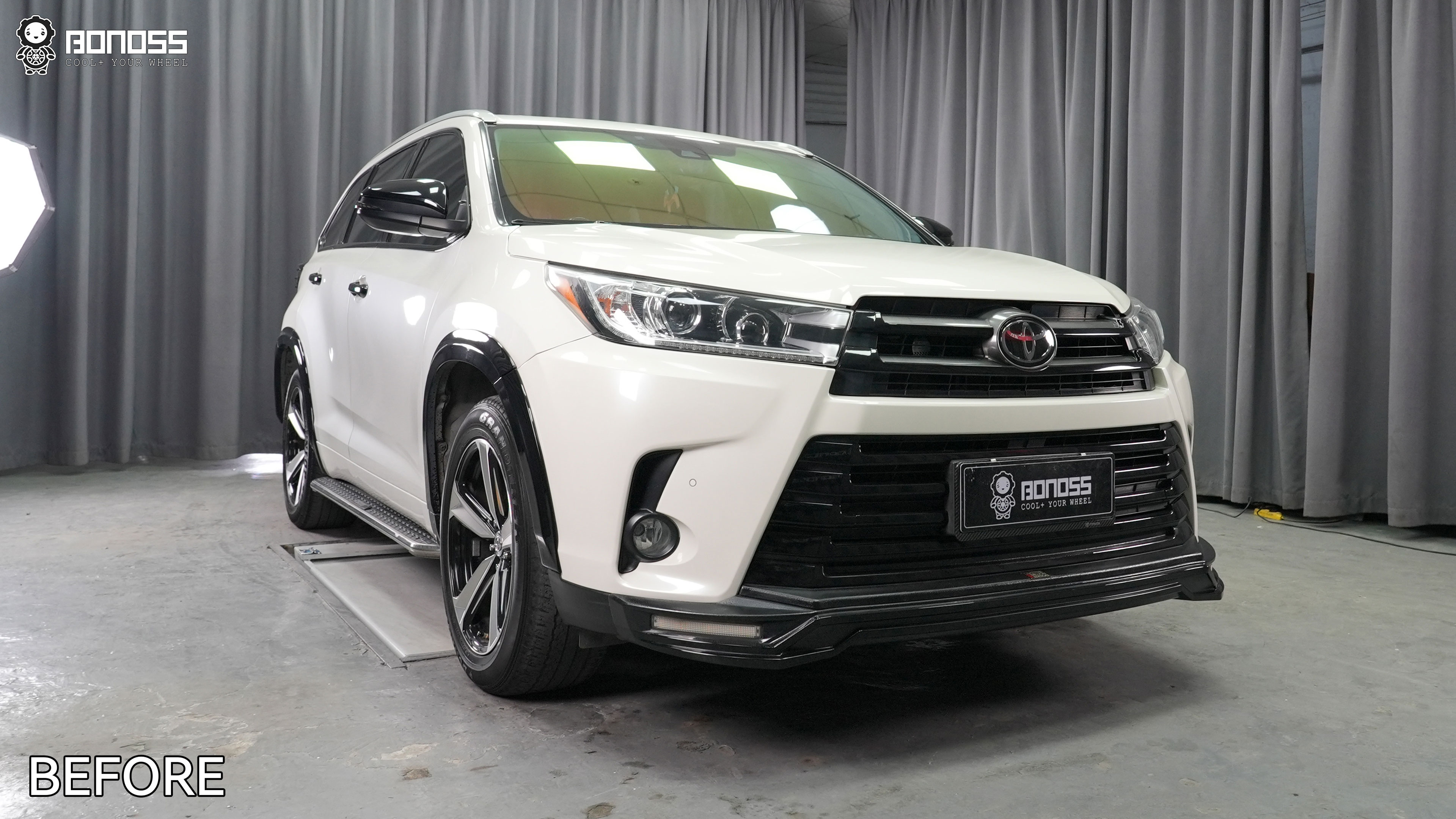
Some jobs are simple. Others walk through the door wearing a brand-new body kit and a pair of aftermarket wheels that look fantastic — and fit terribly. That was Anthony Kamal’s Highlander on the morning of August 20, 2025.
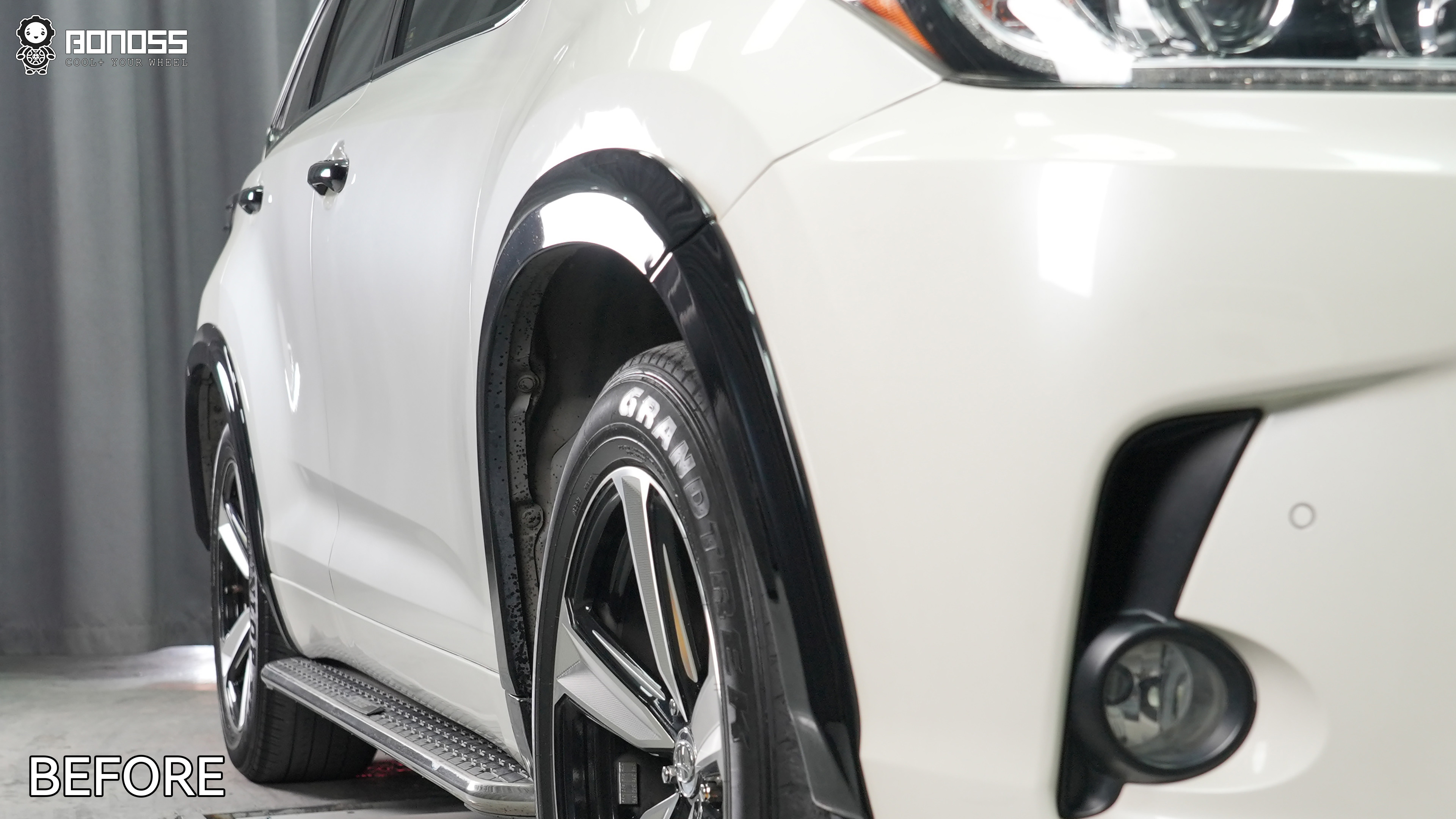
Anthony runs a shop over in Oakdale, MN. A shop manager who knows cars, knows forums, and — as he’d be the first to tell you — had just made a fitment mistake he wasn’t ready to admit. He’d bolted on a wide body kit and grabbed a fresh set of wheels he loved. The problem was, love doesn’t change offset. The wheels sat tucked deep inside the fenders, looking like they’d shrunk in the wash.
His words, not mine:
“I just picked up some new wheels and also added a body kit, but the kit ended up being way wider than I expected. Gonna need spacers to push them out away from the suspension.”
So he didn’t come in asking for 2018 Toyota Highlander wheel spacers because he read a blog post. He came in because his eyes told him something was off, and his suspension was uncomfortably close to the back of his new rims. That’s the kind of customer I like — he already knew why he needed them. He just needed to know what size.
The Fitment Problem — When “Aggressive” Wheels Sit Too Far In
Here’s the thing people don’t talk about enough: a body kit changes the visual target, not the suspension geometry. Your fenders get wider, your wheels don’t move. So the gap you used to ignore is suddenly the only thing you can see.
Anthony’s wheels were sitting maybe 30-something millimeters inside where they should’ve been. On a Highlander, that’s not just ugly — it’s risky. The inside of the tire was close enough to the strut. Not good.
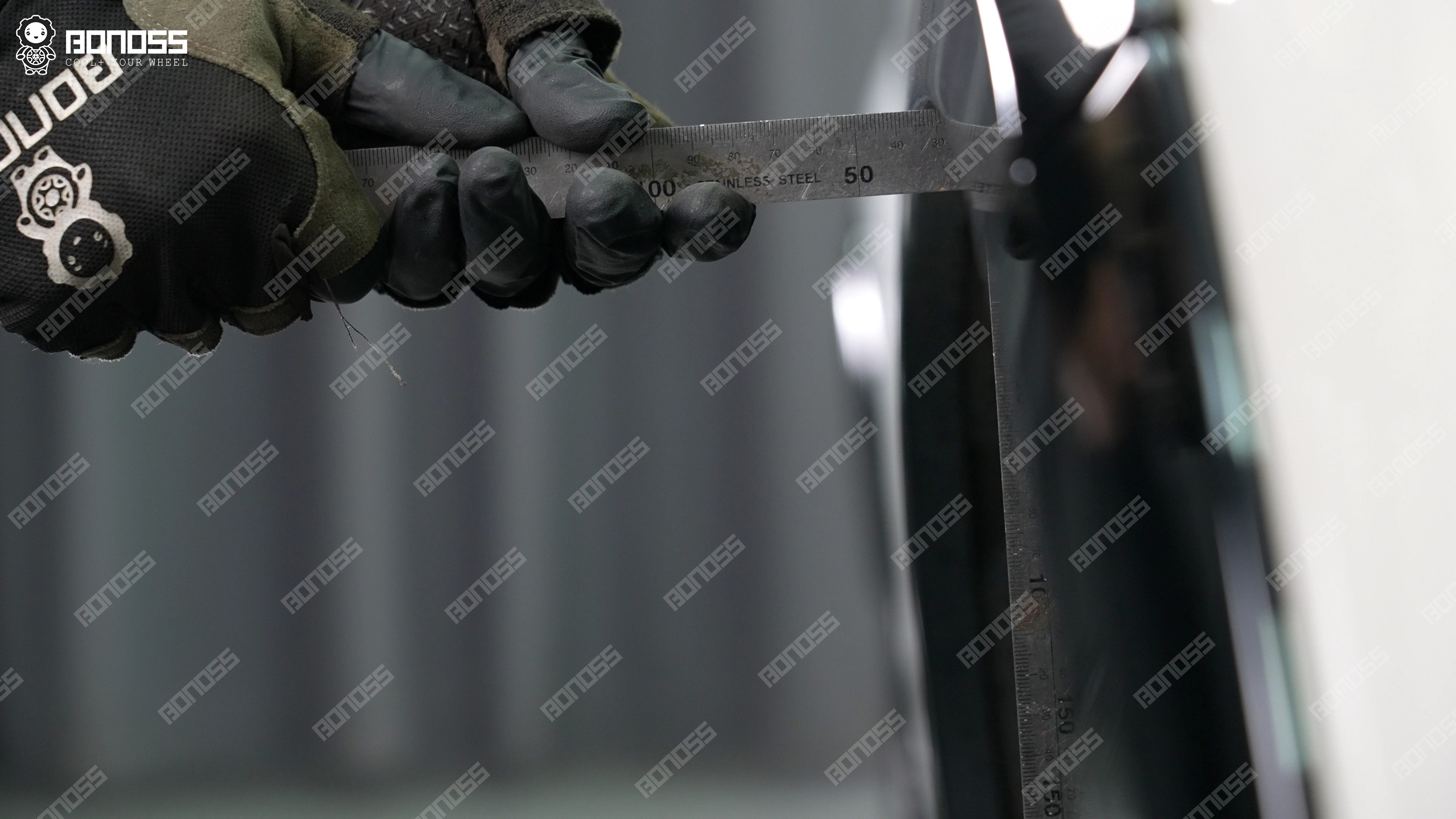
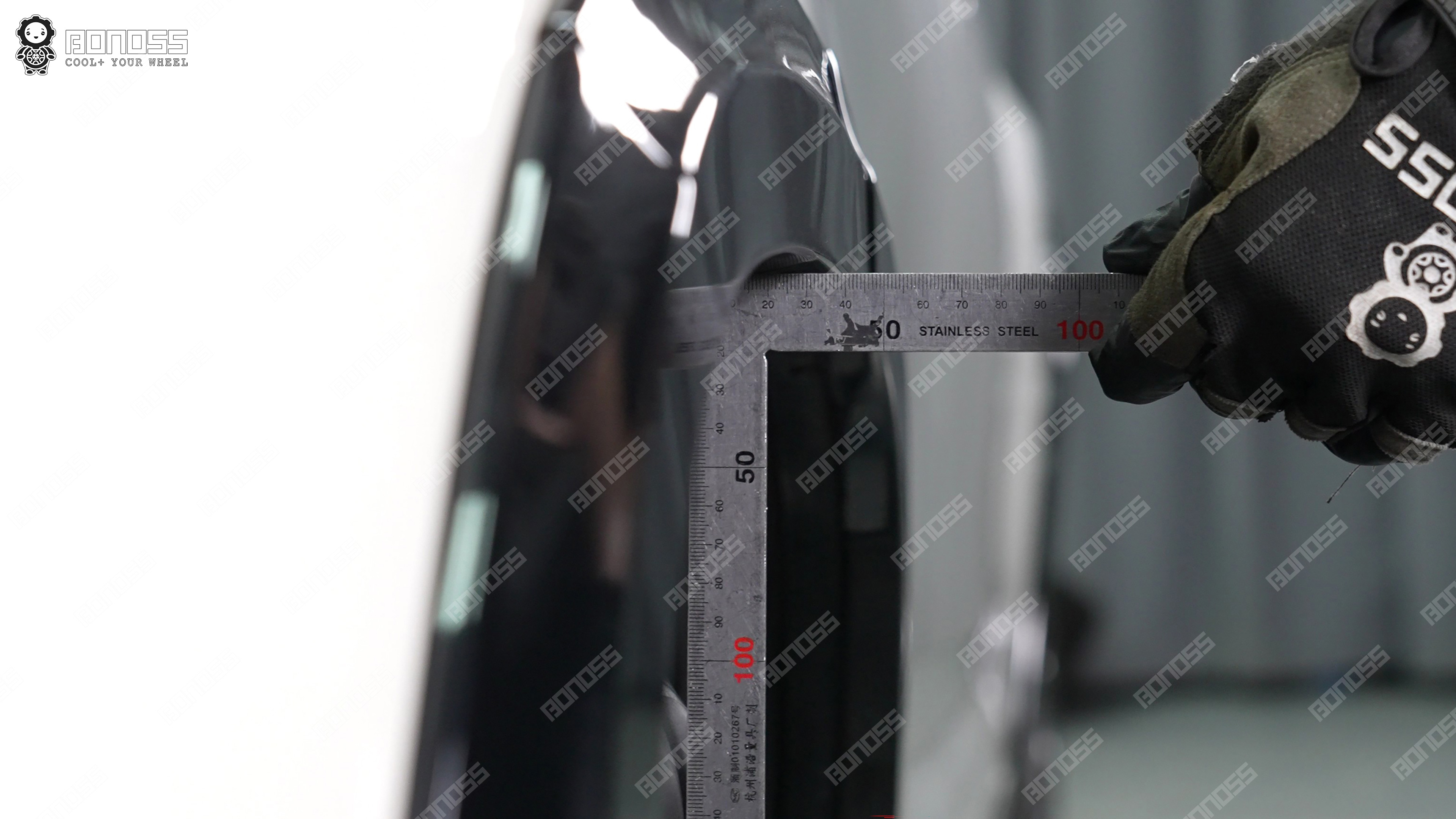
So before I recommended anything, I did what I always do: I measured. No guessing, no “most Highlanders take a 25.” Every car is a little different once you start modifying it.
Why 35mm? The Numbers That Actually Matter
I get asked “what size wheel spacers do I need” about as often as I get asked if spacers are safe — which is to say, daily. And my answer is always the same: let me measure your car, then I’ll tell you.
Here’s what I found on Anthony’s 2018 Highlander:
| Measurement | Front | Rear |
|---|---|---|
| Hub bore (center hole) | 60.1mm | 60.1mm |
| Hub step height | 8.5mm | 8.1mm |
| Factory stud protrusion | 23mm | 21mm |
| Lug nut thread | M12x1.5mm | M12x1.5mm |
| Factory Torque spec | 103 Nm (76 ft·lb) | 103 Nm (76 ft·lb) |
| Bolt Pattern (PCD) | 5×114.3mm | 5×114.3mm |
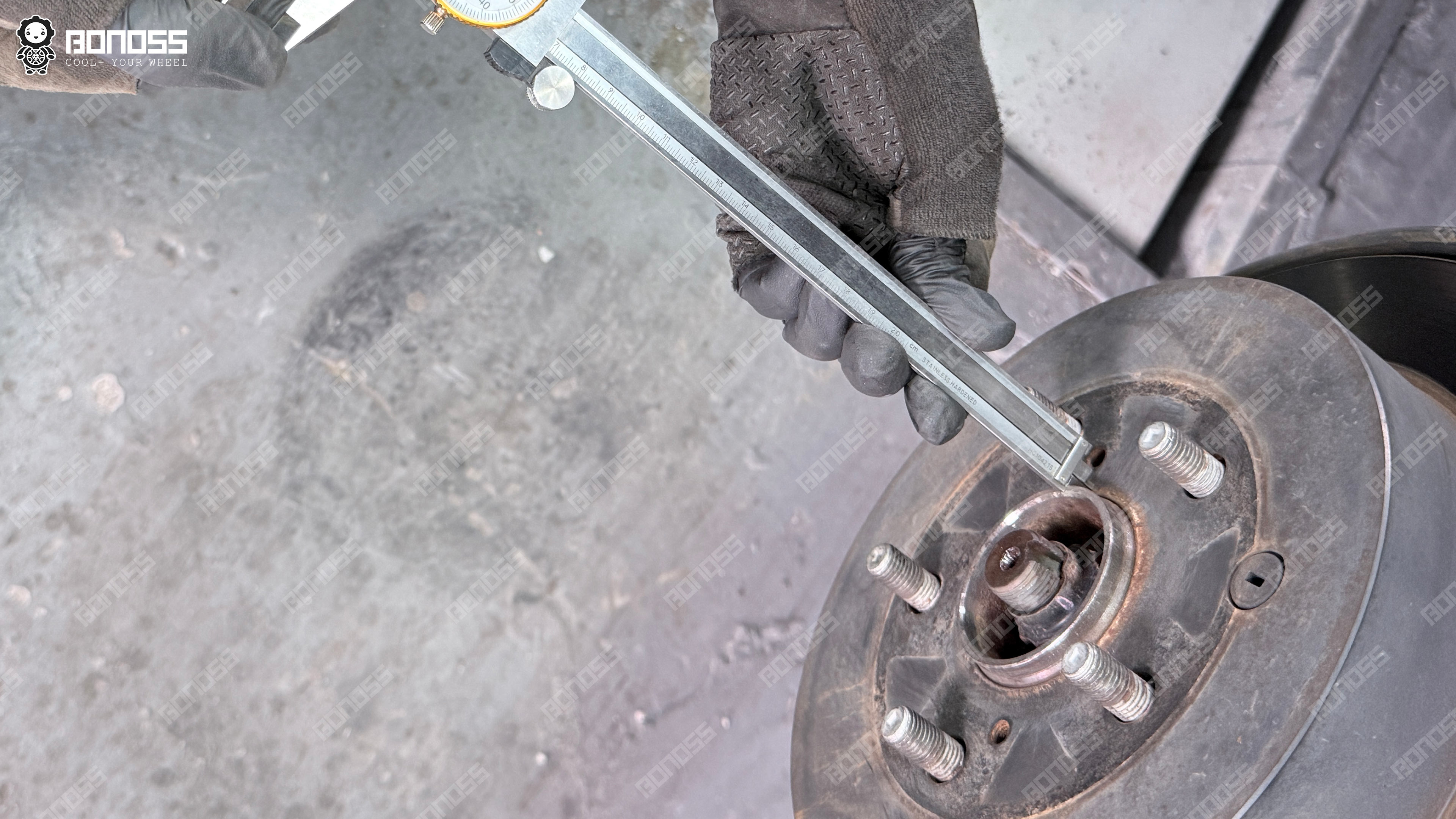
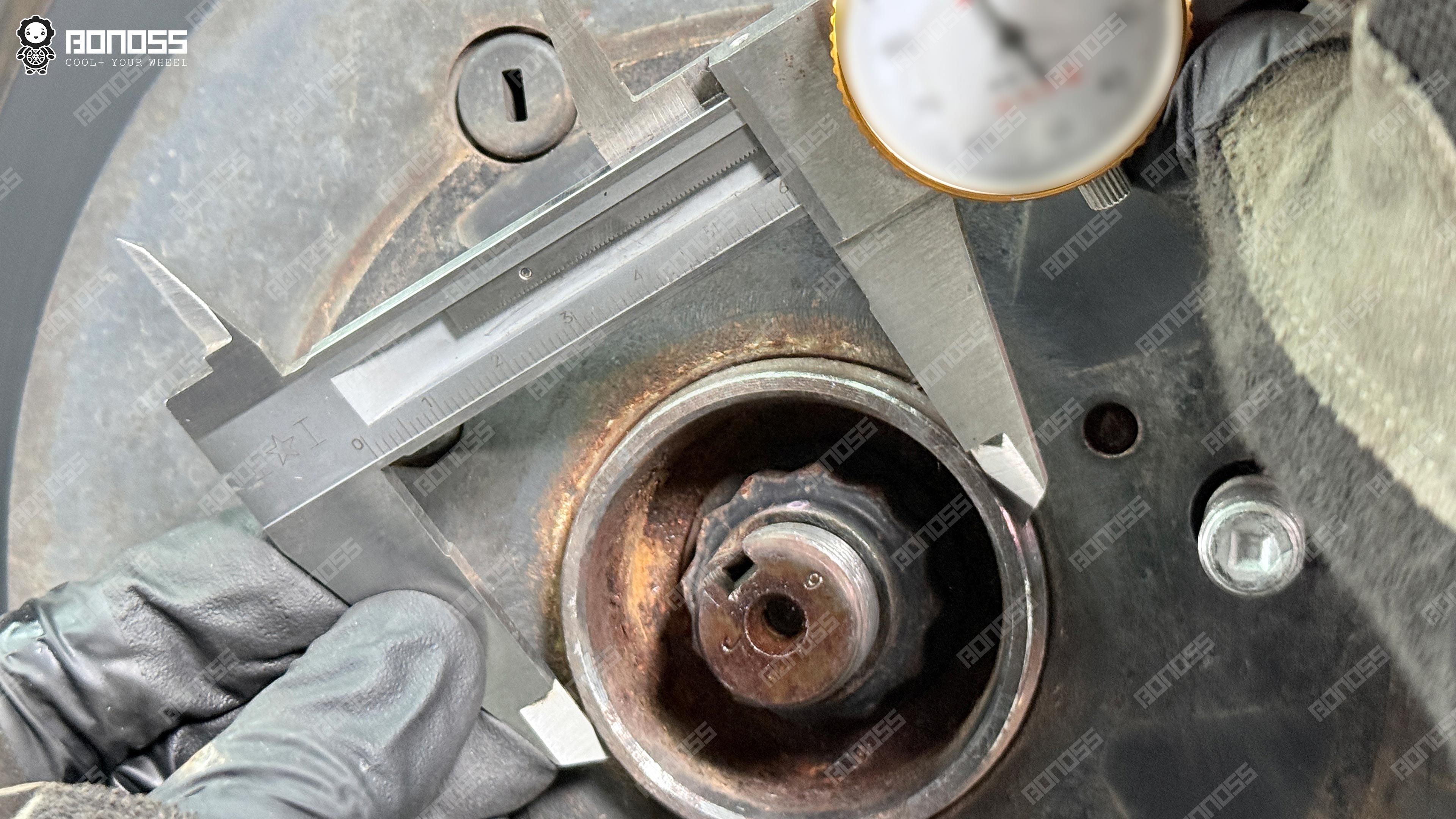
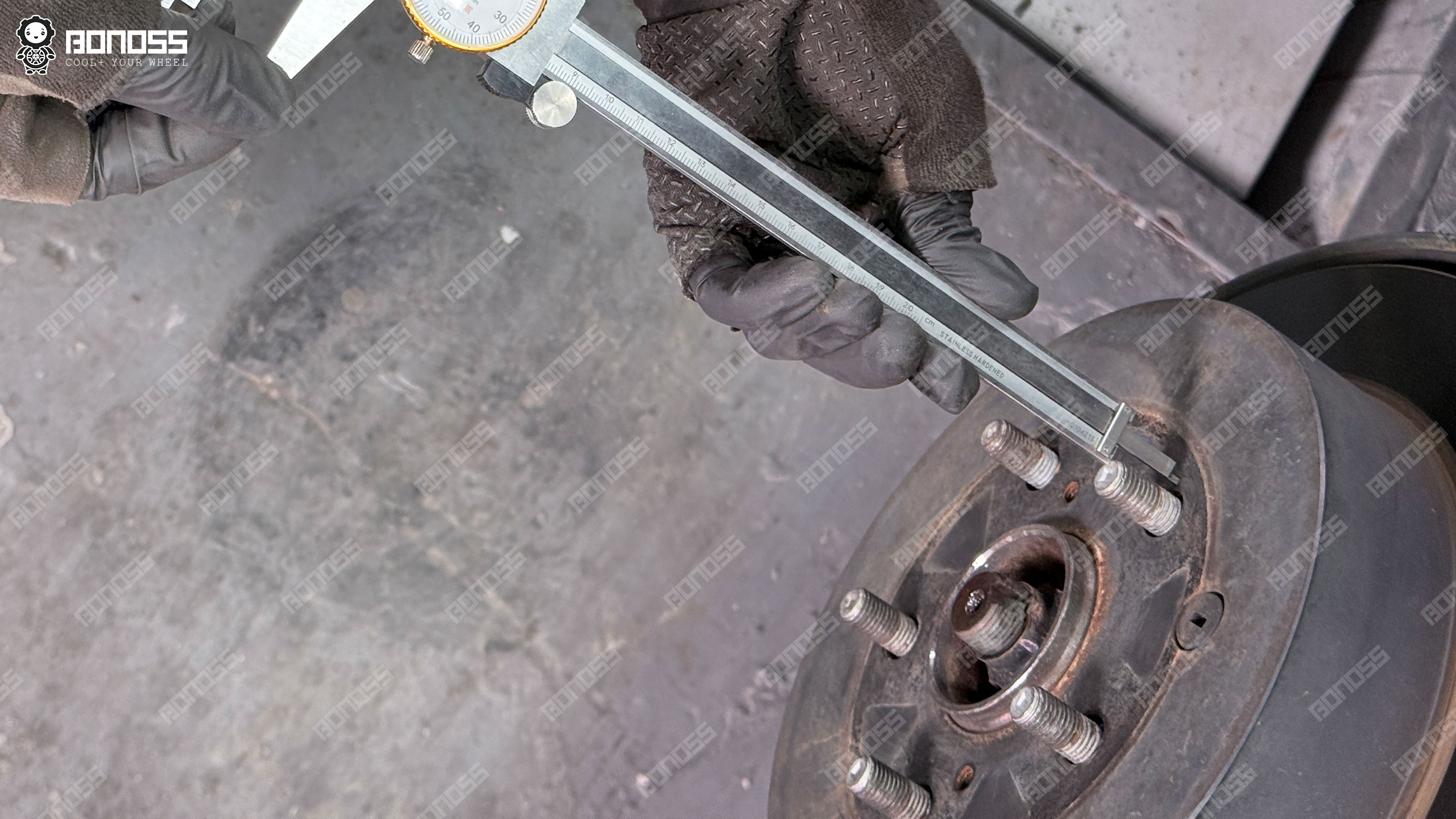
Once I had the fender-to-wheel-face gap measured at roughly 35mm per side for a flush, no-rub finish, the spacer size basically picked itself. And here’s the part that made Anthony relax in his seat: his factory studs were only 23mm (front) and 21mm (rear) long.
Why does that matter? Because 35mm spacers are longer than his studs. The studs would sit *inside* the spacer body — not poke through and bottom out against the back of his new wheels. No cutting. No grinding. No “take a hacksaw to your brand-new hub studs” horror story from the forums.
The “Cut Your Studs” Myth — And Why This Highlander Didn’t Need It
Ah, the forums. I love them, and I hate them. Anthony had been reading the same threads every modifier reads, and somewhere in there he saw the same advice that’s been copy-pasted since 2010: “You’ll have to cut your factory studs down, otherwise they’ll hit the wheel.”
That advice is incomplete.
It’s true only when your factory studs are longer than your spacers, but your wheel cavities are not deep enough. If you’ve got 45mm of stud sticking out, 10mm wheel cavities, and you’re running 30mm spacers, then yeah — 15mm of stud is going to punch into your wheel barrel. Cut them, or use wheels with deep enough cavities.
But Anthony’s studs were 23mm and 21mm. His spacers were 35mm. The math isn’t complicated: the studs never reached the far side of the spacer. Problem solved, hacksaw stays in the drawer.
This is exactly why measuring matters. You can’t answer “do I need to cut my studs?” from a forum post written about someone else’s car with someone else’s wheels. If you’re shopping for Toyota Highlander wheel spacers, the size that works comes from your hub, not a guess.
Torque Wrench, Not an Impact Gun — Here’s the Reason
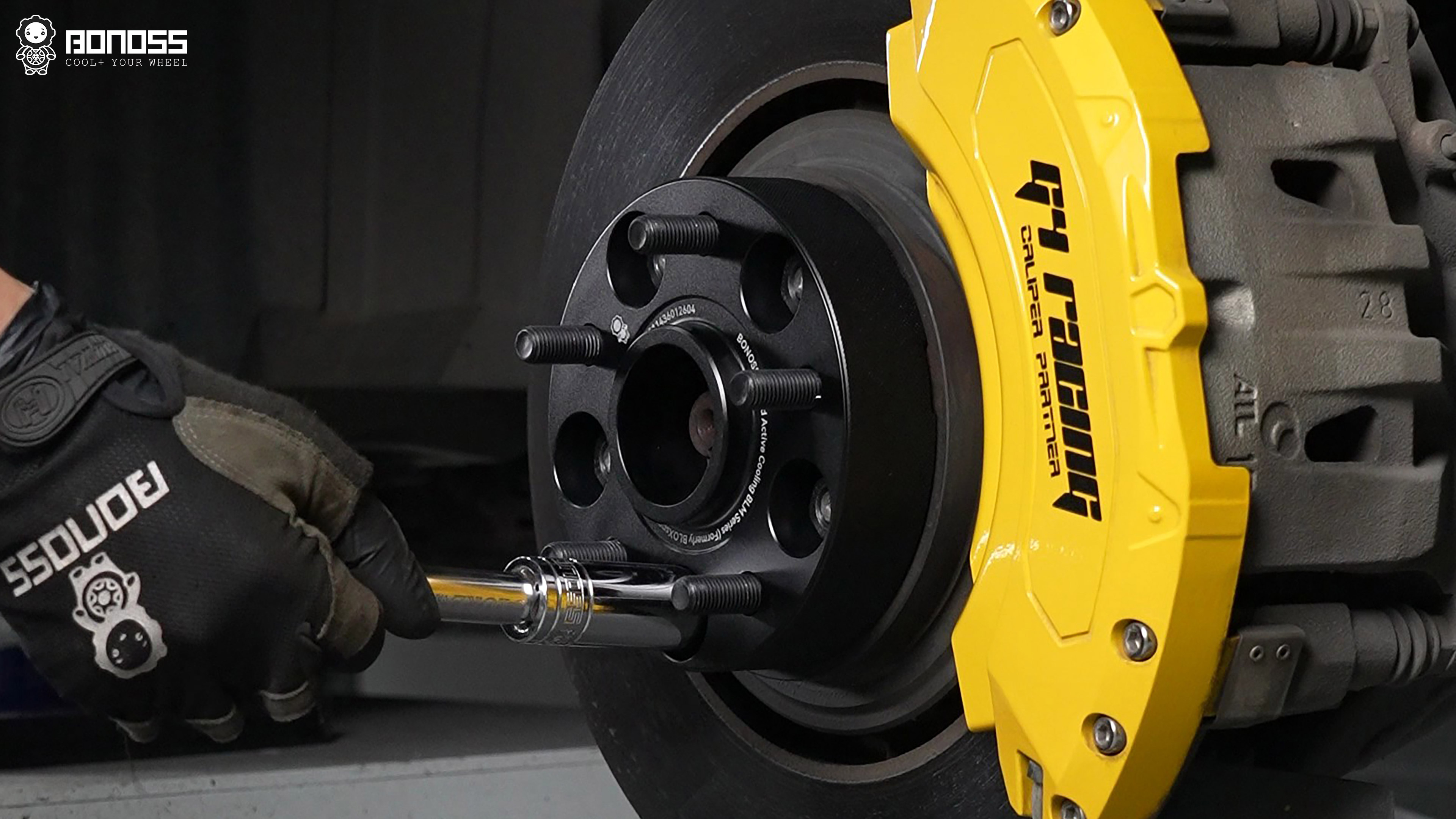
Anthony watched me pull out a torque wrench and got curious. Fair enough — he’s seen tire shops blast lugs on with an impact gun in about four seconds flat.
“I’ve seen guys change my tires with an impact gun. Why are you using a torque wrench?”
Good question, and I’ll give you the answer I gave him.
An impact gun is fast. It’s also violent. It hammers the lug down in bursts, and unless you’re using torque sticks (which most shops either don’t calibrate or don’t use correctly), you get wildly uneven clamping force. One lug at 120 Nm, the one next to it at 90, the third at who-knows. That uneven load can warp a rotor over time, gall the threads on a stud, and — on a spacer setup — put uneven pressure on the hub-centric seat.
What “Active Cooling, ISO 12.9 Studs, and Knurled Sides” Mean on the Road
I want to get into the BONOSS hardware for a second, because Anthony bought these because of three features, and I want to be honest about whether they matter or if they’re just stickers.
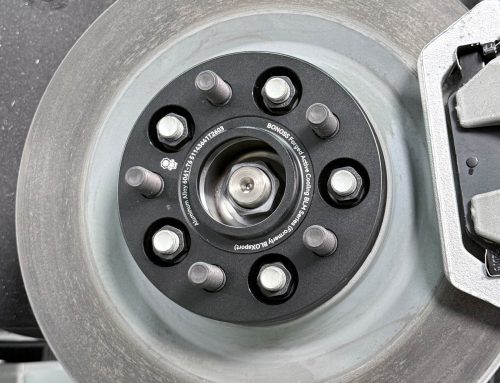
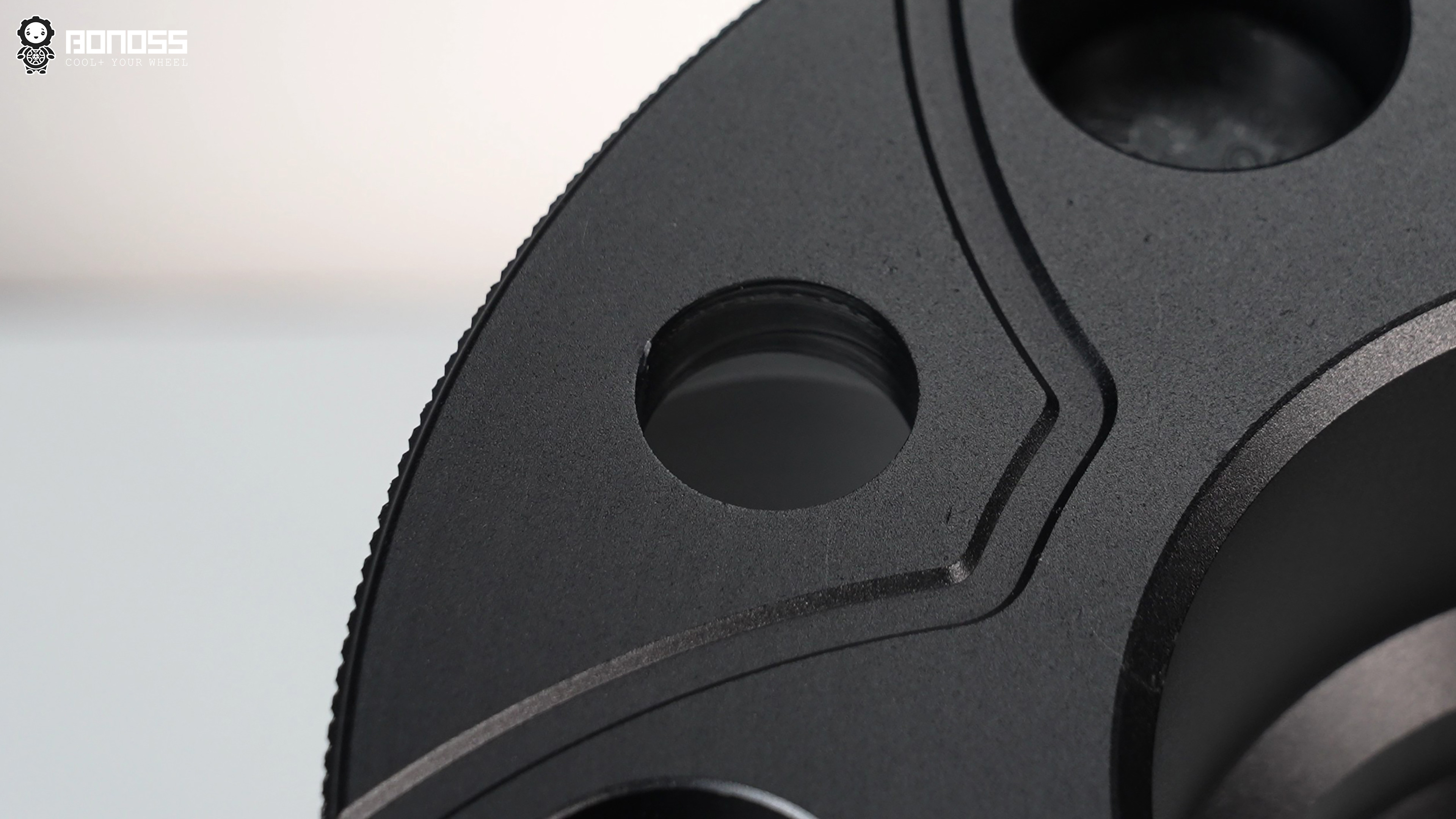
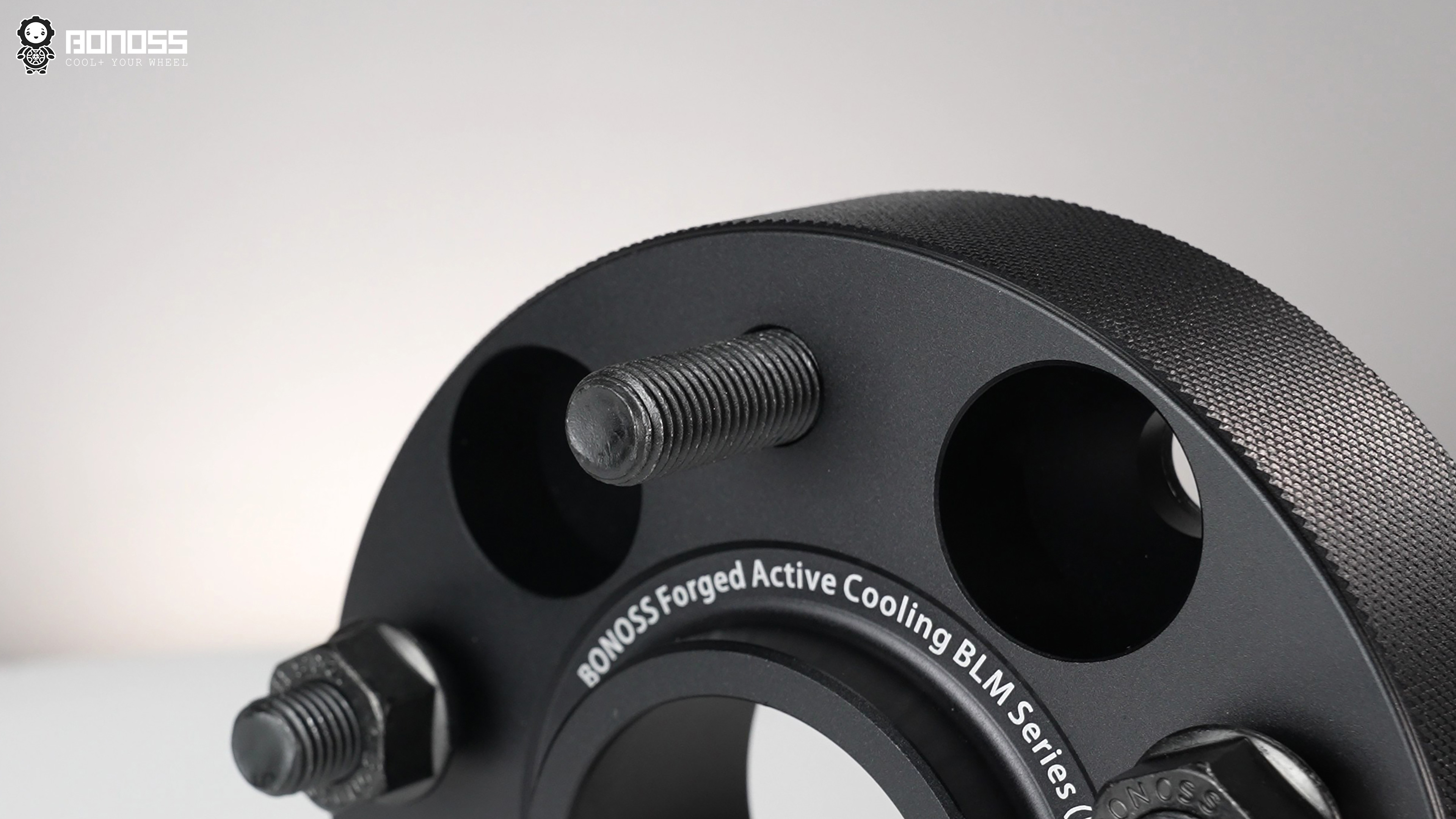
Active cooling. The petal-shaped cooling grooves on the spacer face look almost decorative. They’re not. Spacers can heat-cycle hard under load — long highway runs, heavy vehicle, aggressive driving. Those grooves move air across the spacer face and the hub contact area. Less heat soak, more consistent clamping force over a long drive. On an SUV that sees highway miles, I’ll take it.
ISO grade 12.9 wheel studs. “12.9” is a tensile strength rating, not marketing. Grade 12.9 means ~1,220 MPa tensile strength — significantly stronger than the grade 10.9 studs you see on most factory hardware. On an SUV running 35mm of offset change, I’d rather have the stronger studs holding my wheels on. This isn’t a flex; it’s margin.
Side knurling. This is the one most people miss. The knurled outer edge on the BONOSS forged active cooling wheel spacers isn’t about looks. It gives you grip when you’re handling the spacer during install — slippery billet spacers are annoying to seat straight on a hub — and it increases the surface area marginally, which helps with heat dissipation. Small thing. Real thing.
How Anthony Found Us — And Why He Almost Walked Away
I’ll let Anthony tell this part, because he told it to me almost exactly like this.
He’d already botched the fitment at home. Body kit on, new wheels bolted up, looked in the driveway, and felt his stomach drop. He didn’t want to dump the wheels — he genuinely loved them — so he went to YouTube and searched “2018 Highlander spacers.” A few videos in, he landed on our piece: “Are Toyota Highlander Wheel Spacers Good or Bad for Your SUV?” He watched it, and he reached out.
But here’s where it almost didn’t happen.
He’d already messaged a couple of other spacer sellers. And — I’ll be fair, without naming them — their replies were identical: a generic spec sheet, a “this should work,” and zero install history on a Highlander. No measurements asked for, no fitment questions, no “send me a photo of your hub.”
Anthony’s a shop manager. He noticed.
“Other places just sent me the same numbers as they copied it from a chart. No real install to look at. BONOSS was the only one who actually walked me through measuring the wheel gap and answered every question.”
Even after that, he hesitated. He’d read the online chorus that says spacers are unsafe, just buy the right wheels. He hadn’t used BONOSS before. Quality was a question mark. What tipped him over was a combination of three things: word-of-mouth in his car circle, real install cases on our site, and — the deal-clincher — the active cooling design. He’s a hands-on guy. A feature he could actually see and understand made the difference.
For anyone combining a wide body kit with aftermarket wheels, Anthony’s path is worth copying: measure first, ask questions, and find a seller who asks for your numbers instead of quoting from a catalog.
The Install, Start to Finish in About an Hour
Total install time: roughly an hour, four corners. Here’s the order.
- Lift and support. Wheels off.
- Clean the hub face — wire brush, brake cleaner. This matters more than people think; rust and crud under a spacer is how you get vibration.
- Seat the hub-centric spacers onto the hub register. The 60.1mm bore fits the Highlander hub cleanly.
- Hand-tighten the supplied lug nuts, then torque them to 113 Nm (per BONOSS installation instructions) in a star pattern.
- Mount wheels. Torque the factory wheel nuts to 103 Nm (per the owner’s manual) in a star pattern.
- Lower. Done.
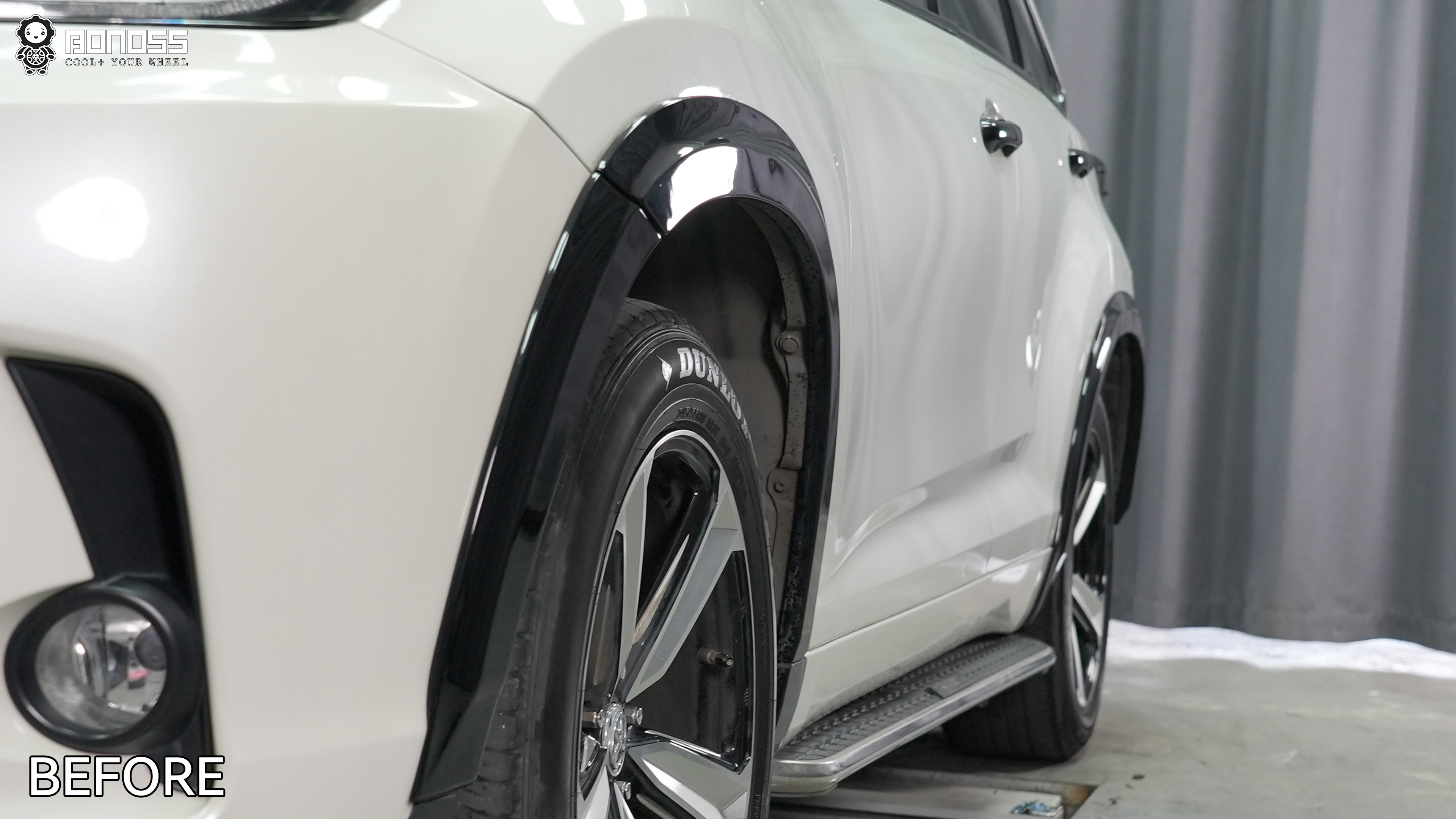
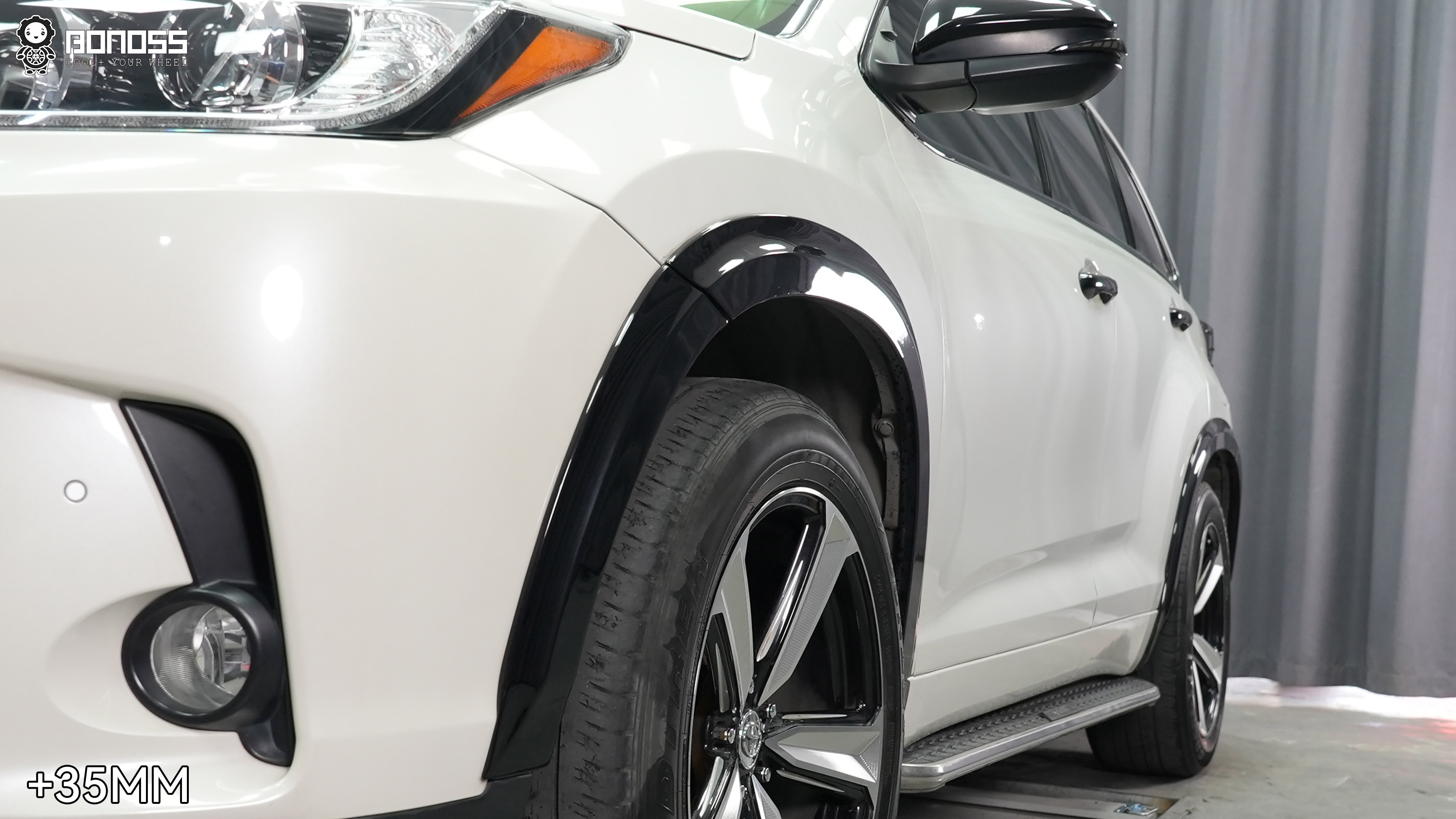
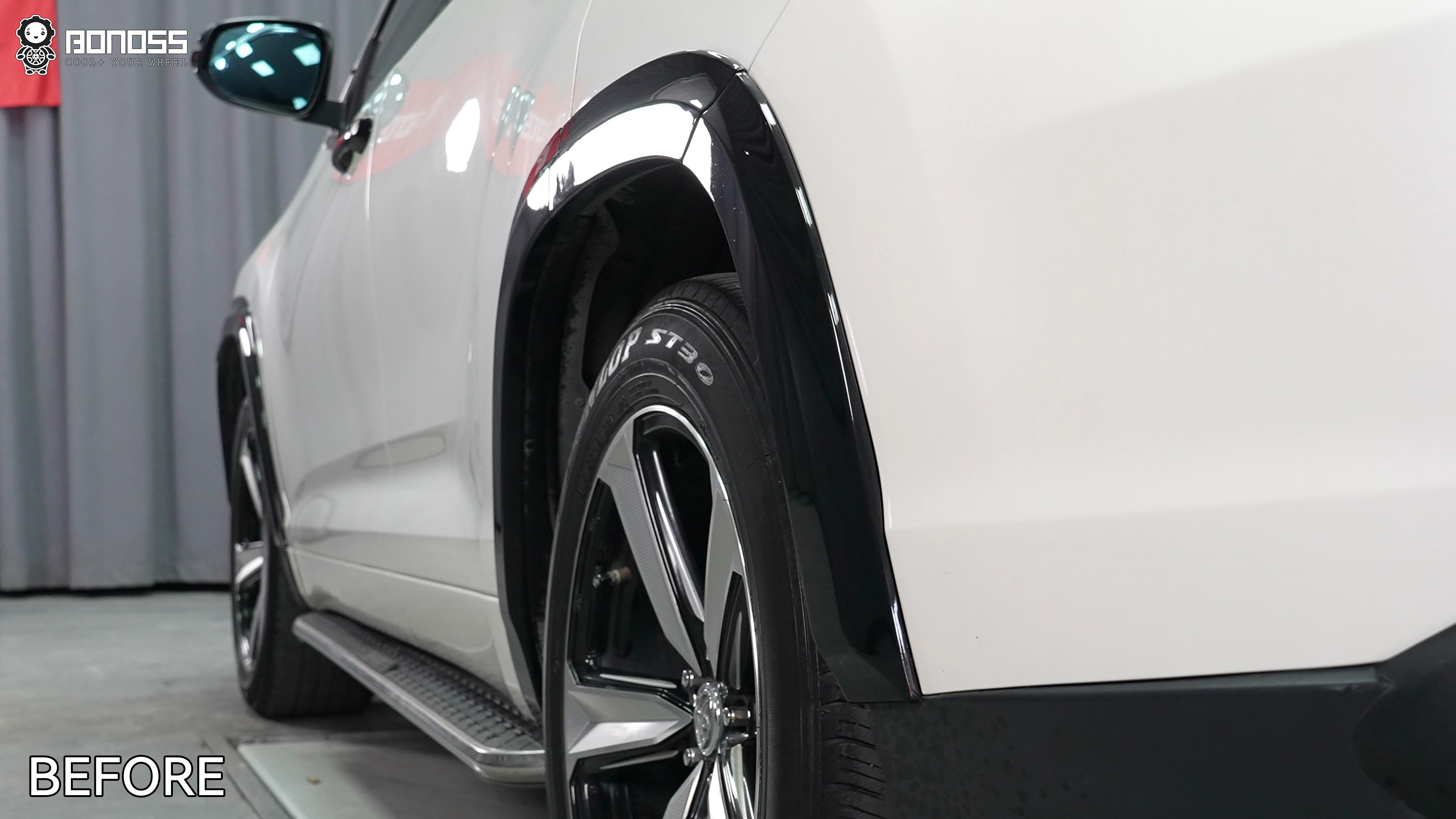
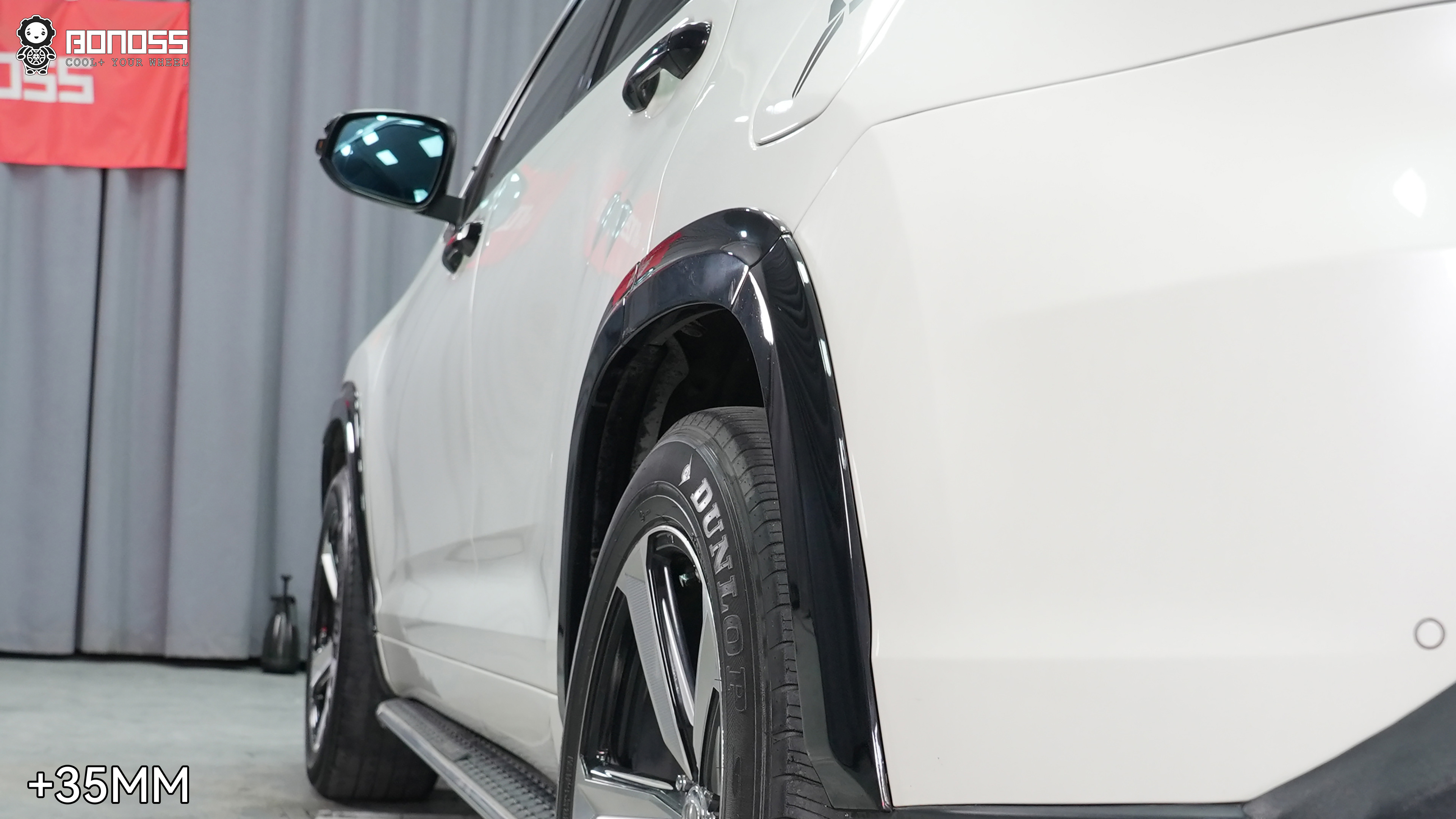
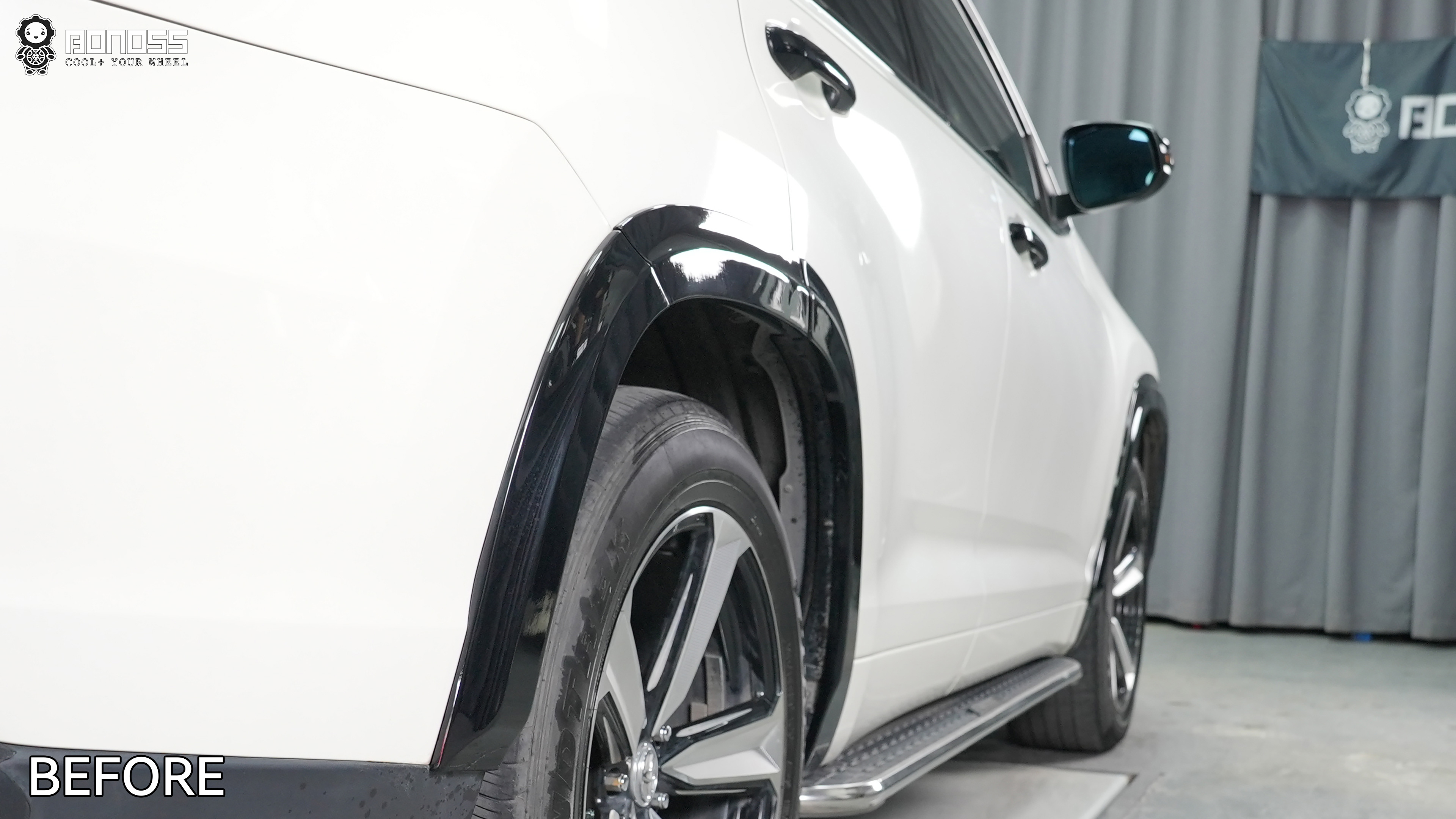
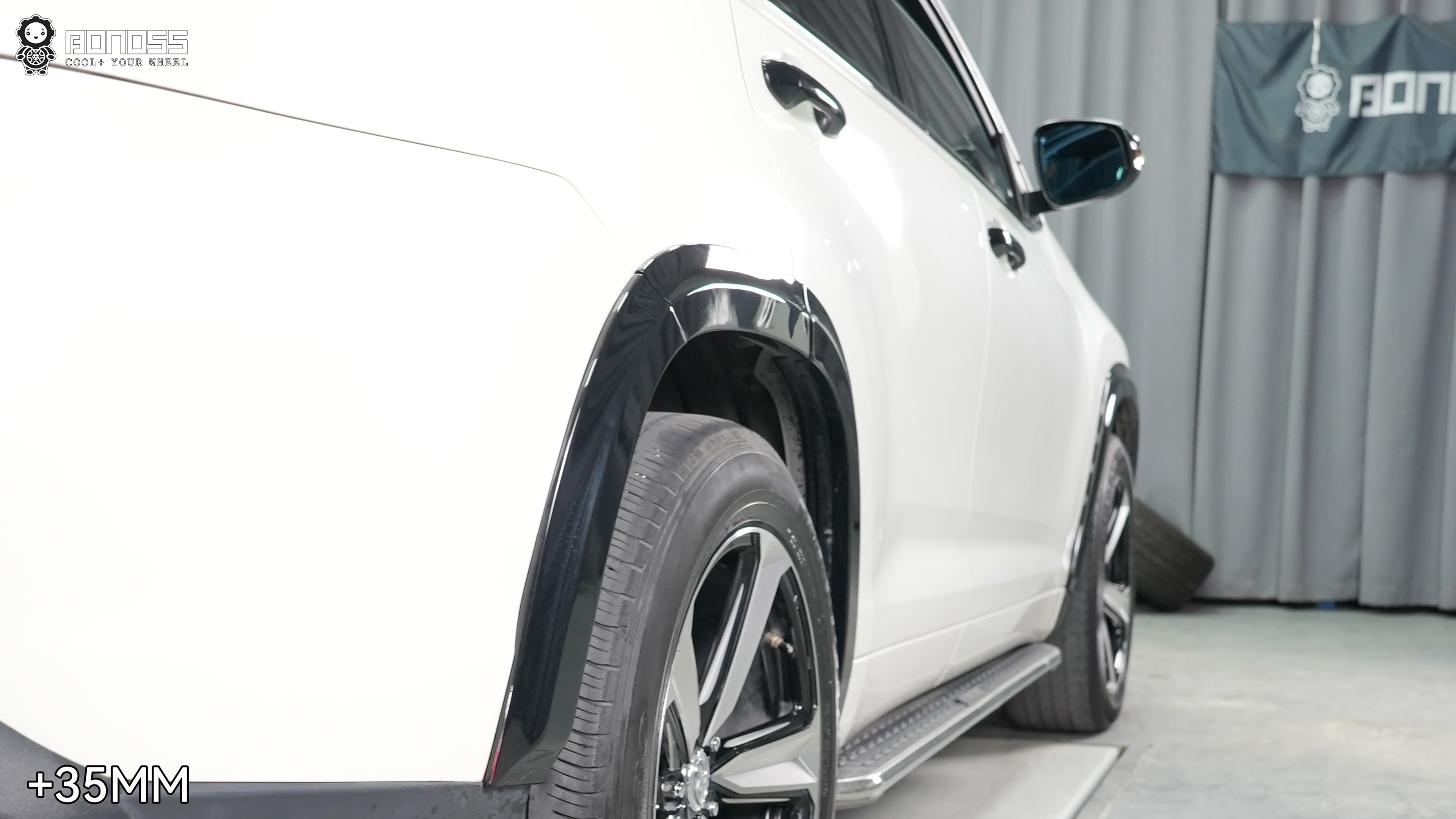
Then the part Anthony was already preaching about before I could:
“Make sure to take the wheels off and re-torque the spacers after driving a bit. I put like 100 miles on mine. Don’t skip it.”
He’s right. I tell every customer the same thing. Drive a hundred miles, pull the wheels, re-check the spacer nut torque. Things settle. Heat cycles happen. A two-minute re-torque saves you a vibration headache later. It’s free insurance.
13,000 Miles Later — Did It Hold Up?
Anthony drove home to Minnesota and didn’t come back complaining. He came back with mileage. A year later, about 13,000 miles on the spacers, and here’s his actual report:
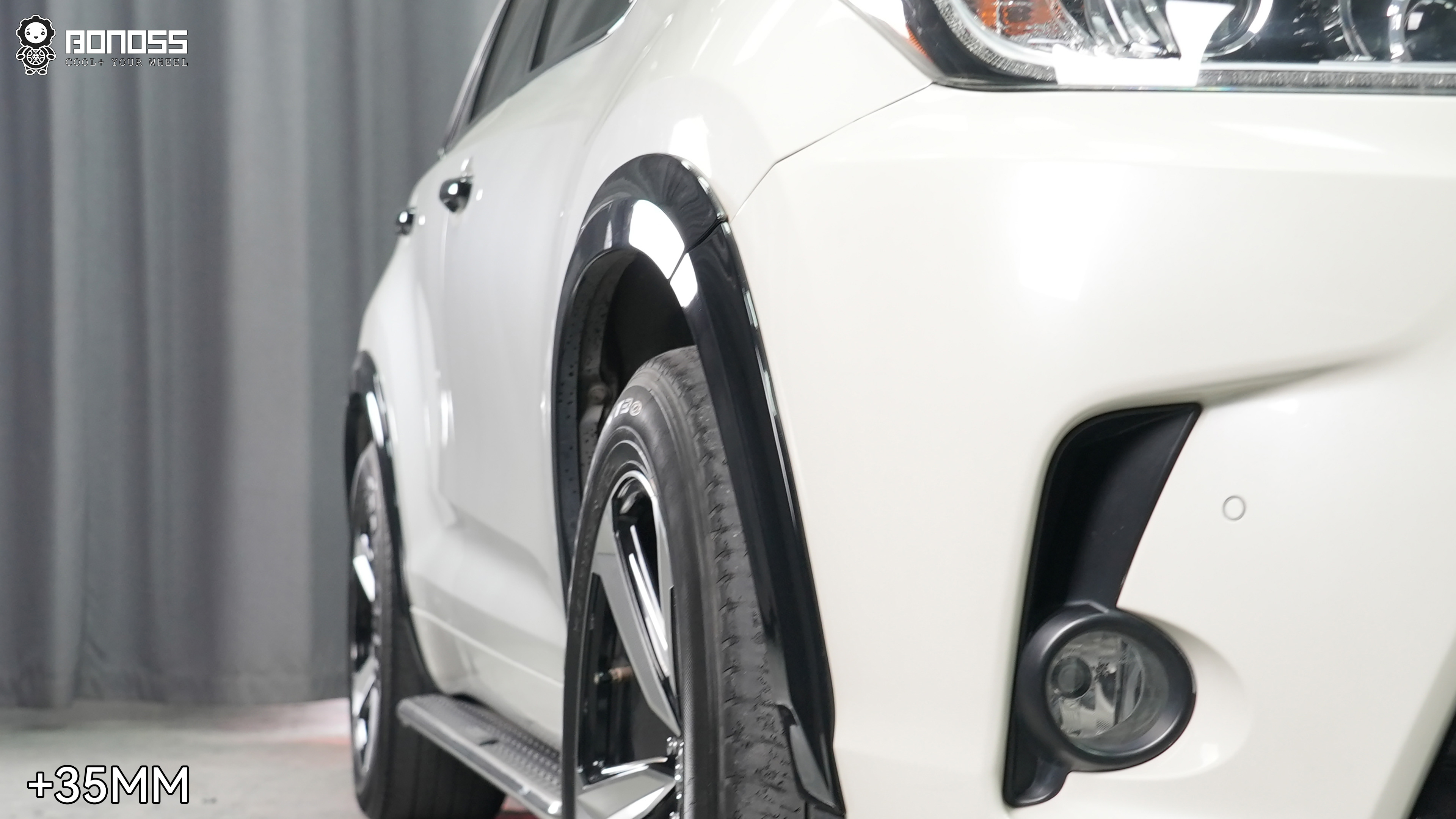
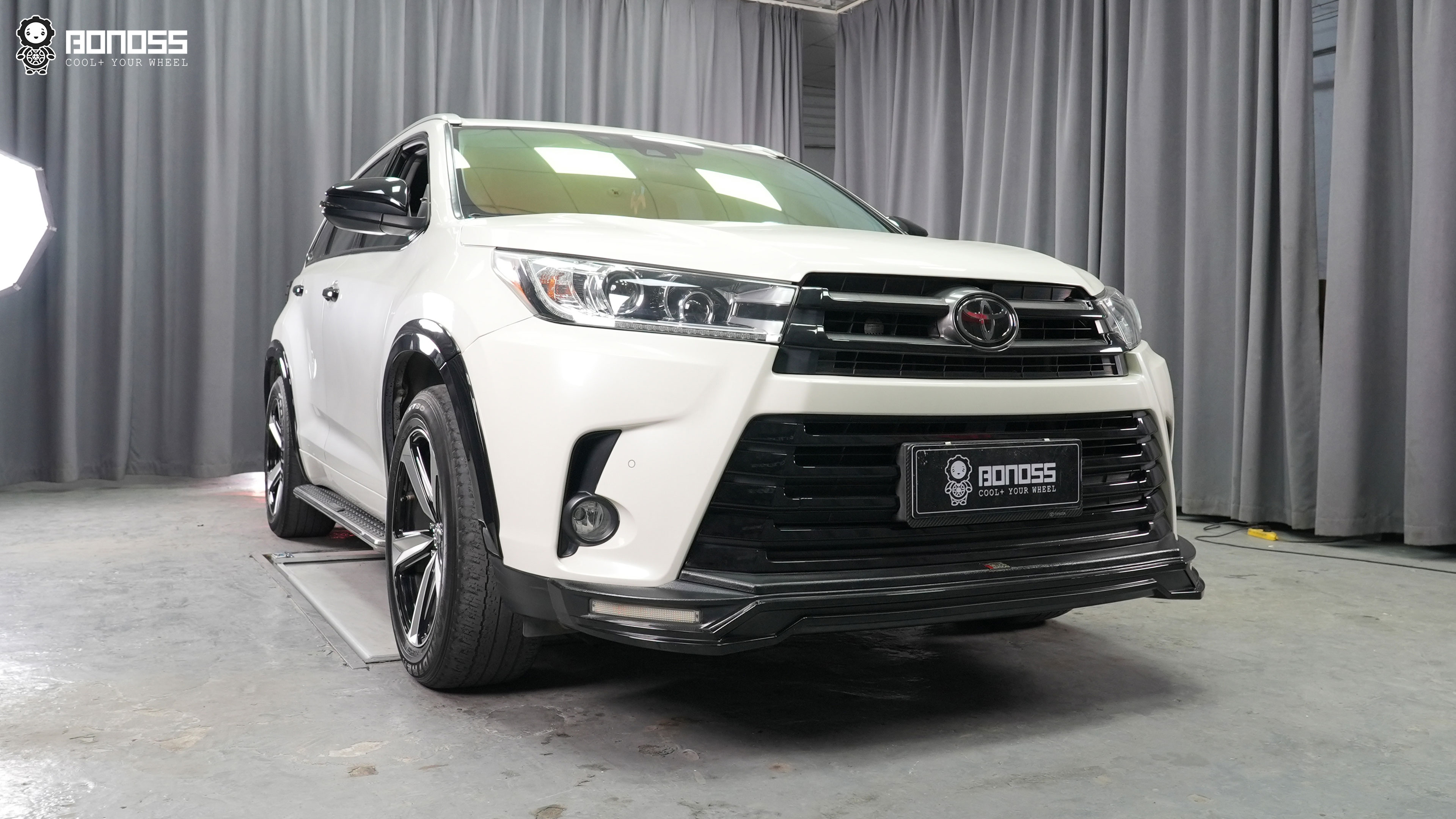
“Running 35mm spacers all the way around on my 2018 Highlander, and the wheels line up perfectly with the fenders. Got about 13,000 miles on them so far, zero issues. I’m happy with the stance. Handling actually feels a little better too — steering is a bit more planted.”
And the part about the highway ride:
“I took it on a long highway run right after getting the spacers on, cruise set at 70. Just smoother on the road. No vibes. Definitely happy with how it rides now.”
No vibes. That’s the line I care about. “No vibes” on a 35mm spacer at 70 mph means the hub-centric seat is doing its job, the torque held, and nothing walked. That’s the whole ballgame. A poorly seated spacer will tell you about itself in the first 50 miles.
A quick honest note on the “handling feels better” comment: a wider track does change steering feel. It’s not imaginary. The roll center and scrub radius shift a little, and on an SUV, that can translate to a more planted feel at speed. It is *not* a performance upgrade in the way coilovers are — it’s a side effect of the geometry change. I’m not going to oversell it. But Anthony felt it, and it’s real.
Should You Run Spacers on Your Highlander? My Honest Take
Let me be direct, because I’ve been doing this for over a decade and I’m tired of the two extremes — the “spacers will kill you” crowd and the “slap on anything, it’s fine” crowd. Neither is useful.
Done right — hub-centric, properly torqued, on a vehicle with studs shorter than the spacer, re-torqued after break-in — wheel spacers on a Highlander are a perfectly reasonable solution to a real fitment problem. Anthony’s is not a fluke. It’s what happens when you measure, use quality hardware, and torque properly.
Done wrong — lug-centric spacers from a discount bin, blasted on with an impact gun, never re-torqued — yeah, you’re going to have a bad time. But that’s not a spacer problem. That’s an installer problem.
If your studs are longer than your desired spacer, you either cut the studs, use a wheel with deep cavities, or rethink your size. If your hub bore doesn’t match, you don’t have hub-centricity and you’ll chase a vibration forever. Get the measurements. That’s the whole secret.
Anthony summed it up better than I could:
“For anyone thinking about aftermarket wheels, here’s my advice: wheels might look cool, but fitment is always a pain. Thank you, BONOSS.”
But it’s a solvable pain, and 13,000 miles of zero-issue driving is the proof.
FAQ
Do 2018 Toyota Highlander wheel spacers require cutting the factory studs?
Not always. It depends entirely on your factory stud length versus your spacer thickness. On Anthony’s 2018 Highlander, the front studs were 23mm and the rears 21mm — both shorter than the 35mm spacers — so no cutting was needed. Measure your stud protrusion before deciding.
What size wheel spacers are best for a 2018 Highlander with a body kit?
It depends on your fender-to-wheel gap and your wheel offset. On this build, 35mm front and rear delivered a flush, no-rub fitment. Always measure your specific vehicle rather than copying a number from a forum.
Are hub-centric wheel spacers safe for daily driving?
When properly installed — hub-centric, torqued to spec in a star pattern, and re-torqued after ~100 miles — yes. Anthony has 13,000 miles on his with zero vibration or issues.
What’s the benefit of BONOSS active cooling wheel spacers?
The active cooling grooves improve airflow across the hub contact area to reduce heat soak on long drives. The ISO grade 12.9 studs offer higher tensile strength than standard hardware, and the knurled sides aid handling during installation and marginally improve heat dissipation.
Final Summary
Got a 2018 Toyota Highlander that’s sitting too narrow after a body kit or new wheels? Don’t guess the size — measure it. Send us your hub bore, stud length, and fender gap, and we’ll tell you exactly which BONOSS forged active cooling wheel spacers will give you a flush, vibration-free fit. Browse our Toyota Highlander wheel spacer options and reach out — we answer every question, and we’ve got the install cases to back it up.

About Jack Miller
Jack Miller is a certified automotive technician specializing in wheel and tire systems, with over a decade of hands-on repair experience. He has served as a senior technical specialist at BONOSS for the past 7 years, advising on wheel spacer fitment, wheel bolt & wheel nut selection for thousands of customer builds. Jack’s technical guides on BONOSS are grounded in real customer cases — not theory.