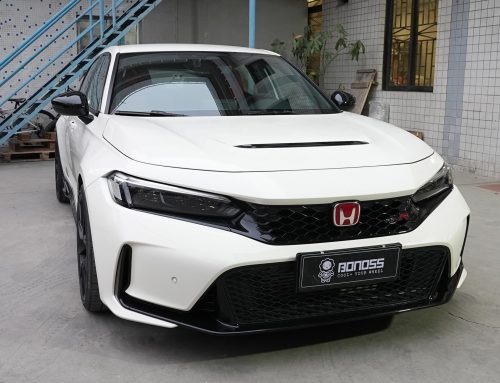
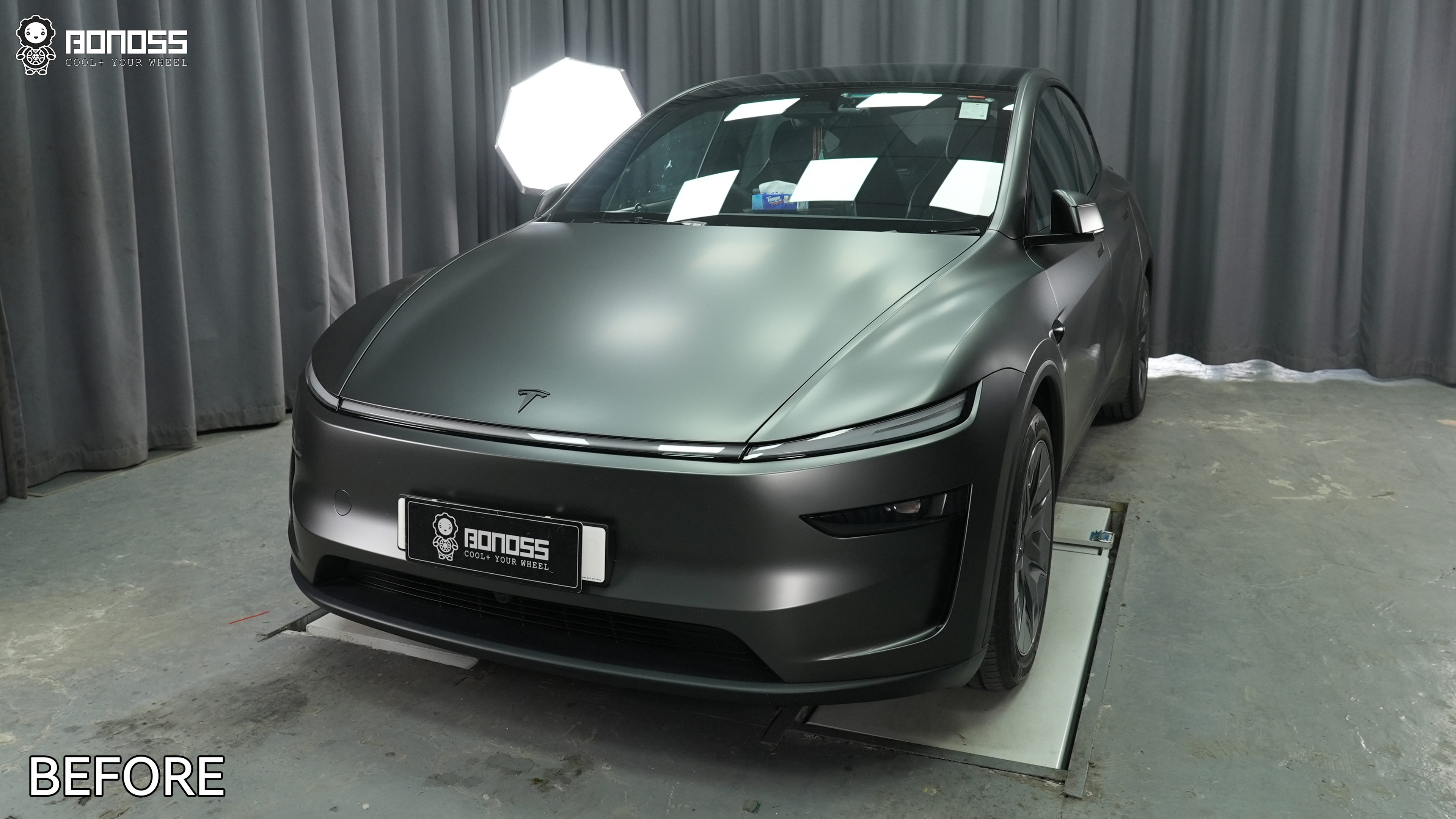
On May 26, 2026, a stock 2026 Tesla Model Y rolled into our shop with a familiar request: make the wheels sit flush with the fenders, but do it right. I’ve spent 9 years fitting wheels, tires, and 2026 Tesla Model Y wheel spacers on everything from daily commuters to track toys, and if there’s one thing that job teaches you, it’s that “close enough” is how people end up with vibration at 70 mph. So before a single lug nut came off Kevin’s car, we spent the better part of an hour with a vernier caliper, a micrometer, and a high-accuracy ruler.
This is the full story of that install — the numbers we measured, the two forum myths we had to debunk on the spot, and what the car feels like after 1,016 miles on BONOSS forged active cooling wheel spacers, 20mm at all four corners.
The Guy Who Wanted a Flush Stance, Not a Guess
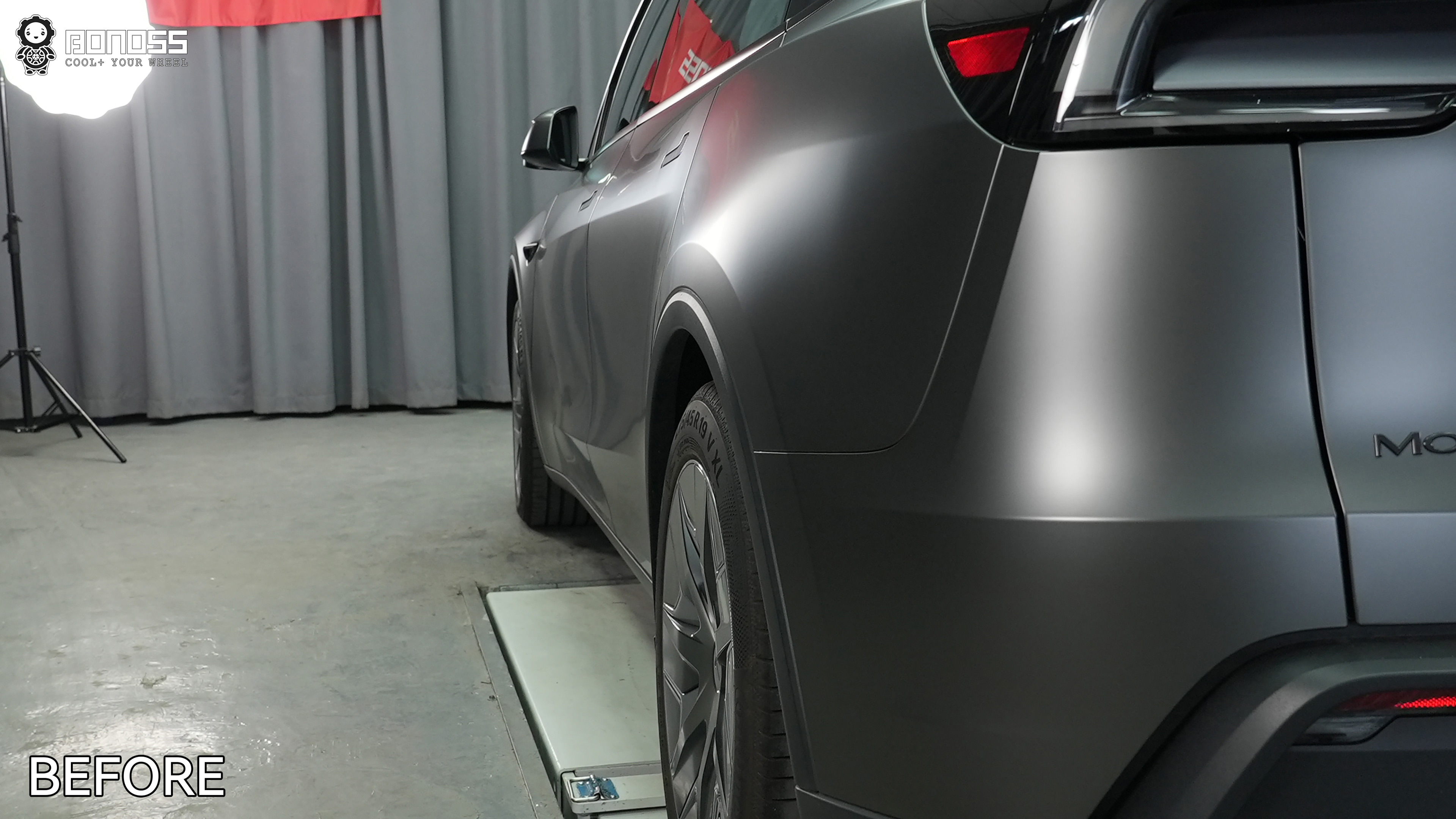
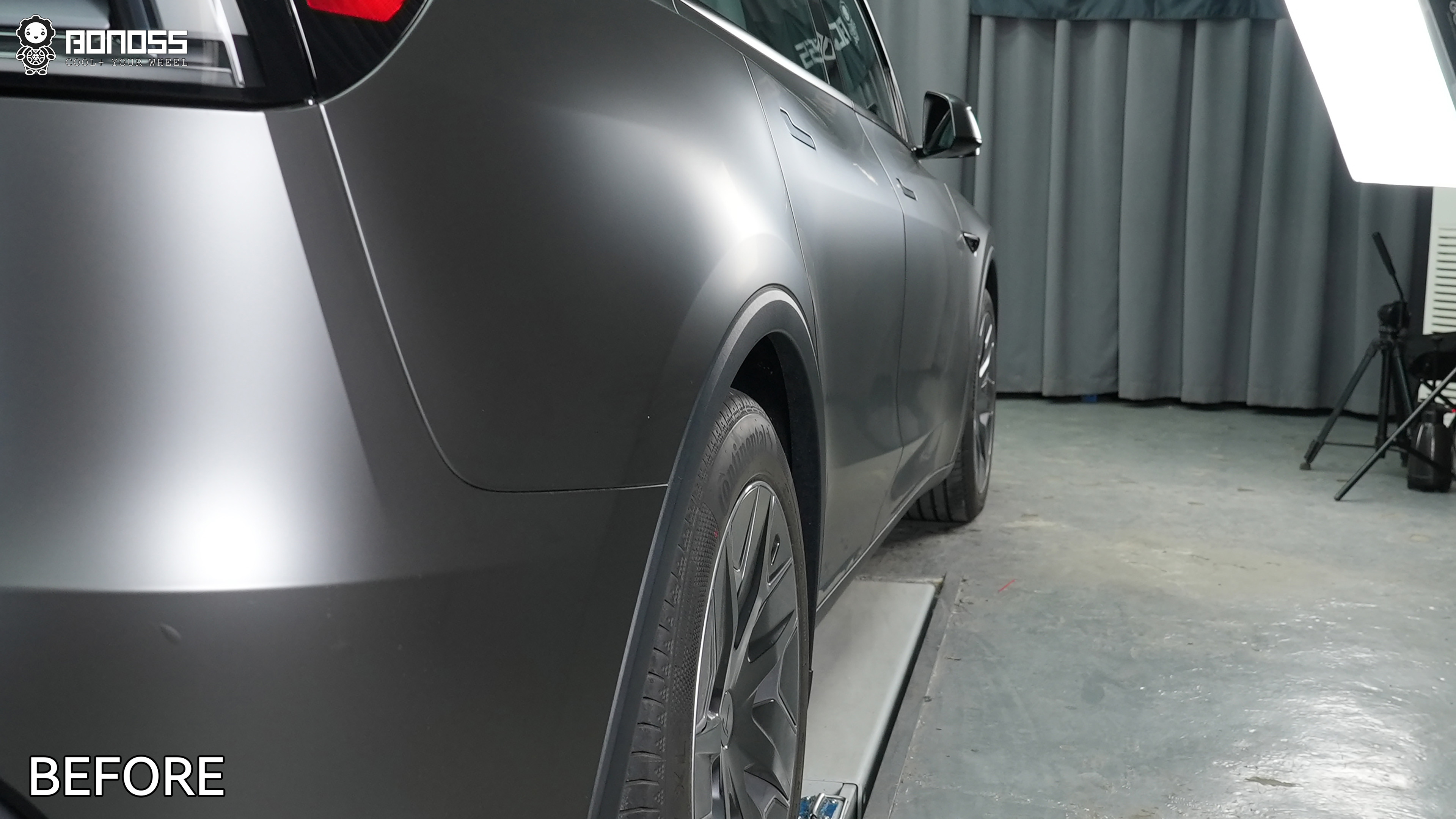
Kevin Powell is a product manager. He thinks in specs and tolerances for a living, which made him both a great customer and a demanding one. His 2026 Model Y was completely stock — factory 19-inch wheels, 255/45R19 with an ET+45 offset. From the factory, Tesla tucks those wheels noticeably inside the fender line. It looks fine. It doesn’t look finished.
Kevin wanted the flush look. What he didn’t know — and what most owners honestly can’t know without measuring — is how many millimeters of spacer that actually takes on his specific car. Too thin and you’ve spent money on a stance nobody notices. Too thick and you’re into rubbing, weird scrub radius geometry, and a car that tramlines over every groove in the pavement.
He told us straight up: “I want flush, but I don’t want to guess.” That’s the right instinct, and it’s basically the whole reason this article exists.
How Kevin Found Us
Like most Tesla owners, Kevin started on the internet. He searched for 2026 Tesla Model Y spacers, read through forum threads, watched install videos, and kept noticing the same name coming up — BONOSS. So he reached out.
To his credit, he did his homework. During the same stretch, he contacted a couple of other spacer brands and compared what came back. He also had two genuine hesitations, both born from forum reading. First, he’d seen posts from owners who said they had to cut their factory studs to fit spacers, which he really didn’t want to do to a brand-new car. Second, the classic counter-argument was everywhere: “just buy lower-offset wheels instead of running spacers.”
That second point deserves an honest answer rather than a sales pitch. A set of quality aftermarket wheels in the right offset absolutely achieves a flush stance — at four to six times the cost of a spacer kit, and you’re left storing a perfectly good set of factory wheels. For a stock car whose owner likes the factory wheel design, a properly engineered hub-centric spacer is the sensible path. Forums tend to skip the “properly engineered” part, which is where the horror stories come from.
Why He Picked BONOSS After Comparing Brands
Kevin’s shortlist came down to engineering details rather than price. Two things kept pulling him back toward BONOSS.
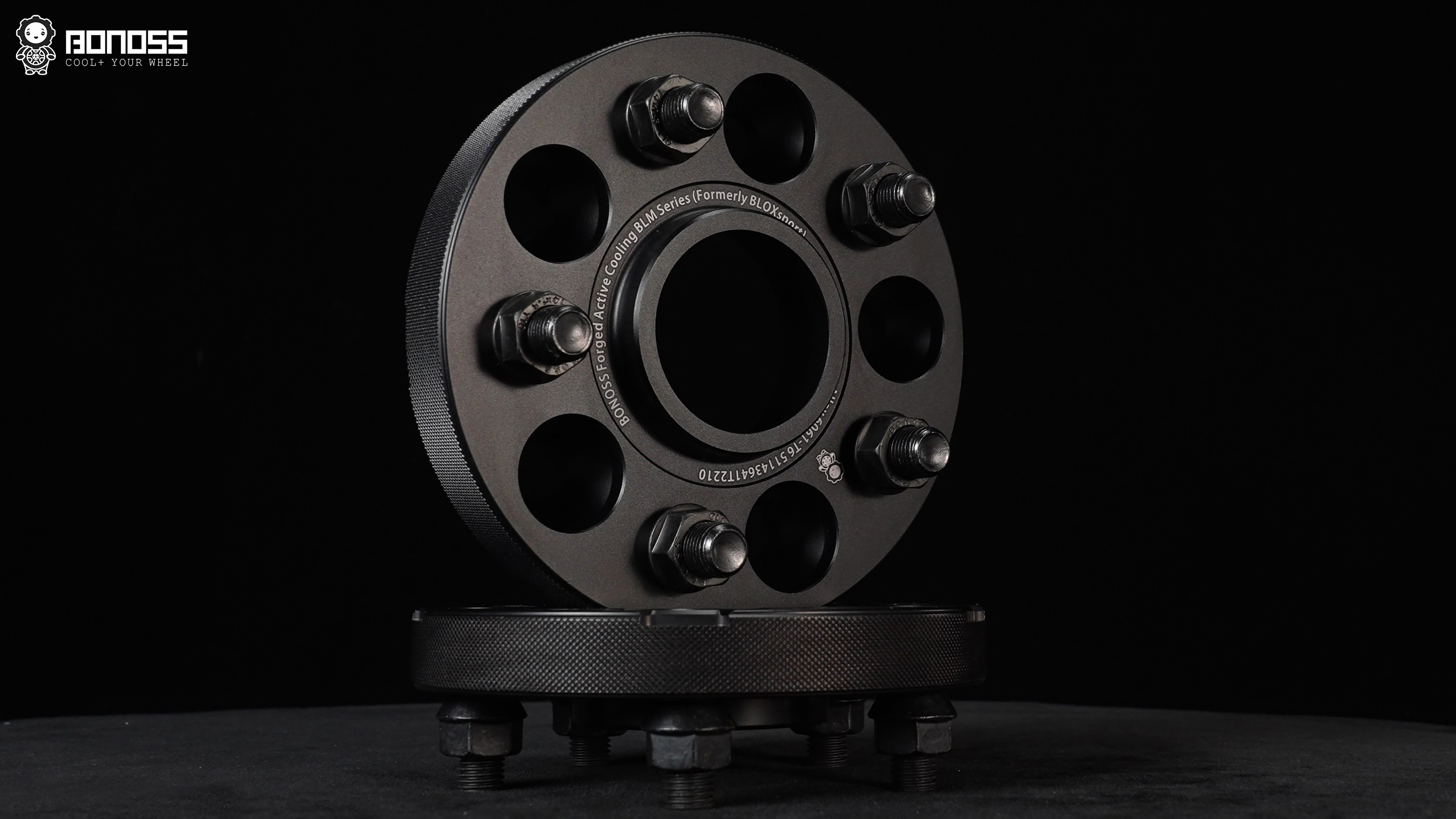
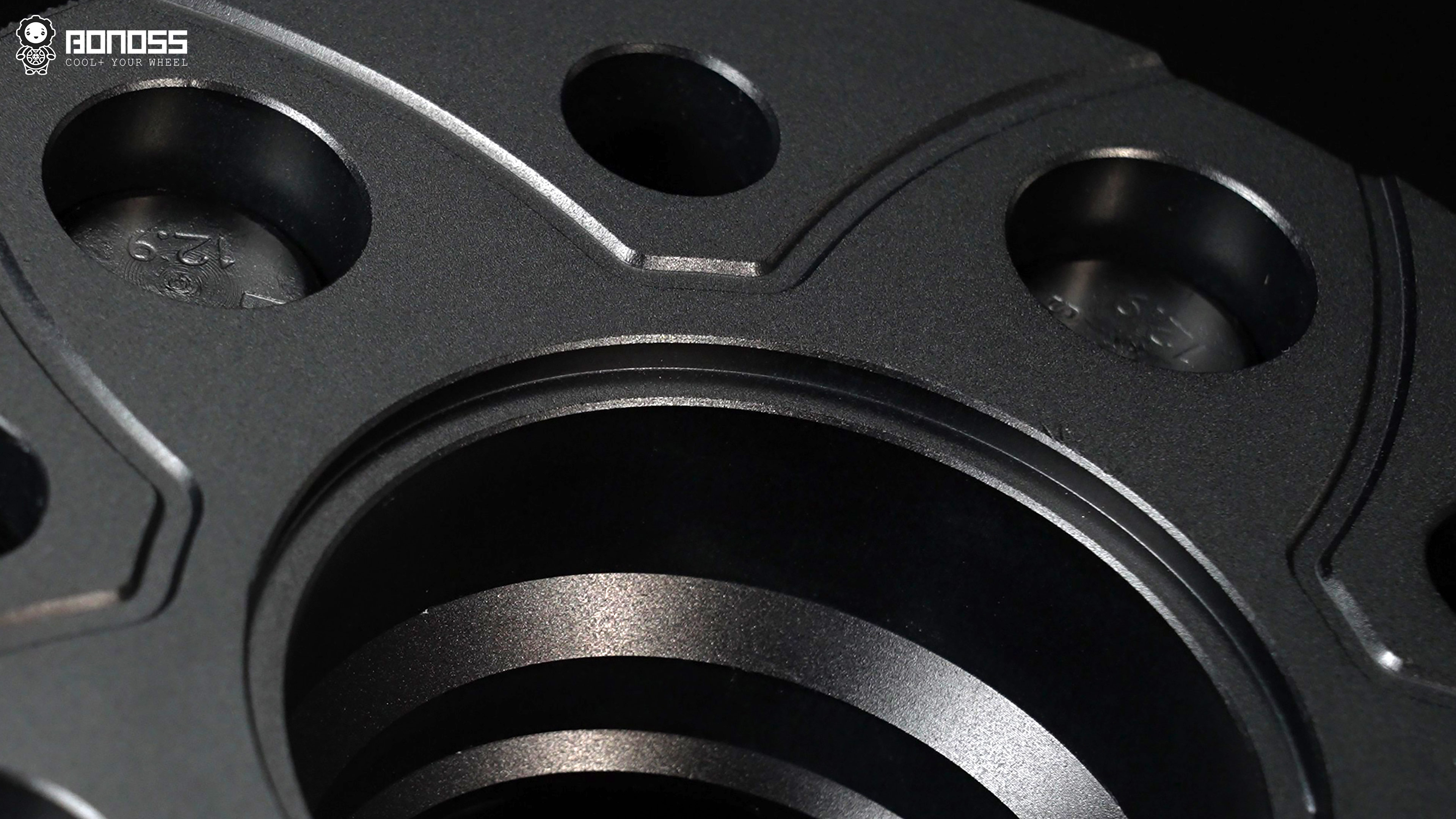
The active cooling design was the first. The spacers carry machined cooling grooves on the body that move air across the spacer and the hub area as the wheel rotates. On a heavy EV that regen-brakes constantly but still leans on its friction brakes hard when it needs them, heat management around the hub isn’t a gimmick — it’s the difference between a part that ages gracefully and one that doesn’t. Kevin’s words after living with them: “Love the active cooling feature.”
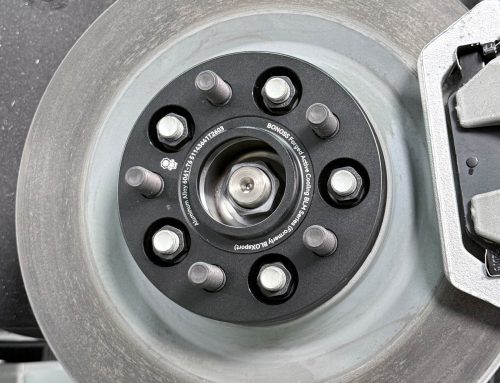
The second was the multi-stage hub-centric design. The 2026 Model Y’s hub isn’t a simple flat flange with a single lip — there’s a step to it, and a spacer that only pilots on one diameter leaves part of the load path to the studs. The BONOSS spacer is machined with stages that match the hub’s actual profile, so the spacer is centered and supported by the hub itself, the way the factory wheel is. Add the provided hardware that matches Tesla’s M14x1.5 lug nuts.
There was also the human factor. “Website experience was smooth, but I wanted to confirm fitment before ordering, so I called customer service. Talked to a rep who actually knew his stuff. He answered all my questions and made sure I got the right size Tesla Model Y spacers.” That’s Kevin again. Between the forum reputation, the YouTube install videos he watched, and that phone call, the decision made itself.
If you’re comparing kits right now, the pricing breakdown across thicknesses is covered here: Tesla Model Y wheel spacers prices guide. For reference, Kevin’s set — four 20mm forged active cooling spacers — came to $256 total (labor fee included).
We Measured Everything Before Touching a Wrench
Here’s where nine-plus years of fitment work earns its keep. Every number below came off Kevin’s actual car on May 26 — not from a spec sheet, because spec sheets don’t account for manufacturing variance, and manufacturing variance is exactly what bites people.
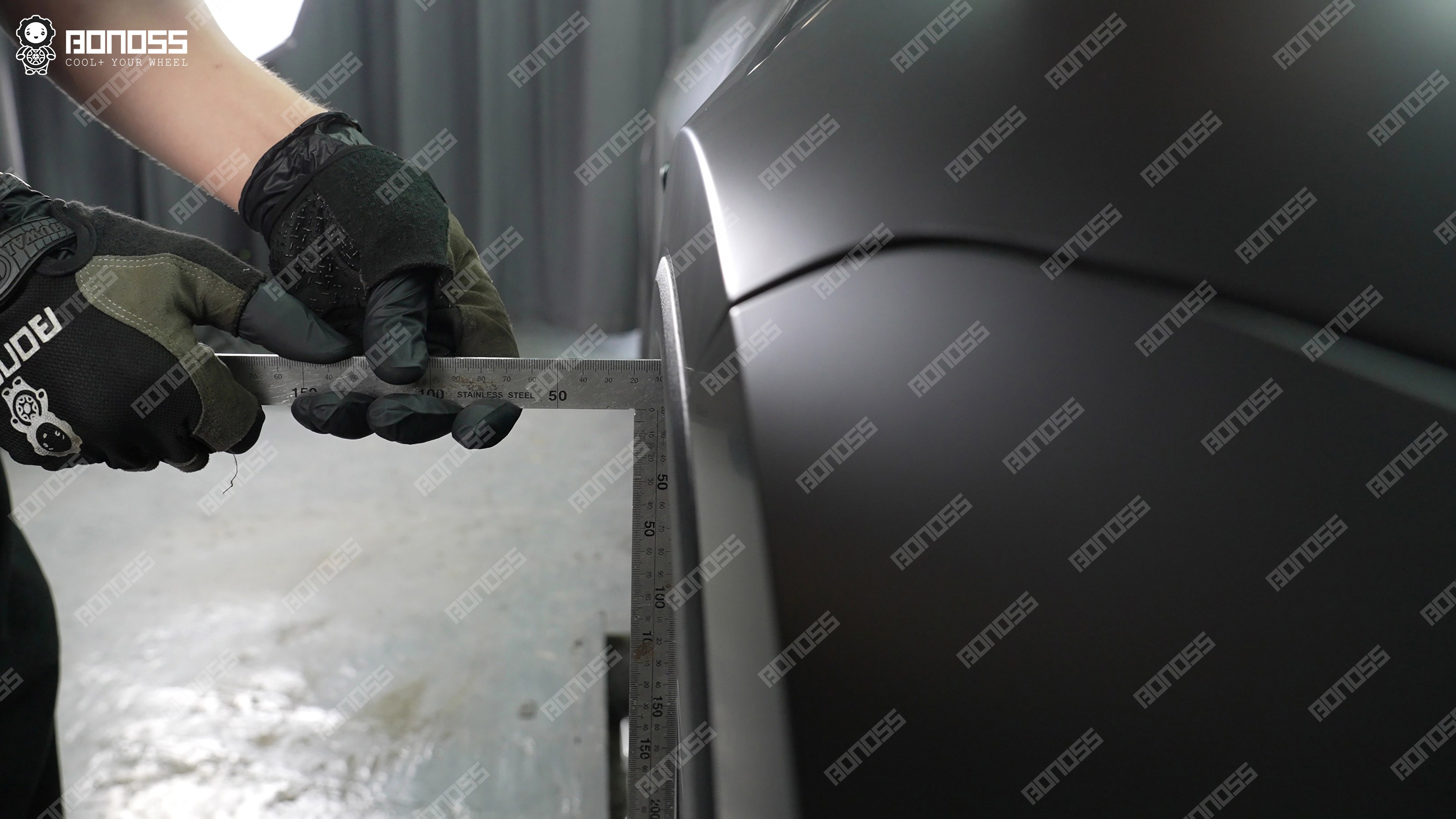
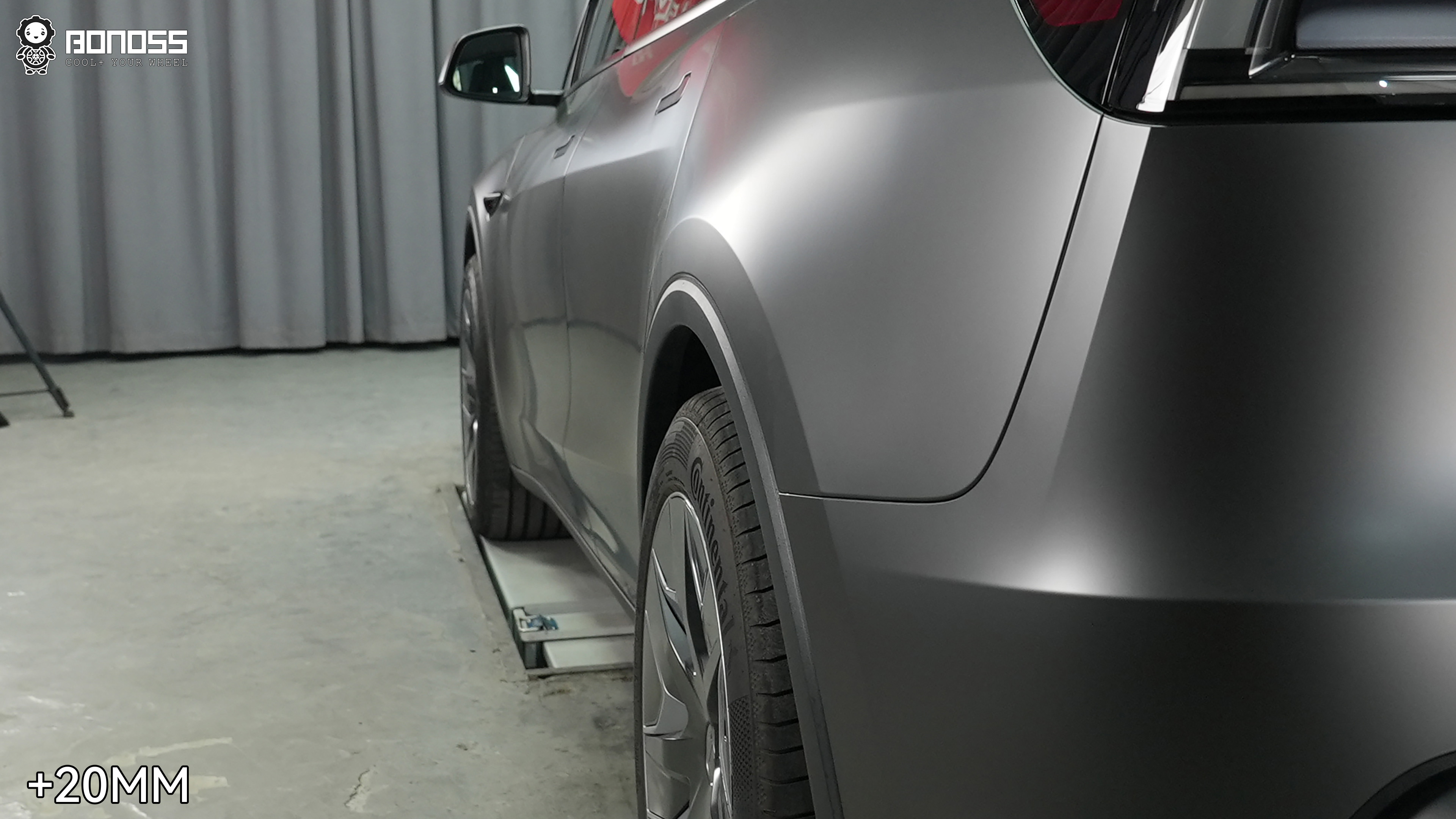
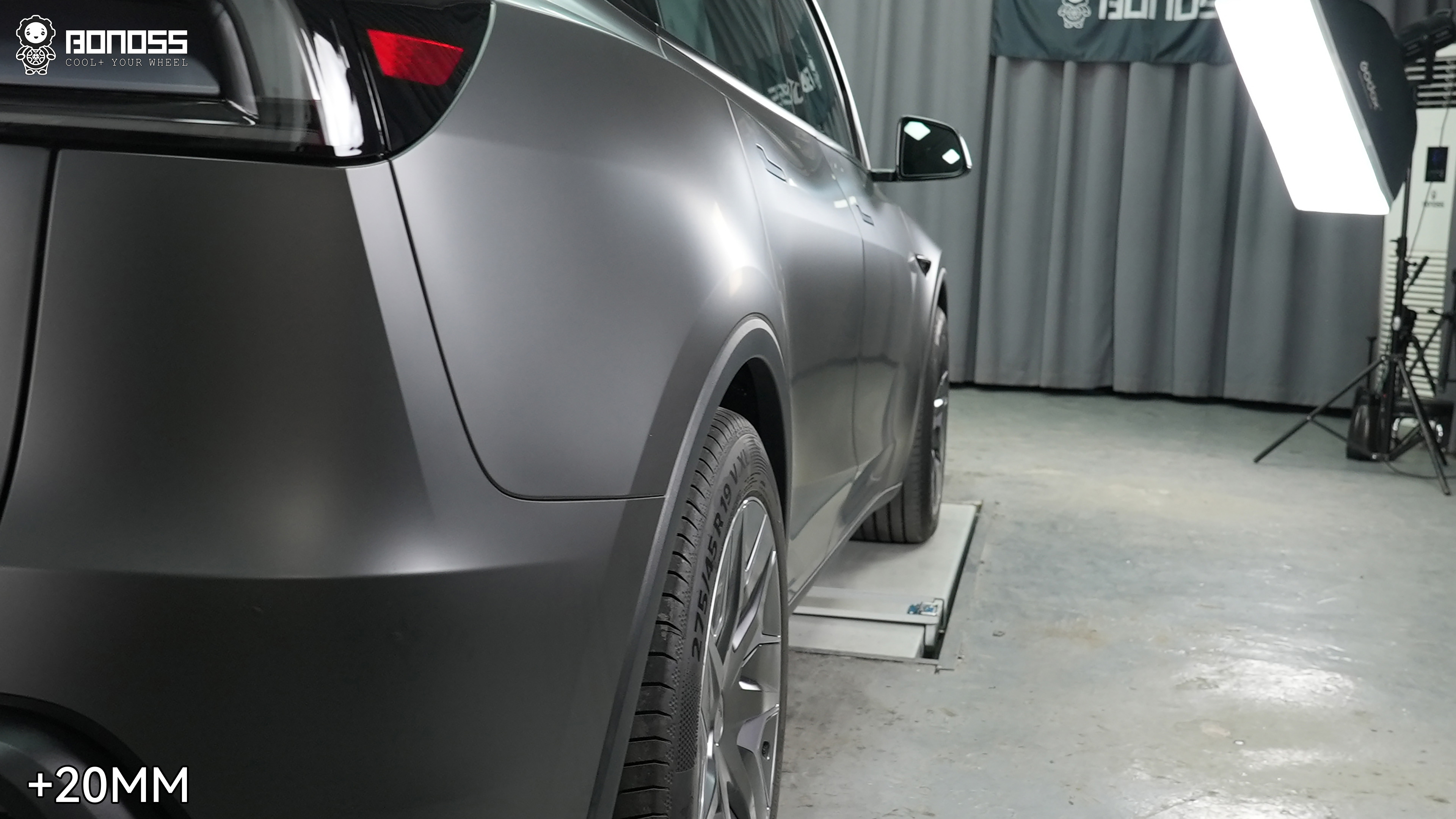
Fender clearance, front and rear. We measured the gap from the outermost face of each wheel to the fender lip. The math said a 20mm spacer at each corner would land the wheel face essentially flush with the fender — the offset effectively moving from ET+45 to ET+25 — without pushing the tire into the fender under compression.
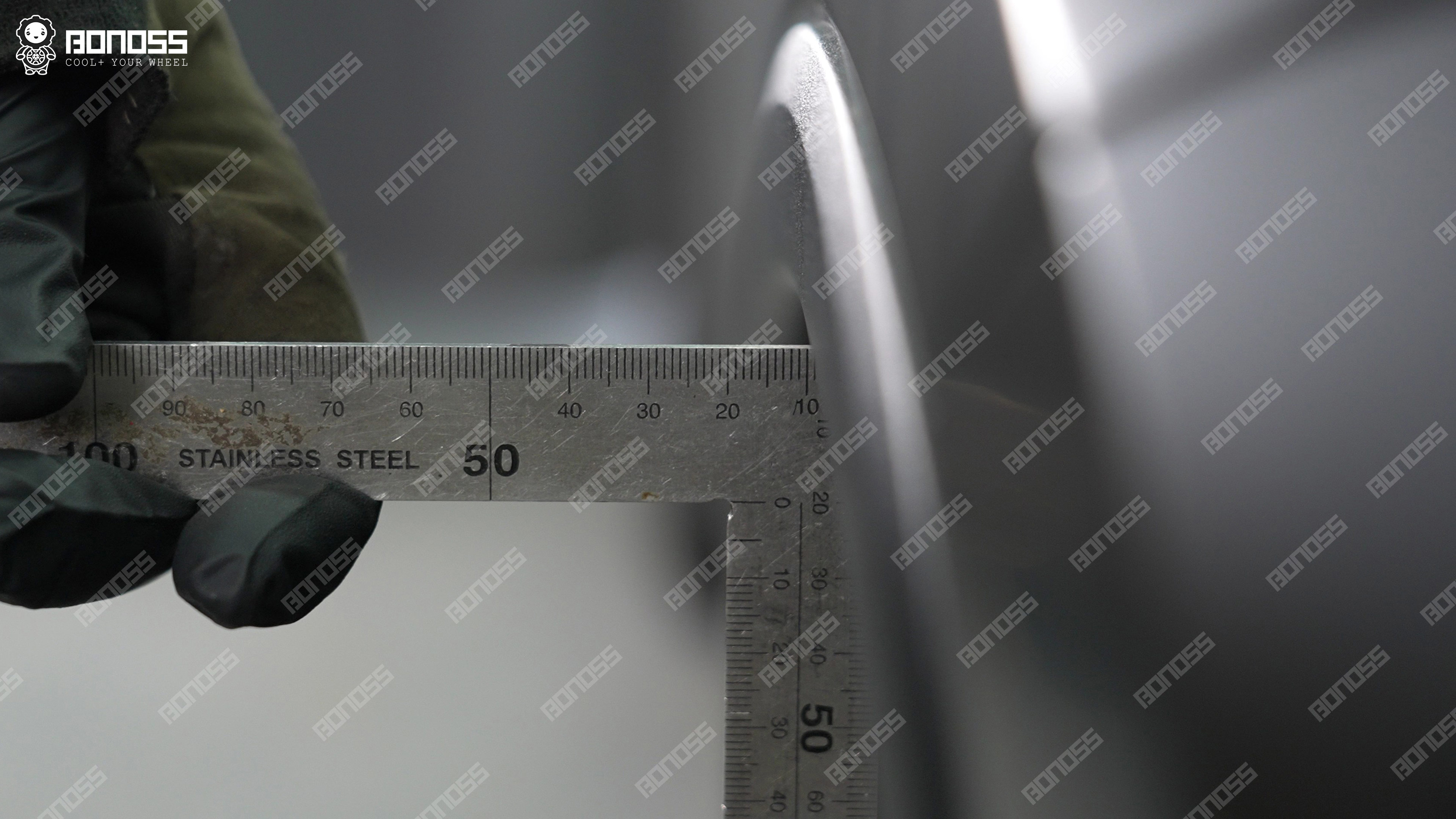
That settled the thickness question with data instead of vibes. This was Kevin’s first real question (“how thick do I even go?”) and it took a ruler and five minutes per corner to answer properly.
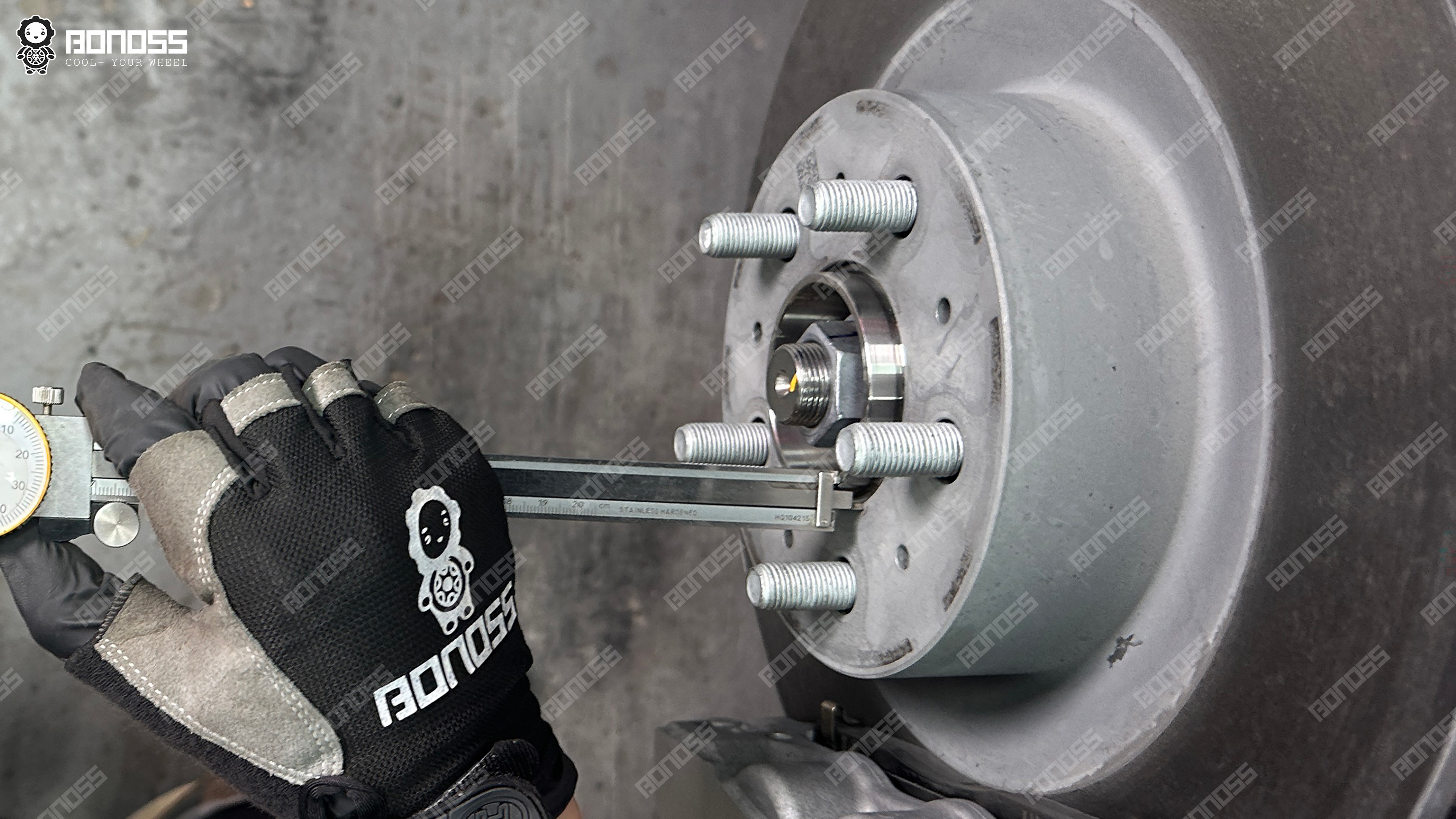
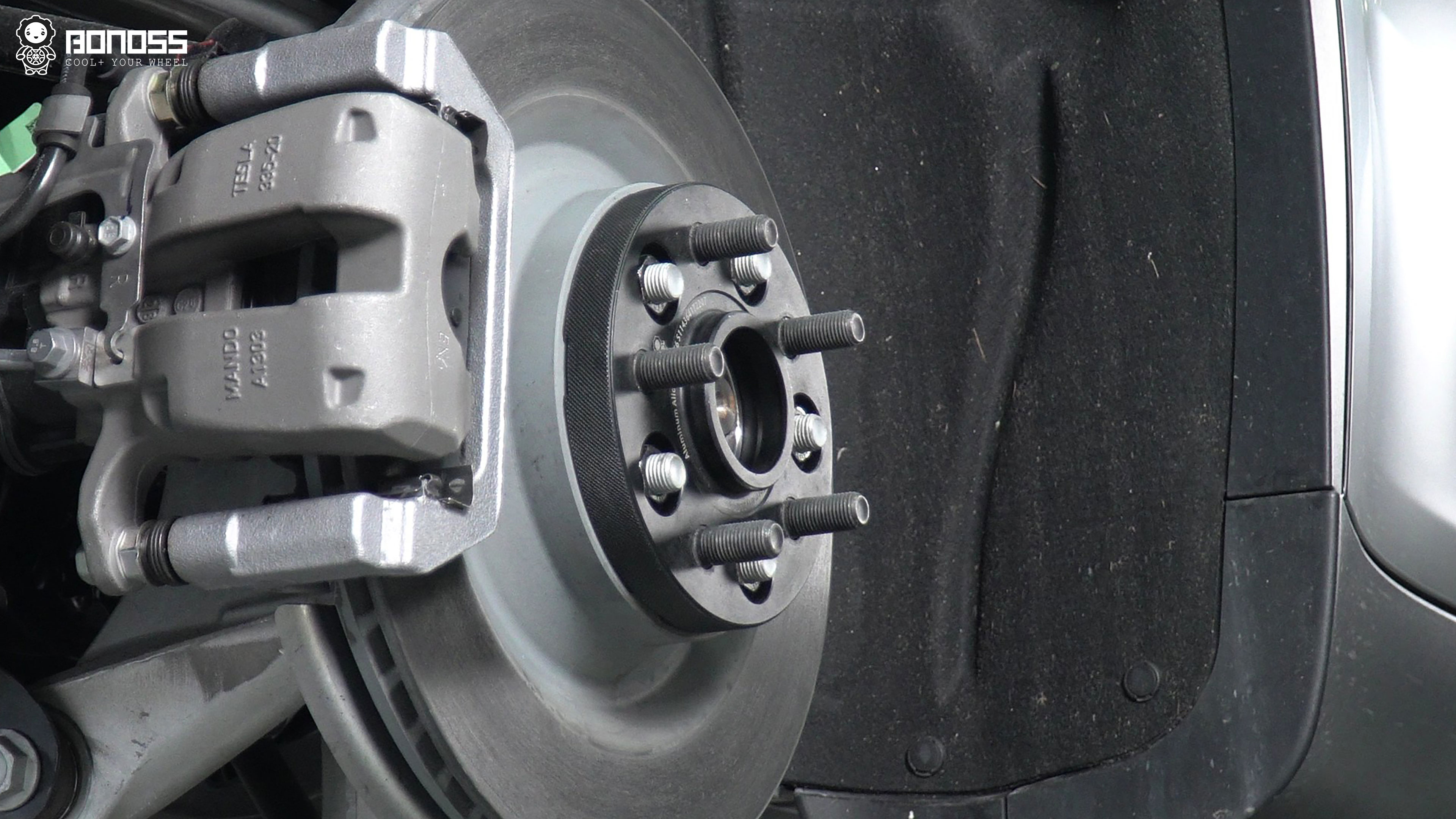
Hub step height. This is the measurement most DIY installs skip, and it’s the one that decides whether a hub-centric spacer actually seats. Front hub step: 8.52mm. Rear: 8.46mm. We checked both against the spacer’s multi-stage pilot depth and confirmed full engagement at both ends. If the step were taller than the spacer’s pilot pocket, the spacer would sit on the step instead of the hub face — that’s how you get runout and the highway vibration everyone blames on “spacers” in general.
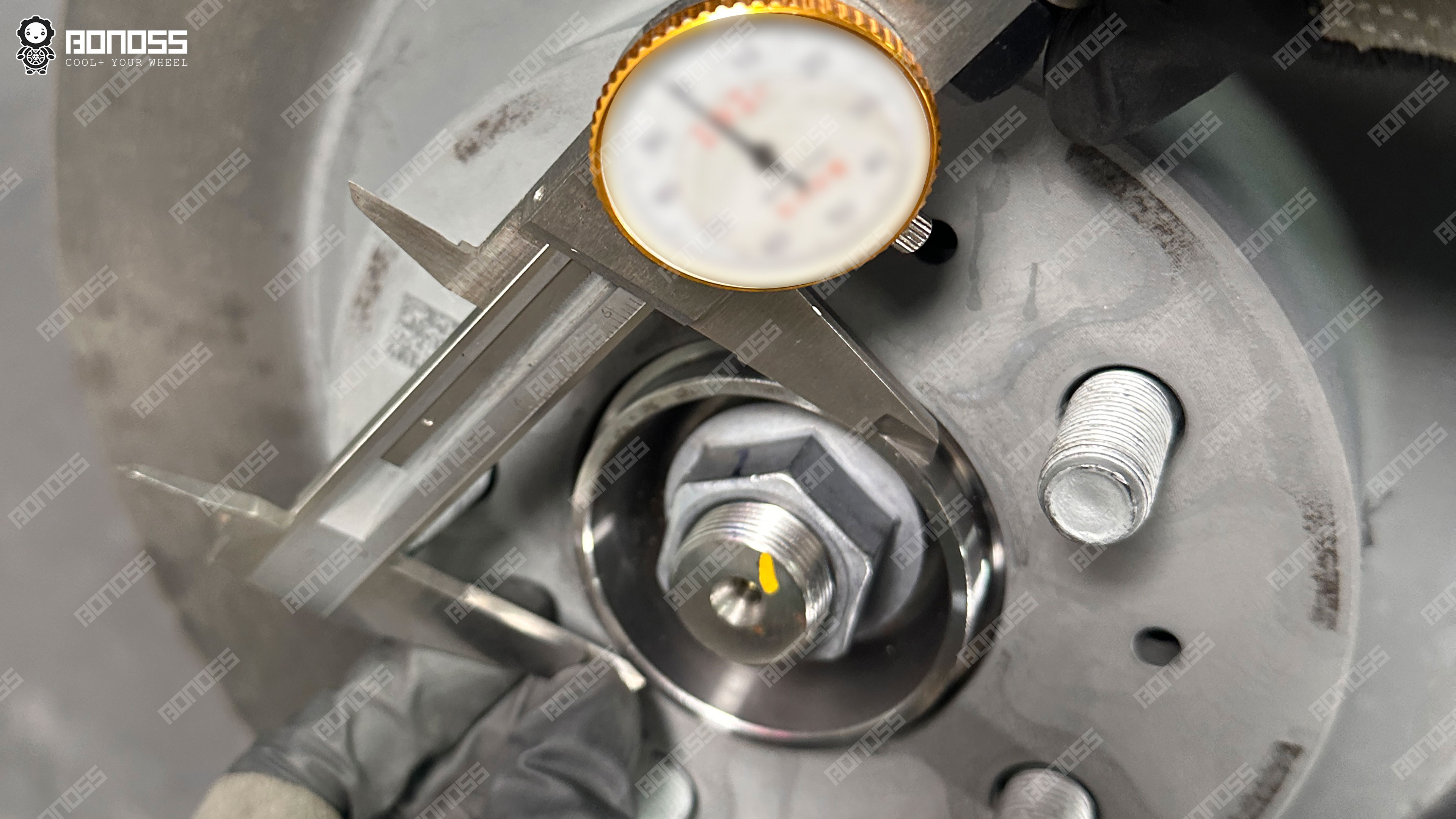
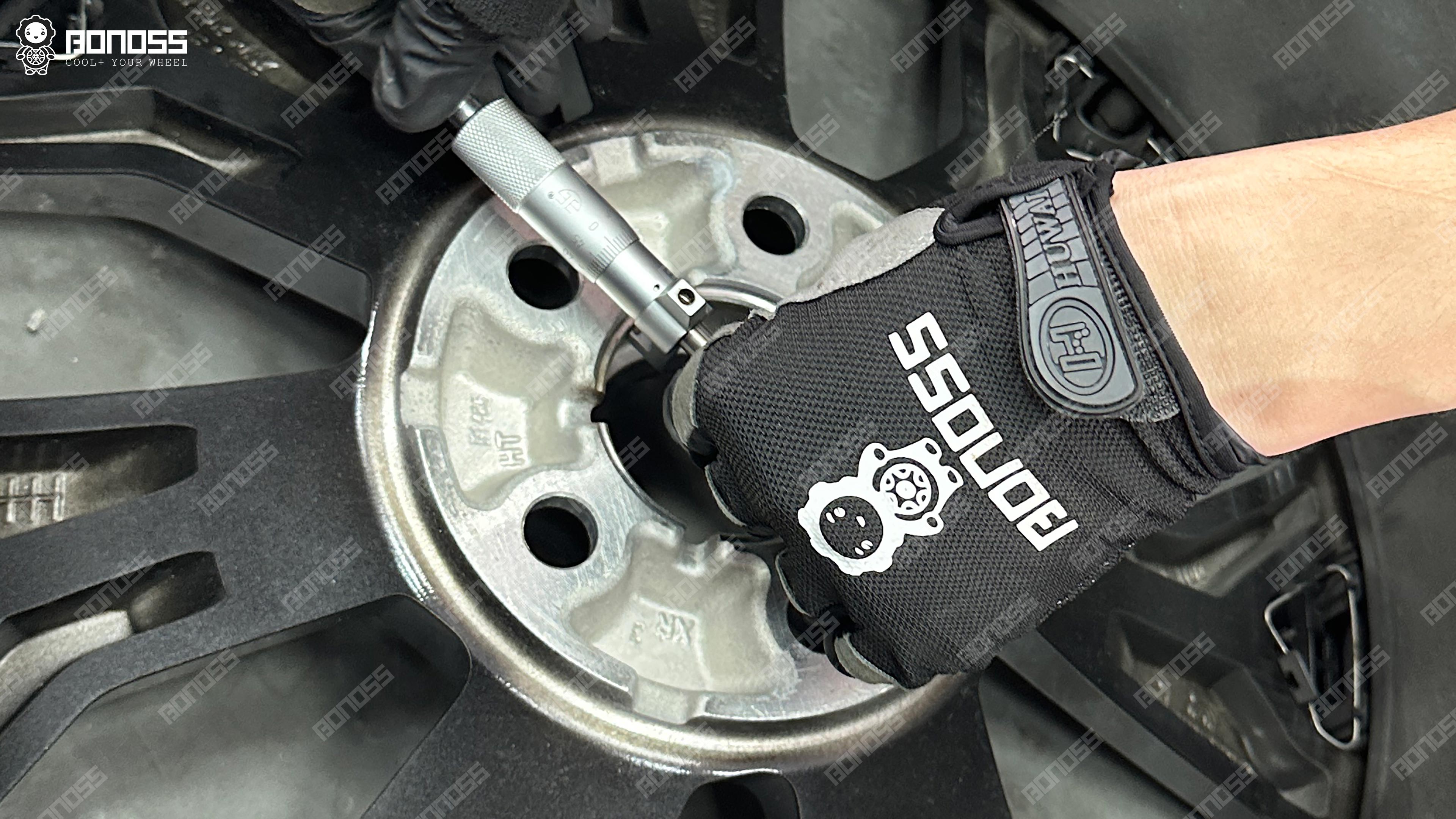
The bolt pattern (PCD) of a 2026 Tesla Model Y is 5×114.3mm (5×4.5″). As for the hub center bore, the vernier caliper read 64.08mm on it. The BONOSS spacers for this application are machined to a 5×114.3mm bolt pattern and a 64.1mm center bore — a slip fit with just enough clearance to install without binding and zero meaningful play once seated.
The Install, Exactly as It Happened
Total time, wheels off to wheels torqued: about an hour. Here’s the sequence we follow on every spacer job, with the two moments where Kevin’s forum research collided with reality:
Break the lug nuts loose, lift the car, and pull all four wheels. Nothing exotic here — the Model Y comes apart like any modern car. We cleaned every hub face and wheel mounting pad with a wire brush and wiped them down. Corrosion or debris under a spacer is a runout machine.
Test-fit each spacer dry before final assembly. This is where the rotor retaining screw question came up. Kevin had read that the little screw holding the brake rotor to the hub can interfere with spacers, and that some shops just remove it. His instinct was right: he’d rather keep it. The screw exists to hold the rotor in place during assembly and wheel swaps — removing it doesn’t hurt anything mechanically, but there’s no reason to if the spacer clears it. So we measured the screw head height and checked it against the spacer’s inner profile. The 20mm spacer swallowed it completely and sat dead flat on the hub face. Screw stays. “I was a little worried the screw might rub against the spacer, but it didn’t,” Kevin said afterward. “And the flush stance looks very nice!”
Seat each spacer on the hub and torque the spacer hardware. The multi-stage pilot clicked over the hub step the way a good slip fit should — no wobble, no force needed. We torqued the spacer fasteners to 140 Nm (per BONOSS installation instructions) in a star pattern.
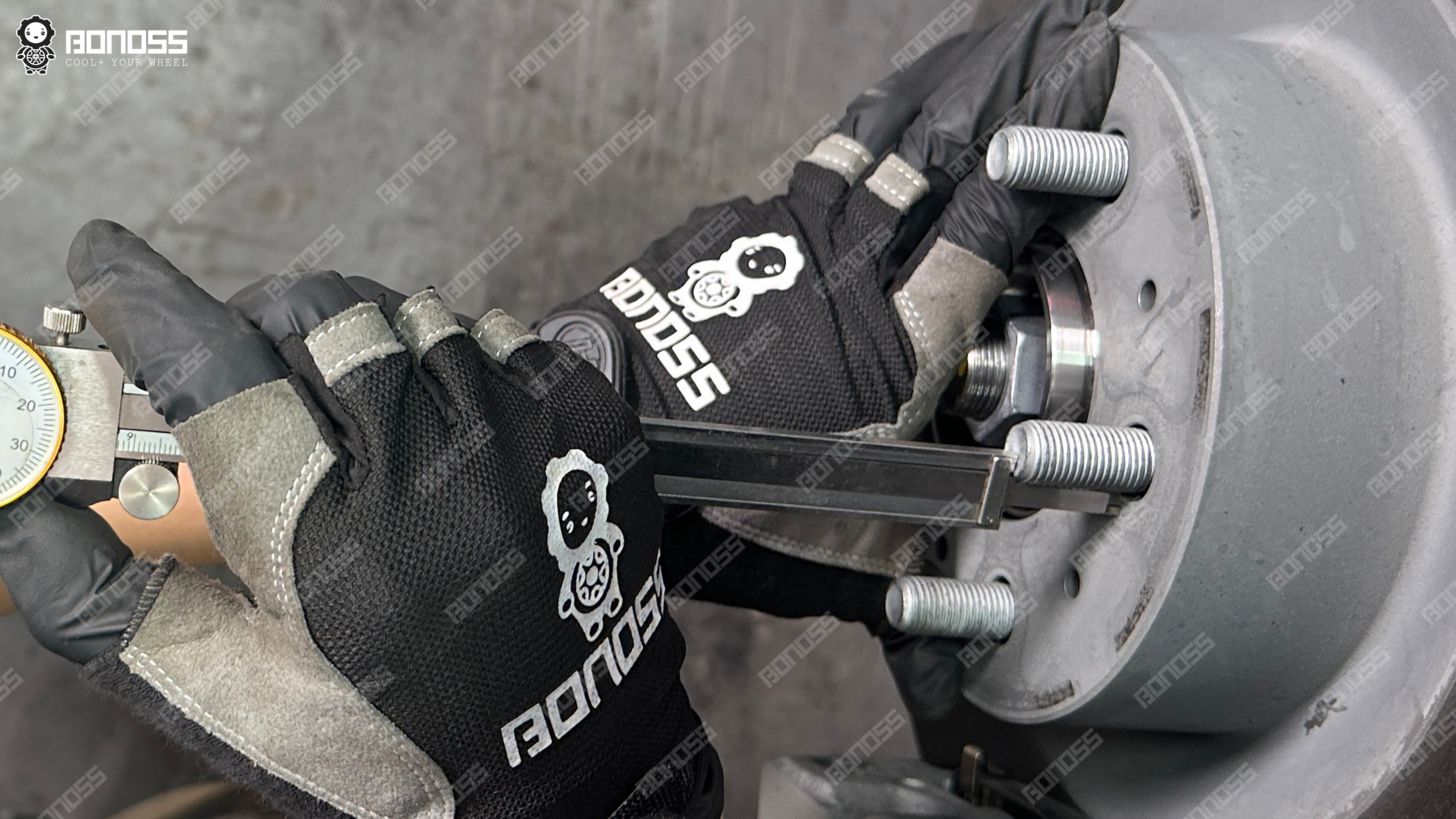
Stud protrusion. Front studs stuck out 26.57mm past the hub face; rears, 26.25mm. Hold that number — it becomes the star of the show in a minute.
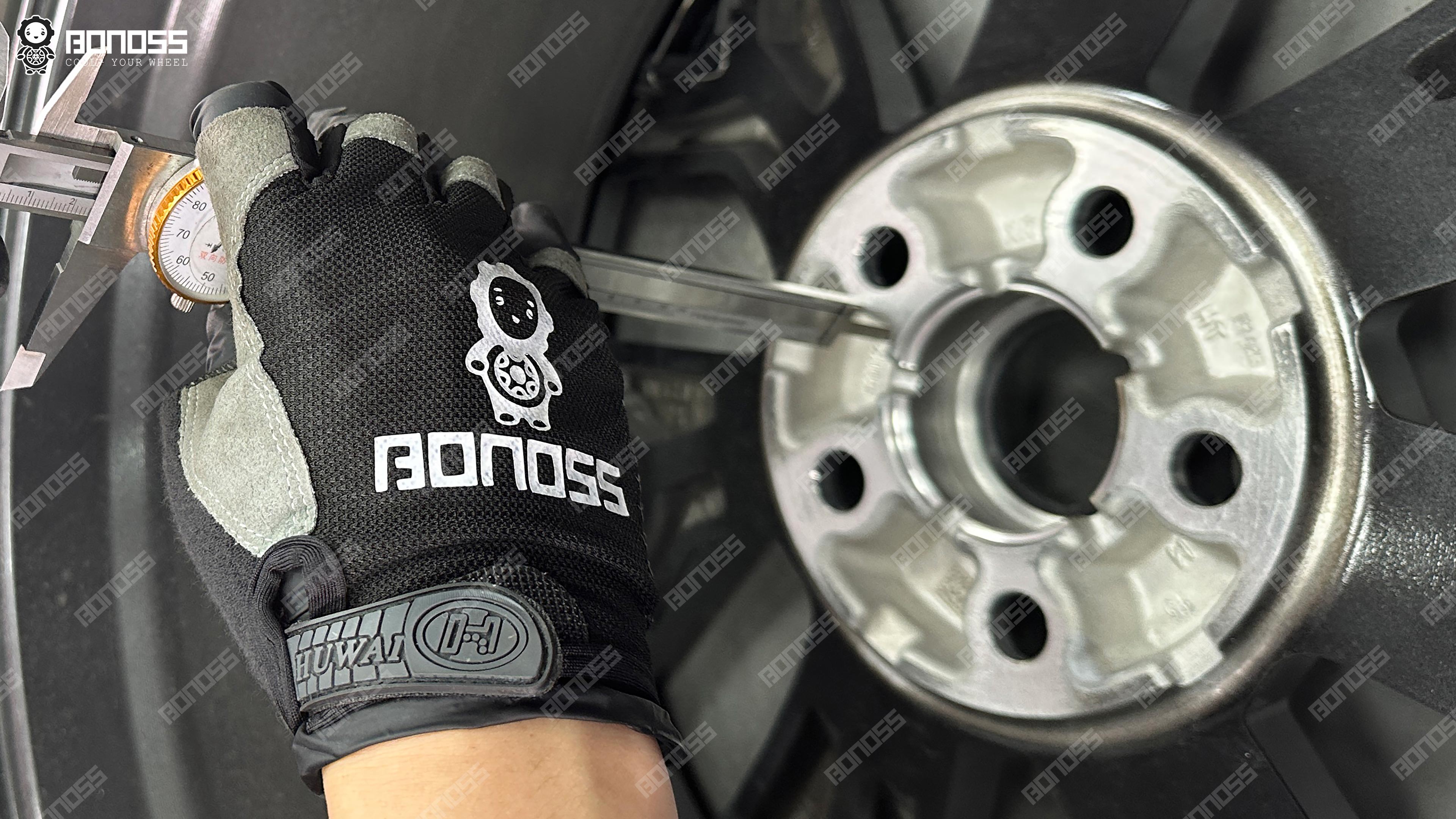
Wheel pocket depth. The recesses in the back of the factory wheel measured 24.09mm deep. Also hold that one.
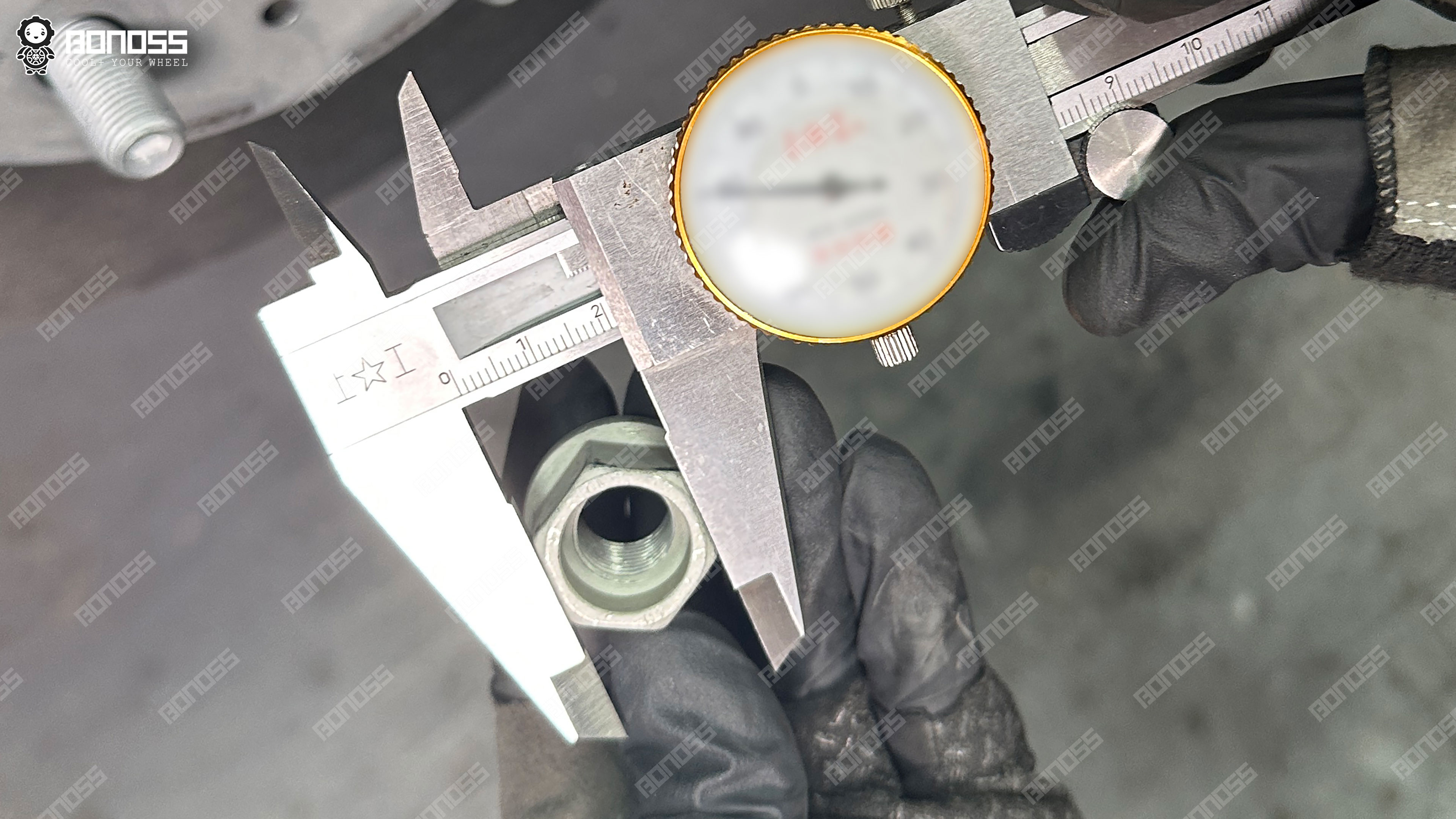
Hardware. Factory lug nuts are M14x1.5 with a conical seat, taking a 21mm hex socket.
Now, the stud-cutting myth is settled with arithmetic. Remember the 26.57mm and 26.25mm stud protrusion numbers, and the 24.09mm wheel pocket depth. A 20mm spacer consumes 20mm of stud. That leaves roughly 6.6mm of stud standing proud of the spacer face up front, 6.3mm in the rear. The factory wheel’s pockets are 24.09mm deep — nearly four times what the leftover stud needs. The studs disappear into the pockets with room to spare. No cutting, no grinding, no shortening anything. We showed Kevin the caliper readings before the wheels went on, because seeing the math beats hearing “trust me.”
Mount the wheels, hand-start every lug nut, and torque the factory wheel nuts to 175 Nm (per the owner’s manual) in a star pattern. We lowered the car, did a final torque pass at ride height, and rolled it out. The deeper engineering case for doing all of this correctly — stud engagement, seat geometry, and why it matters — is worth a read if you’re on the fence: why stud design and engagement matter on Model Y spacers.
1,016 Miles Later: What Kevin Actually Thinks
Install was May 26. As of this writing, Kevin has put 1,016 miles on the setup over about three months of driving — highway, surface streets, summer heat, afternoon downpours.
“Price was reasonable. Love the active cooling feature. I have about 1,016 miles on them. No vibes, no rubs, no weird noises at all. Great experience. Top-notch.”
That’s the outcome the measuring session was buying. Zero vibration means the hub-centric pilots are doing their job and nothing is running out of true. No rubbing means the 20mm number was right for his specific fender clearances — a number we arrived at with a ruler, not a catalog.
His longer take covers the ownership side: “Always a pleasure dealing with BONOSS! Spacers for my 2026 Model Y work well, no issues. Put about 1k miles on them over 3 months — rides better, more stable. Haven’t really noticed any hit to range either. They’ve got fair prices and customer service that’s always down to help.”
The range comment is worth pausing on, because it’s the question every EV owner asks. Moving the wheels out 20mm per side does change aerodynamics at the margin, but in Kevin’s real-world use — commuting, highway runs, the works — any efficiency change has been small enough that he can’t find it in his consumption data. Your results will vary with speed and driving style, but “I can’t tell” is the most common report we hear, and now it’s his report too.
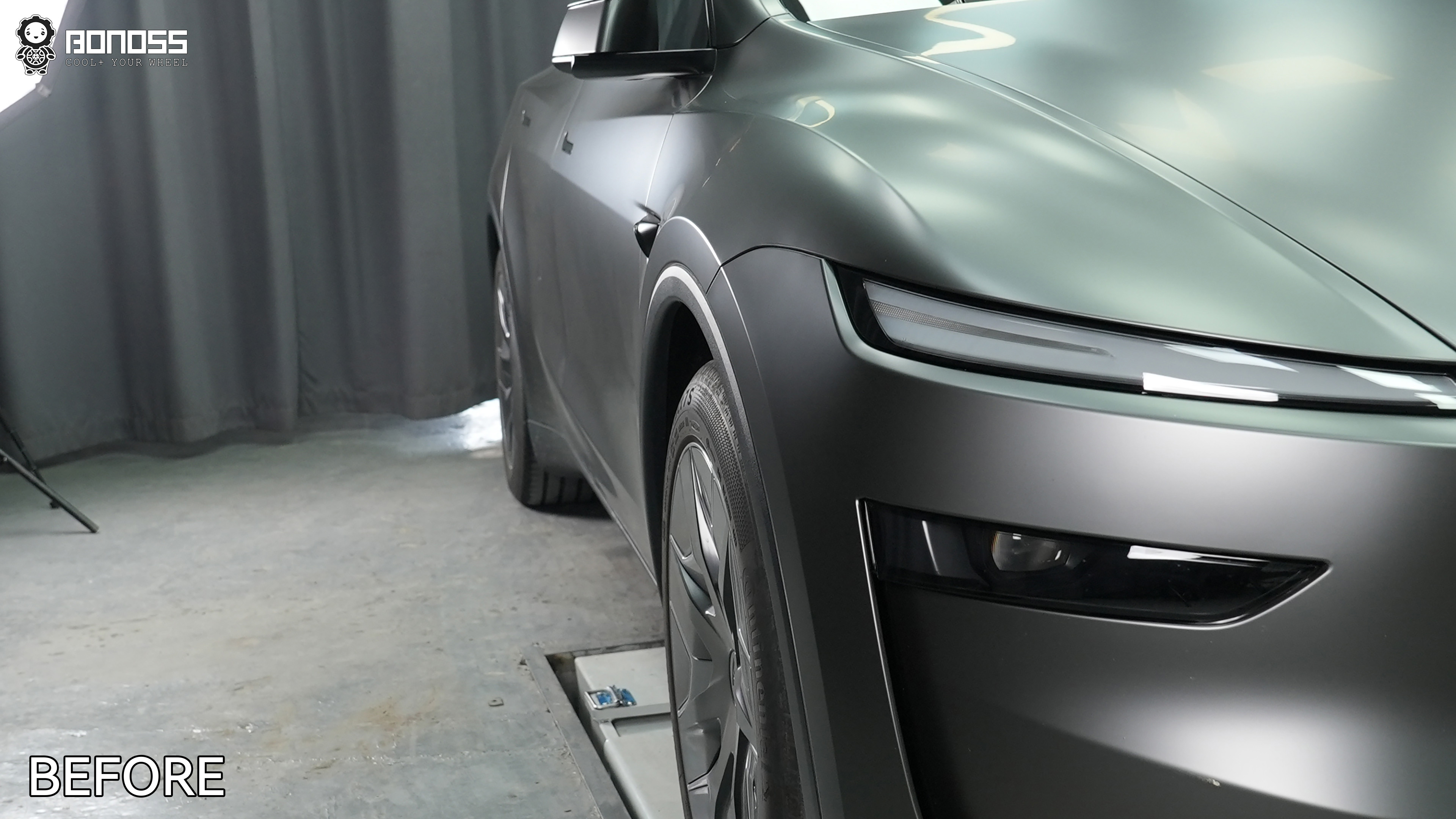
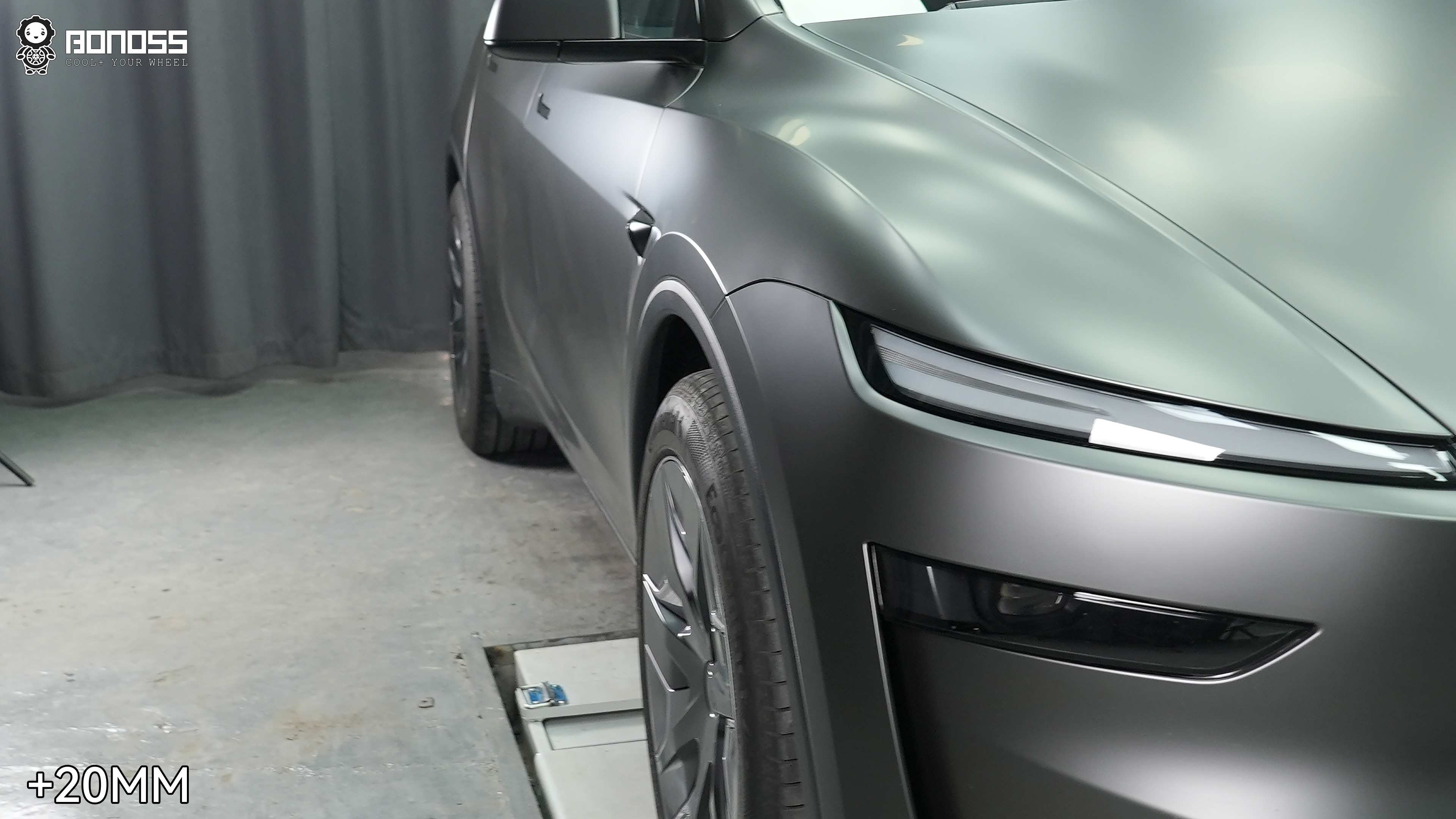
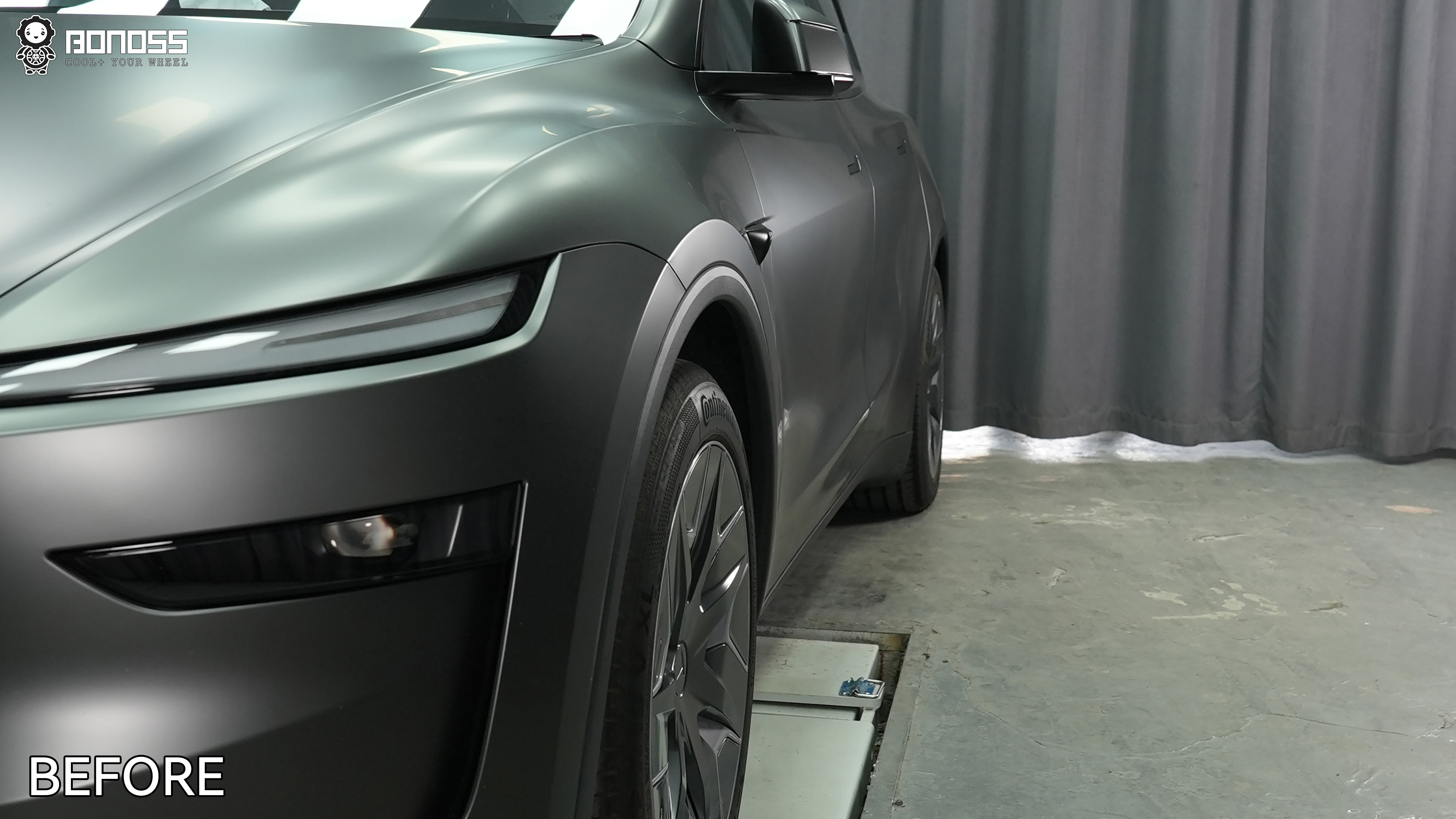
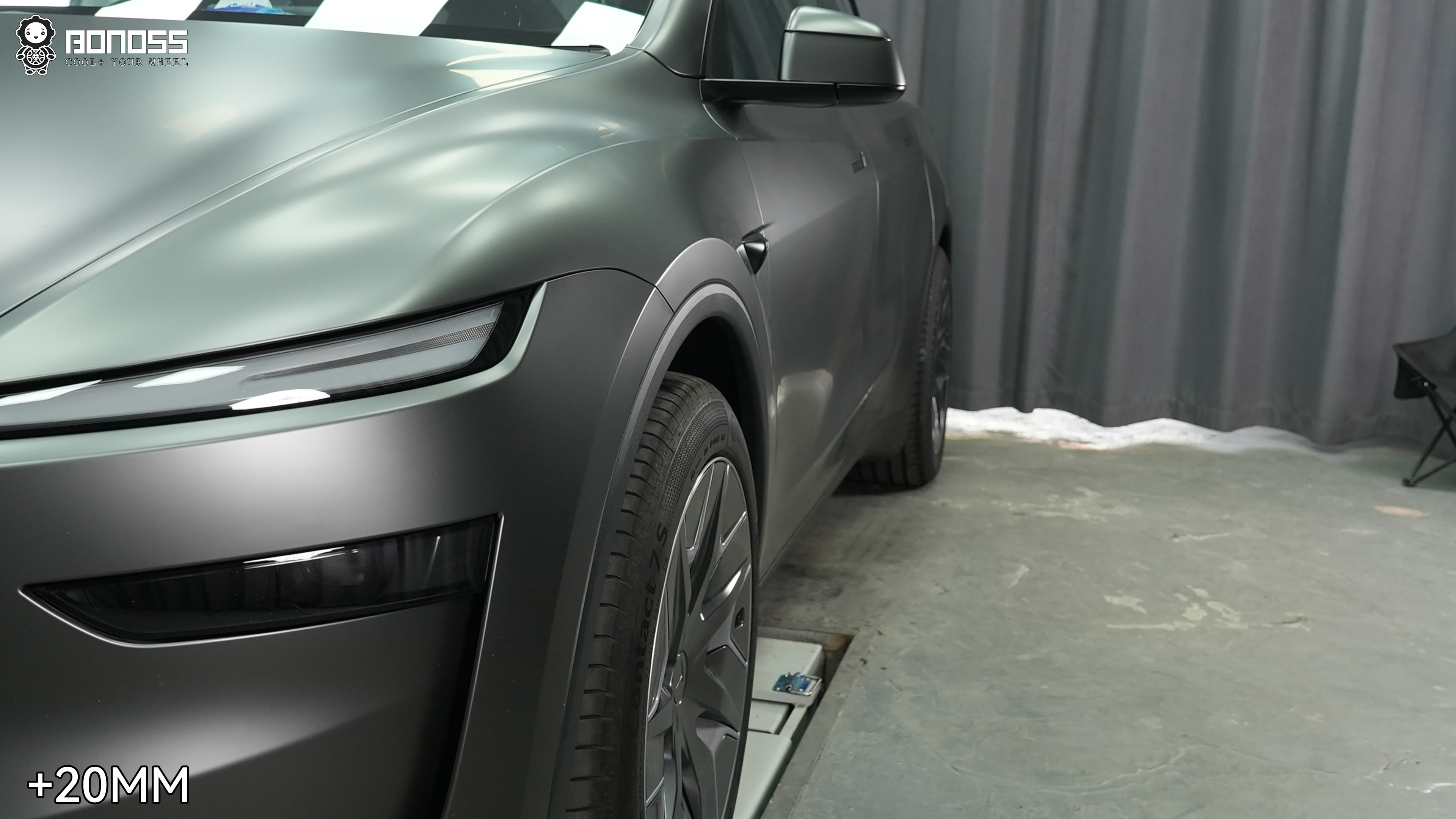
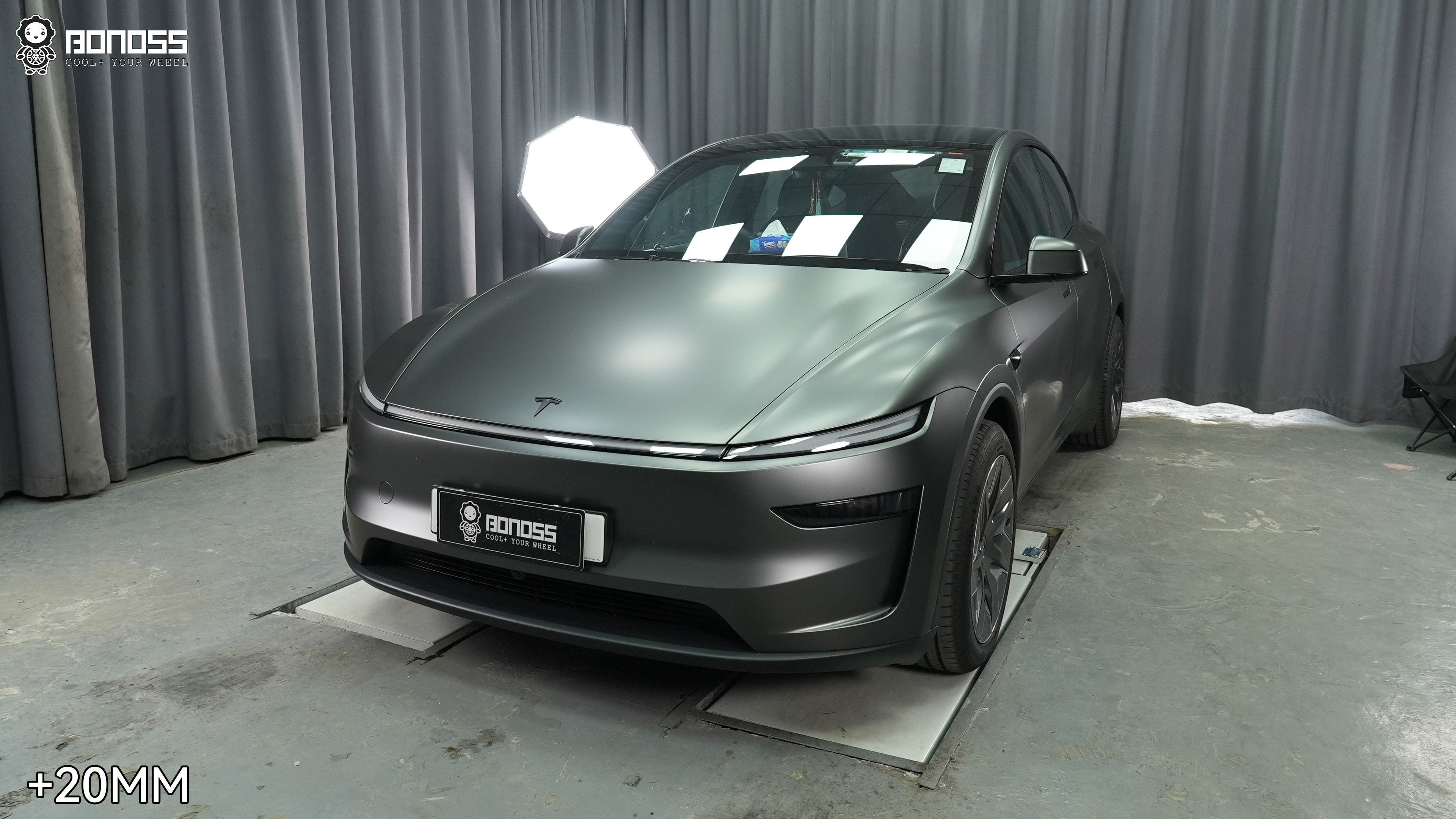
And the stance? The car looks the way it probably should have from the factory — wheel faces sitting right at the fender line, no poke, no tuck. Kevin’s summary of the whole job: “Car drives and looks awesome!” From the guy who didn’t want to guess, that’s the review that matters.
FAQ: 2026 Tesla Model Y Wheel Spacers
Do I have to cut the factory studs to run 20mm spacers on a 2026 Model Y?
Not with the factory wheels. On Kevin’s car, the studs protruded 26.57mm (front) and 26.25mm (rear). After a 20mm spacer, about 6.3–6.6mm of stud remains, and the factory wheel pockets are 24.09mm deep — so the studs sit fully inside the pockets. Stud cutting only becomes a topic with spacers much thinner than the pocket depth, or with certain aftermarket wheels that have shallow or no pockets. Measure your actual wheels before assuming anything.
Do I need to remove the brake rotor retaining screw before installing spacers?
No — at least not with 20mm spacers on this application. We measured the screw head height against the spacer’s inner profile and the spacer seated completely flat with the screw in place. The screw’s job is positioning the rotor during service, and it’s happy to keep doing that job behind the spacer.
Are hub-centric spacers really necessary on a Model Y, or are lug-centric ones fine?
For an EV with instant torque, hub-centric is the right call. The hub pilot — not the studs — is designed to center and support the wheel assembly. A multi-stage hub-centric spacer that matches the Model Y’s stepped hub (we measured 64.08mm bore, 8.52mm front / 8.46mm rear step heights) keeps the load path the way Tesla engineered it. Lug-centric spacers hang everything on the hardware, and that’s where vibration complaints come from.
What torque should I use on Model Y wheel spacers?
We torque the spacer fasteners to 140 Nm in a star pattern. For the factory wheel nuts, Tesla’s factory spec is 175 Nm — check your owner’s manual for your specific configuration. Either way, re-torque everything after the first 50–100 miles. Fresh hardware settles; a five-minute re-check is cheap insurance.
Will 20mm spacers make my Model Y rub or hurt my range?
On a stock 2026 Model Y with 255/45R19 tires, 20mm per side landed flush with no rubbing — but that number came from measuring this car’s fender clearance, so measure yours. As for range, after 1,016 miles, Kevin reports no noticeable change in consumption. The aero penalty of a flush wheel position is small enough that most owners never find it in their data.
How much do 2026 Tesla Model Y wheel spacers cost?
Kevin’s complete set — four 20mm BONOSS forged active cooling spacers — was $256. Thickness and quantity move the price around, so check the current pricing for your exact setup before ordering.
In Summary
Get the exact kit from this case study: BONOSS Forged Active Cooling Wheel Spacers for Tesla Model Y (PCD 5×114.3, CB 64.1) — the same multi-stage hub-centric, full-cone seat, active cooling spacers we measured and installed on Kevin’s car. Not sure about your thickness? Contact the team with your wheel specs — as Kevin put it, you’ll talk to someone who actually knows their stuff.

About Robert Wall
Robert Wall is a Senior Automotive Engineer at BONOSS with over 9 years of experience in automotive component R&D, specializing in the structural design and safety validation of wheel spacers, wheel adapters, and high-strength fasteners. He is actively involved in product testing and on-track evaluation and is dedicated to translating engineering expertise into accessible modification knowledge — helping enthusiasts upgrade their vehicle’s stance and handling without compromising safety.