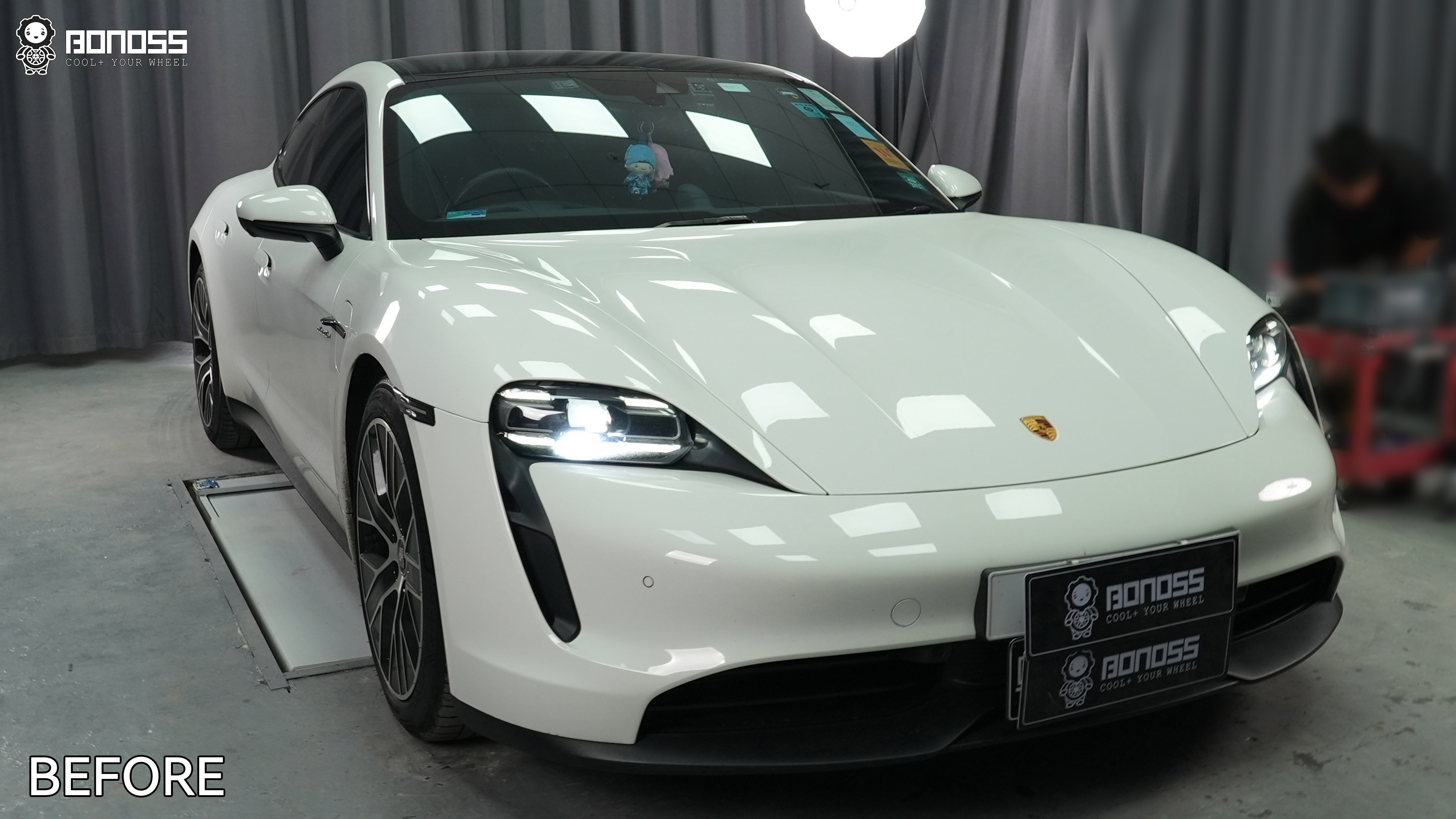
Fifteen millimeters on all four corners. That’s the number that puts a bone-stock 2023 Porsche Taycan flush with its fenders, and it isn’t a guess — it’s what the ruler said. This case follows David Cooper’s Taycan, an electric car built on the 9J1 platform and rolling on the factory 20-inch wheels, from measurement through installation to 3,200 miles of real driving. If you’re researching 2023 Porsche Taycan 15mm wheel spacers, this is the measured fitment, the before-and-after proof, and the owner feedback you actually want — not a universal spec sheet.
Before anything went on, the car sat exactly as Porsche delivered it: 245/45R20 up front at ET+54 offset, 285/40R20 at the rear at ET+60. The bolt pattern is 5x130mm and the wheel bolts are M14x1.5 with an R14 ball seat. None of that changes when you add spacers. What changes is the offset, the stance, and — per the owner — the way the car rides and corners.
Spec Quick Reference
Here’s the whole install in one table before I get into the story.
| Item | Spec |
|---|---|
| Vehicle | 2023 Porsche Taycan (9J1) |
| Stock wheels | 245/45R20 ET+54 (front) / 285/40R20 ET+60 (rear) |
| Bolt pattern (PCD) | 5x130mm |
| Hub center bore (CB) | 71.6mm nominal (71.47mm measured on this car) |
| Thread size | M14x1.5 |
| Spacer thickness | 15mm front / 15mm rear |
| Offset after spacer | ET+39 front / ET+45 rear |
| Wheel bolt torque — BONOSS extended bolts | 140 Nm (103.5 ft-lb) per BONOSS installation instructions |
| Wheel bolt torque — OEM bolts | 160 Nm (118 ft-lb) per the owner’s manual |
| Required extended bolts | 47mm, ISO Grade 12.9 |
| Spacer material | 7075-T6 forged aluminum |
One torque note worth reading twice. The 160 Nm (118 ft-lb) figure is for the original Porsche bolts only. This install swaps in BONOSS extended bolts, so the final torque on every bolt is 140 Nm (103.5 ft-lb) per BONOSS installation instructions. Do not mix the two values on the same job — use the factory value with factory bolts and the BONOSS value with BONOSS bolts. Here, every bolt is a BONOSS extended bolt, so 140 Nm (103.5 ft-lb) is the number you wrench to.
Why 15mm on All Four Corners — the Measurement That Settled It
The goal was a flush stance, not poke. David wanted the tire shoulder to line up with the fender edge without sticking out, and the quick way to answer “how much spacer” is to measure, not to scroll forums. If you want the broader method rather than just this one car, a proper Porsche wheel spacers fitment guide walks through the same three checks in more depth.
Measure the Fender Gap First
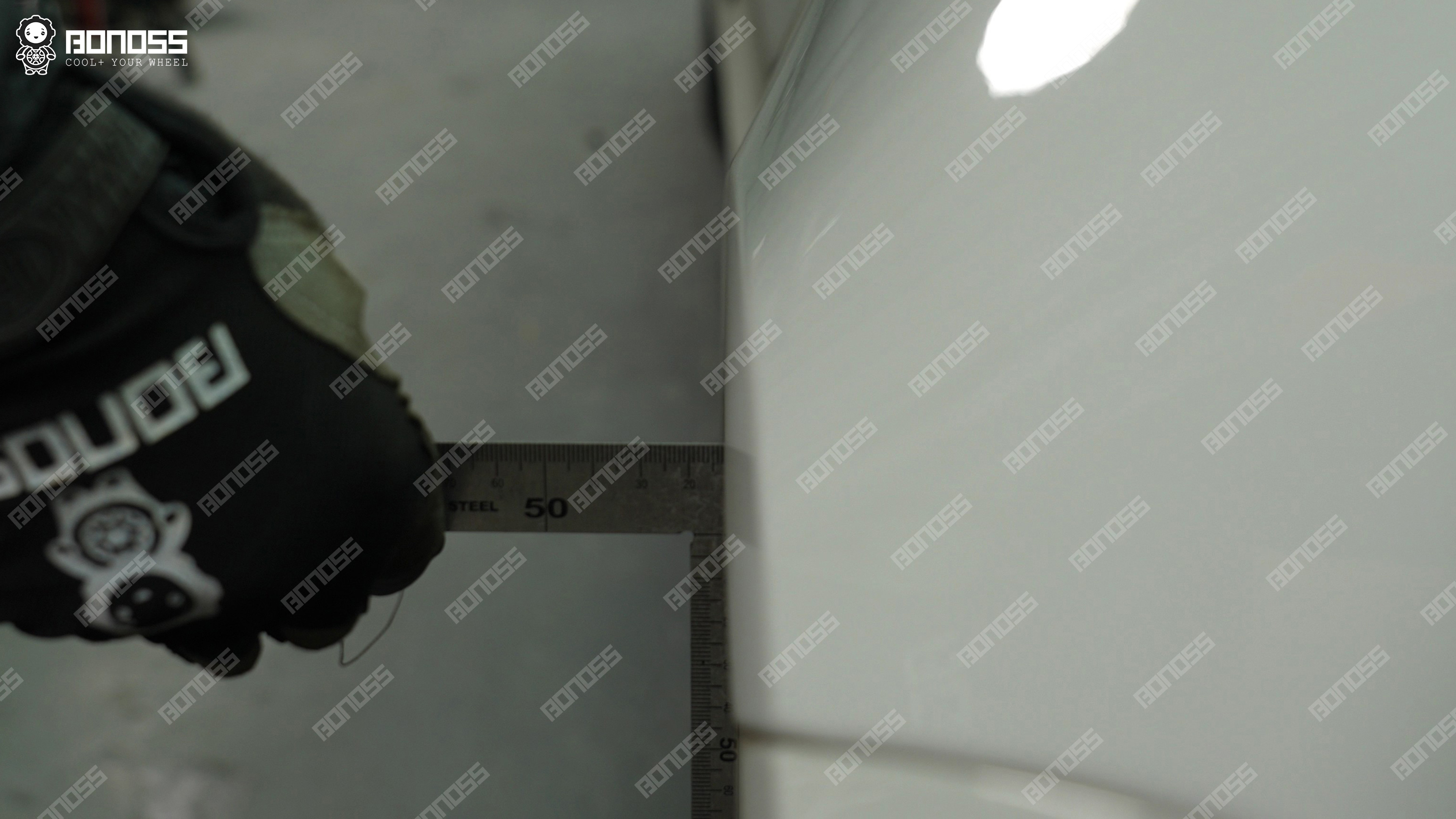
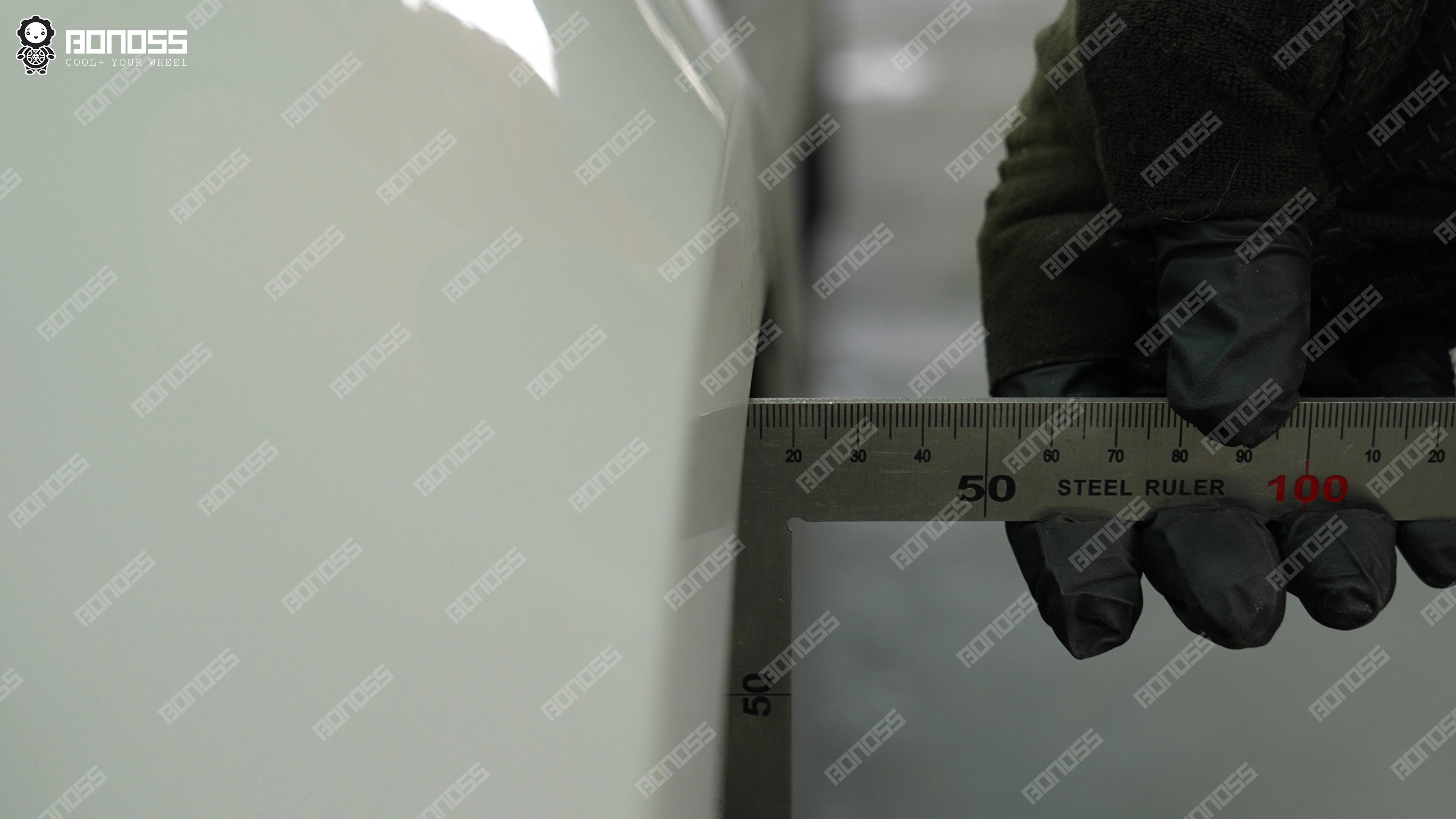
A high-accuracy ruler across the front-left wheel-to-fender gap showed roughly 15mm of clearance to close. The rear told the same story.
The rear-right measurement landed at the same 15mm. That’s the value of measuring all four corners instead of assuming front and rear match. On this car they happened to match, but a staggered setup like this — 245 section front, 285 rear — often doesn’t. Flush front and rear is exactly what the owner was after, and the ruler confirmed it could be done without any poke.
Check the Hub Step and Center Bore
Spacers are only as safe as the hub engagement, so the hub step height and center bore both got measured with a vernier caliper rather than eyeballed.
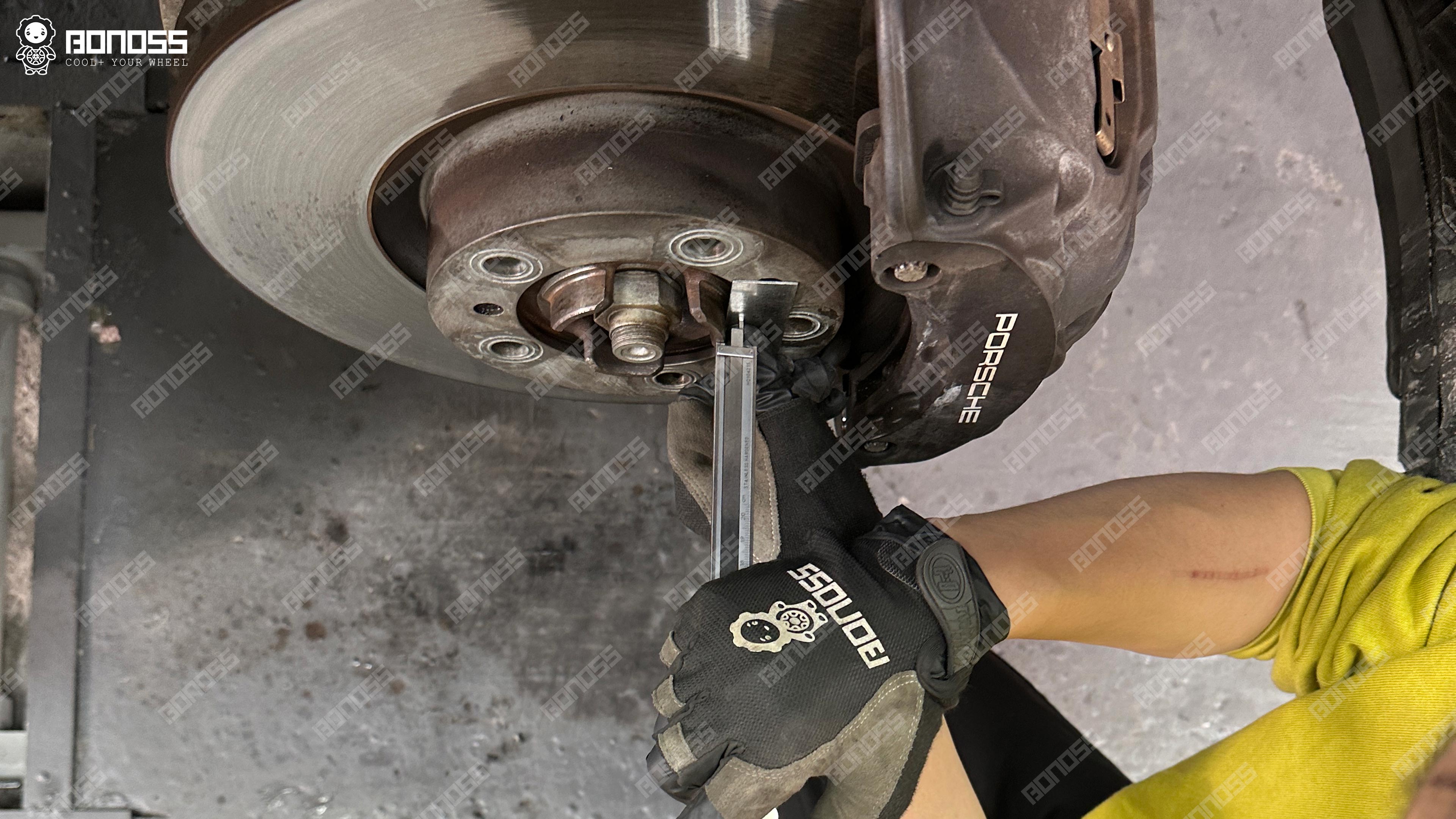
The front hub step measured 9.52mm and the rear 10.56mm. Both sit well inside a 15mm spacer, which means the spacer’s own hub-centric lip carries the wheel and the factory hub still has room to do its job. This is the kind of check that separates a proper hub-centric fit from a sloppy lug-centric one.
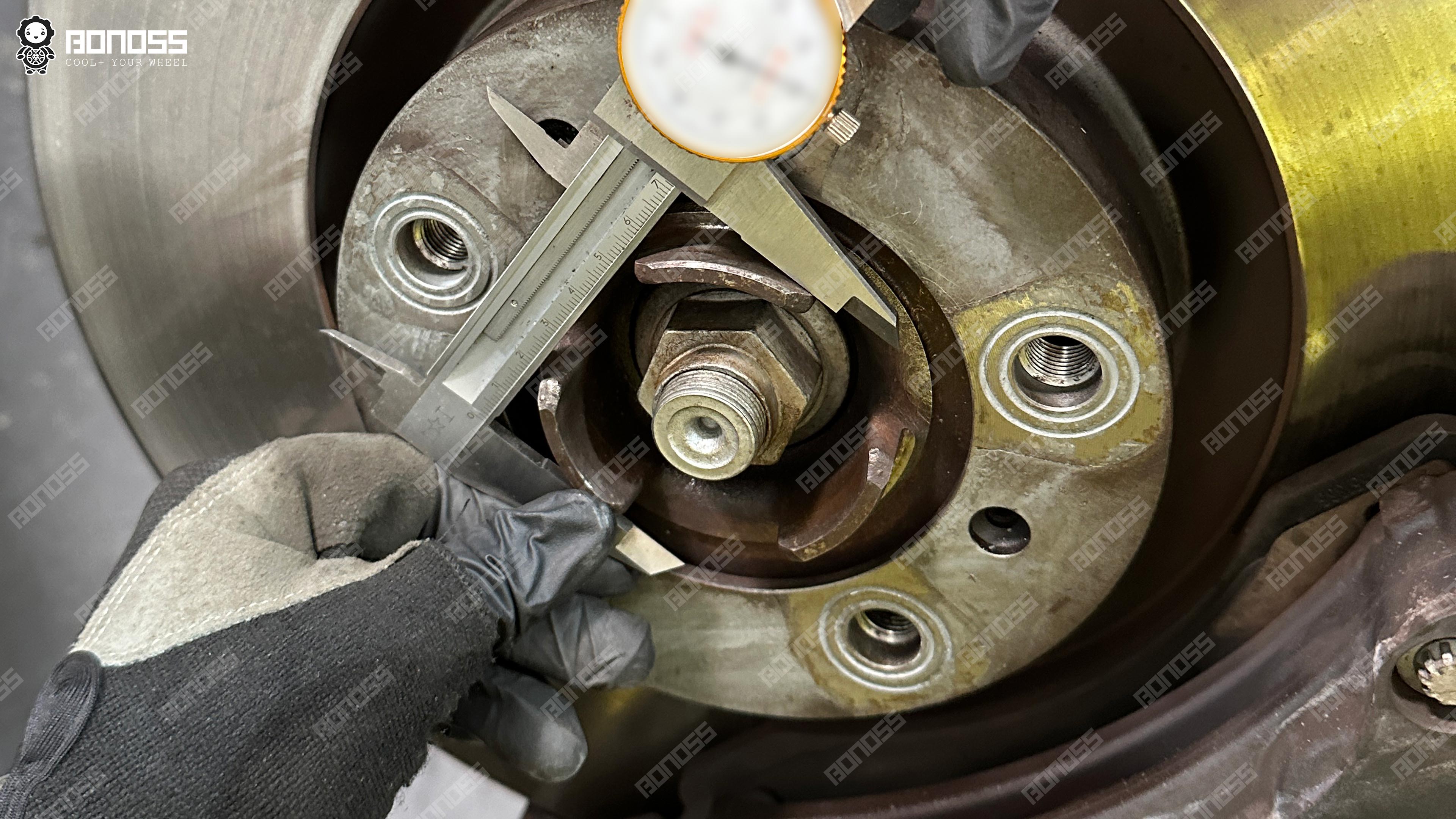
The hub bore calipered at 71.47mm, and the wheel’s own center bore read 71.61mm on the micrometer.
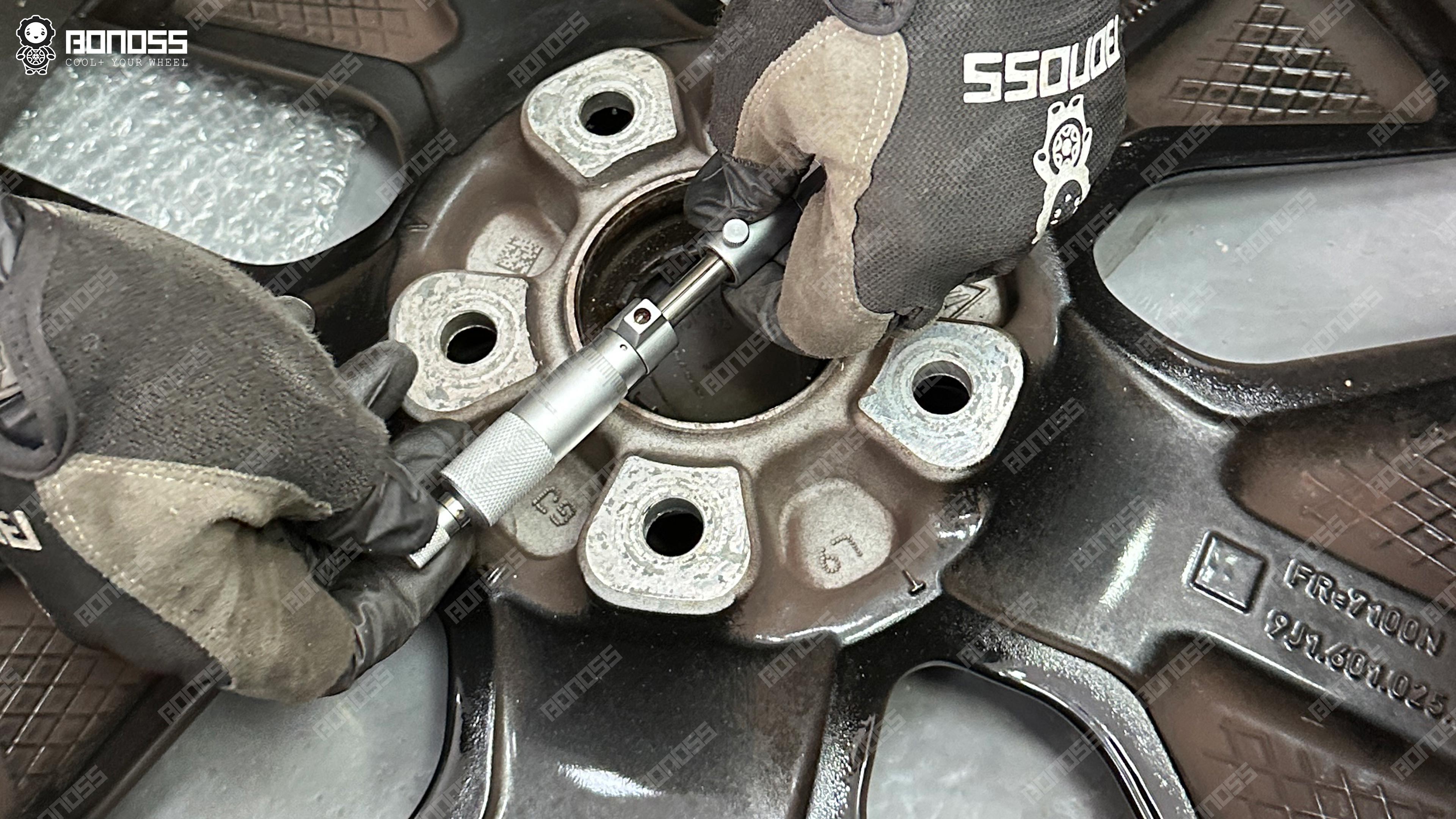
A 71.6mm spacer bore mates to both cleanly. That’s the whole point of hub-centric — the spacer seats on the hub lip and the wheel seats on the spacer’s lip, so the studs clamp but never carry the load.
The Offset Math
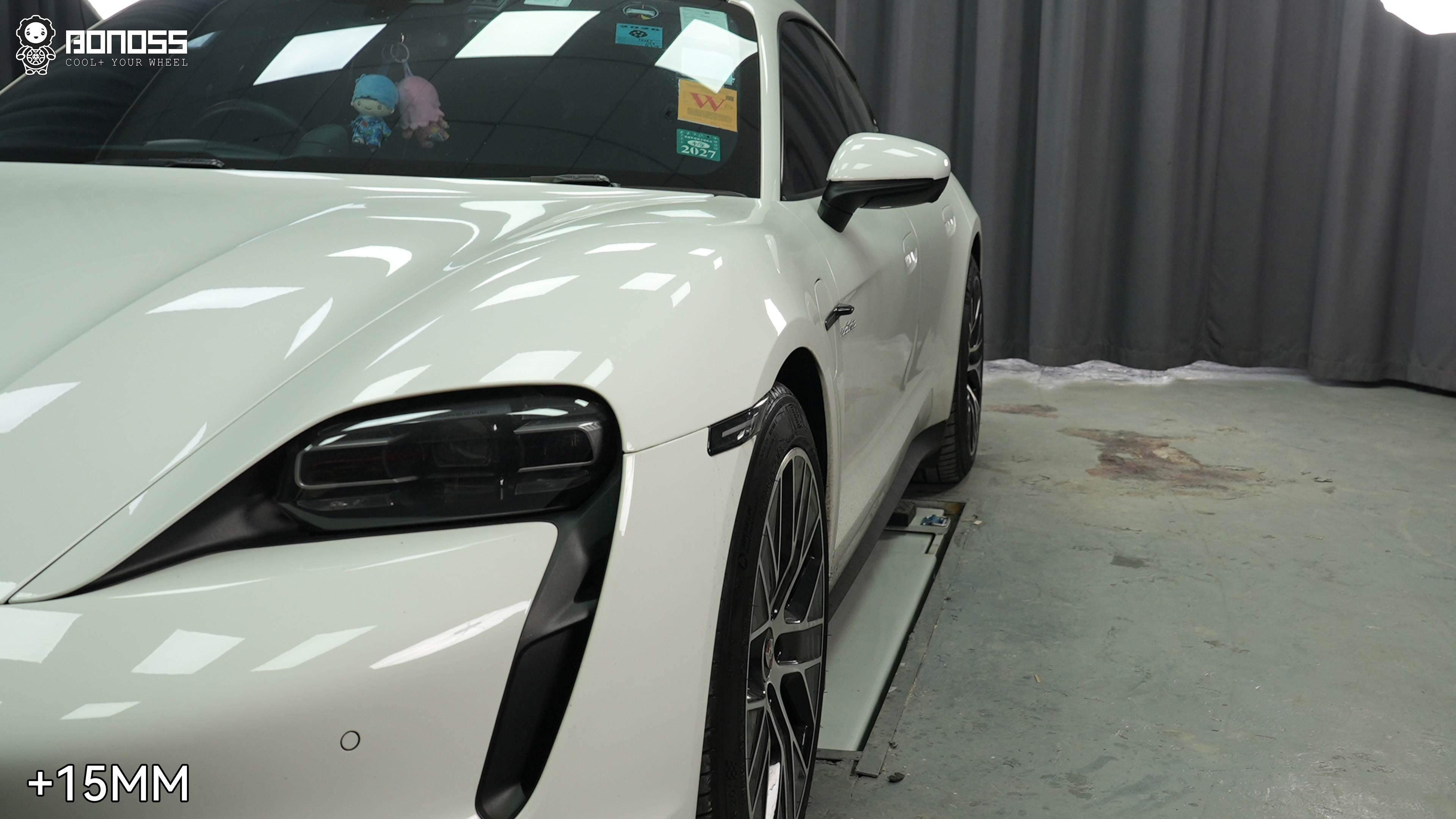
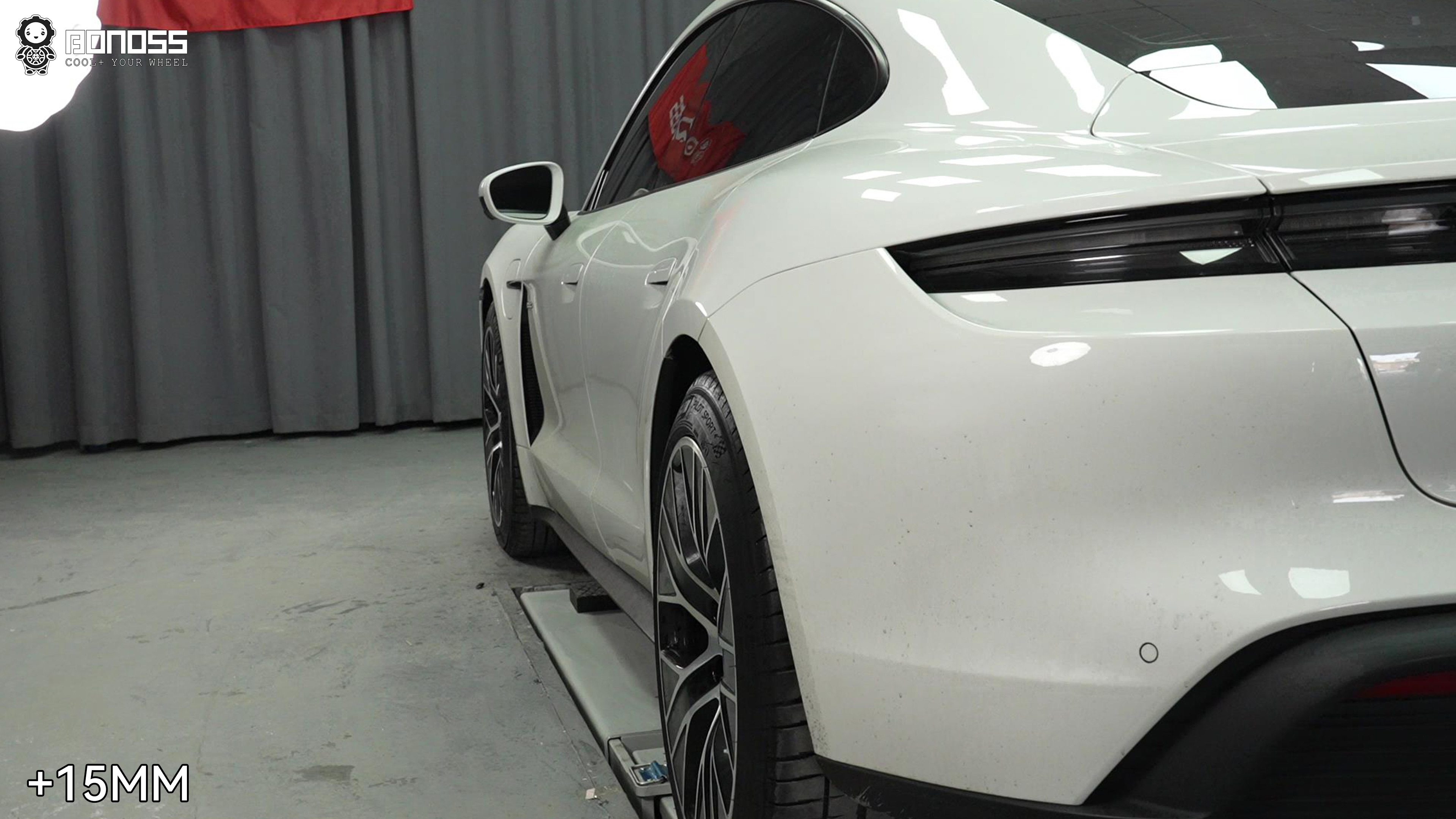
Offset is just the distance from the wheel’s mounting face to its centerline. Add a 15mm spacer and you push the wheel out 15mm, which subtracts 15mm from the offset. Front: ET+54 minus 15 equals ET+39. Rear: ET+60 minus 15 equals ET+45. That lands the tire shoulder right at the fender line on this car.
For context, 15mm sits in the sweet spot on the Taycan. Go 10–12mm and you get a conservative improvement that still looks tucked. Go 15mm and you’re flush. Push past 20mm on the stock offset and you’re flirting with poke and rub, especially at the rear where the 285 tire already fills the arch. This car wanted flush, so the answer wasn’t a guess — it was 15mm on all four corners.
The Bolt Question: You Do Need Longer Bolts at 15mm
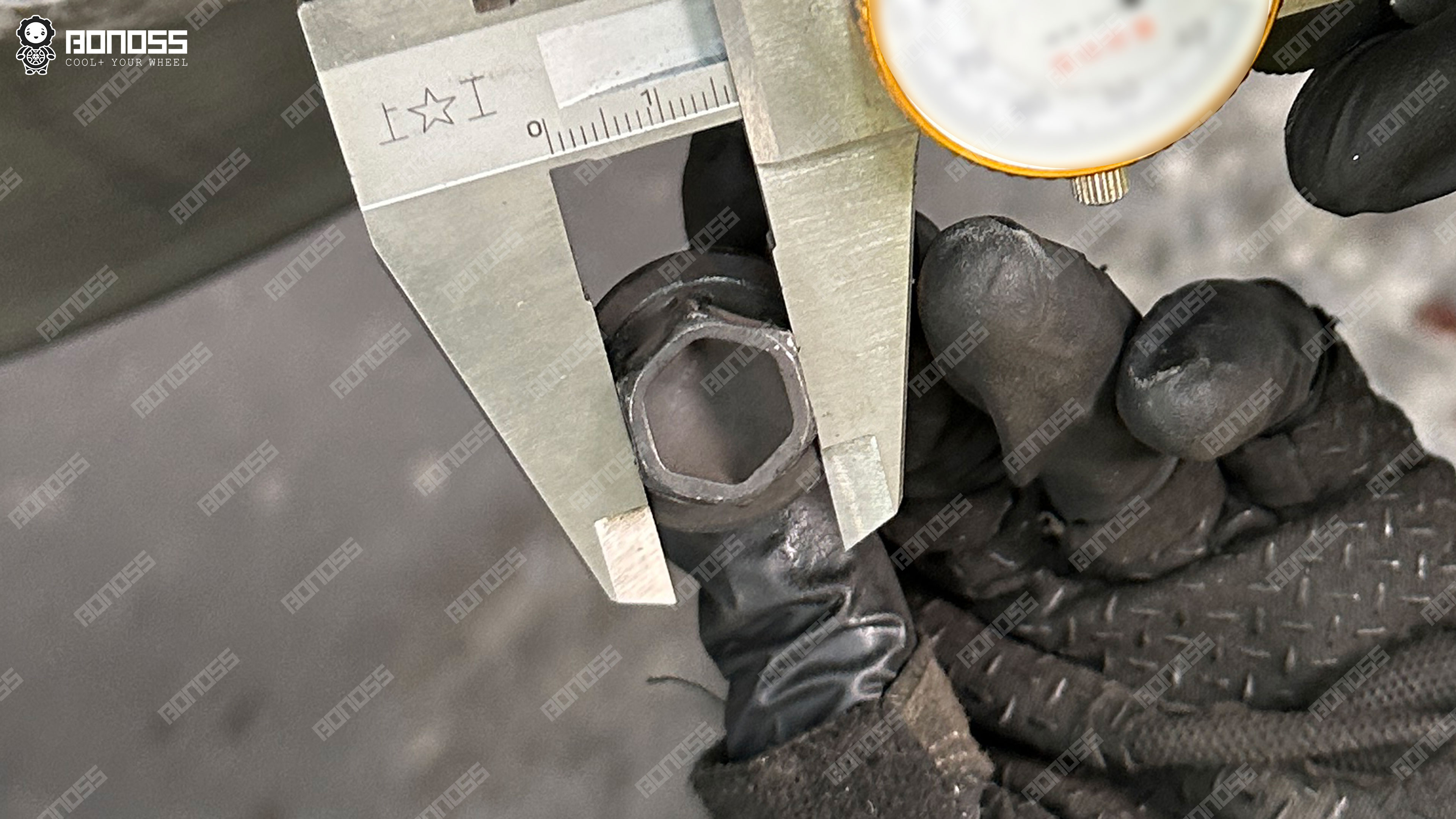
This is the part people get wrong. A 15mm spacer means the stock bolt now has 15mm less thread engaging the hub, and M14x1.5 thread doesn’t leave much slack to begin with.
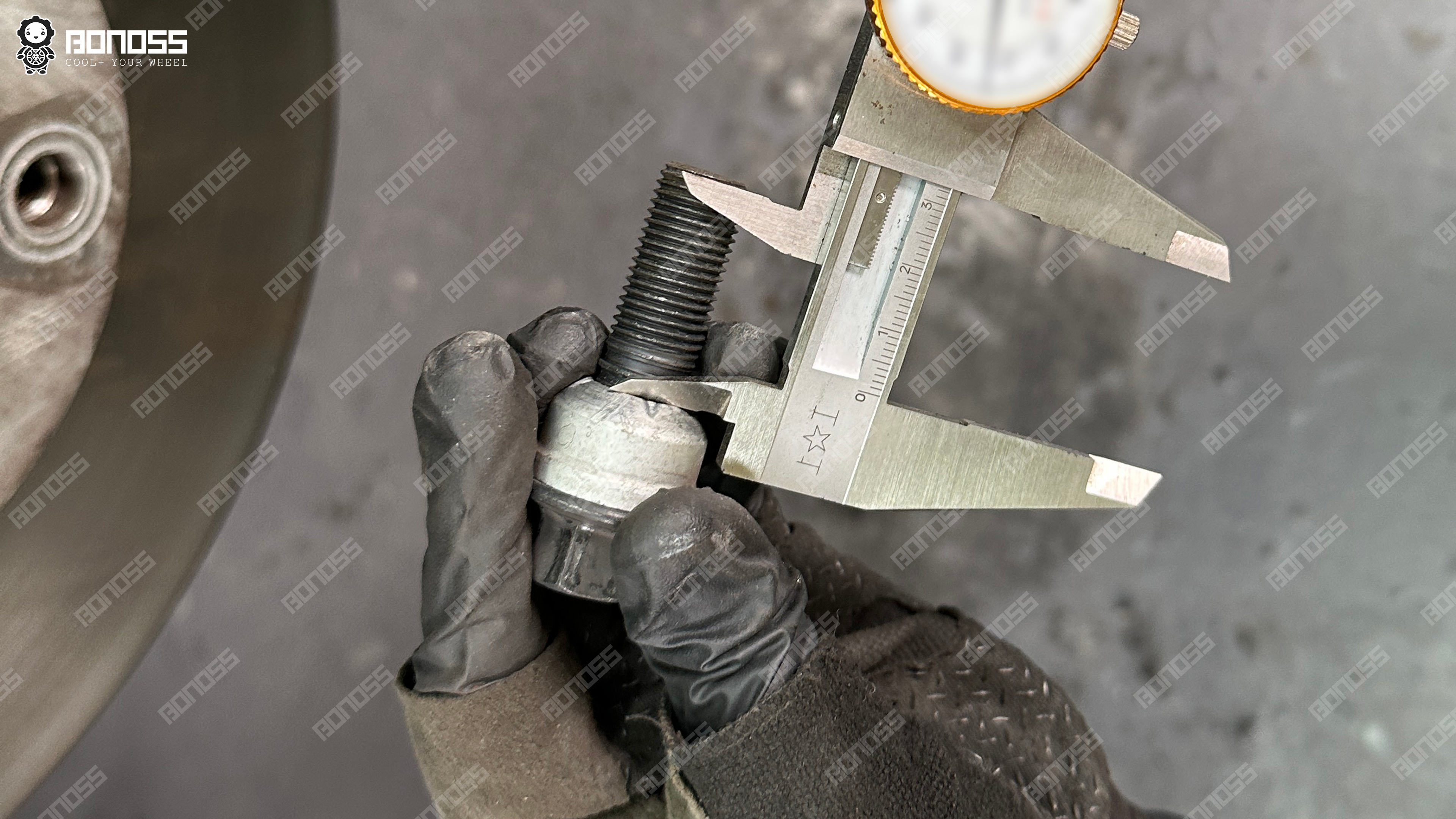
We measured the stock bolt’s contact length below the ball seat at 32mm with a vernier caliper. Subtract the 15mm spacer and you’re down to roughly 17mm of engagement — not enough to be safe. The fix is a longer bolt, and the measured calculation came out to a 47mm thread-length extended bolt.
The bolt head is a 17mm hex, so a standard 17mm socket does the job. And yes, this means you replace all twenty original bolts — five per wheel — which is baked into the cost below. If you’re the type who wants the spec sheet rather than the story, the same BONOSS forged lightweight plus 15mm hub-centric wheel spacers for the Porsche Taycan used here is listed with its full hardware details on the product page.
Before and After at All Four Corners
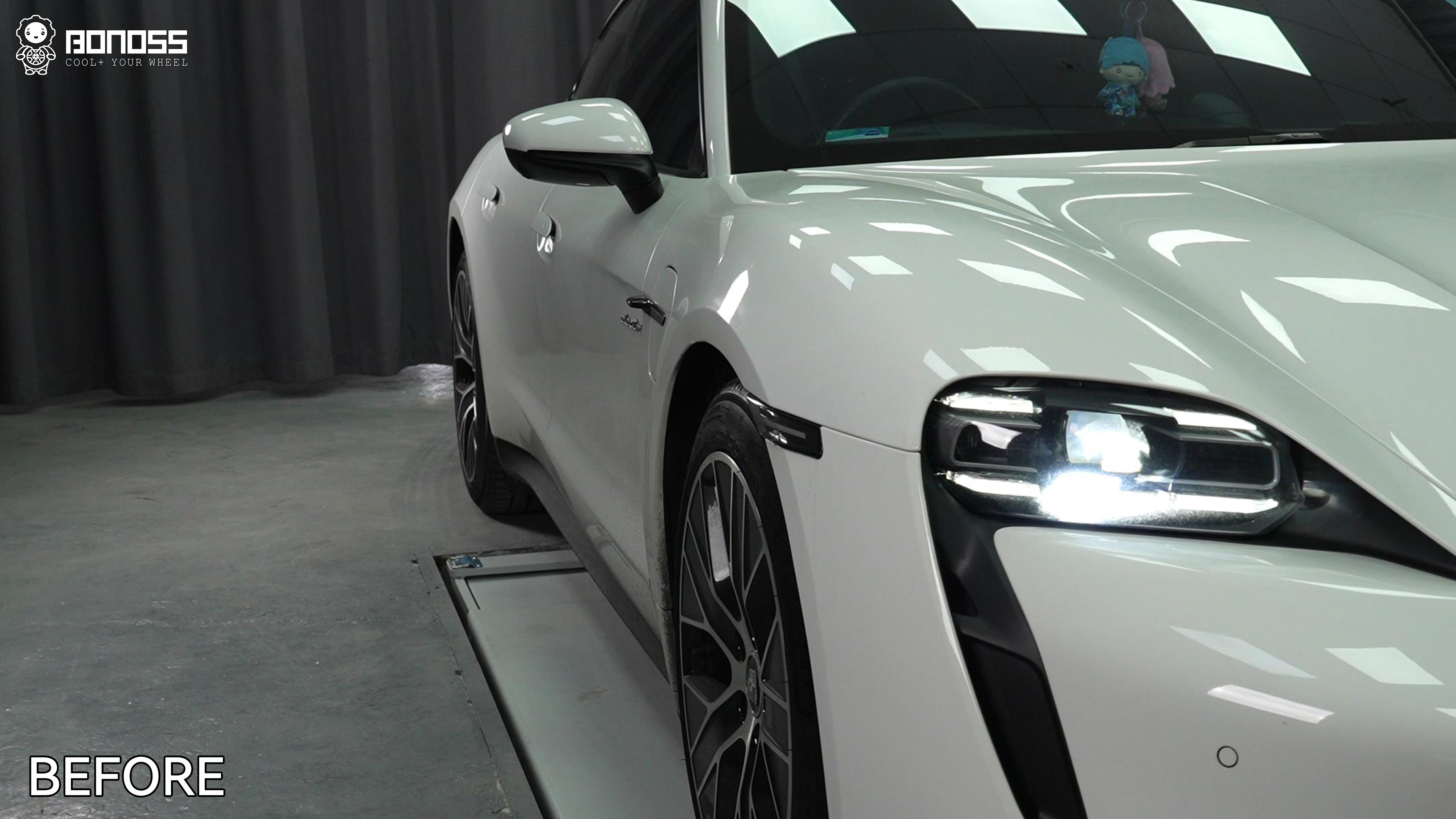
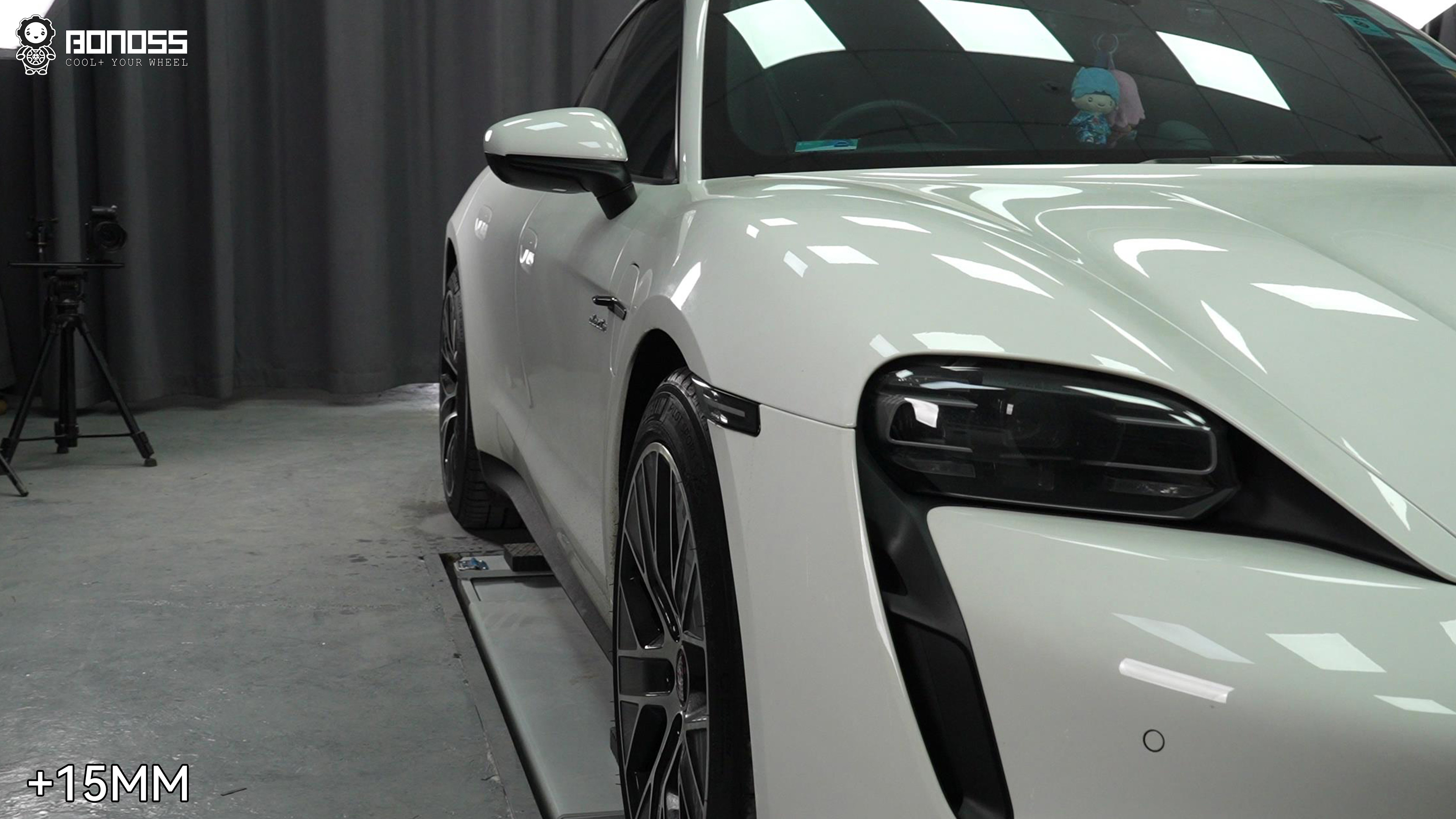
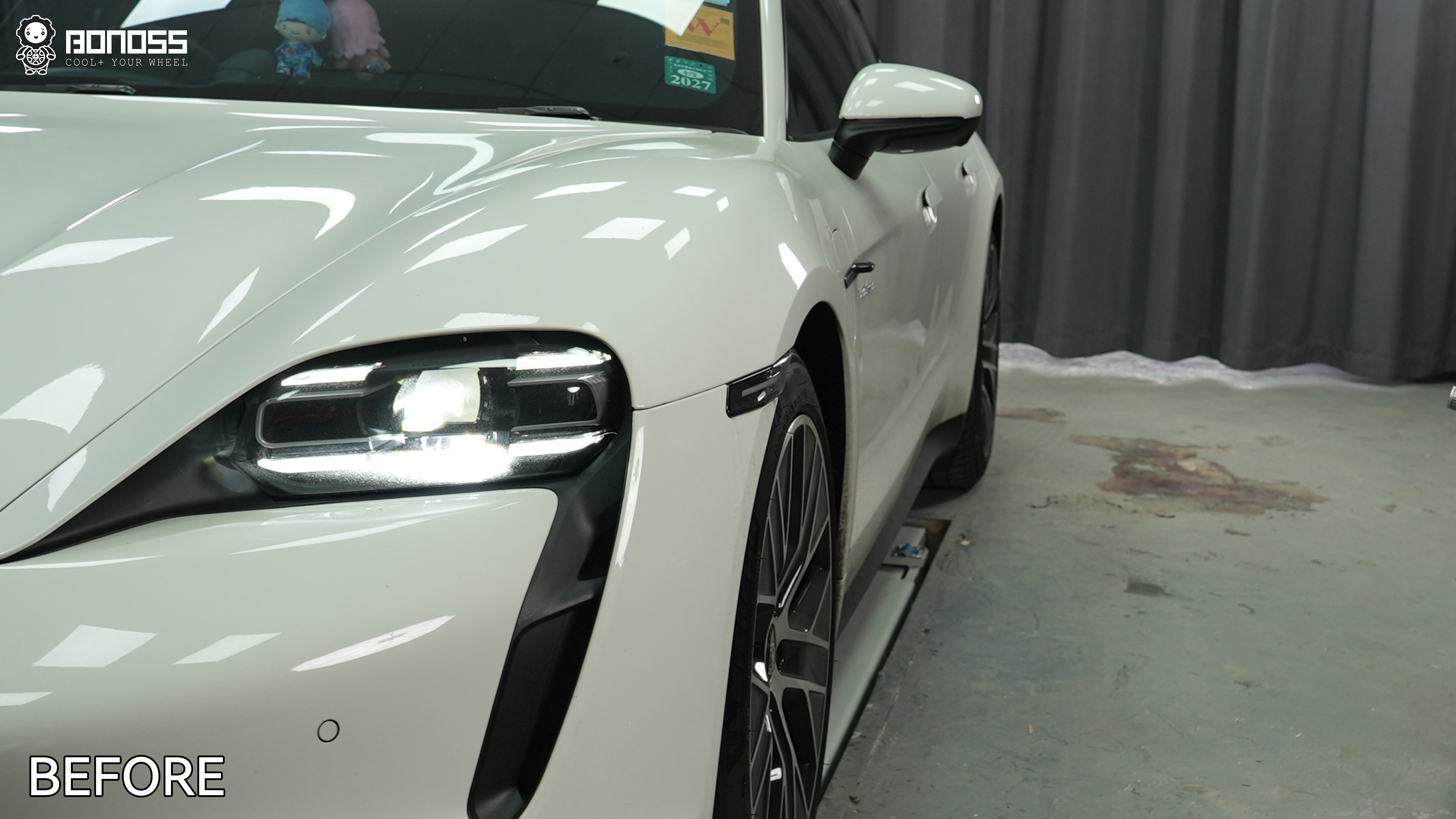
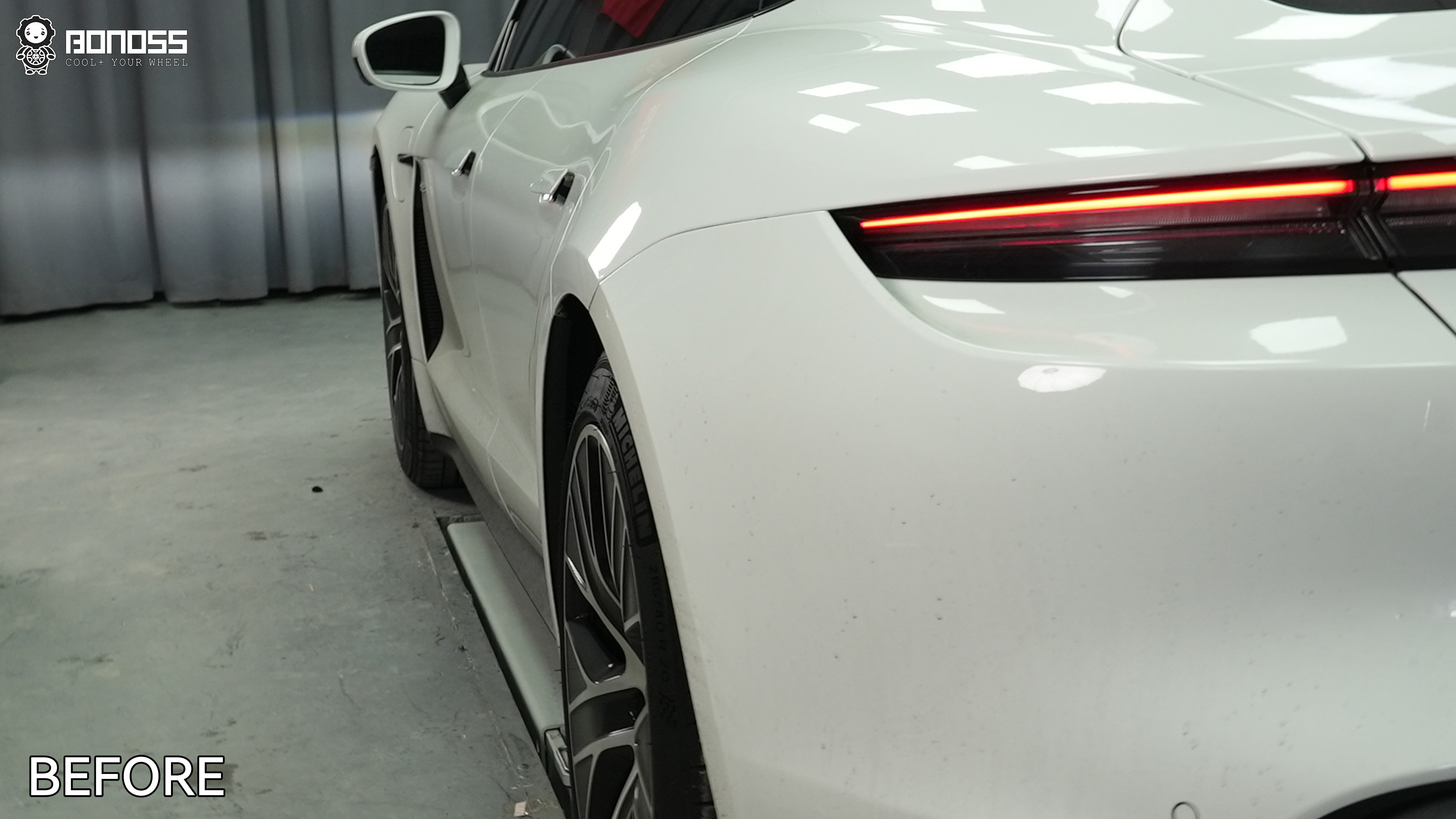
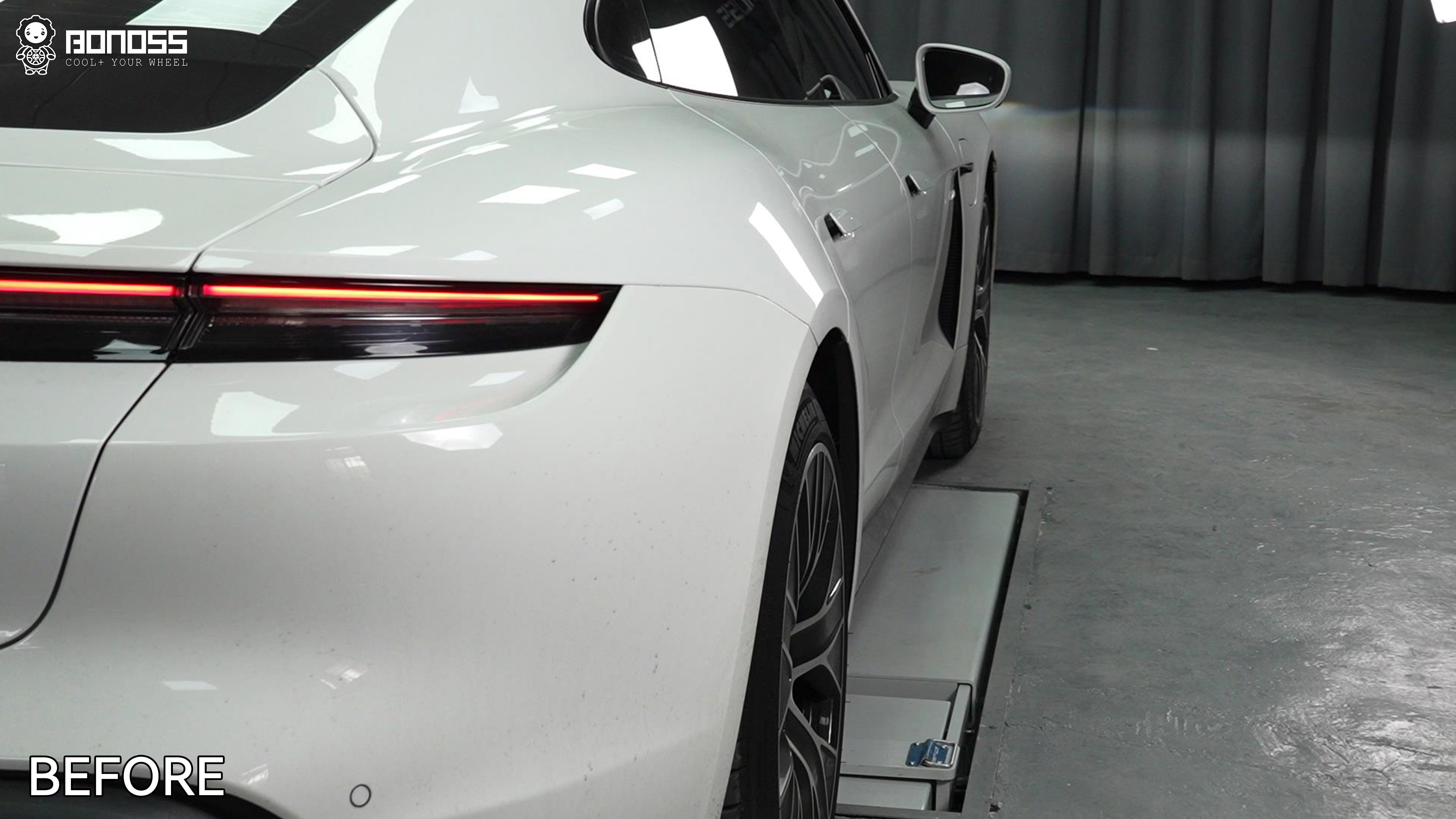
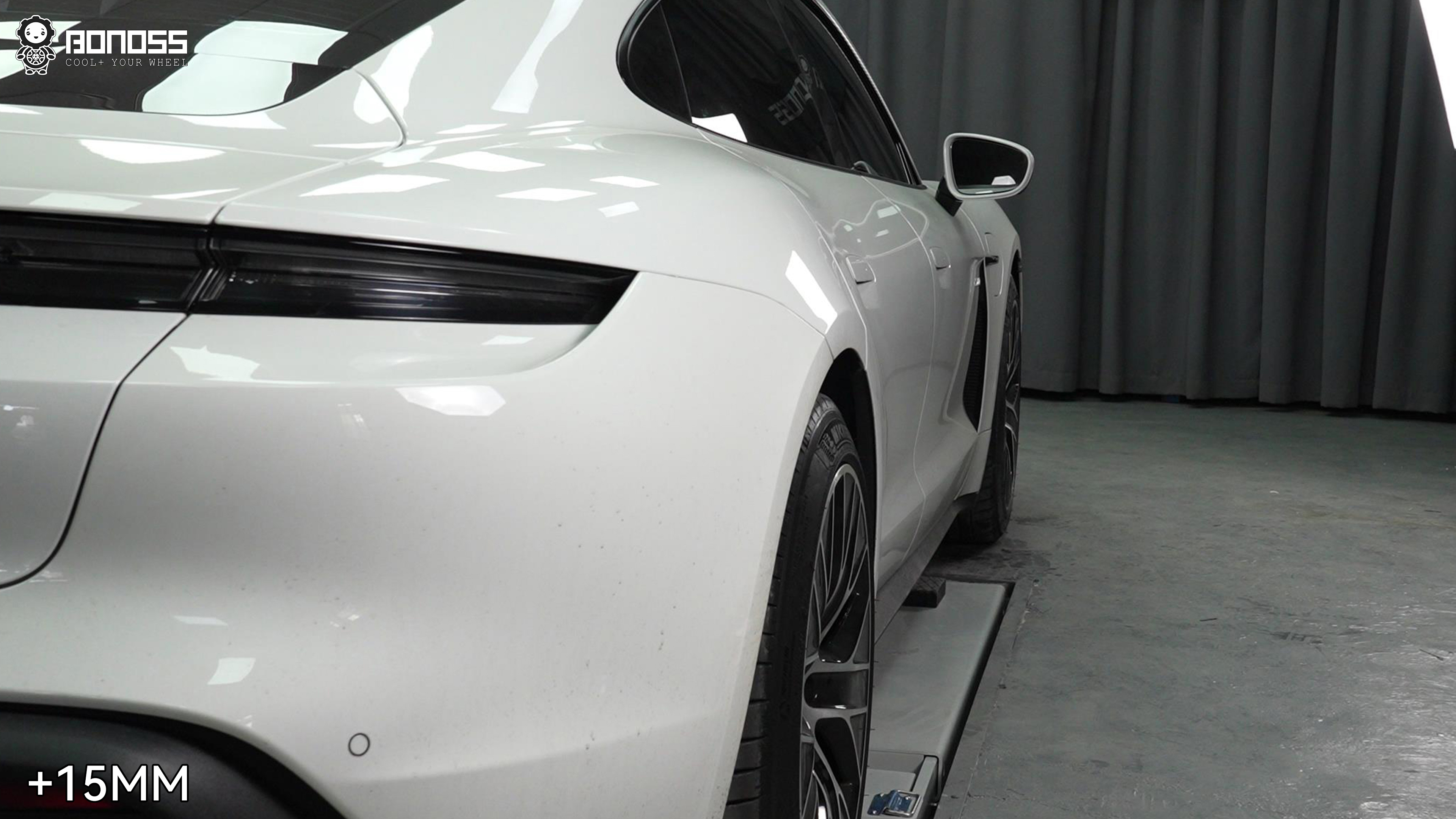
Photos beat adjectives. Here’s each corner, stock first, then flush. The stance is even all around, no poke, no rub.
The Hardware Behind the Fitment
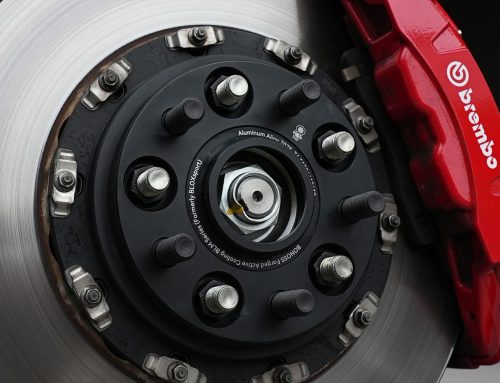
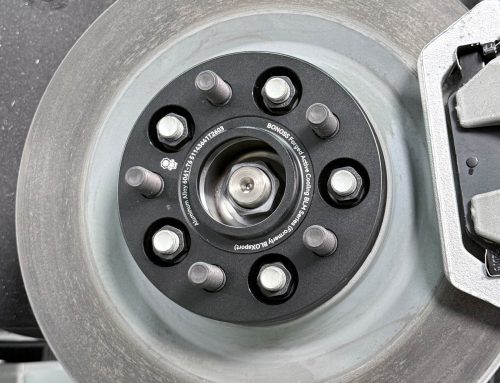
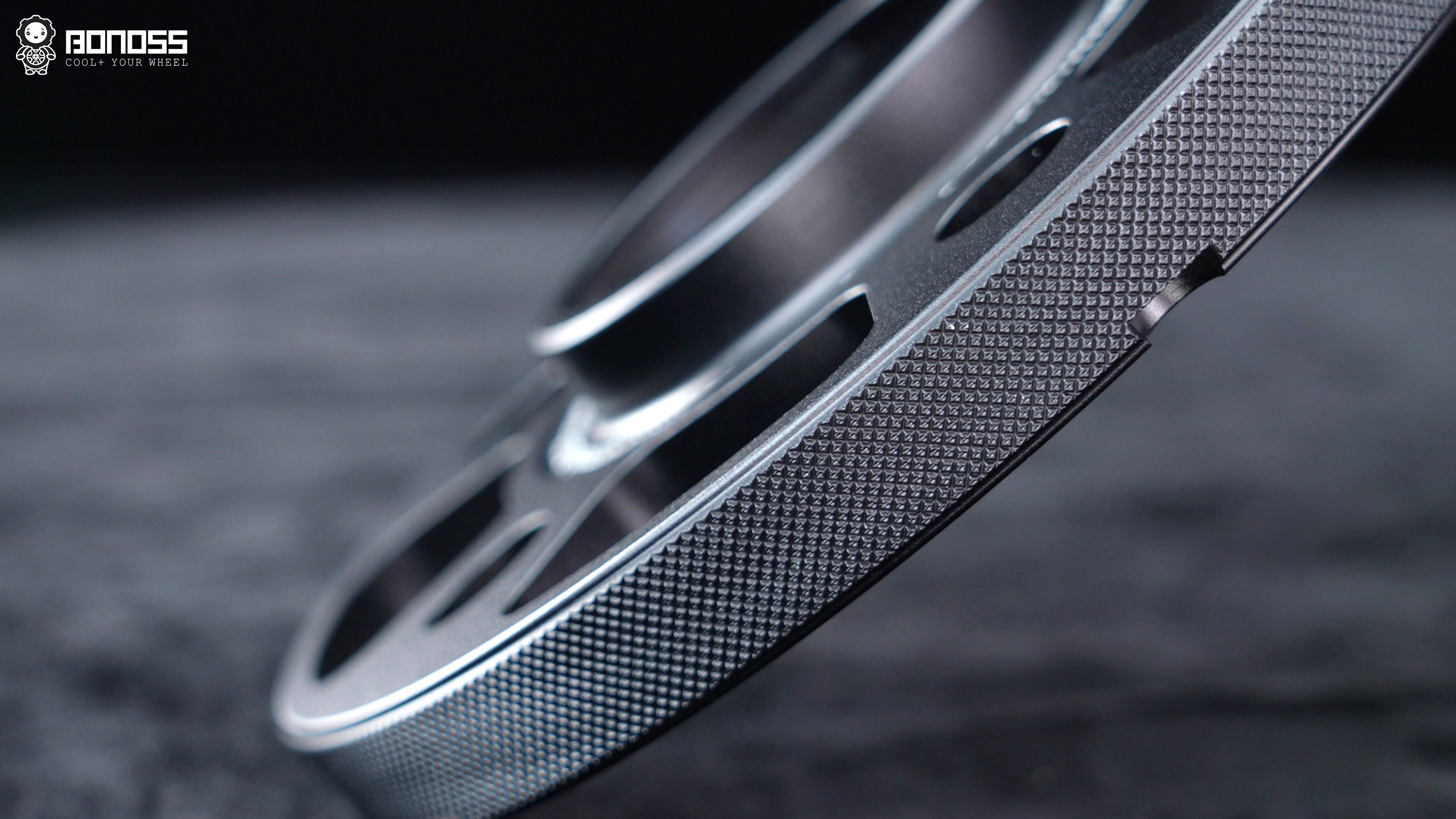
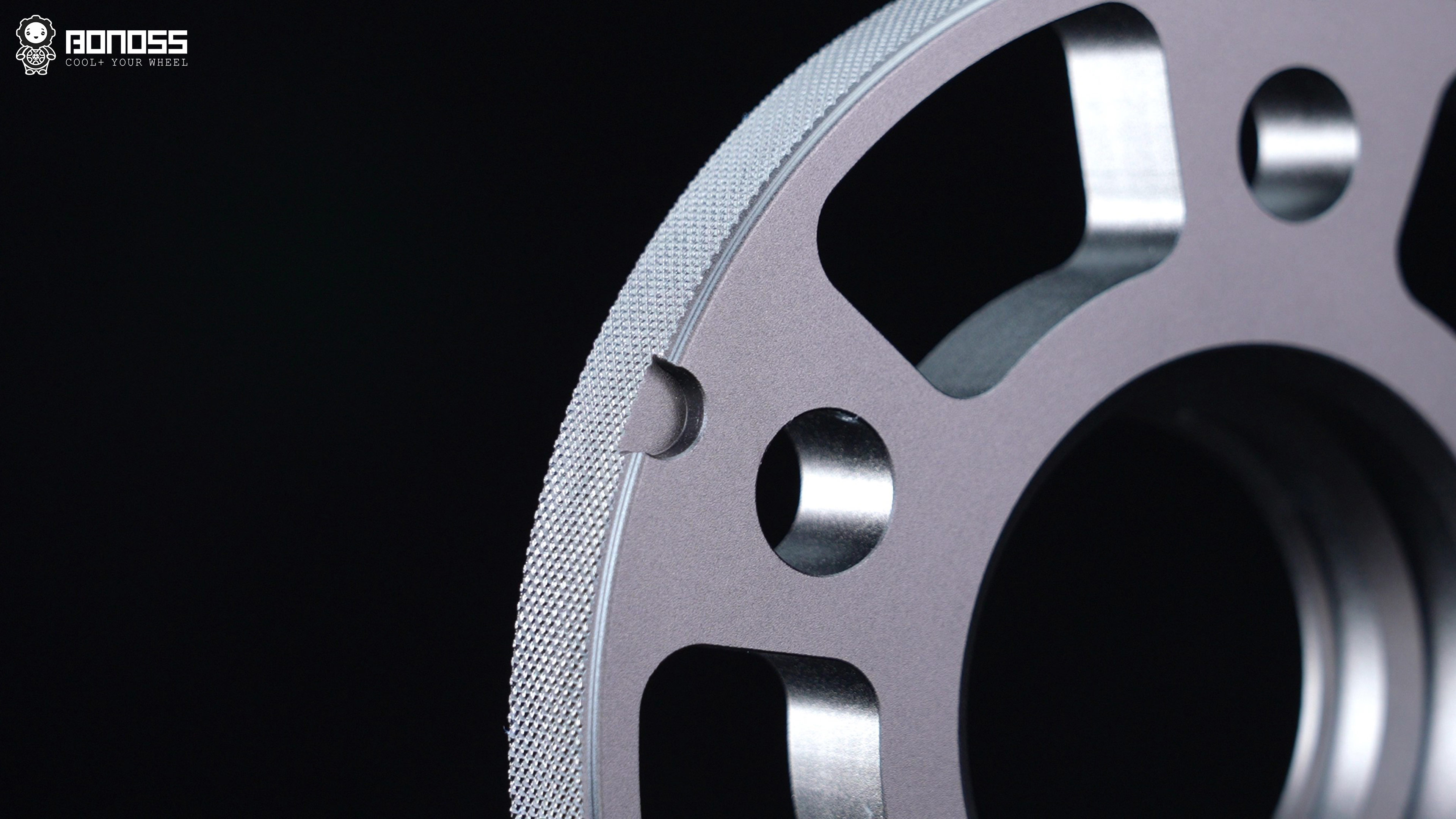
The spacer itself matters as much as the number. These are BONOSS forged lightweight plus wheel spacers, and “lightweight” here isn’t marketing fluff — the bodies are cut from 7075-T6 forged aluminum and CNC-machined to a 0.02mm tolerance, with mass carved out of the non-load-bearing areas.
The lightweight plus design removes material from areas that don’t carry load, so the spacer adds width without dumping unsprung weight at every corner. It’s hub-centric, which is the non-negotiable here. The spacer carries the wheel on its own machined lip instead of asking the studs to do it.
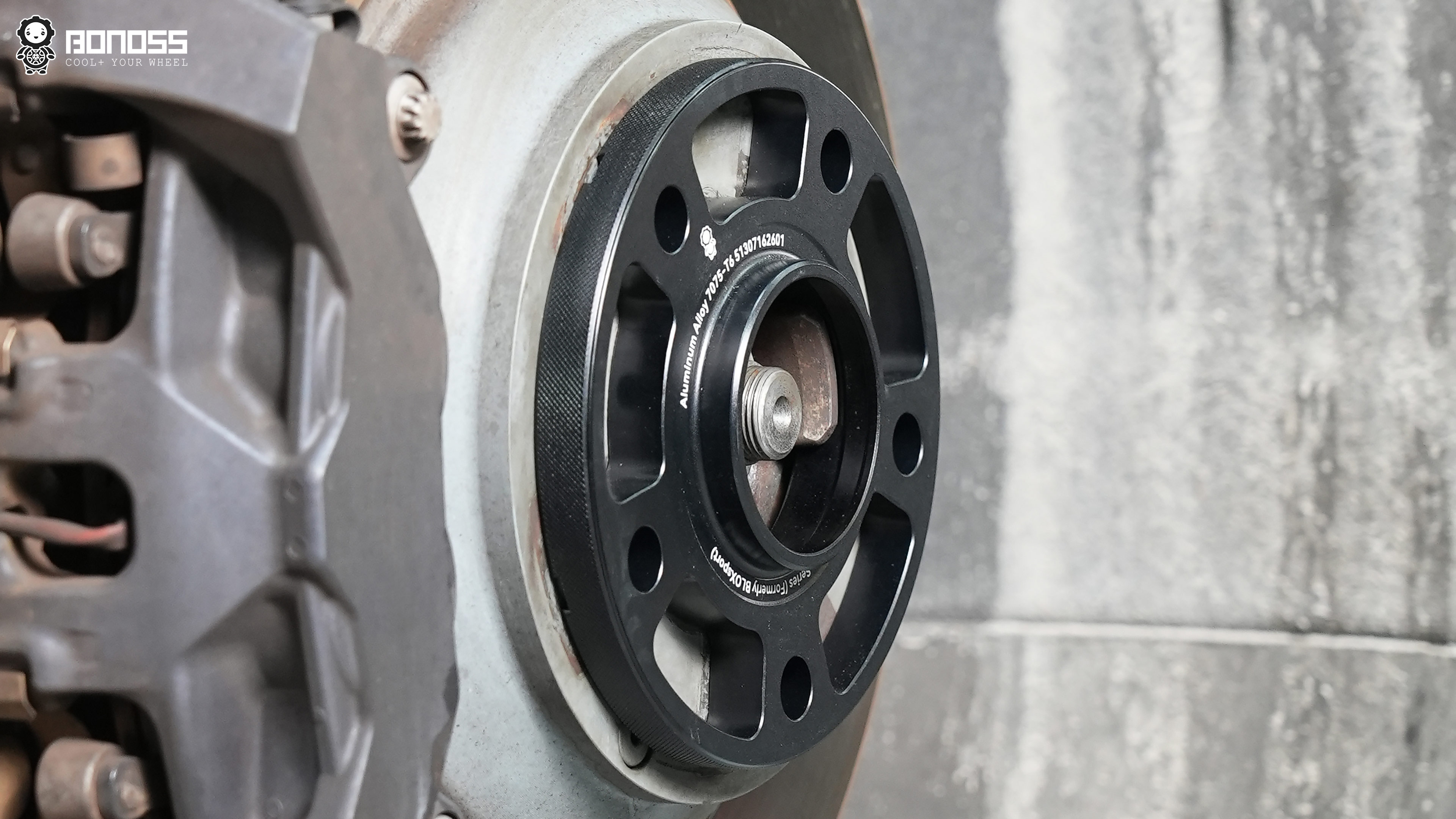
On the front hub, the 15mm spacer seats centered and flush before the wheel goes back on.
For the extended bolts, BONOSS uses ISO Grade 12.9. If you’re the type who reads test reports, the certification trail is worth a look: an SGS tensile test put the M14x1.5 bolts at 1236 MPa and a TÜV Rheinland tensile test at 1273 MPa, both to ISO 898-1. Hardness came back at 390–394 HV10 (SGS) and 395–402 HV10 (TÜV Rheinland), with a two-million-cycle limited life range test and a 192-hour neutral salt spray test to ISO 9227:2017. On the spacer side, the 7075-T6 billet tested at 146 HBW 5/250 under ISO 6506-1:2014.
A quick note on why those numbers differ from report to report: different labs, different samples, and normal measurement error will shift a reading a few MPa either way, and a nut tests differently from a bolt because the thread engagement isn’t identical. Even two bolts can differ if the pitch changes — M14x1.5 and M14x1.25 are not the same fastener. None of this means anything is wrong; it means the numbers are real measurements, not rounded marketing copy. The full reports are linked from the product pages if you want them.
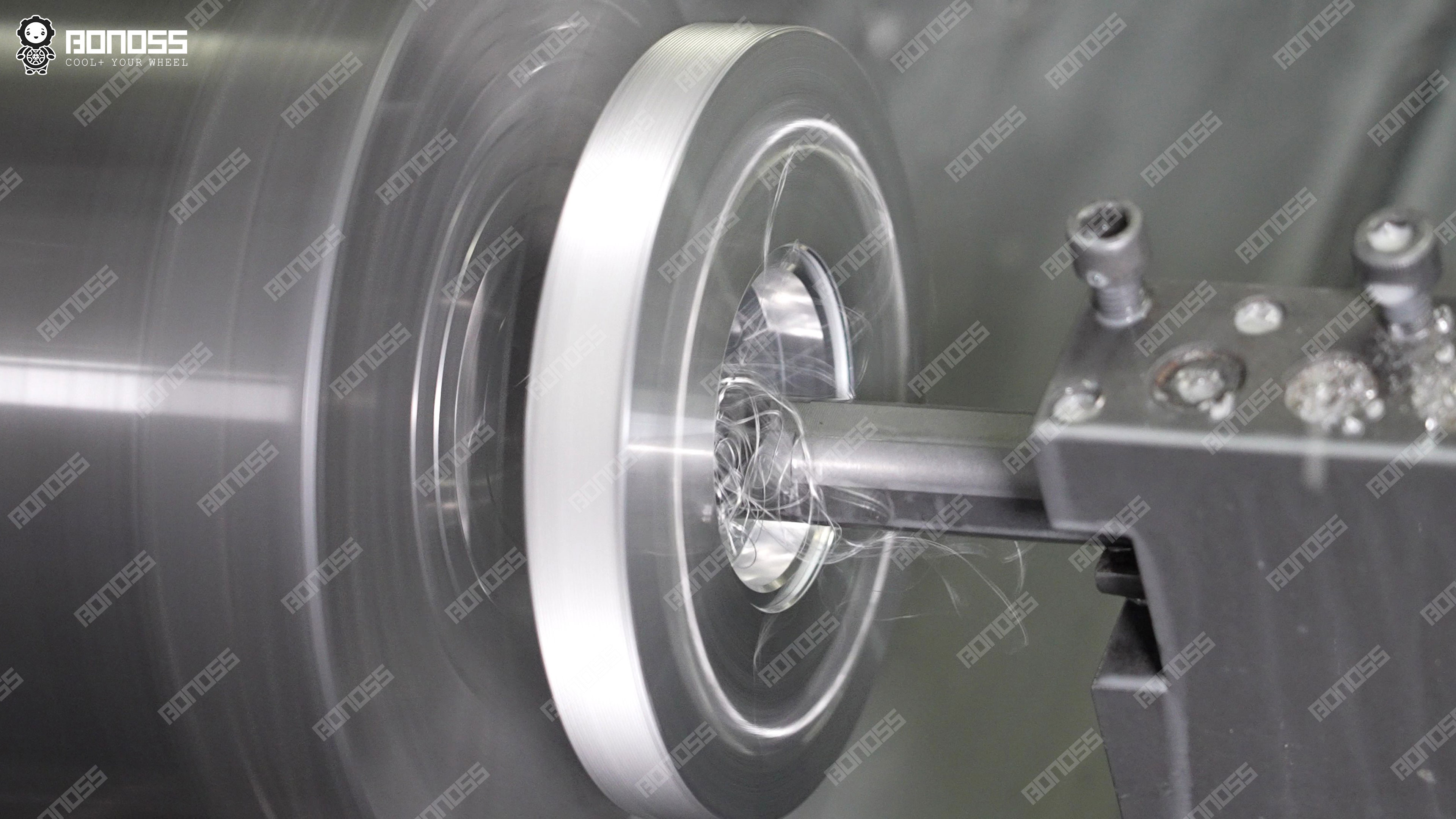
The spacer starts as billet on a CNC machine (0.02mm tolerance) at the BONOSS factory.
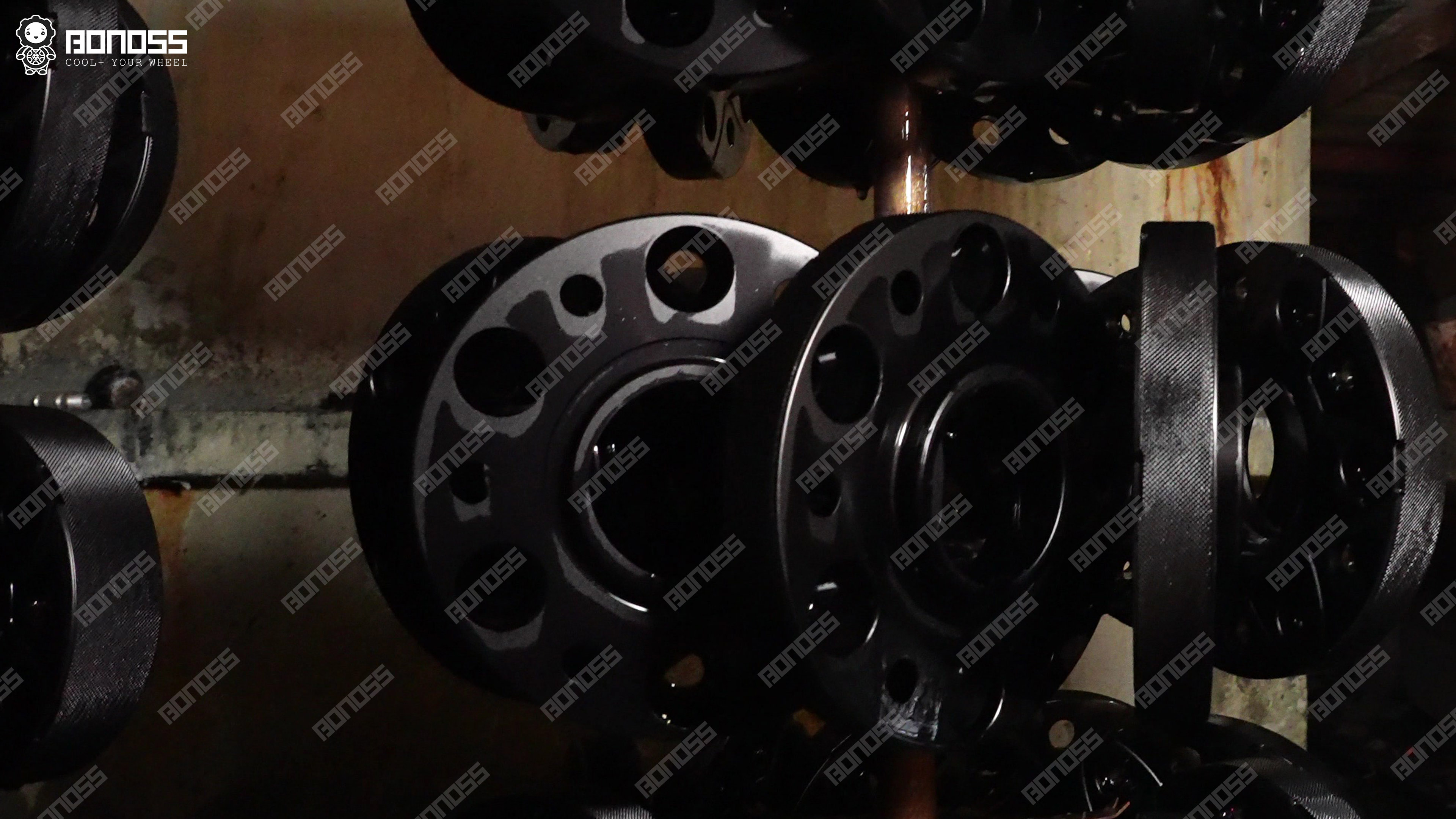
The spacer go through anodizing for a hard, corrosion-resistant surface before it ships.
What 3,200 Miles Actually Feels Like
Numbers and photos tell you it fits. Miles tell you whether it stays good. David installed these on February 5, 2026, and has put 3,200 miles on them since. Here’s what he said, verbatim:
“BONOSS was great. They helped me nail down what I needed to get the fitment flush. Threw them on that day and went for a short drive the next day. Rides smoother and handles better, especially cornering. Would definitely recommend.”
And after the mileage stacked up:
“Put 3,200 miles on them and honestly super impressed. Good price, solid quality, and love the flush stance. The guys were pros during install. They walked me through the whole thing and made sure I understood what was going on. Thanks again, appreciate it.”
I’ll take “rides smoother and handles better, especially cornering” at face value — it’s consistent with a wider effective track. Pushing each wheel out 15mm adds 30mm of total track width, which is exactly the kind of change you feel as flatter cornering and a touch more steering heft, not a placebo.
For the record, the whole setup ran: four 15mm 7075-T6 spacers plus twenty 47mm extended wheel bolts for $331.98, and $20 for labor. That’s the honest number for this job, not a “starting at” price.
FAQ
Are 15mm spacers safe on a 2023 Porsche Taycan?
Yes, when they’re hub-centric and paired with correctly sized extended bolts — this install used a 71.6mm hub bore and 47mm thread-length ISO Grade 12.9 bolts. The measured hub step (9.52mm front, 10.56mm rear) stays well inside the spacer, so the wheel is carried by the hub lip rather than the studs.
Do I need extended bolts for 15mm spacers?
Yes. A 15mm spacer removes 15mm of bolt engagement, and the stock bolt only has 32mm of contact below the seat, which isn’t enough once the spacer is in. This car moved to 47mm thread-length extended bolts.
What torque do I use for Porsche Taycan wheel spacers?
It depends on which bolts you’re tightening. Factory bolts are 160 Nm (118 ft-lb) per the owner’s manual; BONOSS extended bolts are 140 Nm (103.5 ft-lb) per BONOSS installation instructions. Since this install uses BONOSS bolts throughout, the final torque is 140 Nm (103.5 ft-lb).
Do 15mm spacers need to be hub-centric?
Yes. On a 5x130mm, 71.6mm-bore car like the Taycan, hub-centric keeps the wheel centered on the spacer’s lip so the studs only clamp and never carry weight or shear.
How much are Porsche Taycan wheel spacers?
A complete 15mm setup — four spacers plus twenty extended bolts — ran $331.98 with $20 labor on this install. For a fuller breakdown of what drives the price, see the Porsche wheel spacers price guide.
Can I install wheel spacers myself?
If you can measure fender gap, handle a 17mm socket, and own a torque wrench, yes. The job is straightforward, but the measurement and torque steps are where DIY installs go wrong, so don’t skip either.
Conclusion: The 15mm Flush Is Worth It
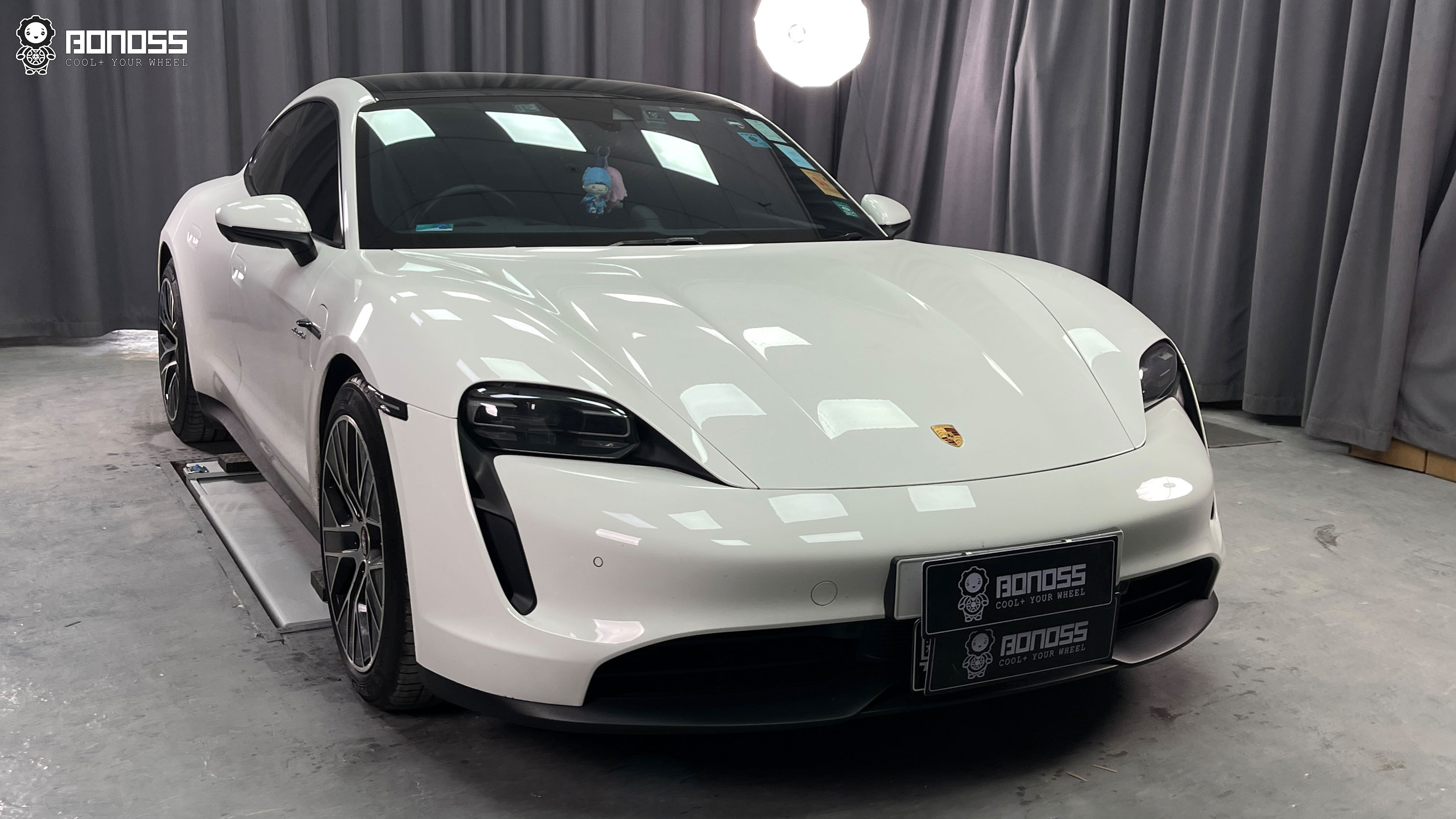
The 2023 Porsche Taycan 15mm wheel spacers decision comes down to one measured number: 15mm front and rear closes the fender gap on the stock 20-inch wheels without poke or rub, and it needs 47mm extended bolts to do it safely. The offset math is clean (ET+54 → ET+39 front, ET+60 → ET+45 rear), the fitment is hub-centric, and after 3,200 miles the owner’s verdict is flush stance, smoother ride, better cornering. If you’re pricing a set or comparing sizes, check the BONOSS product page and the fitment guide before you order — and measure your own fender gap first, because your wheels and offset are the only numbers that actually decide your spacer size.

About Daisy Harris
Daisy Harris has worked for 6 years at BONOSS as an automotive technician, installing and testing wheel spacers, wheel nuts, and wheel bolts. She has personally installed and verified more than 200 wheel-spacer setups across sport sedans, SUVs, and EVs. Her installation guides and reviews are built on real installs, measured clearances, and long-term wear notes — not on spec sheets.