After nine-plus years of fitting wheels and tires for a living, I can tell you that most wheel spacer horror stories start the same way: somebody guessed. Guessed the thickness. Guessed the hub bore. Guessed that “close enough” was close enough. Mr. Brandon didn’t want to guess. He rolled his completely stock 2022 Toyota Land Cruiser 300 Series into our shop on November 23, 2024, with one clear goal—a flush stance with zero drama—and this article is the full record of the 2022 Toyota LC300 wheel spacers we measured, installed, and then followed for 25,000 miles of real-world driving.
Everything below is documented. Every measurement came off a vernier caliper, a micrometer, or a high-accuracy ruler in our own hands. Every quote from Brandon is verbatim. If you’re shopping spacers for your own LC300, this is the reference I wish every owner had before spending a dollar.
A Stock LC300, a Flush Stance, and One Careful Owner
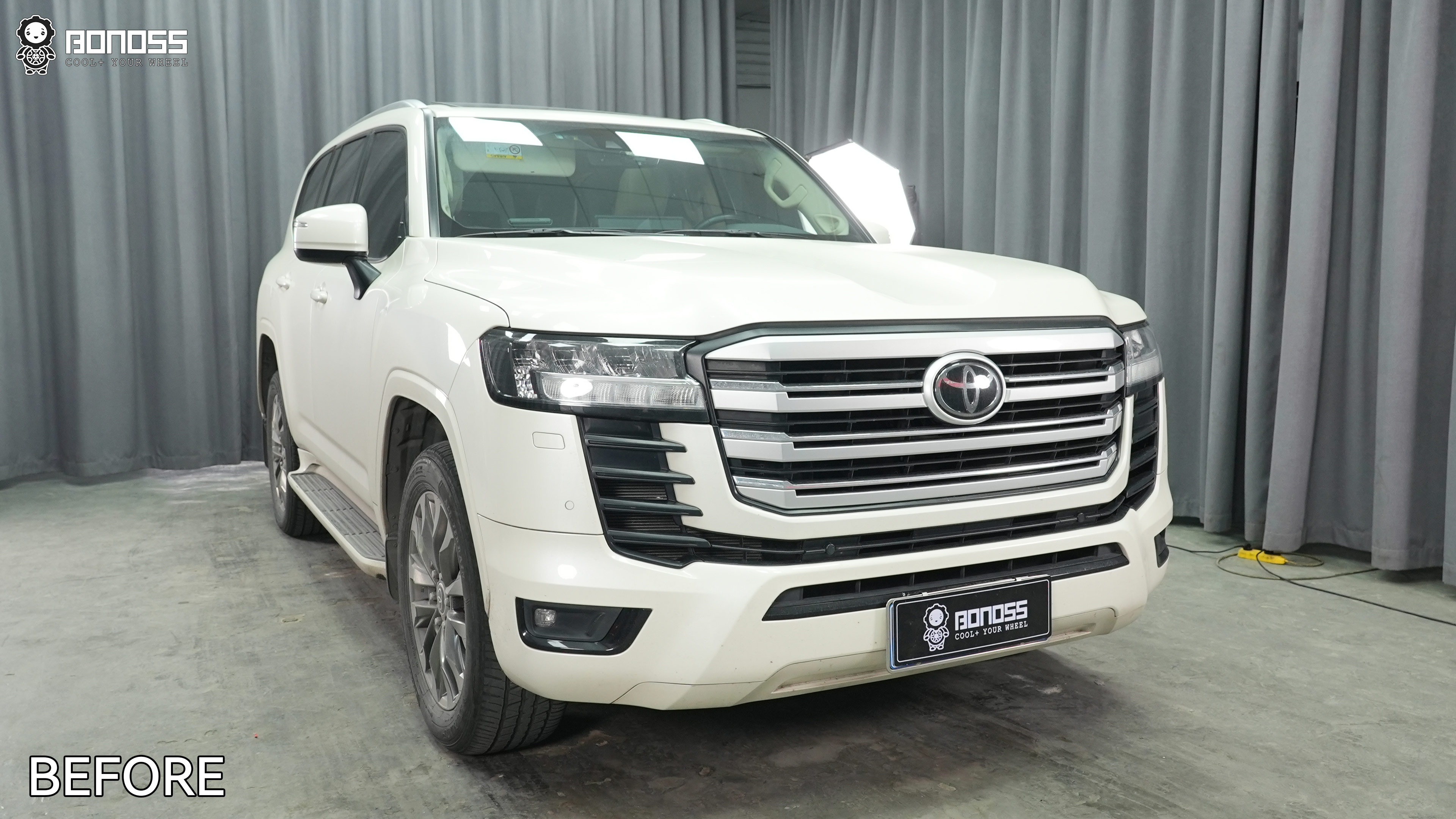
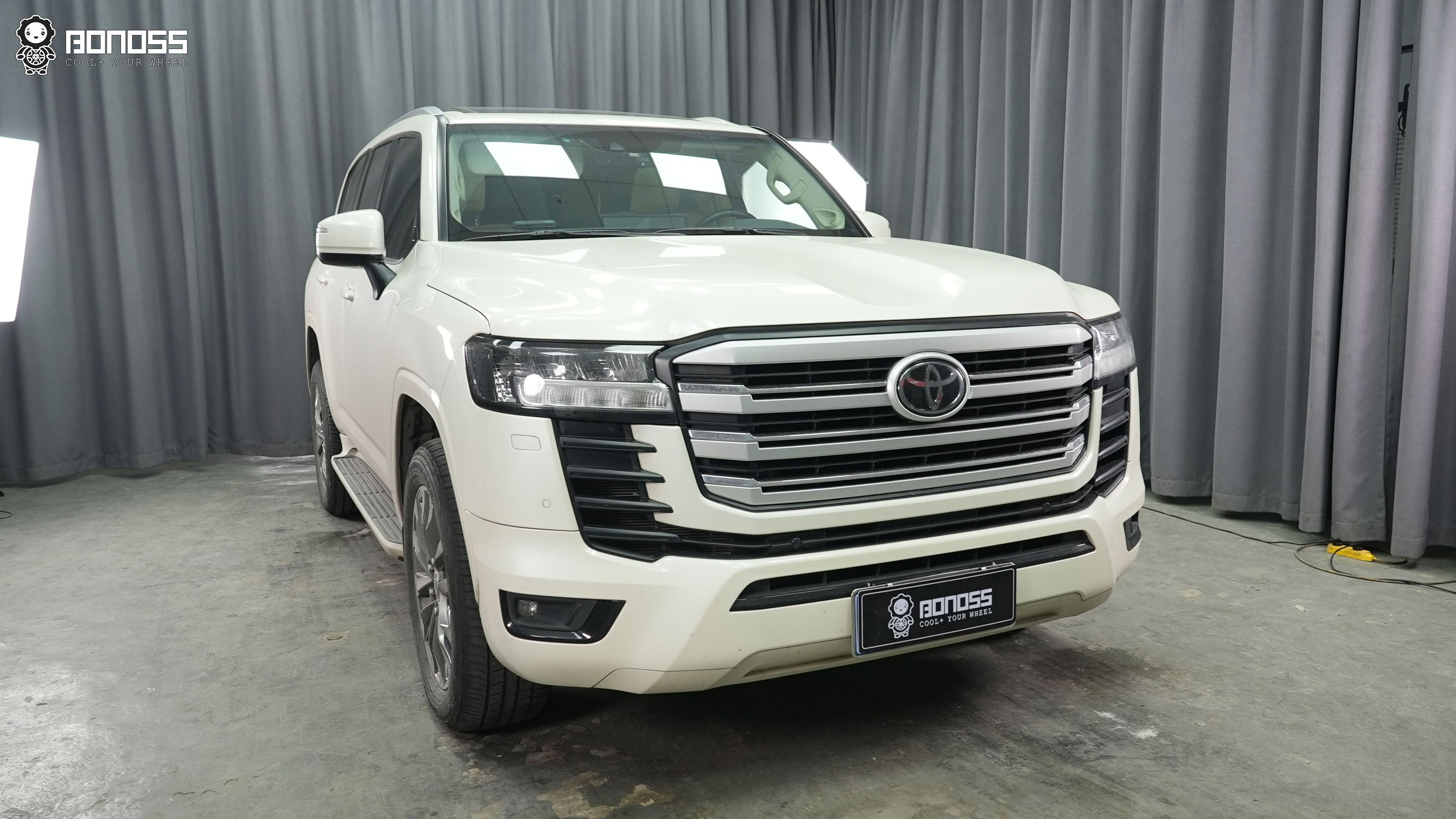
Brandon’s truck was about as clean a starting point as we get. A 2022 Land Cruiser 300 Series, no modifications whatsoever, still wearing its factory setup: 265/55R20 tires on wheels with an ET+60 offset. If you know the LC300, you know the look—Toyota tucks those wheels well inside the fenders from the factory. Great for highway manners, less great if you want the truck to actually fill its arches.
That’s what bothered Brandon. He wanted the wheels sitting flush with the fender line, the way the truck looks like it was always meant to. What he didn’t know was how much thickness that actually takes. Twenty millimeters? Twenty-five? Thirty? The forums said everything and nothing.
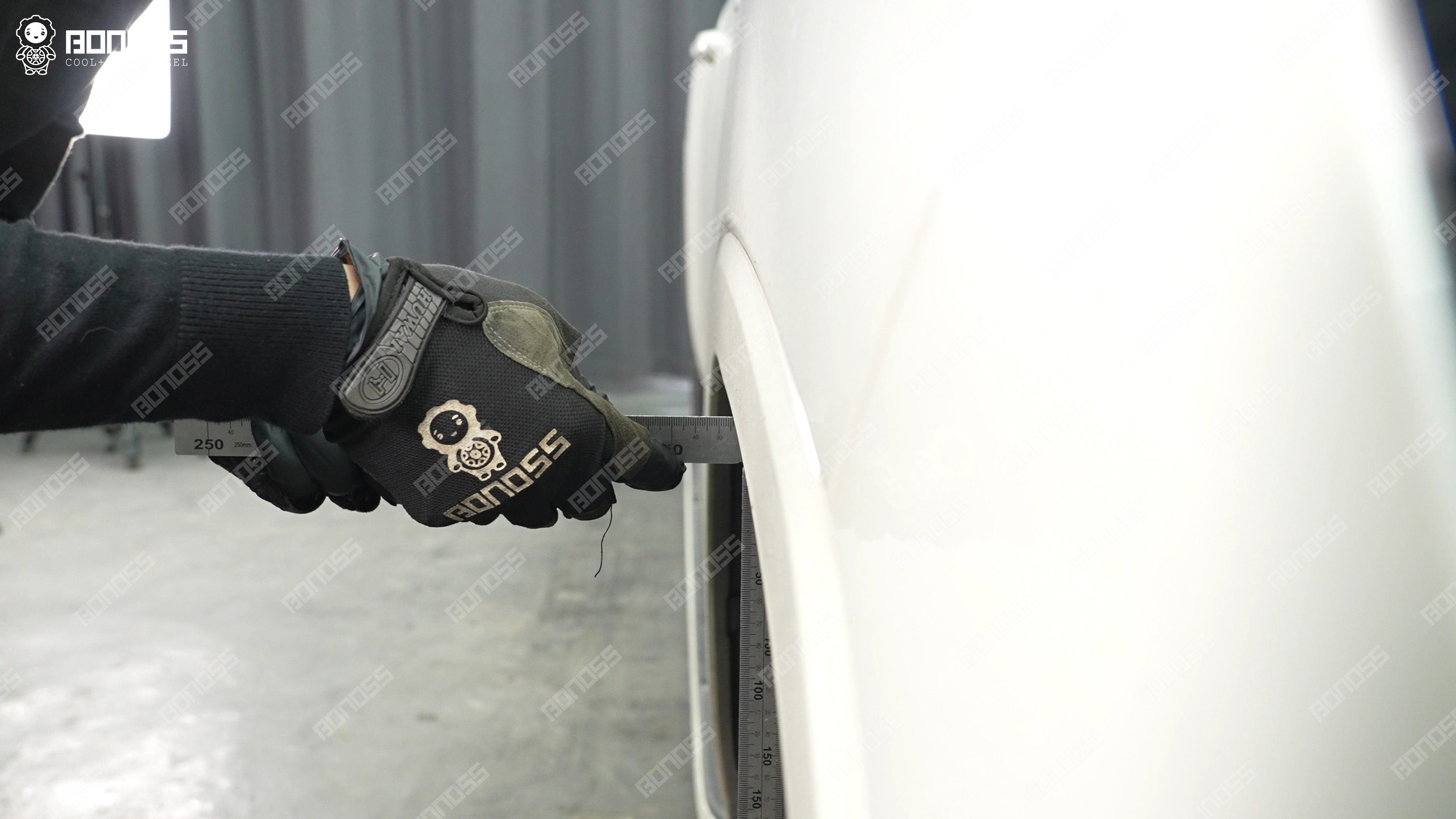
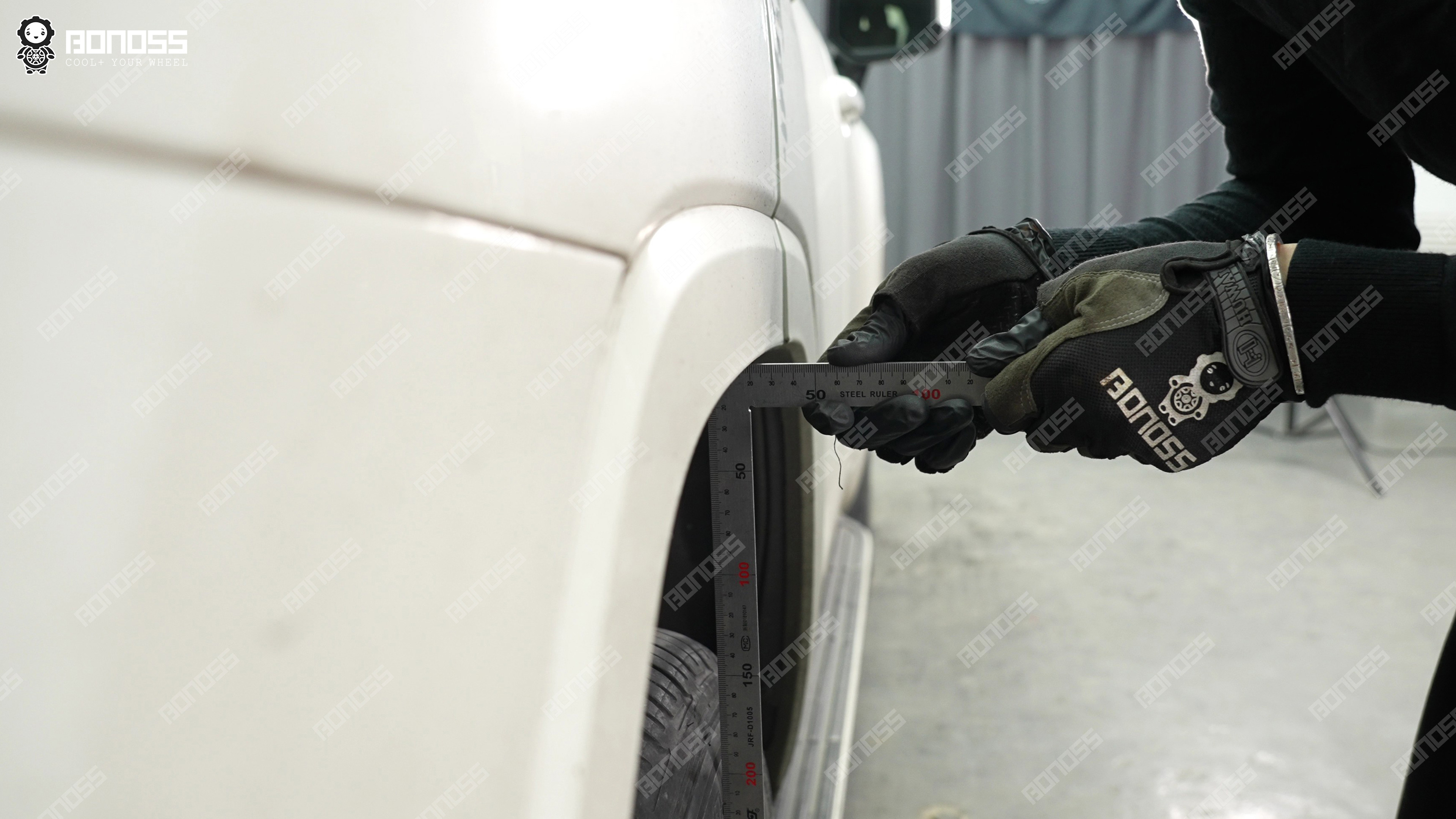
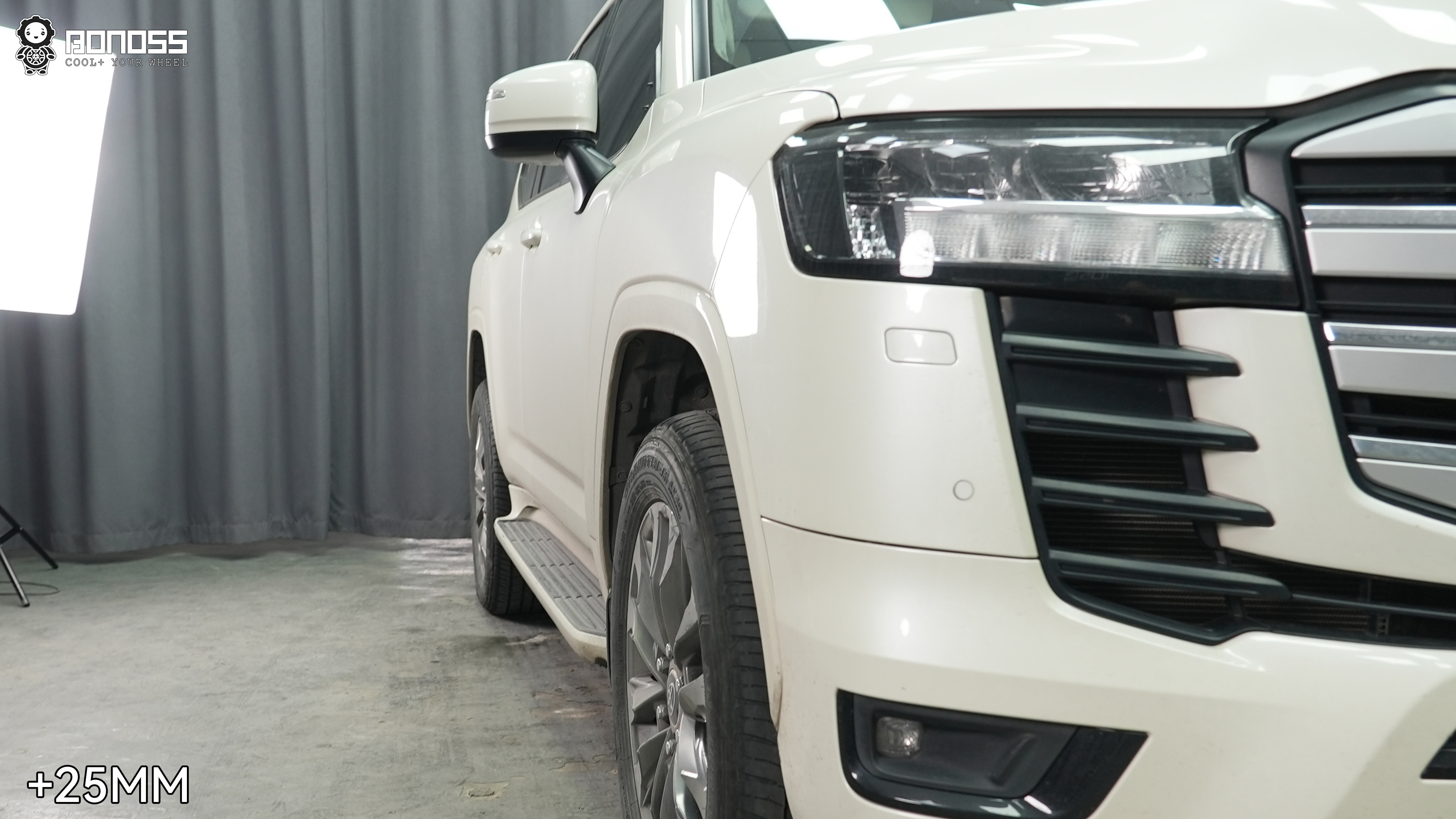
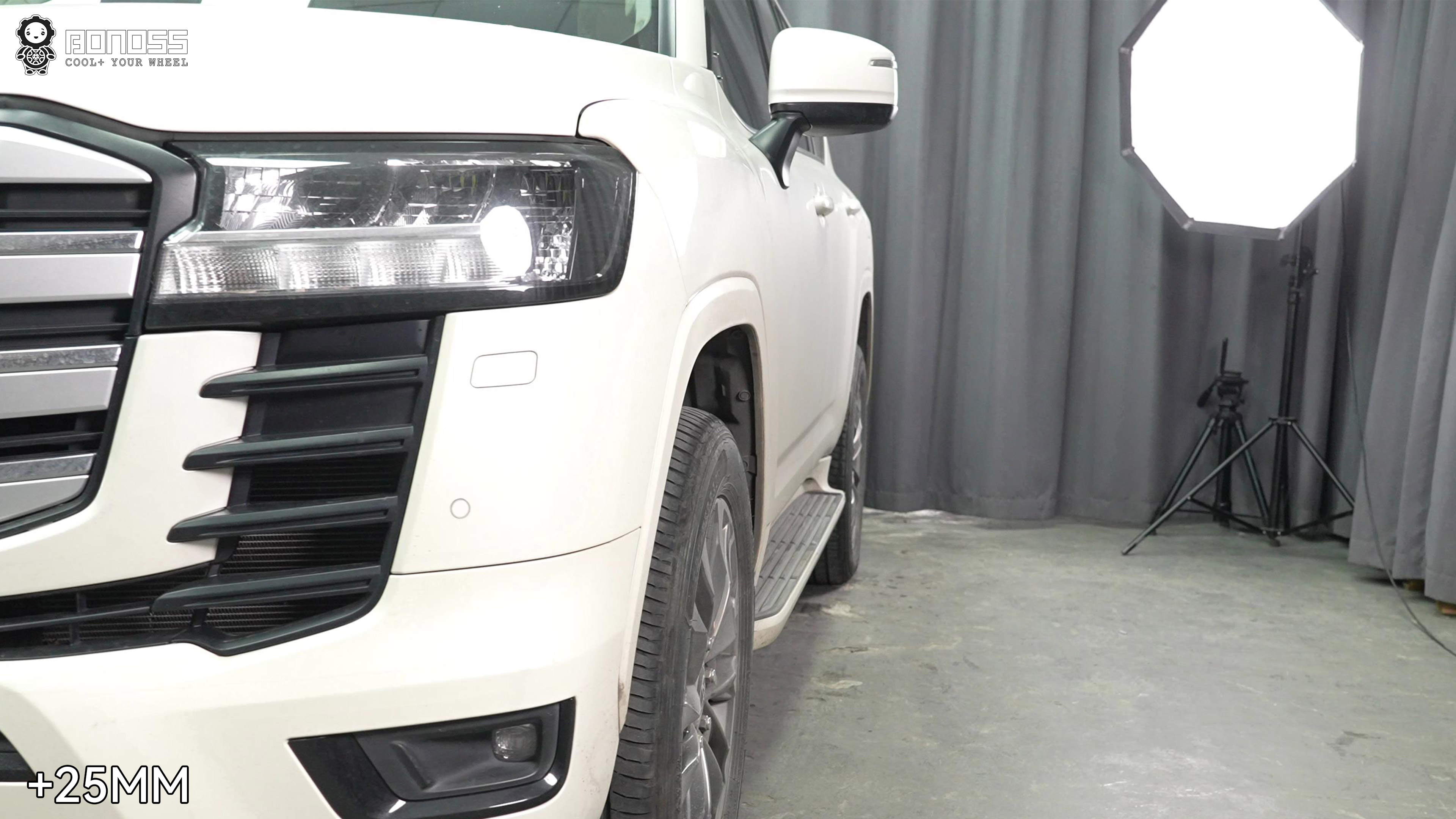
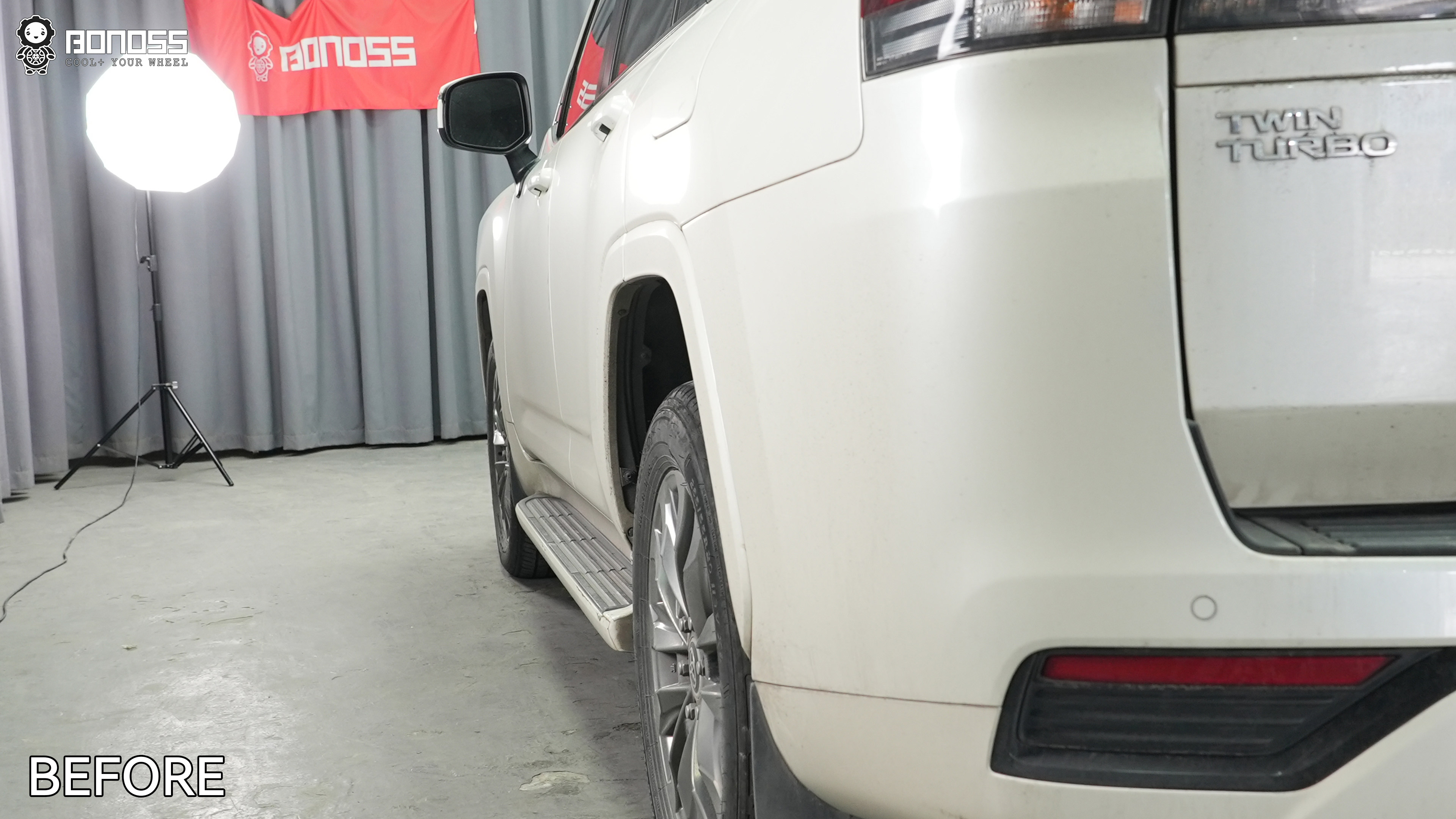
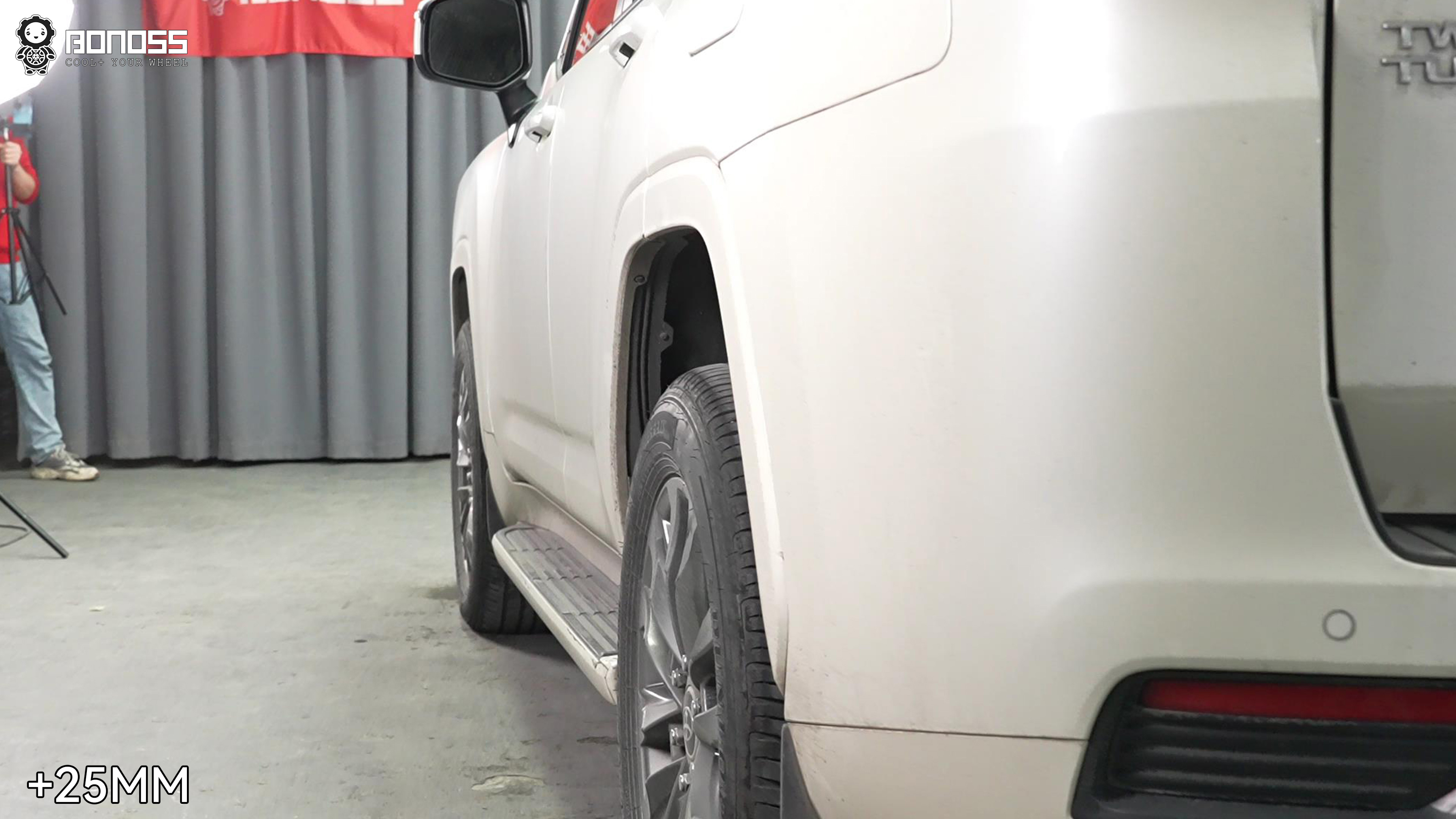
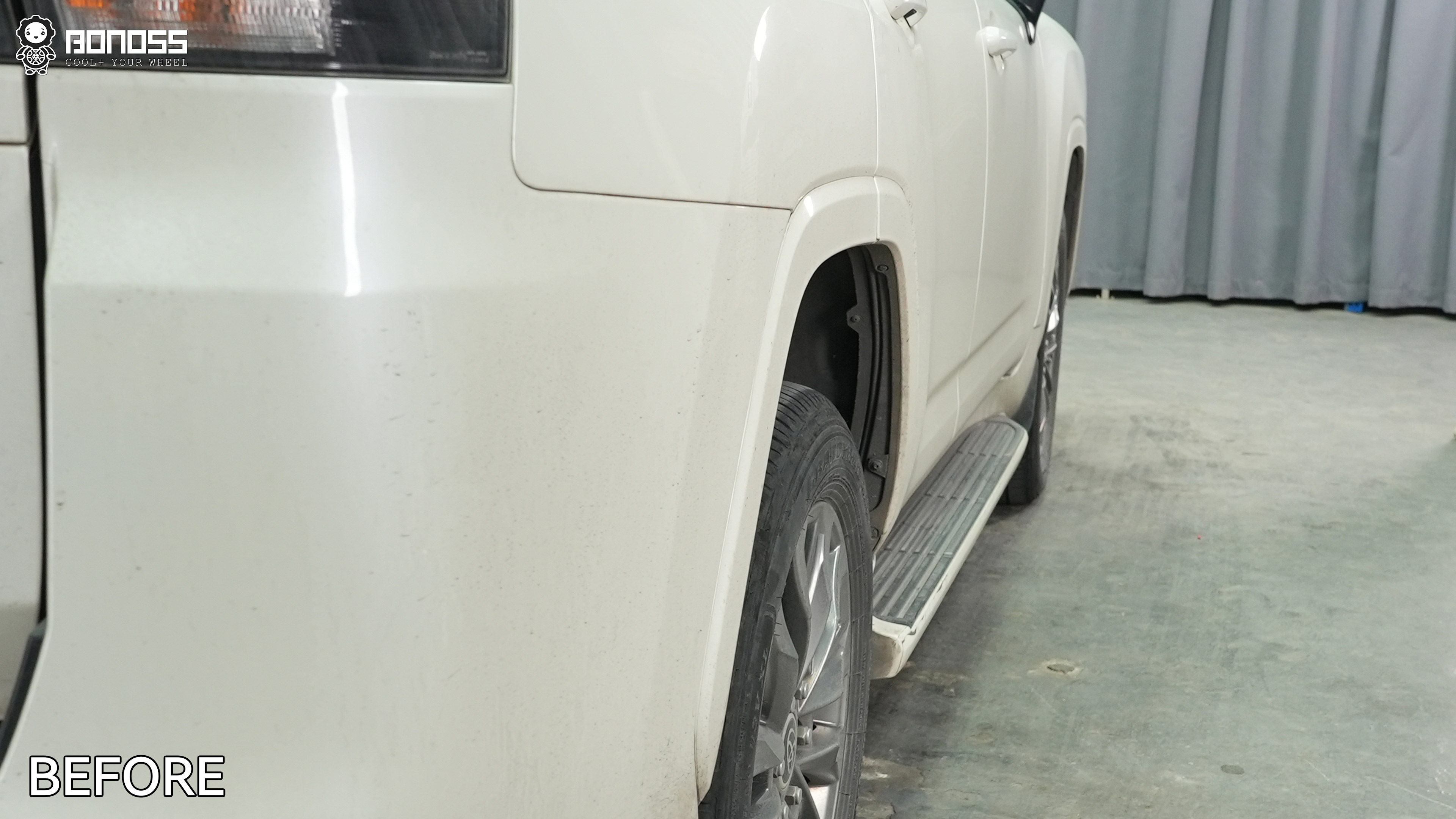
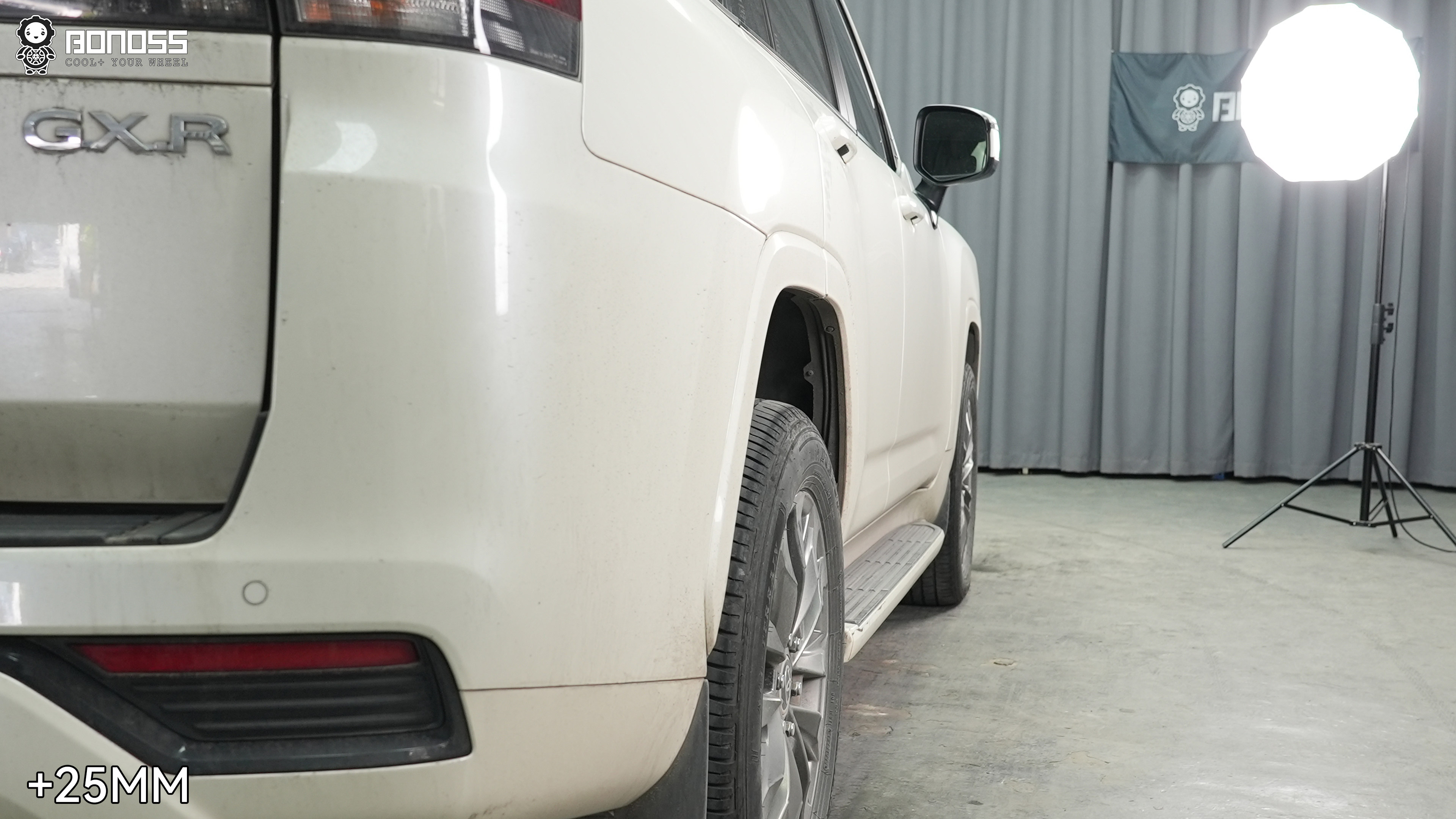
Here’s the thing about “flush” that most articles skip: it’s a measurement, not an opinion. We ran a high-accuracy ruler across the fender line on all four corners and checked the gap from wheel face to fender edge. The front and rear both wanted roughly an inch of push. That landed us at 25mm spacers front and rear—which would move his effective offset from ET+60 to ET+35. On a stock-body LC300 with stock-size tires, ET+35 is right in the sweet spot: visibly flush, no poke, no clearance drama against the fender lip at full lock or full compression.
How Brandon Found Us
Like most of our customers, Brandon started on Google, hunting for anything about LC300 flush fitment. He told us BONOSS kept surfacing—forum threads, install videos, other owners’ write-ups. The name followed him around long enough that he reached out.
Fair credit to him: he didn’t stop there. He contacted a couple of other spacer brands during the same stretch and compared what came back. Two things were eating at him. First, he’d read posts from owners who claimed they had to cut their factory studs to run 25mm spacers, and he wasn’t about to take a cutoff wheel to a nearly new Land Cruiser. Second—and this is the big one for any Land Cruiser guy—he wasn’t convinced spacers belonged on a truck that actually goes off pavement. Mud, ruts, trail miles: was he bolting a liability onto his hubs?
Why He Picked BONOSS After Comparing Brands
A few things tipped the scale, and none of them were slogans.
He’d already seen the BONOSS feedback on the forums trend positive. When he raised the off-road safety question with our team, we gave him the same answer I give everyone in this article: a quality spacer, correctly installed, is safe for off-road use. The spacer itself is a passive component—what matters is the material, the hardware, the fit, and the torque. Cheap cast spacers with mystery-metal studs fail. Properly forged, hub-centric spacers with certified hardware don’t, and there’s a decade of trail trucks running them to prove it. (If you want the deeper dive on that question, are Toyota Land Cruiser wheel spacers safe covers it in detail.)
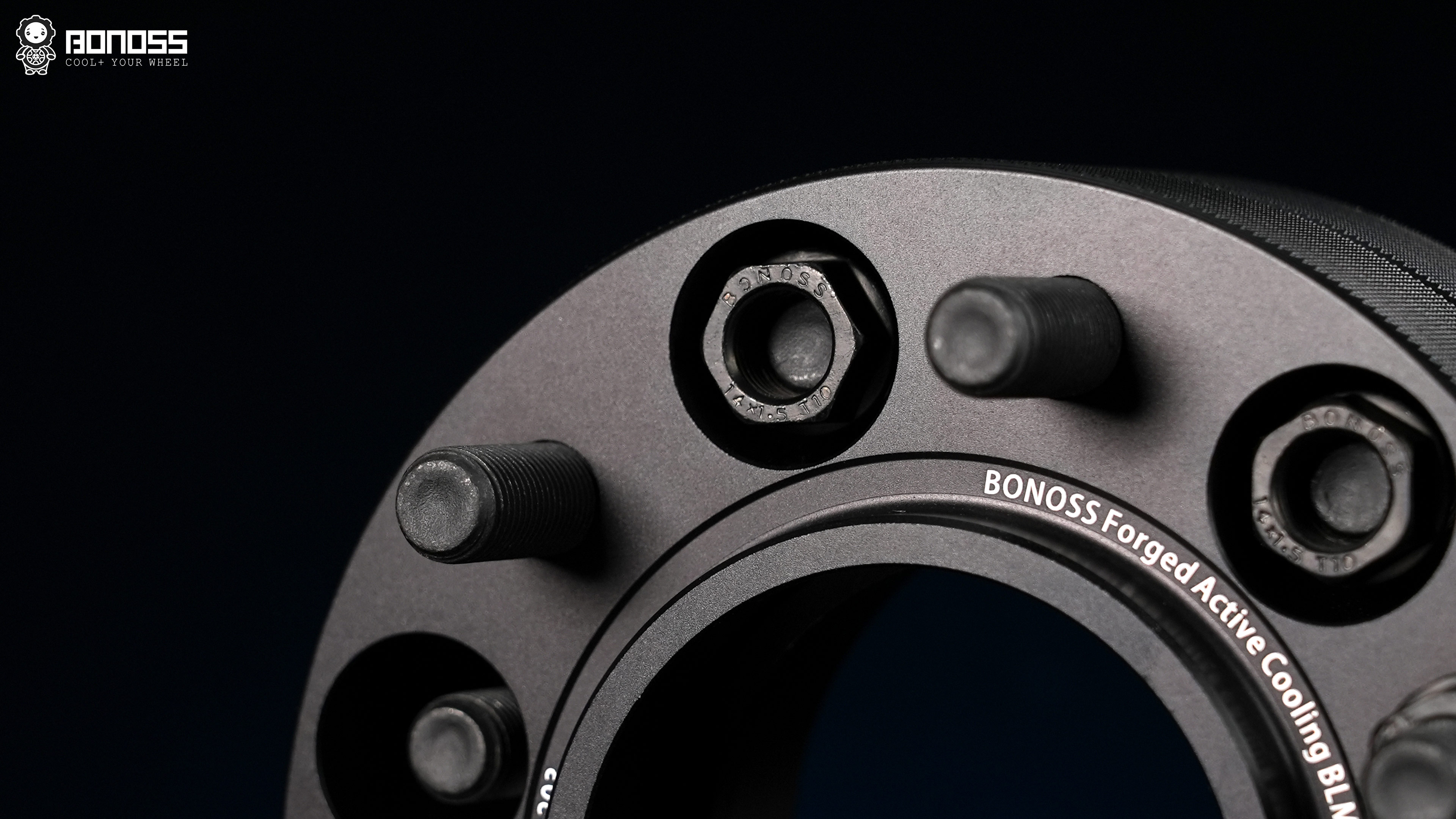
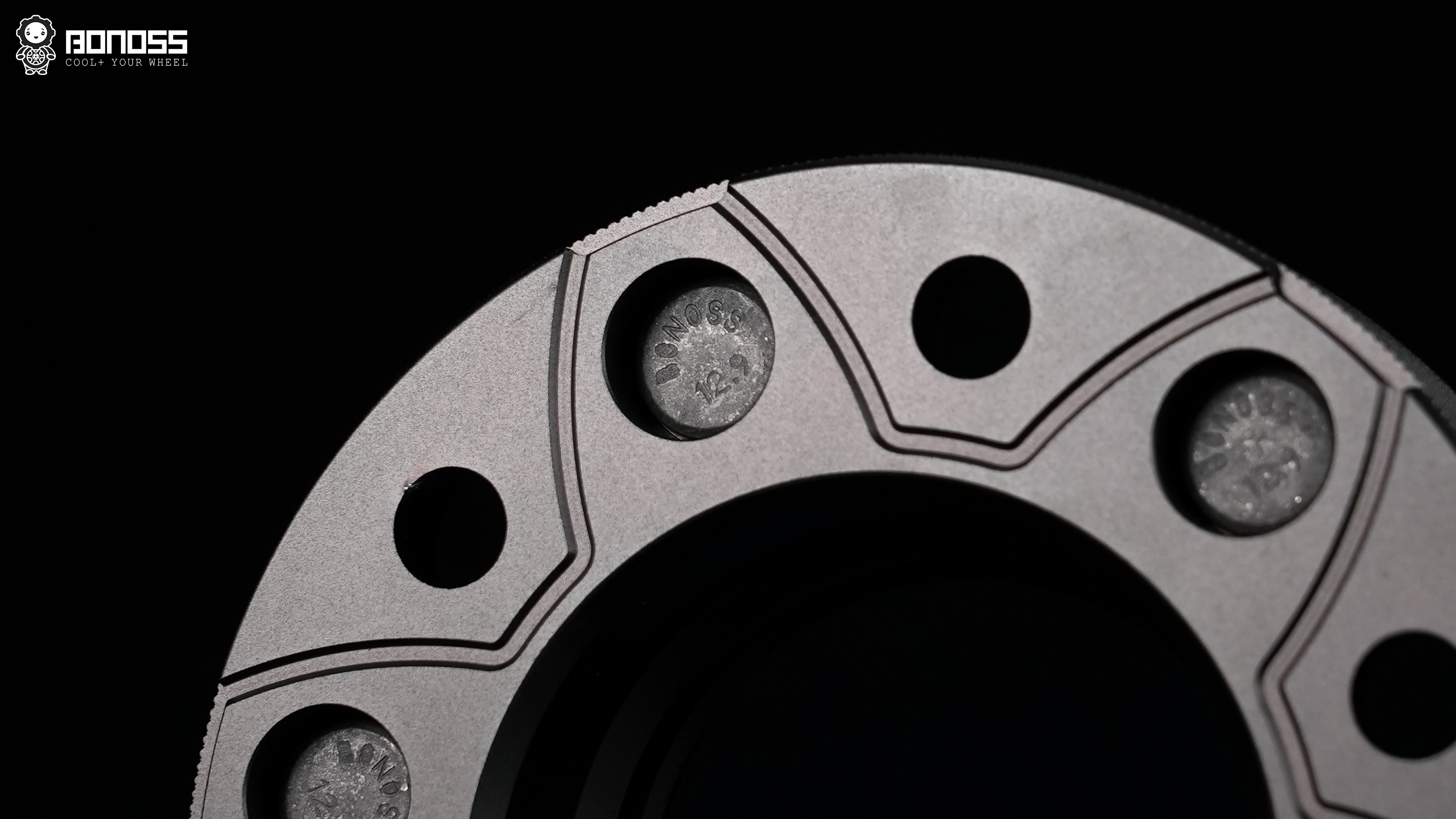
Then he looked at the hardware itself. The BONOSS forged active cooling wheel spacers carry ISO grade 12.9 wheel studs and ISO grade 10 wheel nuts—that’s better than factory hardware, not an aftermarket downgrade. The active cooling design machines relief channels into the spacer body so heat from the brakes has somewhere to go instead of soaking into the hub. And he asked for, and got, the SGS and TÜV test reports. Actual lab paperwork beats a product-page promise every time.
The install videos floating around online sealed it. He could watch the whole process before committing. So he committed: front 25mm, rear 25mm, $320 installed, one appointment.
The Numbers We Measured Before Touching a Wrench
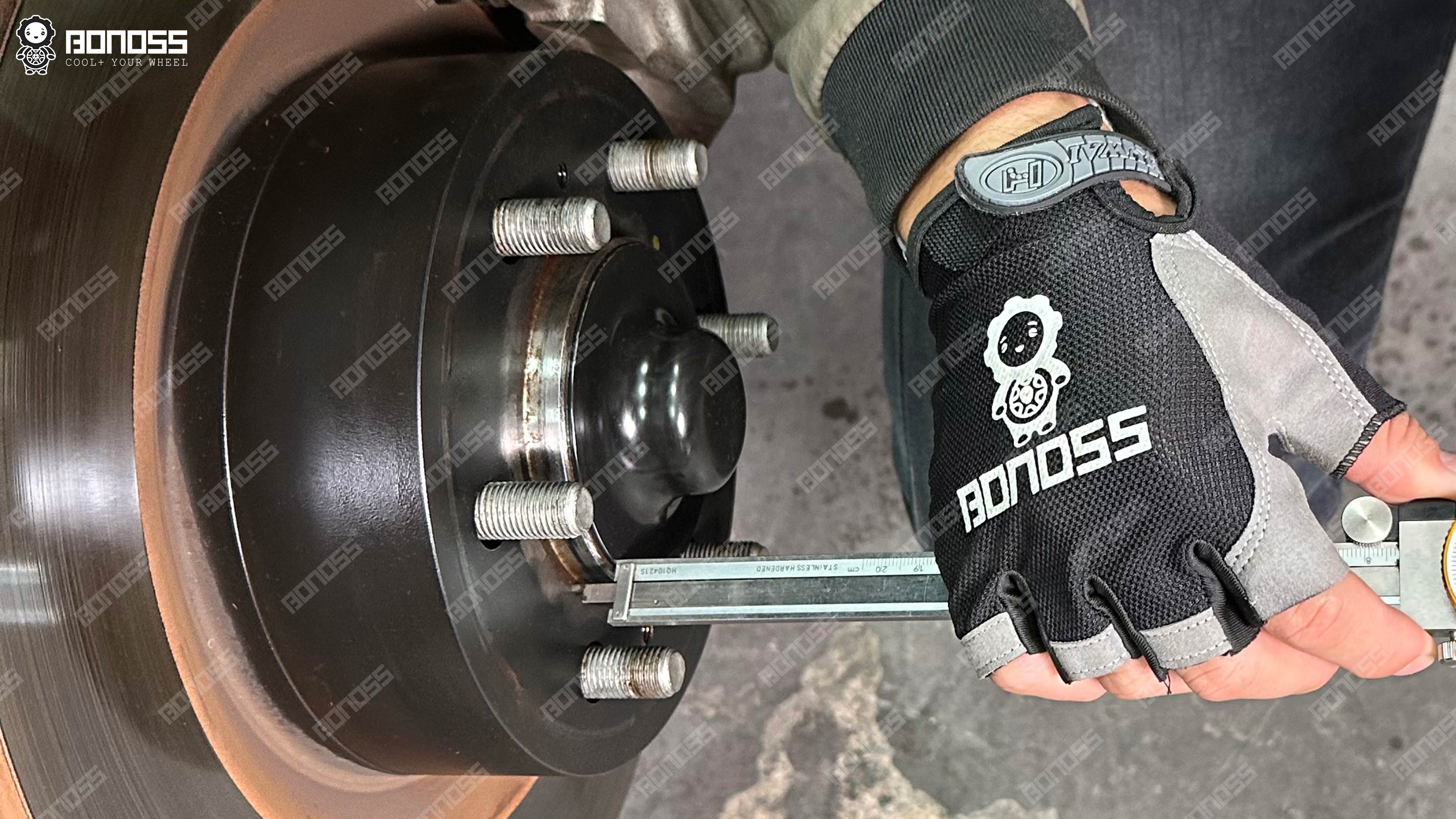
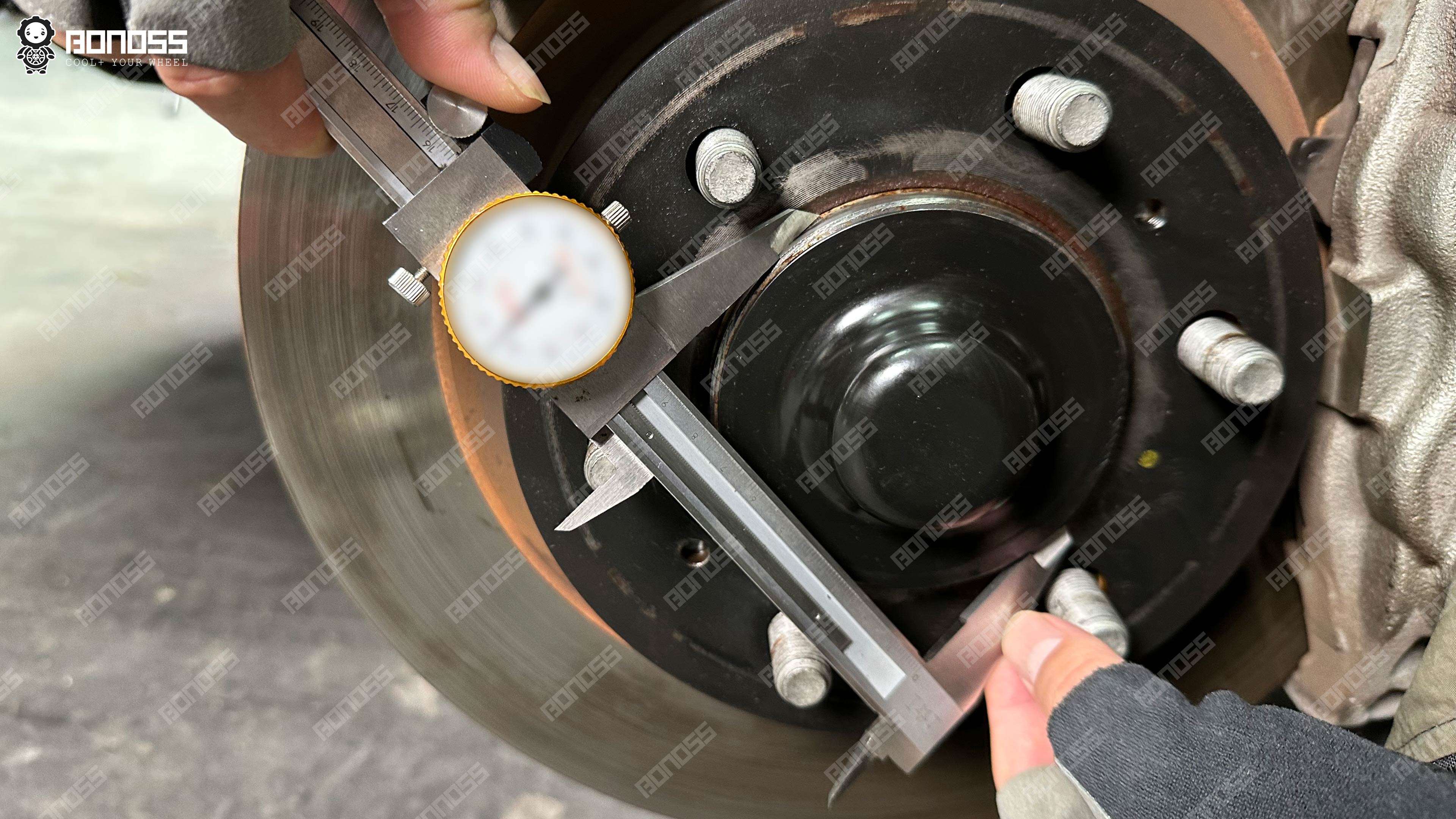
This is the part most install write-ups skip, and it’s the part that decides whether your install goes boring (good) or interesting (bad). Before a single spacer came out of the box, we put instruments on Brandon’s hubs and wheels. Here’s what the LC300 actually measures:
| Measurement | Front | Rear |
|---|---|---|
| Hub center bore (vernier caliper) | 94.92mm | 94.92mm |
| Hub lip/step height | 7.83mm | 12.56mm |
| Stud protrusion from hub face | 24.37mm | 25.21mm |
| Wheel pocket depth | 4.21mm | 4.21mm |
A few notes on why each number matters. The 94.92mm center bore is what makes hub-centric fitment possible—the spacer’s center bore matches it, so the spacer pilots on the hub exactly the way the factory wheel does. No relying on the studs to center anything. The hub lip height of 7.83mm front / 12.56mm rear confirms the lip seats fully inside the spacer’s register. And the stud protrusion numbers are the answer to Brandon’s cutting question, which I’ll get to in a minute.
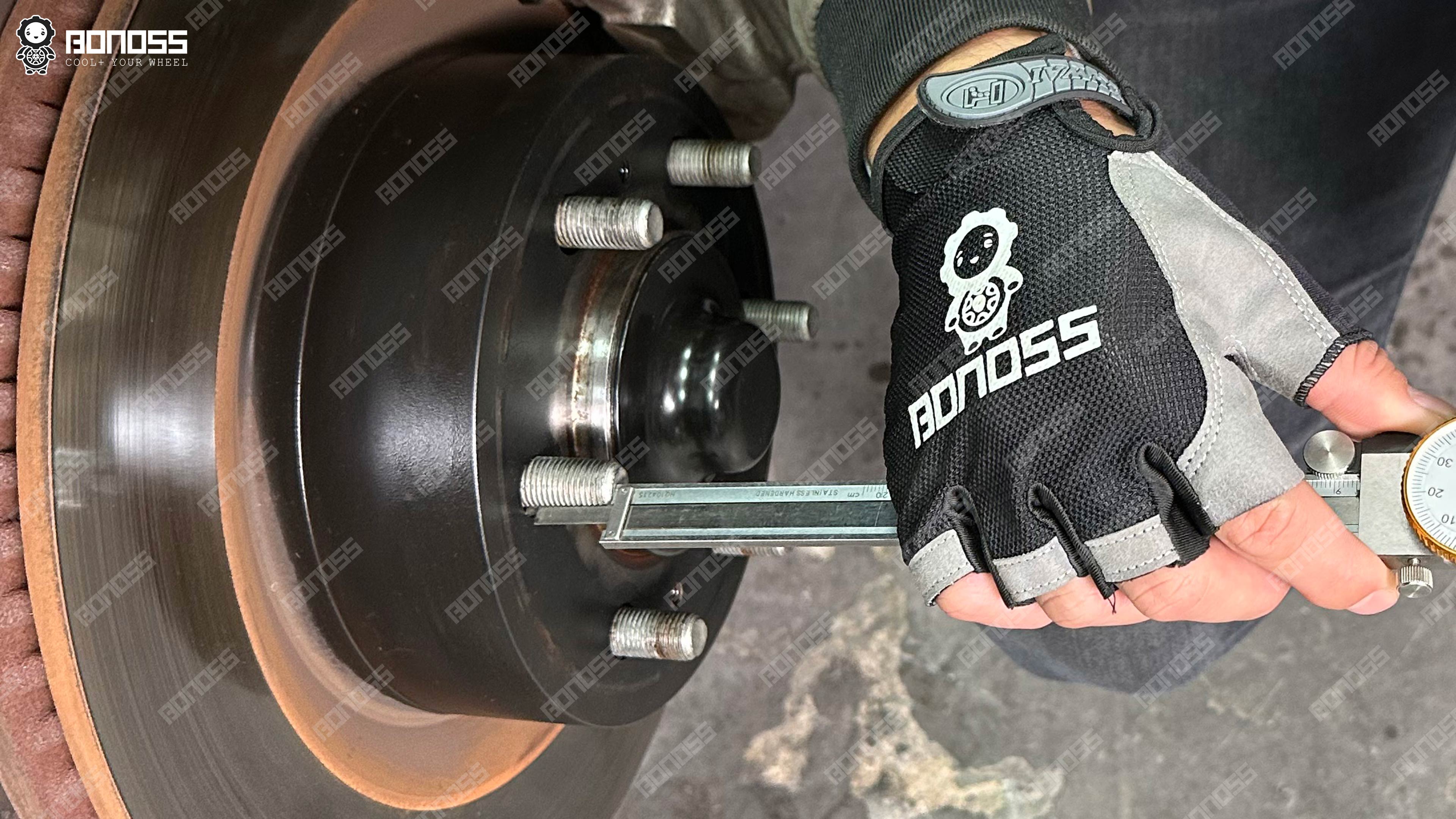
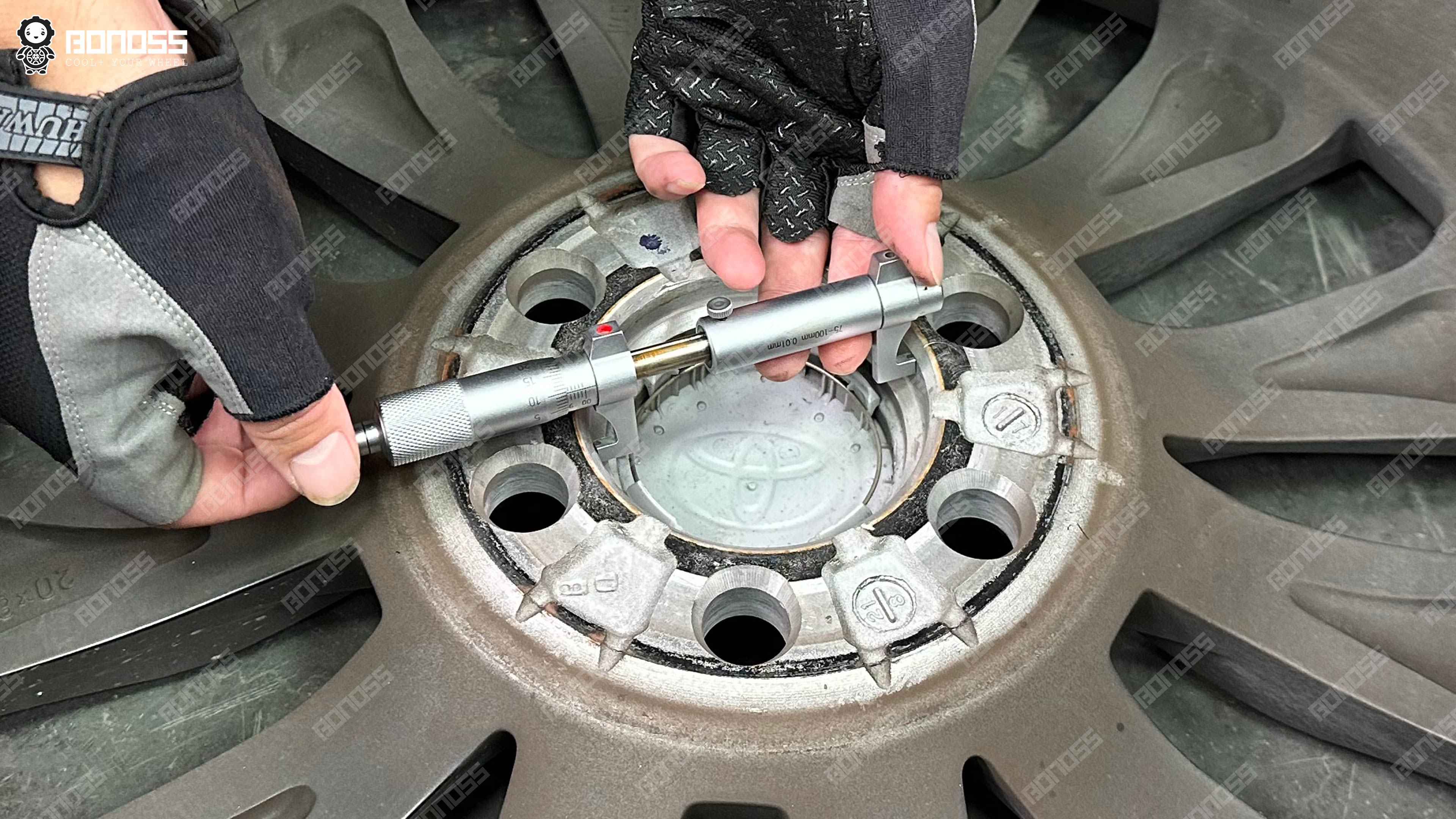
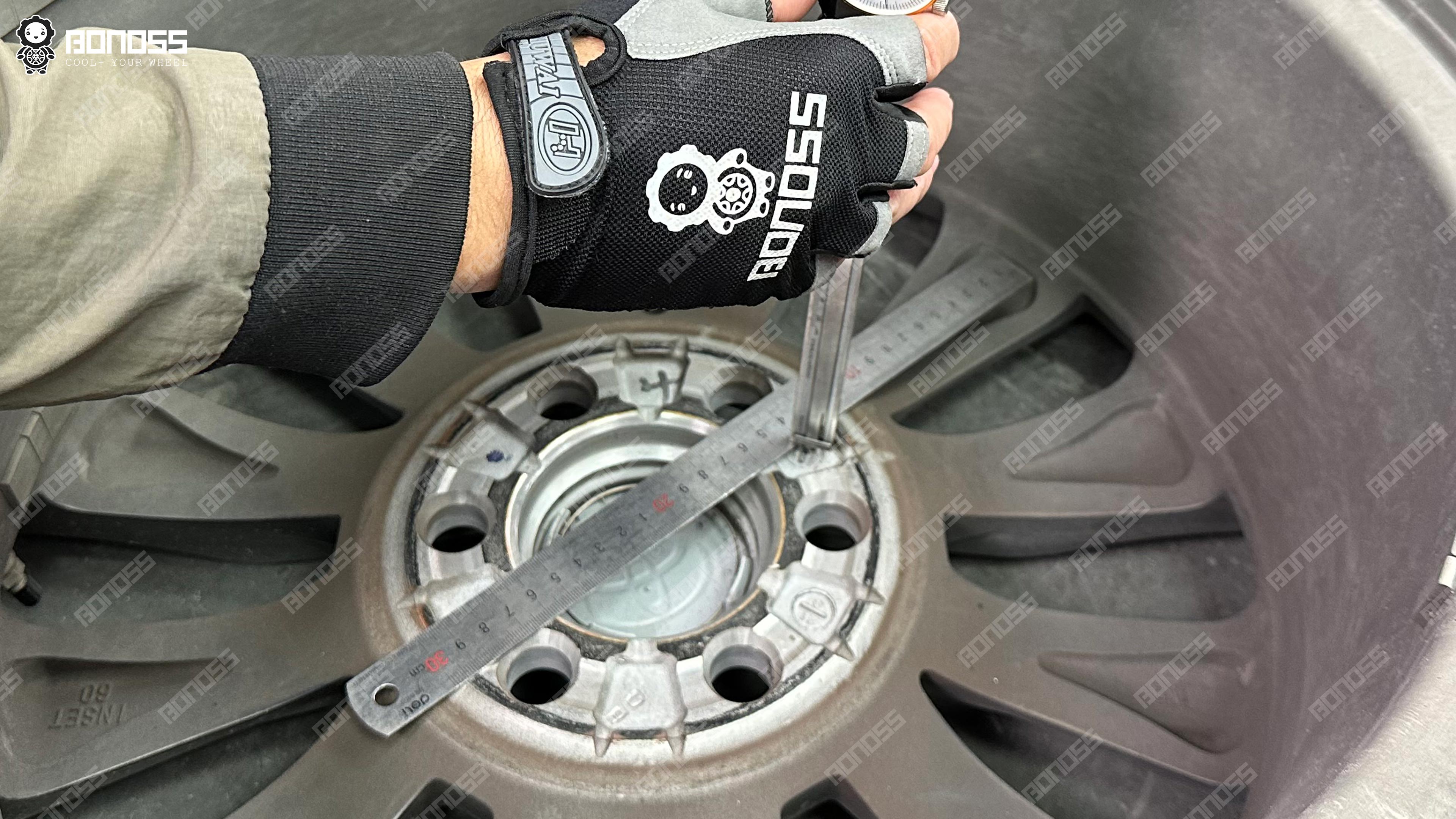
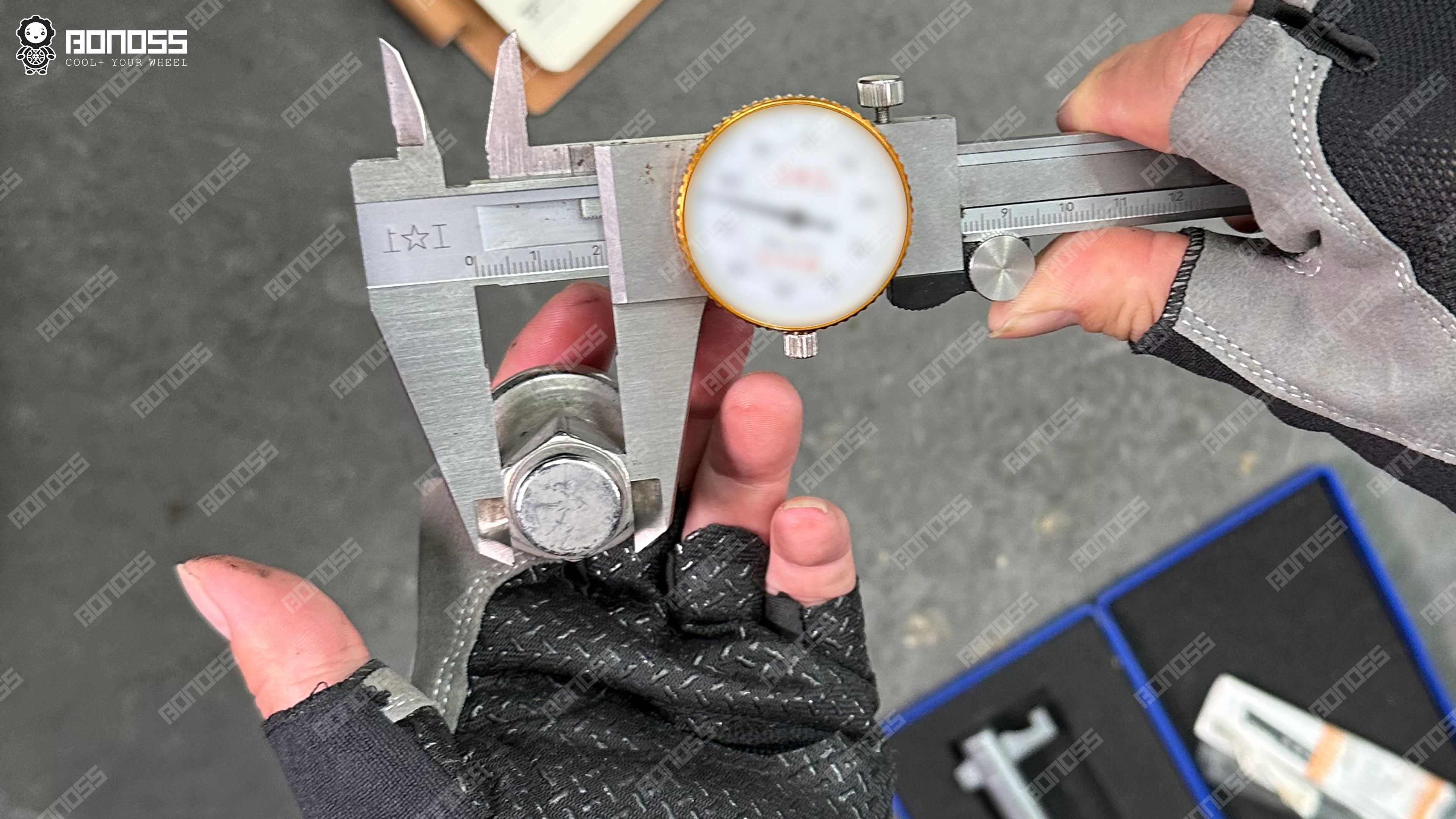
For completeness: factory lug hardware on the LC300 is M14x1.5 thread with a flat-seat contact face, and the factory lug nuts take a 21mm hex socket. The bolt pattern (PCD) of this 2022 LC300 is 6×139.7mm (6×5.5″). The BONOSS kit matches these specs.
Installation Day: Two Worries, Zero Cut Studs
Brandon showed up with two specific worries, and the install answered both of them in order. Here’s exactly how the job went, start to finish—the whole thing took about an hour:
- Measured the fender clearance first. Before recommending anything, we checked the wheel-to-fender gap with a high-accuracy ruler on all four corners. That data—not a forum guess—is why we specced 25mm and not 20mm or 30mm. (Worry one: “How thick do I actually need?” answered before we even jacked the truck up.)
- Verified the stud math against the wheel pockets. Brandon’s rear studs protrude 25.21mm from the hub face—0.21mm more than the spacer is thick. On a flat-backed wheel, that would be a problem. But his factory wheels have 4.21mm-deep pockets between the lug holes, which swallow that extra 0.21mm with room to spare. The wheel sits dead flat on the spacer face. Worry two, resolved: no stud cutting, no grinding, nothing permanent.
- Cleaned every mating surface. Hubs and spacer faces got a full clean and inspection. Corrosion or debris between the hub and spacer is how you buy yourself a vibration at 70 mph.
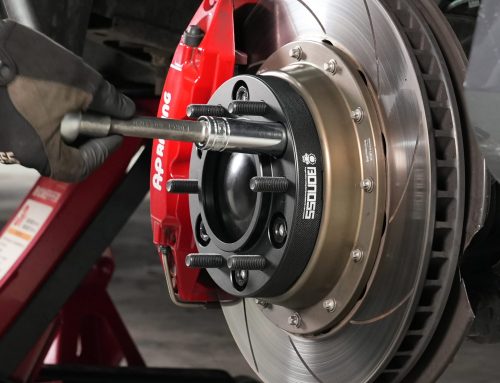
- Installed the spacers hub-centric on all four corners. The spacers piloted onto the hubs with zero play—exactly what that 94.92mm bore match is supposed to feel like.
- Torqued the spacer hardware to spec. The supplied ISO grade 10 nuts went on the factory studs and came down to 140 Nm (per BONOSS installation instructions) in a star pattern with a calibrated torque wrench.
- Mounted the wheels and torqued to final spec. Use the factory wheel nuts to secure the wheels on the spacers. Tighten the factory wheel nuts to 131 Nm (per the owner’s manual). All four corners, star pattern, then a short road test and a re-check.
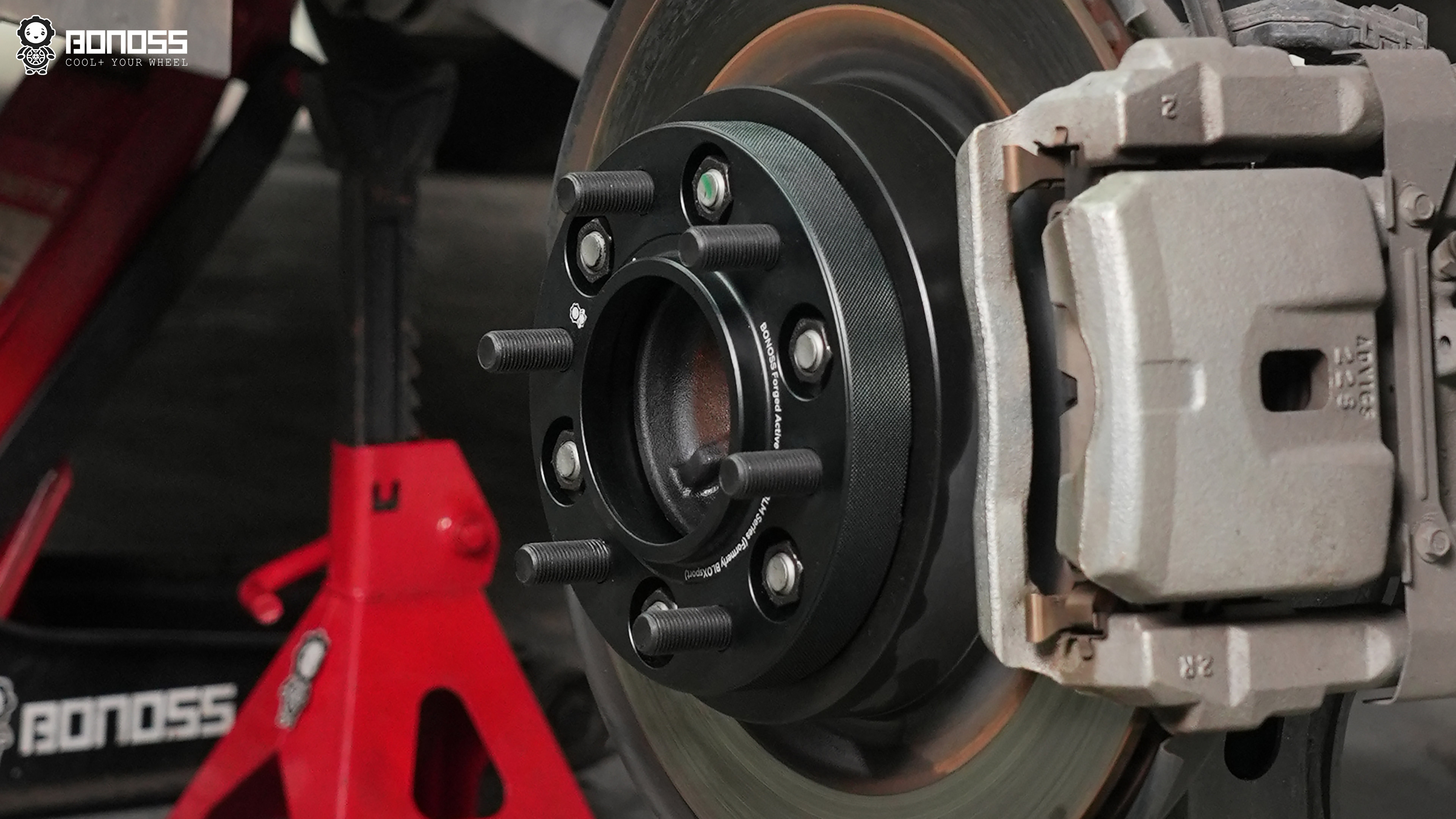
That step-two measurement is worth lingering on, because it’s the single most common question I hear about this truck. Yes, the rear stud pokes a hair past the spacer face. No, it doesn’t touch the wheel, because the pockets exist. If your wheels don’t have pockets—some aftermarket designs don’t—the math changes and you measure again. That’s the whole game: measure, don’t assume.
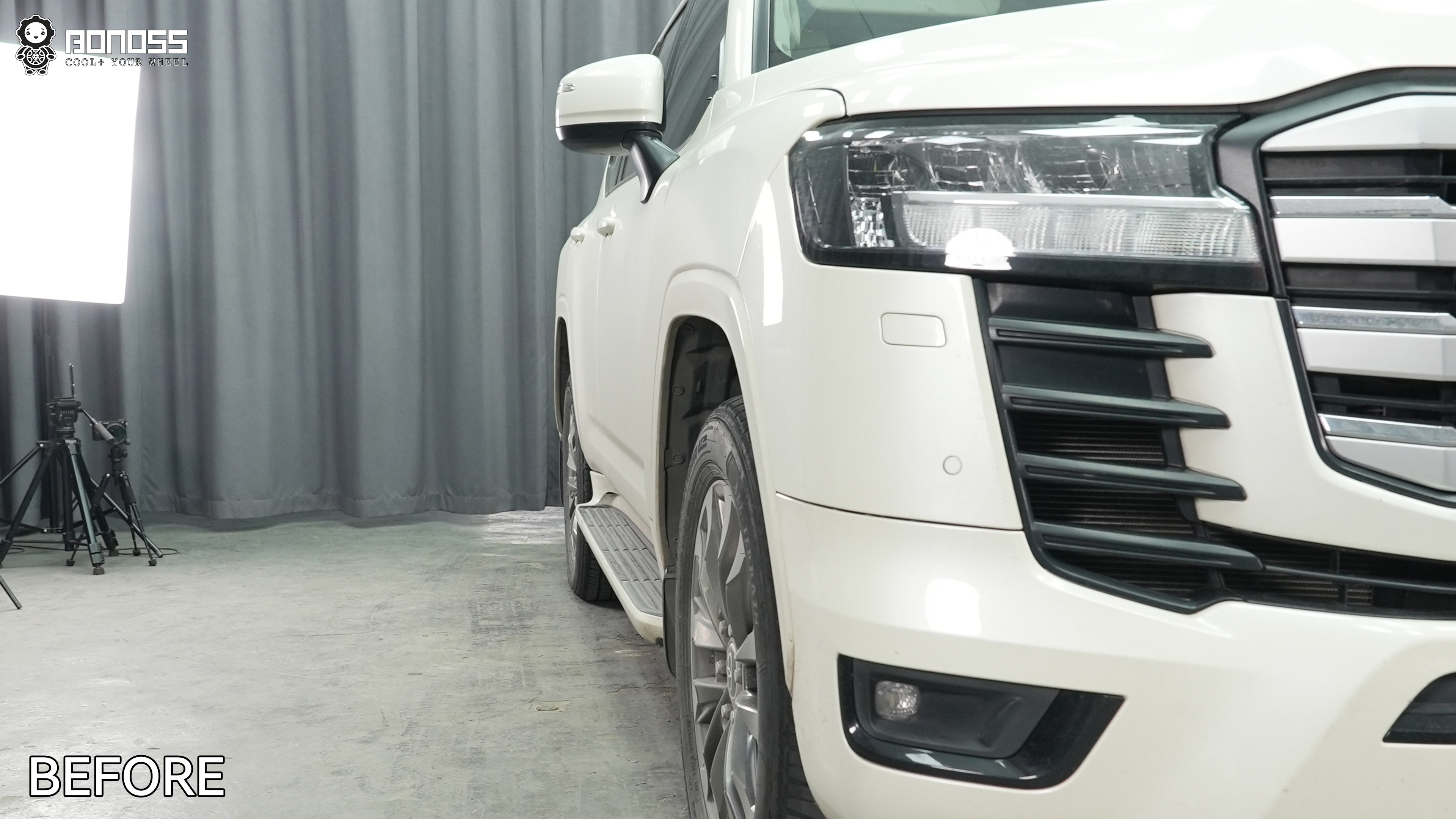
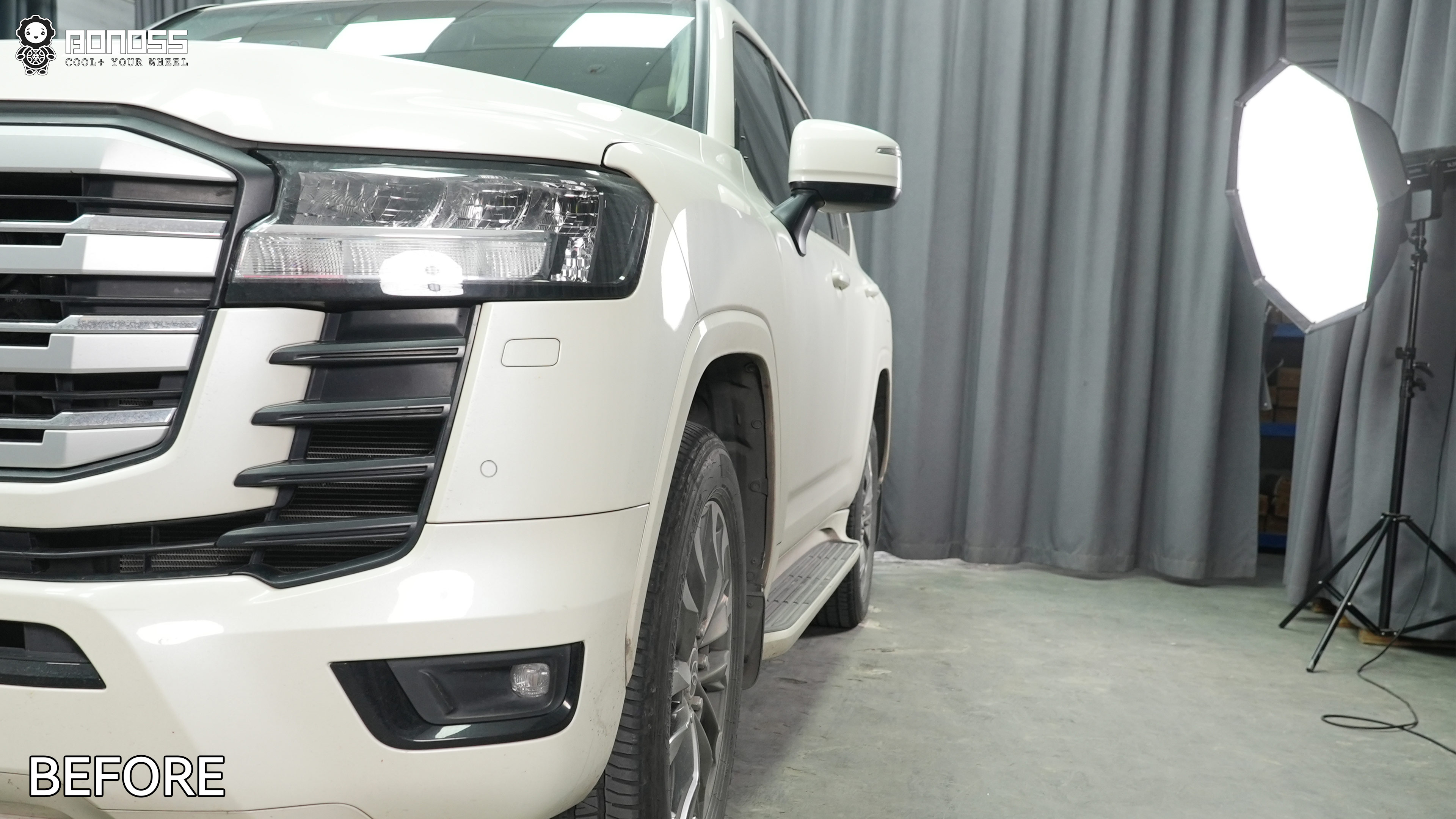
The before-and-after on each corner tells the rest of the story. Same truck, same wheels, same tires—just sitting where they should have been sitting all along.
One hour, four corners, zero cut studs, and a stance that finally matches the truck.
25,000 Miles Later: Brandon’s Verdict
Install-day impressions are cheap. What matters is what the truck feels like after real mileage—highway, weather, and in Brandon’s case, mud. He’s put roughly 25,000 miles on the setup since that November appointment, well over a year and a half of daily use. I asked him how it’s been. His words, exactly as he said them:
“Been running 25mm spacers for close to 25k miles now—no issues at all. Would definitely recommend BONOSS to anyone wanting quality spacers and good customer service.”
And two more from his follow-up feedback:
“The quality of the spacers went beyond my expectations. I’ve been running these spacers for a year and a half now. The ride is stable, and traction in mud feels safe and secure. Cornering is definitely improved, and it still rides smoothly overall.”
“Great prices and awesome customer service. No vibes, no weird noises on the highway. 10/10 would recommend to anyone.”
“No vibes, no weird noises” is the sentence I’d underline. Vibration after a spacer install almost always traces back to one of three things: a spacer that wasn’t hub-centric, a dirty mating surface, or bad torque. Get those three right—which is a process, not luck—and spacers disappear into the truck. You stop thinking about them, which is the highest compliment a chassis part can earn. The wider track is also doing real work here; pushing each wheel out 25mm per side widens the truck’s footprint by two inches overall, and that’s free stability in corners and in soft terrain. If you’re comparing thickness options for this platform, our best Toyota Land Cruiser wheel spacers guide breaks down how to choose.
FAQ
Are wheel spacers safe on a Land Cruiser 300 for off-roading?
Yes—provided the spacers are forged, hub-centric, use certified hardware (ISO grade 12.9 studs / grade 10 nuts), and are torqued correctly. The spacer is a passive component; failures almost always trace to cheap cast parts, lug-centric fitment, or improper torque. Brandon’s truck has 25,000 miles including mud driving on this exact setup with zero issues.
Do I need to cut the factory studs to run 25mm spacers on an LC300?
Not on the stock wheels. The LC300’s rear studs protrude 25.21mm—0.21mm past the spacer face—but the factory wheels have 4.21mm-deep pockets between the lug holes that clear the stud ends completely. Measure your own wheels before assuming; some aftermarket wheels lack pockets.
What size spacers give a flush stance on a 2022 LC300?
On the stock 265/55R20 setup with ET+60 wheels, 25mm front and rear lands flush—effectively ET+35—without poke or fender contact. But “flush” depends on your specific wheels and tires, so measure your fender clearance before ordering.
Will 25mm spacers cause rubbing with stock 265/55R20 tires?
No. On an unmodified LC300 with factory-size tires, the ET+35 effective offset stays clear of the fender liner and suspension components at full lock and full compression.
Do wheel spacers cause vibration or affect ride quality?
Not when they’re hub-centric and installed on clean surfaces at correct torque. Brandon’s report after 25,000 miles: “No vibes, no weird noises on the highway.”
Final Thoughts
Nine years in, my advice on spacers hasn’t changed: the part is only ever as good as the measurement behind it and the torque on top of it. Brandon’s LC300 is the proof I point to now—one careful measurement session, one hour of install time, 25,000 uneventful miles, and a truck that finally looks the way it should have from the factory.
If you’re running an LC300 and want the same result, the exact spacers from this install are here: BONOSS Forged Active Cooling Wheel Spacers for Toyota Land Cruiser 300 Series. Forged 6061-T6 aluminum, hub-centric 95mm center bore, active cooling design, ISO grade 12.9 studs and grade 10 nuts included—backed by the same SGS and TÜV paperwork that convinced Brandon. Measure your truck, pick your thickness, and bolt on a stance you’ll still be happy with 25,000 miles from now.

About Robert Wall
Robert Wall is a Senior Automotive Engineer at BONOSS with over 9 years of experience in automotive component R&D, specializing in the structural design and safety validation of wheel spacers, wheel adapters, and high-strength fasteners. He is actively involved in product testing and on-track evaluation and is dedicated to translating engineering expertise into accessible modification knowledge — helping enthusiasts upgrade their vehicle’s stance and handling without compromising safety.