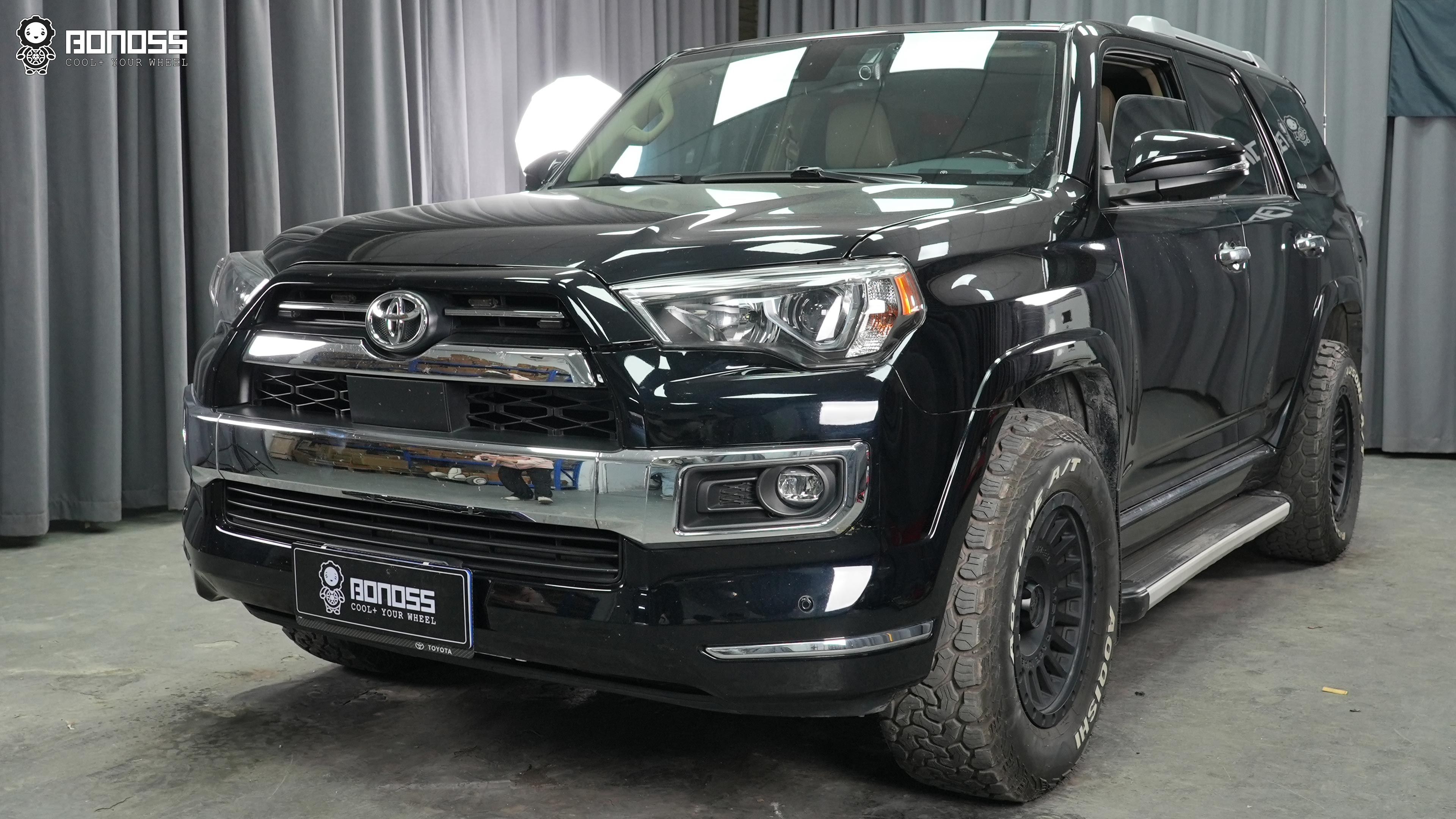
Frank Torres started with a 5th-gen 2021 Toyota 4Runner, known by its N280 chassis code, a set of ET 0 aftermarket wheels, and AT tires. The front wheels sat farther inside the fenders than the rears, and the mismatch bothered him more than the inset itself.
The eventual answer was 2021 Toyota 4Runner 30mm wheel spacers at all four corners, installed on November 8, 2023. Getting there required two changes of plan. A 25mm setup looked reasonable on the front, but rear stud projection ruled out the same thickness with his shallow wheel pockets unless the studs were trimmed. Moving only the rear to 30mm solved that mechanical issue, then created a stance Frank disliked. The front finally received 30mm spacers too.
At follow-up, Frank had covered 39,847 miles. He reported no rubbing, no cracks, and no problems after a long run through mud and rocks. That is useful real-world evidence, not a universal clearance guarantee. Tire size, suspension travel, wheel design, alignment, and installation condition still matter. His measurements and the final decision process are the valuable parts of this case.
Spec Quick Reference
| Item | This 2021 Toyota 4Runner case |
|---|---|
| Chassis | N280, fifth-generation 4Runner |
| Wheel and tire baseline | Aftermarket ET 0 wheels with AT tires |
| Final spacer thickness | Front 30mm; rear 30mm |
| Effective wheel offset | ET 0 – 30mm = ET -30mm at each corner |
| Bolt pattern | 6×139.7mm |
| Vehicle hub-bore specification | 106.1mm |
| Measured hub register diameter | 105.93mm, measured with a vernier caliper during this installation |
| Measured hub register height | 10.23mm, measured with a vernier caliper |
| Factory thread specification | M12x1.5 |
| Spacer-to-hub fastening | 113 Nm (83.3 ft-lb) using the supplied BONOSS nuts, per BONOSS installation instructions |
| Wheel-to-spacer fastening | 103 Nm (76 ft-lb) when OEM nuts are used in a compatible factory-wheel application, per the owner’s manual |
| Spacer material | Forged 6061-T6 aluminum |
| Supplied parts and labor | $313.98 for four spacers plus $25.00 labor; $338.98 total before any unspecified charges |
Two torque rows are necessary because there are two separate joints. Do not use one torque value for the entire installation: both values are acceptable only for their respective hardware and joint, and neither should be transferred to the other. Frank’s aftermarket wheels also required nuts compatible with their seat design; the original flat-seat nuts were not automatically suitable.
Three Ways This Fitment Could Have Gone Wrong
Mistake One: Assuming the Front and Rear Needed the Same Correction
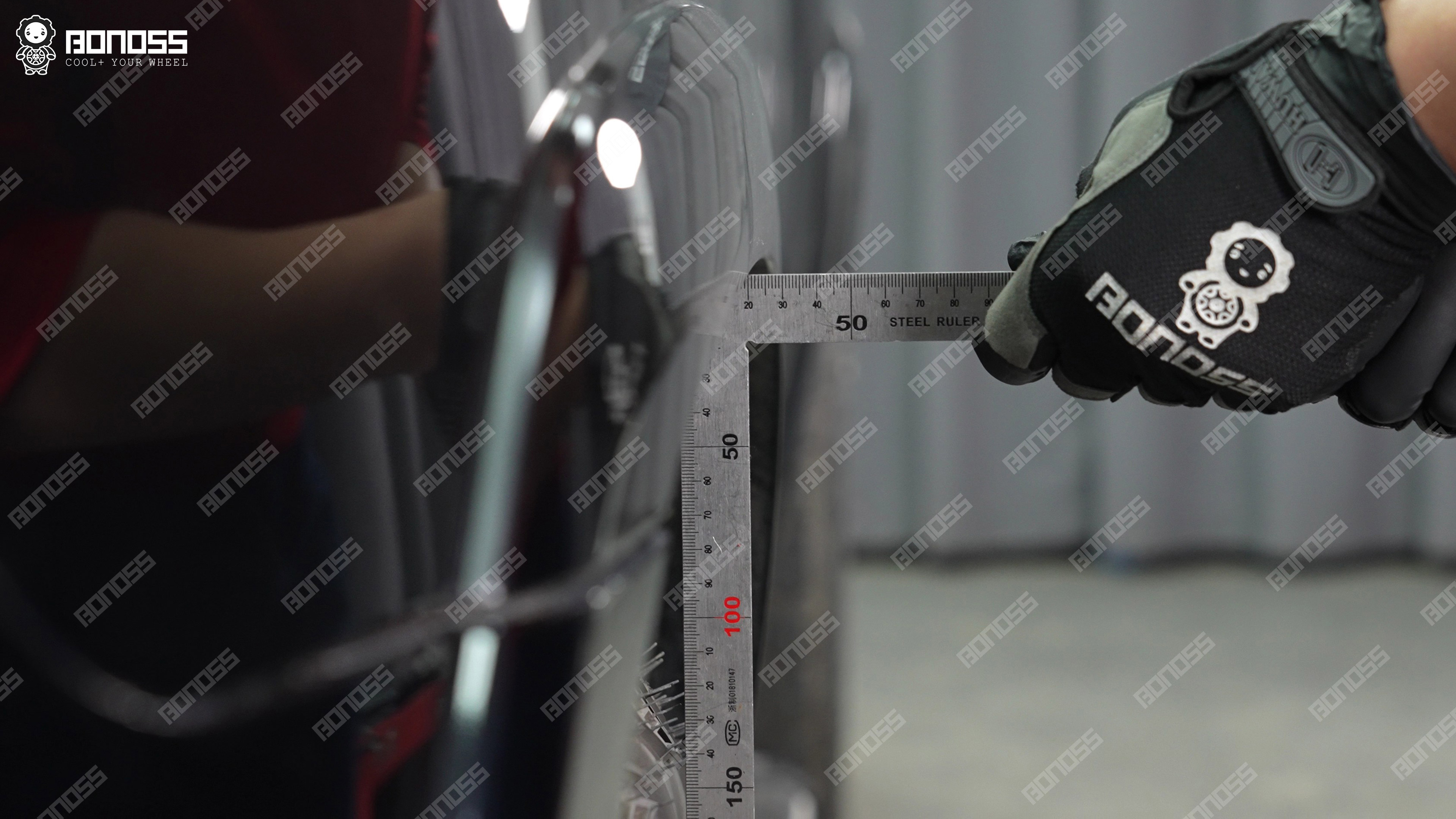
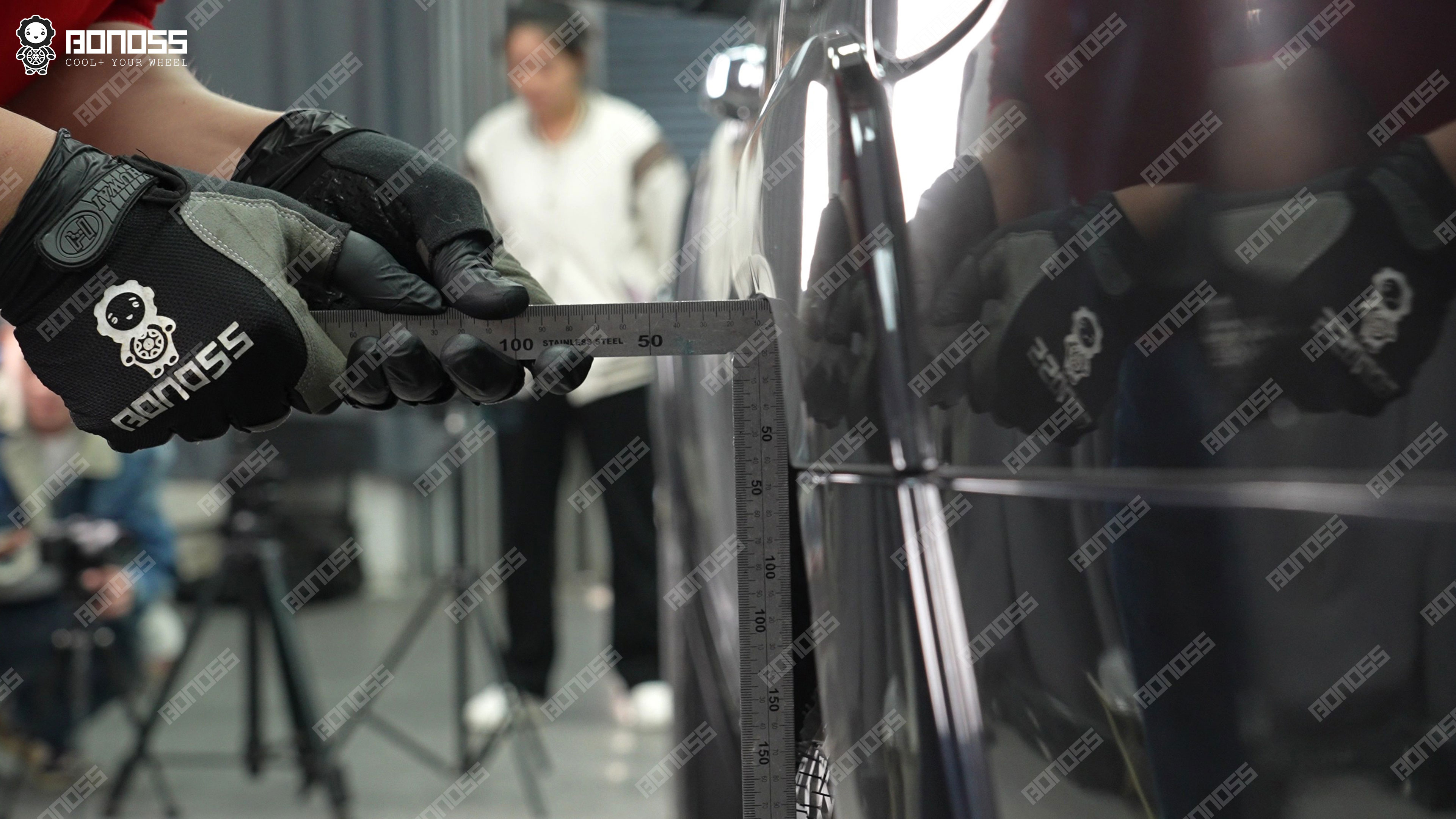
The first high-accuracy ruler check put the front wheel approximately 25mm inside the desired fender line; the rear was only about 10mm inside. Copying the front measurement to both ends would push the rear roughly 15mm beyond its simple flush-line estimate. That would not automatically cause interference, but “matching thickness” and “matching appearance” are plainly different goals.
Frank accepted the front trial, then requested a stronger rear stance instead of following the smaller rear correction suggested by the ruler alone.
Mistake Two: Checking Fender Clearance but Forgetting Stud Projection
The rear 25mm trial exposed the more important problem. The original rear studs projected approximately 2mm beyond the spacer’s wheel-facing surface. Frank’s aftermarket wheels had pockets only 1.02mm deep, so those recesses could not fully accommodate the studs and allow the wheel mounting face to sit flat.
The arithmetic is direct: 27mm measured rear stud projection minus a 25mm spacer leaves 2mm. A 1.02mm pocket does not erase that interference. Even allowing the pocket depth, approximately 0.98mm remains in the simplified stack-up. Actual contact should always be checked physically because stud shape, pocket location, chamfers, and mounting-face geometry affect the result.
The front measurement told a different story. Its 22mm projection was 3mm shorter than a 25mm spacer, so the studs would remain below the spacer face. On this vehicle, that meant a front wheel without pockets would not require trimming on stud-projection grounds alone.
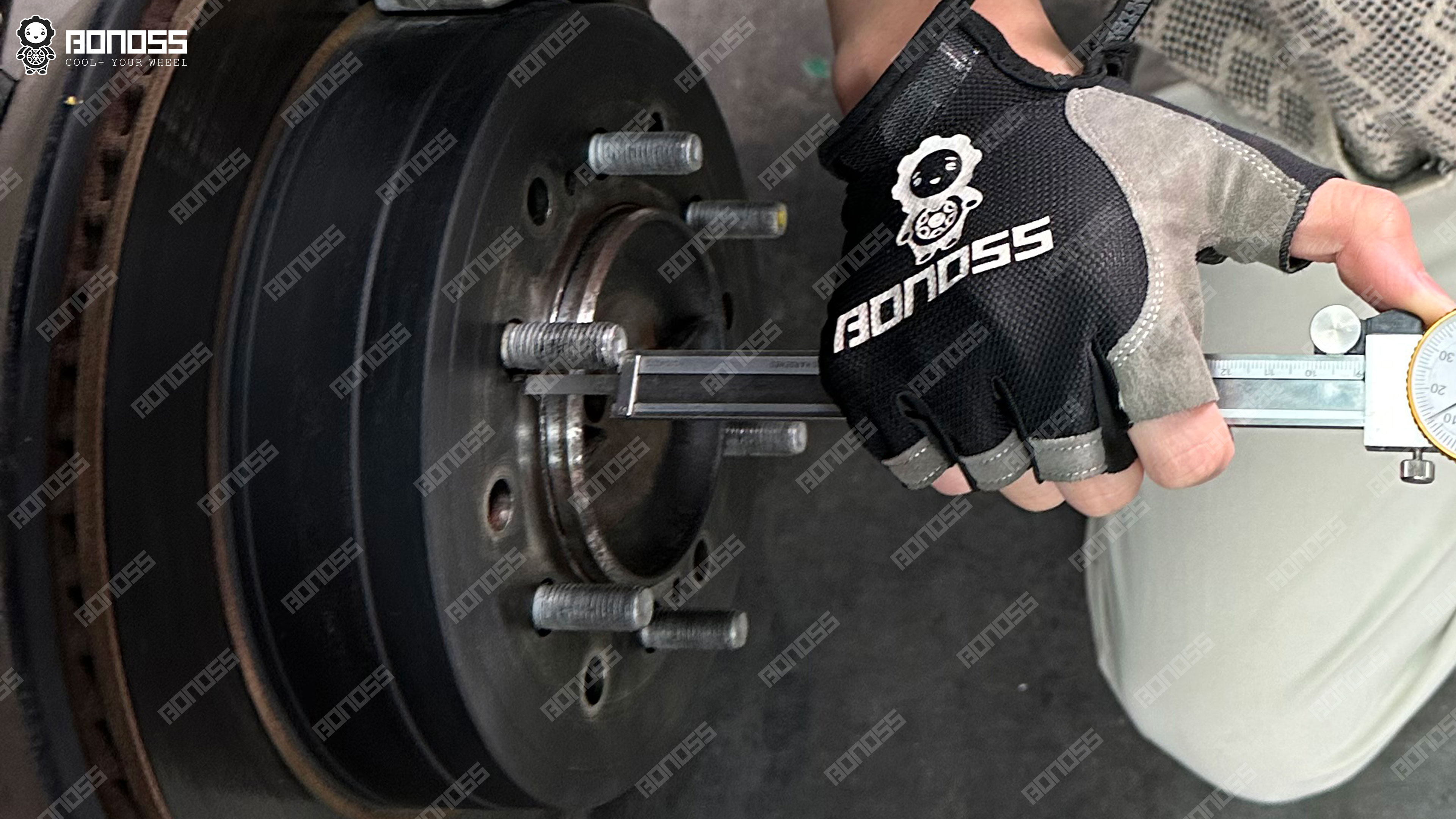
For the rear, the staff offered two honest options: trim the roughly 2mm projection or use a 30mm spacer. Frank chose the thicker spacer immediately. With 30mm, the measured 27mm stud remained about 3mm below the face, removing the need to cut on this measured stack-up. The 4Runner wheel stud trimming and thickness guide explains the same clearance relationship for other wheel and spacer combinations.
Mistake Three: Solving the Mechanical Problem and Ignoring the Visual One
With 25mm on the front and 30mm on the rear, everything could be assembled without trimming. Frank still disliked the essentially flush front and farther-out rear. His reaction did not make 30mm universally “better”; it clarified his aesthetic target. The front spacers were changed to 30mm, and he approved the result after walking around the vehicle.
Real fitment involves three separate questions: the wheel must seat mechanically, the tire must clear during use, and the owner must like the stance. Arithmetic alone cannot answer all three.
The Offset Formula Behind the Final Stance
Wheel offset and spacer thickness work in opposite directions when a spacer moves the wheel outward. Frank began with ET 0 wheels. Subtracting the 30mm spacer thickness gives:
ET 0 – 30mm = ET -30mm
Each wheel therefore sat 30mm farther outward. With identical spacers on both sides, nominal wheel-center spacing increased by 60mm across the axle. This geometry explains the stronger stance.
Three Measurements That Prevented the Guesswork
Step One: Measure the Fender Gap at Both Ends
Use the same reference method at every corner before choosing thickness. The high-accuracy ruler readings here were approximately 25mm front and 10mm rear; ride height, ground conditions, and ruler placement can alter such readings. These figures established a trial-fit baseline, not a mandatory target. Frank ultimately exceeded the rear flush estimate because he preferred a stronger look.
Step Two: Confirm Offset, Wheel Pockets, and Stud Length Together
Offset predicts wheel-center movement, not whether the mounting pad will foul an original stud. Stud projection, pocket geometry, brake caliper clearance, and tire clearance require separate checks. Compare actual stud projection with spacer thickness, then inspect whether the pockets accept any excess. Do not borrow Frank’s 22mm and 27mm figures for another vehicle; hardware and wheel designs can change the stack-up.
Step Three: Measure the Hub Register Instead of Relying on PCD Alone
The 6×139.7mm bolt pattern only establishes the stud-circle layout. It says nothing about centering fit. For anyone comparing 2021 Toyota 4Runner hubcentric wheel spacers, the remaining interfaces matter just as much. The case specification lists a 106.1mm hub bore, while the installer’s vernier caliper reading of the vehicle register was 105.93mm. Register height measured 10.23mm.
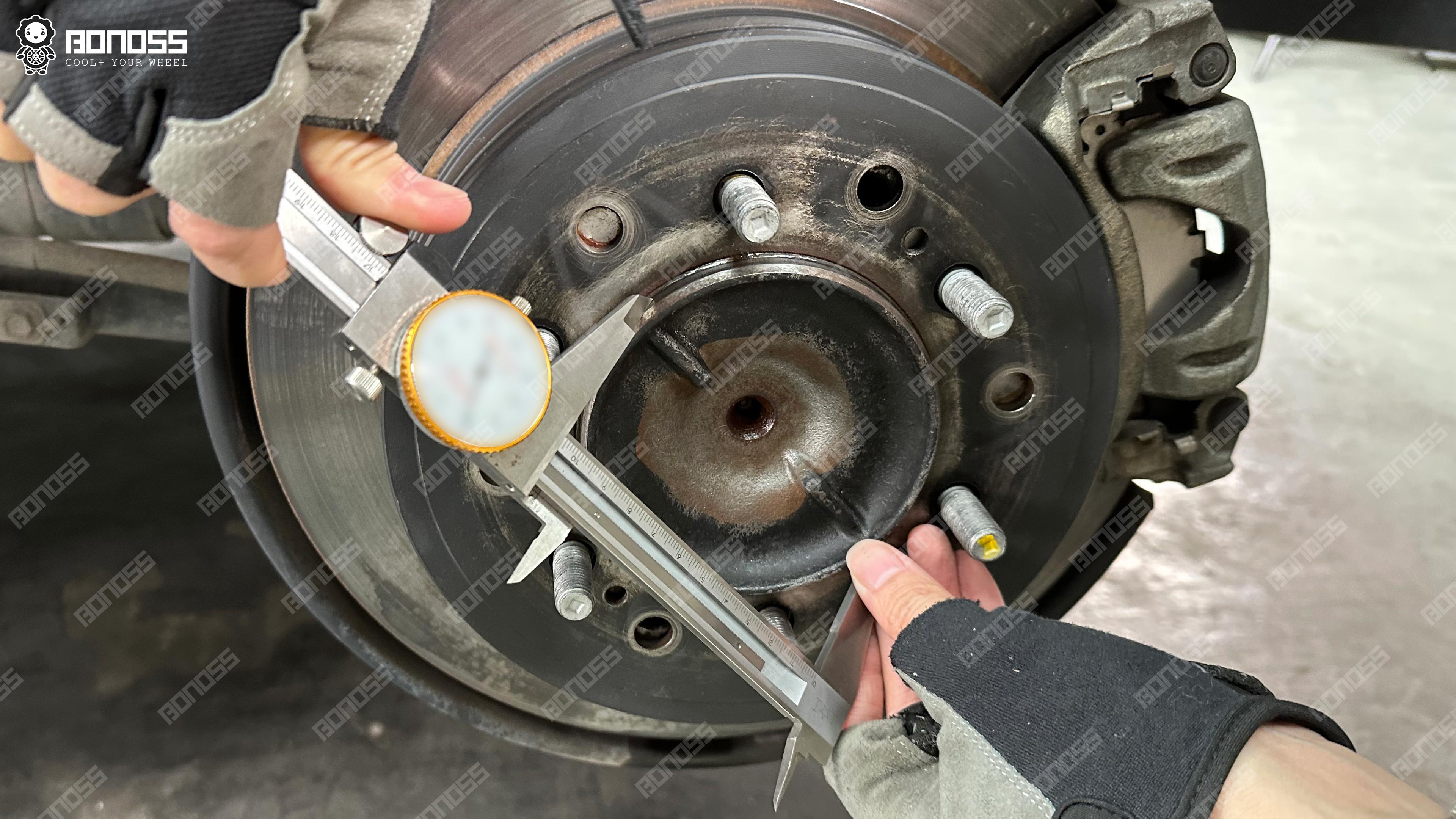
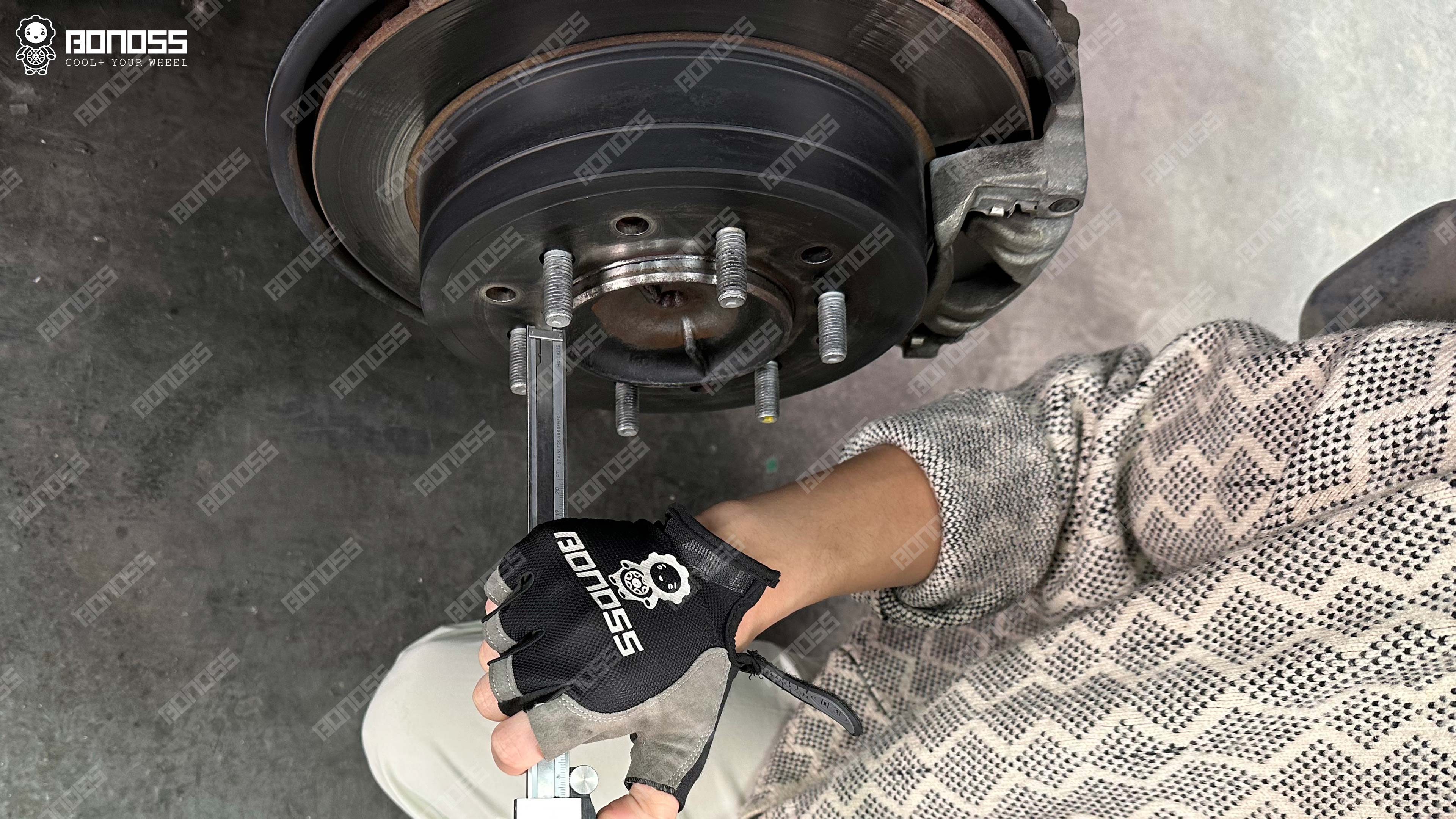
The 0.17mm difference between the listed bore figure and the register reading should not be assigned a cause without further inspection. Measurement position, contact condition, and tool technique can influence readings. The professional response is straightforward: record the actual dimensions, check the mating spacer and wheel, and verify seating by hand. Do not treat matching PCD as proof of hub-centric compatibility.
The final spacers used a multi-stage hub-centric profile intended to follow the mating hub geometry. A hub-centric interface helps locate the components concentrically during assembly.
25mm vs 30mm: What This Case Actually Supports
| Thickness | Front outcome on Frank’s vehicle | Rear outcome on Frank’s vehicle | Appearance decision | Relative fitment risk in this case |
|---|---|---|---|---|
| 25mm | Studs remained below the spacer face; trial accepted initially | Studs projected about 2mm; 1.02mm pockets were insufficient without trimming | Front looked flush; rear trial was rejected after later comparison | Lowest outward change, but rear mounting-face interference required action |
| 30mm | Final choice; no front stud trimming indicated by the measured 22mm projection | Final choice; 27mm studs remained below the face without trimming | Balanced the rear and produced the stance Frank wanted | Greater outward change than 25mm; full tire and body clearance still required verification |
Installation Details That Mattered More Than the Finish
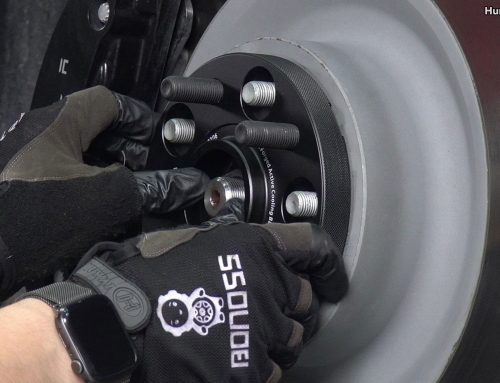
The axle hubs had rust that could prevent full, even contact between the hub and spacer. The staff sprayed rust remover and worked the surface with abrasive cloth until the corrosion contamination was cleaned away. Only then could the spacer sit flush against the hub. This preparation step addresses a common vibration mechanism: an uneven interface can leave the spacer misaligned even when every nut is tightened.
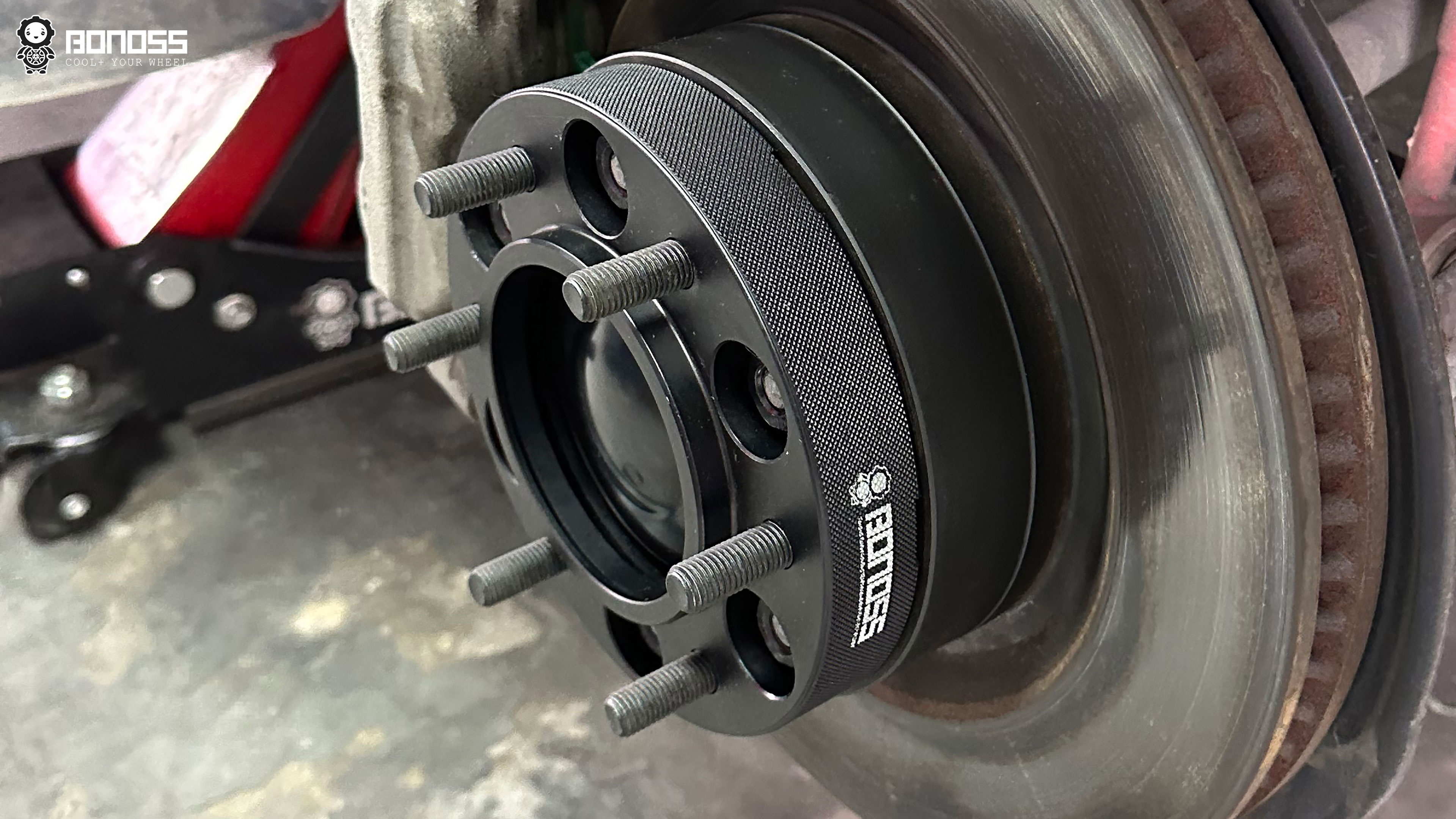
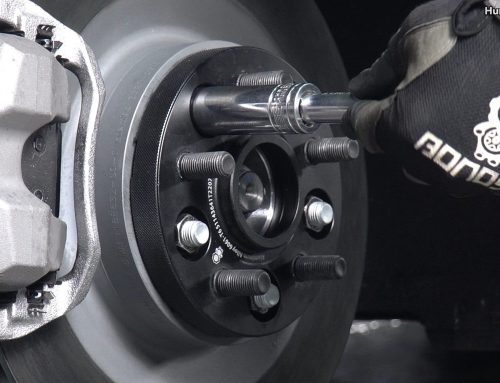
Each joint must be hand-started, seated evenly, and tightened with a calibrated torque wrench in the prescribed sequence. For the spacer-to-hub joint using BONOSS nuts, this case specifies 113 Nm (83.3 ft-lb), per BONOSS installation instructions. For a compatible OEM wheel-and-nut joint, the manual’s aluminum-wheel value is 103 Nm (76 ft-lb), per the owner’s manual. Those values are not alternatives for the same nut.
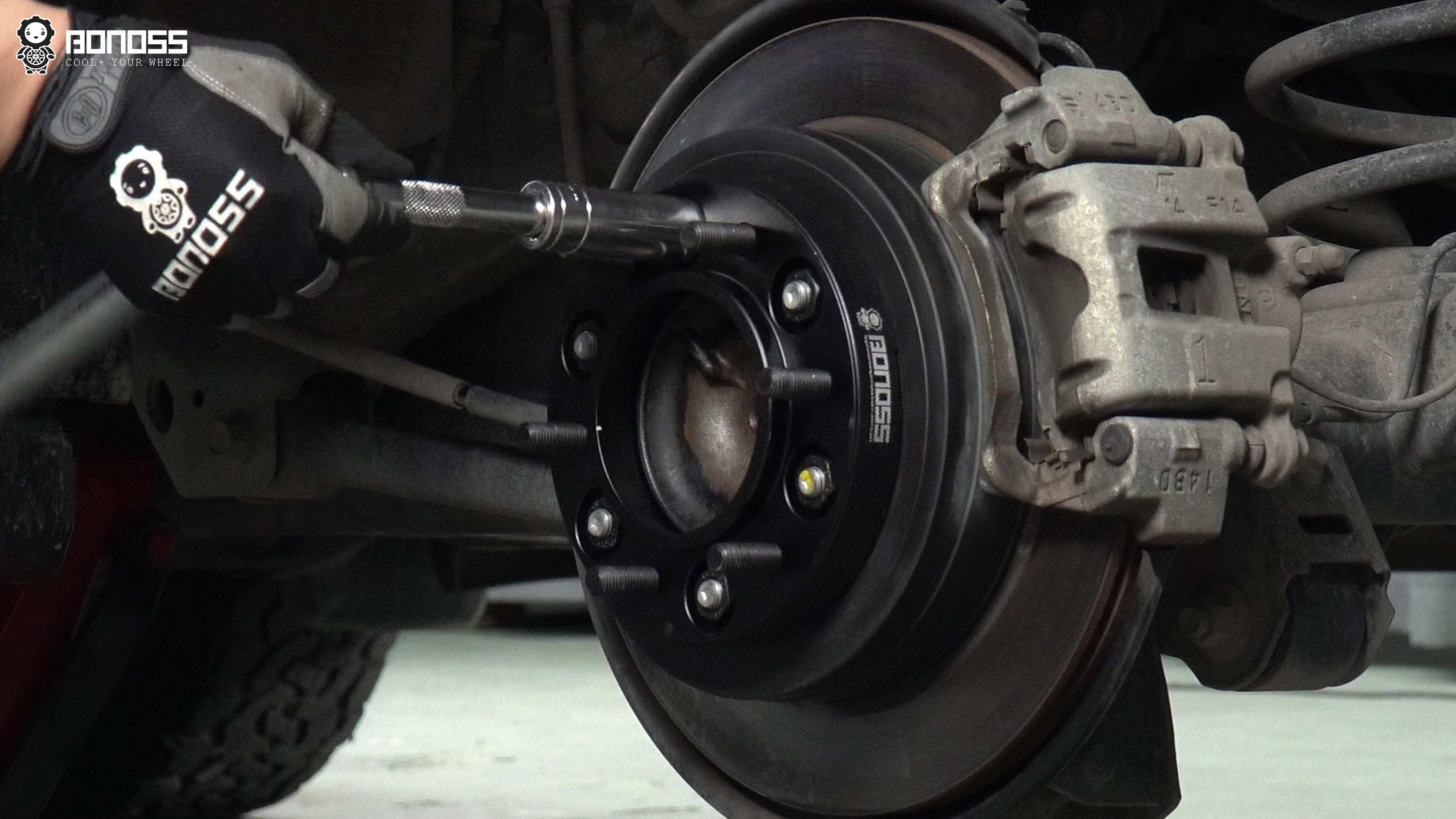
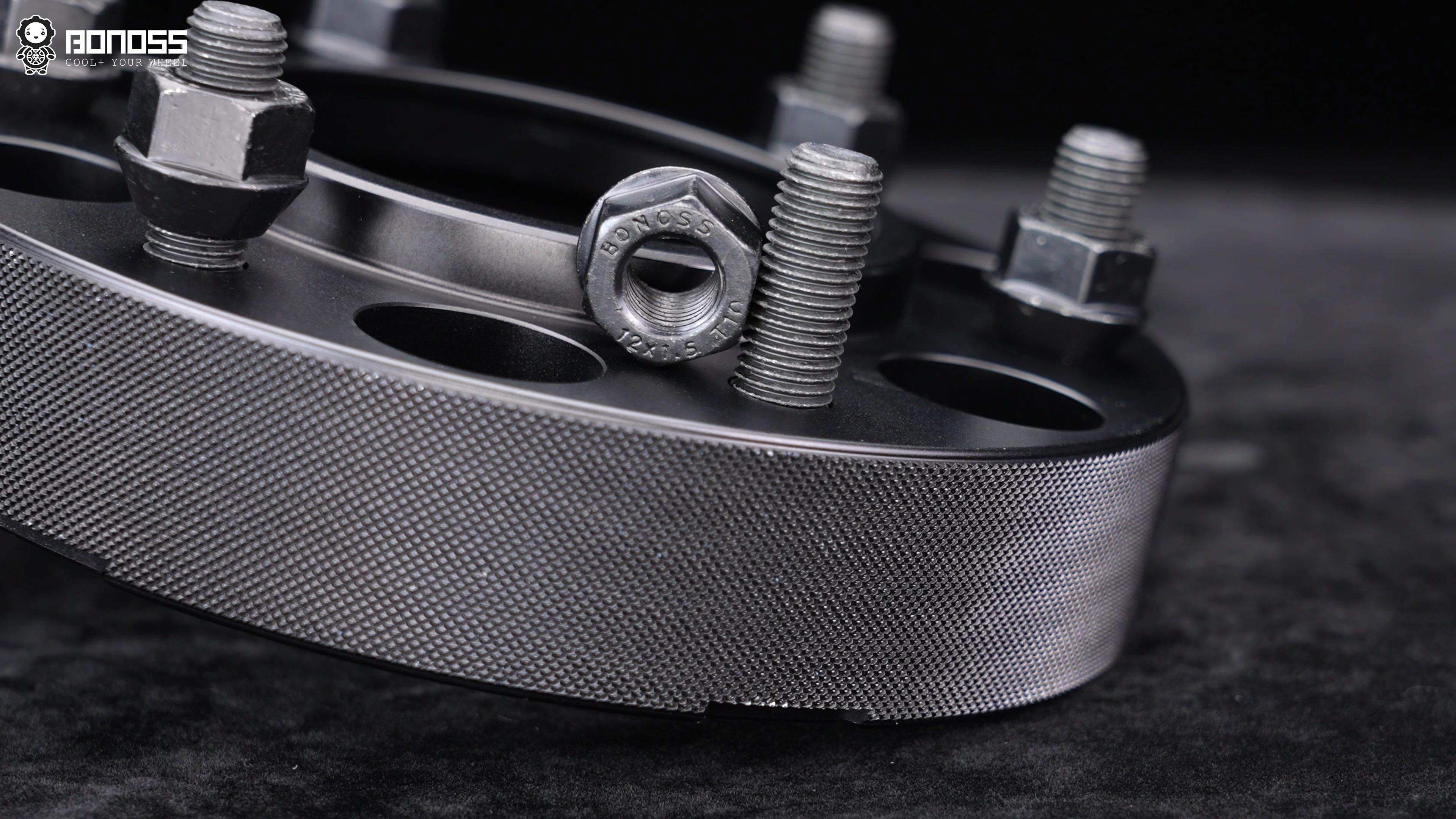
There is an important hardware caveat. The factory 4Runner nuts supplied for this vehicle had a flat contact face, while the aftermarket wheels required a different compatible nut. Thread size alone does not establish compatibility. The nut seat must match the wheel, and the replacement hardware supplier’s instructions take precedence for that aftermarket joint. Reusing a nut merely because it is M12x1.5 would be poor practice.
After installation, fasteners should be inspected and re-torqued according to the applicable BONOSS and wheel-hardware instructions. If no interval is supplied, ask the installer rather than inventing one. Any vibration, loosening, damaged thread, or shifted component requires immediate inspection. For a broader explanation of centering and installation checks, see the 4Runner wheel spacer safety and hub-centric installation guide.
What the BONOSS Design Adds, and What It Does Not Prove
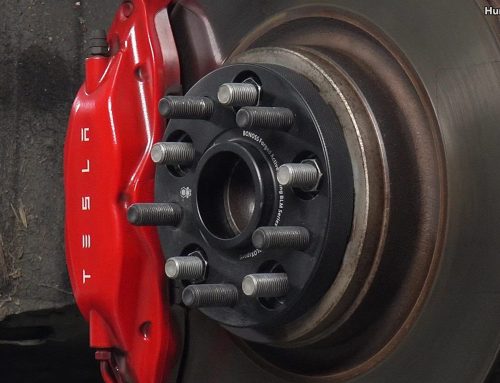
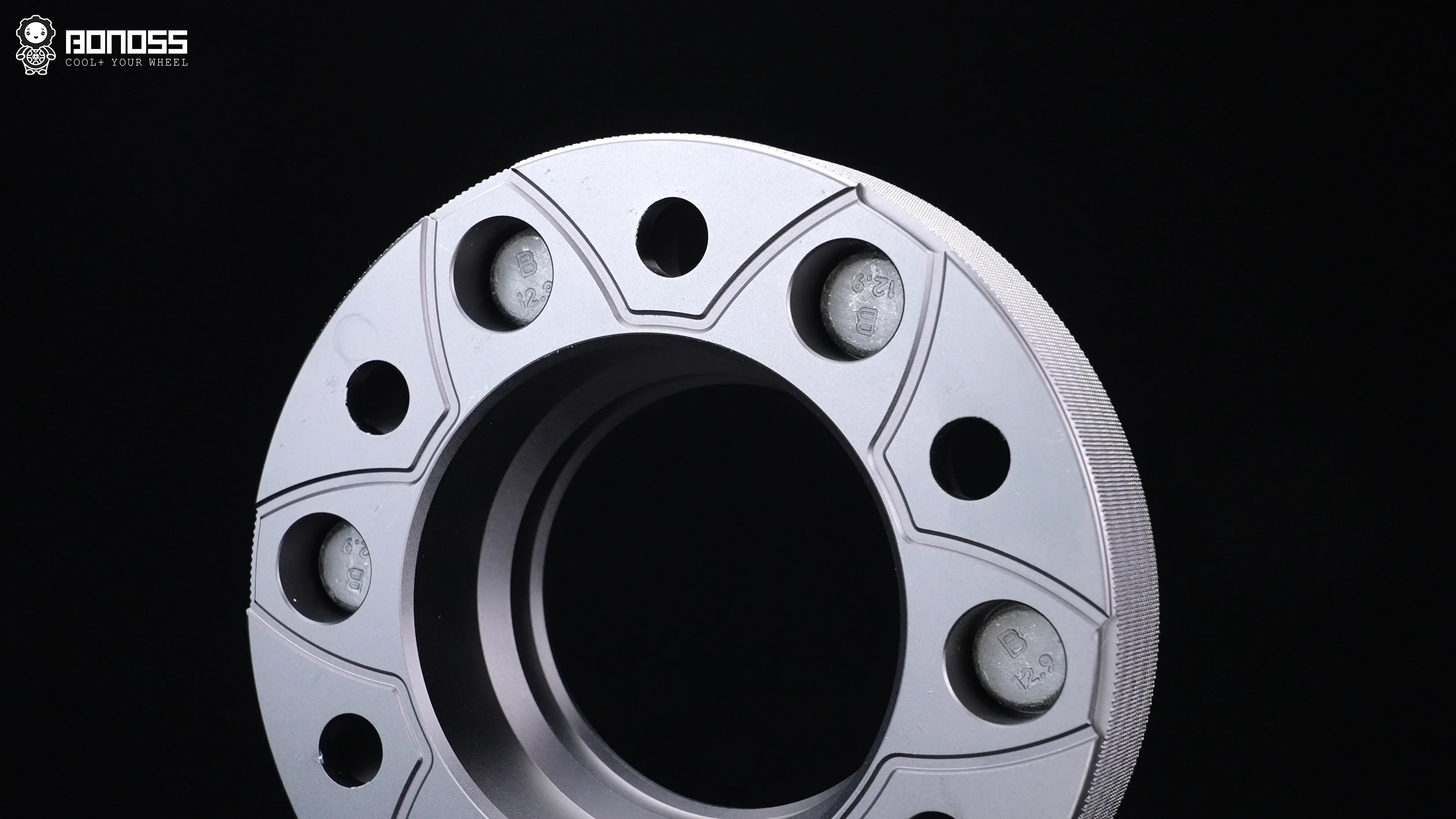
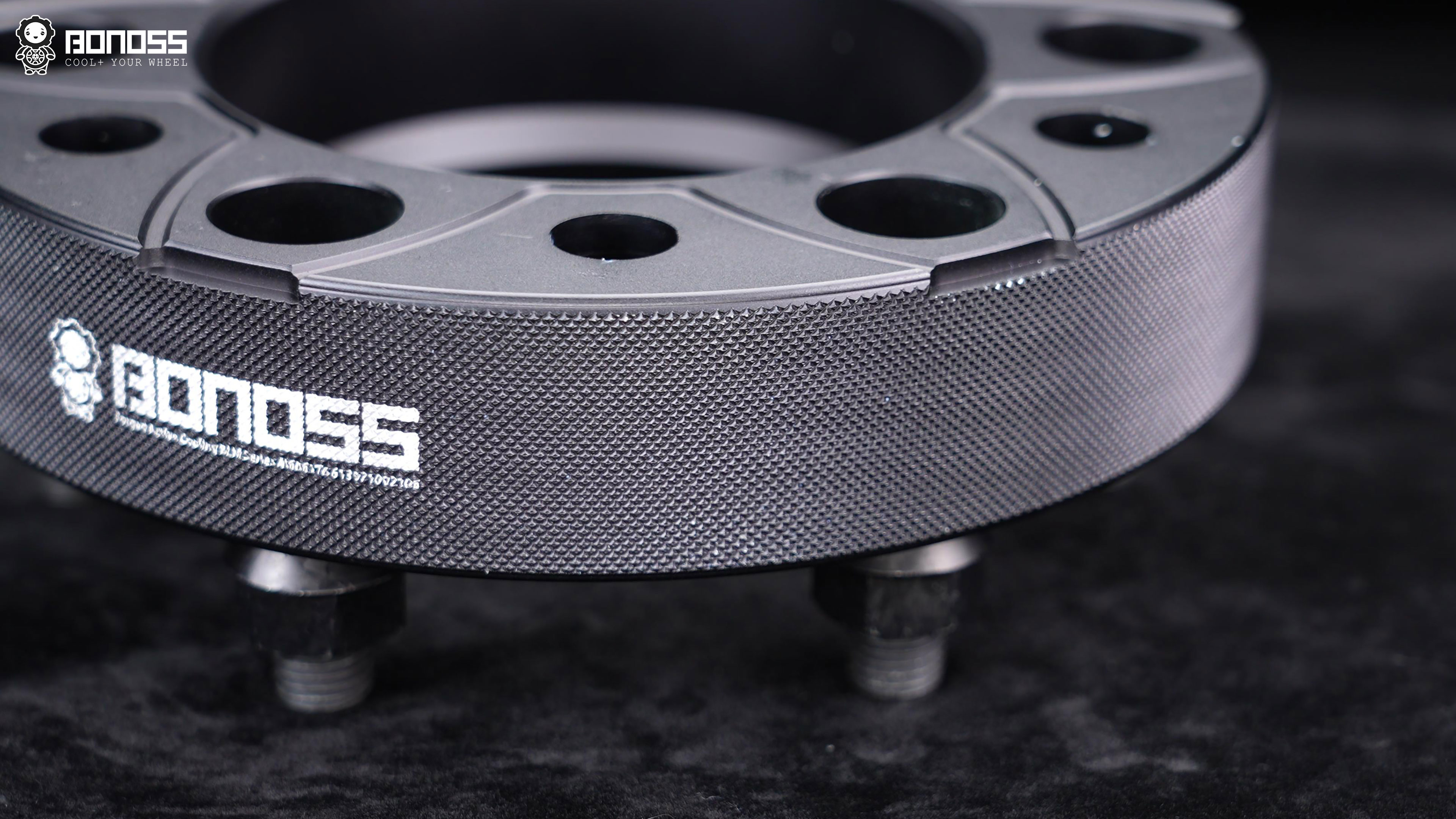
The selected BONOSS forged active cooling wheel spacers use petal-shaped grooves designed to guide air through the spacer as it rotates. Side knurling adds a textured edge treatment and extra surface geometry around the circumference. It does not replace correct hub preparation or torque. The multi-stage hub-centric profile, forged 6061-T6 aluminum construction, supplied ISO Grade 12.9 studs, and ISO Grade 10 nuts are the other relevant product specifications.
Two material-related reports provide narrower, verifiable evidence. The TÜV Test Report for BONOSS 6061-T6 Wheel Spacers Hardness Test, report No: 01 220 CHN-T-2500961+, lists a hardness result of 101-103 using ISO 6506-1:2014. The hardness report page identifies the tested material as aluminum 6061-T6.
The TÜV Test Report for BONOSS 6061-T6 Wheel Spacers Neutral Salt Spray Test, report No: 01 220 CHN-T-2500958-1+, records 240 hours of exposure with no defects under ISO 9227:2022+Amd 1:2024. The neutral salt spray report page provides the corresponding method and result.
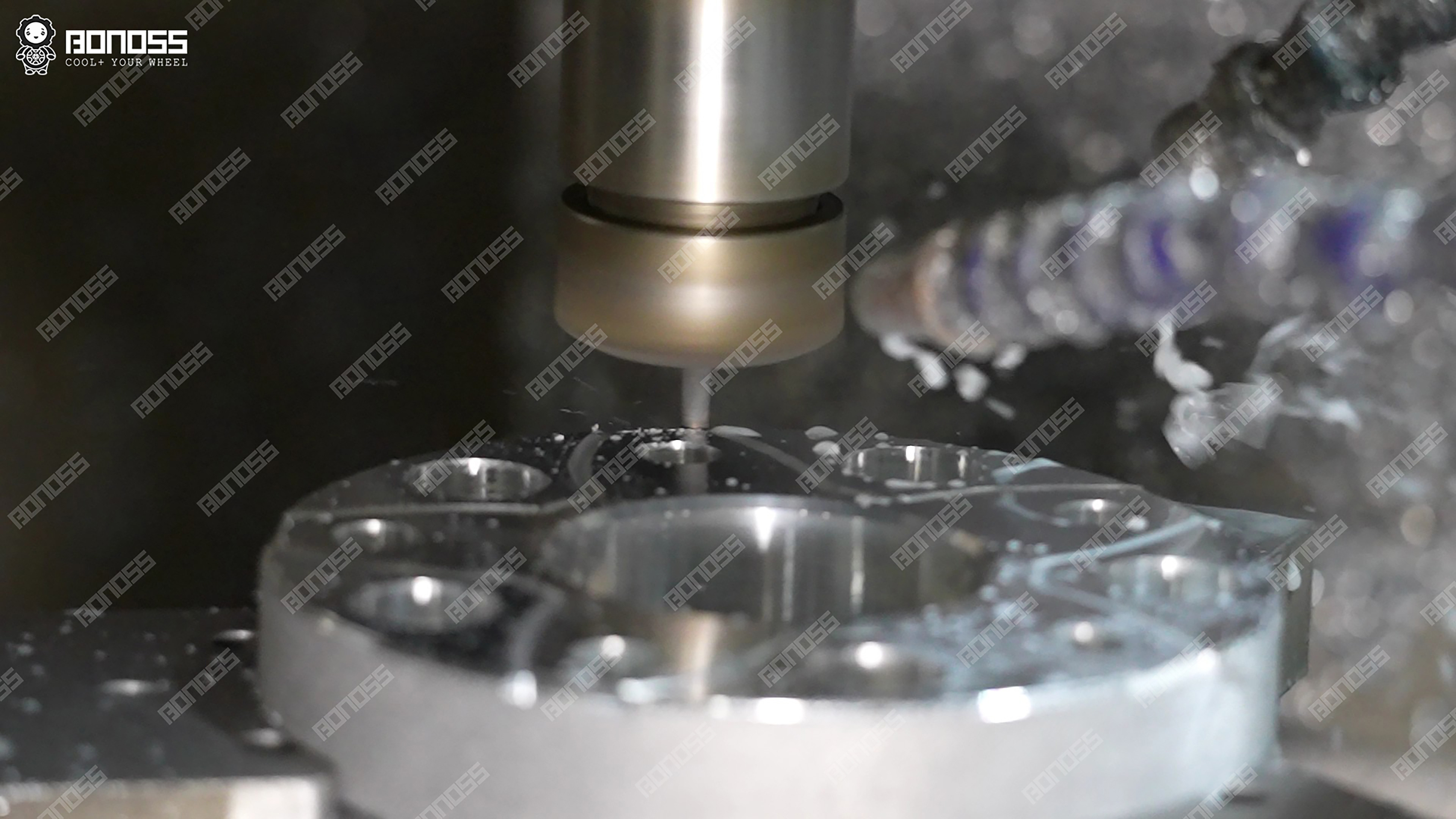
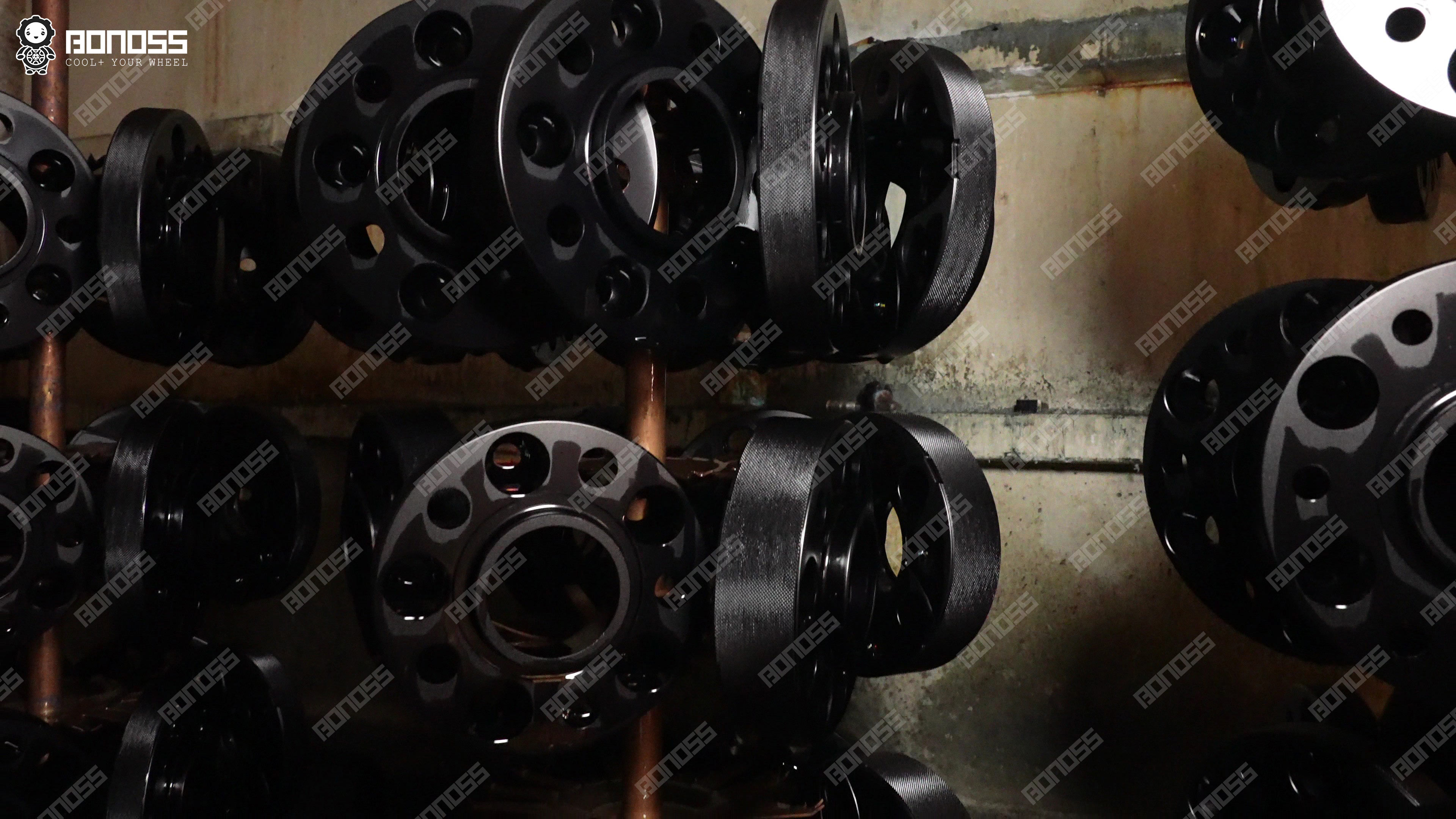
Different laboratories, samples, surface conditions, and measurement uncertainty can produce different readings. Manufacturing images also show process steps, not independent validation of Frank’s individual parts.
The product carries a stated 10-year warranty, but fitment verification and correct installation remain the owner’s and installer’s responsibilities. Warranty duration is not a substitute for either.
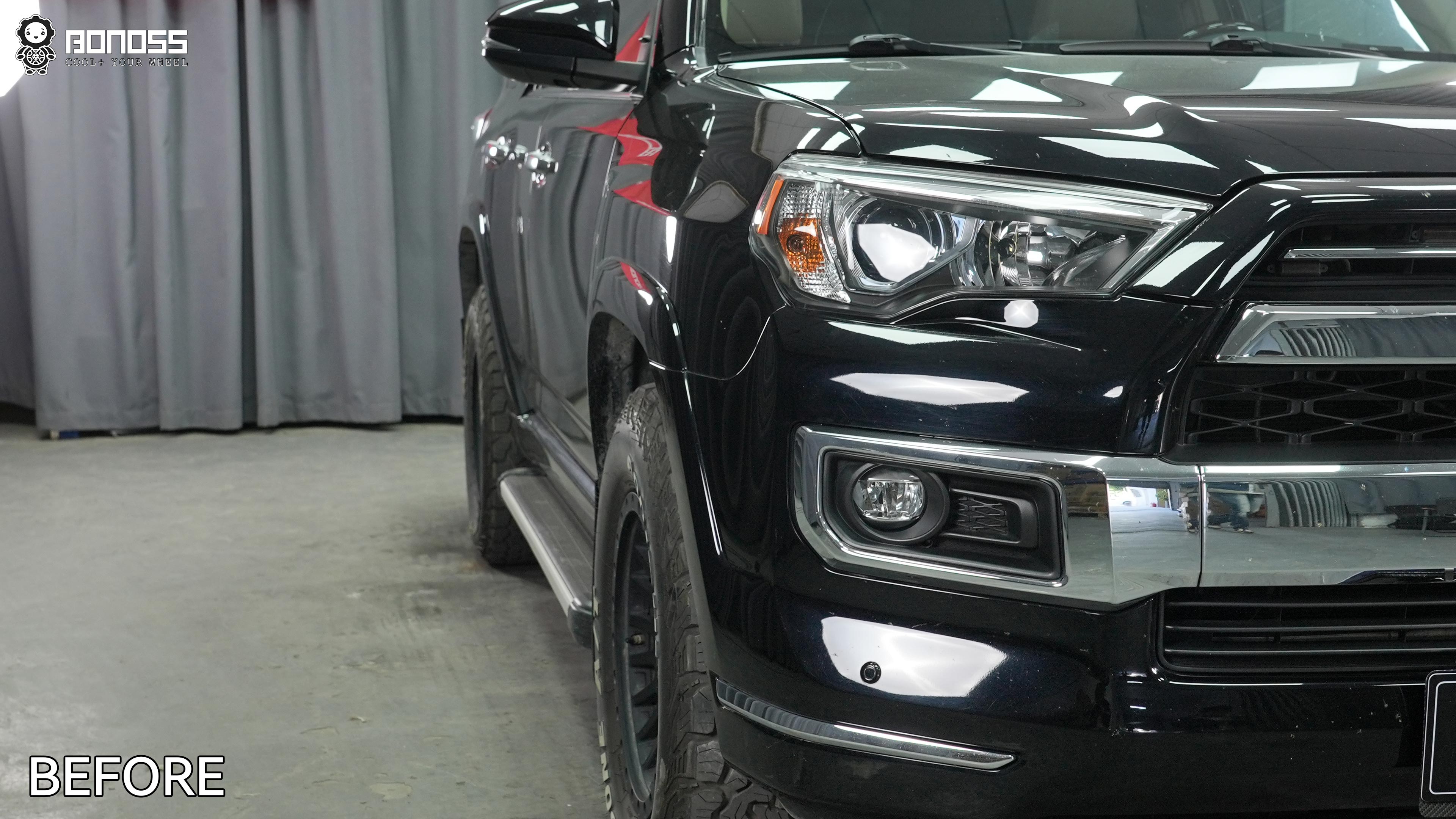
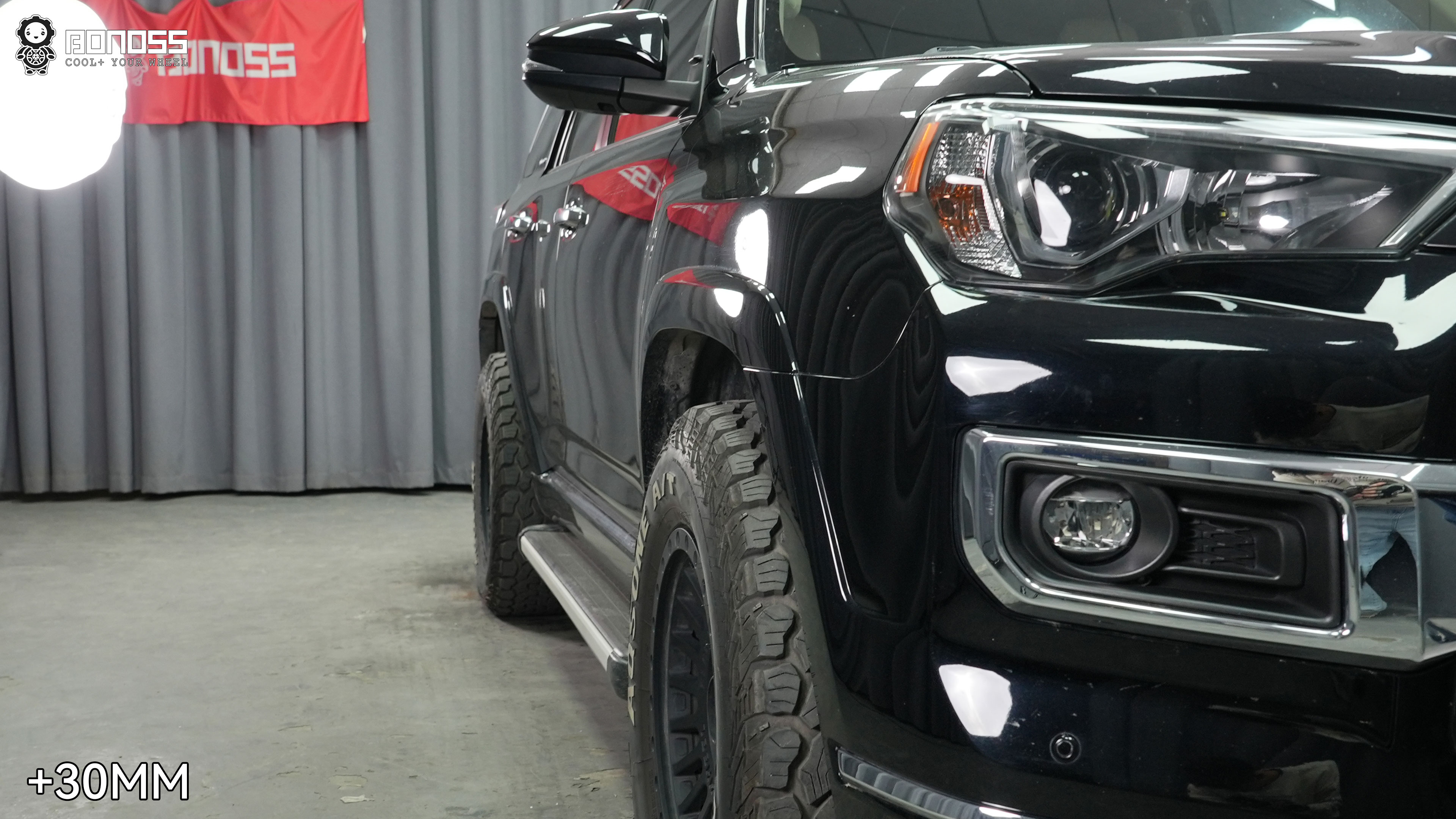
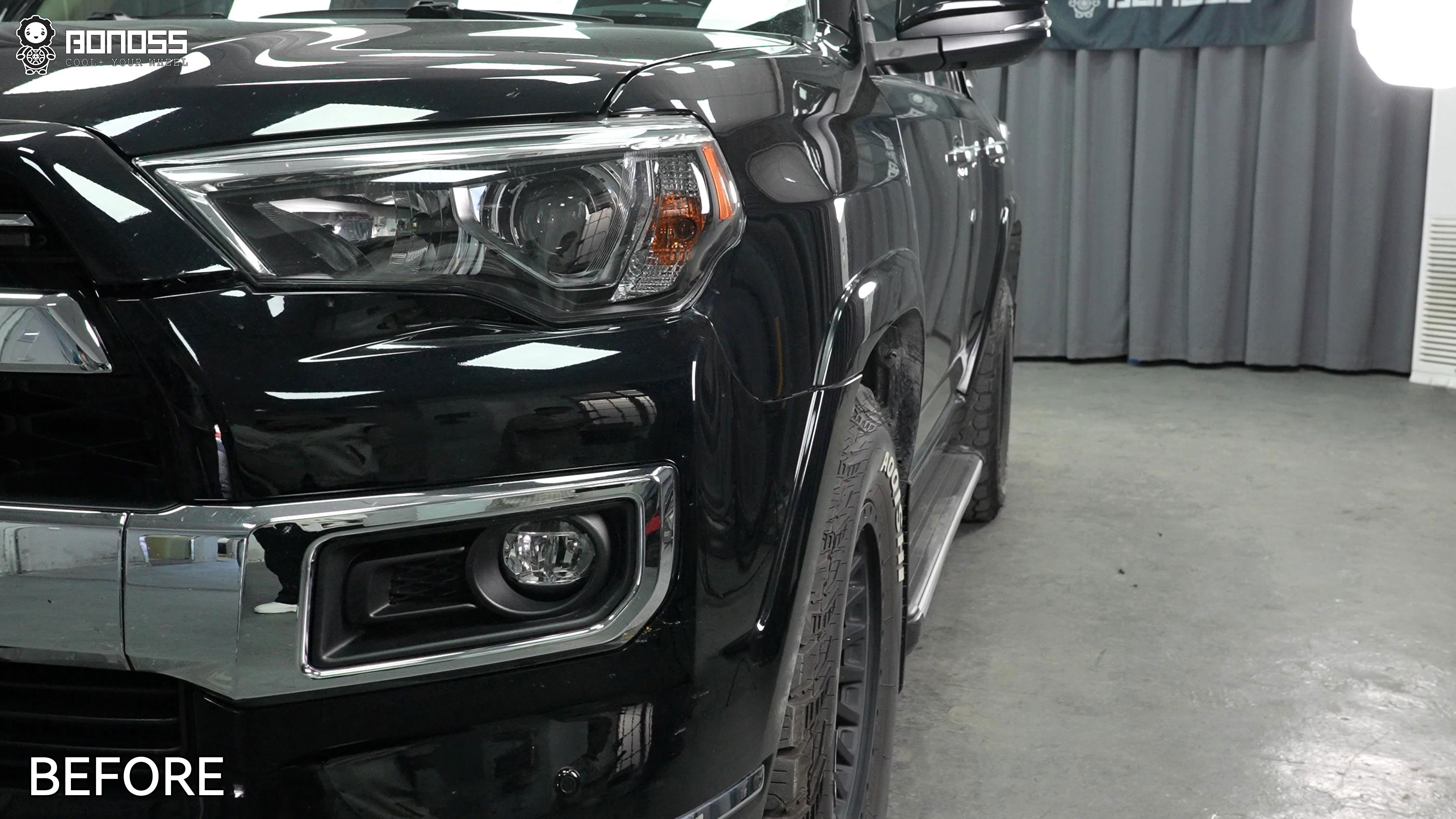
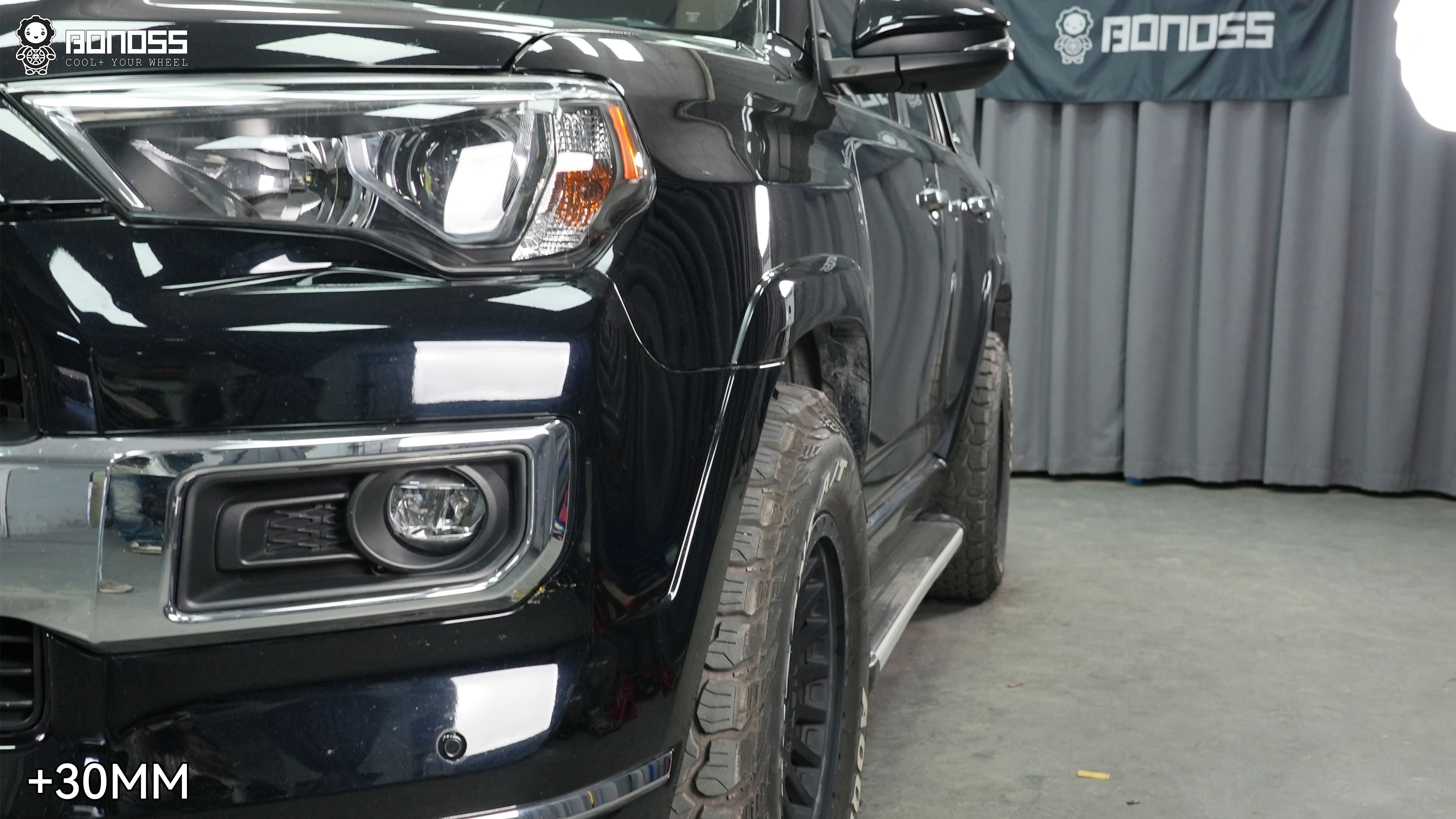
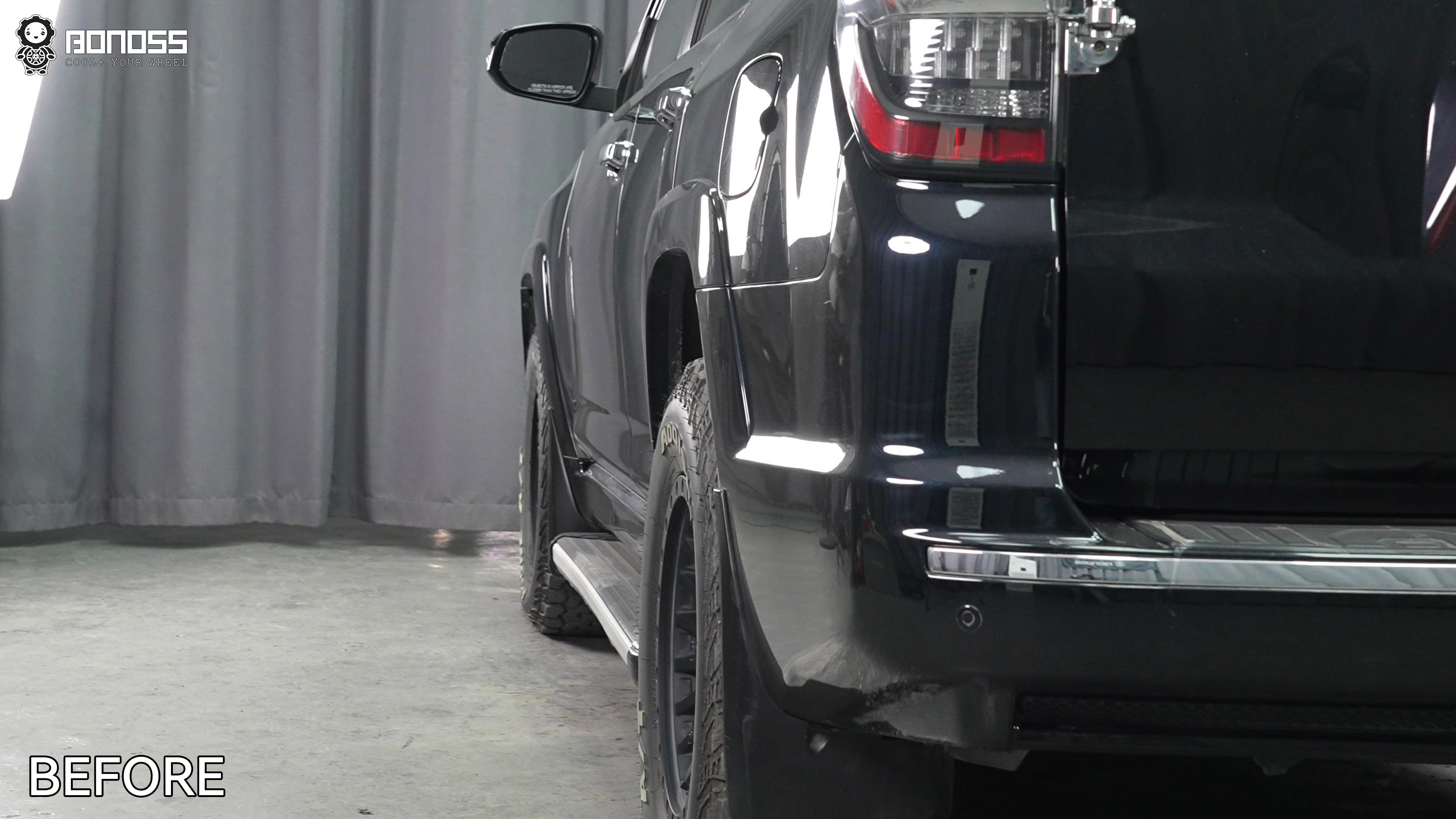
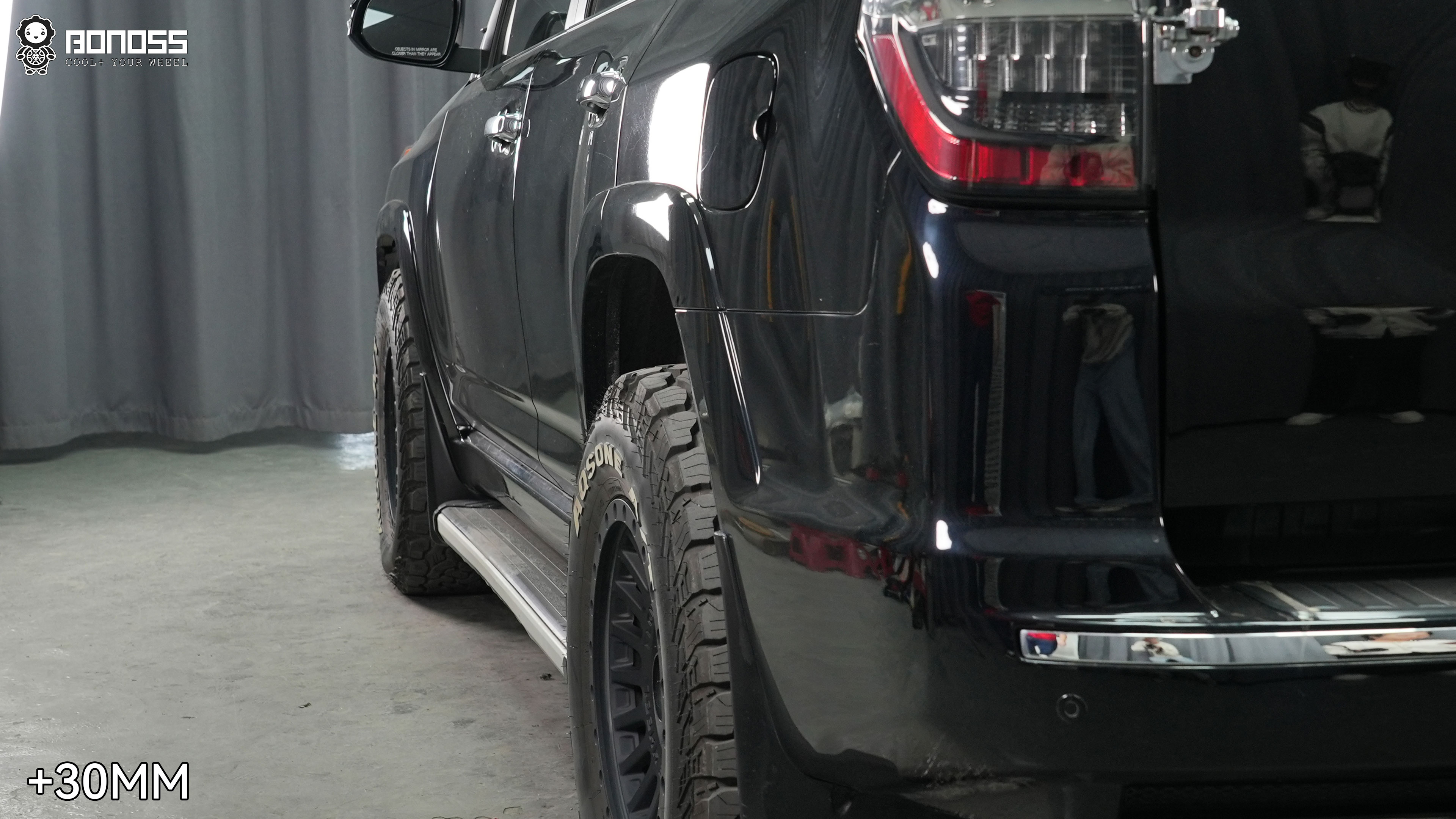
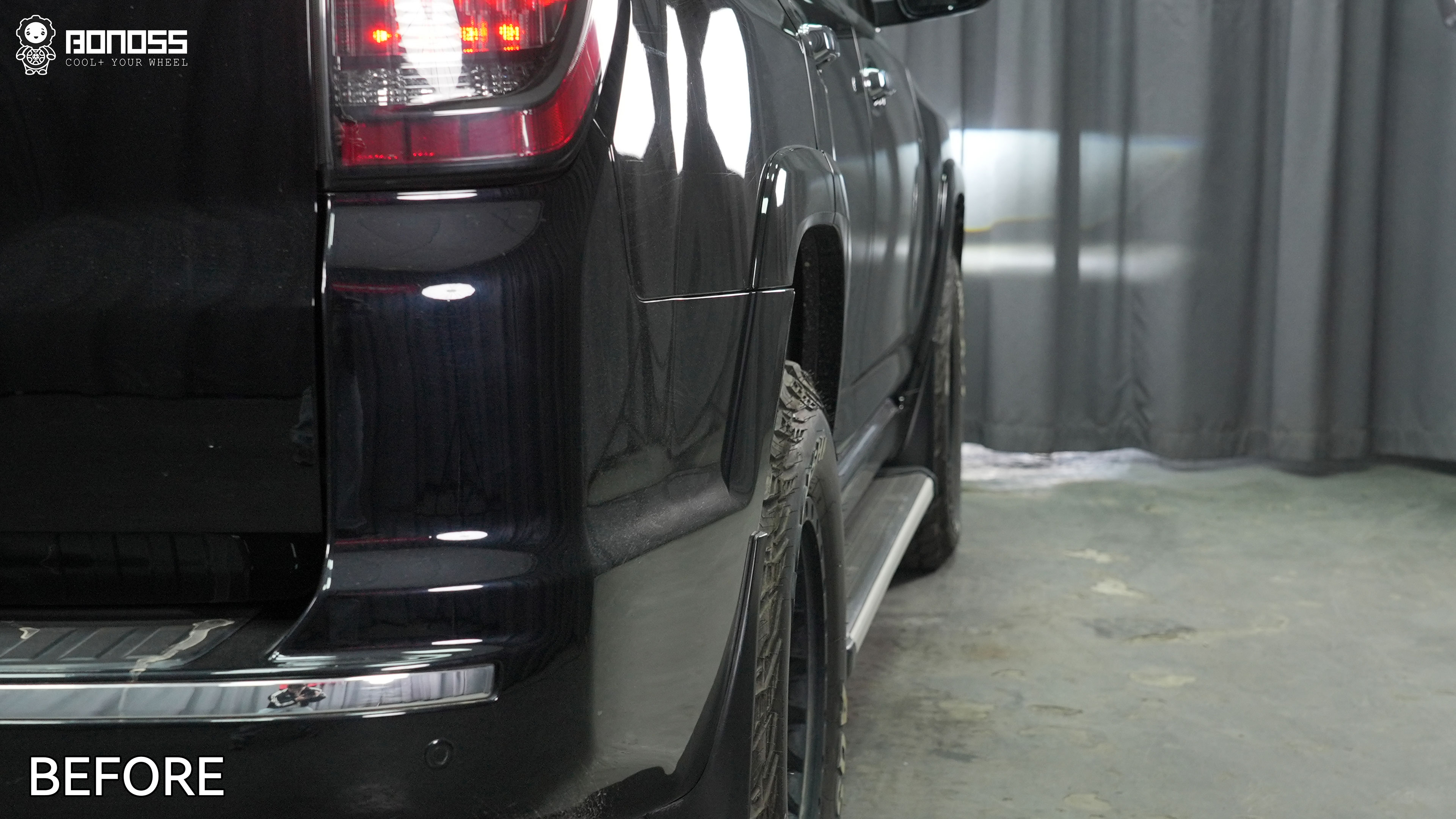
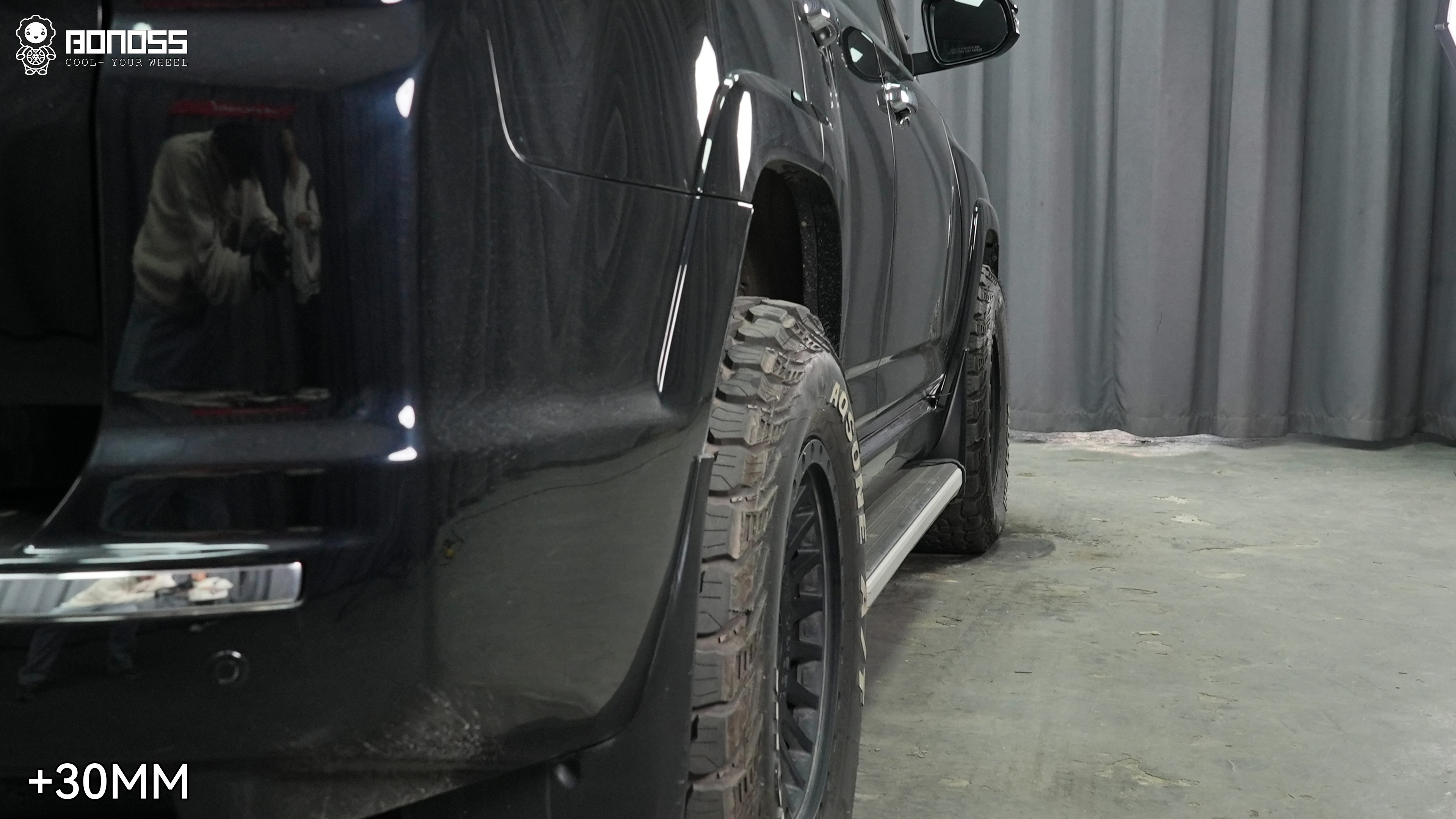
Toyota 4Runner 30mm Spacers Before and After: Four Corners
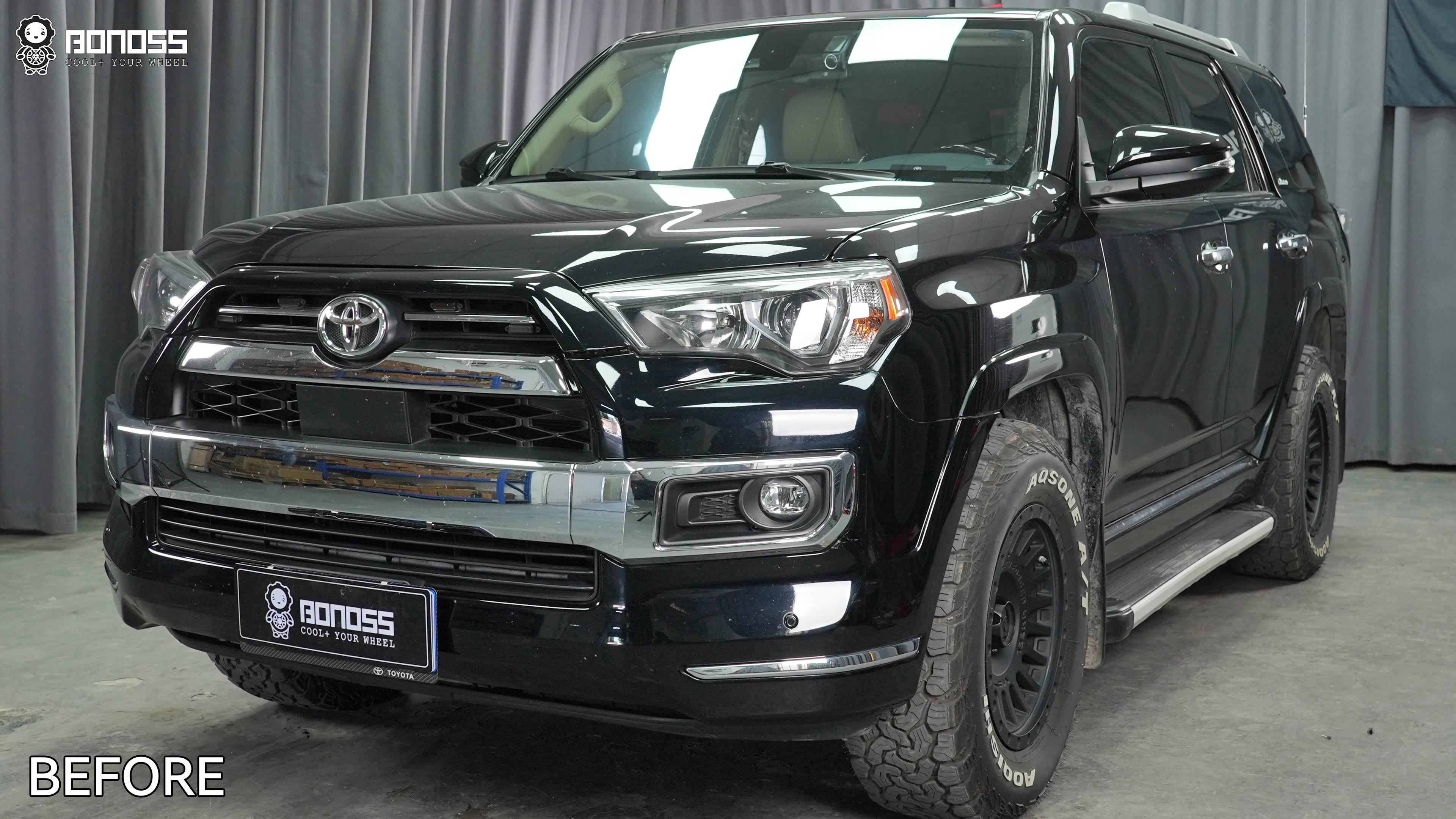
The individual wheel photographs make the offset change easier to judge than a single full-vehicle angle. Camera position and perspective can alter perceived poke, so read the paired views together with the measured 30mm outward movement rather than treating them as scaled drawings.
The 39,847-Mile Owner Review
Frank’s later feedback was direct: “Stance is beast, and it handles smoothly.” He also said there were “no rubbing, no cracks” after roughly 40,000 miles and no problems following a long off-road run through mud and rocks. The recorded follow-up distance was 39,847 miles.
That is the strongest validation in this article because it comes after actual use rather than a driveway photograph. His purchasing experience was similarly practical. BONOSS confirmed fitment, the parts were installed the same day, and he considered the price reasonable. The supplied invoice figures were $313.98 for four 6061-T6 spacers and $25.00 for labor, totaling $338.98.
Frequently Asked Questions
Do 30mm wheel spacers fit a 2021 Toyota 4Runner?
They fit Frank’s N280 after PCD, hub geometry, stud projection, wheel pockets, nut seats, and final clearance were checked, but thickness alone cannot confirm another vehicle. His setup used 6×139.7mm wheels and spacers, M12x1.5 hardware, ET 0 wheels, and AT tires. Reproduce the measurement process rather than copying only the 30mm number.
Do I need to trim my studs for 30mm spacers on a 4Runner?
Frank did not need trimming with 30mm spacers because his measured 22mm front and 27mm rear stud projections stayed below the spacer faces. With 25mm rear spacers, the studs projected about 2mm and his 1.02mm pockets were insufficient. Measure your own studs and inspect pocket depth and position before deciding.
What bolt pattern does a 2021 Toyota 4Runner use?
This case uses a 6×139.7mm bolt pattern with M12x1.5 threads and a listed 106.1mm hub-bore specification. PCD compatibility alone is not enough; centering geometry, fastener seats, brake clearance, and the actual wheel must also match.
What torque should I use for 4Runner wheel spacers?
Use 113 Nm (83.3 ft-lb) for the spacer-to-hub joint with supplied BONOSS nuts per BONOSS instructions, and 103 Nm (76 ft-lb) only for a compatible OEM aluminum-wheel nut joint per the owner’s manual. Frank’s aftermarket wheels required different compatible nuts, so their manufacturer’s specification must be confirmed rather than assumed.
Will 30mm spacers rub on a 2021 4Runner?
Frank reported no rubbing after 39,847 miles with his ET 0 wheels and AT tires, but that does not establish clearance for every tire and suspension combination. Check the full steering range and suspension movement on the specific vehicle. Tire width, diameter, tread shape, alignment, and ride height can all change the result.
Are 30mm wheel spacers safe on a 4Runner?
They can be when the components match and both joints are installed correctly, but Frank’s trouble-free mileage does not make every 30mm setup safe by default. His installation prioritized clean hub contact, hub-centric fitment, compatible nuts, and controlled torque. Do it right, using wheel spacers are safe.
Final Verdict and Fitment Check
The success of these 2021 Toyota 4Runner 30mm wheel spacers came from correcting two separate problems: mechanical clearance and visual balance. The 25mm rear option failed Frank’s wheel-pocket check, while 30mm kept his measured studs below the spacer surface without trimming. Moving the front to 30mm then delivered the consistent stance he wanted, followed by 39,847 miles of positive owner-reported use.
If you are comparing Toyota 4Runner 30mm spacers for sale, bring four measurements to the conversation: fender gap, wheel offset, stud projection, and wheel-pocket depth. Add the hub dimensions and nut-seat type before ordering. For a vehicle-specific starting point, view the BONOSS forged active cooling 30mm spacers for Toyota 4Runner, then confirm your actual measurements with the fitment team. If your current setup rubs, vibrates, or has a stud-clearance concern, submit that symptom with photographs so the recommendation addresses the real problem.

About Daisy Harris
Daisy Harris has worked for 6 years at BONOSS as an automotive technician, installing and testing wheel spacers, wheel nuts, and wheel bolts. She has personally installed and verified more than 200 wheel-spacer setups across sport sedans, SUVs, and EVs. Her installation guides and reviews are built on real installs, measured clearances, and long-term wear notes — not on spec sheets.