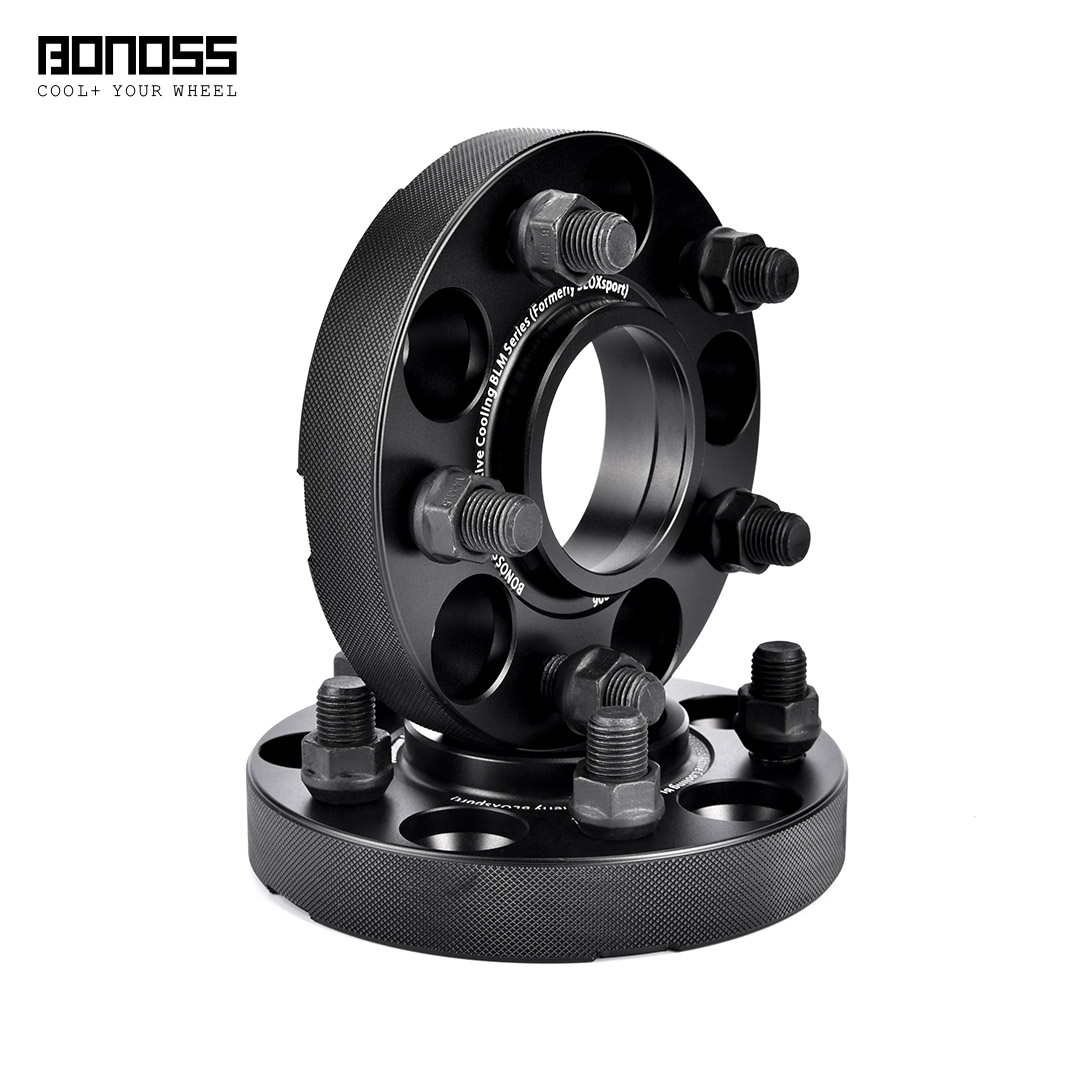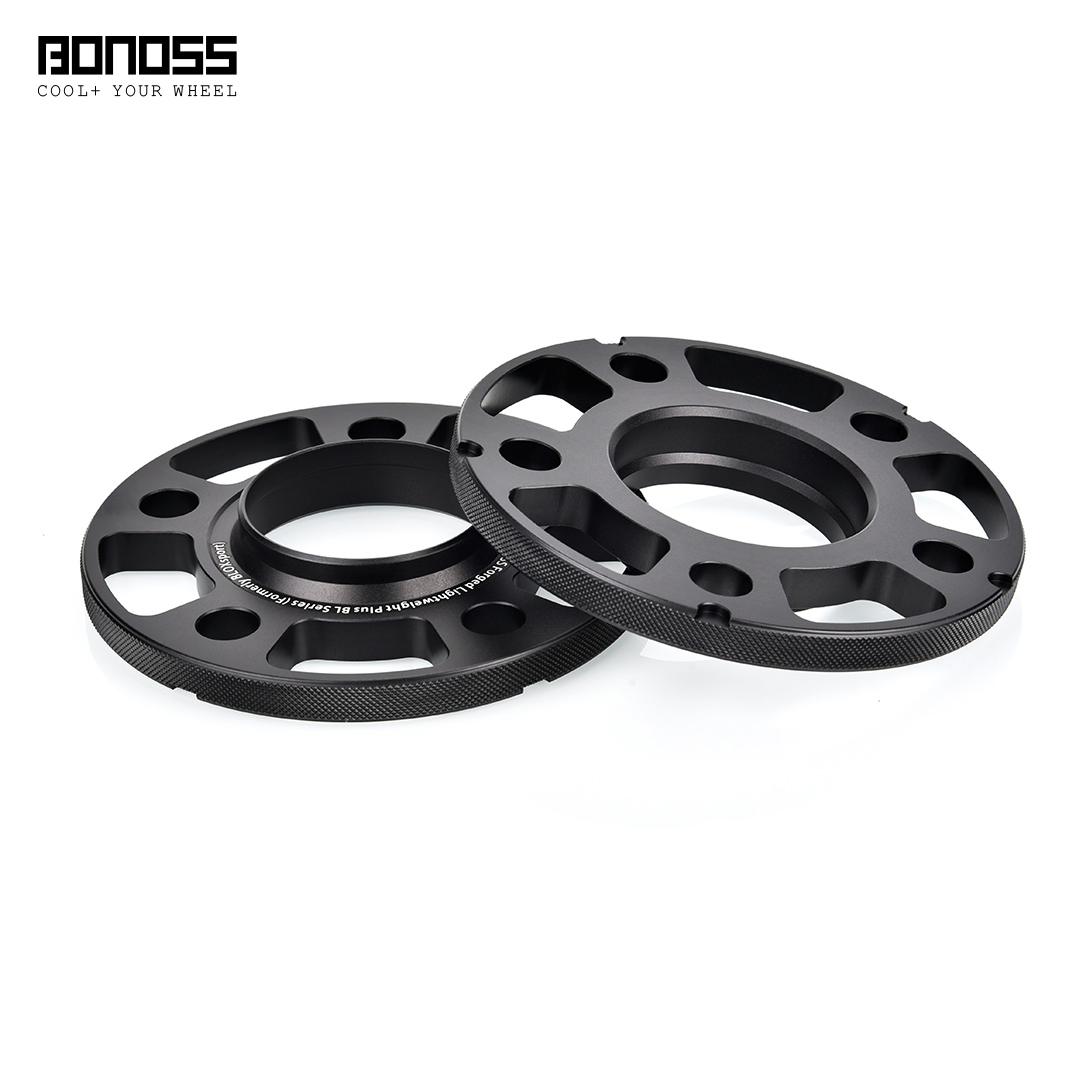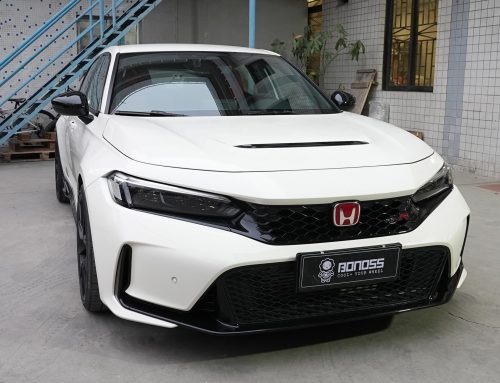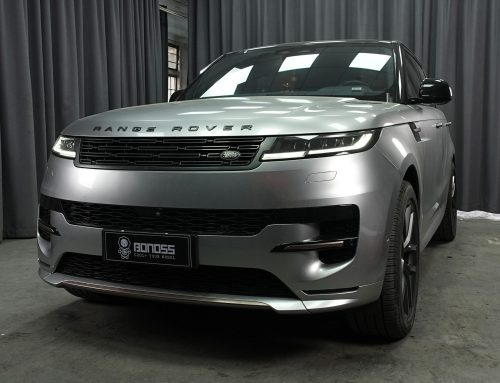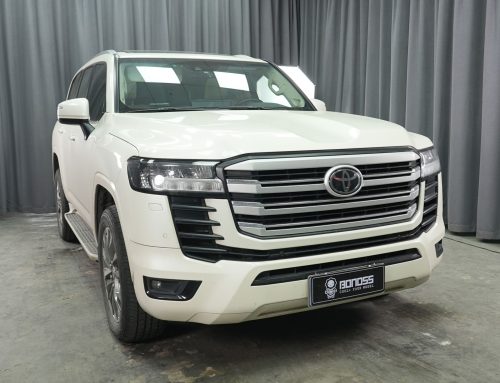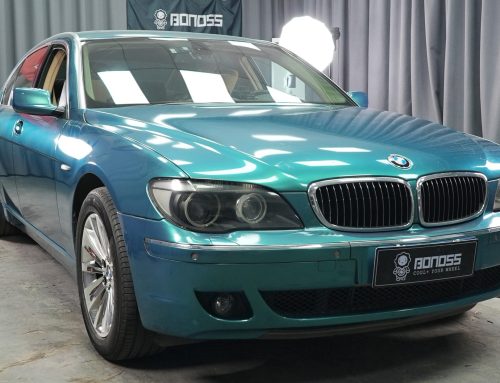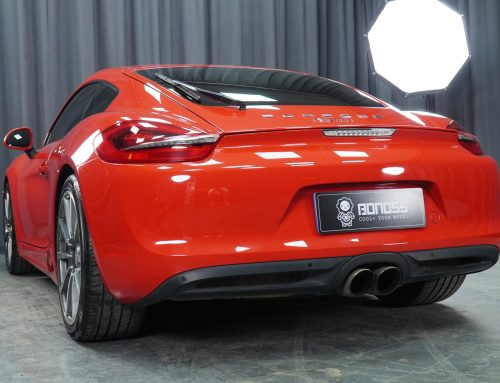
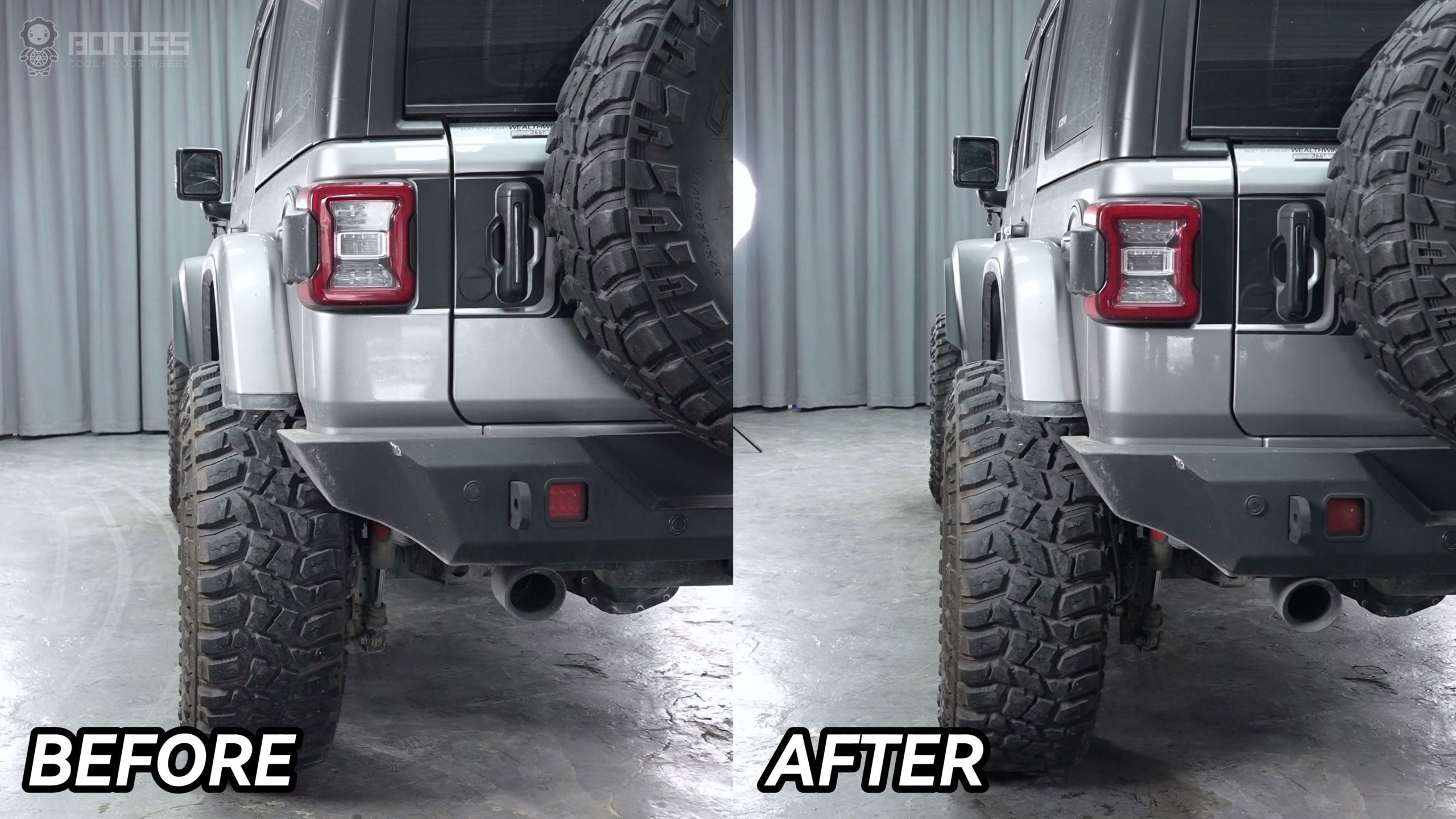
Installing proper Jeep Wrangler spacers on the front and back wheels allows you to make the vehicle look sporty and aggressive. Besides, wheel spacers increase the track width hence improving stability. The contact points with the ground stand wider apart, increasing roll resistance. You will experience better handling of the curve.
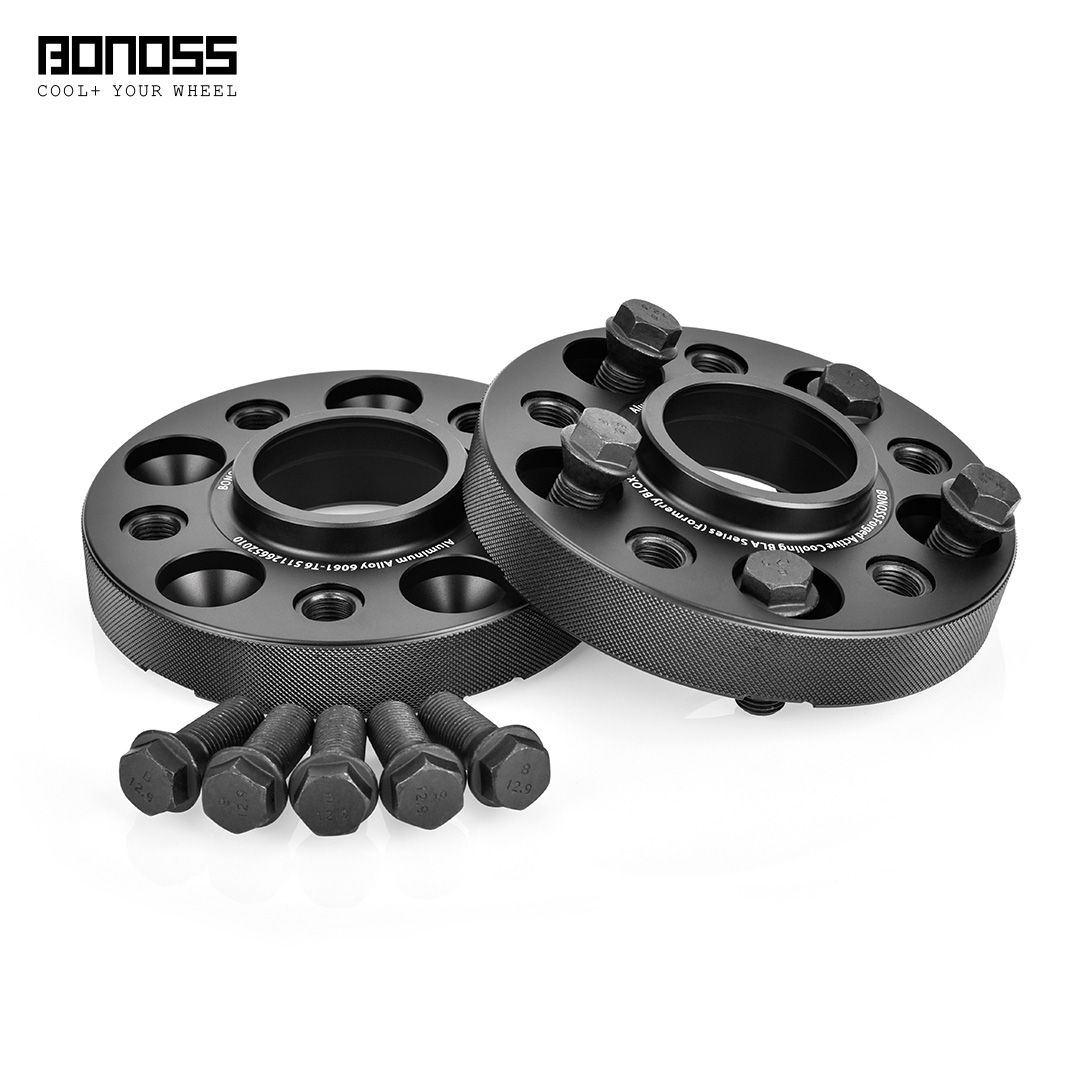
There are different wheel spacers: bolt-on types and slip-on types. The bolt-on types come with wheel studs. They are bolted to the vehicle hubs and following the wheels are secured on the spacers with stock lug nuts. This allows you to achieve a full thread engagement without changing the stock studs. In this article, our expert provides pro tips of safely install Jeep Wrangler bolt-on spacers.
How to Install Jeep Wrangler Spacers Safely?
If you have basic mechanical proficiency, you can install wheel spacers on a Jeep Wrangler yourself and save money. It is not difficult and some experienced people can complete it within an hour.
- Park the vehicle on level ground. Turn off the engine, and pull up the handbrake. Make sure that the surrounding environment of the vehicle is safe and free from interference;
- Loosen the lug nuts with a lug wrench in a star pattern (a special socket will be needed if you are using locking lug nuts);
- Use a jack to lift the vehicle, and keep the tires 20mm away from the ground. Place a tripod on the bottom of the vehicle to ensure safety;
- Remove the lug nuts and the wheels. It is a good chance to clean the axle hub. Use rust remover and sandpaper and other tools to clean the rust, debris;
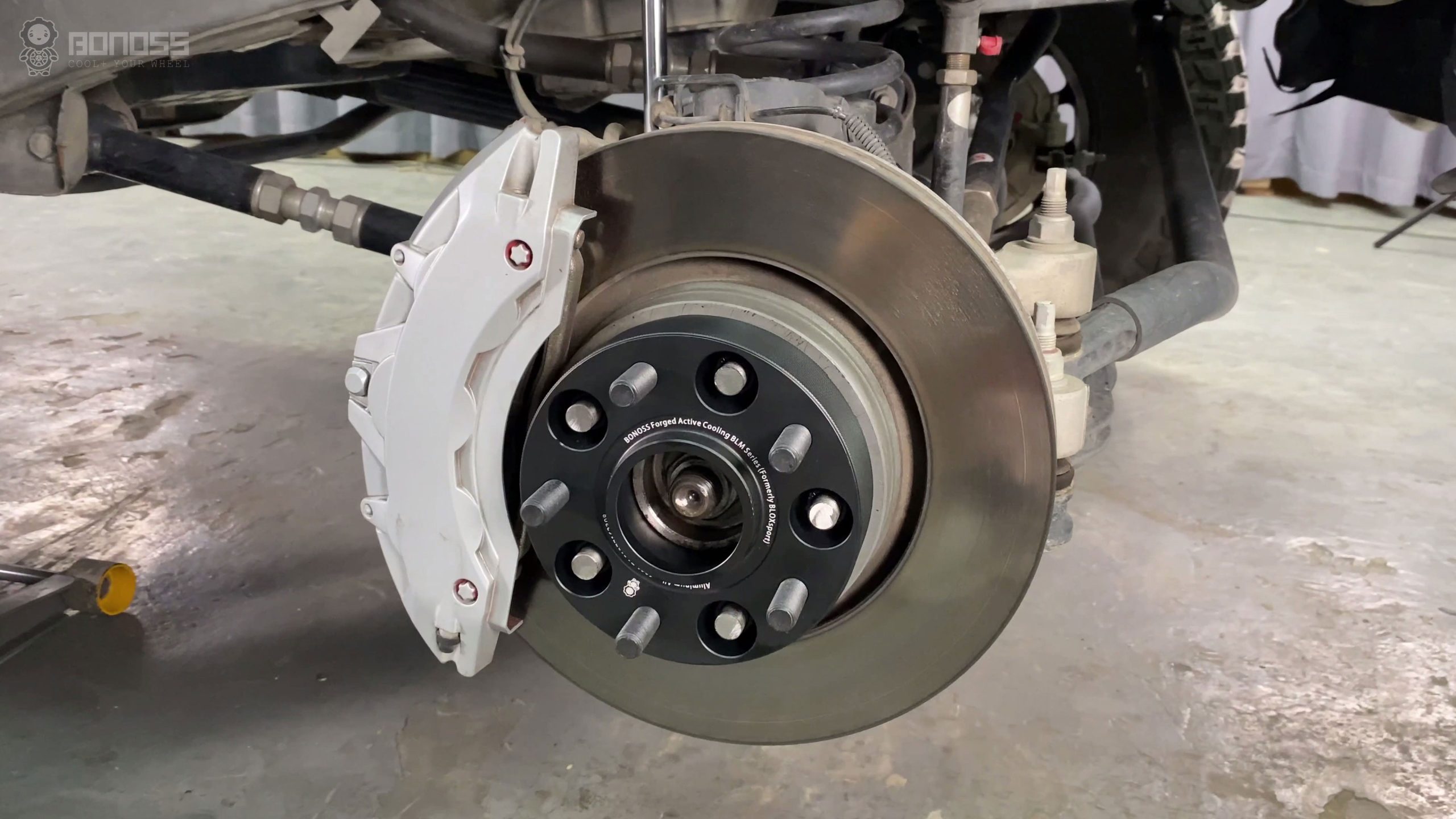
- Align the bolt holes of the wheel spacers with the protruding vehicle studs and then carefully slip the spacers onto the hub assembly;
- Fastening the spacer to the vehicle studs with provided lug nuts. Similarly, use a torque wrench to tighten each lug nut in a star pattern. (The proper torque refers to the owner’s manual);
- Remount the wheel on the spacer (the wheel lug holes pass through the new studs). Use stock lug nuts the secure the wheel. In the same way, torque every lug nut with a torque wrench).
Where to Buy the Best Jeep Wrangler Spacers?
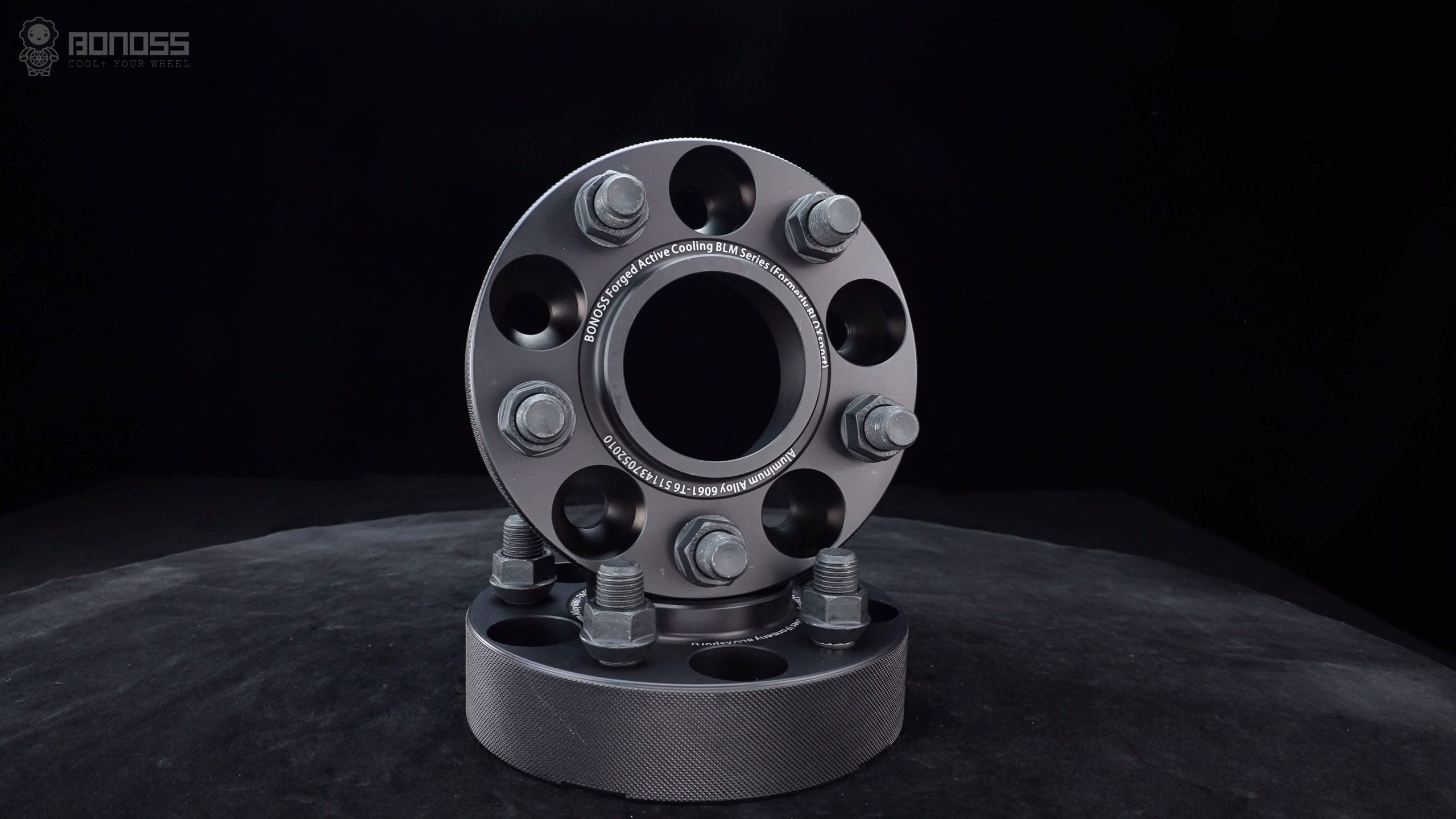
Brand manufacturers focus on quality and performance. Before leaving the factory, BONOSS’s tech staff will do a series of inspections on the finished Jeep Wrangler aluminum spacers to check for any defects. They measure the individual aspects of the spacers to make sure that they meet the design specifications. BONOSS offers several key advantages that make their spacers a top choice.
1. Active Cooling for Better Experience
BONOSS forged active cooling Jeep Wrangler spacers are machined with heat dissipation grooves. Distributed in petal shape, these heat dissipation grooves allow the external cold air to flow continuously inside the wheel spacer when it rotates. The air takes away the heat to actively dissipate heat for the braking system.
2. Forged Aluminum with Hard Anodized
BONOSS forged active cooling Jeep Wrangler spacers are made of 6061-T6/ 7075-T6 aluminum alloy. These aluminum alloy rim spacers are protected by naturally occurring oxide film and have incredible corrosion resistance. What’s better is that BONOSS applies a special black hard anodized surface treatment. This ensures a surface of unparalleled corrosion resistance.
3. Strong Fasteners for Enhanced Stability
To ensure safety, BONOSS provides ISO grade 12.9 wheel studs. These lug studs will undergo a series of safety tests before leaving the factory. The results of those performance tests are great: tensile strength≥1,220 MPa, proof load≥121,000 N. They are all approved by over 75 SGS and TÜV authoritative certification reports.
Final Summary: Elevate Your Wheel Style with BONOSS
With attention to innovative engineering and a relentless pursuit of quality manufacturing, BONOSS forged active cooling Jeep Wrangler spacers surely give you the perfect wheel style and fitment along with confidence for years of rugged use. Choose BONOSS and experience the difference—engineered for those who demand the best.
(Hi, I’m Kevin Brian, an experienced mechanical engineer. All articles, images, and videos are human-produced to ensure the best user experience. They are not generated by Artificial Intelligence (AI) Models or tools.)