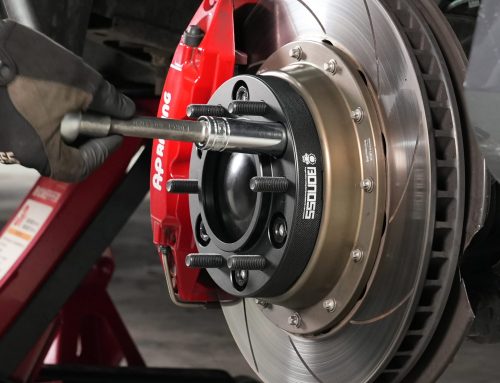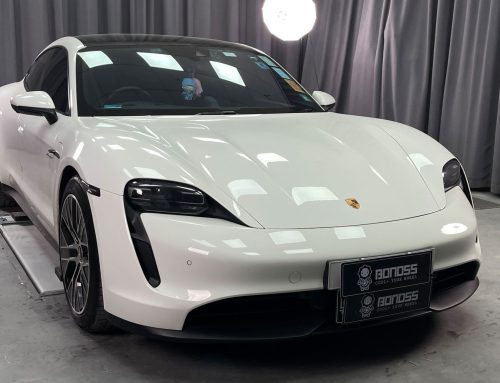
Some cars walk into the shop and make you think. Others just need spacers and a coffee. Mr. Francis’s 2005 BMW 7 Series (E65) fell somewhere in the middle — a twenty-year-old sedan with chrome-plated factory wheels, an owner who wanted a flush stance, and just enough quirks to keep us honest.
On September 14, 2024, he rolled into the BONOSS facility. What follows is the full story: every measurement we took, every problem we hit, and what the car looked and drove like after we were done. No theory. No “in theory, spacers should…” Just the actual numbers, the actual fixes, and the actual two-year follow-up.
The Car and the Guy
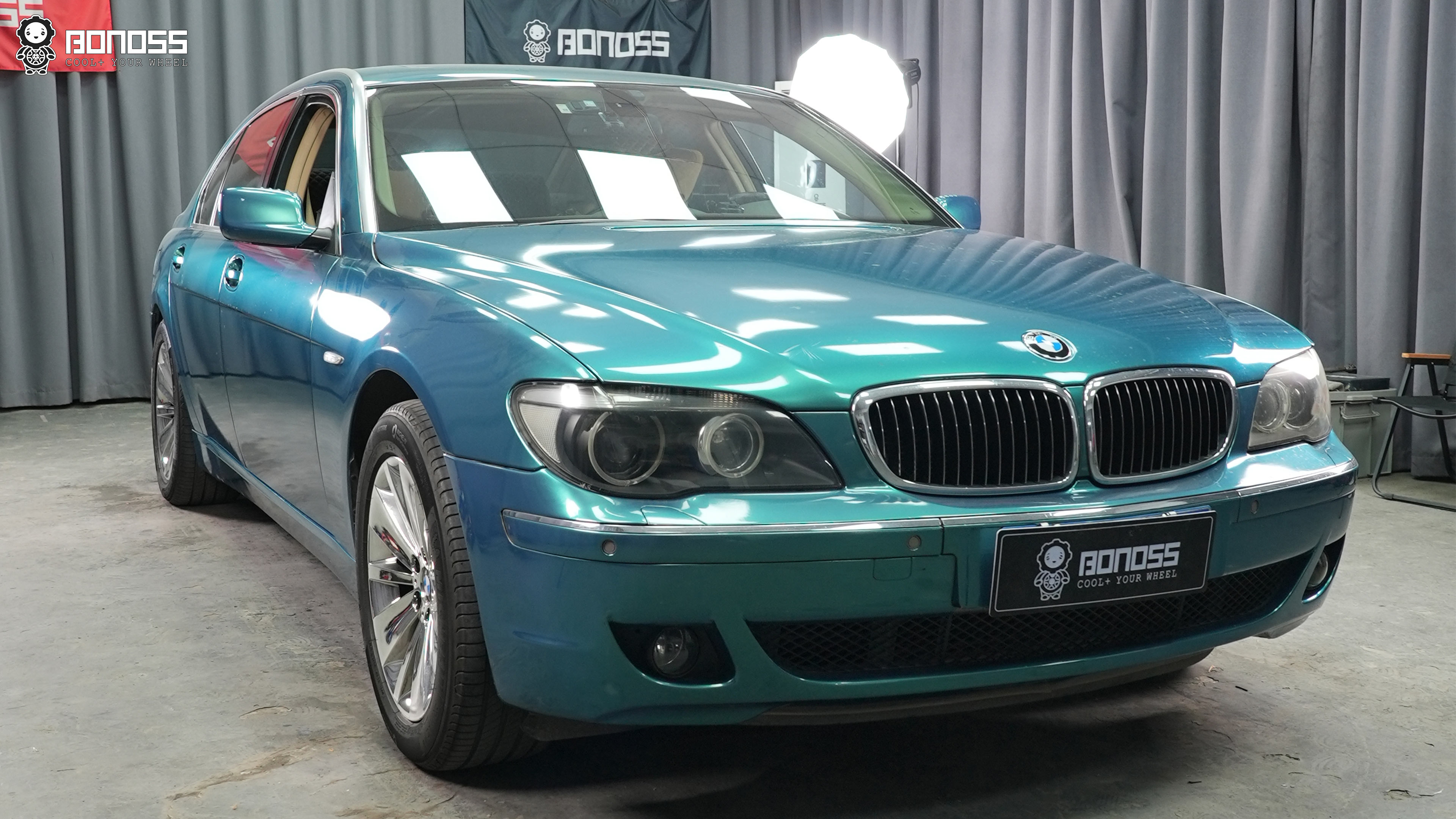
Mr. Francis drives a 2005 BMW 7 Series (E65) — the big sedan, the one that used to go toe-to-toe with the S-Class. His car sits on factory 18-inch wheels wearing 245/50R18 tires at an ET of +24mm. The wheels are original BMW units; he’d had them chrome-plated, which honestly looks sharp on an E65 when the light hits right.
He’d been chasing the flush stance look — the one where the tires sit almost dead-even with the fender edge instead of tucked two inches inside. If you’ve spent any time on car forums or YouTube, you know the look. It’s not about being aggressive or slammed. It’s about the wheels actually filling the arches the way the designers probably intended before the accountants got involved.
“Found BONOSS while looking for wheel spacers. Luckily, they were able to set me up with the right spacers for my old E65. After seeing how the flush stance looked, I ordered right away—no hesitation.”
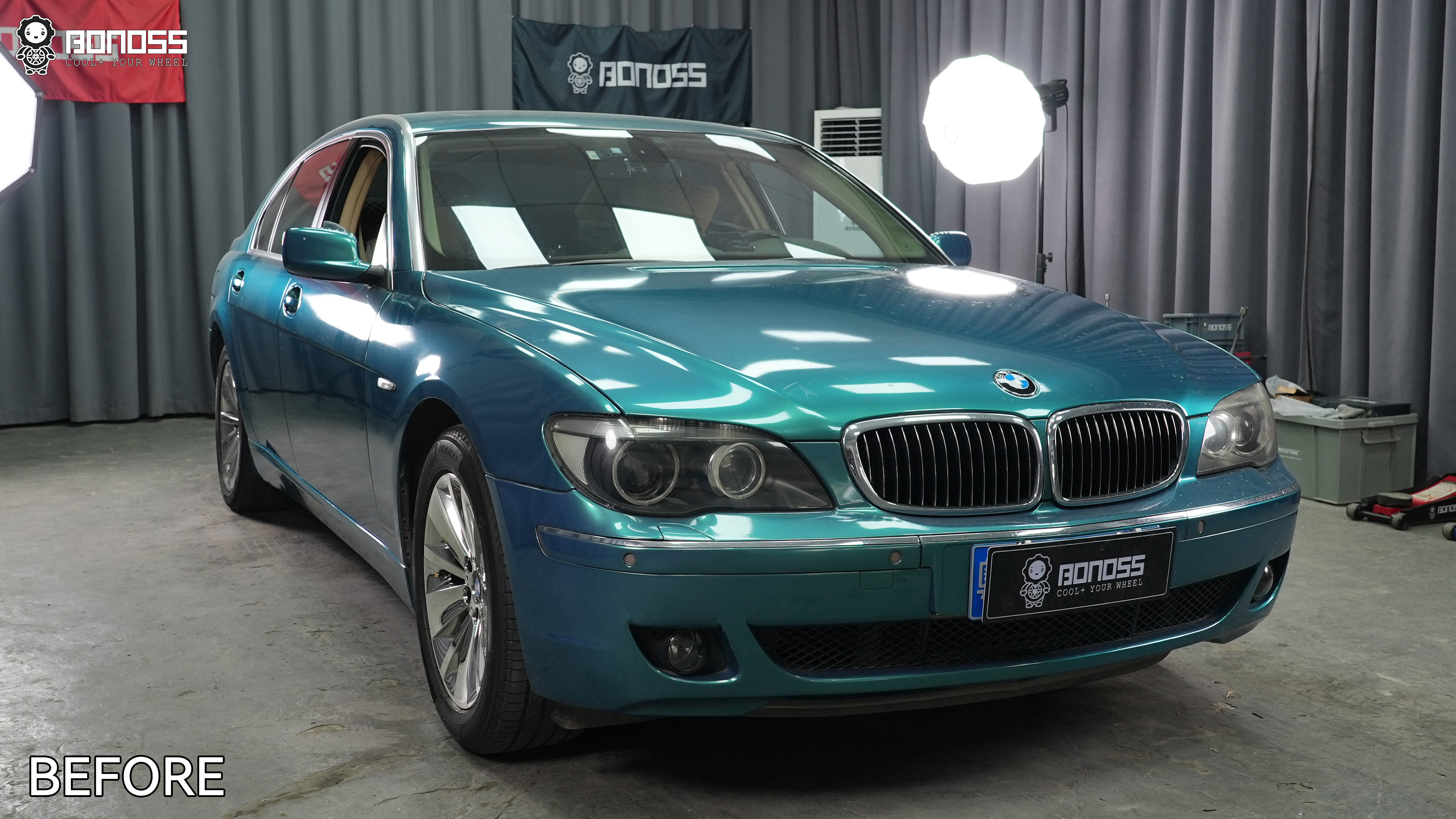
He found us through install videos online, contacted a couple of other brands along the way (we won’t name names, but they’re the usual suspects), and nearly backed out because he wasn’t sure anyone made spacers that would actually fit a car from 2005. Fair concern. A lot of spacer brands chase the new-model market and ignore older platforms entirely.
What sealed it for him: we confirmed the right thickness for his setup, showed him the SGS certification and TÜV certification reports, walked him through the difference between 6061-T6 and 7075-T6 forgings, and he’d already seen enough BONOSS install videos on YouTube to trust the process. He pulled the trigger on the 6061-T6 option.
“BONOSS offered me two options: 6061-T6 or 7075-T6. They said the 7075-T6 is the stronger choice, better for racing and that kind of thing. But since I mostly daily drive, the 6061-T6 made more sense for me. Price was more than reasonable too.”
Measurement Day: Real Tools, Real Numbers
We don’t guess spacer thickness. We measure it. Here’s what came off the car on September 14, 2024:
| Specification | Measured Value |
|---|---|
| Vehicle | 2005 BMW 7 Series (E65) |
| Wheel / Tire | 245/50R18, factory chrome-plated |
| Factory ET | +24mm |
| Hub center bore (measured) | 72.46mm |
| Hub step height — front | 13.15mm |
| Hub step height — rear | 11.57mm |
| Factory wheel bolt | M14x1.5, cone seat |
| Bolt socket size | 17mm hex |
| Factory bolt total length | 54mm |
| Bolt thread below contact face | 32mm |
| Bolt protrusion through wheel | 22mm |
| Wheel pocket depth | 17.33mm |
| Bolt pattern (PCD) | 5x120mm |
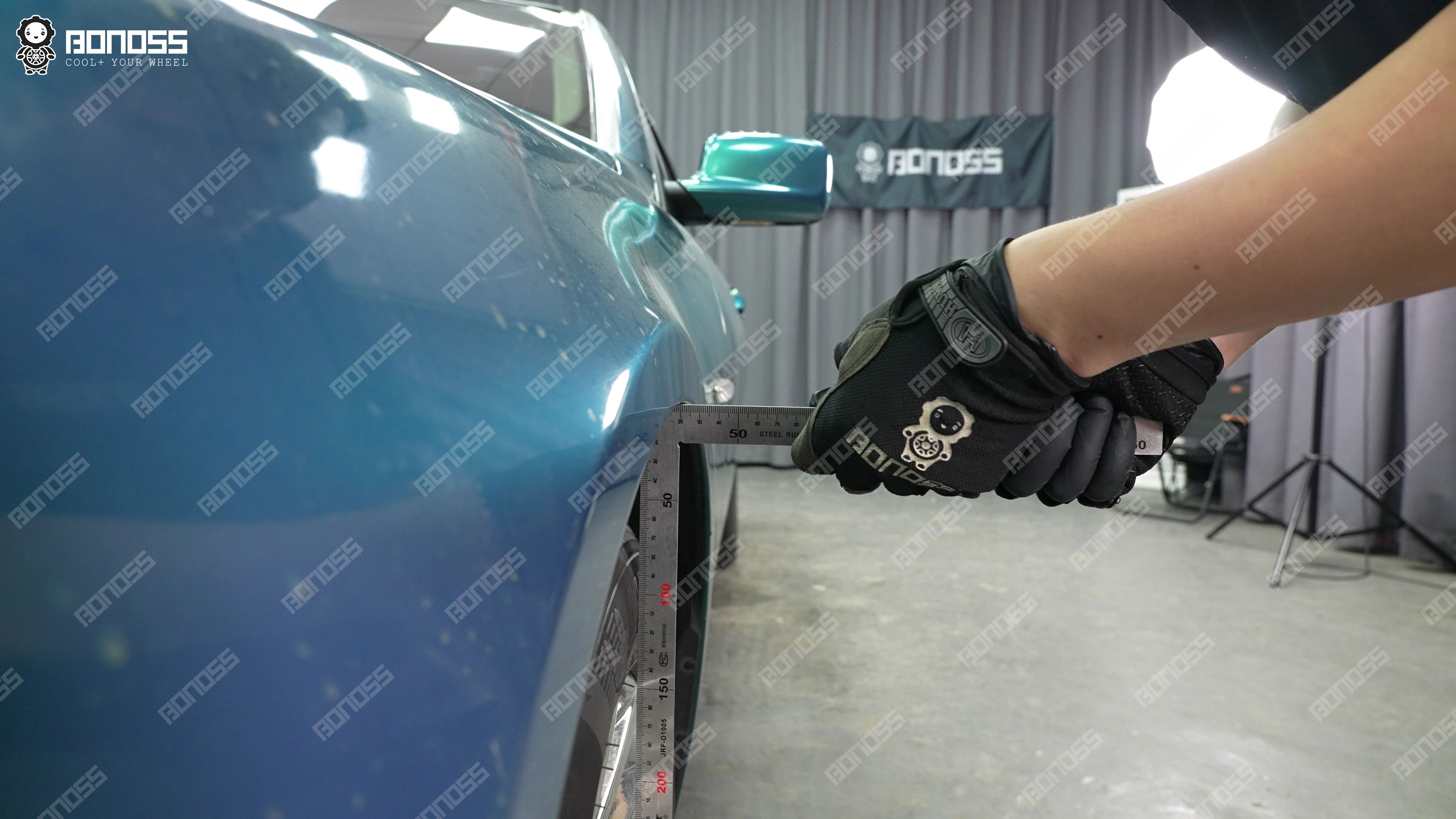
High-accuracy ruler measuring right front wheel flush thickness
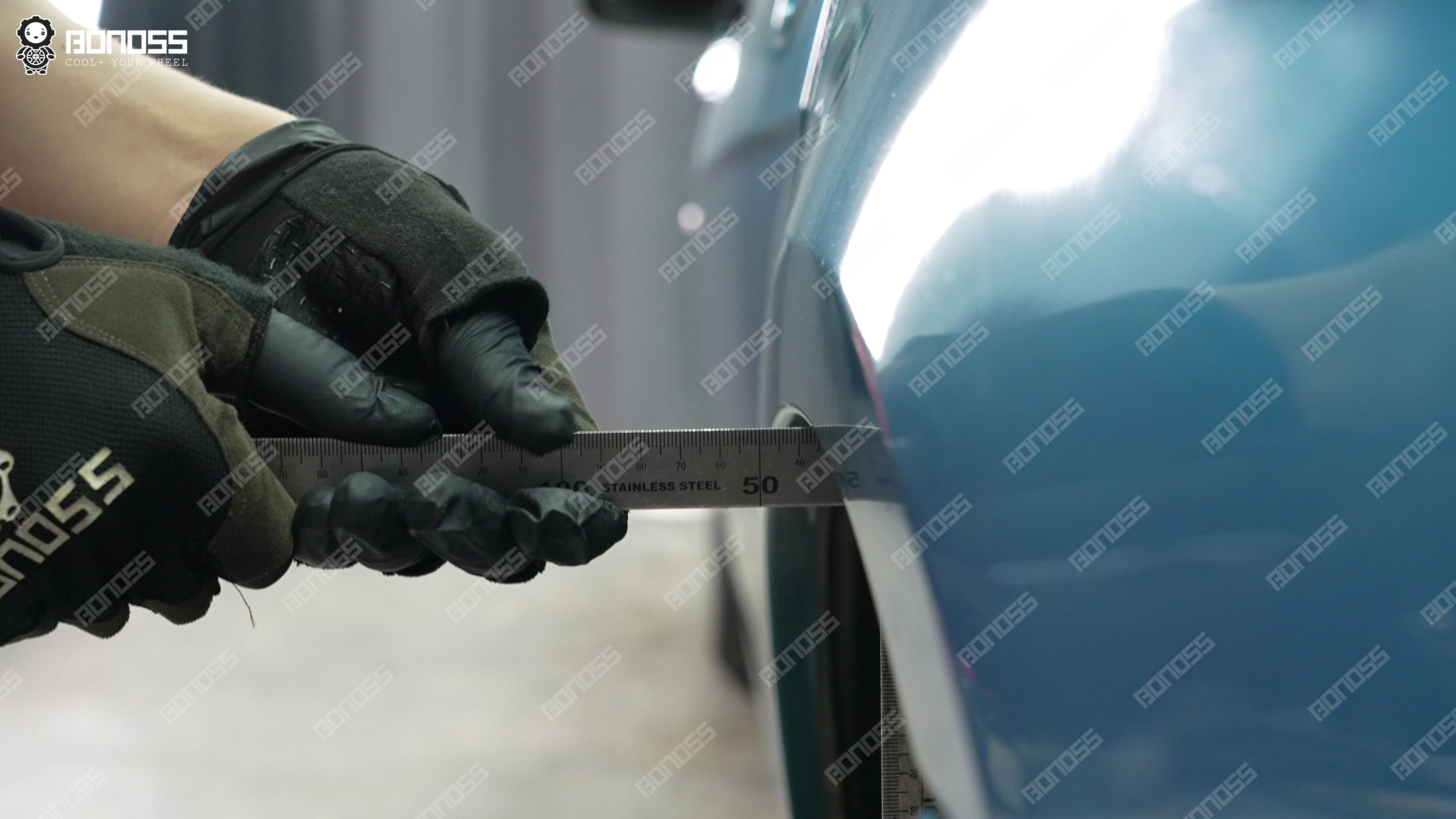
High-accuracy ruler measuring left rear wheel flush thickness
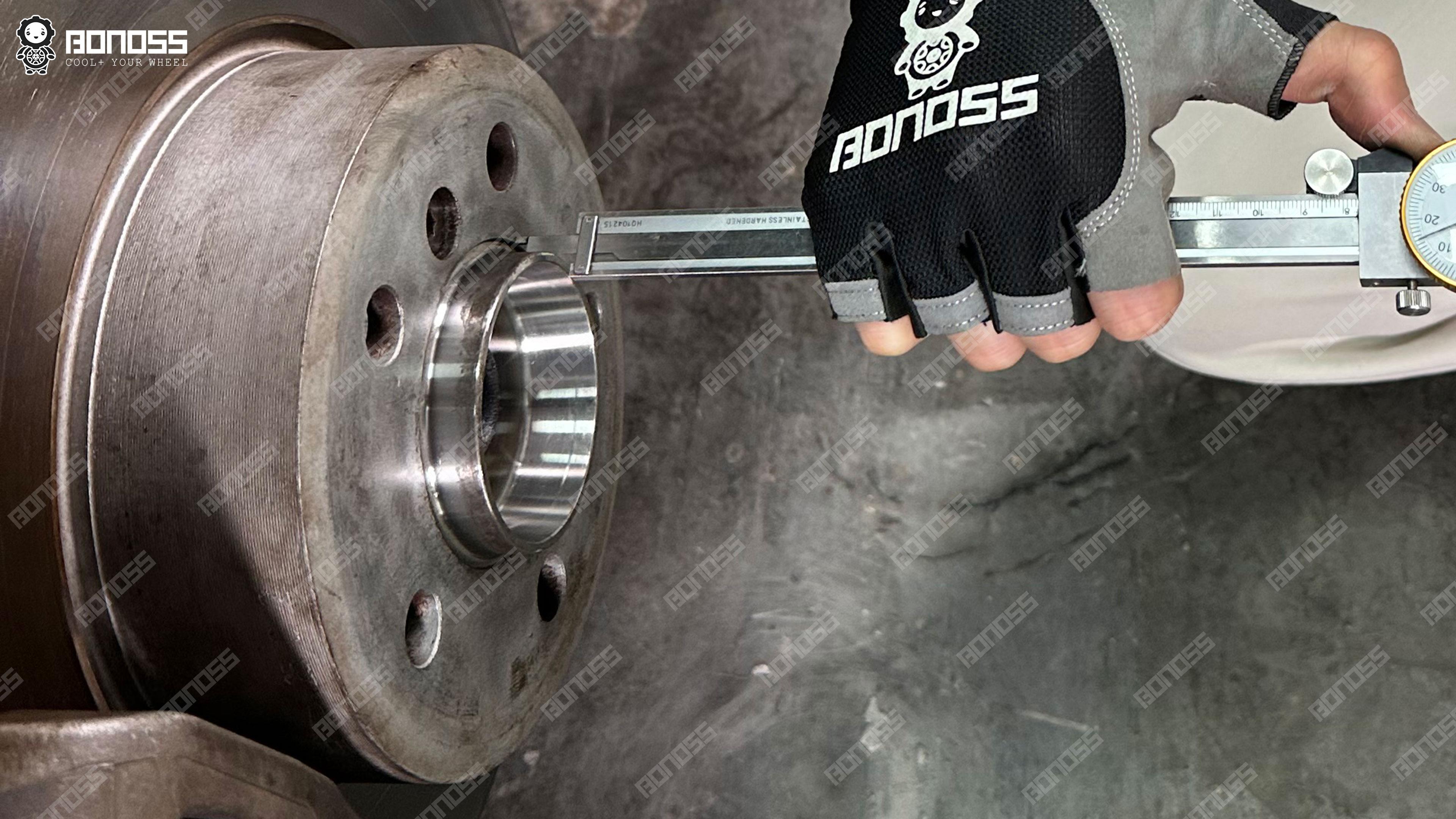
Vernier caliper measuring hub step height (front 13.15mm / rear 11.57mm)
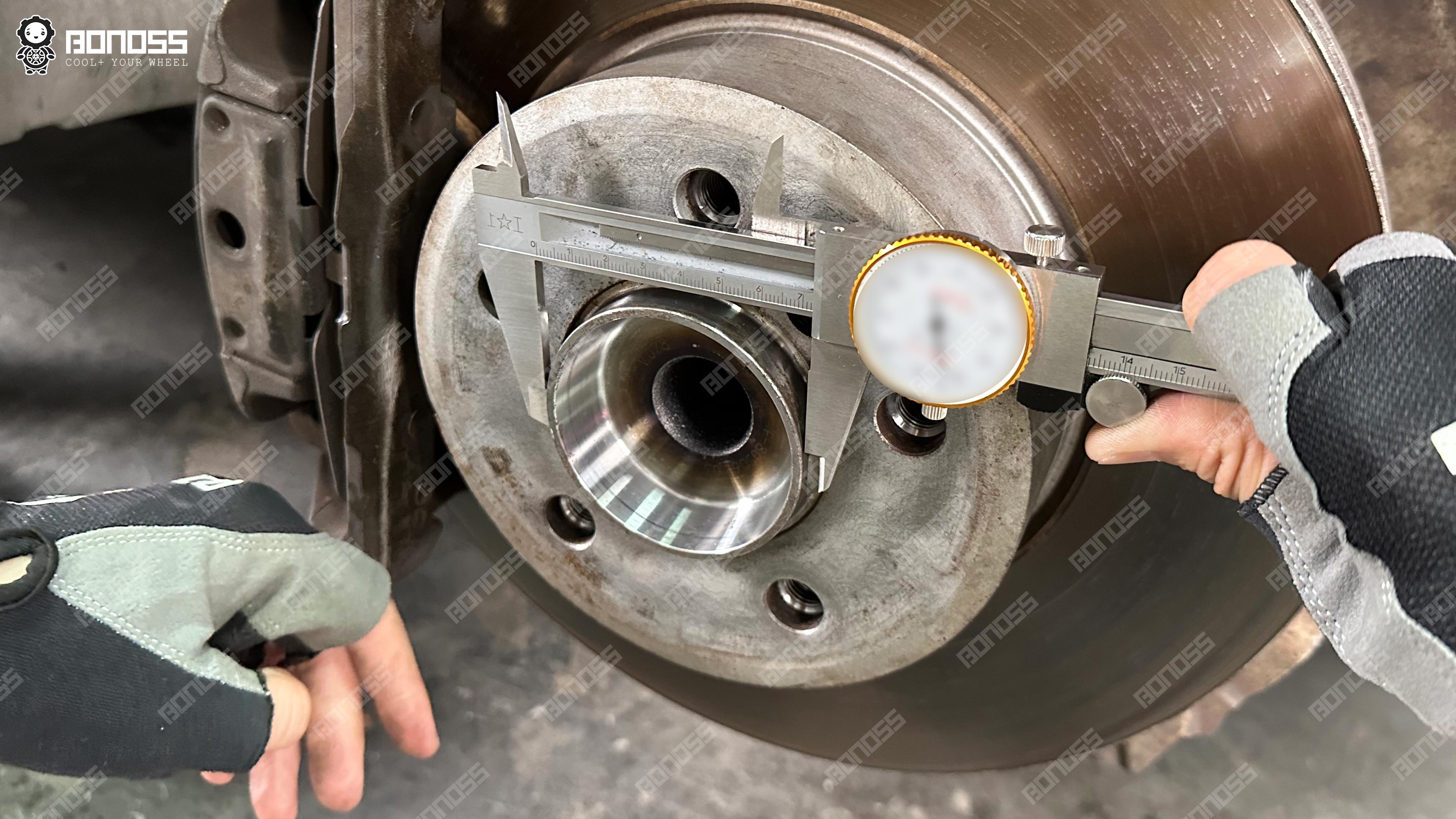
Vernier caliper measuring hub center bore diameter (72.46mm)
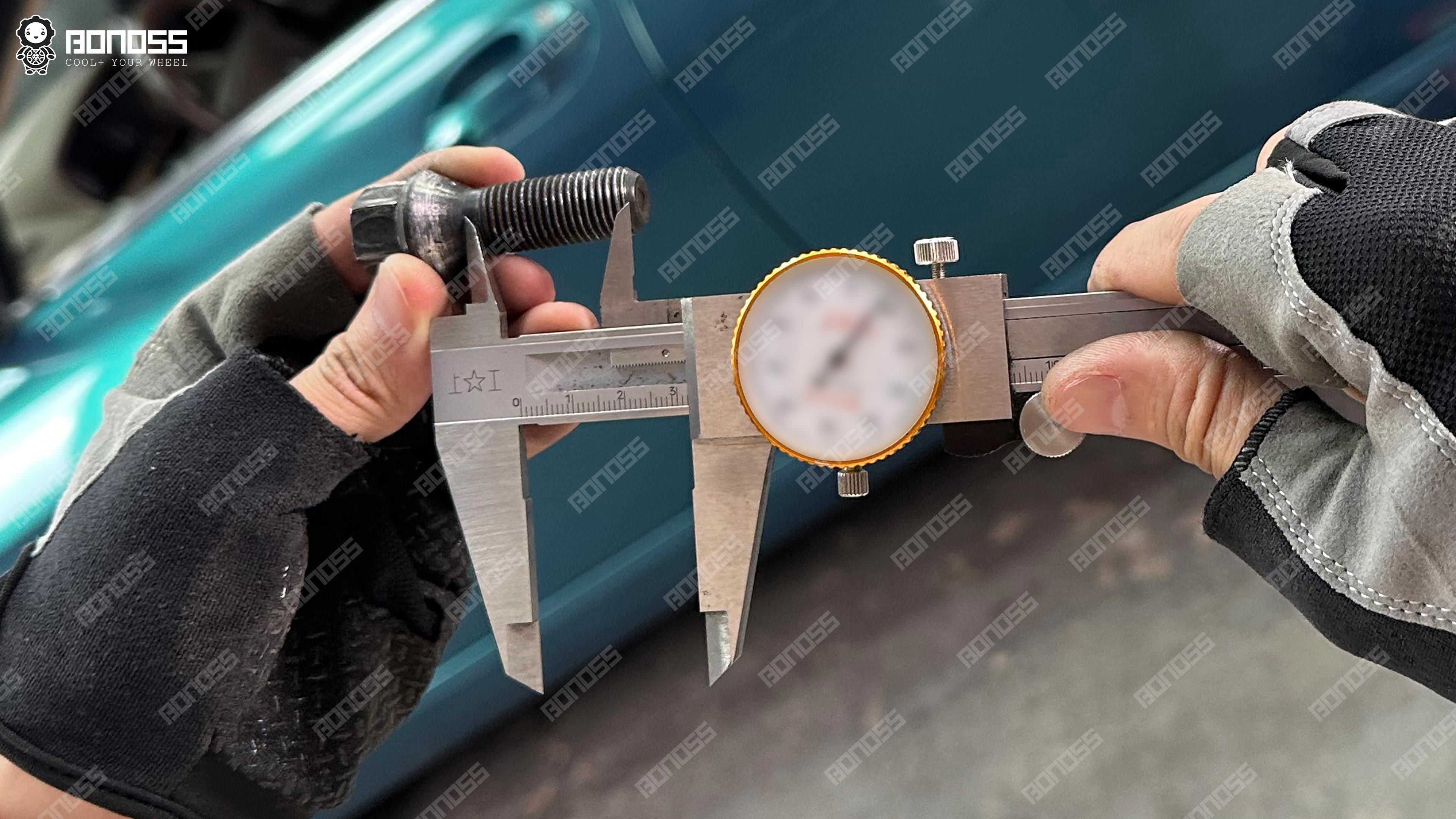
Vernier caliper measuring factory bolt thread length below lug seat (32mm)
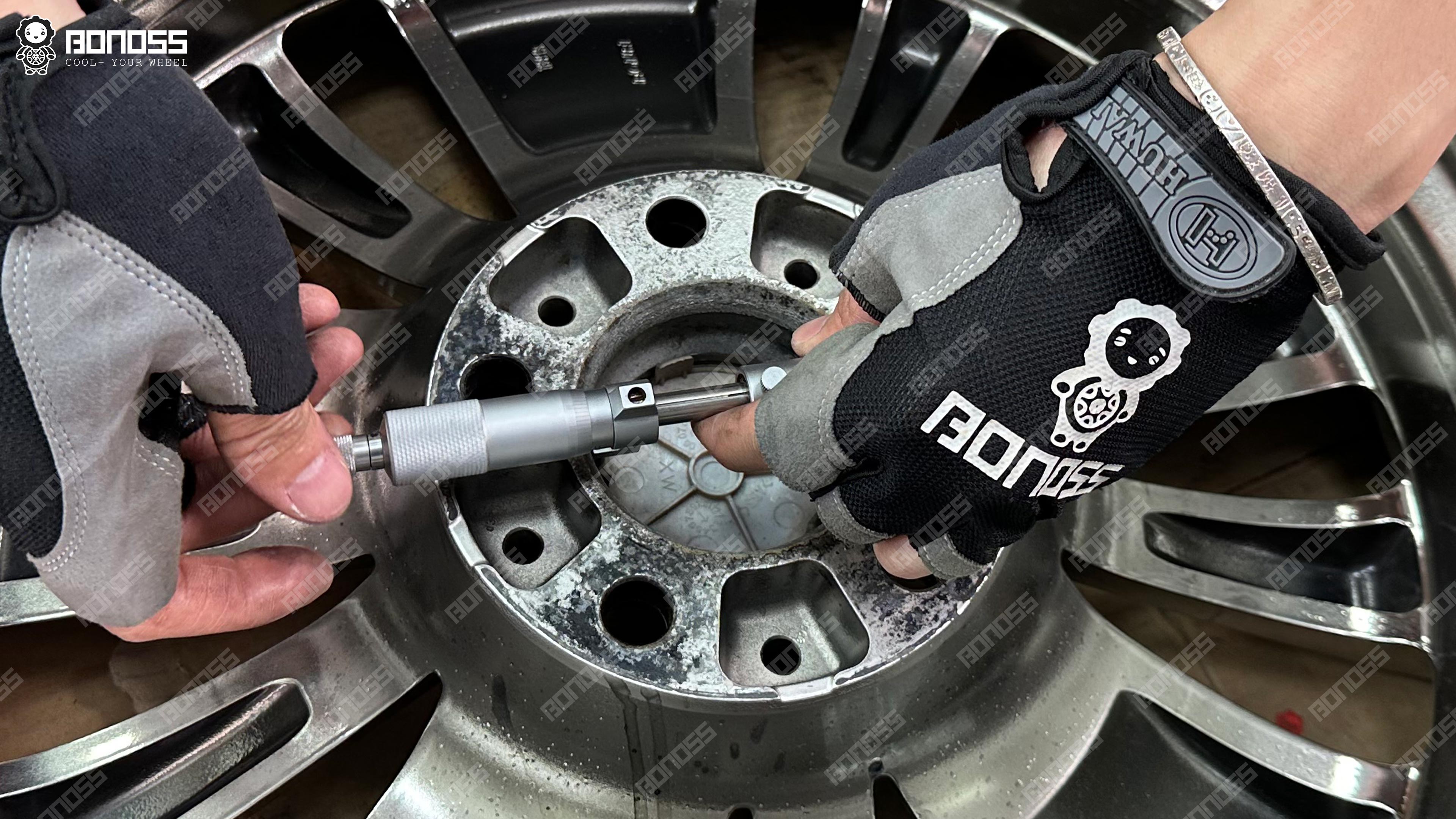
Micrometer measuring wheel center bore diameter for hub-centric verification
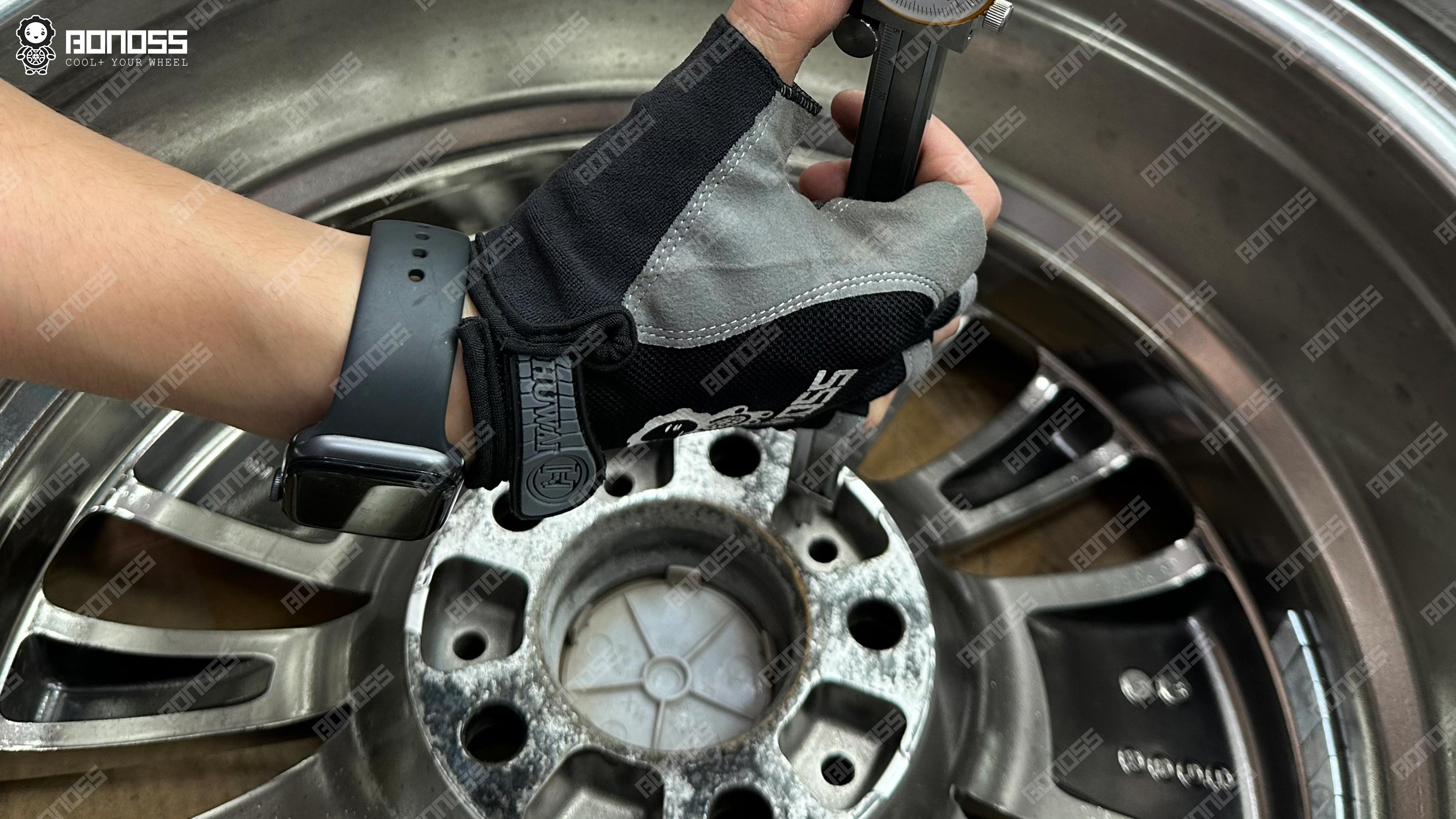
Vernier caliper measuring wheel pocket depth (17.33mm) where the bolt head sits recessed (non-mating surface thickness).
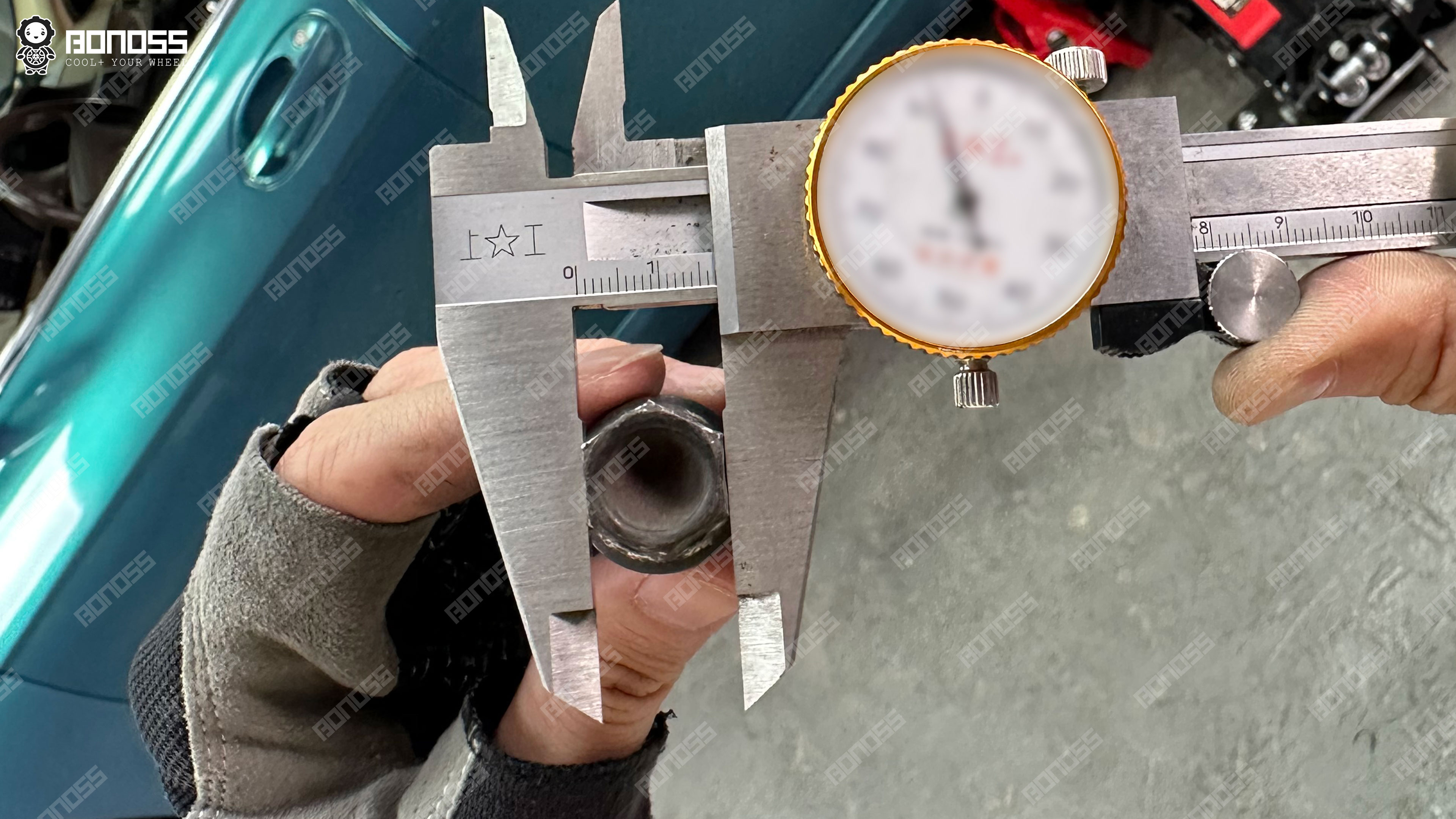
Vernier caliper measuring bolt head hex width across flats (17mm)
Those numbers didn’t come off a spec sheet. They came off the car with a vernier caliper, a micrometer, and a high-accuracy ruler. The hub bore on this E65 measured 72.46mm — close to the nominal 72.5mm you’ll see in BMW documentation, but not exact. That 0.04mm matters when you’re machining a hub-centric spacer. Our multi-stage hub-centric design seats onto that hub, which avoids vibration before it starts.
One detail that jumped out: the factory bolts on this E65 have 32mm of thread below the contact face. Most BMWs of this generation run 27mm. That five-millimeter difference nearly caused a problem later. More on that in a minute.
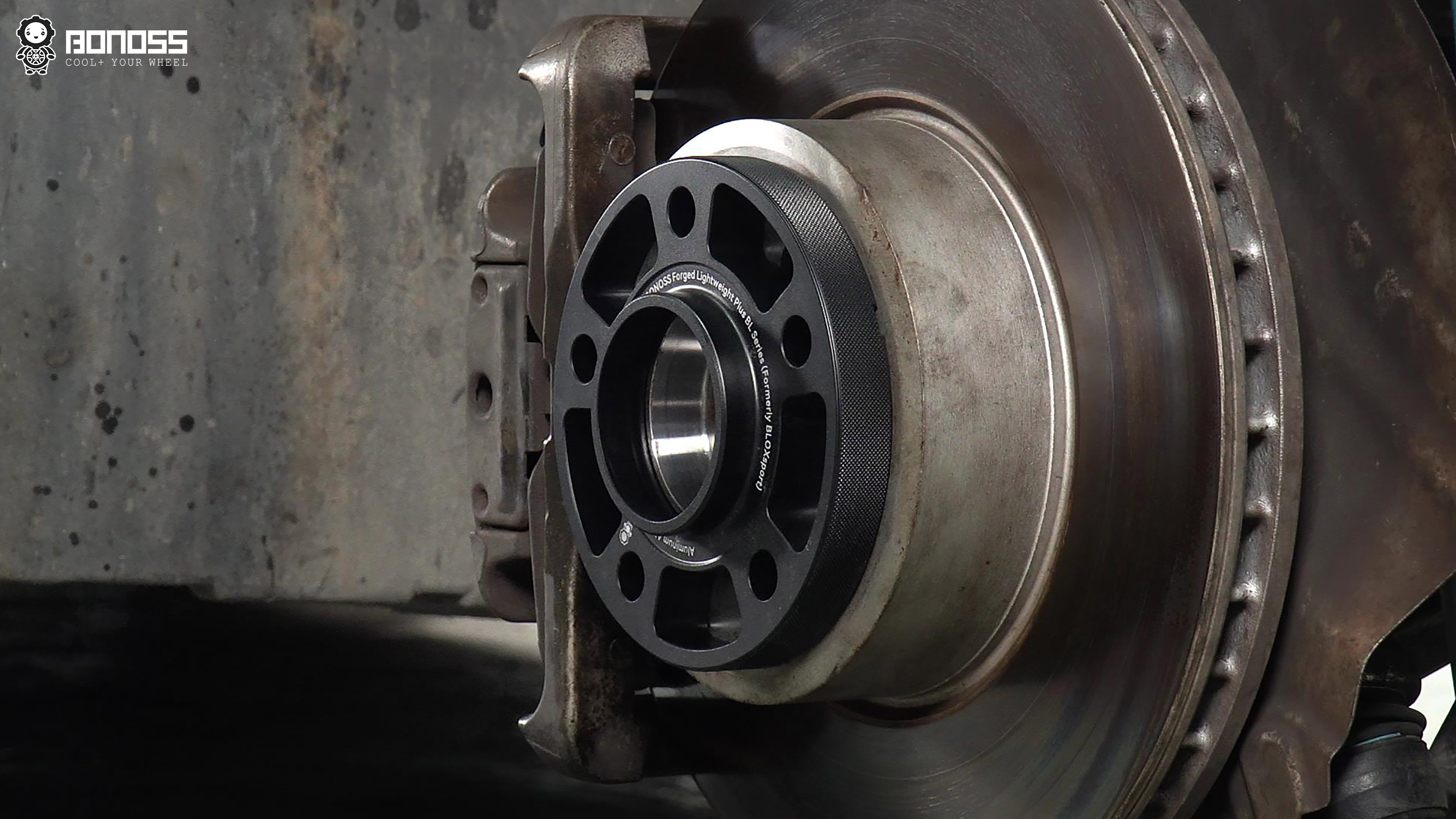
Two Different Spacers, One Car
Here’s where this install gets interesting. Mr. Francis didn’t get the same spacer at all four corners. We ran two completely different products on one car:
- Front (20mm): BONOSS Forged Lightweight Plus Wheel Spacers — designed for weight reduction, no active cooling feature
- Rear (25mm): BONOSS Forged Active Cooling Wheel Spacers — designed with active cooling vanes, not optimized for lightweight
Let’s be clear: these are not the same product with different labels. The Lightweight Plus does exactly what the name says — material is carved out everywhere it can be without losing structural integrity, so you’re spinning less unsprung mass up front where steering response lives. The Active Cooling takes a different approach entirely: it uses a petal-shaped vane design that pulls air through the spacer as the wheel rotates, dumping heat away from the hub and brake assembly out back where thermal load concentrates on a big sedan.
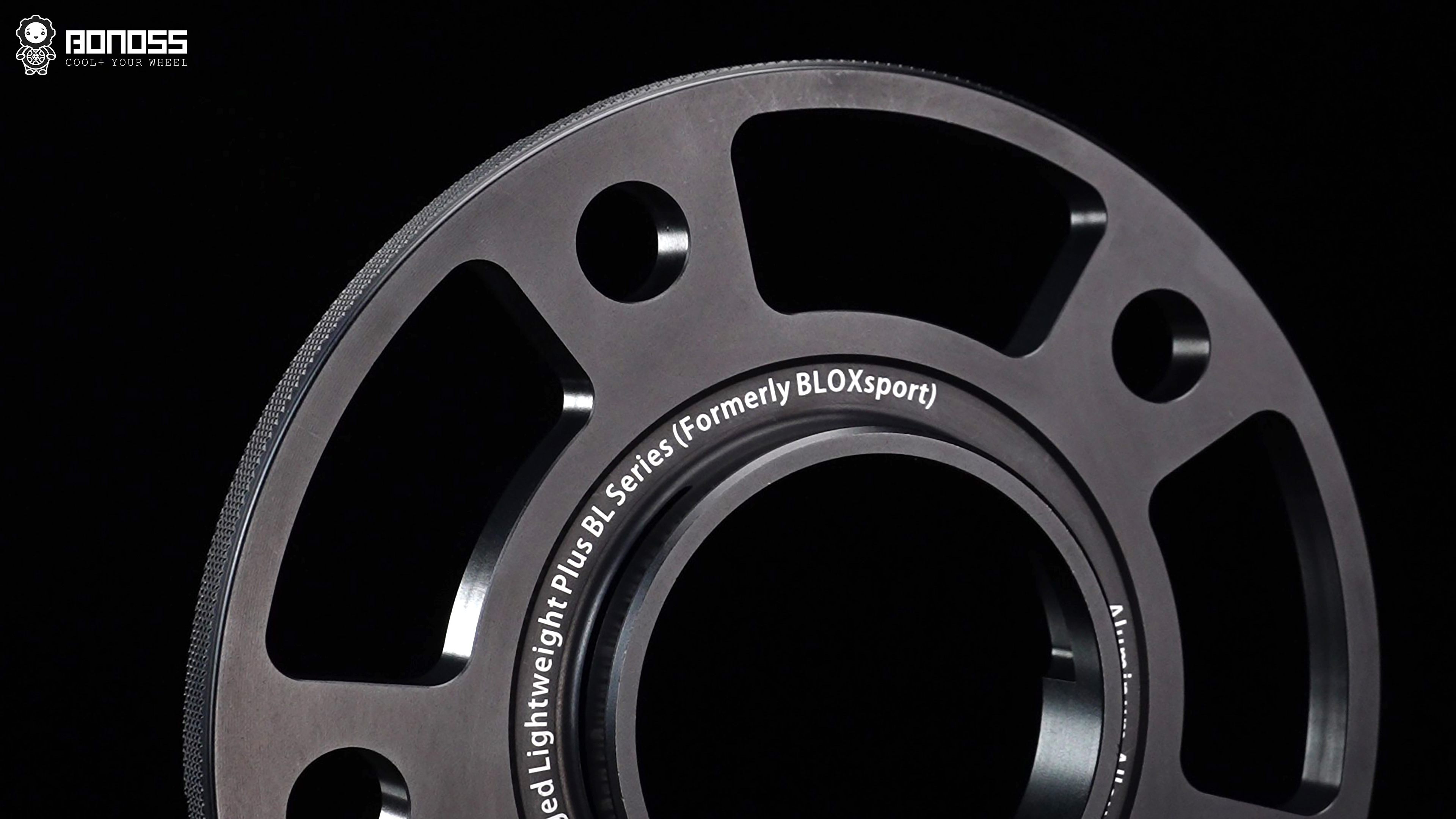
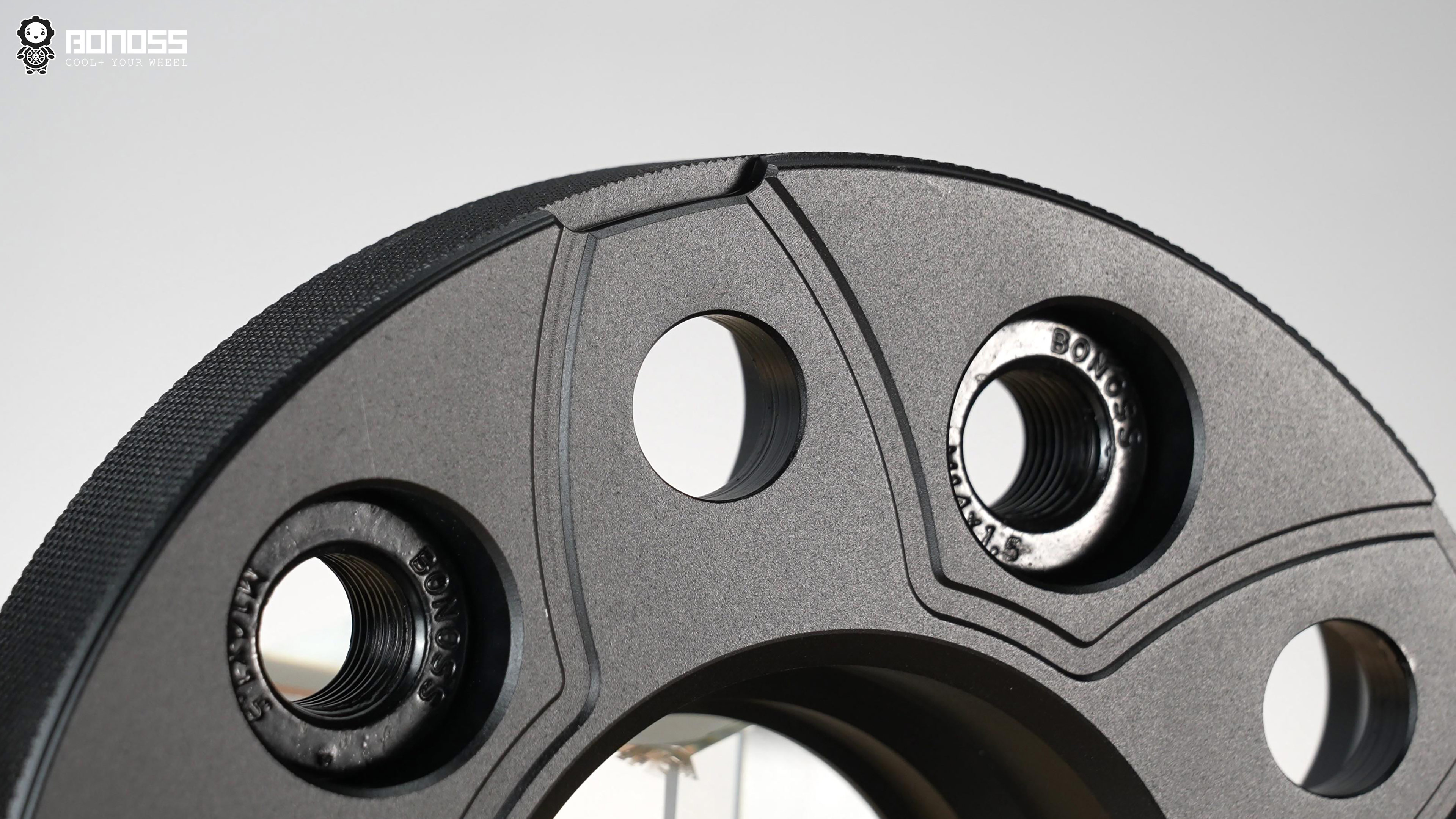
Why split them? Front axle = steering, and unsprung weight matters more for steering precision. Rear axle = where brake heat pools on a car this size, and the active cooling vanes earn their keep. Both are forged from 6061-T6 aluminum, both use multi-stage hub-centric seating, and both run ISO Grade 12.9 wheel bolts. Same material standard, same bolt standard, different engineering priorities.
The ET math is straightforward:
| Spacer Thickness | Original ET | New ET |
|---|---|---|
| Front 20mm | +24mm | +4mm |
| Rear 25mm | +24mm | −1mm |
Front ends up at ET+4, rear at ET−1. That’s flush to slightly aggressive — exactly the look Mr. Francis was after. Not tucked, not poking out like a stance bro’s Instagram. Just right. More on the 20mm BMW spacer fitment math here if you’re working through your own calculations.
The Install: Three Problems We Actually Hit
Total shop time was about 1.5 hours. Not bad for a car with two decades of road grime. But it wasn’t plug-and-play. Here’s what went down.
Problem 1 — Rust on the Hubs
This car is original. Twenty years old. The hub faces had real rust buildup — enough that a fresh spacer wouldn’t sit dead-flat against the mating surface. If you bolt a spacer over rust, you get a microscopic gap. That gap turns into runout. Runout turns into vibration at highway speed. It’s the number-one cause of “my spacers shake” complaints online, and it’s almost never the spacer’s fault.
We sprayed rust penetrant on the hub faces, let it soak, and went at them with an abrasive cloth until the metal was clean and bright. Only then did the spacers seat properly — flat, full contact, zero gap.
“Yeah, I know cleaning all the rust off the hubs helps a lot with fitment.”
Mr. Francis said it himself. If your hub is rusty and you skip this step, you’re setting yourself up for a steering wheel that buzzes at 70 mph. Don’t skip it. The full rundown on BMW spacer torque specs and maintenance covers this in more depth.
Problem 2 — 30mm Rear? Not on This Car
Mr. Francis originally wanted 30mm spacers out back. Aggressive, but not unreasonable for an E65 with deep arches.
So we test-fitted a 30mm rear spacer, put the wheel back on finger-tight. Then we eyeballed the clearance between the tire shoulder and the inner fender liner.
It rubbed. Not a lot, but enough. The tire would have eaten through the inner liner within a few hundred miles, and at speed that turns into a real problem fast.
We pulled the 30mm off and went with 25mm. Problem solved, stance still aggressive enough to look right. This is why test-fitting matters. You can calculate all day, but sometimes the fender liner has the final say.
Problem 3 — The 32mm Bolt Question
This one was the real head-scratcher.
The rear 25mm spacers are bolt-on type — the spacer comes with its own wheel bolts that thread into the hub first, and then you use the factory bolts to secure the wheel to the spacer’s face. Clean system, and it means you don’t need extended bolts for the rear.
Here’s the catch. Most BMW factory bolts have 27mm of thread below the contact face. This E65’s bolts are different — they measure 32mm. That’s 5mm longer than typical. A 25mm spacer is 25mm thick. If the factory bolt’s 32mm thread bottoms out inside the spacer’s threaded holes on the back side, it could contact the brake disc. Not catastrophic immediately, but absolutely not something you want to discover halfway through a mountain pass.
So we measured. The bolt protrusion through the wheel came in at 22mm. The spacer is 25mm thick. That means the bolt’s threaded portion sits 22mm into the spacer, with 3mm to spare before it reaches the back wall. No contact with the brake disc. Perfect fit.
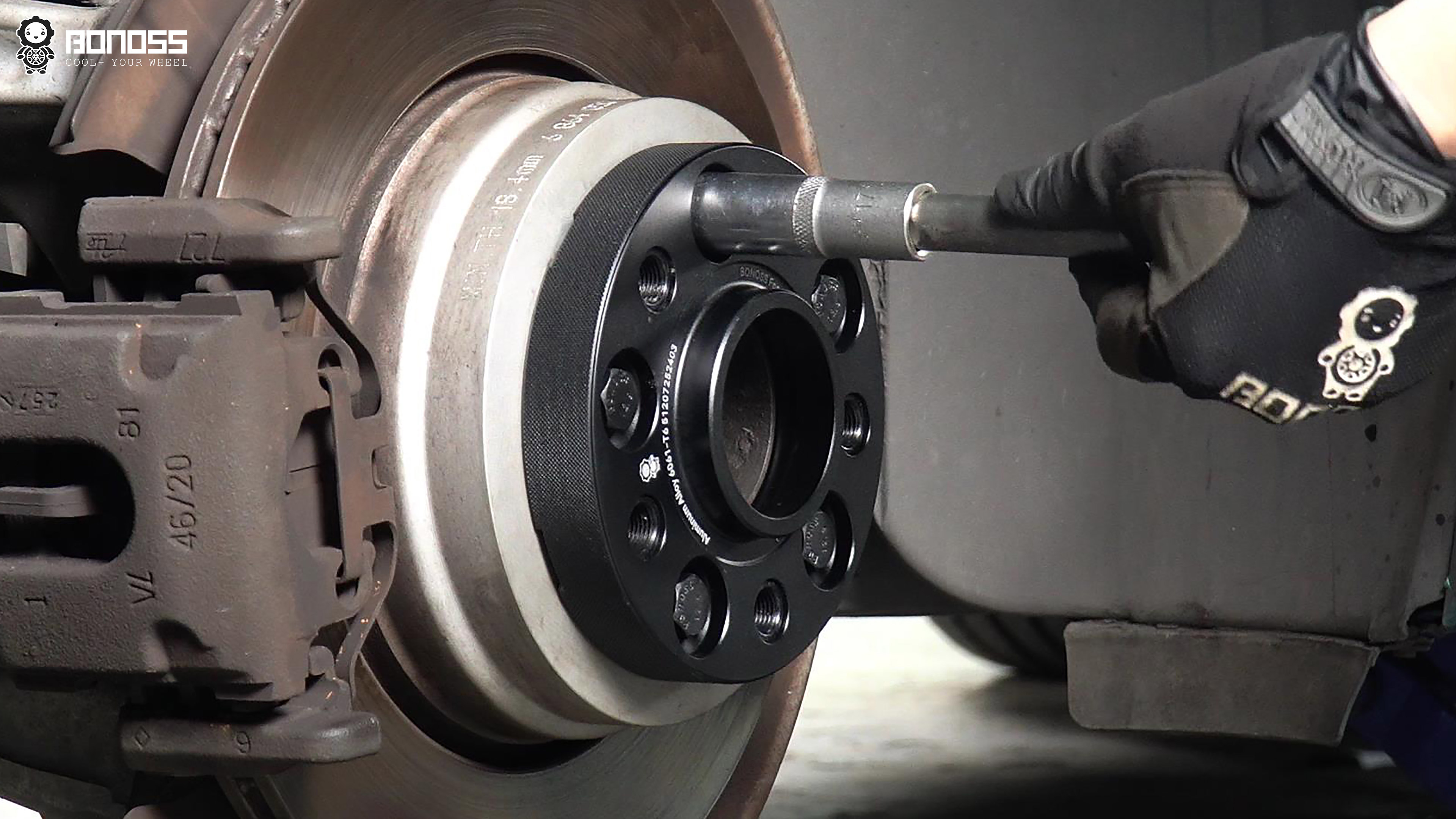
Had the protrusion been 26mm or more, we’d have needed a different plan — counterbored holes, shorter bolts, or a different spacer design. But the numbers worked, and the bolt-on rear setup went on clean. If you’re deep in the weeds on BMW rim spacers and wheel bolt geometry, that article breaks it down further.
For the front 20mm spacers — the Lightweight Plus — those are slip-on type. No built-in bolts. You use extended bolts. Based on the factory bolt’s 32mm thread below contact plus 20mm of spacer thickness, we needed bolts with 52mm of thread engagement. We had those in stock. ISO Grade 12.9, because anything less on a car this heavy isn’t worth the risk.
Torque and Final Fitment
Everything went to 140 Nm per BMW’s factory spec. No guessing, no “hand-tight plus a grunt.” Calibrated torque wrench, 17mm hex socket, proper star-pattern sequence, two passes. That’s how you keep a wheel on a car.
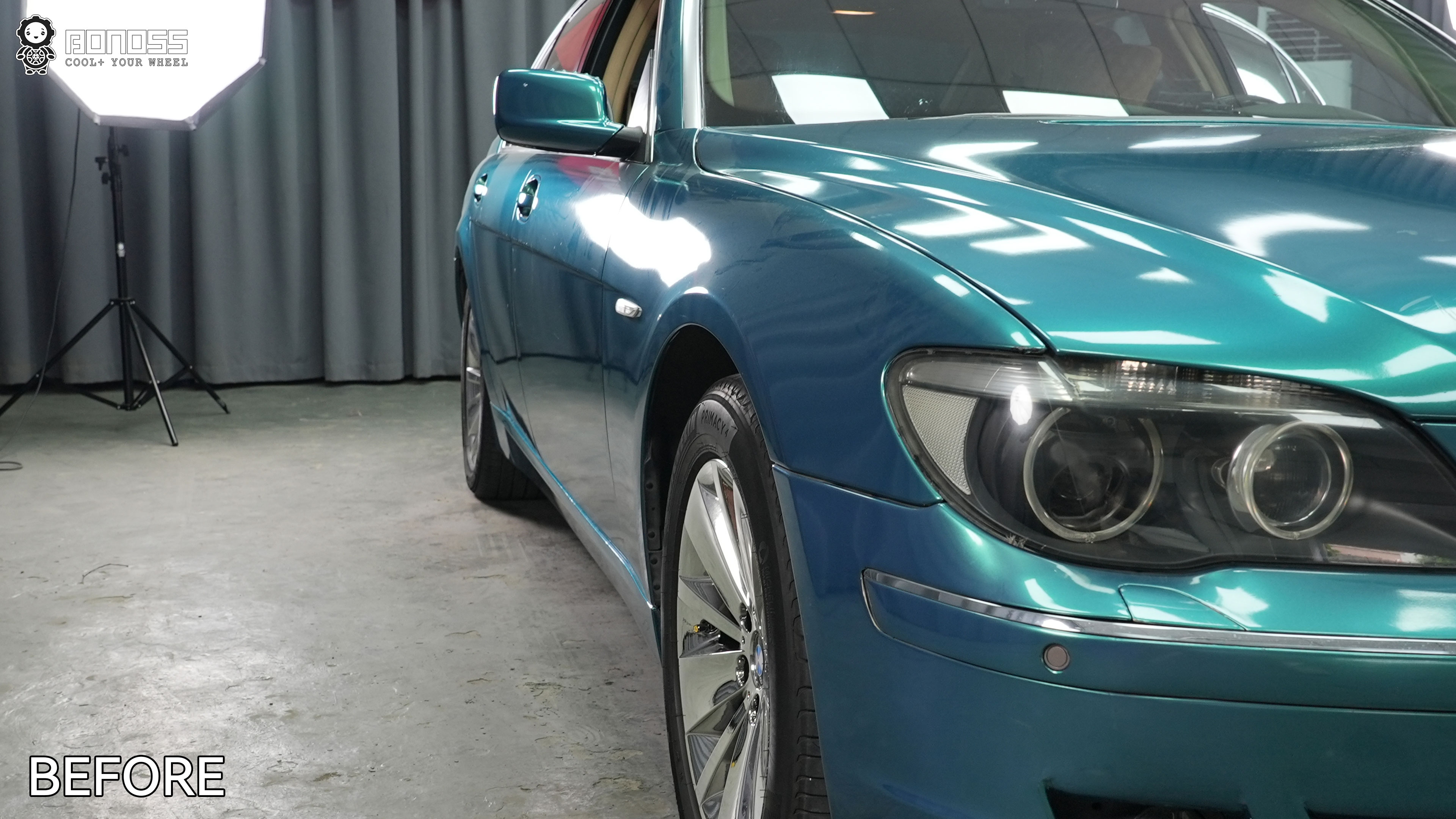
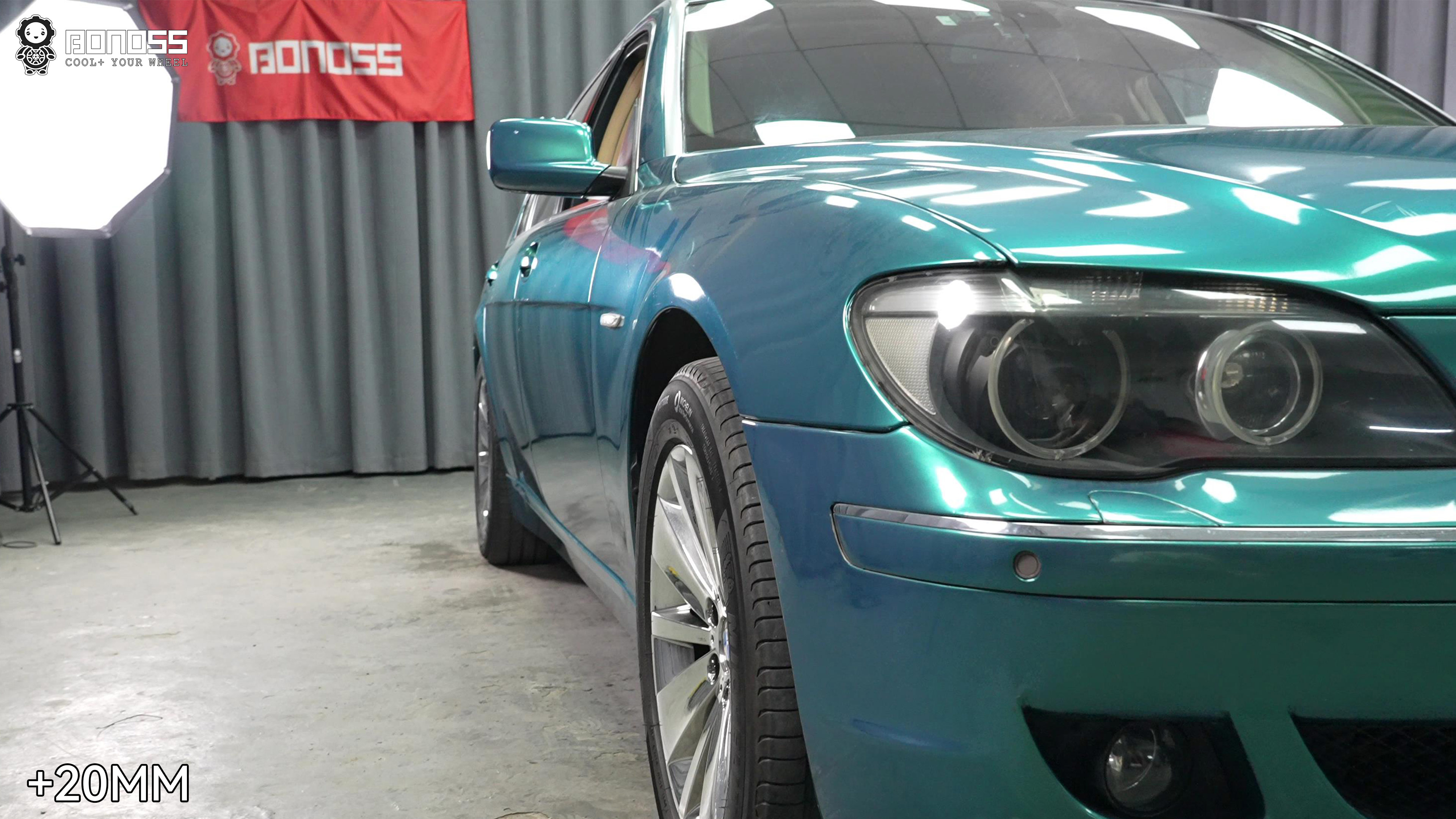
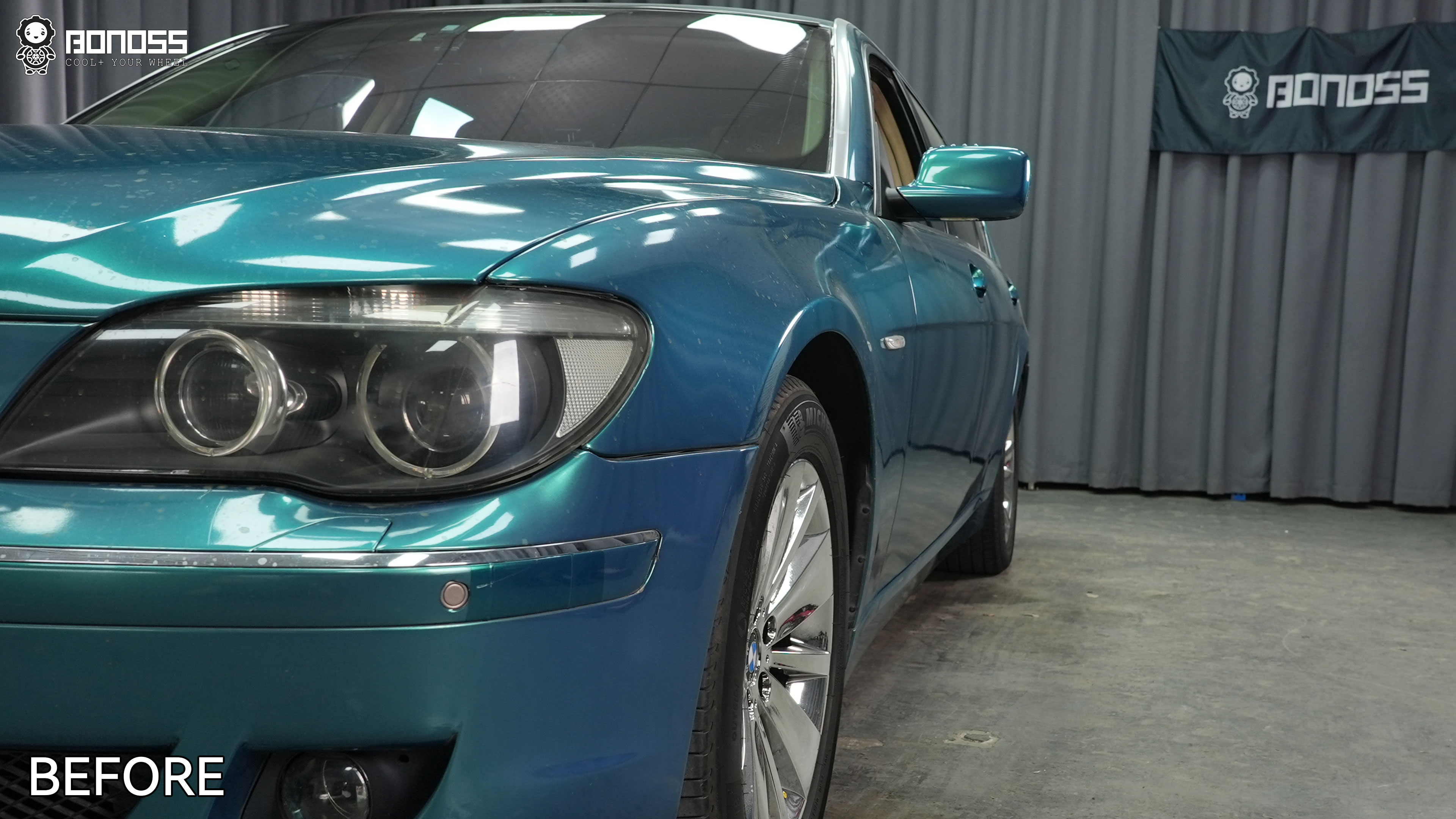
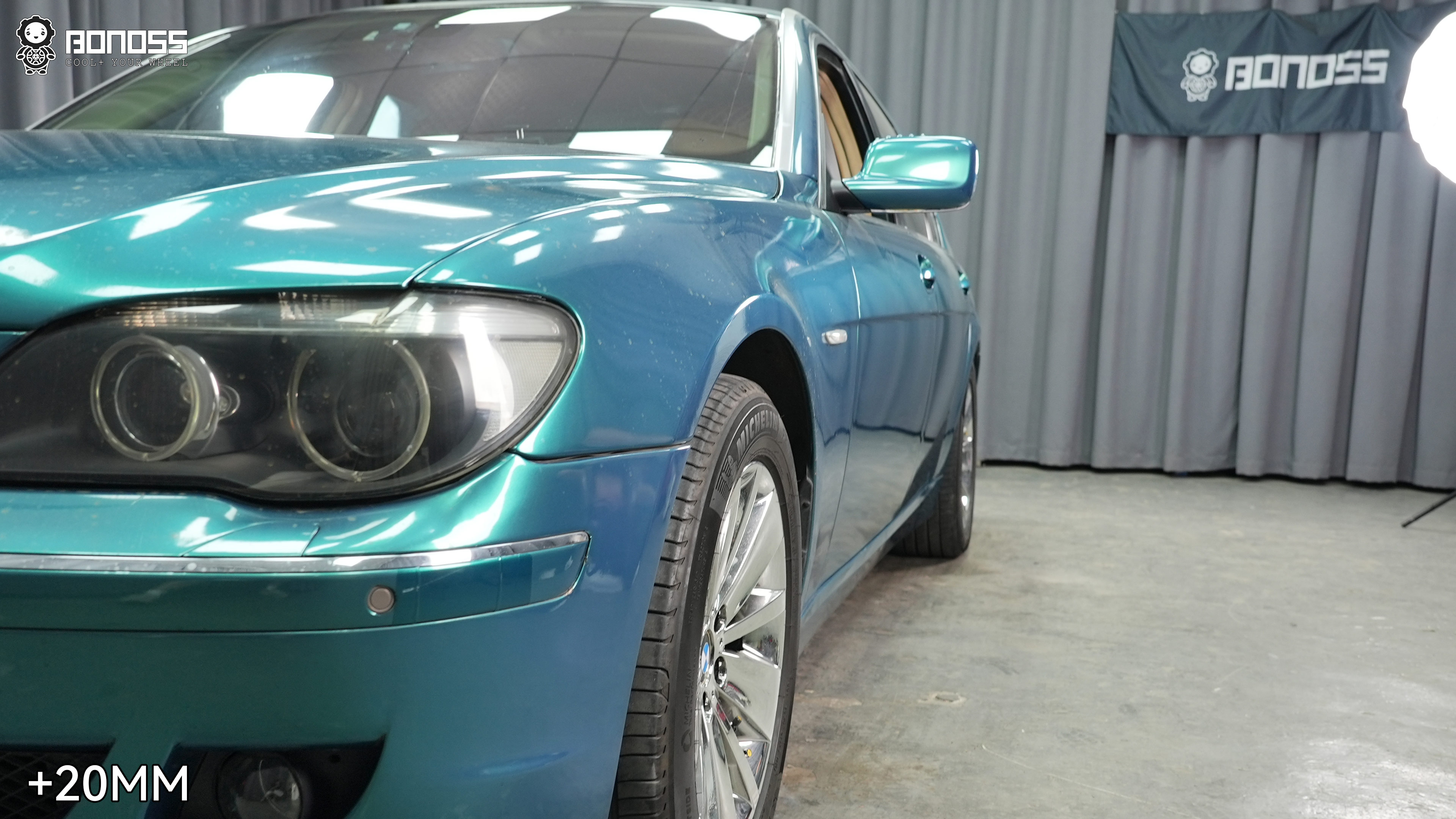
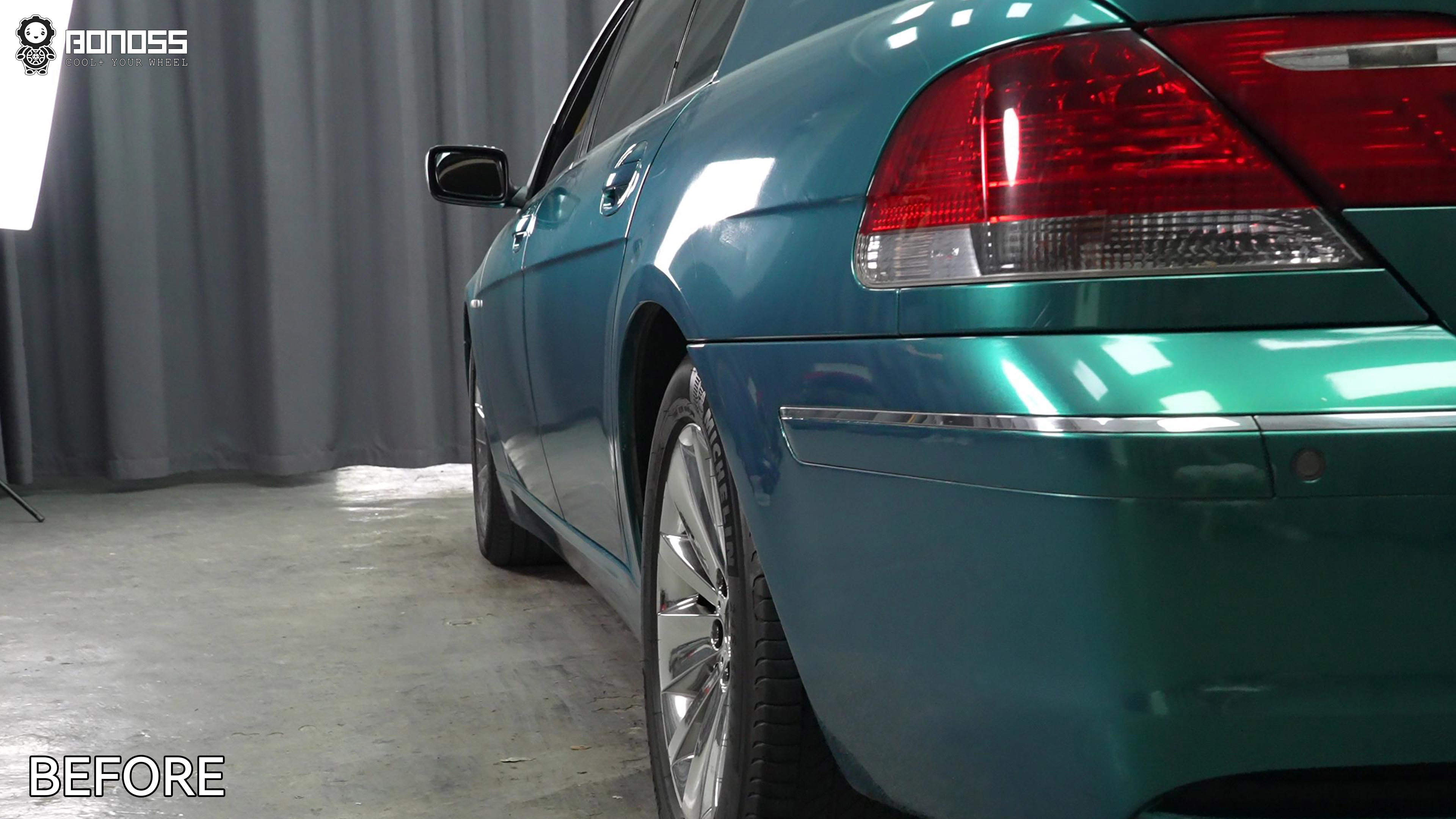
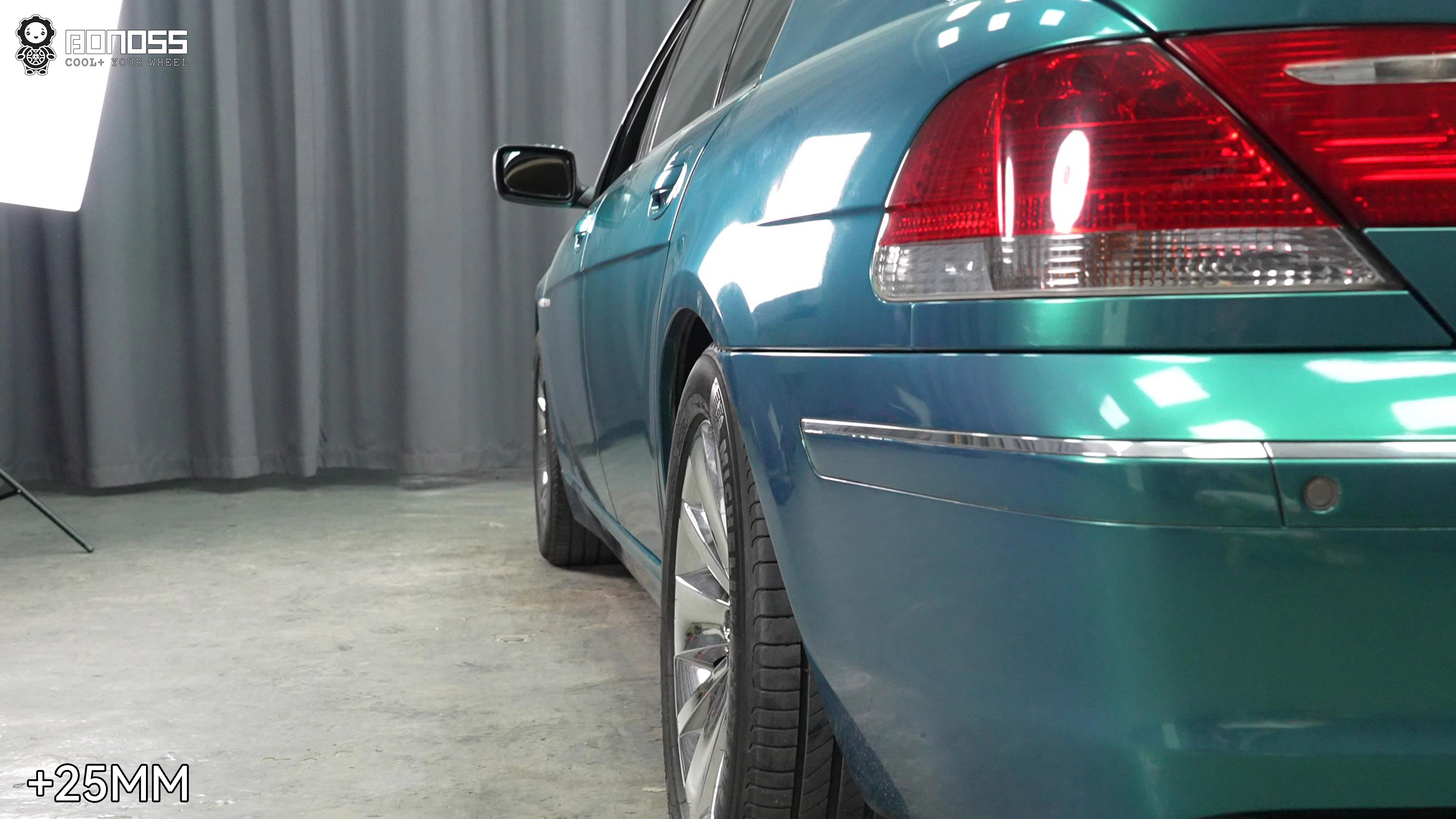
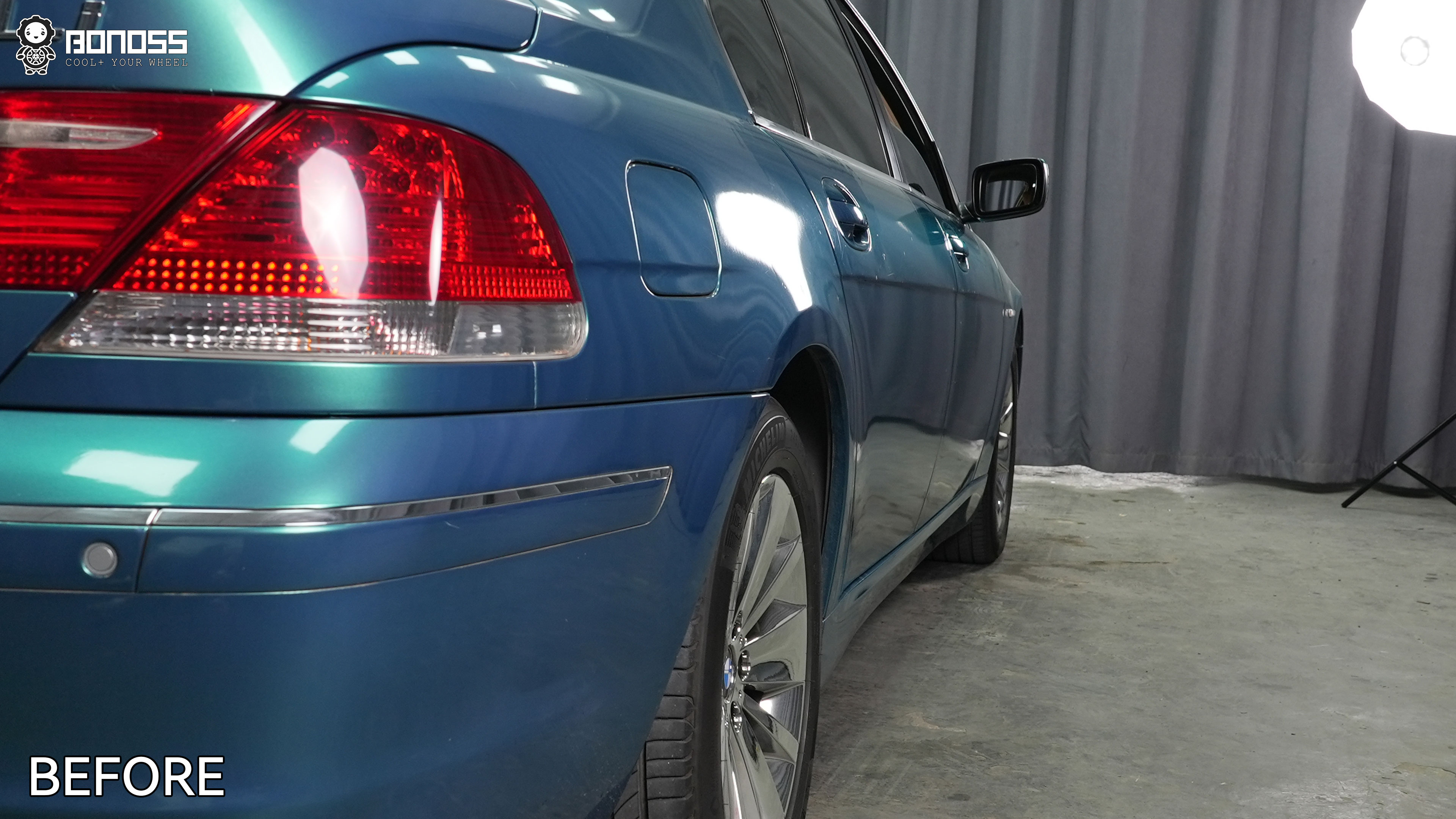
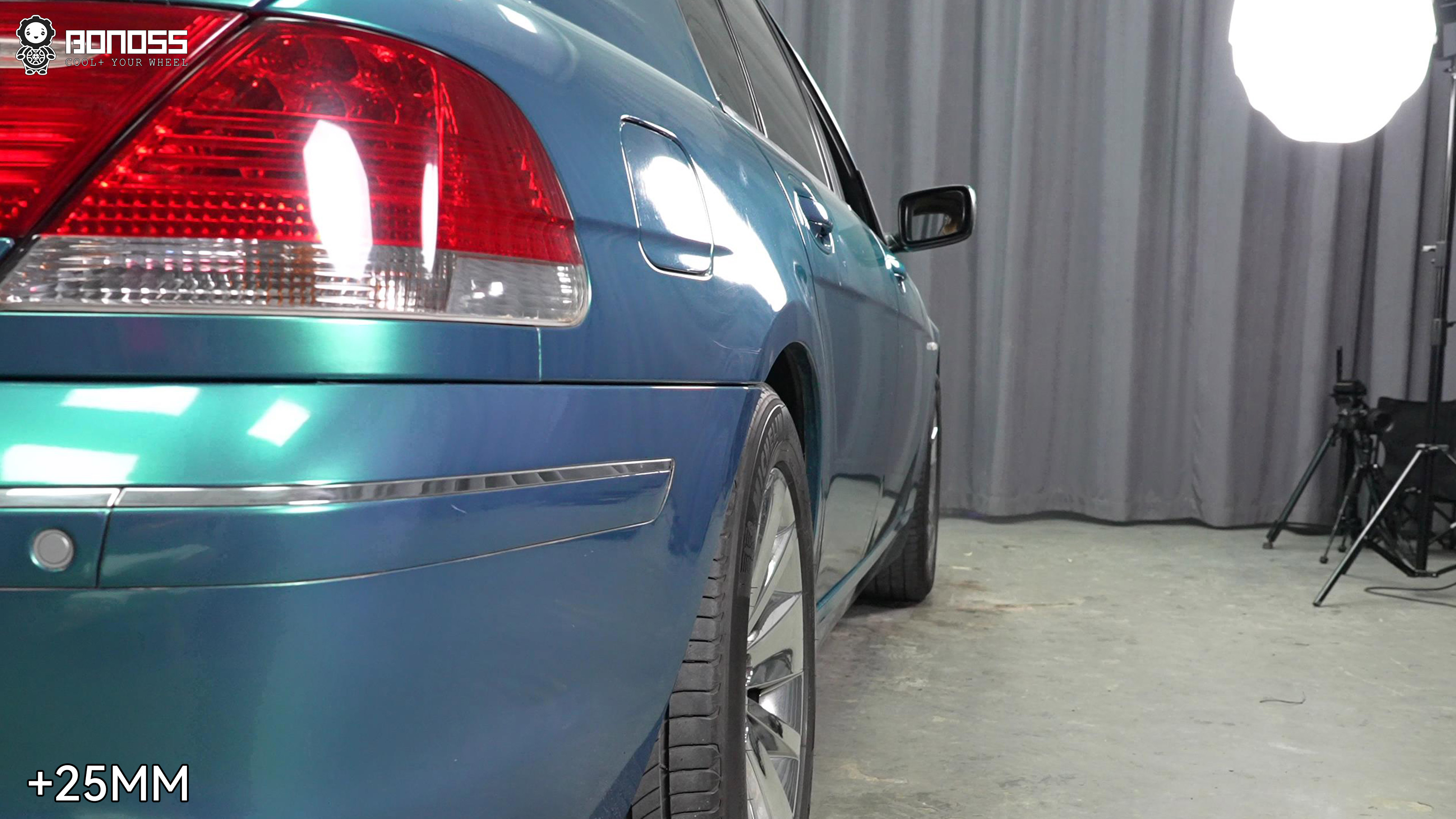
The before-and-after shots tell the story better than I can. That factory +24mm ET tucks the wheels deep inside the arches — looks like the car is wearing shoes two sizes too small. After the spacers — front at ET+4, rear at ET−1 — the tires fill the fenders properly. It’s not poke. It’s flush. The stance change is immediately visible, and on an E65 it transforms the car’s road presence. This is a sedan that always looked a bit too “executive parking lot.” Now it looks like it means business.
Total cost: $300, and that included the labor. Two different purpose-built spacer products, four wheels off and back on, 1.5 hours, done properly. For a car that’s been on the road since 2005, that’s a pretty cheap way to fix the one thing that always looked off about it.
Two Years and 13,600 Miles Later: The Owner Speaks
We caught up with Mr. Francis recently. He’s been daily-driving the E65 with the spacers on for about two years — roughly 13,600 miles of real-world use. Smooth driving, highway cruising, the usual commuter grind.
“Installed them about two years ago, and I’ve got roughly 13,600 miles on them since. I don’t drive it hard or anything—mostly smooth driving. Stance and handling are both noticeably better. Followed the torque specs and maintenance, and they work awesome. Couldn’t be happier.”
That’s the review. No vibration, no loosening, no weird tire wear. The multi-stage hub-centric design did its job — nothing to chase at 70 mph. The ISO 12.9 bolts held torque. The 6061-T6 forgings haven’t fatigued. The active cooling vanes on the rear spacers are still doing their thing.
Would 7075-T6 have been “better”? On paper, sure — higher tensile strength, higher yield stress. But this car sees grocery runs and highway miles, not launch control at every light. 6061-T6 is more than enough.
FAQ
Q: Will wheel spacers cause vibration on a 2005 BMW 7 Series E65?
Not if they’re hub-centric and the hub face is clean. The number-one cause of spacer vibration isn’t the spacer — it’s rust or debris between the hub and spacer mating surfaces. Clean the hub thoroughly before installation. We hit 13,600 miles with zero vibration on this car.
Q: What size wheel spacers fit a 2005 BMW E65?
It depends on your wheel offset and tire size. This car ran 245/50R18 at ET+24, and 20mm front / 25mm rear gave a flush fit. If your wheels or tires differ, you need to measure your own flush thickness. Don’t copy someone else’s setup blind.
Q: Do I need extended wheel bolts for BMW E65 spacers?
For slip-on spacers (like our 20mm front Lightweight Plus), yes — you need extended bolts sized to your spacer thickness plus factory thread engagement. For bolt-on spacers (like our 25mm rear Active Cooling), no — the spacer has built-in wheel nuts and provides wheel bolts to secure itself. Always verify your factory bolt’s thread length. This E65 ran 32mm, which is longer than the typical 27mm on most BMWs.
Q: What’s the torque spec for BMW E65 wheel spacers?
140 Nm (103 lb-ft), matching BMW’s factory wheel bolt torque. Use a calibrated torque wrench, tighten in a star pattern, and recheck after 50 miles.
Q: Are 6061-T6 or 7075-T6 spacers better for a daily-driven E65?
For daily driving, 6061-T6 is more than sufficient. 7075-T6 offers higher tensile strength and is ideal for track use, aggressive driving, or high-horsepower applications. If you’re not tracking the car, 6061-T6 saves money without sacrificing real-world durability.
Q: How long do BONOSS wheel spacers last?
With proper installation and torque maintenance, they should outlast the car. This E65 case shows 13,600 miles with zero issues. The forgings don’t fatigue under normal driving loads, and the ISO Grade 12.9 bolts are rated for far more than a street car will ever apply.
If You’re Running an E65…
If you’ve got a 2005 BMW 7 Series E65 — or any E65/E66 from 2001–2008 — and you want to fix the tucked-wheel look without buying aftermarket wheels, spacers are the most cost-effective solution. $300 including labor, two purpose-built products with different engineering priorities, and a stance that actually fills the arches.
The key is measurement. Not “I think 20mm looks right” but actual caliper-on-hub measurement of your centre bore, step height, bolt thread length, and wheel pocket depth. That’s how you avoid the three problems we hit on this car. That’s how you get a clean install that holds up for 13,600 miles and counting.
Check out the BONOSS Forged Lightweight Plus Wheel Spacers for BMW E65 here, or the Forged Active Cooling Wheel Spacers here. Both are in stock, both carry SGS and TÜV certification, and both are machined to your car’s exact hub specs.
Don’t guess. Measure.

About Jack Miller
Jack Miller is a certified automotive technician specializing in wheel and tire systems, with over a decade of hands-on repair experience. He has served as a senior technical specialist at BONOSS for the past 7 years, advising on wheel spacer fitment, wheel bolt & wheel nut selection for thousands of customer builds. Jack’s technical guides on BONOSS are grounded in real customer cases — not theory.