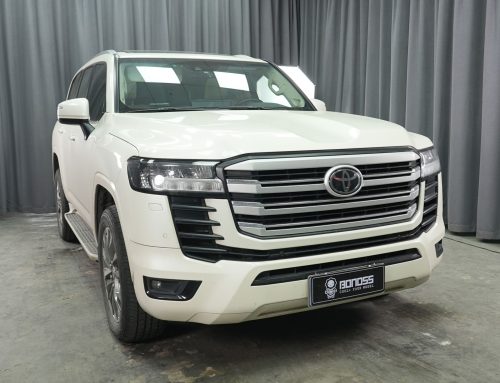
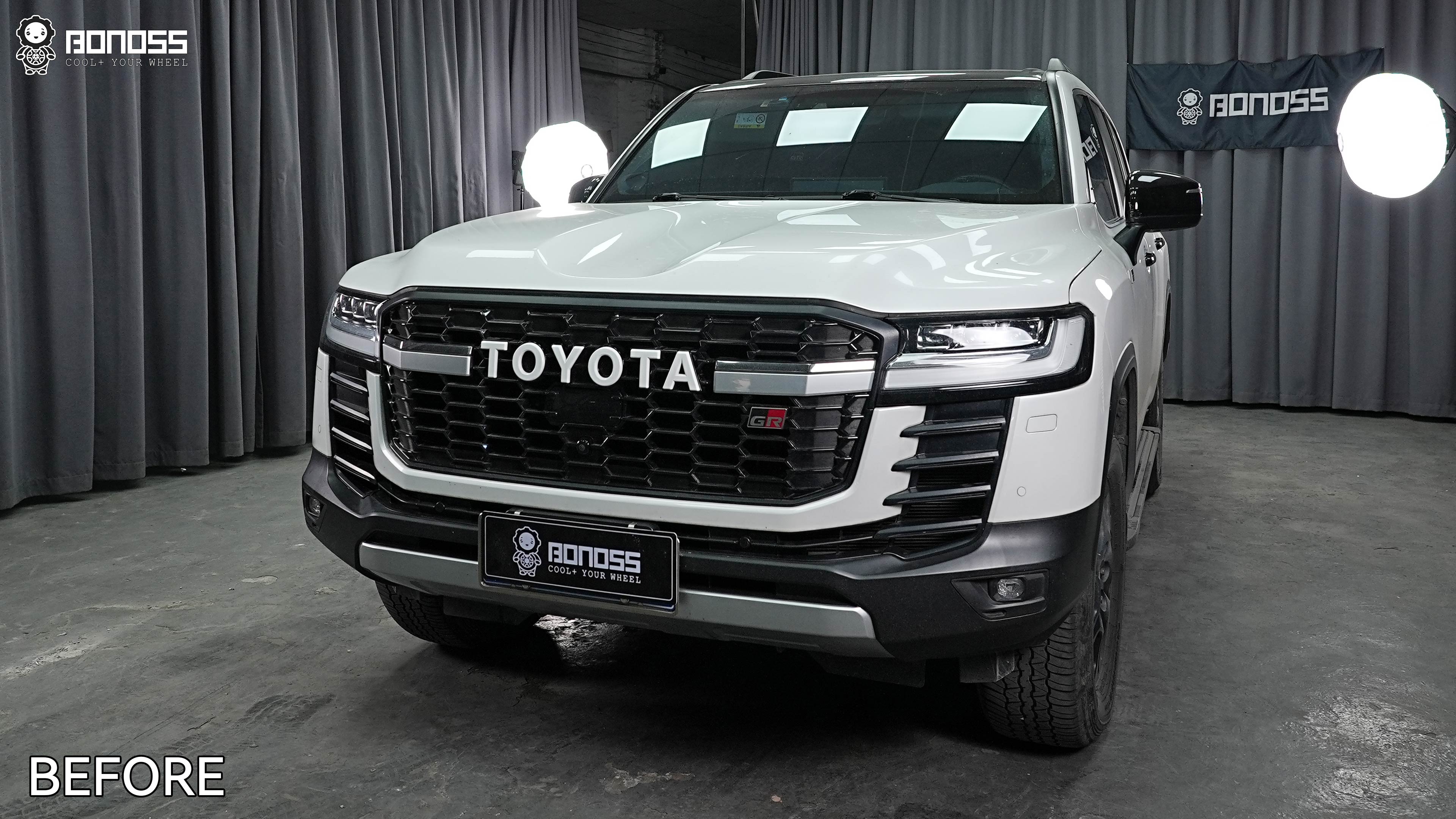
Salman’s 2022 Toyota Land Cruiser 300 Series GR-S came to us on December 16, 2024 with one request: make the wheels sit flush with the fenders. It left the shop with 25mm wheel spacers up front and 30mm spacers at the rear, and it has now covered about 32,000 km (20,000 miles) on that setup — through regional highways, summer heat, and regular runs into the desert.
If you’re researching 2022 Toyota Land Cruiser 25mm wheel spacers, you’ve probably noticed the internet is full of forum opinions and short on installs with actual numbers attached. So here are the numbers: every fitment measurement we took with a vernier caliper and a high-accuracy ruler before a single part went on, before-and-after photos of all four corners, the exact torque values used at both fastening points, and the owner’s unfiltered feedback after 32,000 km.
One detail worth knowing up front: Salman originally planned on 25mm all around, because that’s what his friend’s LC300 runs. Our measurements said the rear needed 30mm. That gap between assumption and measurement is the most useful lesson in this whole story.
Spec Quick Reference: 2022 Land Cruiser 300 (J300)
Numbers first, story after. Everything below was measured on Salman’s truck with a vernier caliper or a high-accuracy ruler unless otherwise noted.
| Item | Specification |
|---|---|
| Vehicle | 2022 Toyota Land Cruiser 300 Series GR-S (J300 platform) |
| Stock wheels / tires | 265/65R18, ET60 offset |
| Bolt pattern (PCD) | 6×139.7mm |
| Hub bore (CB) | 95.1mm nominal — measured 94.93mm on this hub (vernier caliper) |
| Factory lug nuts | M14x1.5, flat seat, 21mm hex (measured) |
| Spacer thickness | Front 25mm / Rear 30mm, forged 6061-T6 aluminum |
| Effective offset after install | Front ET35 / Rear ET30 |
| Hub stud protrusion | Front 24.23mm / Rear 25.87mm (measured) |
| Torque: spacer to hub (BONOSS nuts) | 140 Nm per BONOSS installation instructions |
| Torque: wheel to spacer (factory nuts) | 131 Nm per the owner’s manual |
Torque note — one value per step. Both torque figures above are acceptable for their own step: 140 Nm on the spacer-to-hub nuts per BONOSS installation instructions, 131 Nm on the wheel-to-spacer factory nuts per the owner’s manual. Use ONE torque value for the entire fastening step you’re tightening, never mix the two on the same nut, and never substitute an impact gun for a torque wrench — more on that in the install section.
The Truck and the Goal
Quick context: the Land Cruiser 300 Series is the J300, Toyota’s current body-on-frame flagship. Across the Middle East it needs no introduction, and the GR-S (GR-Sport) trim is the one carrying the enthusiast following — about as close to default transportation royalty as this region gets.
Salman’s truck was completely stock: 265/65R18 tires on ET60 wheels, 6×139.7 bolt pattern, M14x1.5 hardware. Daily driver with weekend desert duty. That 18-inch wheel with a tall sidewall is exactly what you want off the tarmac, so replacing the wheels to chase a stance made no sense — LC300 wheel spacers at 25mm front and 30mm rear let him keep the setup and fix the tuck.
And “ET60” translates to something visual: those factory wheels sit noticeably inside the arches, with the fender line overhanging the tire on both axles. Fine on a dealership lot. Not what anyone calls a good look, and it leaves usable track width sitting on the table.
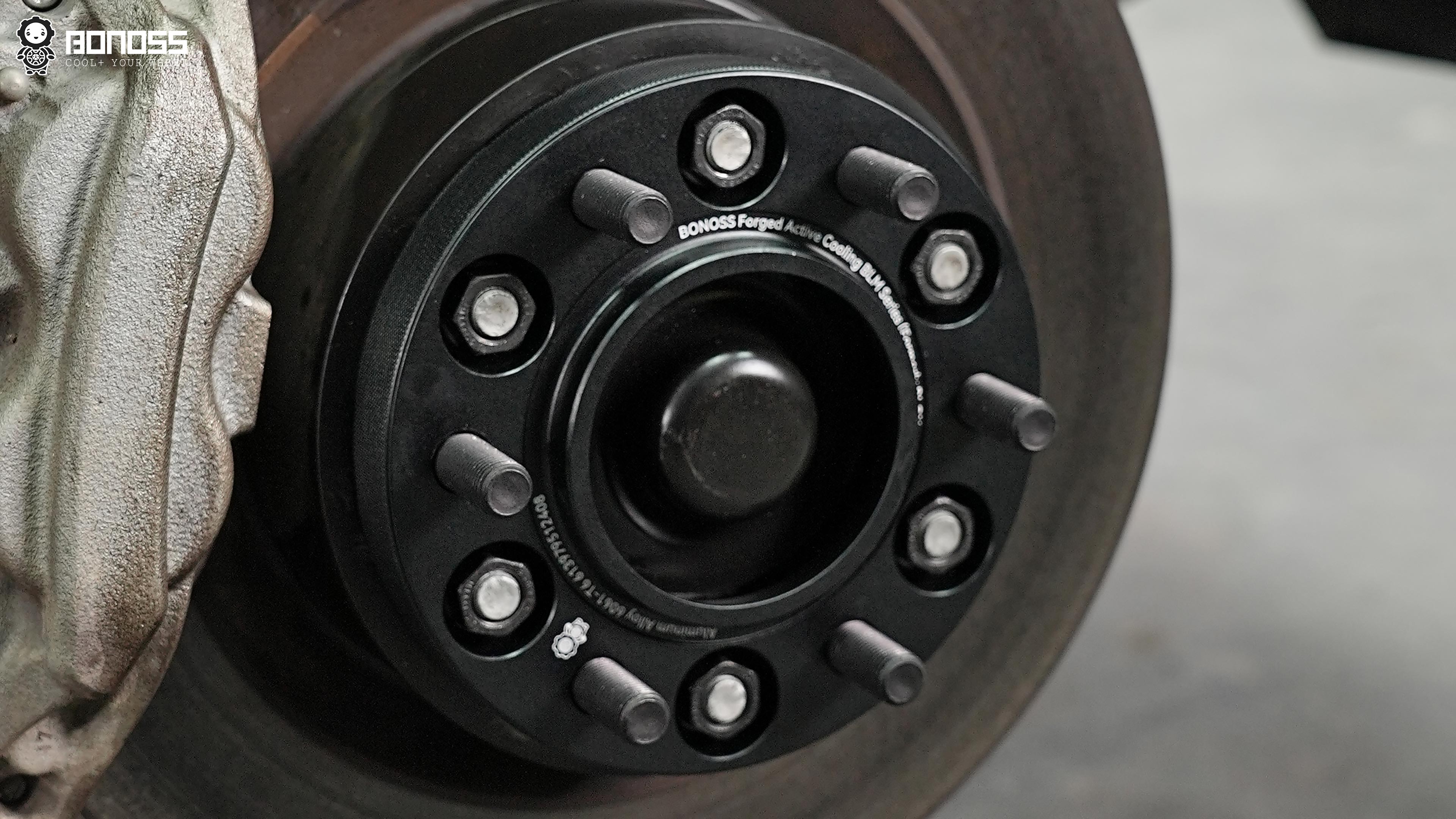
The parts: BONOSS forged active cooling wheel spacers for the J300 — hub-centric, 6×139.7 PCD, forged 6061-T6, a bolt-on design with pre-installed ISO Grade 12.9 wheel studs, sized per our measurements.
Will 25mm Spacers Up Front Actually Sit Flush?
Here’s where most spacer stories go wrong, so let’s start here.
Salman’s reference point was his friend’s LC300 GX-R— 25mm front and rear, looked right. So the working plan when the truck arrived was 25/25. A reasonable assumption. Wrong truck.
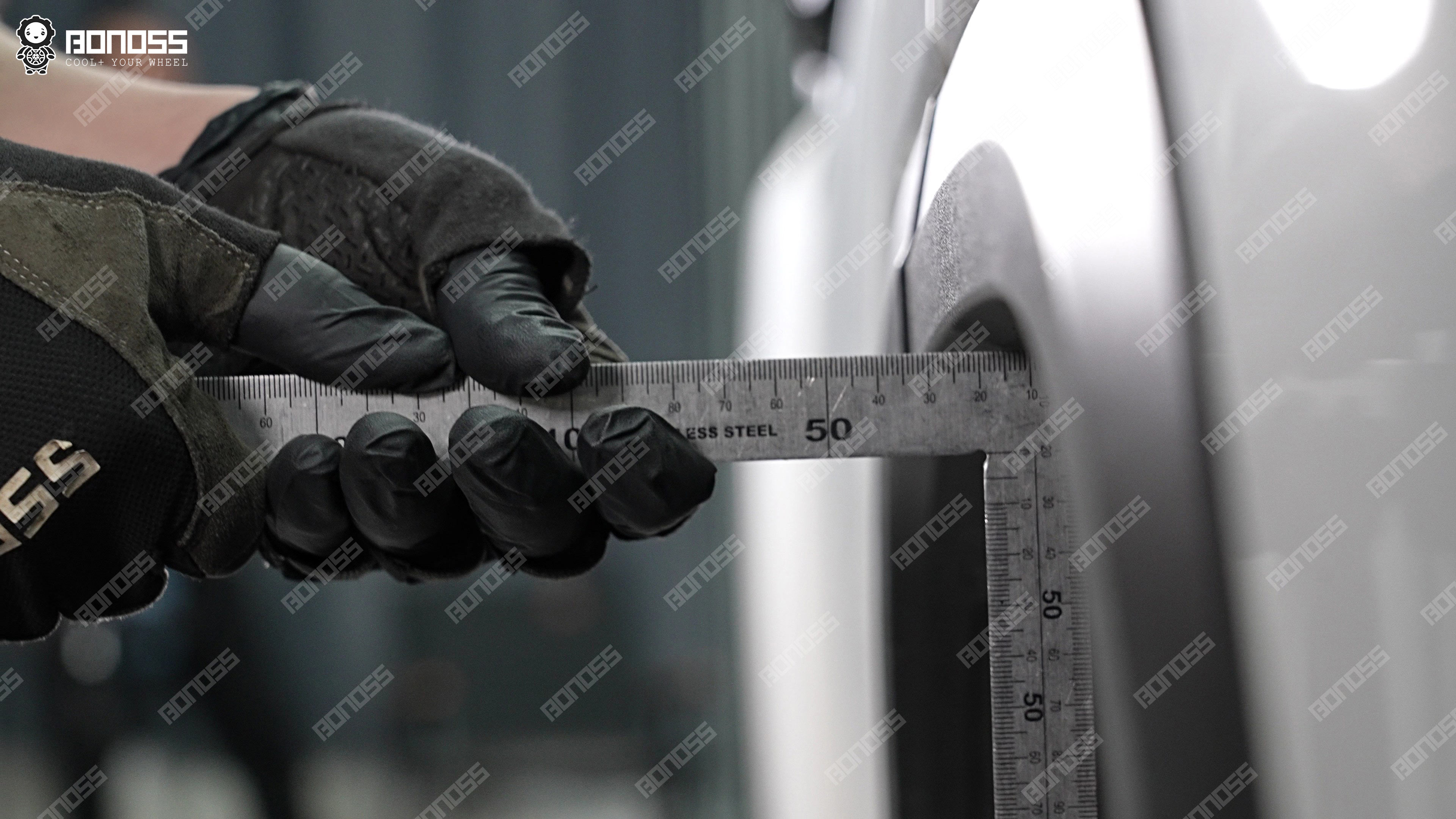
We measure every vehicle before recommending a thickness: fender clearance, hub step height, stud protrusion, wheel pockets — the whole picture, with a high-accuracy ruler and a vernier caliper. On Salman’s GR-S, the ruler said:
- Front wheels: 25mm inside the fender line
- Rear wheels: 30mm inside the fender line
The GR-S is fitted with more flared black wheel arch mouldings. These components significantly increase the visual width of the wheel arches, effectively adding an ‘outer frame’ around the wheels, so the rear wheels need to be pushed out by 30 mm to achieve a flush stance. You cannot see a 5mm difference when two trucks are parked side by side — well, you can if you go looking, but nobody does. You will absolutely notice it if you install 25mm rear spacers and finish 5mm short of flush.
The offset math, in 30 seconds
A spacer’s thickness subtracts directly from wheel offset. Stock wheels are ET60:
- Front: ET60 − 25mm = effective ET35
- Rear: ET60 − 30mm = effective ET30
That’s the entire calculation. Push the wheel out 25mm, and the offset drops by exactly 25mm. No rounding, no interpretation.
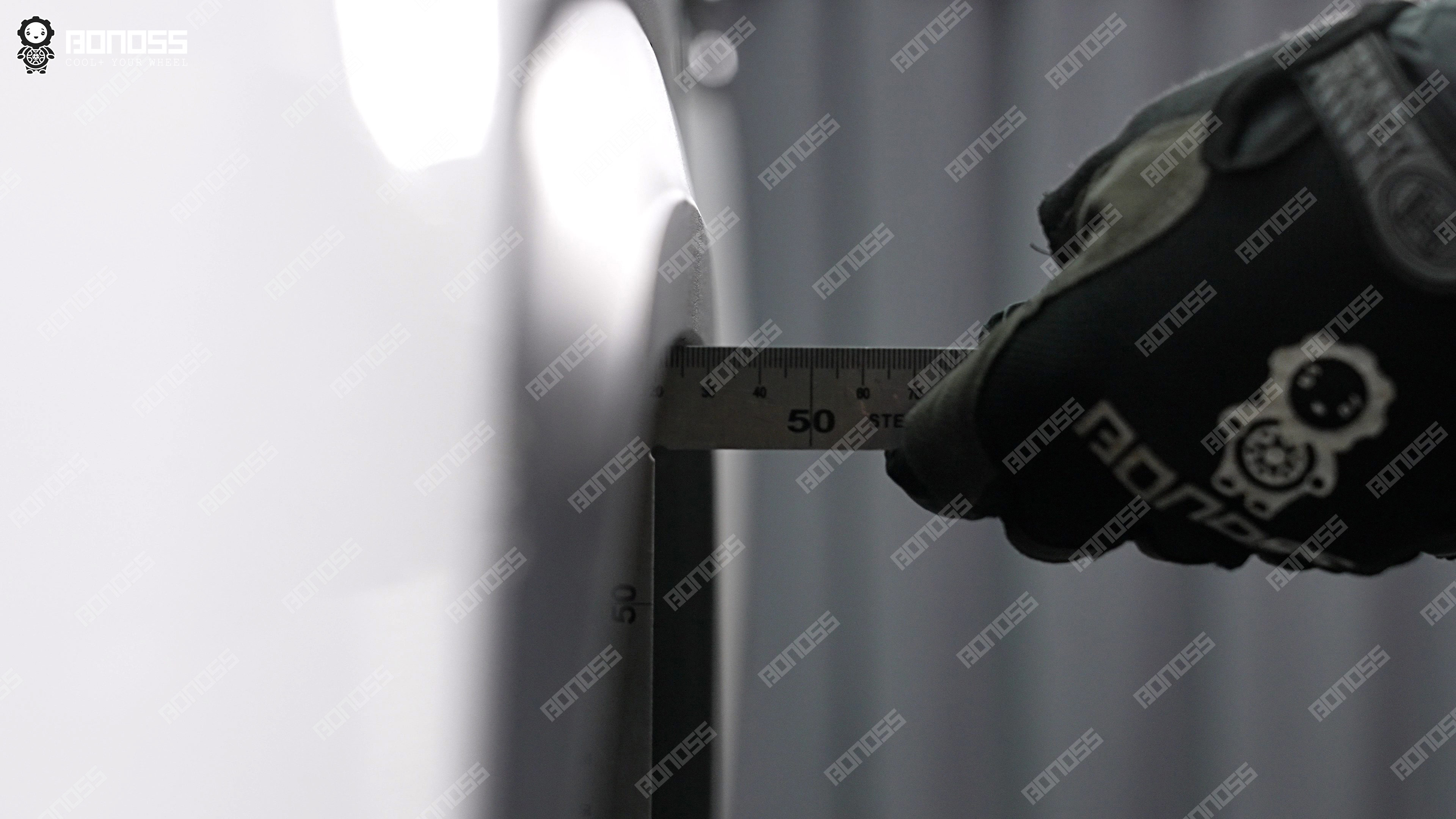
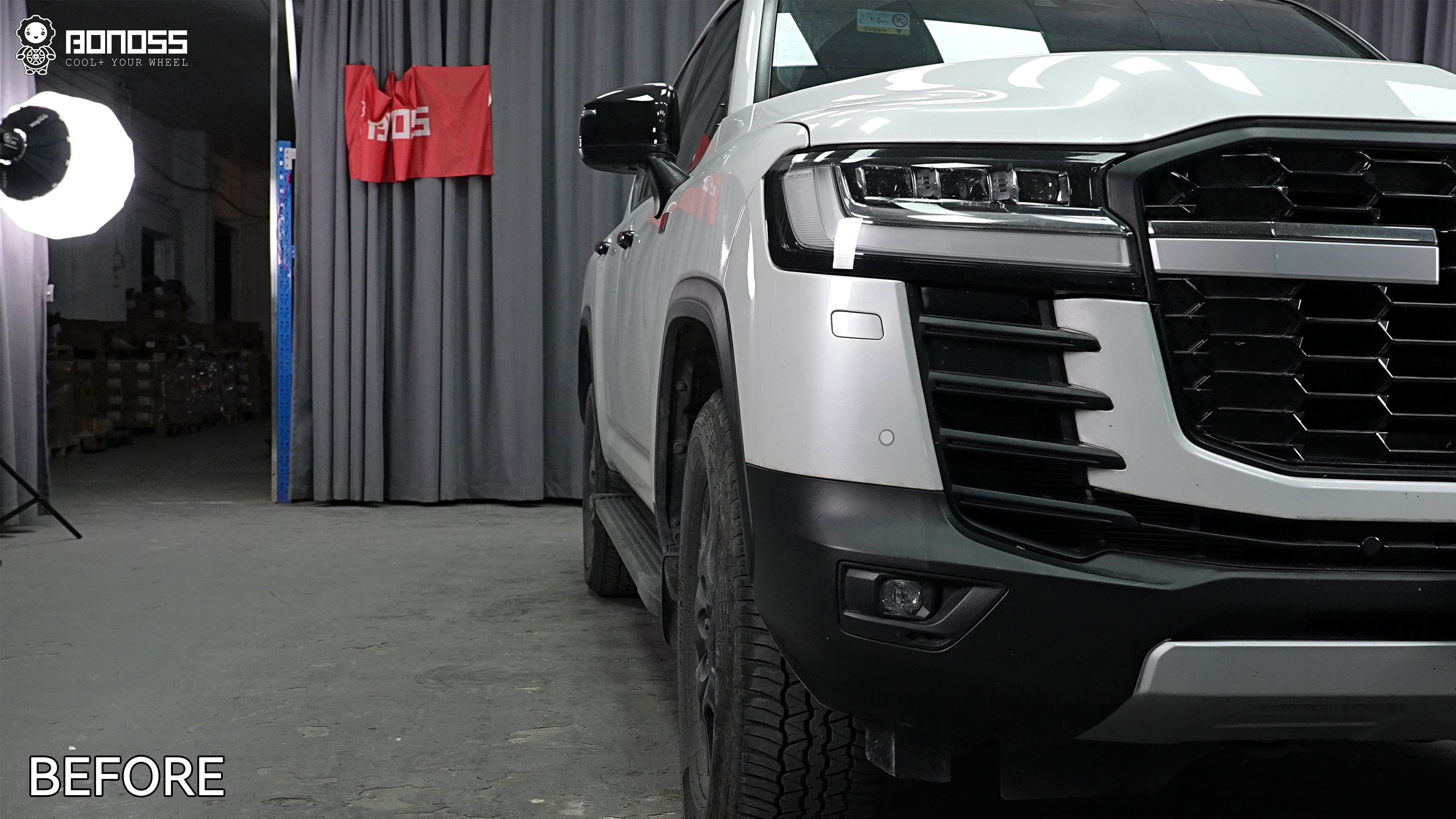
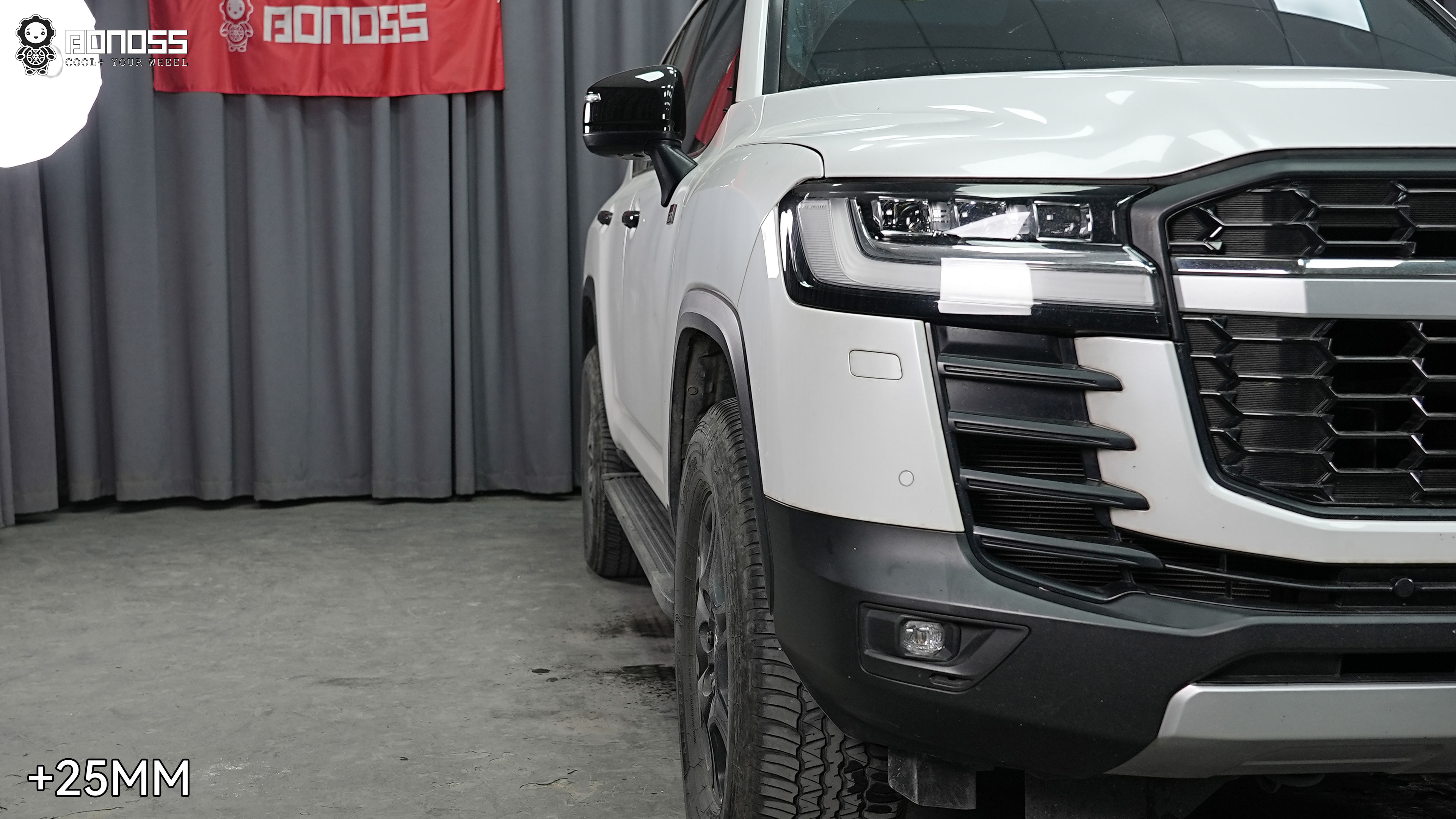
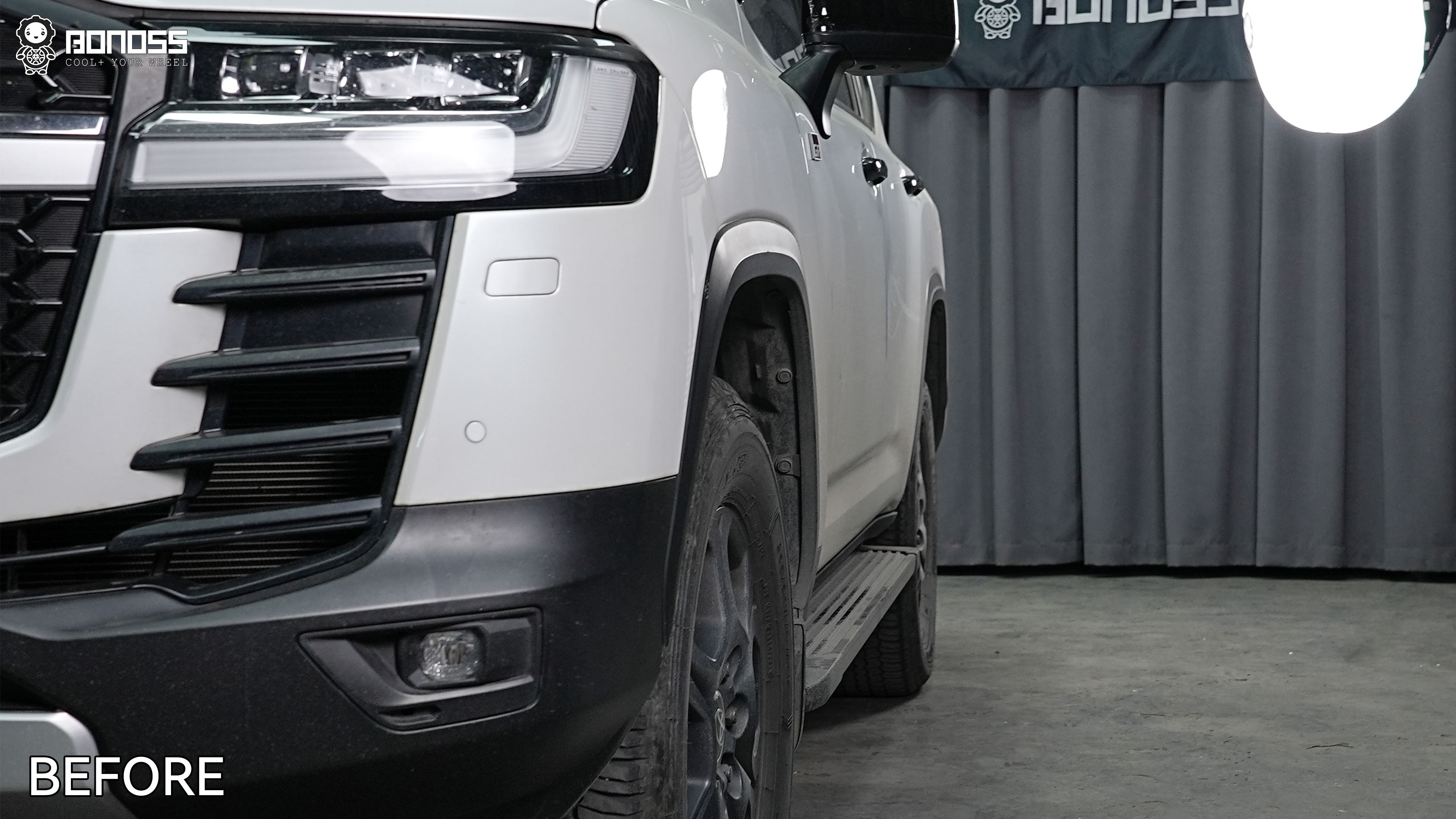
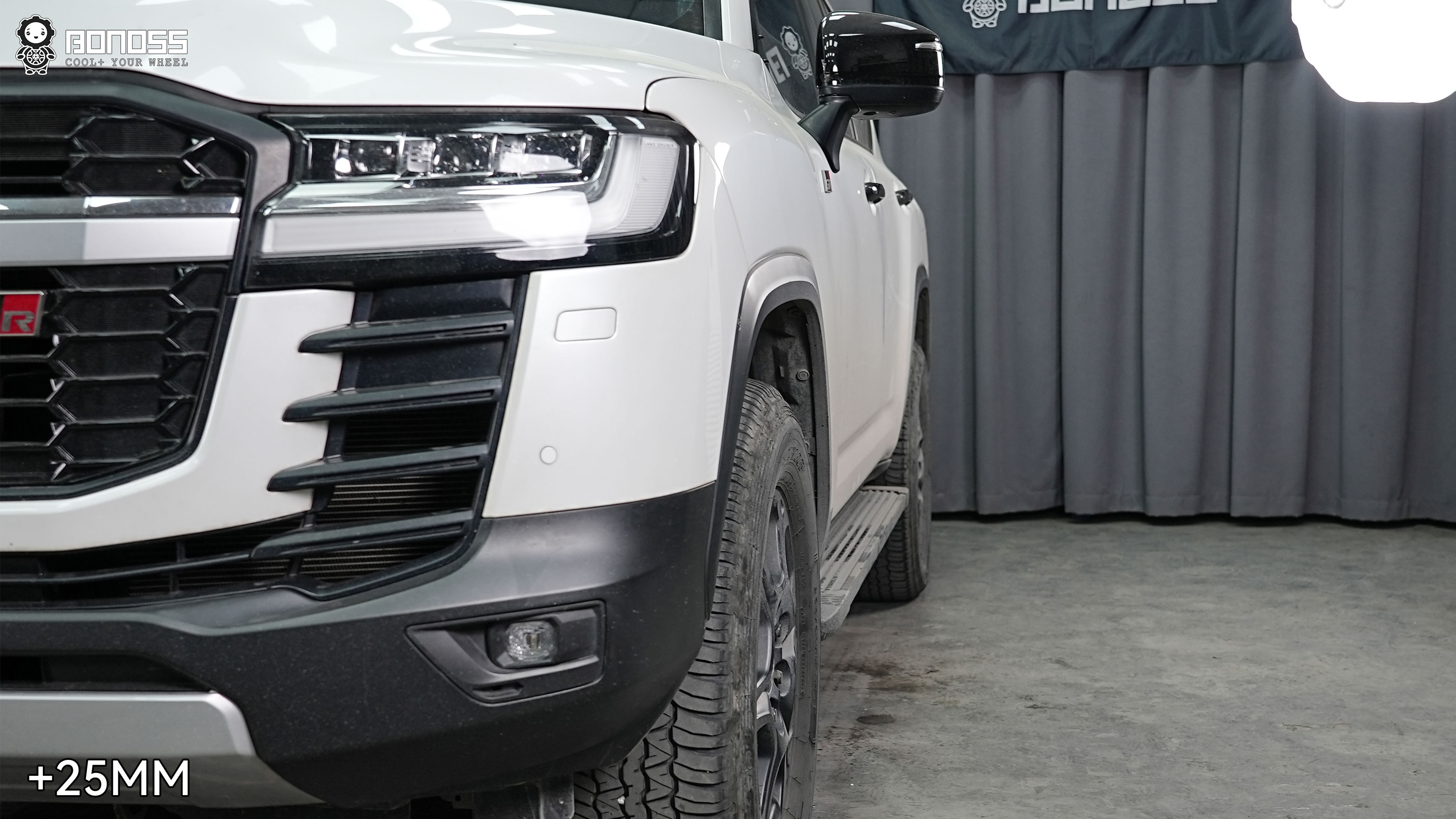
Land Cruiser LC300 25mm spacers before and after (front)
The fronts went on with 25mm spacers — Toyota Land Cruiser 25mm spacers in 6×139.7 that bolt to the factory studs and present their own hub pilot for the wheel. The result is exactly what the math promised: tires sit level with the fender line, and the truck finally looks the way it should have left the factory.
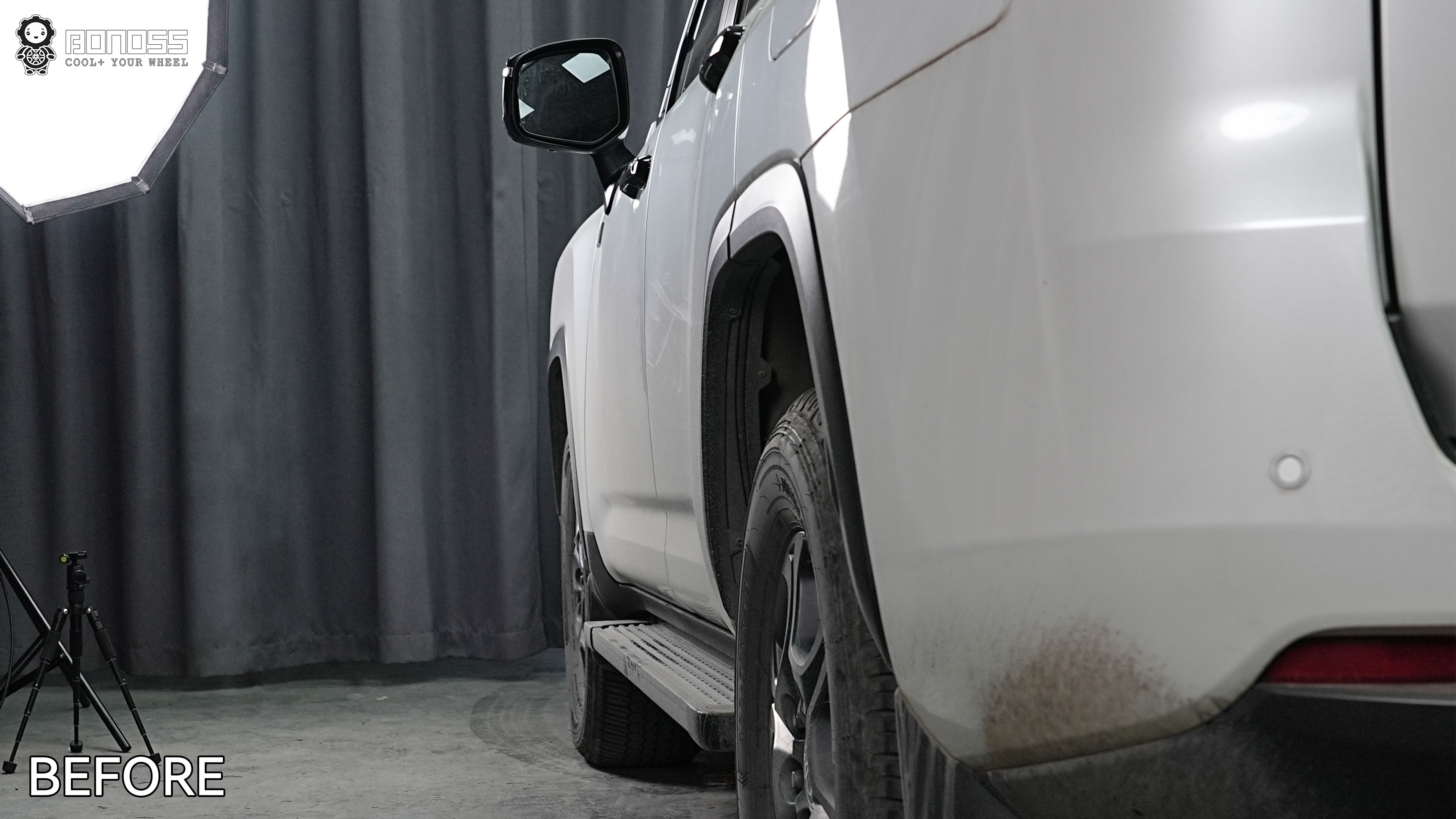
2022 LC300 30mm spacers before and after (rear)
The rears took Toyota Land Cruiser 30mm spacers in the same 6×139.7 pattern — 5mm more than the fronts, because that’s what the ruler said, not because 30 is a magic number. Effective ET30, and the rear arches now frame the tires instead of overhanging them.
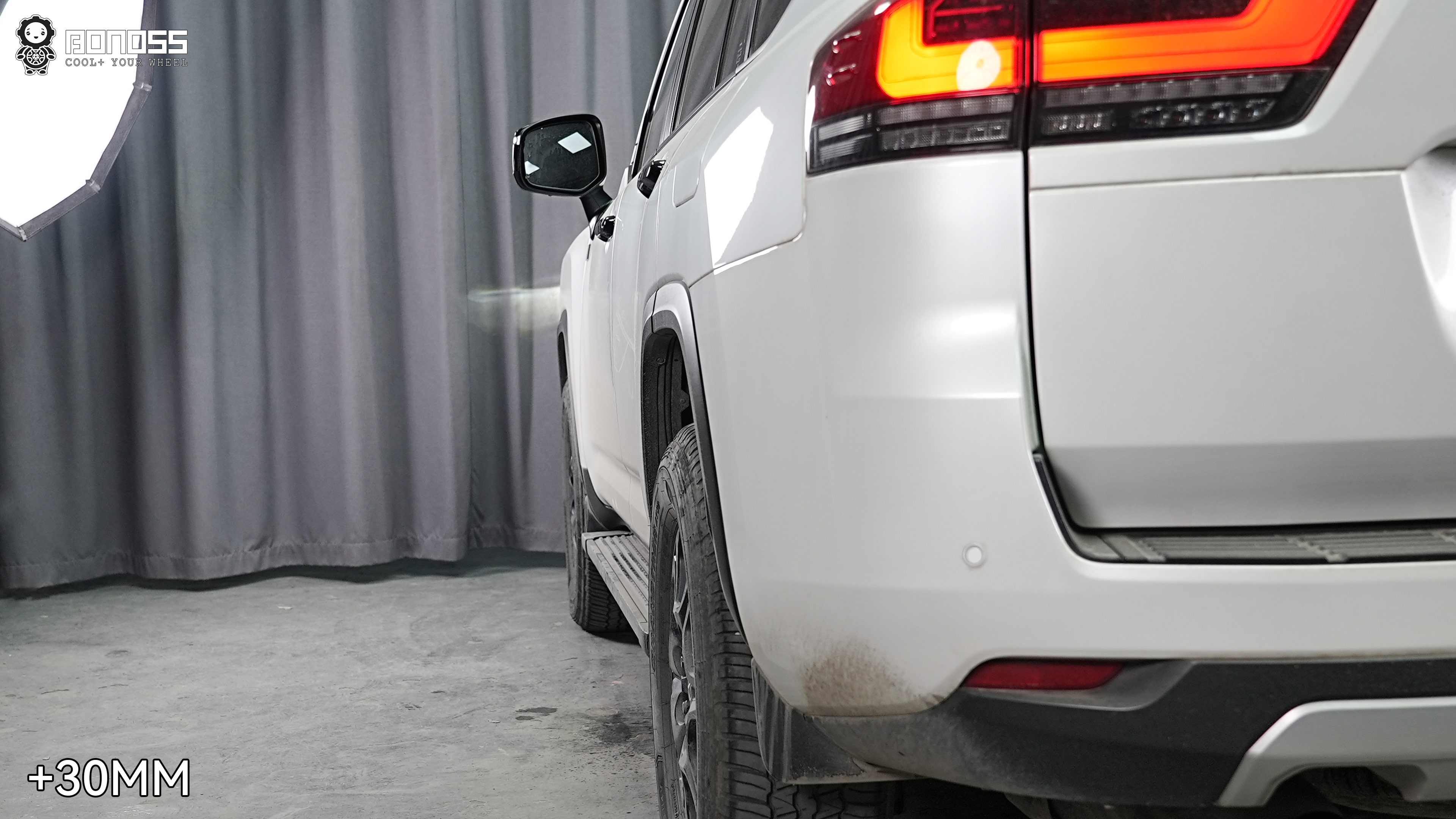
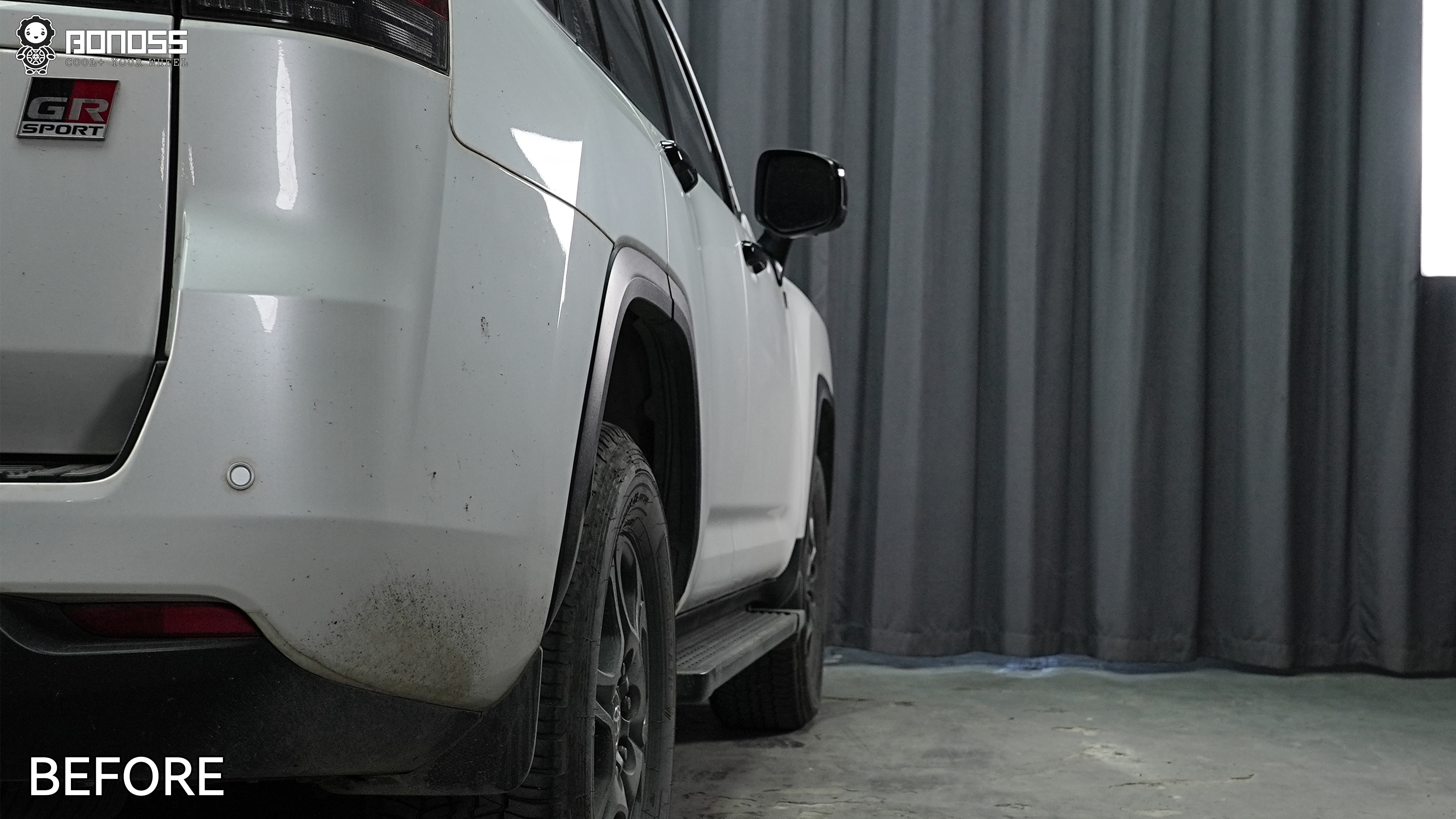
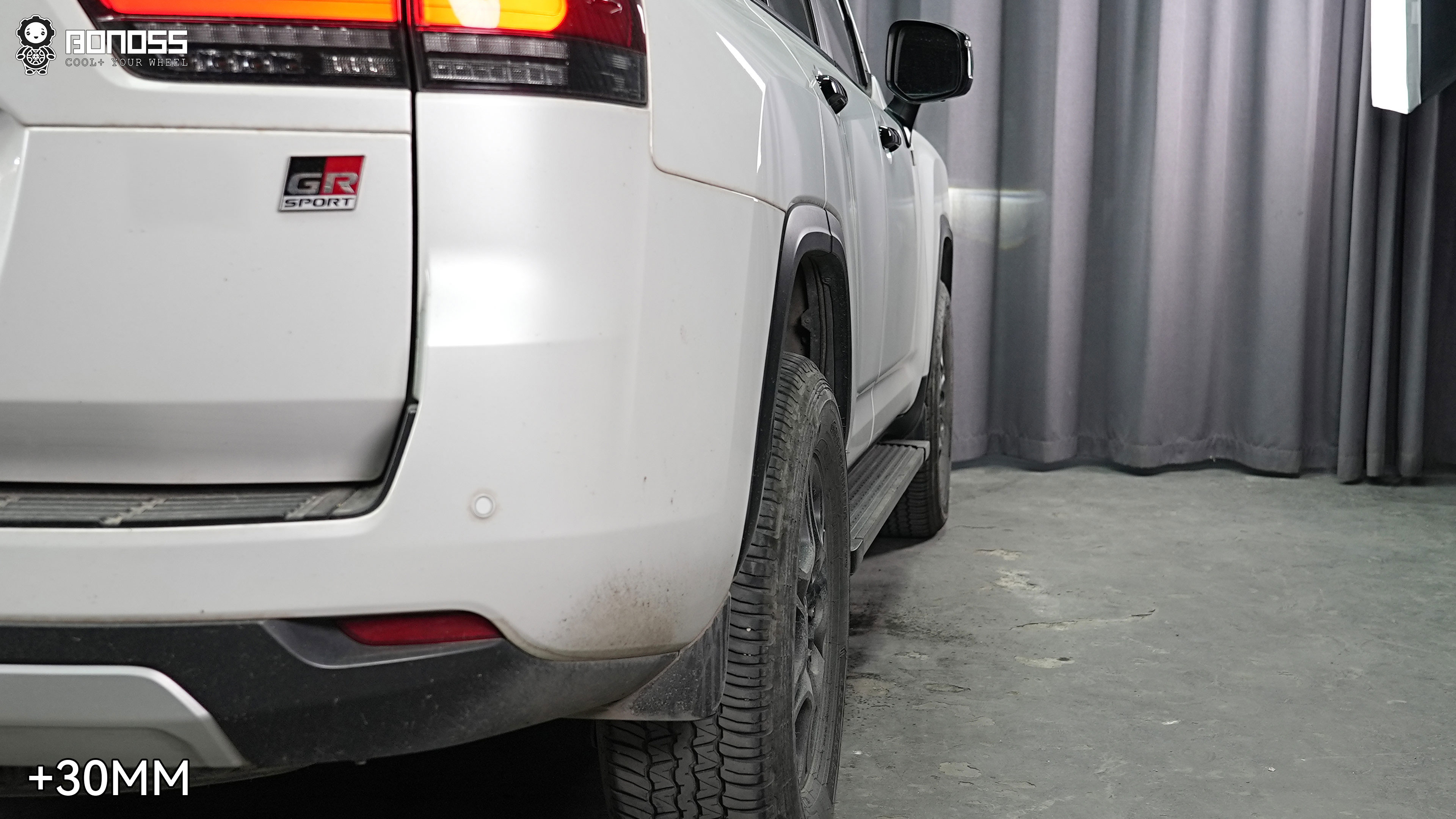
Stock to flush, no cutting, no new wheels. One opinion before we move on. If you’re weighing Toyota Land Cruiser spacers 25mm vs. 30mm for your own truck, the answer isn’t in this article or any forum thread — it’s on your fender, and a ruler will read it in five minutes. This is also why we don’t publish one universal Toyota Land Cruiser spacer spec: platform-sharing doesn’t guarantee shared fitment. Like an LC200, an LX600, and a Prado 250, each needs its own measured numbers before anyone orders parts.
Are Wheel Spacers Safe on a 2022 Land Cruiser?
The honest version: spacers are safe when three conditions hold — hub-centric design, certified hardware, and a torque wrench. Drop any one of the three, and you’ve built a problem. This install met all three and now has 32,000 km behind it. We’ve covered the general safety question in depth in are Toyota Land Cruiser wheel spacers safe.here’s the J300-specific version.
Hub-centric vs. lug-centric on a 6×139.7 truck
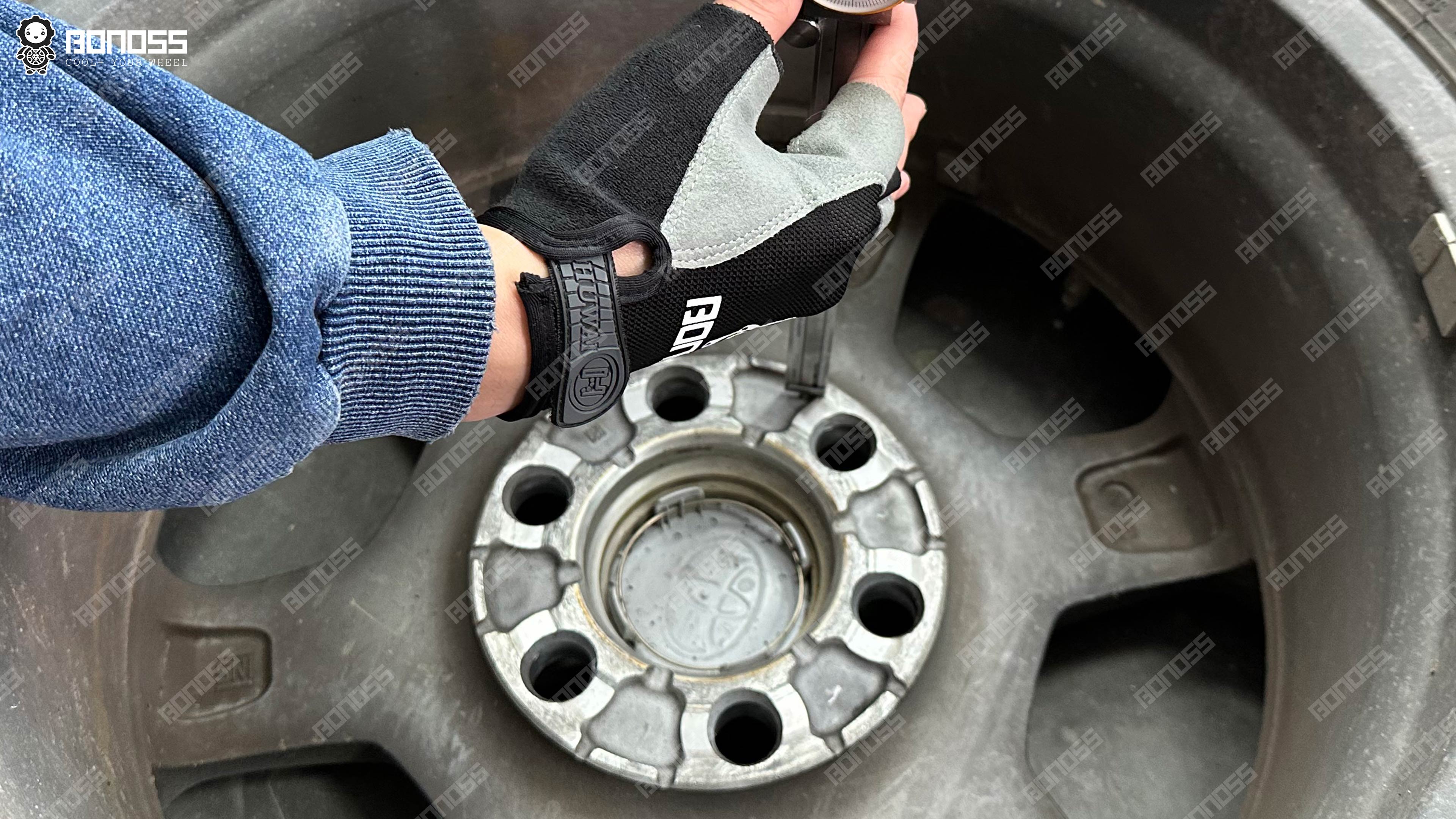
Before anything was ordered, we measured the hub itself: a 10.46mm centering step up front, 12.32mm at the rear, and a hub pilot that measured 94.93mm on the caliper (95.1mm nominal — real hubs run a few hundredths off the drawing, which is exactly why you measure).
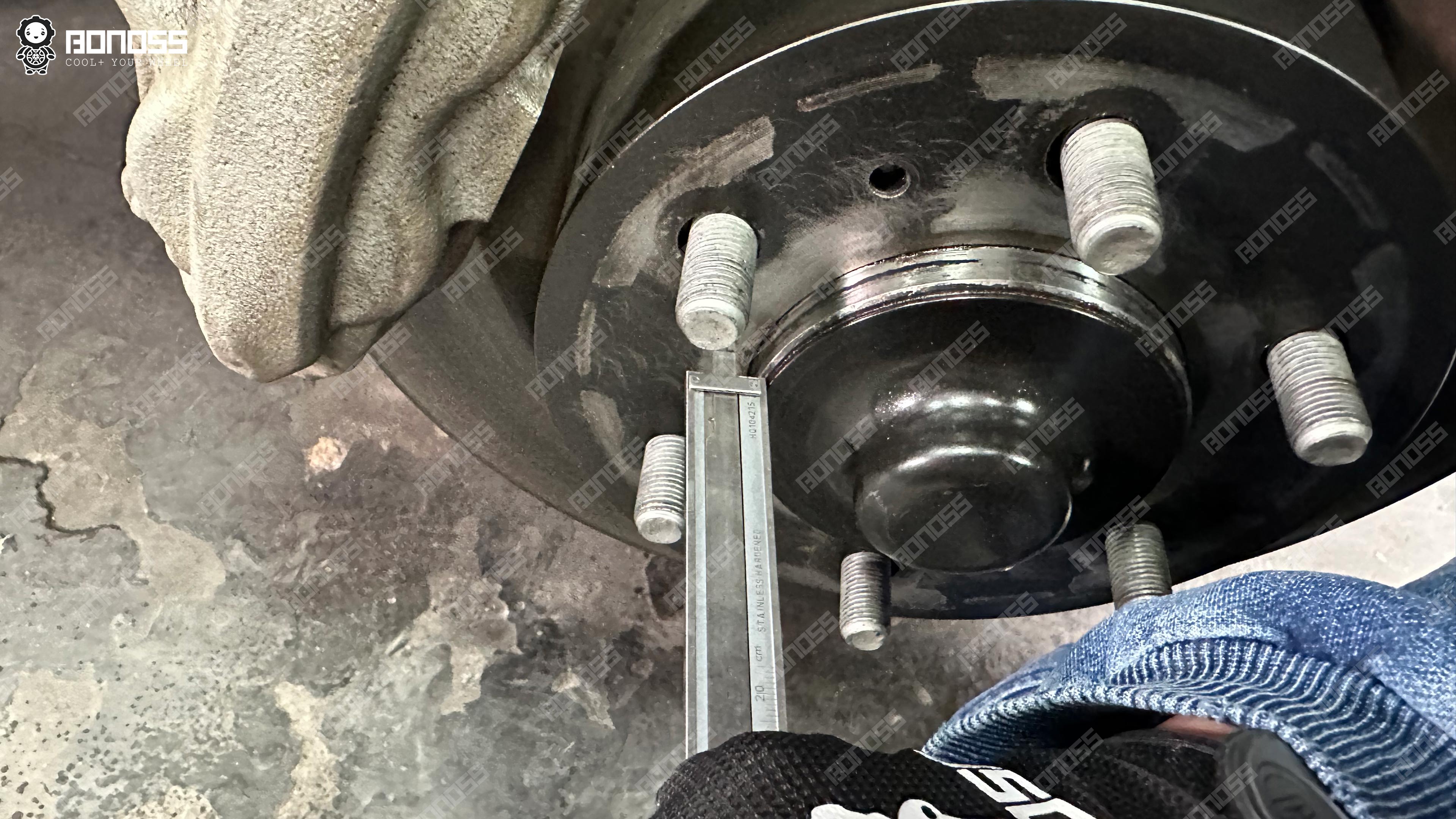
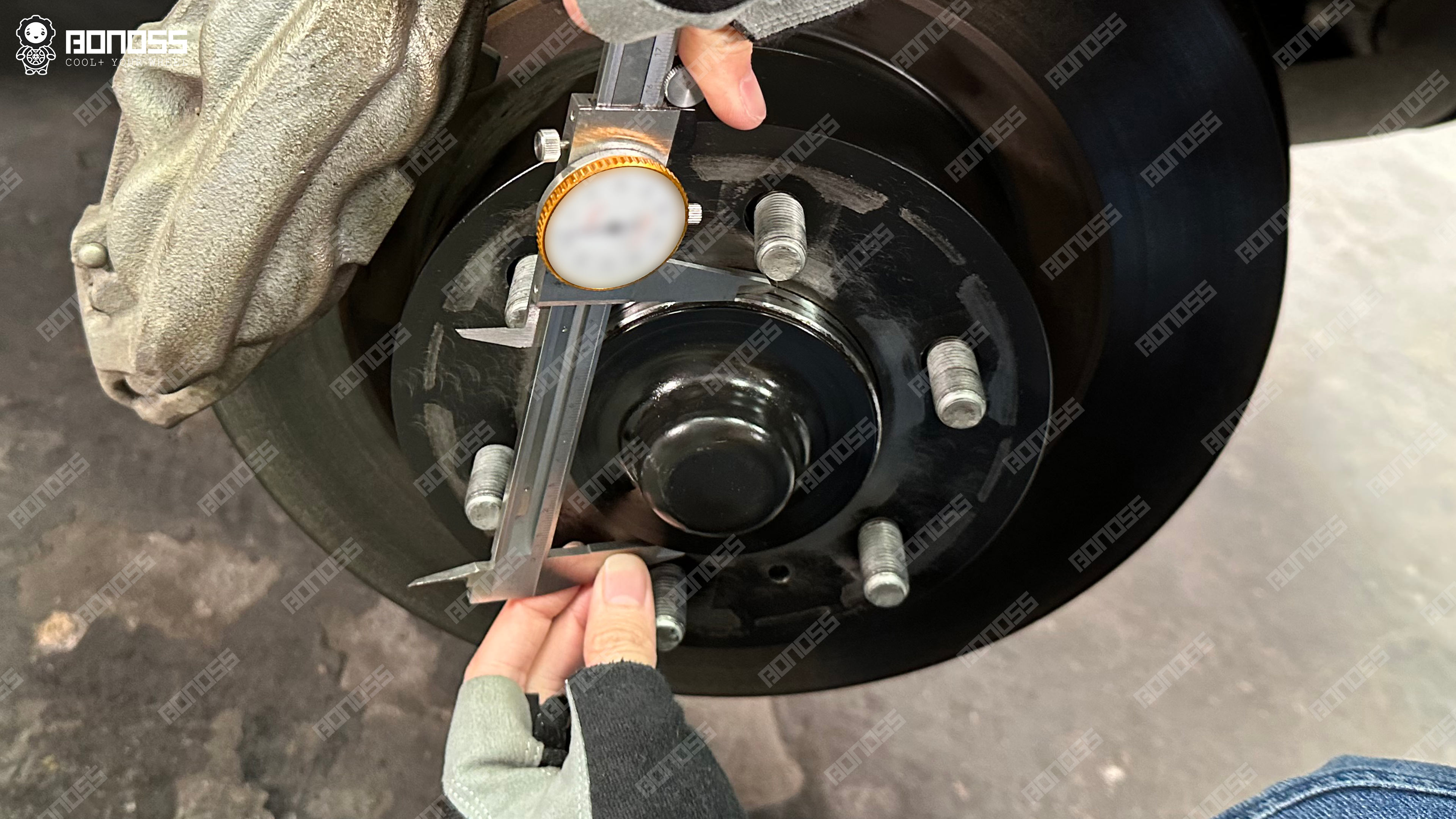
A hub-centric spacer pilots on that factory step, so the wheel is located by the hub, the same way Toyota locates it from the factory. A lug-centric spacer has a clearance hole instead and asks the lug nuts to find center as they tighten. On a truck this heavy, that slop shows up as steering-wheel vibration at speed. Land Cruiser J300 hub-centric spacers don’t leave centering to chance.
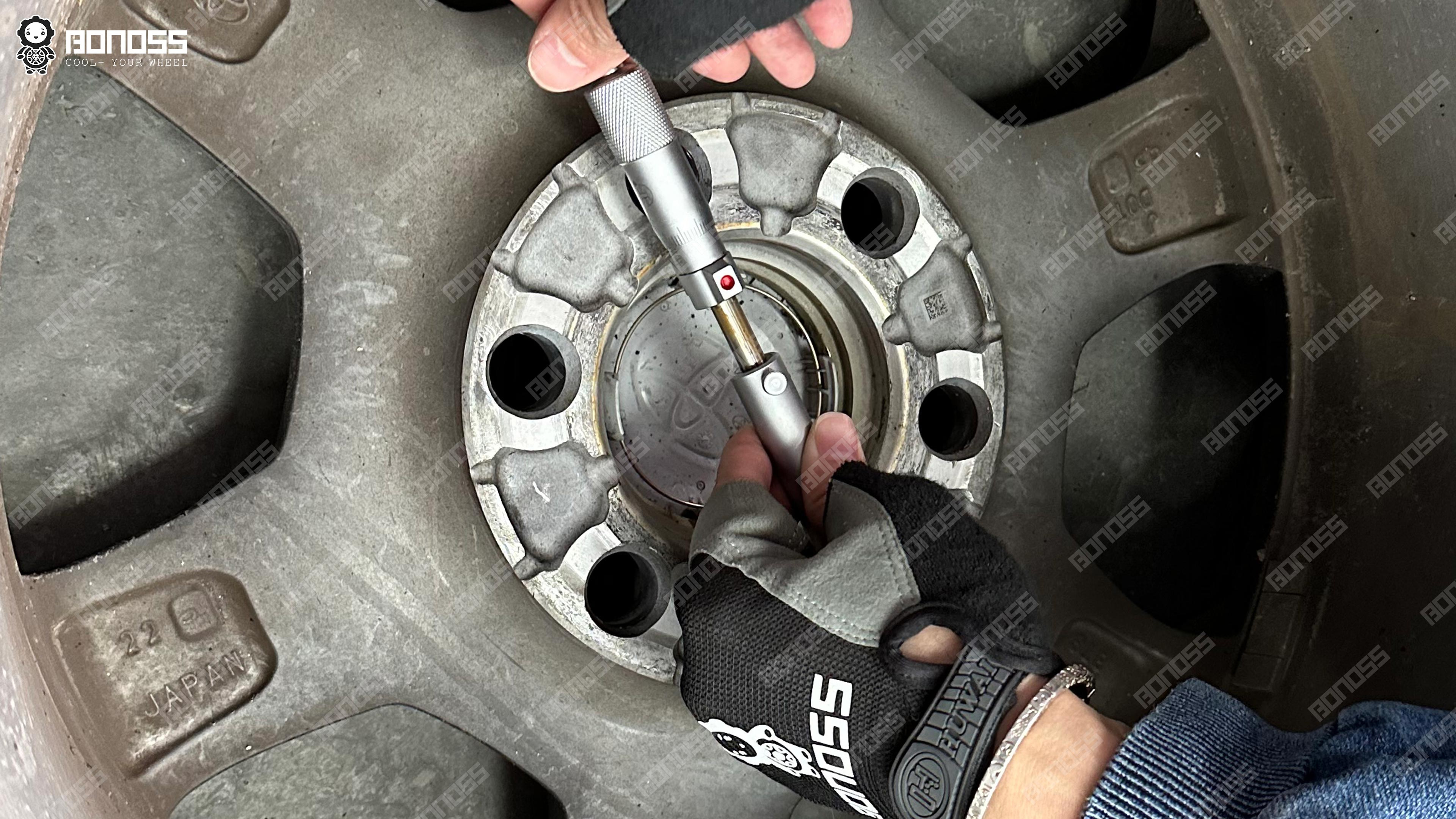
BONOSS uses a multi-stage hub-centric design: the spacer seats on the hub’s centering step, then presents its own machined pilot to the wheel. We confirmed the wheel side too — the center bore measured 95.1mm with a micrometer.
Hardware you can verify, not just trust
Every spacer ships with ISO Grade 12.9 wheel studs (M14x1.5 on this truck) and ISO Grade 10 lug nuts with a full-cone seat. “Grade 12.9” is a claim until there’s paper behind it, so here’s the paper:
- Studs, SGS: tensile strength 1268 MPa (report) and proof load 121 kN (report), both per ISO 898-1:2013+Cor-1:2013; hardness 391–401 HV10 per ISO 6507-1:2018 (report)
- Studs, TÜV: tensile strength 1233 MPa per ISO 898-1:2013+Cor-1:2013 (report) and hardness 386–390 HV10 per ISO 6507-1:2018 (report)
- Nuts, SGS: proof load 138.8 kN per ISO 898-2:2012 (report) and hardness 358–362 HV0.5 per ISO 6507-1:2018 (report)
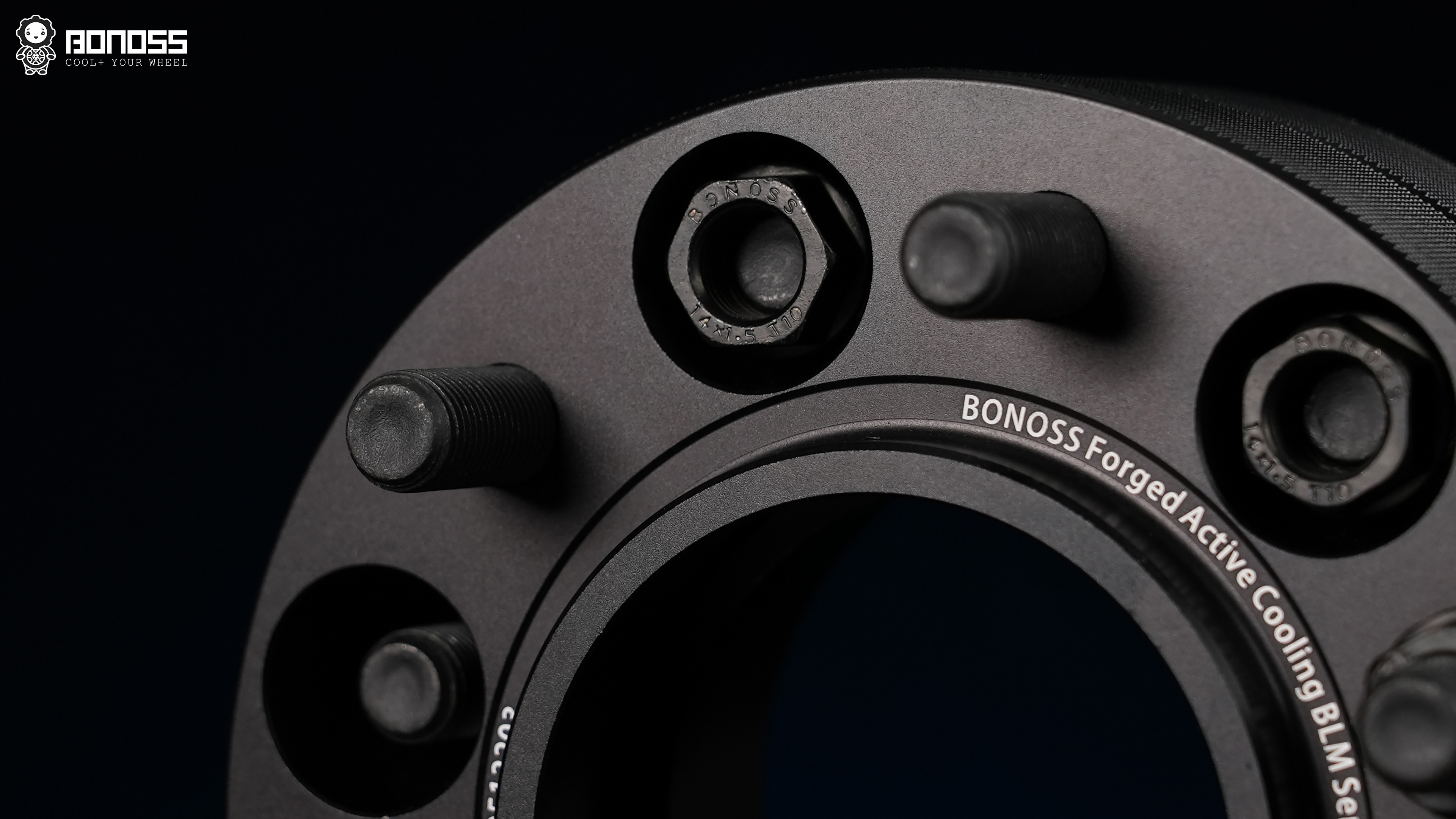
You’ll notice SGS and TÜV report different tensile figures for the same M14x1.5 stud spec — 1268 vs. 1233 MPa. That’s normal, and it’s worth understanding why: different laboratories, different test samples, and measurement uncertainty all shift a reading a few percent. Nut figures differ from stud figures because a nut’s thread engagement doesn’t behave like a stud’s. And an M14x1.5 thread will never match M14x1.25 data — same nominal diameter, different pitch, different numbers across the board. Any time you see fastener values quoted anywhere, the underlying certification report is the source of truth. Ours are linked above; read them yourself.
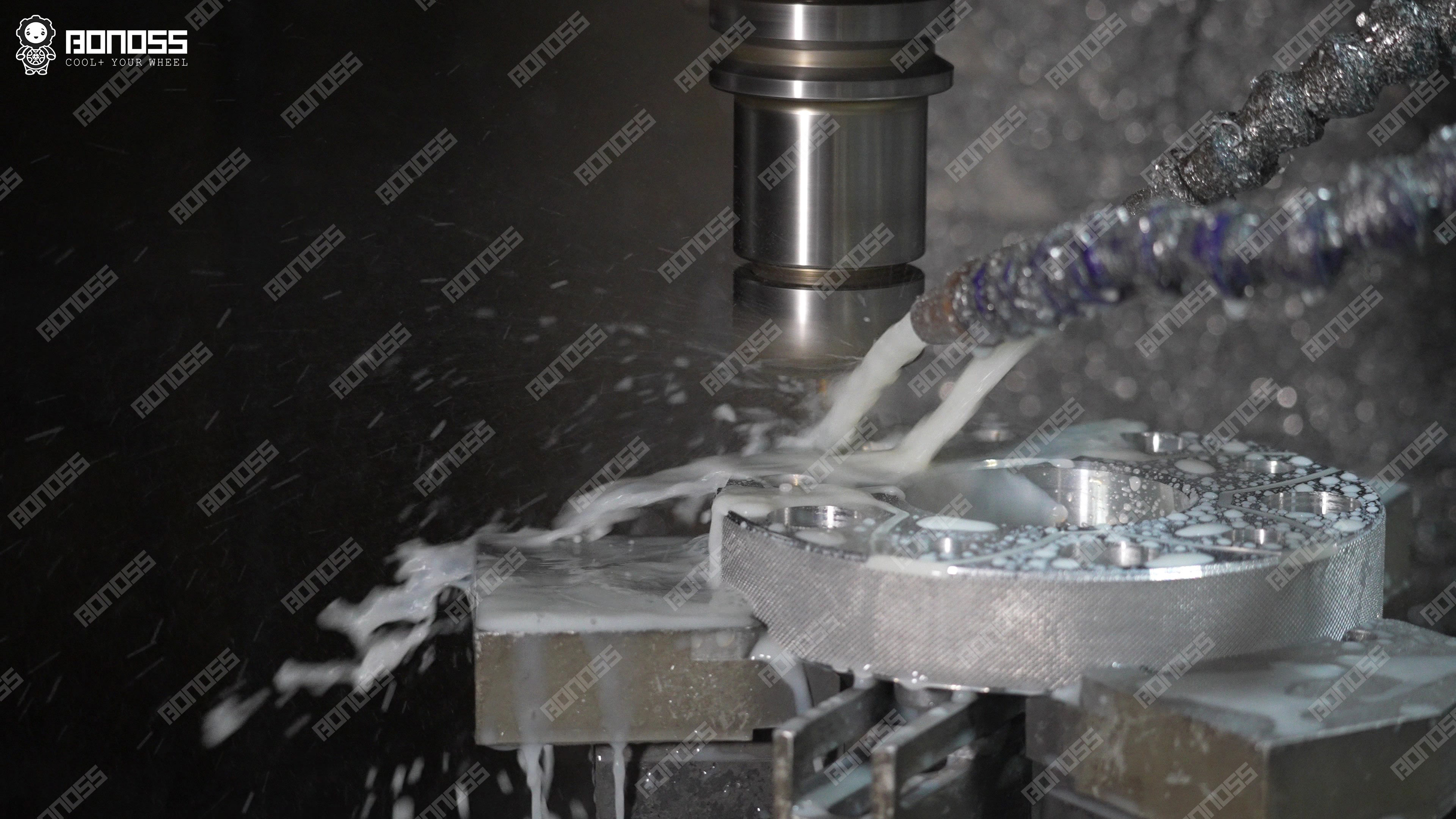
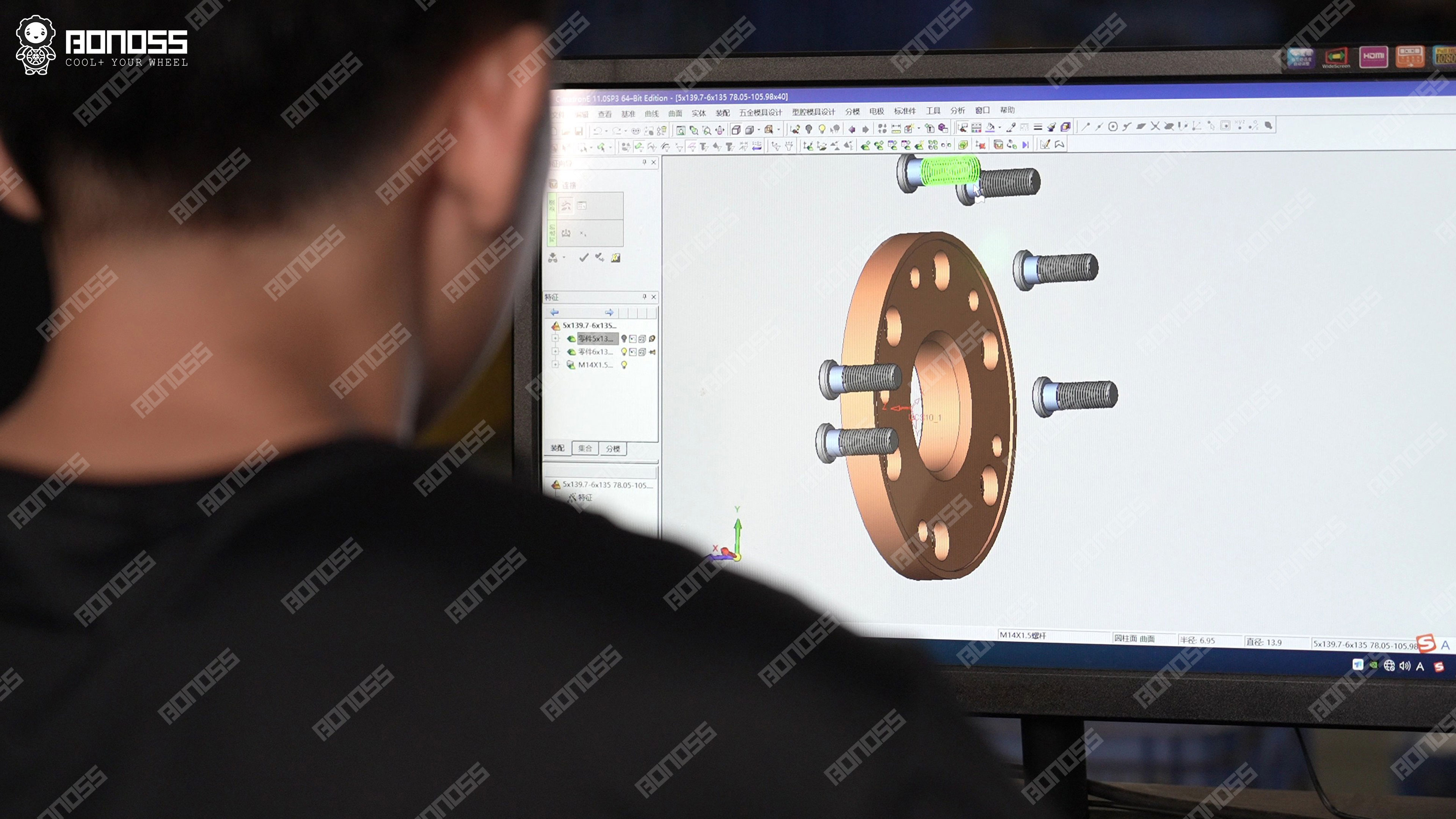
The spacer bodies are forged 6061-T6 aluminum — TÜV-measured hardness of 101–103 per ISO 6506-1:2014, and 240 hours of neutral salt spray exposure with no defects per ISO 9227:2022+Amd 1:2024. Forging matters here: a forged billet carries a uniform grain structure, where a casting can hide porosity. It’s one of the reasons BONOSS machines every spacer from forged stock on in-house CNC equipment, to a 0.02mm tolerance, from the first drawing to the finished part.
Active cooling, minus the brochure language
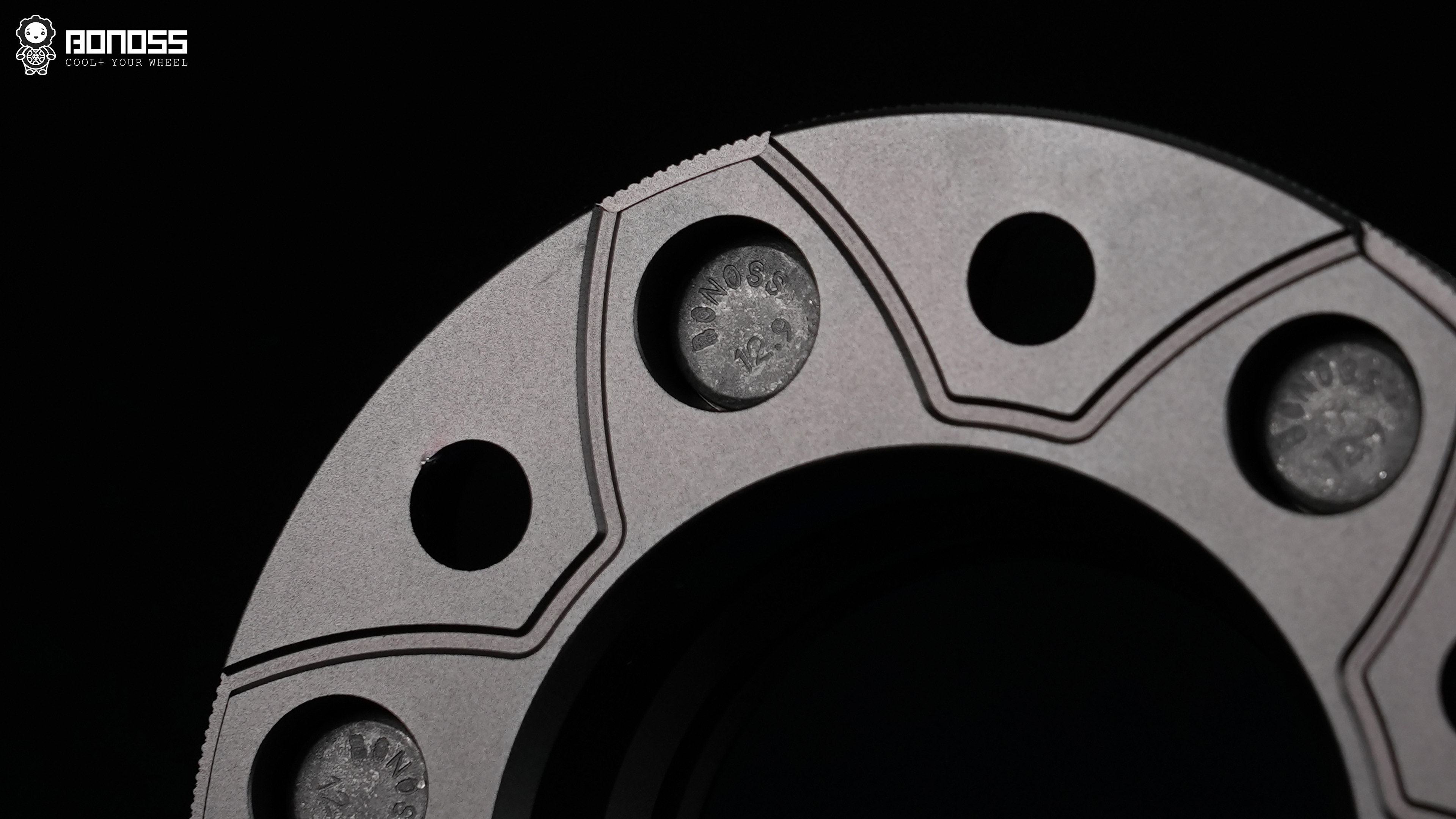
“Active cooling” sounds like a marketing department got creative — until you look at the part. Instead of a flat disc of aluminum, the spacer body is carved with a groove pattern. More surface area meets moving air, and the grooves give air a path through the area around the hub and brakes instead of leaving a sealed, dead zone. The design intent is heat management in the hardest-working corner of the truck. 32,000 km, including desert heat, and the hardware has held up great.
The 32,000-km verdict from the driver’s seat
Lab reports certify parts. Owners certify installs. Salman, 32,000 km in:
“These spacers solved my fitment issues and installed easily. Improved stability and look on my ’22 LC300. Quality is high, parts arrived clean and properly measured, all hardware included. Fair price. 32,000 km so far, no change in fuel consumption, still holding up well. Thanks.”
Do I Need Extended Studs — or Any Stud Trimming?
No, and no. But don’t take our word for it — take the measurements.
We measured how far the factory hub studs protrude before the parts were ordered: 24.23mm at the front, 25.87mm at the rear. The front spacers are 25mm thick. So on the front axle, the factory studs end 0.77mm below the spacer’s outer face — they never reach the surface the wheel sits on.
That number matters because protruding studs are the classic spacer headache: when a factory stud pokes past the spacer face, it can bottom out against the wheel and keep the nut from clamping properly, and the fix usually involves trimming studs. Salman’s fronts clear with 0.77mm to spare — meaning even a wheel with no pockets at all would bolt straight on. His factory wheels do have pockets, measured 4.52mm deep, so the real-world margin is even bigger.
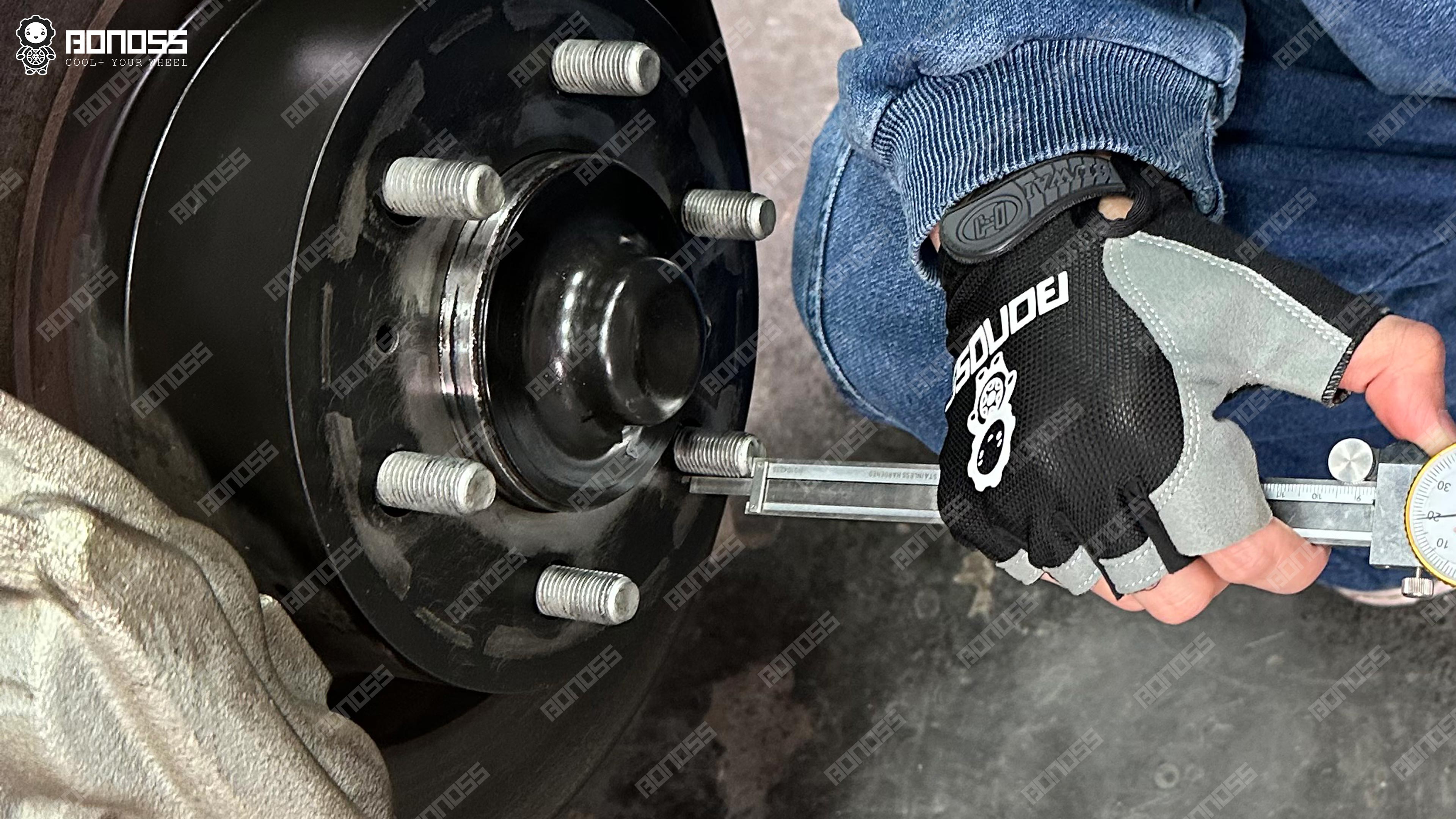
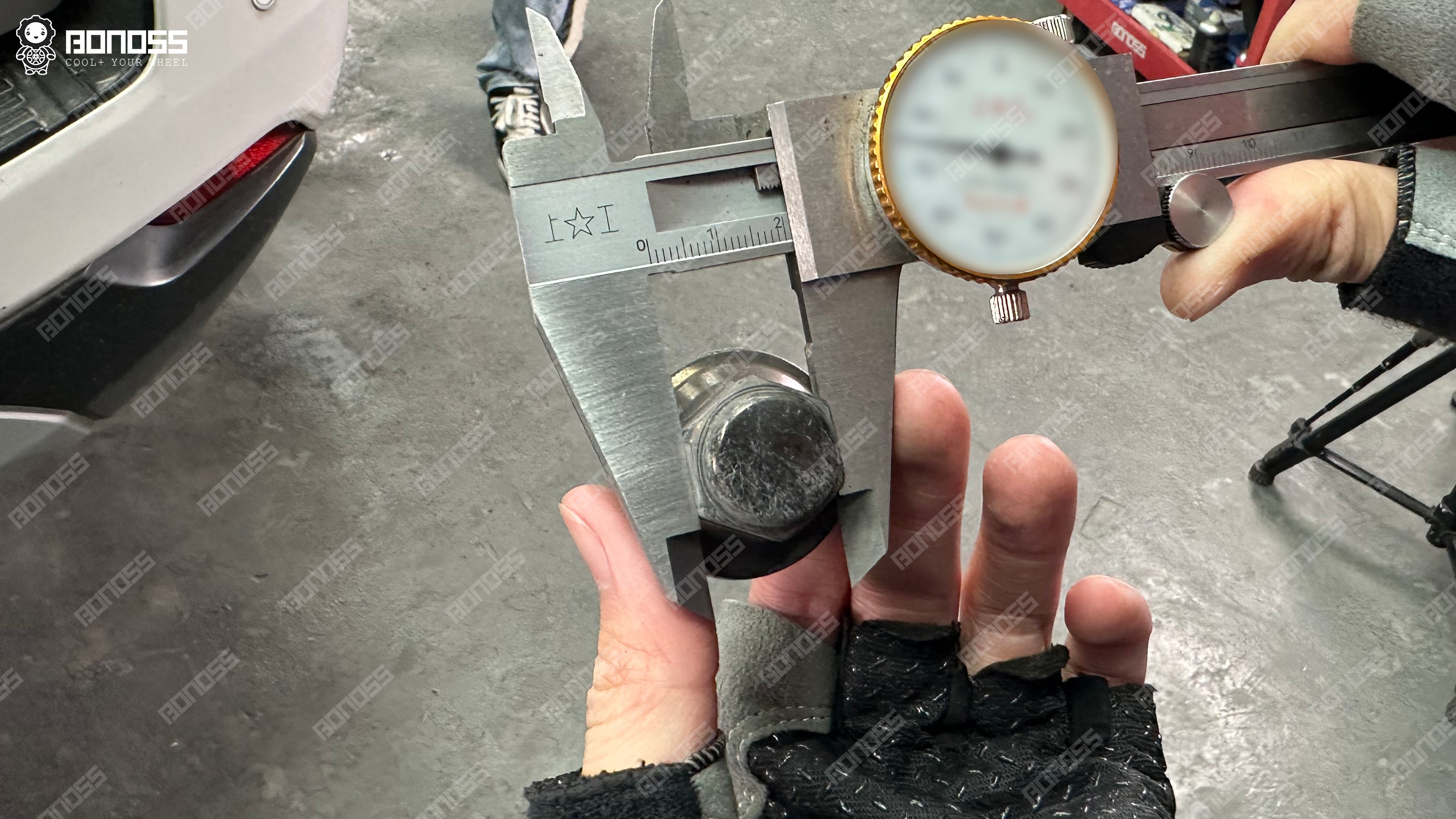
The rear runs the same logic: 25.87mm of stud under a 30mm spacer, 4.13mm of clearance.
So: no extended studs, no trimming, no grinding. The spacer bolts to the factory studs with BONOSS nuts, and the wheel bolts to the spacer’s own ISO Grade 12.9 studs with the factory flat-seat M14x1.5 nuts — the exact hardware the truck was born with, on a 21mm hex.
On rubbing: effective ET30 at the rear with stock 265/65R18 tires, 32,000 km driven, zero rubbing reported, and the stock brake calipers cleared with no interference. Fitment always depends on your specific tire size and brand, so measure before ordering, but on a stock GR-S, this setup ran clean.
The Install: Two Torque Values and One Iron Rule
The install itself is deliberately boring. Boring is the point.
Measure first. Fender clearance, hub step, hub bore, stud protrusion, wheel pockets — all of it, before any part is ordered. Salman noticed: “They also measure, clean, and test everything before installation, which is reassuring for sure.”
Clean the hub face. Corrosion or grit on the mounting face keeps a spacer from seating flat, and a spacer that isn’t seated flat introduces runout — which you’ll feel as vibration. Wire brush, clean rag, seat the spacer by hand.
Torque wrench only. Here’s the iron rule: never run the nuts down with an impact gun. An impact gun doesn’t apply torque — it hammers. You get uneven clamp load from stud to stud, and a socket that isn’t perfectly square can chew up the threads. This is the single most common way spacer installs go wrong, and it’s completely avoidable with a basic torque wrench.
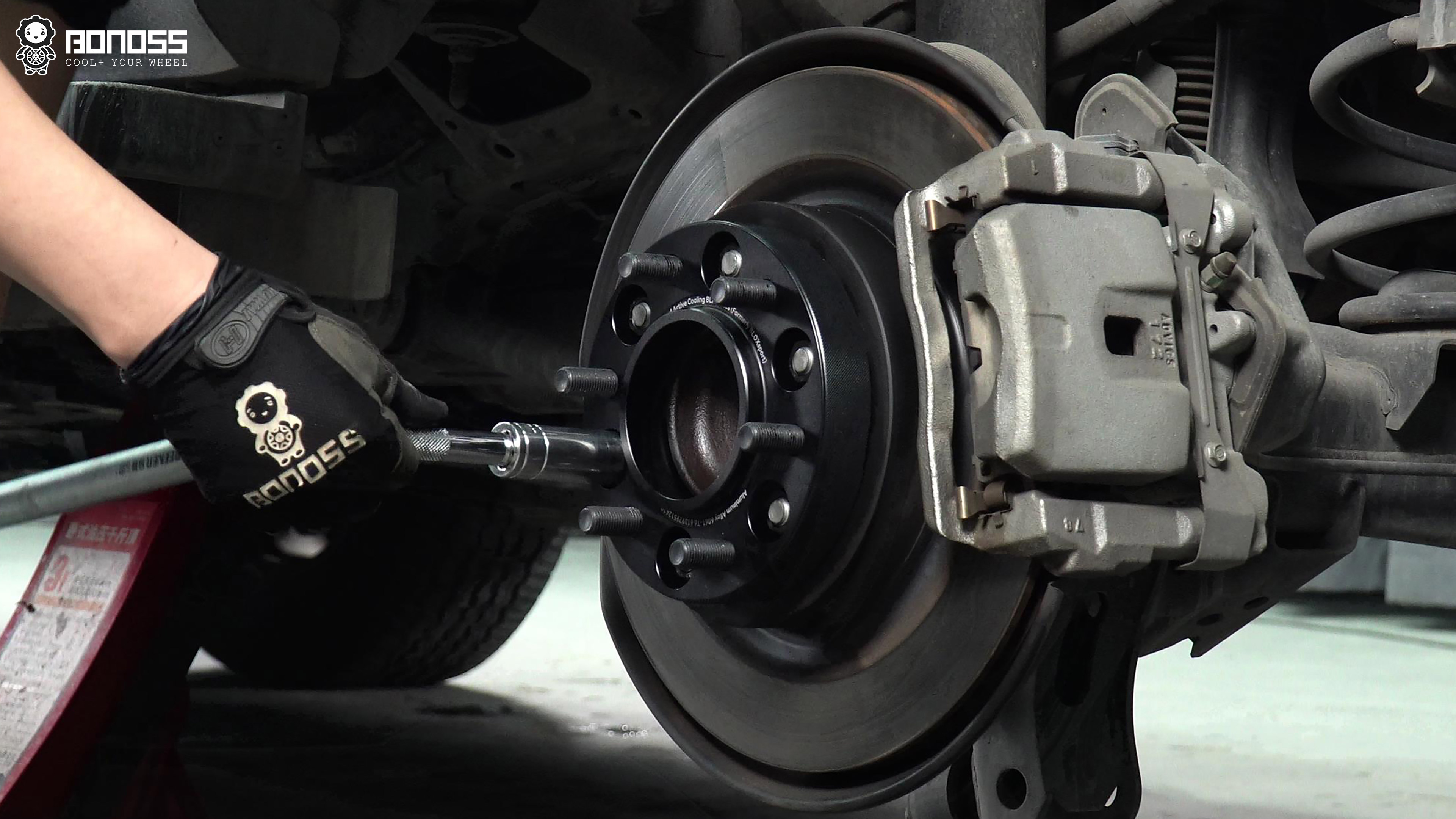
Two steps, one value each:
- Spacer to hub — BONOSS nuts: 140 Nm, per BONOSS installation instructions
- Wheel to spacer — factory nuts: 131 Nm, per the owner’s manual
Work in a criss-cross pattern and re-check torque after the first drive or two — standard practice for any wheel-off job, spacers or not.
What it costs, exactly
| Item | Price |
|---|---|
| 2× 25mm front spacers, forged 6061-T6 | $149.99 |
| 2× 30mm rear spacers, forged 6061-T6 | $156.99 |
| Labor | $20.00 |
| Total | $326.98 |
Roughly the price of one decent aftermarket wheel for the whole truck — prices in USD as listed for this install.
Frequently Asked Questions
Are wheel spacers safe on a 2022 Land Cruiser?
Yes, when they’re hub-centric, made from certified forged material, and torqued to spec with a torque wrench — this install has 32,000 km on it with no issues reported. Most spacer horror stories trace back to lug-centric parts, loose hardware, or impact-gun installs, not the concept itself.
Do I need extended studs for 25mm spacers on an LC300?
No — bolt-on spacers carry their own pre-installed studs. Your factory studs only need to stay below the spacer’s outer face, or the wheel pockets are deep enough. Here they measured 24.23mm front versus a 25mm spacer, clearing by 0.77mm with no trimming.
Will 30mm spacers rub on an LC300?
They didn’t on this truck — effective ET30 with stock 265/65R18 tires and 32,000 km with zero rubbing reported. Fitment is tire-specific, so if you’re still choosing a thickness, our guide to Toyota Land Cruiser wheel spacers walks through the suitable sizes.
What torque for Land Cruiser 300 wheel spacers?
140 Nm for the spacer-to-hub nuts per BONOSS installation instructions, and 131 Nm for the wheel-to-spacer factory nuts per the owner’s manual — one value per step, torque wrench only.
What bolt pattern is the 2022 Land Cruiser 300?
6×139.7mm PCD with a 95.1mm center bore and M14x1.5 threads — six studs, 21mm hex on the factory nuts.
Do wheel spacers hurt fuel economy on a Land Cruiser?
Not measurably in this case — the owner reported “no real hit to MPG” across 32,000 km. If there’s a penalty from the wider track, it was too small for him to notice at the pump.
The Verdict
Thirty-two thousand kilometres after fitting 2022 Toyota Land Cruiser 25mm wheel spacers up front and 30mm rears, here’s where things stand: the truck sits flush, the numbers hold up, and the owner is happy.
The takeaway isn’t “25 front, 30 rear” — it’s that those numbers came from this truck’s own fenders, not from a friend’s build or a forum consensus. The best 25mm wheel spacers for a 2022 Land Cruiser 300 are the ones specified from your own measurements, with certified hardware behind them and a torque wrench finishing the job.
What 32,000 km added is the part no spec sheet can: proof it lasts. No fitment issues, no real hit to fuel economy, hardware that’s held up through desert heat, and a stance the factory should have shipped in the first place.
Ready to sort out your own GR-S? BONOSS forged active cooling wheel spacers for the J300 come with ISO Grade 12.9 studs, ISO Grade 10 nuts, a 10-year warranty, and more than 75 SGS/TÜV test reports behind the program. The 25mm front pair runs $149.99 and the 30mm rear pair $156.99 — so if you’re looking to buy 2022 Land Cruiser wheel spacers, now you know the real number before you ever see a checkout page.
Measure first. Then order.

About Jack Miller
Jack Miller is a certified automotive technician specializing in wheel and tire systems, with over a decade of hands-on repair experience. He has served as a senior technical specialist at BONOSS for the past 7 years, advising on wheel spacer fitment, wheel bolt & wheel nut selection for thousands of customer builds. Jack’s technical guides on BONOSS are grounded in real customer cases — not theory.