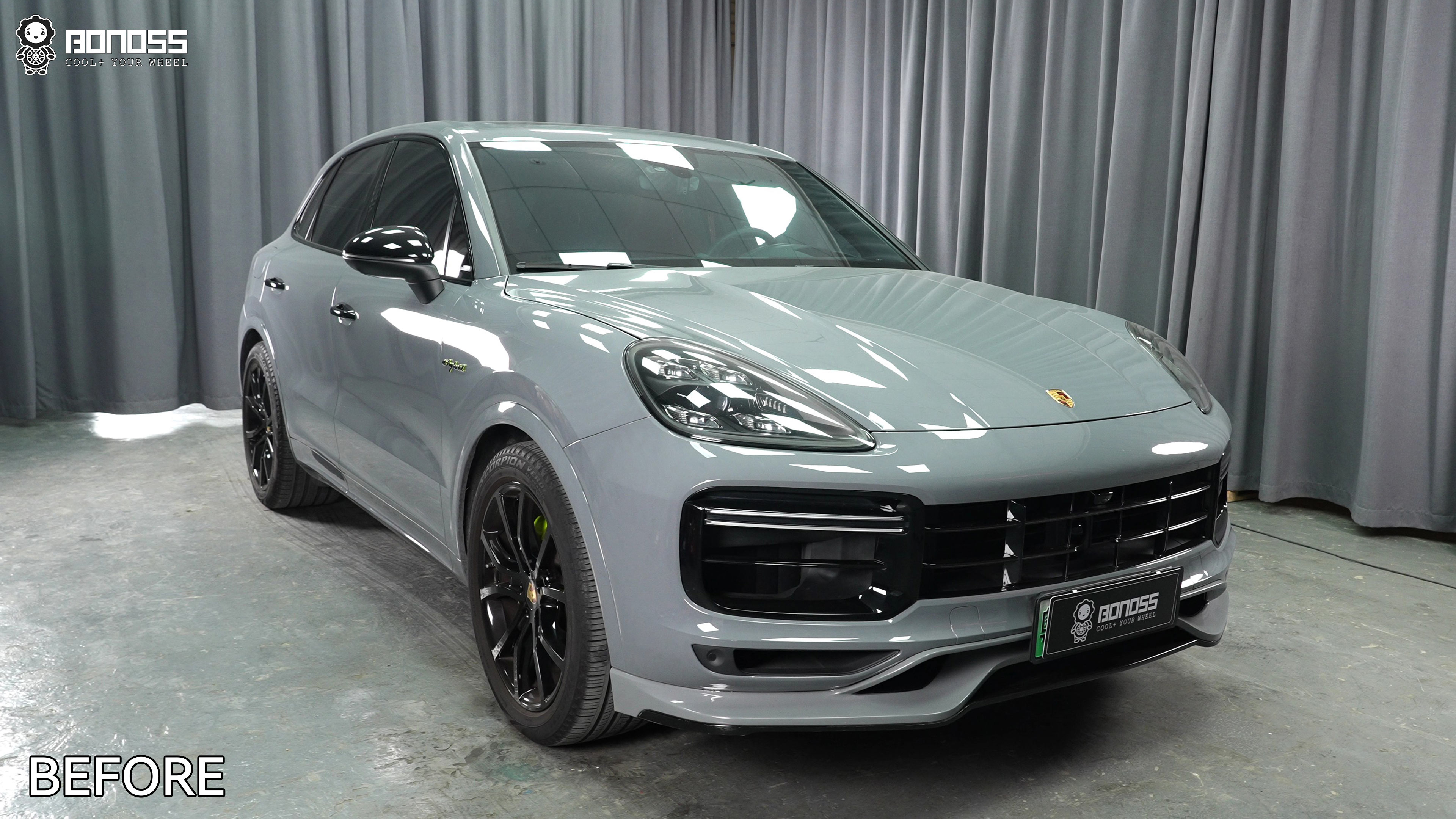
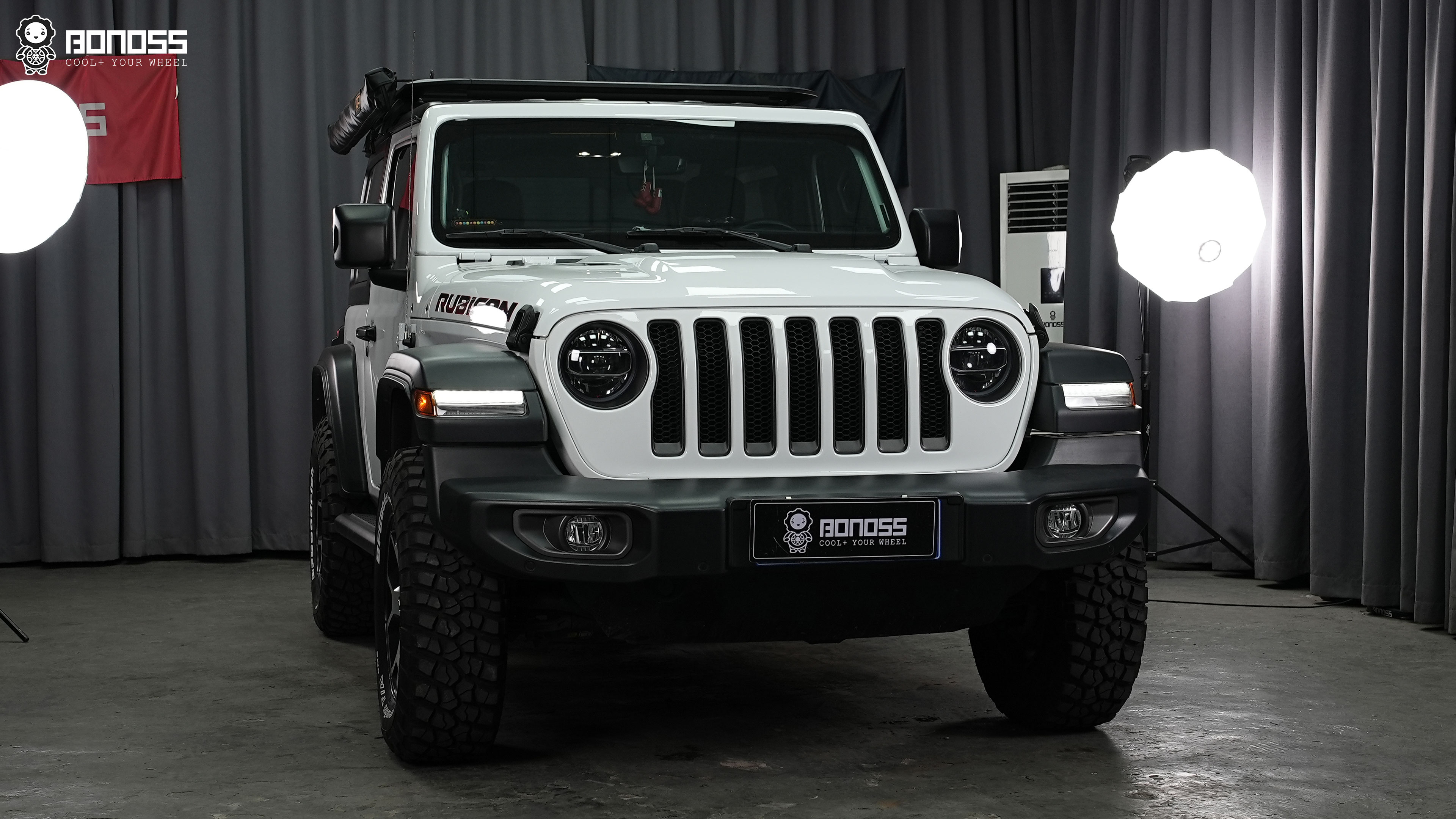
Ryan Turner rolls up in his 2021 Jeep Wrangler Rubicon (JL platform — the current generation that replaced the JK in 2018) wanting one thing: a flush stance without giving up his factory LT255/75R17 wheels. No new rims, no body lift, just spacers done right. We measured his fender clearance, ran the offset math, and landed on 30mm front / 35mm rear BONOSS forged active cooling wheel spacers. This is a real 2021 Jeep Wrangler 30mm wheel spacers install, not a spec-sheet fantasy — and nine months plus 9,200 miles later, including real off-road use, the setup still holds up.
That opening paragraph is the whole thesis. The article below documents what actually happened on a stock JL Rubicon: vernier-caliper measurements, torque values pulled from two sources, and a customer who has beaten on the spacers on trails and mud. If you’re researching 2021 Jeep Wrangler 30mm wheel spacers and want to know whether 30mm and 35mm fits, whether you have to cut OEM studs, and whether it survives off-road — read on.
Spec Quick Reference
| Parameter | Front | Rear | Source |
|---|---|---|---|
| Vehicle | 2021 Jeep Wrangler Rubicon (JL) | — | — |
| Spacer thickness | 30mm | 35mm | High-accuracy ruler |
| Bolt pattern (PCD) | 5x127mm | 5x127mm | Factory spec |
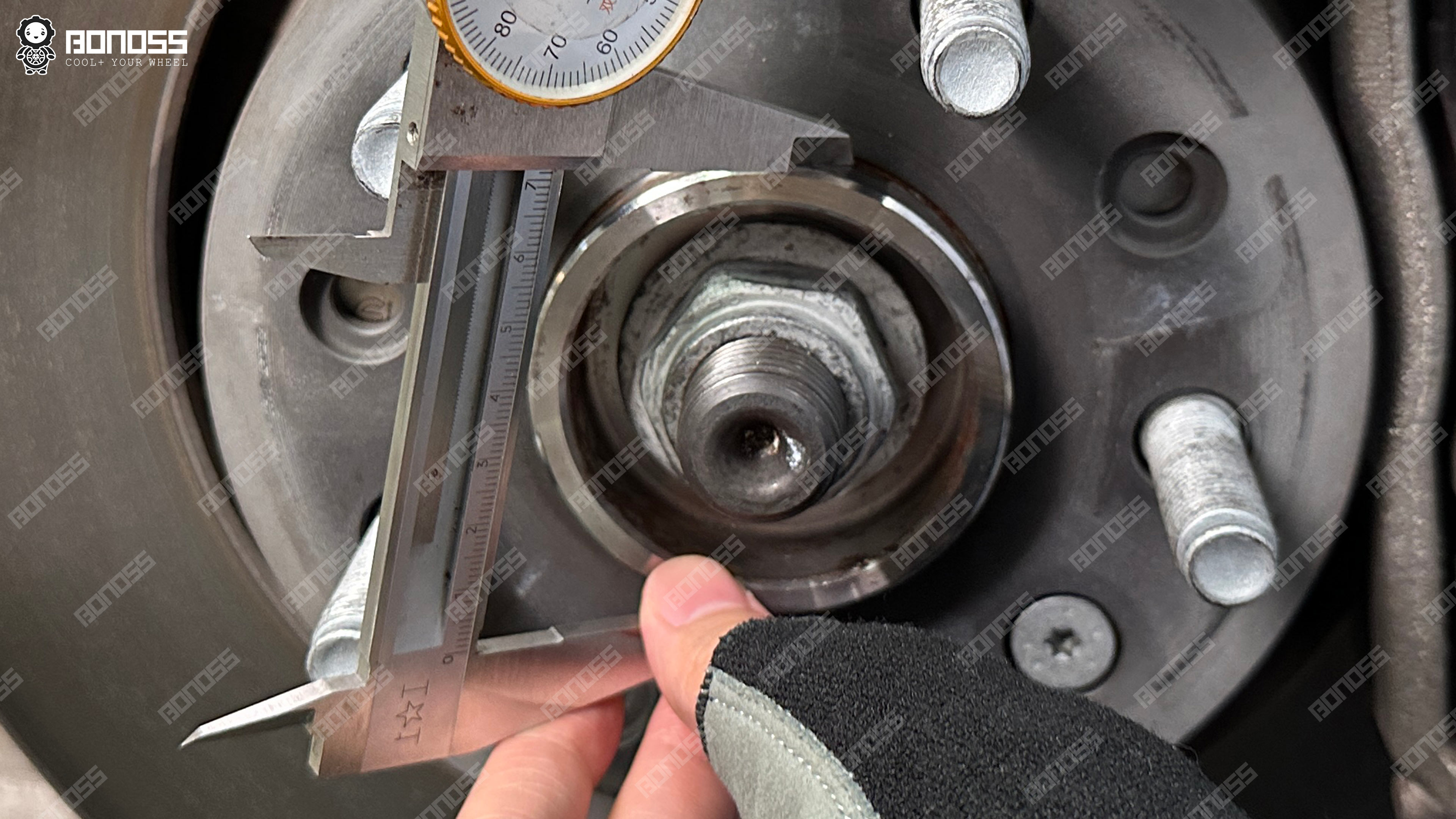
| Hub center bore (measured) | 71.45mm | 71.45mm | Vernier caliper |
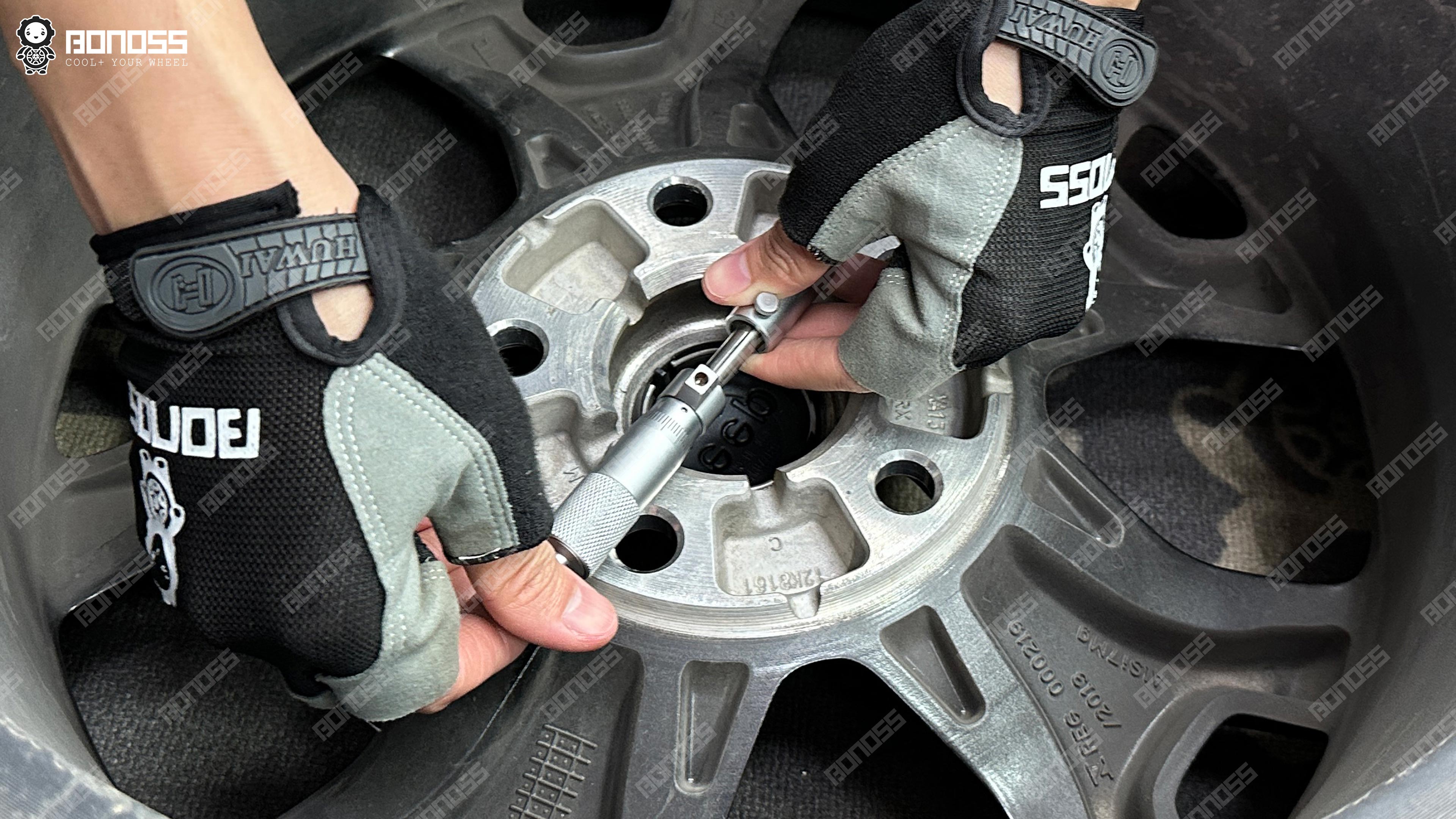
| Wheel center bore (measured) | 71.63mm | 71.63mm | Micrometer |
| Hub step height | 10.53mm | 15.21mm | Vernier caliper |
| OEM wheel spec | LT255/75R17, ET+44.45mm | LT255/75R17, ET+44.45mm | Factory spec |
| Net offset after spacers | ET+14.45 | ET+9.45 | Calculated (44.45 − spacer) |
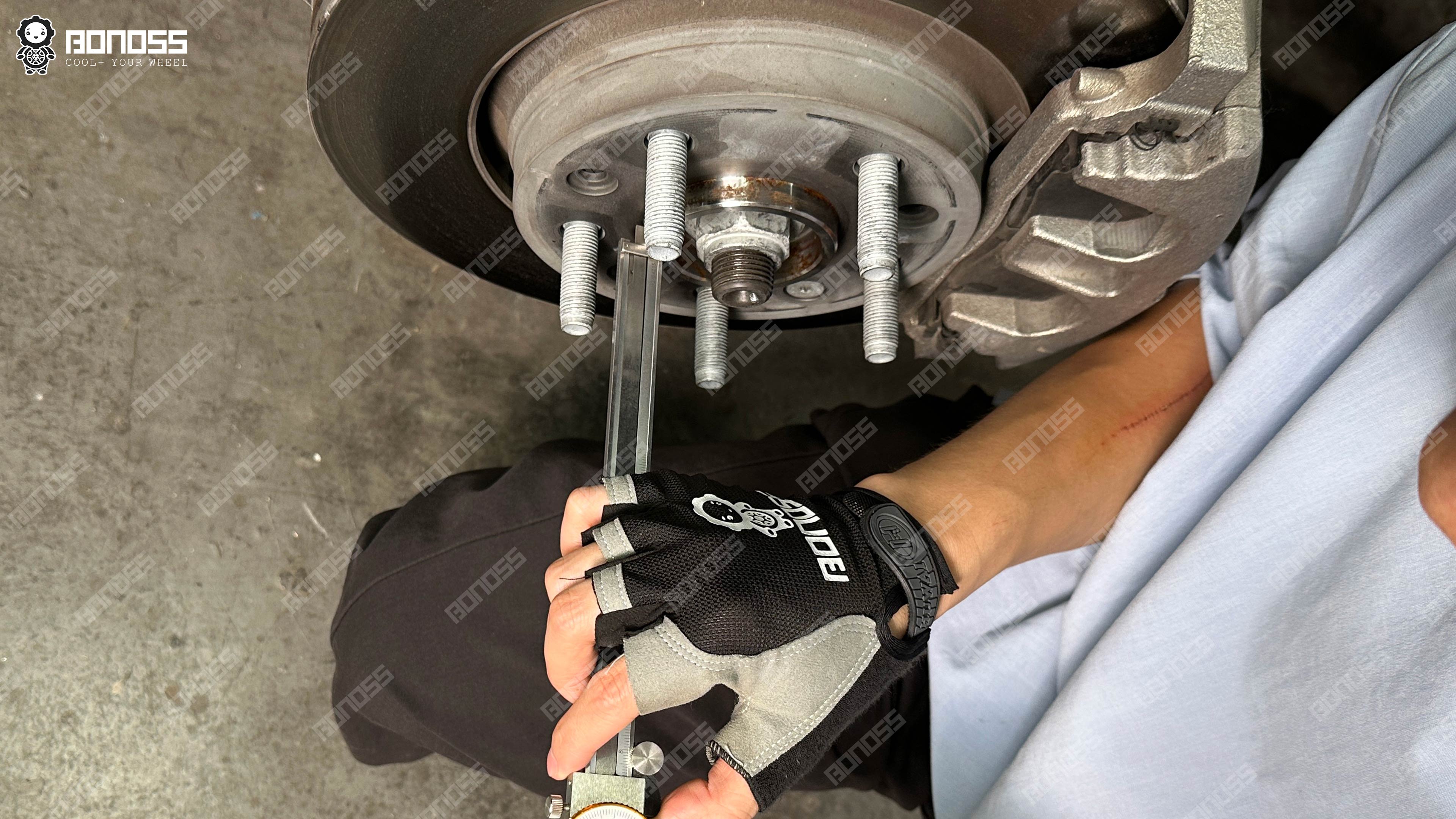
| Hub stud protrusion | 40.92mm | 40.92mm | Vernier caliper |
| Wheel pocket depth | 18.52mm | 18.52mm | Vernier caliper |
| Factory lug nut | M14x1.5, conical seat | M14x1.5, conical seat | Factory spec |
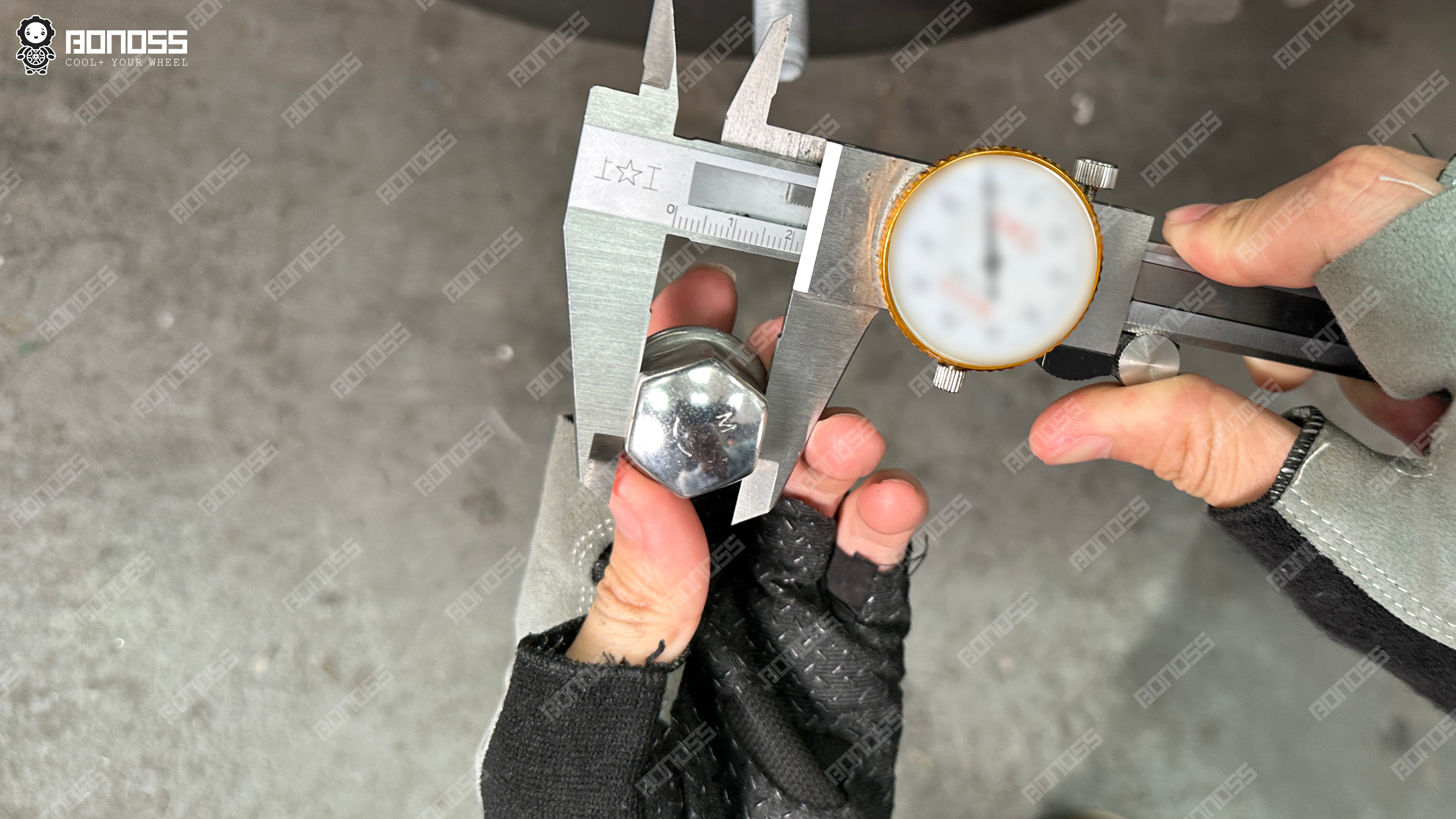
| Lug nut socket size | 21mm hex | 21mm hex | Vernier caliper |
| Spacer → hub torque (BONOSS nuts) | 140 Nm (103.5 ft-lb) | 140 Nm (103.5 ft-lb) | Per BONOSS installation instructions |
| Wheel → spacer torque (OEM nuts) | 176 Nm (130 ft-lb) | 176 Nm (130 ft-lb) | Per the owner’s manual |
Two torque values, two operations — don’t mix them. The 140 Nm figure is for tightening the BONOSS nuts that clamp the spacer to the hub; the 176 Nm figure is for the OEM conical lug nuts that pull the wheel down onto the spacer. Use ONE torque value per fastener: BONOSS torque with BONOSS fasteners, OEM torque with OEM fasteners. Both are correct for their respective operation, and when in doubt take the more conservative figure and confirm compatibility.
How We Arrived at 30mm Front, 35mm Rear
Ryan’s goal was a flush stance, not a poked one. That distinction matters — flush means the tire face sits roughly even with the fender lip; poked means it sticks past the body. We measured fender clearance at each corner with a high-accuracy ruler.
The front needed 30mm to bring the tire out to the fender line; the rear, because of how the JL Rubicon’s body sits and its slightly different rear fender profile, needed 35mm to match visually. Staggered front-to-rear on a Wrangler isn’t unusual — the JL’s rear axle track and body overhang don’t mirror the front exactly.
The offset math is straightforward. Factory wheels run ET+44.45mm. Subtract the spacer thickness and you get the new effective offset:
- Front: 44.45 − 30 = ET+14.45mm
- Rear: 44.45 − 35 = ET+9.45mm
Both push the wheel outward, widening track width by double the spacer thickness (60mm front, 70mm rear). That’s the whole point — more track, flusher look, and on a solid-axle Wrangler a touch more roll stability for free.
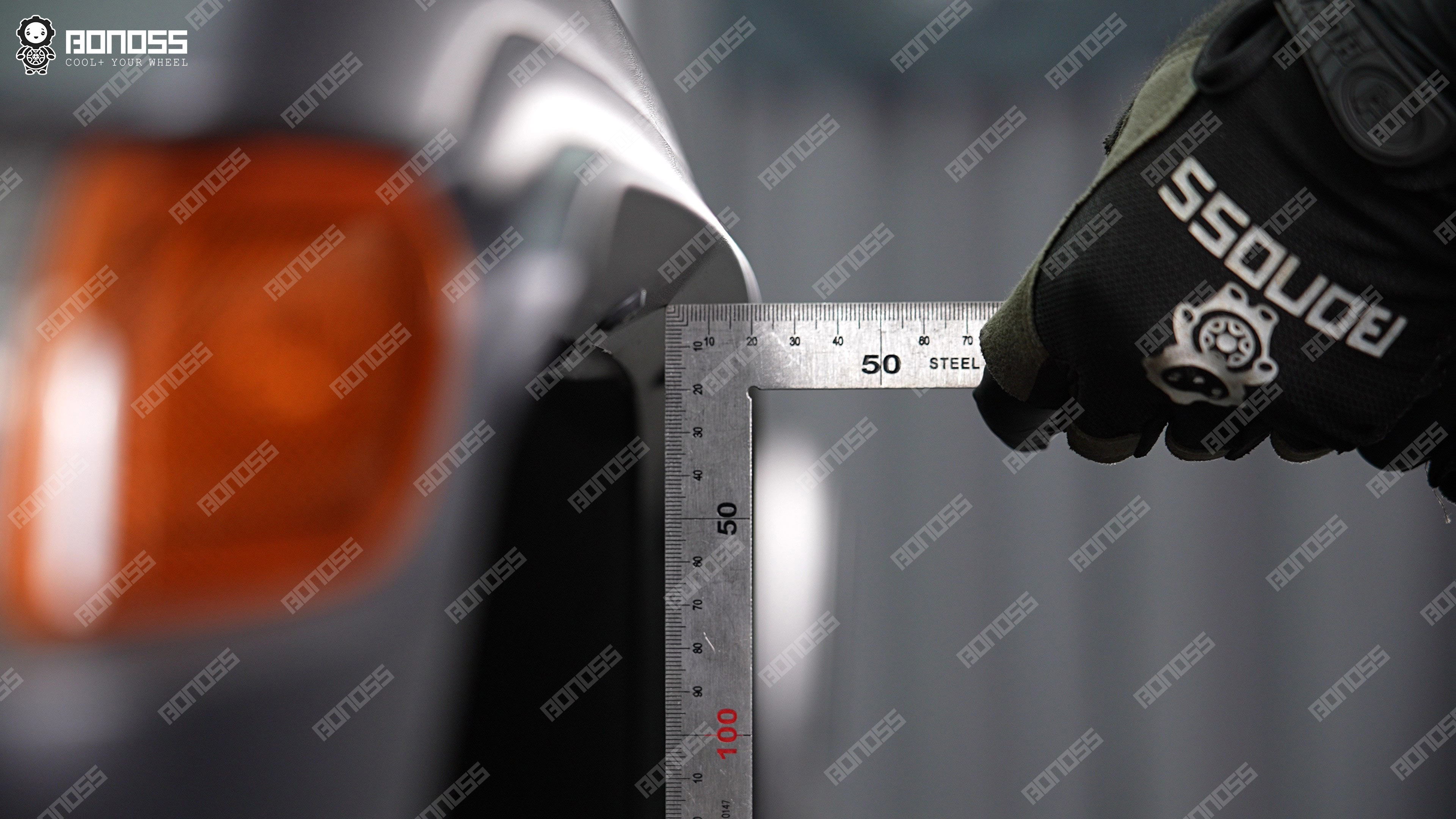
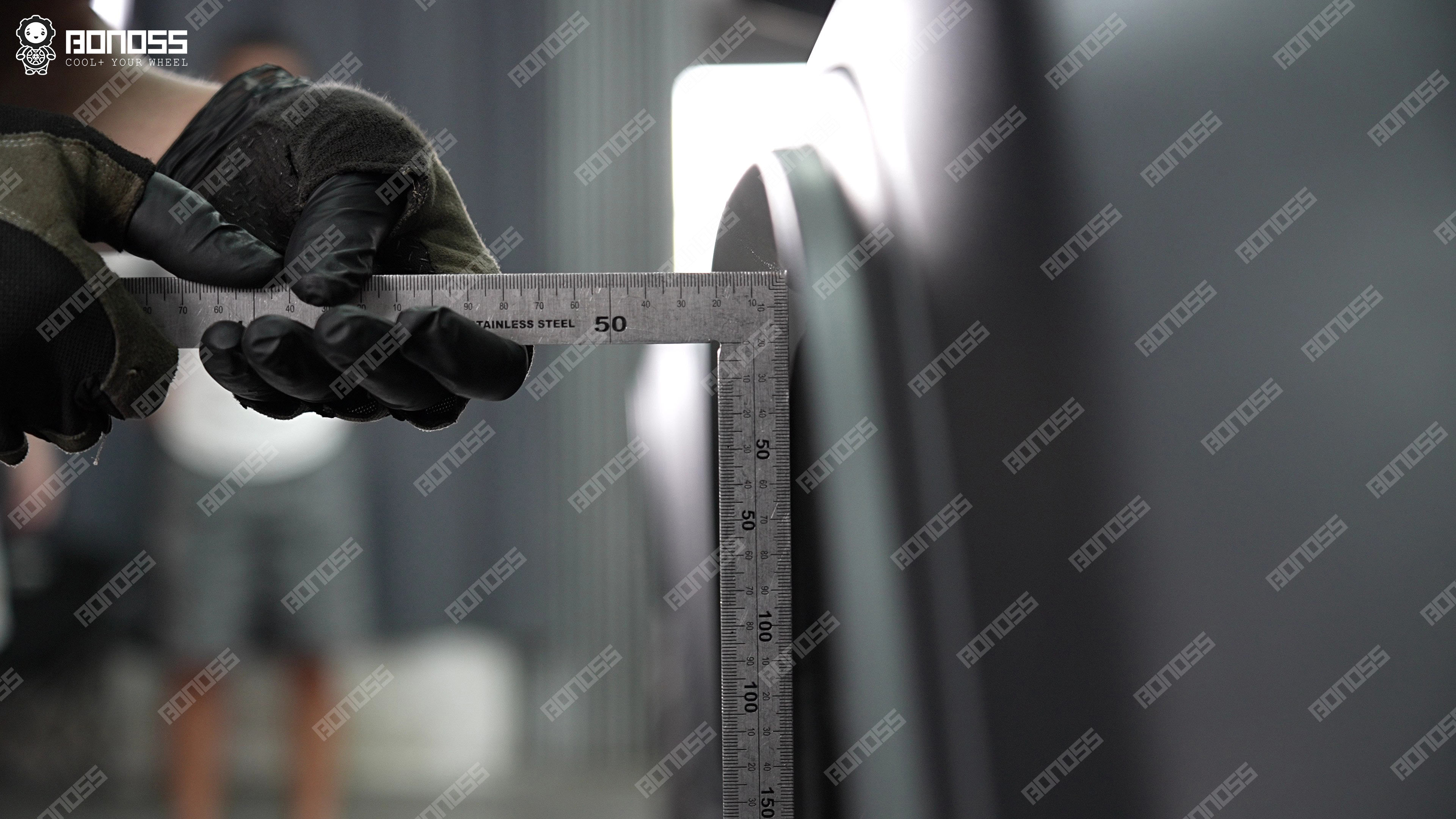
Hub and wheel measurements that made the call
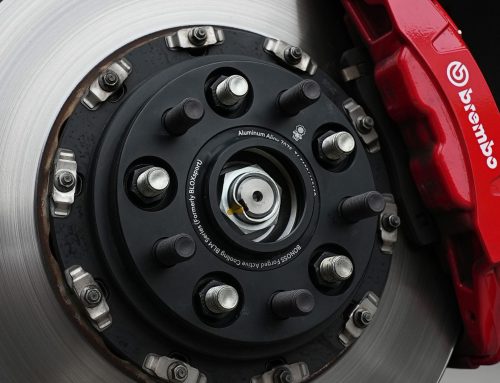
Before committing to 30mm we verified the physical interfaces. The hub center bore measured 71.45mm on the vernier caliper; the wheel center bore measured 71.63mm on the micrometer. That 0.18mm difference is the clearance a hub-centric spacer has to bridge — the spacer’s pilot lip seats on the 71.45mm hub register and pilots the 71.63mm wheel bore.
Hub step height came in at 10.53mm front / 15.21mm rear — the raised register the spacer’s female bore must capture for true centering. Get that wrong and you’re running lug-centric whether you bought hub-centric parts or not. For a deeper treatment of why this geometry matters on the 5×127 platform, our Jeep Wrangler JL wheel spacers fitment guide breaks down the hub-centric vs. lug-centric distinction and the role of the hub register.
Stud Length Check: Do You Need to Trim OEM Studs?
This is the question that separates a clean install from a hacked one. When you bolt a spacer over the hub, the factory studs poke through the spacer. If they’re too long, they bottom out in the wheel pockets instead of letting the wheel seat flat — and then people reach for an angle grinder.
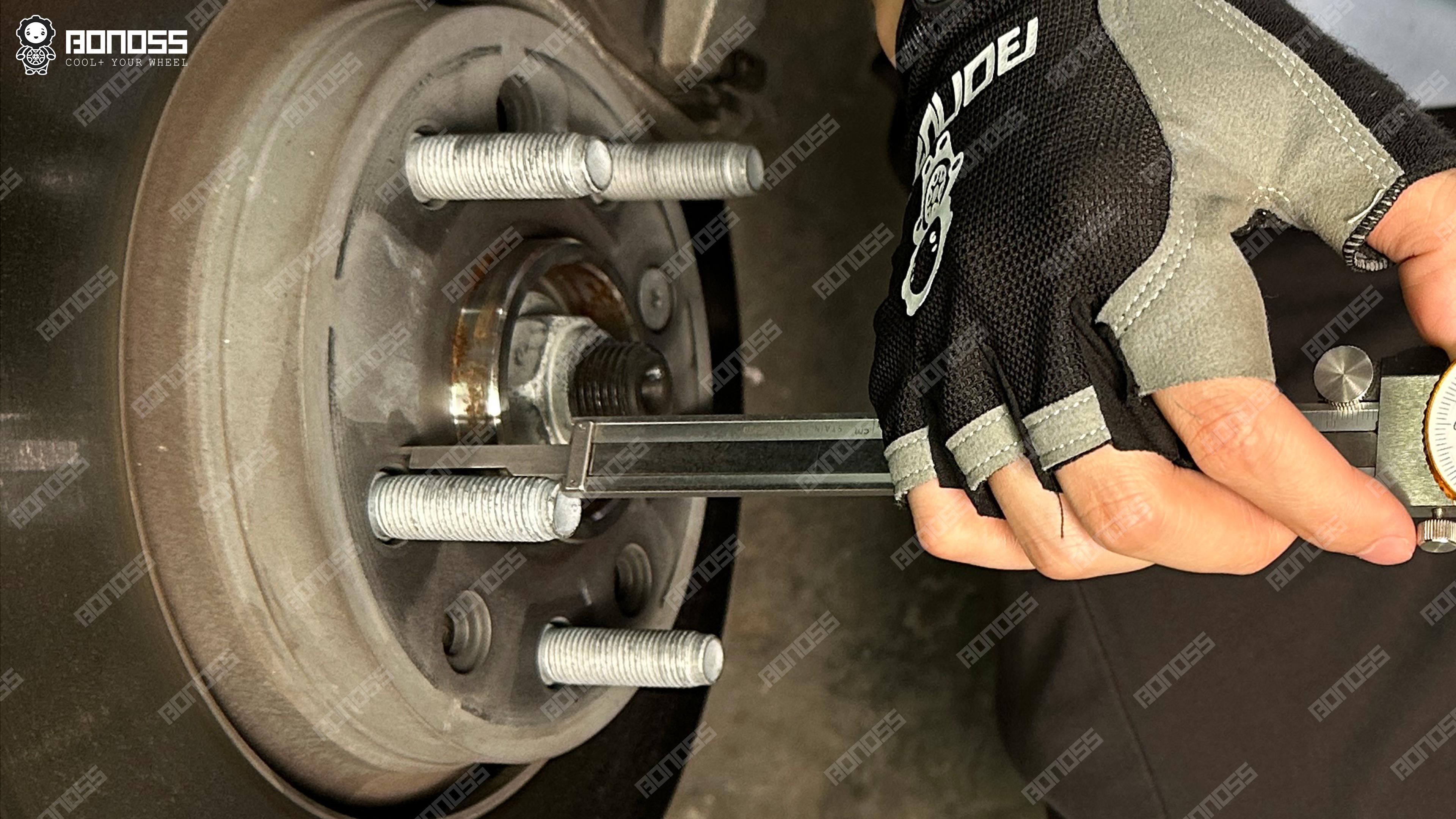
On Ryan’s JL, the hub studs protrude 40.92mm past the hub face.
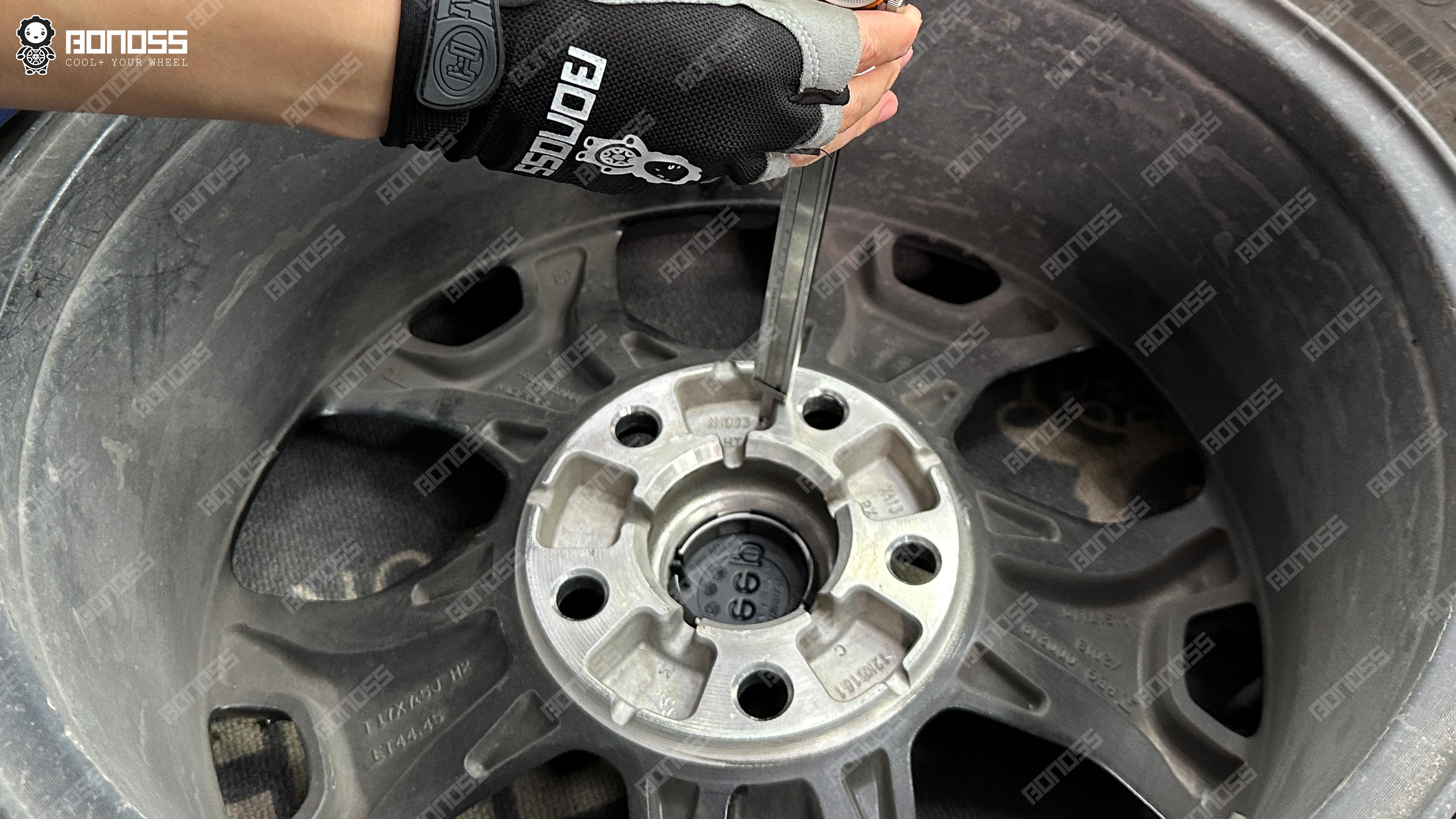
The wheel pockets on his factory wheels measure 18.52mm deep.
Do the subtraction. A 30mm spacer leaves 40.92 − 30 = 10.92mm of stud still protruding past the spacer’s outer face. The wheel pockets are 18.52mm deep. Since 10.92mm is well under 18.52mm, the studs tuck fully inside the pockets with 7.6mm of room to spare. No trimming. That’s why 30mm isn’t an arbitrary choice — it’s the thickness that comfortably clears the stud-into-pocket math on this specific wheel.
This is also why thickness matters more than people think:
- 20mm or less: 40.92 − 20 = 20.92mm of stud still protruding, but pockets are only 18.52mm deep → studs bottom out, wheel won’t seat flat, you’d have to cut. Risky on a 5×127 Wrangler where you want every millimeter of lug engagement.
- 25mm: 40.92 − 25 = 15.92mm, clears the 18.52mm pockets with 2.6mm margin — the safe starting thickness.
- 30mm: 10.92mm protrusion, 7.6mm of margin — comfortable, with real safety headroom.
- 35mm (rear): 5.92mm protrusion, even more clearance.
Translation: on a JL Rubicon with these factory wheels, 25mm is the floor and 30mm is the comfortable choice. Go thinner and you’re cutting studs; go thicker and you’re just pushing the tire further out, which carries its own clearance costs.
The Hub-Centric Design: Not All 5×127 Spacers Are Equal
A 5×127 bolt pattern and a 71.6mm-ish center bore describe the geometry, but they don’t guarantee a vibration-free wheel. The difference between a good spacer and a vibrating one is whether the wheel is located by the hub register (hub-centric) or by lug-nut clamping friction (lug-centric). BONOSS runs a multi-stage hub-centric design — the spacer’s pilot lip captures the hub register and presents a matching register to the wheel, so the load path goes through the machined registers, not through the studs in bending.
This is the part worth being pedantic about. On a Wrangler that sees off-road impacts and high-frequency solid-axle inputs, a lug-centric spacer transfers all the shear to the studs. Hub-centric lets the register carry the radial load and the studs carry clamping — which is how the factory intended the wheel to be located. The 21mm hex on the M14x1.5 OEM lug nuts (verified on the caliper) and the conical seat match the factory interface, so the wheel-to-spacer connection behaves exactly like the factory wheel-to-hub connection.
Installation Walkthrough
The install is two torque sequences, not one. Here’s the order.
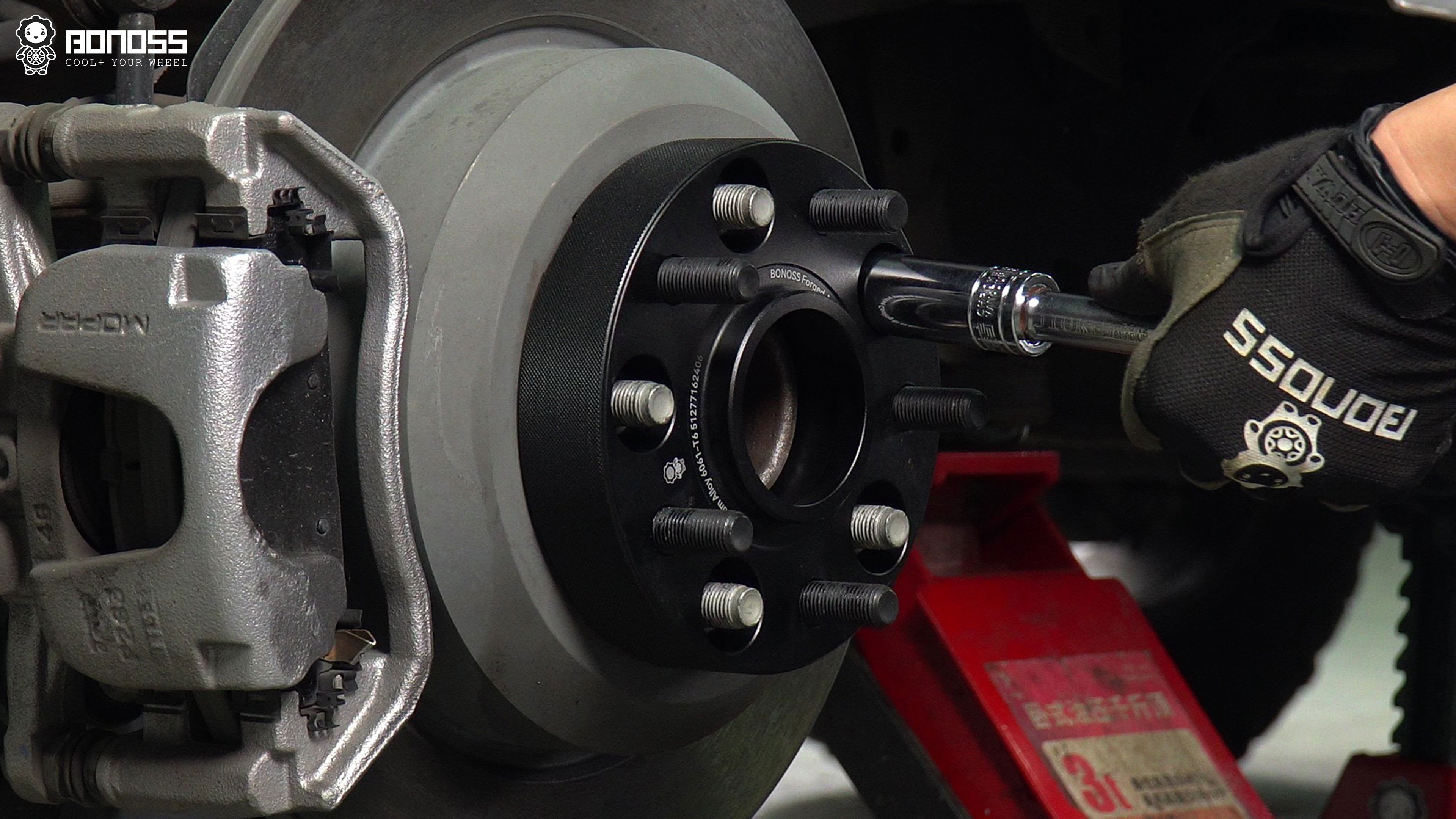
Step 1 — Spacer to hub. Clean the hub face first; rust, debris, or even a paint ridge will cause runout. Slide the BONOSS spacer onto the hub register, engage the BONOSS M14x1.5 nuts, and torque in a star pattern to 140 Nm (103.5 ft-lb) per BONOSS installation instructions. These are ISO Grade 10 nuts — SGS tested to 358–362 HV0.5 hardness (ISO 6507-1:2018) and 138.8 kN proof load (ISO 898-2:2012). Don’t guess the torque.
Step 2 — Wheel to spacer. Mount the wheel, engage the OEM conical-seat lug nuts, and torque to 176 Nm (130 ft-lb) per the owner’s manual. Same star pattern, same discipline. Use ONE torque value per fastener — don’t blend the two. Both are correct for their operation.
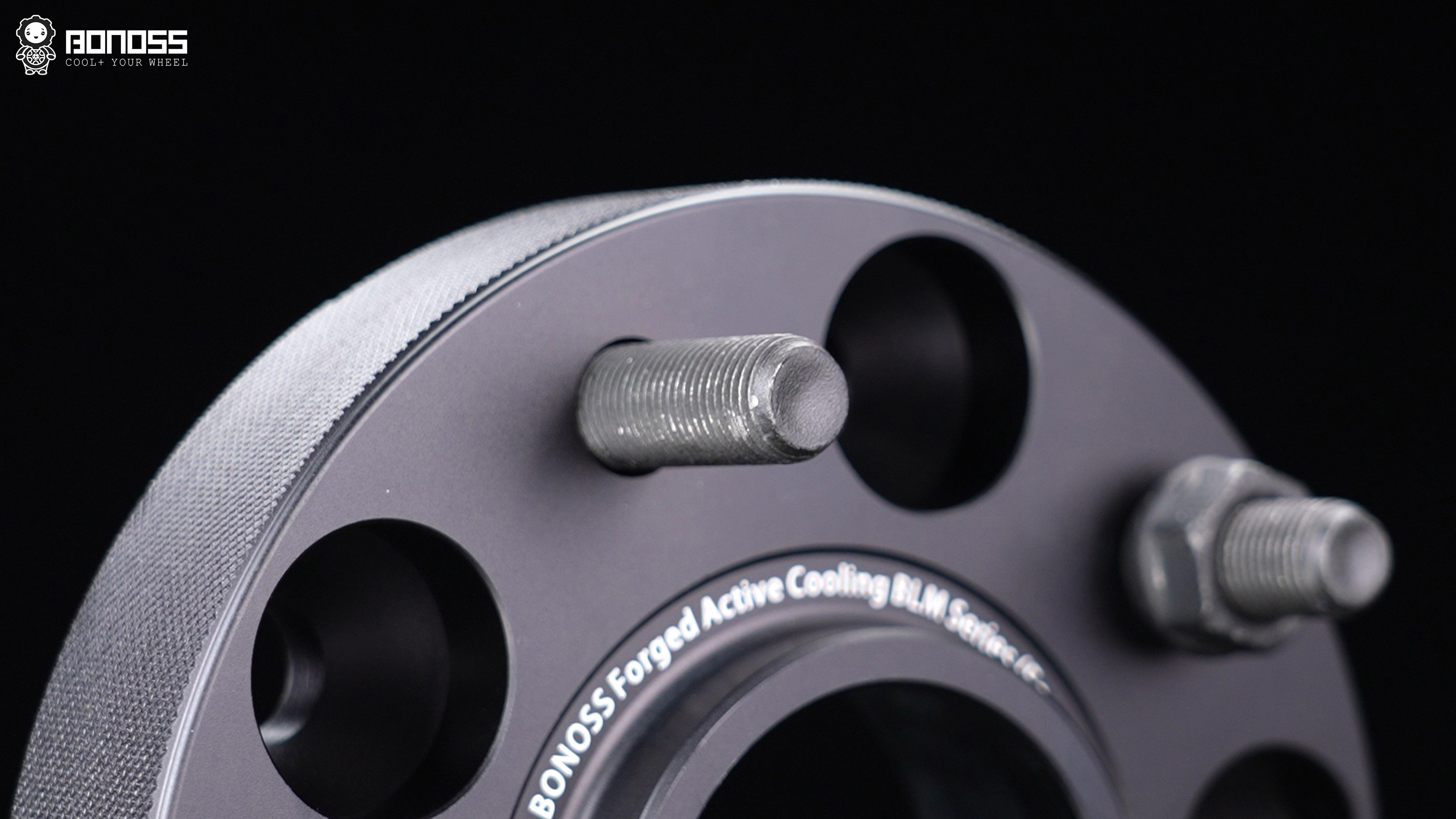
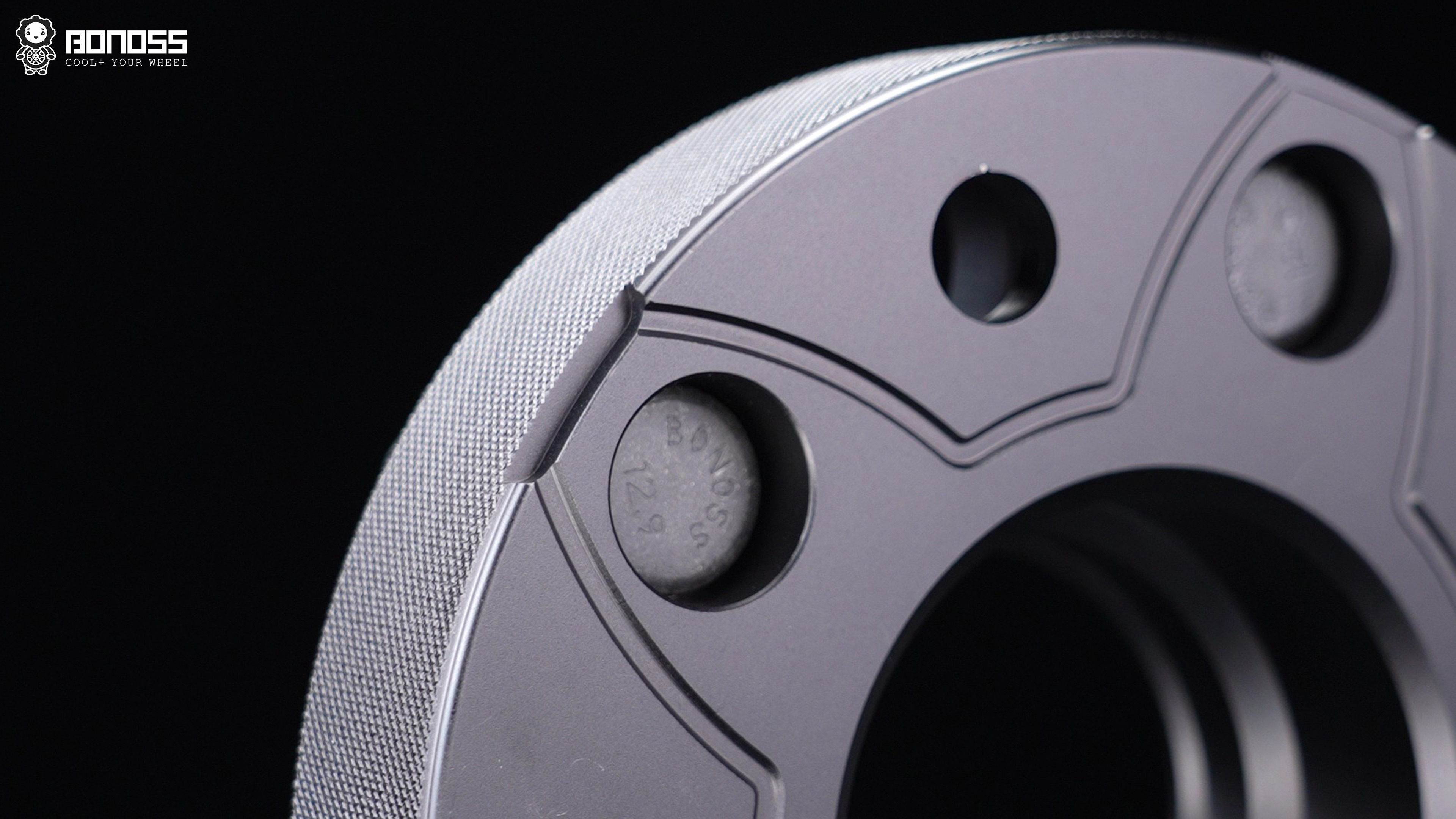
Why the confidence in the hardware? The studs are ISO Grade 12.9, M14x1.5. SGS measured tensile strength at 1268 MPa (ISO 898-1:2013+Cor-1:2013), hardness at 391–401 HV10 (ISO 6507-1:2018), and proof load at 121 kN (ISO 898-1:2013+Cor-1:2013). TÜV independently also tested the studs and returned 1233 MPa tensile and 386–390 HV10 — a slightly different reading from a different lab and sample, which is expected; different specimens and measurement setups produce different numbers, and both reports are on file. The spacer body is forged 6061-T6 aluminum; TÜV tested hardness at 101–103 (ISO 6506-1:2014) and ran a 240-hour neutral salt-spray exposure (ISO 9227:2022+Amd 1:2024) with zero defects — meaning no corrosion breakthrough after ten days of salt fog.
A clarification worth stating plainly: a Grade 10 nut’s test values do not equal a Grade 12.9 stud’s values, and an M14x1.5 thread does not equal M14x1.25. The thread pitch and the part type (nut versus stud) change the test results. Read the actual report for your specific fastener — don’t assume “12.9 is 12.9” across pitches and parts.
Before & After: All Four Corners
Numbers are one thing; the stance is another. Here’s every corner, before and after.
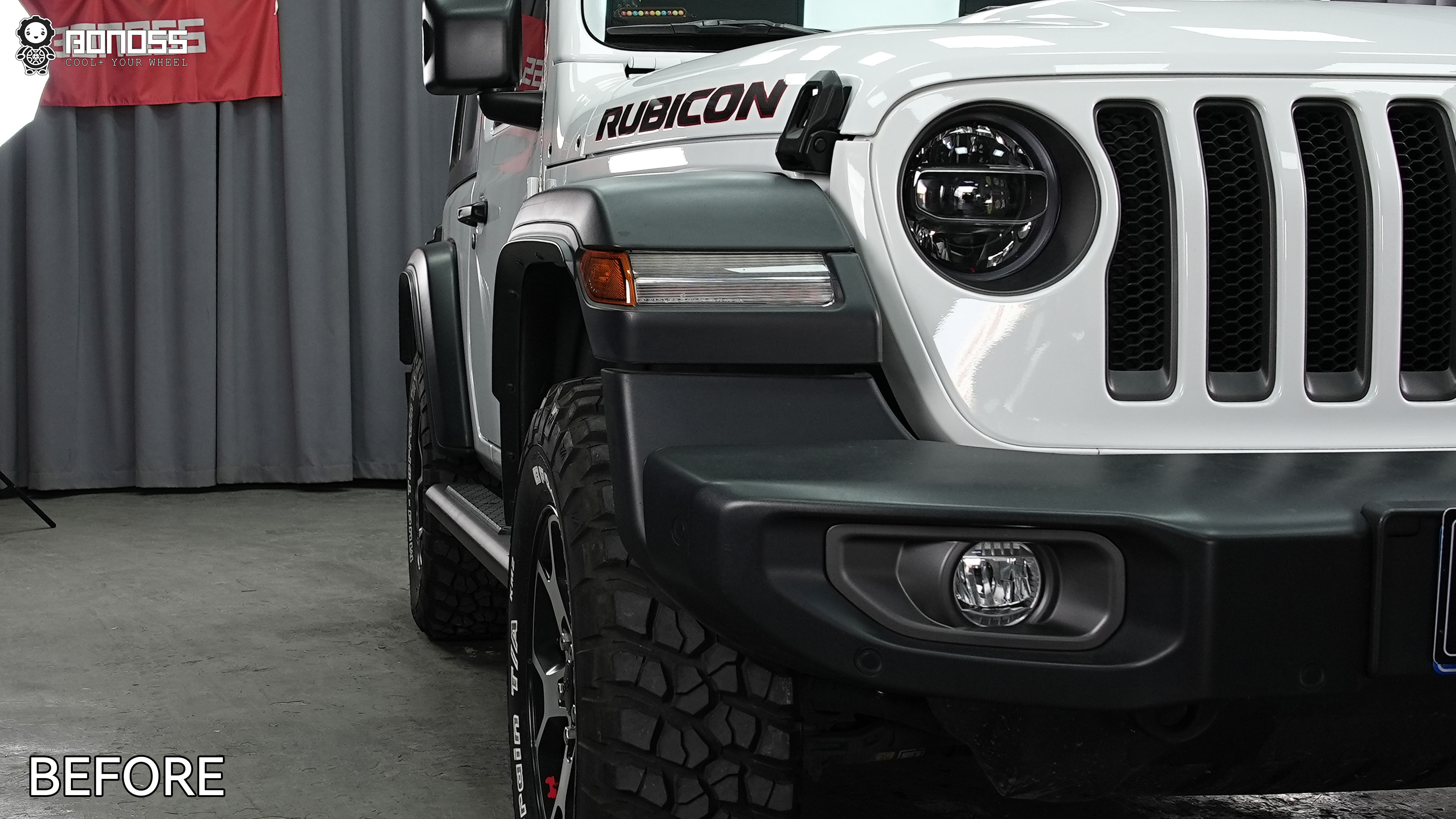
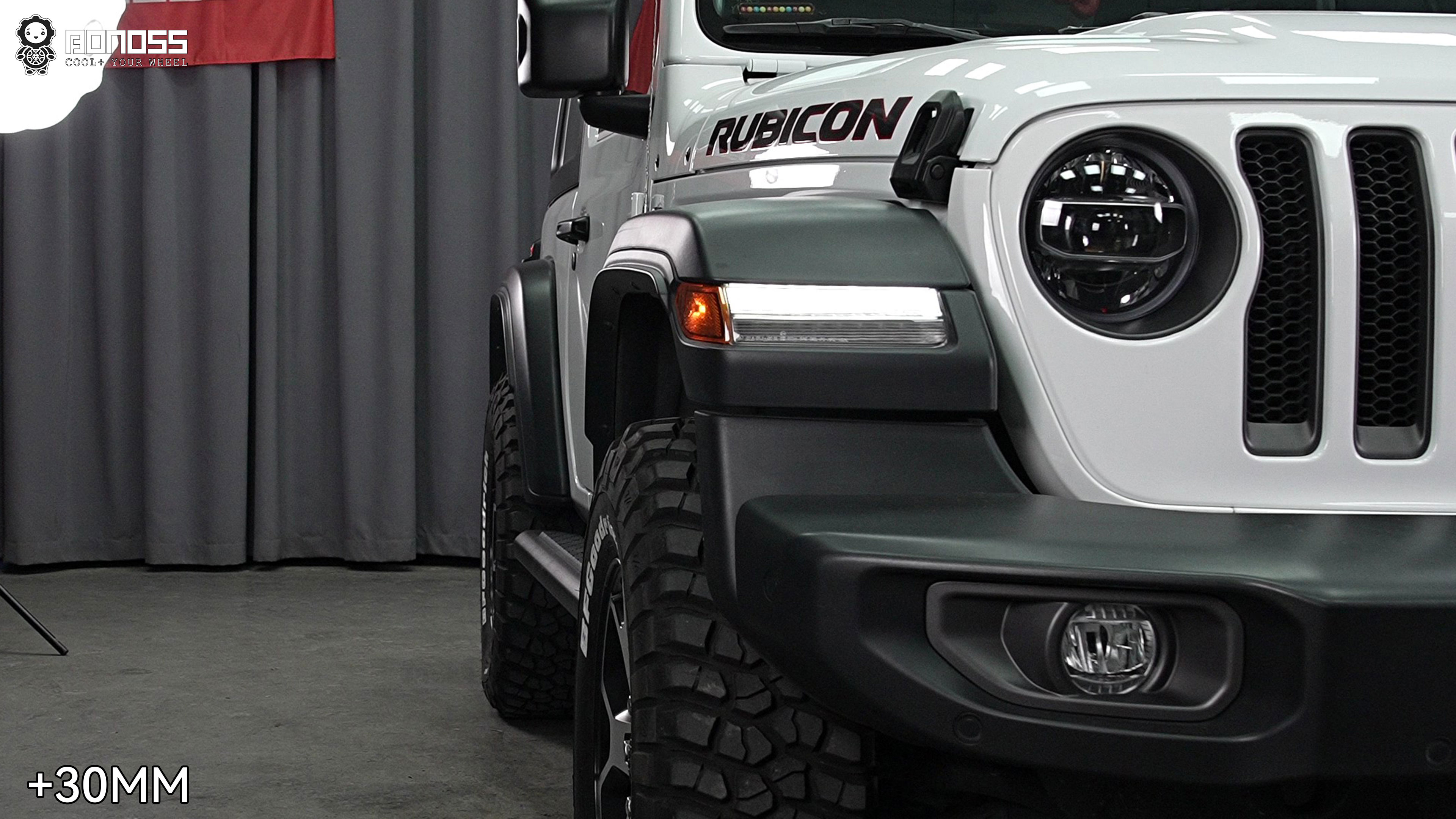
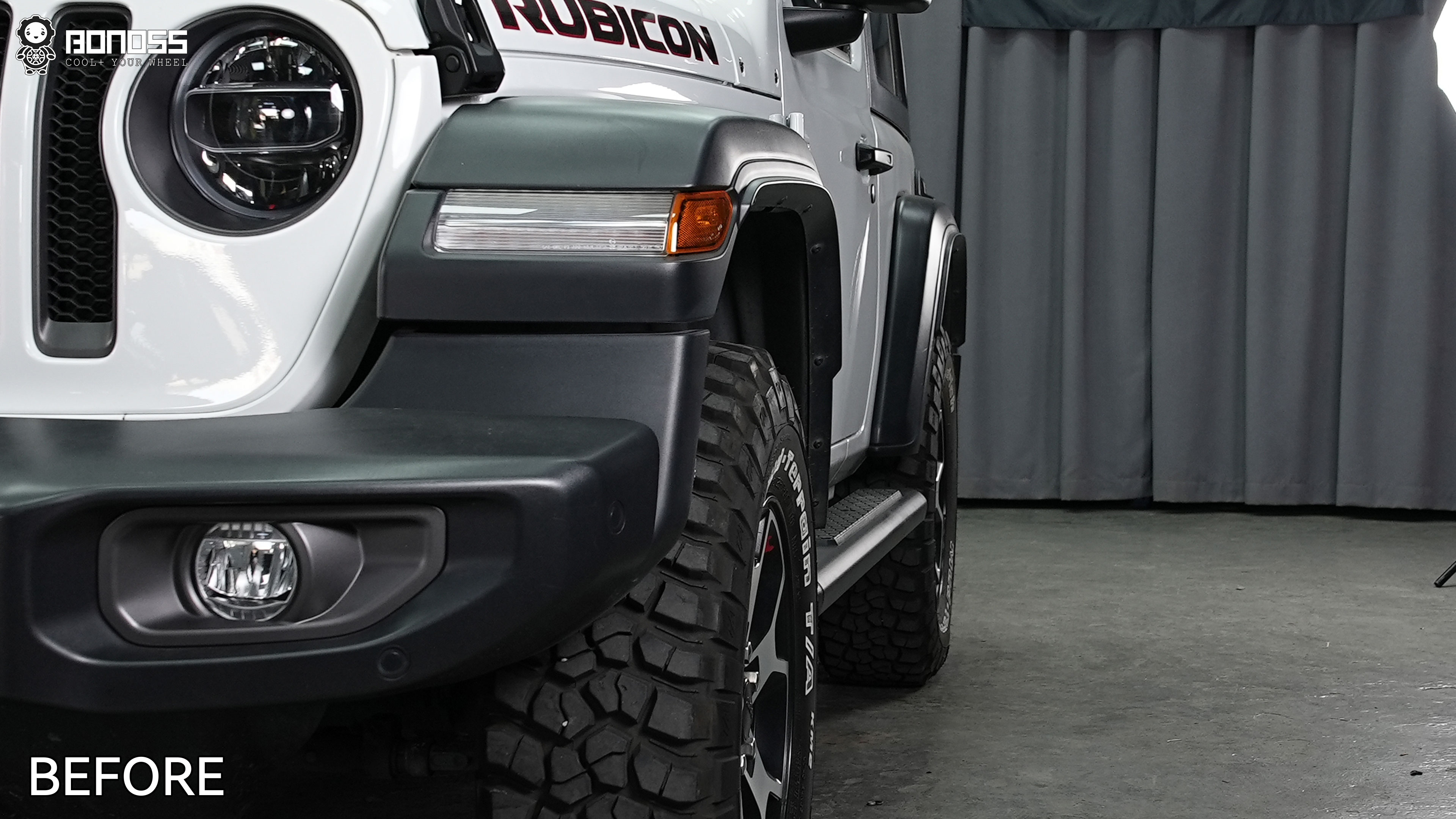
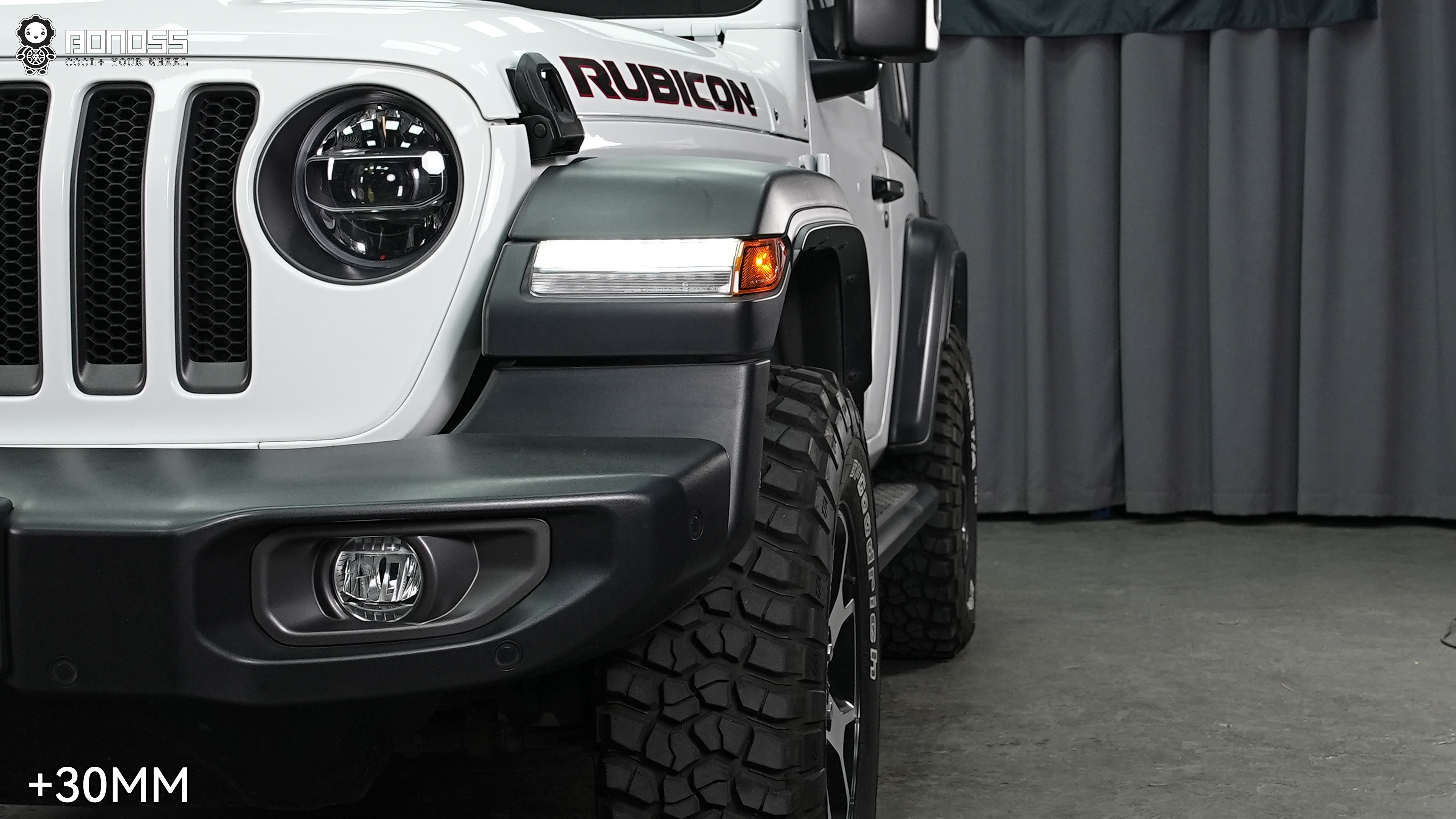
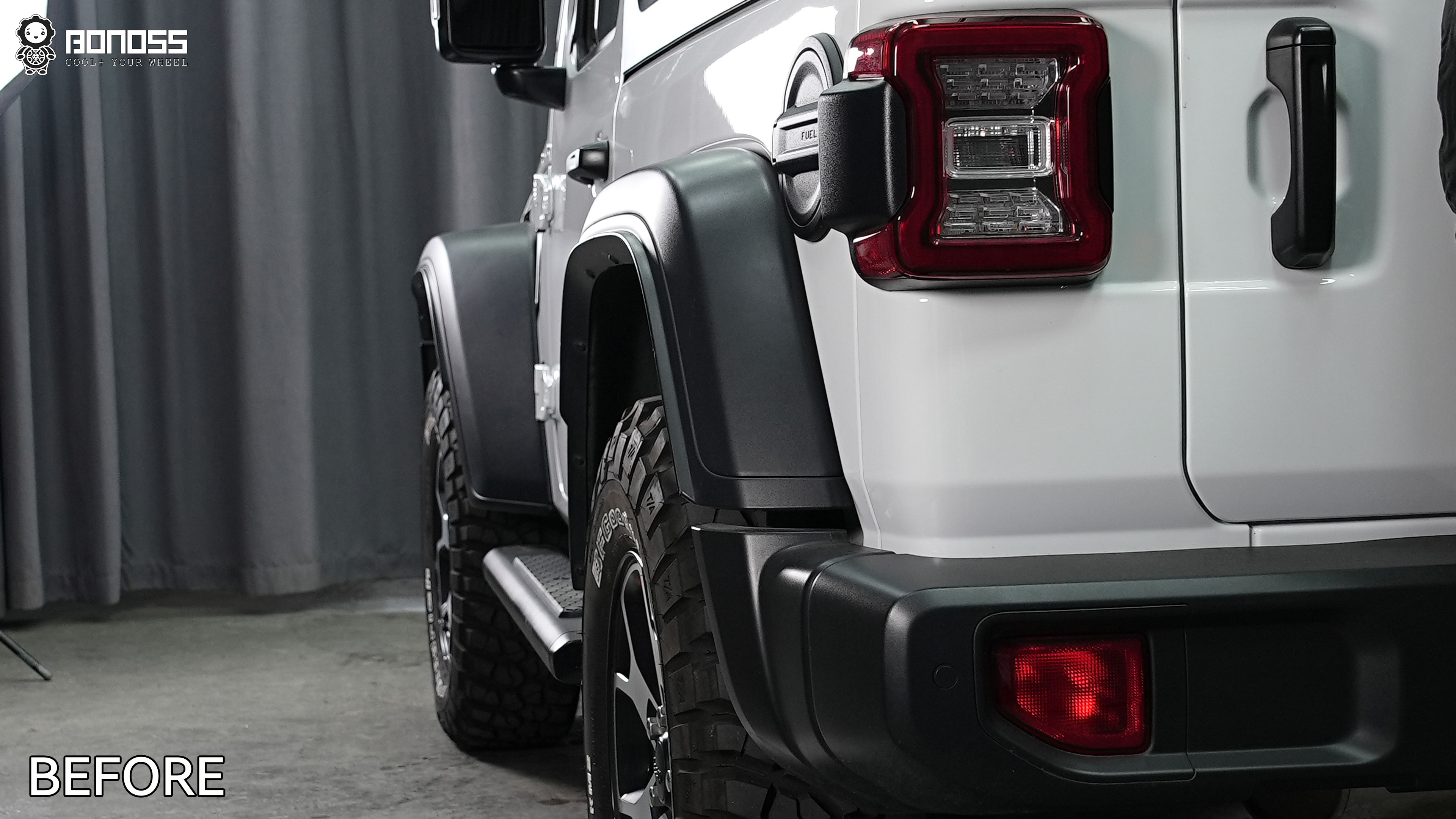
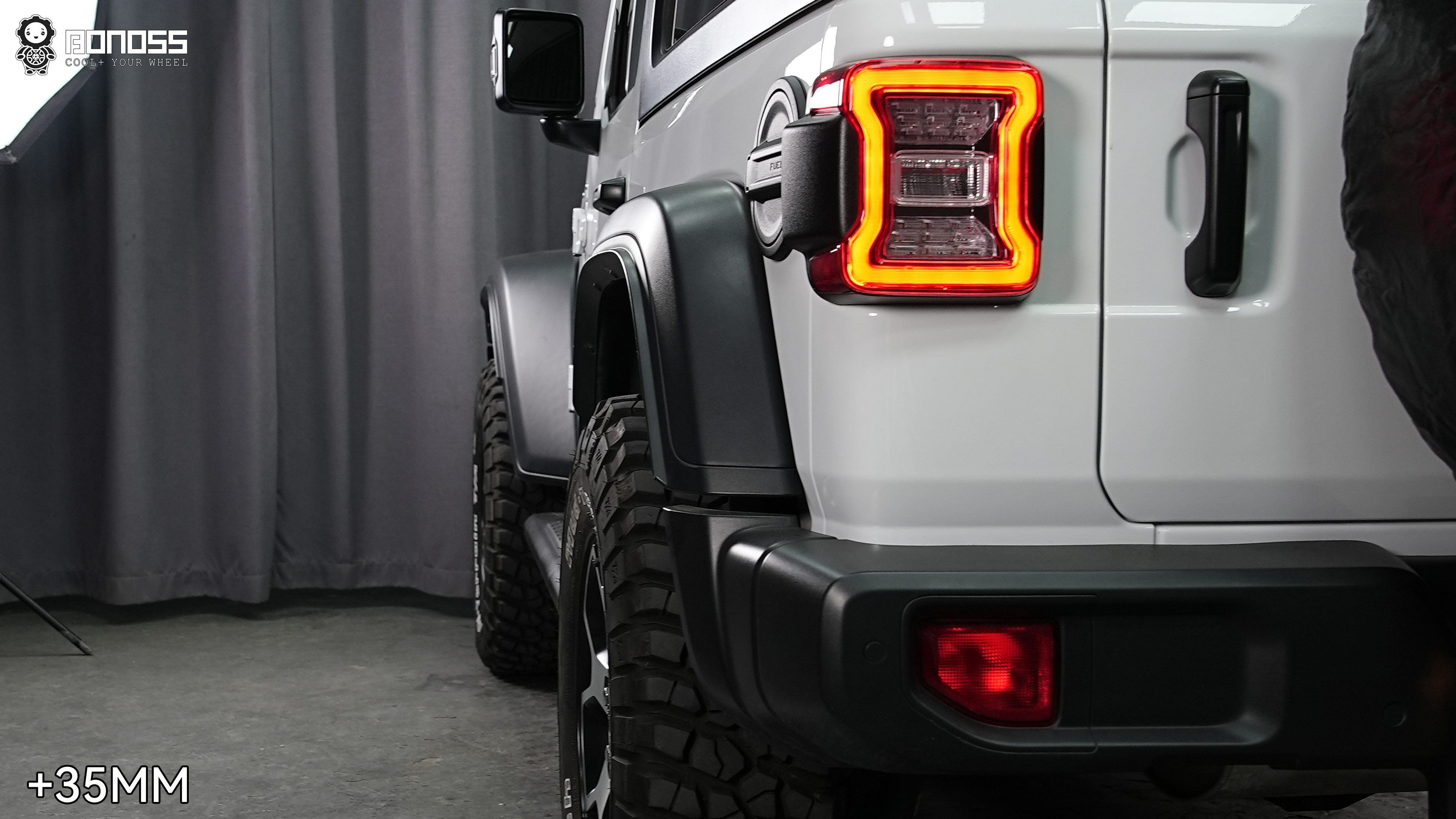
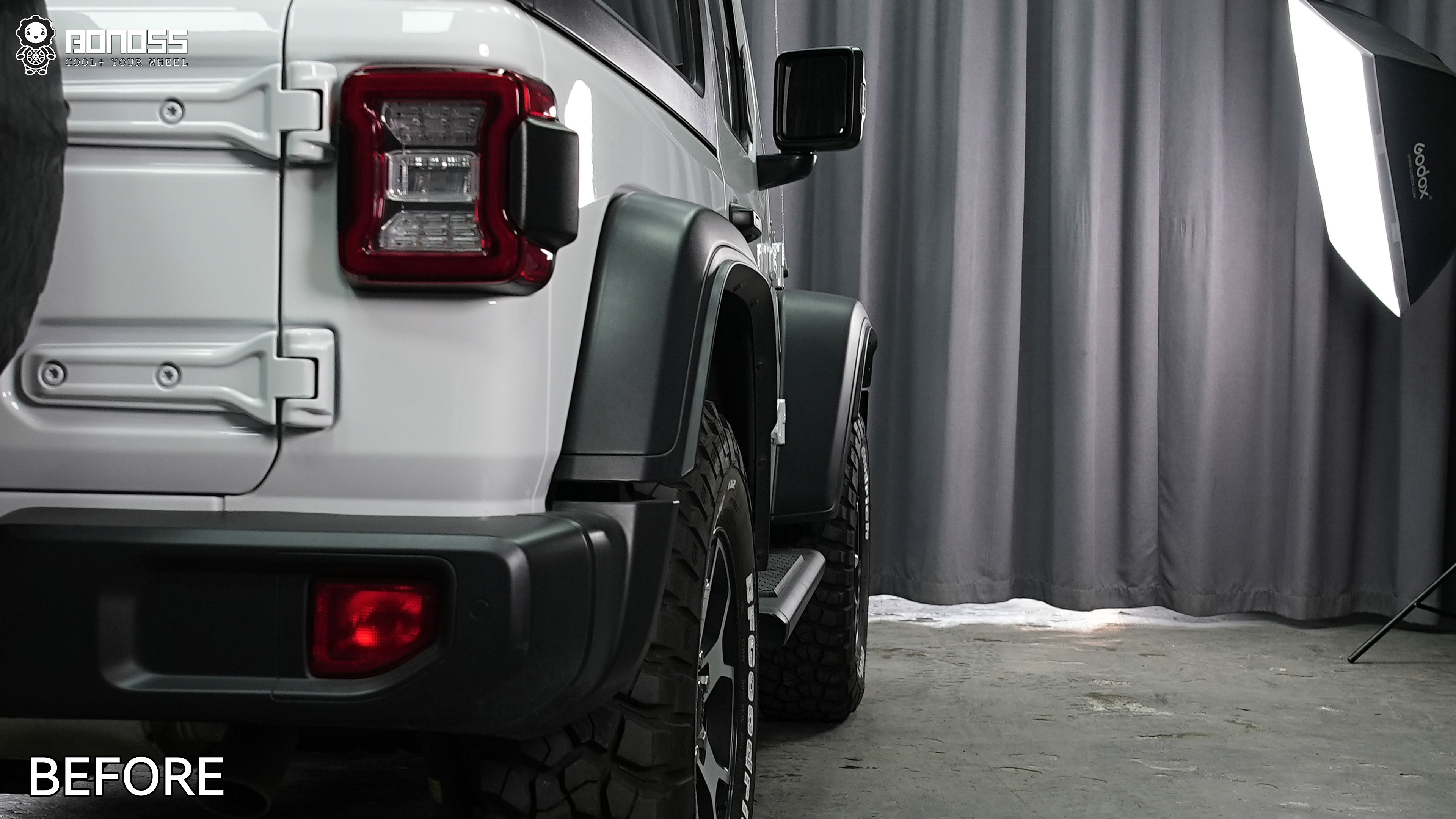
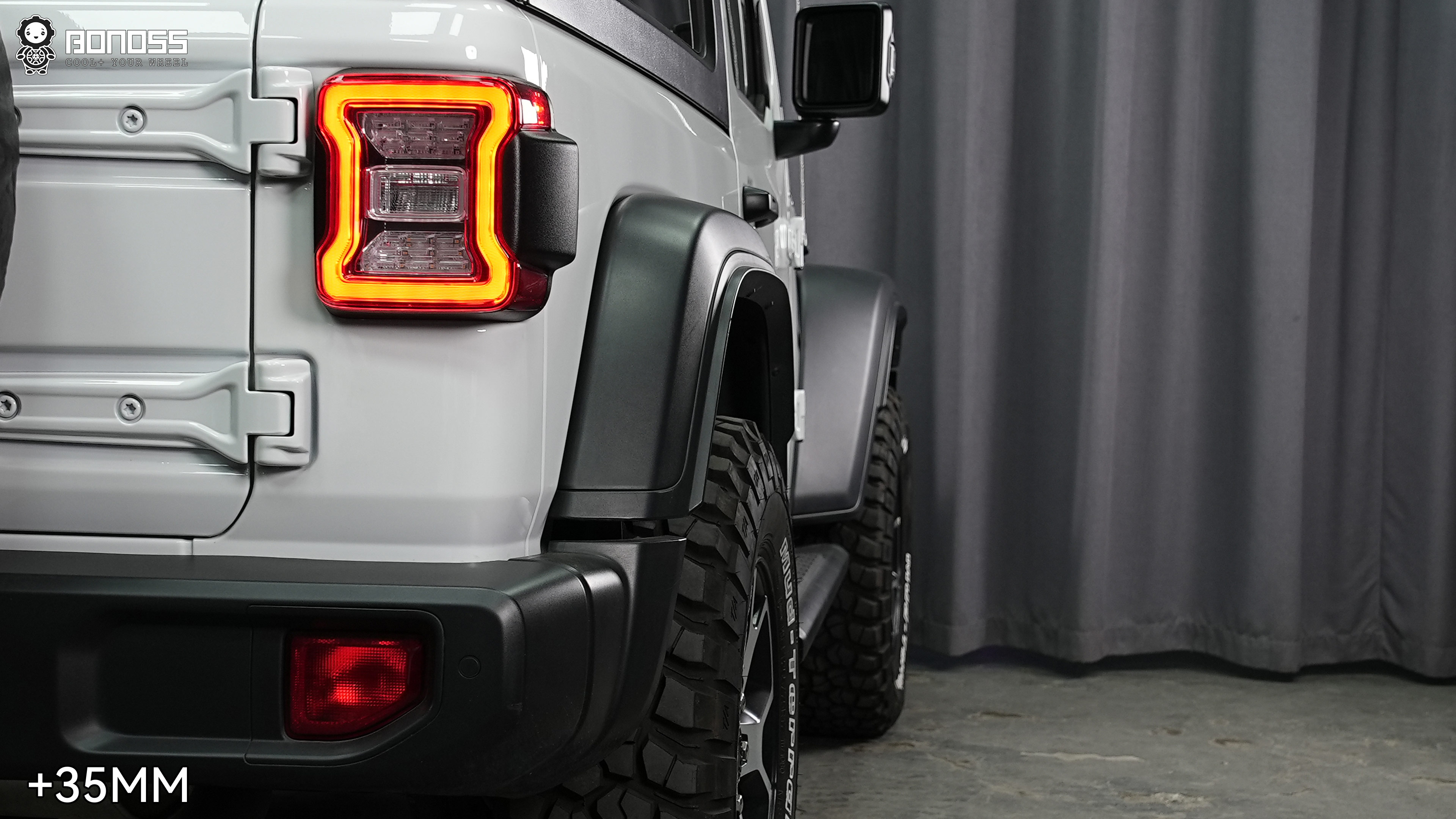
Ryan’s own words on the result: “30mm front / 35mm rear on my ’21 Rubicon. Fit perfectly. Love the flush stance. Drives and looks awesome!”
Off-Road Validation: 9,200 Miles of Trails and Mud
This is where most spacer reviews go quiet. Street driving is forgiving; off-road isn’t. Axle articulation, mud packing, rock impacts, water crossings — all stress fasteners in ways pavement never will.
Ryan put 9,200 miles on the setup, a meaningful chunk of it off-road. His report: “I take it off-road every now and then. People told me spacers wouldn’t last off-road. After hitting trails and mud, these things are still holding up great.” And: “Great design, top-notch quality for the price. Hassle-free install, and still going strong after 9,200 miles. Highly recommend.”
The inner-fender check people skip
Before signing off, we did the one test that catches most “spacers rub” complaints: with the spacers and wheels installed and the vehicle on the ground, we turned the steering lock-to-lock in both directions and watched the tire-to-inner-fender-flare gap at full lock. Zero contact, front or rear. The 30mm front pushes the tire out but the JL Rubicon’s fender flare and inner liner have the clearance for it at full steering angle. The 35mm rear is even less of a concern since the rear wheels don’t steer.
If you’re running a lift or bigger tires later, re-check this — more tire or more flex changes the equation. But on Ryan’s stock-height Rubicon with factory LT255/75R17s, the clearance is clean.
What About Vibrations? Three Conditions
Vibration is the single most common complaint with wheel spacers, and it’s almost always traceable to one of three things:
- Hub-centric seating — the spacer must register on the hub and pilot the wheel. A lug-centric spacer or a dirty hub face will vibrate.
- Correct torque — under-torqued fasteners back off; over-torqued ones stretch. Use the matched torque for each fastener, in a star pattern, on a clean hub.
- Re-torque after the first heat cycle — drive 50–80 miles, then re-check both torque values. Check again periodically, especially after off-road use. Thread locker is optional, not a substitute for correct torque.
Get all three right and spacers behave like any other wheel fastening. Get any one wrong and you’ll blame the spacers for a problem that’s really an install error. For the full parametric breakdown of the 5×127 hub-centric wheel spacers for the Wrangler JL, the product page lists every dimension.
Thickness Comparison: 20mm vs 25mm vs 30mm+
| Thickness | Stud protrusion past spacer | Pocket clearance (18.52mm) | Trim OEM studs? | Stance |
|---|---|---|---|---|
| 20mm | 20.92mm | Bottoms out (20.92 > 18.52) | Yes — required | Mild |
| 25mm | 15.92mm | Clears, 2.6mm margin | No | Flush-ish |
| 30mm | 10.92mm | Clears, 7.6mm margin | No | Flush (front) |
| 35mm | 5.92mm | Clears, 12.6mm margin | No | Flush+ (rear) |
| 38.1mm (1.5″) | 2.82mm | Clears, 15.7mm margin | No | Poked |
| 44.45mm | −3.53mm | Spacer thicker than stud | No | Aggressive poke |
The takeaway: 25mm is the minimum that clears the pockets on this wheel; 30mm gives real margin and is the sweet spot for a flush front; 35mm does the same for the rear and matches the JL’s rear body line.
Sibling Platform Fitment
The 5×127 / 71.6mm-hub / M14x1.5 pattern is shared across the Jeep family, but don’t assume identical fitment:
- Wrangler JL (2018+): 71.45mm hub, M14x1.5 — this article’s vehicle.
- Gladiator JT: same 5×127 and M14x1.5, hub bore close — spacers generally cross-fit, but verify hub step height; the JT’s rear axle differs.
- Grand Cherokee WK2 (2011–2021): 5×127, M14x1.5, but a different hub register and different fender clearance — the flush thickness won’t match a Wrangler.
- Older JK / TJ: 5×127 on the JK or 5×114.3 on the TJ, different stud sizes on the TJ — not a drop-in.
Same bolt pattern does not equal same fitment. Always measure hub bore, hub step, stud protrusion, and wheel pocket depth on the actual vehicle before picking a thickness.
FAQ
Are 30mm wheel spacers safe on a 2021 Jeep Wrangler JL?
Yes — when installed hub-centric with the correct torque and re-torqued after the first heat cycle. The 30mm thickness clears the factory wheel pockets (10.92mm stud protrusion vs. 18.52mm pockets) with no stud trimming, and 9,200 miles of mixed street and off-road use on this Rubicon produced zero failures.
Do I need to trim my OEM studs for 30mm spacers on a JL?
No. With 40.92mm of stud protrusion and 18.52mm wheel pockets, a 30mm spacer leaves 10.92mm of stud past the spacer — well inside the pocket depth. No cutting required. You’d only need to trim below roughly 22mm of spacer thickness.
What is the correct torque spec for 30mm and 35mm spacers on a Jeep Wrangler JL?
Two values: 140 Nm (103.5 ft-lb) for the BONOSS nuts holding the spacer to the hub, per BONOSS installation instructions; 176 Nm (130 ft-lb) for the OEM nuts holding the wheel to the spacer, per the owner’s manual. Use one torque per fastener — don’t blend them.
Is it safe to off-road with 30mm wheel spacers on a Jeep JL?
On this Rubicon, yes — 9,200 miles including trails and mud produced no loosening, no vibration, no failure. The conditions are hub-centric seating, correct torque, and re-torque after hard off-road use. Lug-centric spacers or skipped torque checks are what fail off-road, not the thickness.
Do Jeep JL wheel spacers fit the Gladiator JT and Grand Cherokee WK2?
The 5×127 bolt pattern and M14x1.5 thread are shared, but hub register, step height, and fender clearance differ — so the flush thickness won’t be the same. Measure the specific vehicle before ordering; same PCD does not mean same fitment.
How often should I re-torque wheel spacers on a Wrangler JL?
After the first 50–80 miles, then after every off-road trip or every few thousand street miles. Torque both the spacer-to-hub nuts and the wheel-to-spacer nuts to their respective specs. Thread locker is optional, not a substitute.
Conclusion
Ryan’s 2021 Jeep Wrangler Rubicon JL proves the point: 2021 Jeep Wrangler 30mm wheel spacers up front and 35mm in the rear deliver a flush stance on factory LT255/75R17 wheels with no stud trimming, no inner-fender rub, and 9,200 miles of street-and-trail abuse with zero issues. The math is verifiable (40.92mm studs, 18.52mm pockets, 10.92mm clearance), the torque is documented from two sources, and the hardware carries SGS and TÜV test reports you can read for yourself.
If you’re ready to buy 2021 Jeep Wrangler JL wheel spacers, the same 5×127 / 71.6mm hub-centric parts that worked on this Rubicon are available — and the 2021 Wrangler JL spacer specifications guide lays out every option. Install them right, re-torque them, and they behave like they belong there. Because on a JL done this way, they do.

About Robert Wall
Robert Wall is a Senior Automotive Engineer at BONOSS with over 9 years of experience in automotive component R&D, specializing in the structural design and safety validation of wheel spacers, wheel adapters, and high-strength fasteners. He is actively involved in product testing and on-track evaluation and is dedicated to translating engineering expertise into accessible modification knowledge — helping enthusiasts upgrade their vehicle’s stance and handling without compromising safety.